Tuesday, August 10, 2021

Melting ice and a high altitude dig reveal Viking secrets in Norway

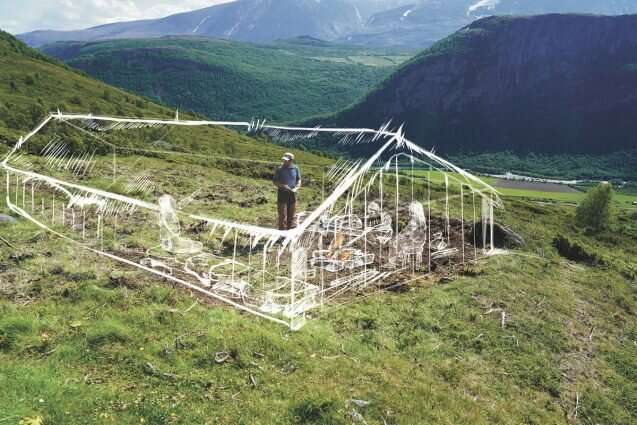
A proposed digital reconstruction of one of the ancient Viking homes,
featuring Secrets of the Ice team member Elling Utvik Wammer.
Credit: Secrets of the Ice. Illustration: Espen Finstad/Hege Vatnaland

The summer of 2011 was unusually hot for southern Norway. Where high mountain passes had been choked with snow and ice in previous years, surveyors and team members of the acclaimed Secrets of the Ice project found only jumbled talus and meltwater. Picking their way through the boulders that covered the ice-free Lendbreen pass, the crew soon realized they had walked into a vast archaeological treasure, one that had stayed frozen for a thousand years. They began to collect countless tools, artifacts and weapons—items that had once been in the possession of Vikings.

After receiving international attention for their discovery, the crew decided to return to Lendbreen this summer in search of deeper answers. Questions remained, such as what purposes had occupied these alpine travelers and where they had been traveling. In search of understanding, team members ventured across and beyond the Lendbreen pass, which over the years has revealed clothing, household items, sleds and animal remains, among other artifacts.

Thursday, August 05, 2021

DNA Testing Just Revealed That This 1,000 Year Old Finnish Viking Was Likely A Well-Respected Intersex Warrior

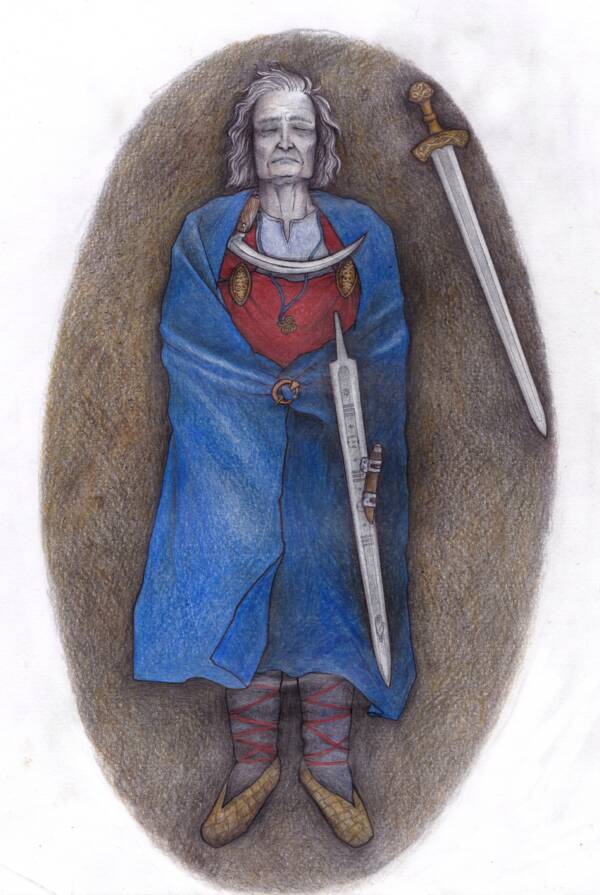
A depiction of the Viking warrior as they would have been laid in the grave.

The Viking remains, which date to between 1050 and 1300, were buried with both male and female objects, suggesting a highly-regarded member of society with a non-binary gender identity.

In 1968, ditch-diggers in Suontaka, Finland, came across a puzzling mystery. They found a 1,000-year-old skeleton buried in women’s clothing — next to two swords. Archeologists speculated that they’d found a double burial, or perhaps evidence of a woman warrior.

In fact, DNA testing has shown that the skeleton was likely intersex, according to a study recently published in the European Journal of Archeology.

“According to current data, it is likely that the individual found in Suontaka had the chromosomes XXY, although the DNA results are based on a very small set of data,” explained Elina Salmela, a postdoctoral researcher from the University of Helsinki.

For decades, the grave has confounded archeologists. The warrior, who likely died around 1050 to 1300, wore women’s clothing and had been buried with furs and jewelry. But its grave also contained two swords, including one laid at the skeleton’s hip, usually associated with male Viking burials.

Read the rest of this article...

Spanish cave art was made by Neanderthals, study confirms

.
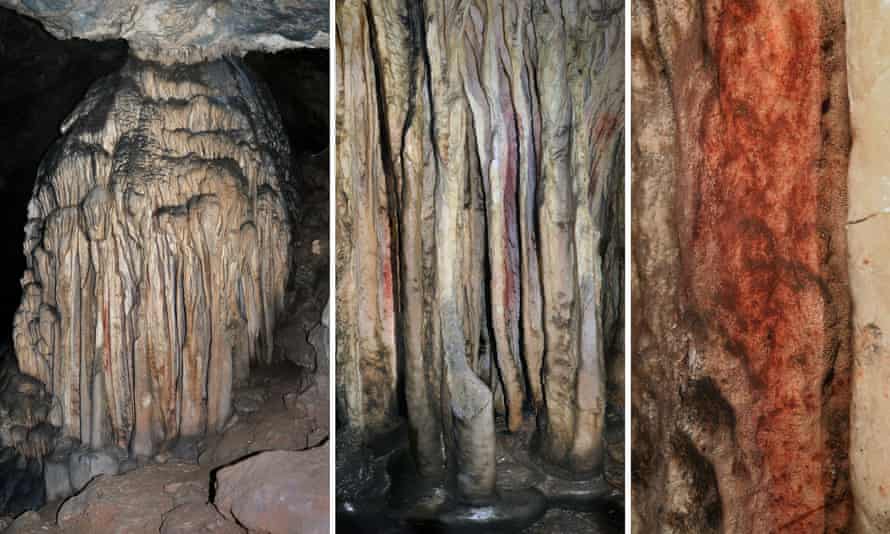
A general view (left), medium close-up (middle) and extreme close up of a partly coloured stalagmite tower in the Spanish cave of Ardales, southern Spain.
Photograph: Joao Zilhao/ICREA/AFP/Getty Images

Study says pigments on cave stalagmites were applied through ‘splattering and blowing’ more than 60,000 years ago

Neanderthals, long perceived to have been unsophisticated and brutish, really did paint stalagmites in a Spanish cave more than 60,000 years ago, according to a study published on Monday.

The issue had roiled the world of paleoarchaeology ever since the publication of a 2018 paper attributing red ocher pigment found on the stalagmitic dome of Cueva de Ardales to our extinct “cousin” species.

The dating suggested the art was at least 64,800 years old, made at a time when modern humans did not inhabit the continent.

But the finding was contentious, and “a scientific article said that perhaps these pigments were a natural thing”, a result of iron oxide flow, Francesco d’Errico, co-author of a new paper in the journal PNAS, told AFP.

Read the rest of this article..

Long-Lost Fragment of Stonehenge Gives Unprecedented Glimpse Inside Ancient Monument

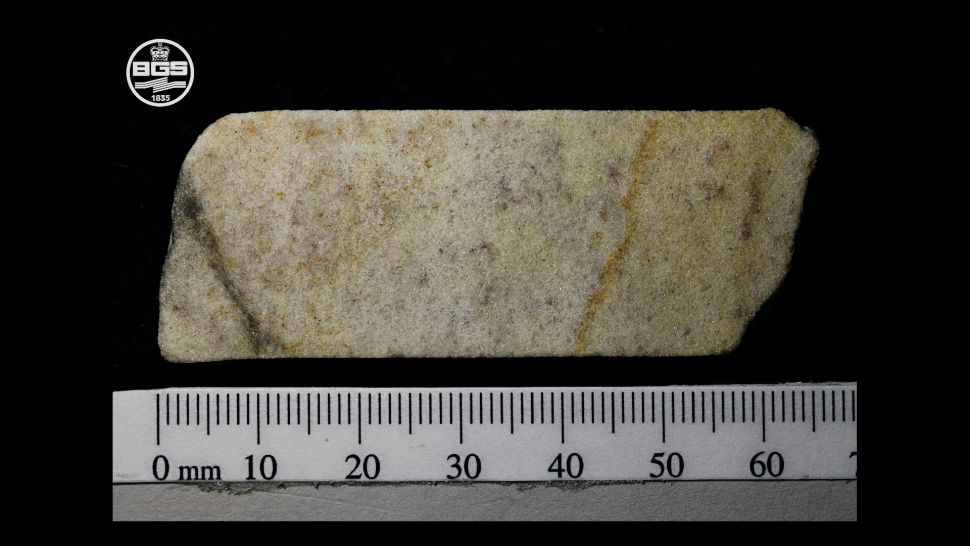
Sample of the core from Stone 58 (British Geological Survey)

"We have CT-scanned the rock, zapped it with X-rays, looked at it under various microscopes and analyzed its sedimentology and chemistry," said study lead author David Nash, a professor of physical geography at the University of Brighton in England.

"With the exception of thin-section analyses and a couple of the chemical methods, all of the techniques we used in the study were new both to Stonehenge and the study of sarsen stones in the UK," Nash told Live Science in an email.

Stonehenge's central circle of pillars was erected during the Neolithic period, about 2,500 years ago, according to English Heritage, a nonprofit organization that manages historic monuments in England. 

"Sarsens were erected in two concentric arrangements – an inner horseshoe and an outer circle – and the bluestones [smaller monument stones] were set up between them in a double arc," English Heritage said on its website.

Read the rest of this article...

New findings unveil a missing piece of human prehistory

IMAGE: GEOGRAPHICAL AND TEMPORAL DISTRIBUTION OF NEWLY SAMPLED INDIVIDUALS

A joint research team led by Prof. FU Qiaomei from the Institute of Vertebrate Paleontology and Paleoanthropology (IVPP) of the Chinese Academy of Sciences sequenced the ancient genomes of 31 individuals from southern East Asia, thus unveiling a missing piece of human prehistory.

The study was published in Cell on June 24.

Prof. FU's team used DNA capture techniques to retrieve ancient DNA from Guangxi and Fujian, two provincial-level regions in southern China. They sequenced genome-wide DNA from 31 individuals dating back 11,747 to 194 years ago. Of these, two date back to more than 10,000 years ago, making them the oldest genomes sampled from southern East Asia and Southeast Asia to date.

Read the rest of this article...

Carpenter’s Rude Carving In Church Is Exposed Hundreds Of Years Later

@clashboy23/Twitter

A carpenter’s rude carving on a church ceiling has been exposed hundreds of years later. 

The x-rated carving has been discovered at Hereford’s All Saints Church, due to the construction of a new cafe taking place.

The carving was spotted when a light was shone at the ceiling of the church, due to the cafe building an extra floor with bright lights for the restaurant area.

The carving depicts a naked man holding his legs in the air, exposing his genitalia for the world to see. A controversial choice for such a religious location.

The carving was never picked up on by visitors, having lain in the darkness, a secret from unassuming passersby below for over 800 years.

The saucy image went viral on Reddit, with the original post describing the carpenter as ‘skillful’ despite the controversial position of the man in the art.

Read the rest of this article...

And here is the uncensored version of the picture:


Viking ‘amulet factory’ discovery forces rethink of enigmatic artifacts

Figurine motifs from Ribe, Denmark reveal a variety of designs were manufactured at the site.
MUSEUM OF SOUTHWEST JUTLAND, CC-BY-SA

Archaeologists long assumed Valkyrie figurines represented Norse mythical beings. A new study of how and where they were made challenges that.

Mysterious, ancient female figurines have been found by the dozens all over Denmark, and as far afield as England and Russia: inch-long bronze depictions of long-haired women, often wearing crested helmets and long dresses, and armed with shields and swords. The small amulets date back more than a thousand years, to the height of the Viking Age.

But because Viking women weren’t typically buried with weapons—unlike their male counterparts—researchers reached into sagas and mythology to explain the armed female figurines and concluded that they represented Valkyries, the  mythical warrior women ancient Scandinavians thought were responsible for transporting slain warriors to the afterlife.

“The images had always been understood in terms of what we know of Norse mythology,” says Pieterjan Deckers, an archaeologist at the Free University of Brussels.

Read the rest of this article...

Anglo-Saxon Sword Pyramid Found in England

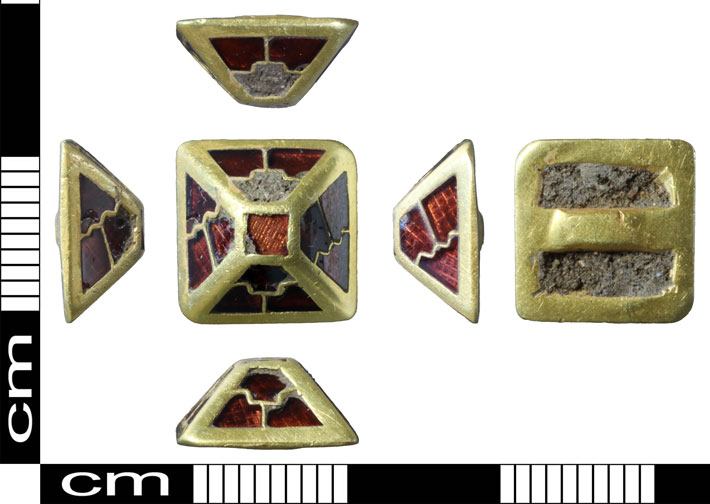
(Norfolk County Council/Portable Antiquities Scheme)

NORFOLK, ENGLAND—According to a BBC News report, a metal detectorist in the the Breckland area of Norfolk in eastern England has found a so-called sword pyramid dating to between A.D. 560 and 630, a time when the area was part of the Anglo-Saxon Kingdom of East Anglia. The object, which would have been part of a pair and whose fellow has not been found, was designed as a decorative fitting to keep a sword attached to its scabbard. Researchers have speculated that one of the sword pyramid's functions was to delay hasty unsheathing of a warrior's sword in anger.

Read the rest of this article...

Saturday, July 24, 2021

Ancient Roman road and dock discovered in Venice lagoon

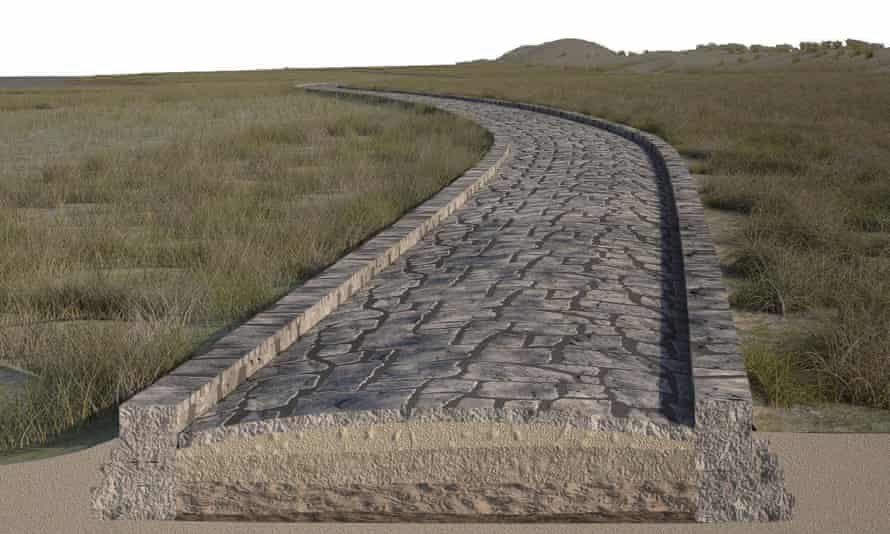
A digital reconstruction of the Roman road submerged in the Venice lagoon, which seems to have been part of a road system in the Veneto region.
Photograph: A Calandriello and G D’Acunto/SWNS

Find could prove there were human settlements in area centuries before city was founded

The discovery of the remains of a Roman road and dock submerged in the Venice lagoon could prove there were permanent human settlements in the area centuries before Venice was founded, researchers say.

Scuba divers discovered what appeared to be paving stones beneath the lagoon in the 1980s, but only after more recent research were the relics confirmed to have formed part of a road system.

“After speaking to those who first found these stones in the 1980s, I understood that it was something significant that could be anthropic,” said Fantina Madricardo, a researcher at the Venice-based Institute of Marine Science (Ismar) whose study was published this week in the Scientific Reports journal.

Read the rest of this article...

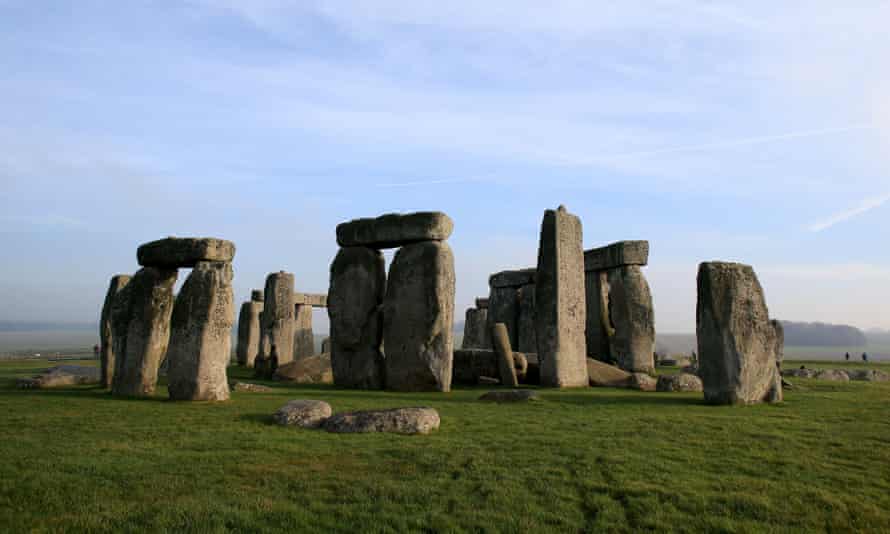
Why could Stonehenge be stripped of world heritage site status?

Unesco says Stonehenge will be put on its danger list unless plans for the A303 road tunnel are changed. Photograph: Matt Cardy/Getty Images

Unesco has confirmed that Stonehenge could be stripped of its world heritage site status, over its concern that a road tunnel, backed by the government, would irreversibly damage an area of “outstanding universal value”.

A report to Unesco’s world heritage committee setting out concerns about the £1.7bn A303 road tunnel was approved unchanged on Thursday. Unless the designs for the two-mile (3.3km) tunnel are extended and changed, the committee recommends placing Stonehenge on Unesco’s list of world heritage in danger next year.

One of the two Beaker-period burials found near the site of the proposed Stonehenge road tunnel
Archaeologists unearth bronze age graves at Stonehenge tunnel site
Read more
Last month the high court was told that a decision by Grant Shapps, the transport secretary, to approve the tunnel last November was unlawful because it did not properly consider damage that would be done to a string of prehistoric sites and many thousands of ancient artefacts.

Unesco’s committee found that if the high court confirms planning consent for the tunnel, Stonehenge should be placed on its danger list. It said that despite minor improvements to the original plan, the proposed cut-and-cover tunnel would irreversibly damage an area of “outstanding universal value”.

Read the rest of this article...

Deposed Ninth-Century King May Have Called This Cave Dwelling Home

Researchers previously thought the cave was an 18th-century folly, or decorative structure
constructed to enhance the natural landscape.
(Mark Horton / Edmund Simons / Royal Agricultural University)

An early medieval cave structure in Derbyshire, England, may be the former home of a ninth-century king—and the United Kingdom’s oldest intact domestic interior.

As Mark Brown reports for the Guardian, new research conducted by experts from the Royal Agricultural University (RAU) and Wessex Archaeology suggests the 1,200-year-old dwelling once housed Eardwulf, an exiled ruler of the medieval English kingdom Northumbria. The team published its analysis in the Proceedings of the University of Bristol Speleological Society.

“Our findings demonstrate that this odd little rock-cut building in Derbyshire is more likely from the 9th century than from the 18th century as everyone had originally thought,” says lead author Edmund Simons, a research fellow at RAU, in a statement. “This makes it probably the oldest intact domestic interior in the U.K.—with doors, floor, roof, windows etc.—and, what’s more, it may well have been lived in by a king who became a saint!”

Per the statement, researchers previously believed the cave was an 18th-century folly (a type of decorative building constructed to enhance the natural landscape). Though the structure is classified by Historic England as a “[n]atural cave, enlarged and formed into a folly,” Simons tells the Guardian that he “can’t think of a natural process that makes walls, doors and windows, let alone pillars.”

The sandstone-chiseled building features narrow openings characteristic of Saxon architecture, notes BBC News. A nearby ninth-century crypt boasts a comparable rock-cut pillar, perhaps suggesting that the two buildings date to the same period.

Read the rest of this article...

Wednesday, July 21, 2021

Archaeologists baffled as Viking discovery in UK 'predates' Scandinavian artefacts

Professor Judith Jesch, from the University of Nottingham (Image: BBC)

Judith Jesch, Professor of Viking Studies at the University of Nottingham, detailed how experts were stunned after uncovering a series of these artefacts known as the runestones.

She told the History Hit podcast: "The most amazing body of Scandinavian runic inscriptions in Britain is actually the runestones of the Isle of Man which are from the core Viking Age – the 10th, possibly early 11th century.

"There are around 30 of them commemorating the dead and they are early hybrid monuments that have runic text with Scandinavian language.

"They are clearly a local product, they are made with local stone, the dating is a bit difficult, but they seem to be earlier than similar monuments in Norway.

Read the rest of this article...

Cock of the north: Roman stone-carved penis uncovered during Yorkshire archaeological dig

Roman stone-carved penis discovered near Catterick
(Northern Archaeological Associates)

A Roman stone-carved penis is one of thousands of artefacts discovered during half a decade of excavation work around the town of Catterick, it has been revealed.

The 11in phallus – complete with line of ejaculate – is believed to date back to the early years of the ancient empire’s occupation of Britain, which began in the first century AD.

It is among more than 62,000 historical objects unearthed during five years of archaeological digs undertaken as part of work to upgrade the A1 around the North Yorkshire town – which was founded by the Romans.

Other treasures include a 2,000-year-old pistachio nut – the oldest ever found in Britain – as well as pottery, incense burners, brooches and works of art which were probably brought from the Mediterranean.

Read the rest of this article...

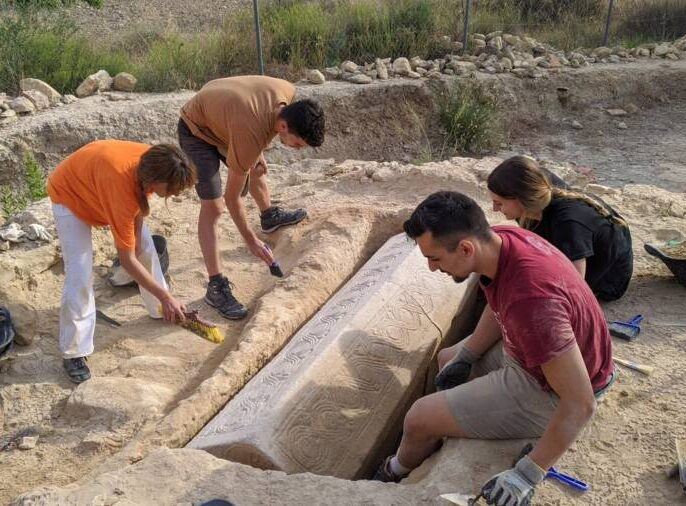
‘Spectacular And Unexpected’ 1,500 Year Old Visigoth Sarcophagus Unearthed In Spain

The visigoth sarcophagus unearthed in Mula, Spain.

As they knelt in the dust and the heat, searching the former Roman settlement of Los Villaricos for history’s treasures, archeologists came across an incredible discovery. There, buried in pale yellow dirt, they found a 1,500-year-old Visigoth sarcophagus — complete with human remains.

“We weren’t expecting this spectacular discovery,” said Professor Rafael González Fernández, of the University of Murcia, who led the excavation.

The sarcophagus, about three feet long and in remarkably good condition, likely dates to the 6th or 7th century A.D. It features elaborate designs across its top, including a coiled geometric pattern, ivy leaves, and the Chi Rho sign. That sign appears frequently in Christian artwork to signify the victory of the Resurrection.

Archeologists came across the sarcophagus during an annual excavation of the former Roman settlement. As González explained:

“This year’s campaign was focused on finishing excavating the last three burials of the necropolis and continuing with the excavation work of the complex located to the north of the town, where in the last few years we had documented a new set of pools.”

Read the rest of this article...

The final meal of the famous 'bog man' revealed: Tollund Man feasted on porridge and fish before being killed as a ritual sacrifice 2,400 years ago, study reveals

The amazingly well-preserved head of the Tollund Man - a man who lived during the
4th century BC

Tollund Man's gut contents had been analysed forensically when he was discovered in 1950, uncovering traces of cereals and wild plants. 

When Tollund Man was autopsied in 1950, his intestines were still preserved, and the alimentary canal from the stomach to anus was removed in one piece with its contents still in place.  

Now, experts from Silkeborg Museum in Denmark, say they have been able to reconstruct the last meal of Tollund Man in greater detail than ever before – right down to how it was prepared. 

The researchers used a few millilitres of material from the large intestine for analyses to give the 'most detailed study' yet on the gut contents of a bog body. 

Read the rest of this article...

Exiled Medieval Anglo-Saxon King May Have Lived as Hermit in 9th-Century Cave Dwelling

Anchor Church cave may have belonged to a 9th-century king turned saint.
COURTESY ROYAL AGRICULATURAL UNIVERSITY

Archaeologists have identified an Anglo-Saxon cave house that may have belonged to a 9th-century king of Northumbria named Eardwulf. The discovery was made by the Royal Agricultural University (RAU) and Wessex Archaeology, which recently published their findings in the Proceedings of the University of Bristol Speleological Society.

The series of sandstone caves in Derbyshire, central England, were once believed to be follies—a popular 18th-century trend that involved elaborate structures with no real purpose, built mainly for decoration. New evidence, however, shows they were likely constructed or enlarged in the 9th century, after erosion from the River Trent had created natural caves at the site.

Anglo-Saxon architecture is featured throughout the rock-cut dwelling, with narrow arched windows and doors, as well as a pillar that resembles the nearby Repton crypt from the same period. “Using detailed measurements, a drone survey, and a study of architectural details, it was possible to reconstruct the original plan of three rooms and easterly facing oratory, or chapel, with three apses,” Edmund Simons, principal investigator of the project and research fellow at RAU, said in a statement.

Read the rest of this article...

University of Sheffield to Close Archaeology Department Despite Protests

The University of Sheffield's Firth Court, 2020.
PRESS ASSOCIATION VIA AP IMAGES

The University of Sheffield, a public university in South Yorkshire, England, has decided to shut down their internationally renowned archaeology department. The executive board at the University first proposed the closure in late May.

Despite protests from students, faculty, staff, and cultural institutions, the University Council decided to go forward with the plan put forward by the executive board to close the department down. The University alerted faculty to this decision in a 13 minute presentation in which faculty were not able to respond as their microphones and cameras had been disabled by the meeting hosts.

The archaeology program at Sheffield is highly respected and is ranked 13th best in the world. The department heads numerous projects in Sheffield, Stonehenge, and other sites in Britain as well as international digs. Yet, the University executive board claimed the program was obsolete, citing that only 10 undergraduate students had committed to taking archaeology courses in the coming academic year.

Read the rest of this article...

Wednesday, July 07, 2021

2,000-Year-Old Sarcophagus Found in England Reveals Roman Burial Practices


The north-facing orientation of the grave suggests it was a pagan burial.
(L-P Archaeology via Bath & North East Somerset Council)

Archaeologists in the city of Bath in southwest England have discovered an approximately 2,000-year-old Roman sarcophagus containing two bodies. The limestone coffin holds the preserved remains of one person in a prone position, with the partial remains of a second individual laid at their feet, the Bath Echo reports.

The north-facing orientation of the grave suggests it was a pagan burial. Nearby, researchers found a small pot containing food remains, as well as artifacts including small red and blue glass beads, possibly left as votive offerings. These types of donations to the gods were common in ancient Roman religion and represented a gift of thanks or payment, according to the Oxford Classical Dictionary.

“This is an amazing find,” says Sylvia Warman, science advisor for Historic England, in a statement. “Although several Roman stone coffins have been found around Bath in the past, none have been excavated and recorded by professional archaeologists using modern methods until today.”

Jesse Holth of ARTnews reports that the grave was buried beneath the grounds of Sydney Gardens, a Georgian pleasure garden once frequented by Jane Austen. Workers renovating and landscaping the garden for the Bath & North East Somerset Council’s Sydney Gardens Project discovered a Roman wall at the border of Bathwick Cemetery. When a team from L-P Archaeology excavated the site, they found the newly revealed burial. The archaeologists also uncovered cremated remains—the only known example of a cremation burial at the cemetery.

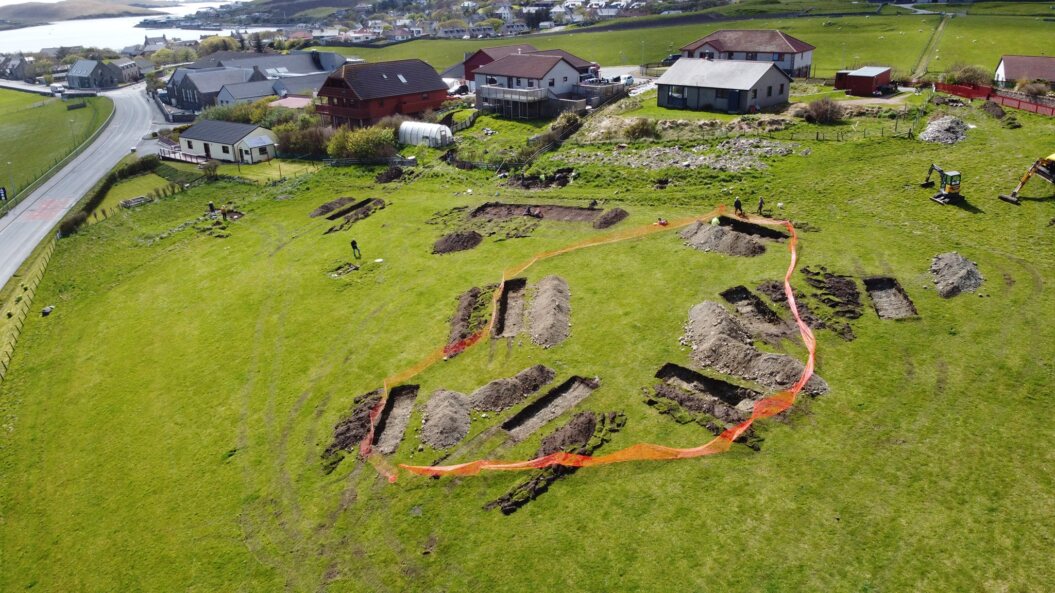
‘Hugely significant’ discoveries made on final day of excavation to find Shetland’s ancient Viking capital


Archaeological discoveries are getting closer to revealing the ancient Viking capital of Shetland.

The Skailway project, which has been underway since May when more than £20,000 was raised to fund an excavation, has reported findings of “huge significance”.

Kristian Leith has been hunting for the ancient capital ever since he found five round house structures and 26 human remains while digging foundations for a garden shed  last year.

After his successful crowdfunding appeal, Mr Leith brought in Orkney archaeological  experts, ORCA,  to carry out geophysical surveys in the land between the Mill Brae road and his home in Upper Scalloway.

The first nine trenches came up with nothing – but the last day of the investigation uncovered a structure, which is thought to be part of the ancient settlement.

Read the rest of this article...

Tuesday, July 06, 2021

Campaign hopes to shore up Offa’s Dyke against future threats

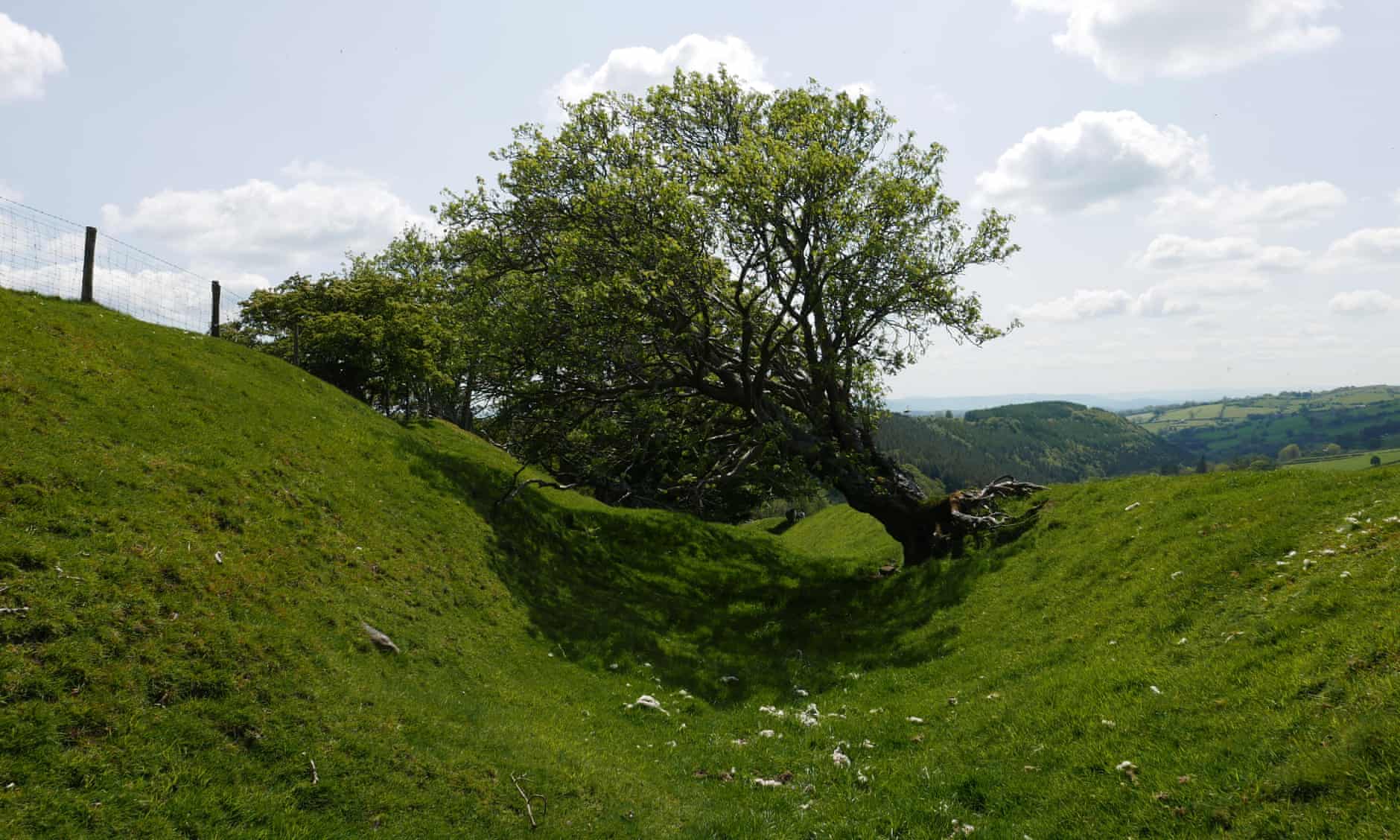
‘It’s not the most glamorous of monuments.’ A tree clinging to Offa’s Dyke near Oswestry, Shropshire. Photograph: Rob McBride


It is Britain’s longest monument and one of the most extraordinary: a 1,200-year-old earthwork that snakes through moor, mountain, field and back garden, crisscrossing the modern incarnation of the Welsh and English border.

But concerns are being raised that Offa’s Dyke is suffering serious damage through a combination of neglect, carelessness or, in some cases, land grabs and vandalism.

This month, to mark the 50th anniversary of the opening of the 177-mile Offa’s Dyke path, a campaign is being launched to highlight the jeopardy the earthwork faces and to raise money to begin repairing sections of it, a task that will take years.

Read the rest of this article...