Saturday, February 01, 2020

First Byzantine Monastery discovered in Spain

Emperor Justinian, Ravenna
[Credit: El Pais] 

Archaeological experts from the University of Alicante in Spain have recently identified the first Byzantine monastery ever found on the Iberian peninsula.
They first came across several round metal objects at the archaeological site, which is located in the area of Elda, Alicante. The exact identification of these objects had proven to be a mystery since the 19th century.

In the 6th century, Emperor Justinian forced people to keep a cache of state-minted coins in the main churches of each city. In this way, merchants could show that the coinage they used in economic transactions corresponded with the official money that the Emperor had minted.

The churches used to work as guarantors that buyers of precious metals were not cheated and that the coins in general use had the actual value that they were meant to have. If the operations were fraudulent, the tax revenue was lower — something the Emperor kept close tabs on.

Read the rest of this article...

The ghostly treasure ship of Sutton Hoo

Silver bowl from Sutton Hoo. Seventh century, British Museum, London
PHOTOGRAPH BY ULLSTEIN BILD, CORDON PRESS

In 1939 a series of mounds at Sutton Hoo in England revealed their astounding contents: the remains of an Anglo-Saxon funerary ship and a huge cache of seventh-century royal treasure.

IN SOUTHERN ENGLAND near the Suffolk coast lies a stretch of sandy heathland dotted by mysterious mounds of earth. Inspiring strange tales and superstitions among local people, these barrows charmed newlyweds Frank and Edith Pretty, who purchased the property, known as Sutton Hoo, in 1926.

The couple made their home at Sutton Hoo for nearly nine years until Frank’s untimely death in late 1934. Edith continued to live there, and she grew increasingly curious about the barrows on her property. A lifelong fascination with the occult had led her, like many wealthy women of her time, to consult spiritualists in London. Some say that after her husband’s death, her interest in spiritualism grew and even expanded to include the barrows on her property. Disputed accounts even describe Edith as having a vision of a ghostly procession passing through the mounds near her house. Whatever the true cause, she decided in 1937 to have the land excavated and approached a museum in nearby Ipswich to discuss it.

What lies beneath
Self-taught archaeologist Basil Brown worked as an excavation assistant at the museum and took on Edith’s project. His decision to take the job not only would change his life but also radically alter, and deepen, the understanding scholars had of the early Anglo-Saxon period in England following the collapse of Roman rule.

Read the rest of this article...

Thursday, January 30, 2020

'Lost' Anglo-Saxon monastery discovered. It might be where England's first king was coronated.

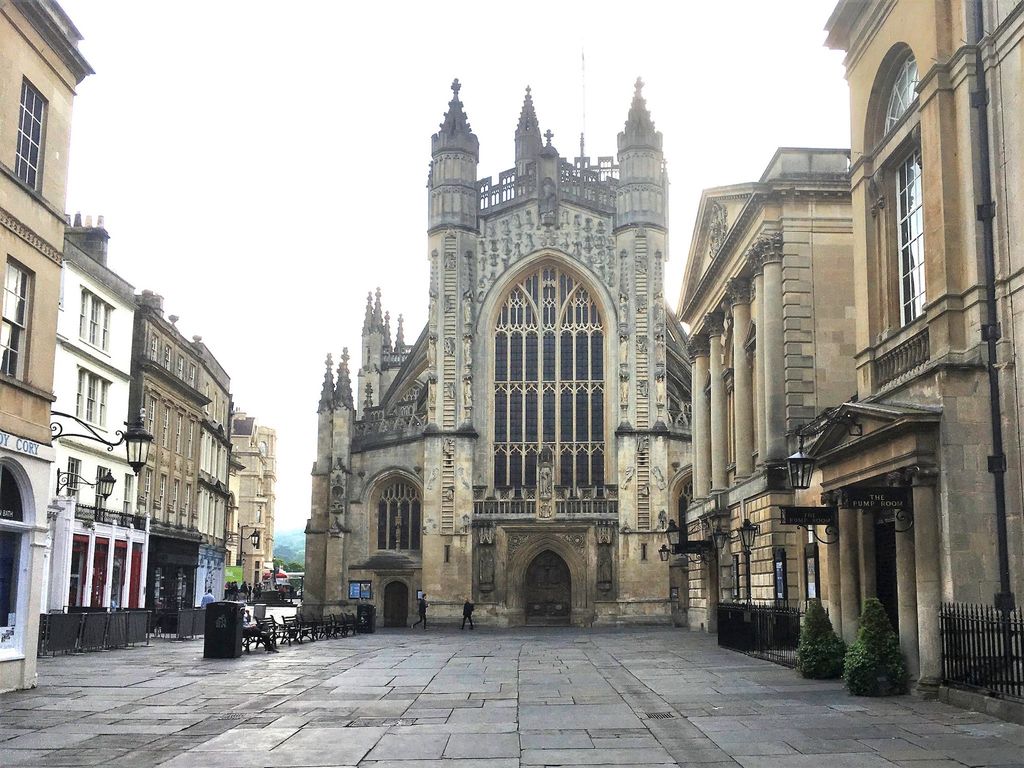
The Abbey at Bath has a spectacular facade.
(Image: © Wessex Archaeology)

Edgar the Peaceful may have been coronated here more than 1,000 years ago.

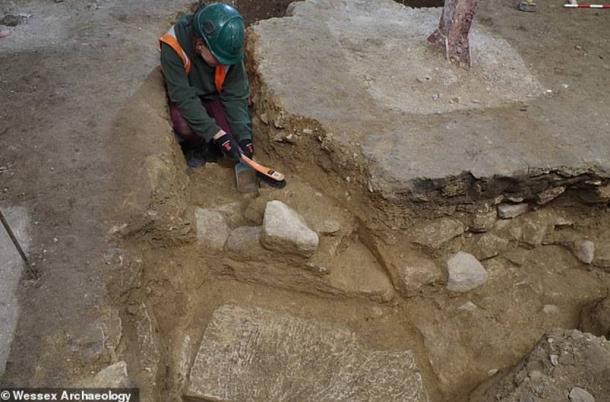
Newly unearthed remains may come from the monastery where England's first king, Edgar the Peaceful, was coronated more than 1,000 years ago, according to Wessex Archaeology, an archaeological company and charity in England. 

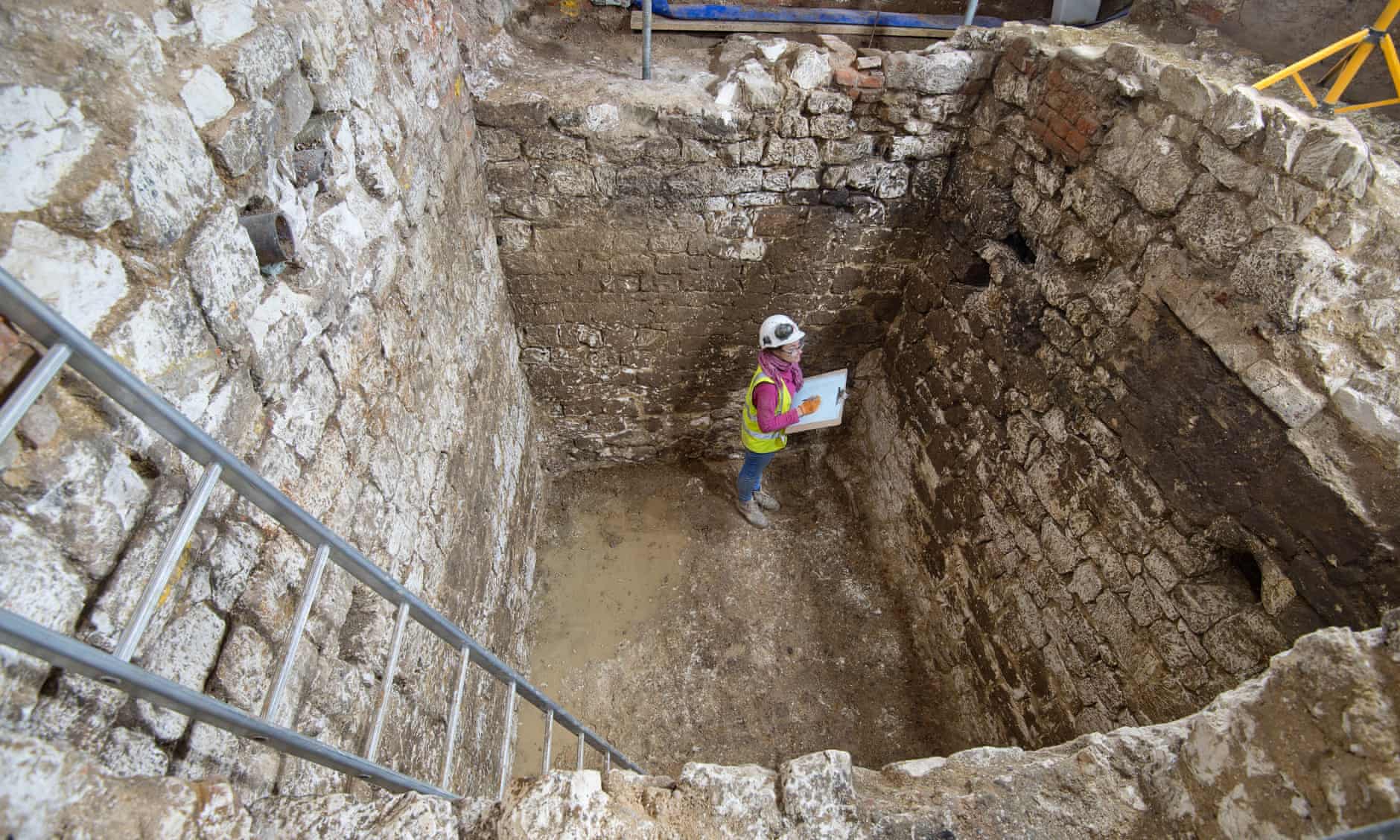
The so-called smoking gun emerged during an excavation at the famous Bath Abbey, ahead of planned renovations there. During the excavation, archaeologists were surprised to find hints of Anglo-Saxon architecture in two structures next to the abbey.

These are the first known Anglo-Saxon structures in all of Bath, a city that was founded by the Roman Empire and that is known for its thermal hot springs. The two apsidal (semicircular) structures, or apses, were found below street level, underneath what once made up the cloisters of the 12th-century cathedral built over Romano-British deposits. The cathedral is just south of the abbey church.

Read the rest of this article...

Neanderthals May Have Trekked 2,000 Miles to Siberia

Chagyrskaya Cave in Siberia's Altai Mountains, where researchers uncovered Neanderthal stone blades that resemble tools excavated in Europe (IAET)

Ancient Siberia was so nice, eastern European Neanderthals trekked there twice—even though they probably had to cross some 2,000 miles of tough terrain to reach it, a new study suggests.

A team of researchers has uncovered stone blades in Siberia’s Altai Mountains that bear a remarkable resemblance to known Neanderthal tools from modern Crimea and the northern Caucasus, located just north of the Black Sea. The group’s findings, published this week in the Proceedings of the National Academy of Sciences, hint that our long-gone cousins crossed the Eurasian continent about 60,000 years ago—an encore act to a similar eastward journey made some 40,000 years prior.

“Neanderthals were intrepid explorers in their own right,” says study author Richard Roberts, a geochronologist at the University of Wollongong in Australia, to Bruce Bower of Science News.

The team can’t conclusively say how long the journey took, or if it happened in fits and starts. But using the tools as an archaeological throughline, the researchers argue that at least some Siberian Neanderthals—whose origins have long been elusive—trace their roots back west.

Read the rest of this article...

Archaeologists analyze the composition of a Roman-era 'makeup case'

Image of the scallop with pigment residues 
[Credit:University of Granada]

First discovered in 2000 during excavations of a funerary complex in the former capital of the Lusitania, Augusta Emerita (present-day Merida) the 'make-up case' was uncovered in a deposit of cremated remains alongside ceramic cups, bone spindles, nails, glassware and the remains of a detachable bone box.

The make-up case is made from a bivalve malacological mollusk specimen of pecten maximus (viera). Once the shell was opened, it was possible to document the cosmetic remains, specifically, a small ball of a “pinkish” powdery conglomerate via a combination of X-ray diffraction (XRD), electron microscopy and chromatographic analysis.

The use of the mollusk as a cosmetic container is a practice that dates back thousands of years across various civilisations. One of the earliest examples is tiny shells in the Sumerian city of Ur from 2500 BC that contained pigments used for cosmetics.

Read the rest of this article...

'Anglo-Saxon' skeletons found on Buckingham care home site

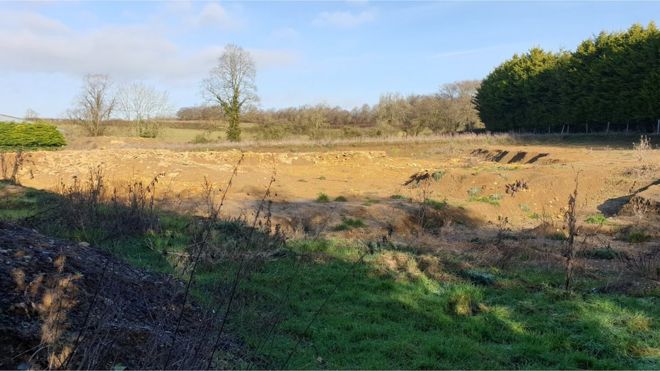
The site where the bodies were discovered is next to the cemetery in Buckingham

A number of "unusual burials" including skeletons with hands tied behind their backs have been discovered on the site of a planned care home.

The bodies were uncovered during excavations ahead of work at West End Farm, on Brackley Road in Buckingham.

It is believed about 40 bodies were found in December as first reported in the MK Citizen.

Historian Ed Grimsdale said he believed they were Anglo-Saxon and it could be "one of the biggest finds" of its kind.

Buckinghamshire County Archaeology Service said it was waiting for results of the post-excavation analysis.

Read the rest of this article...

Jersey 'drowned landscape' could yield Ice Age insights

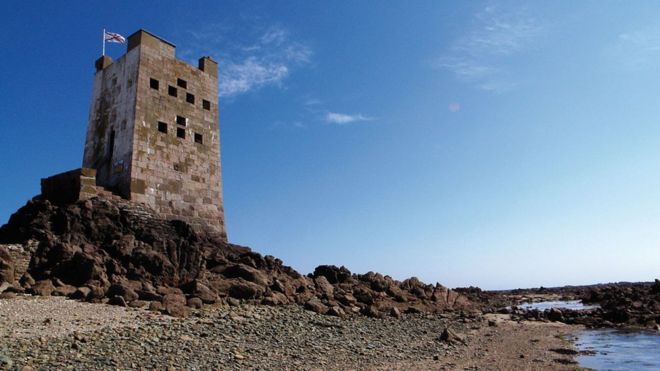
The team will base themselves at Seymour Tower, an 18th Century offshore fortification
UCL

Archaeologists are planning an ambitious survey of part of the seabed off Jersey where Neanderthals once lived.

The site is part-exposed during spring low tide, giving the team a four-hour window to dig while the sea is out.

Stone tools and mammoth remains have been recovered from the Violet Bank over the years.

Neanderthals are known to have inhabited what is now Jersey for hundreds of thousands of years.

The Violet Bank is a type of coastal zone known as an intertidal reef. It's underwater at high tide but some 10 sq km of seabed is exposed during the low spring tide.

Read the rest of this article...

What Is the Most Significant Archaeological Discovery of the Past Decade?

Collection of King Khufu papyri discovered at Wadi El-Jarf port on view at Egyptian Museum in Cairo.
AMR NABIL/AP/SHUTTERSTOCK

The last decade witnessed major archaeological discoveries, from the 10-month excavation of a Bronze Age settlement in England to what could be the world’s oldest figurative artwork, which was found in Indonesia last year. Which of these finds was most important? To hear more, ARTnews asked nine archaeologists and scholars. Their selections—which span several continents and multiple millennia—follow below.

Dieter Arnold
Curator emeritus, department of Egyptian art, Metropolitan Museum of Art

Among numerous other significant discoveries of the past decade in Egypt, one find earns distinction. In 2013, a French mission [led by] Pierre Tallet discovered in a cave on the Red Sea coast in the Wadi El-Jarf remains of a logbook of a boat captain who had—before his assignment at the Red Sea—shipped building blocks to the pyramid of Kheops (Khufu) at Giza (2580 B.C.E.). By itself, such transports were not new to us, but the daily entries in the logbook connect us vividly with one of mankind’s most admired building projects.

Peggy Brunache
Lecturer in the history of slavery, University of Glasgow 

In 2017, the domicile room of Sally Hemings at Thomas Jefferson’s historic Virginia mansion, Monticello, was discovered. Hemings, an enslaved woman, is believed by many to have given birth to several children of one of America’s beloved Founding Fathers. (The theory is supported by DNA evidence.) This discovery once again puts a focus on the entangled roles of enslaved people in the founding of the United States and, more importantly, on the private life of the man who famously wrote “All men are created equal,” and yet, over the course of his life, was a slaveholder of hundreds of Black lives.

Read the rest of this article...

Wednesday, January 29, 2020

UN SITE DU HAUT MOYEN ÂGE ET UNE OCCUPATION MÉSOLITHIQUE À PONTARLIER


À Pontarlier (Doubs), l'Inrap a mené une fouille archéologique préventive sur le site des Gravilliers, dans le cadre de l'aménagement d'un parc d'activités économiques du Grand Pontarlier. Un diagnostic archéologique réalisé en 2011 avait déjà révélé un site du premier Moyen Âge et une occupation mésolithique (9600 à 5500 ans avant notre ère) qui avait livré les plus anciens indices d'occupation humaine connus à Pontarlier. Une première fouille, en 2015, avait amplement confirmé les résultats du diagnostic. 

L’une des particularités du site moyenâgeux des Gravilliers est de se situer en totalité dans l’emprise du projet d’aménagement, permettant une vision exhaustive de l’ensemble, fait exceptionnel dans le cadre de fouilles préventives. La portée scientifique des recherches effectuées sur le site est considérable pour la compréhension de la dynamique de l'habitat rural médiéval et devrait constituer une référence pour l'est de la Gaule. Les résultats de la fouille seront précisés lors de la phase d'étude en 2020-2021.

Read the rest of this article...

MASS GRAVE RIDDLE Mystery as 42 old bodies with hands tied behind their backs found buried in graves on Milton Keynes building site

More than 40 bodies were found on old farm land near Milton Keynes
Credit: Jane Russell

MORE than 40 bodies have been found buried in historic shallow graves on a building site near Milton Keynes - and people are baffled.

The 42 bodies, which are all old skeletons, appeared to have their hands tied behind their backs.

They were unearthed on a patch of old farmland in Buckingham as ground works for 72 new retirement flats were underway.

According to MK Citizen, many people are accusing the flat developers, Brio Retirement Living Holdings of keeping mum about the shocking find.

The bodies are said to have been found weeks ago when the company - which is part of Places for People - commissioned an archaeological investigation of the site to secure planning permission.

But nobody has seen the archaeologists' report.

Read the rest of this article...

Monday, January 27, 2020

Anglo-Saxon Abbey where Lusty King Edgar was Crowned, Found!

Excavations of the possible Anglo-Saxon abbey at Bath Abbey. ( Wessex Archaeology )

Bath Abbey was always thought of as having been located upon a much earlier Anglo-Saxon monastery, but no evidence was ever found to support this idea. However, two structures were discovered during primary renovation works as part of Bath Abbey’s £19.3 million (25.2 million USD) Footprint project and a team of archaeologists from Wessex Archaeology discovered to the south of the modern-day Abbey what a Daily Mail article describes as “Semi-circular relics dating to between the 8th and 10th century AD.”

Plaster samples taken from the remains tested positive for charcoal and they were sent to Queen's University, Belfast for radiocarbon dating, which determined they were from “AD 780-970 and AD 670-770”. These results are why the researchers believe they might have found the site of King Edgar's coronation - Bath's lost Anglo-Saxon monastery . And speaking of the discovery to the Daily Mail the Reverend Canon Guy Bridgewater at Bath Abbey said this is a “really exciting find.”

Read the rest of this article...

2019 excavation results of the Paphos Agora Project

Credit: Dept. of Antiquities, Republic of Cyprus

The Department of Antiquities, Ministry of Transport, Communications and Works, has announced the completion of the 2019 excavations of the Department of Classical Archaeology of the Institute of Archaeology, Jagiellonian University, Kraków, Poland, within the framework of the Pafos Agora Project (PAP). The PAP, which has been running since 2011, examines the economic infrastructure and activity of the city, not only on the basis of excavations in the Agora itself, but also outside of it, throughout the entire Archaeological Site of Kato Paphos, based on prospection with the use of non-invasive geophysical methods.

Researchers from the Warsaw Technical University and the University of Hamburg participated in the 2019 field season, which took place during August and September 2019. Two main goals were set: 1) determining the size of the Agora in the north, and 2) identifying streets flanking it from the north and from the east. Excavations were carried out at four points.

Read the rest of this article...

Newport Ship could be Wales' answer to the Mary Rose

The ship would have been moored in an inlet on the River Usk in Newport at around 1468
NEWPORT MUSEUMS AND HERITAGE SERVICE

A salvaged 15th Century ship has "significant potential" to do for Wales what the Mary Rose did for Portsmouth when it goes on show.

Archaeologists say "there's nothing else like" the medieval ship, the remains of which were found preserved in mud in a Newport riverbank in 2002.

Historians say reassembly of the 2,500 timber pieces will be the world's largest ancient ship rebuild project.

Newport council said it hopes to display the ship in a prominent place.

Experts say the "unique" attraction could emulate the Mary Rose exhibition of Tudor king Henry VIII's 16th Century flagship naval vessel, renowned as one of the world's best maritime displays with its own £35m museum,

Read the rest of this article...

Medieval treasures uncovered – from the sludge of a London cesspit

A Mola archaeologist records the medieval cesspit uncovered in 
the basement of the Courtauld. 
Photograph: Mola

Forks, pendants and wine jugs shine a light on city life in the Middle Ages

It is said that one person’s trash is another’s treasure. The discovery by archaeologists of a huge cesspit containing medieval artefacts under one of London’s finest historic buildings is proving the case.

Up to 100 objects, largely dating from the 14th and 15th centuries, have been retrieved from sticky, greenish sludge in a four-metre-deep pit beneath the Courtauld Institute of Art at Somerset House.

The haul includes pottery drinking vessels and tableware, along with a rare Penn floor tile – a favoured decorating material for palaces and monastic sites – and a range of metalwork pieces, including an iron spur, a finger ring, a belt buckle, a bone-handled fork and a pendant. There is also a thick chain, which might once have been attached to a candlestick. Although discarded, many of these objects are virtually intact.

Read the rest of this article...

Friday, January 24, 2020

Triple Copper Age burial discovered in Croatia

Credit: Lovas Archaeological Project

While excavating one of the trenches in the highest part of Kovači in 2019, we discovered a triple Copper Age (?) burial, possibly dating to the period of Kostolac Culture (3250-3000 BCE). Burials of this kind are extremely rare in Croatia and this seems to be the earliest one (other similar examples are known from the famous site of Vučedol, but are connected to the later layers of Vučedol culture).

The burial was discovered in almost completely sterile soil above the bedrock, with no traces of a grave pit. Three individuals were buried together and numbered from 1 to 3 (left to right in the above photo).

The bodies of Individuals 1 and 3 were positioned in the same way. They were on their backs, but with their legs leaning to the right, as if they were stepping forward. Their arms were bent in the elbows and pulled to their chests.

Their faces were probably facing east. Individual 1 was a 20-30-year-old female and Individual 3 a 25-35-year-old male. The individual in the middle (Individual 2) was a female between 30 and 40 years of age. She was facing the ground.

Read the rest of this article...

Four Warriors Buried in 11th Century Tombs in Pomerania Came From Scandinavia, say Scientists


The four warriors buried with rich grave offerings in the central part of the cemetery in Ciepłe (Pomerania) came from Scandinavia, expert analyses show. This is proof that people of foreign origin were members of the Piast state elites, scientists suggest.

Archaeologists investigating a cemetery dating from the first Piast monarchy of Bolesław I the Brave have published their latest findings.

The discovery in the small village of Ciepłe near Gniew in Eastern Pomerania, has so far revealed over 60 graves, but the archaeologists believe there may be more.

Dr. Sławomir Wadyl from the Archaeological Museum in Gdańsk said: “In the central part of the cemetery there were four very richly equipped chamber graves. Men, probably warriors, were buried in them, as evidenced by the weapons and equestrian equipment deposited with the bodies.”

Read the rest of this article...

Grave of elite Bronze Age man from Poland reconstructed

The mysterious prince, although in fact he was not a member of royalty, but a local elite, 
was about 20-30 years oldand massively built, according to the preserved bones. 
Unlike the other burials around it, the body wasn’t burnt
[Credit: M. Podsiadlo]

A new 3D rendering of a 2,000-year-old aristocrat’s grave shows how the tribes inhabiting the Malopolska region buried their elites.

The richly-equipped kurgan, one of only a dozen in Poland, is known as the prince’s grave, due to the evident high standing of the man laid to rest there and the site’s monumental form.

The burial ground in Szarbia, near Krakow, was discovered in 1997 in fields by researchers from the Archaeological Museum in Krakow, led by Ryszard Naglik.

The excavations carried out until 2001 yielded incredible results. The archaeologists uncovered two burial sites, one from 2,000 years ago and one from 5,000 years ago.

Read the rest of this article...

Lincoln Cathedral: Medieval priest's items 'rare find'

The priest was buried alongside a pewter chalice and paten, which is a plate made of gold or silver
Image copyrightALLEN ARCHAEOLOGY

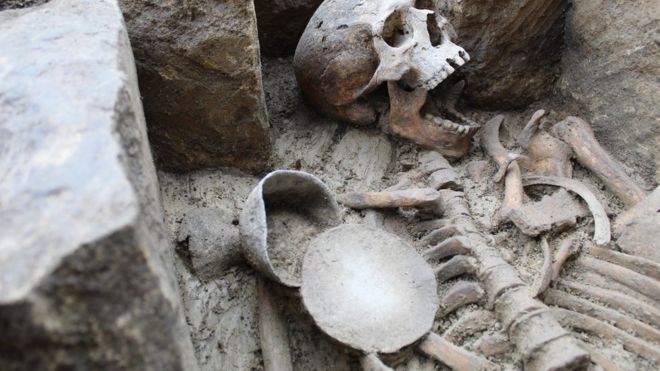
Archaeologists have described the discovery of the remains of a medieval priest buried alongside "key symbols of his work" as a significant "rare find".

The find was one of more than 50 burials unearthed during renovation works at Lincoln Cathedral.

Archaeologist Natasha Powers said the priest was buried with a pewter chalice and paten - a gold or silver plate.

He believed his tools would provide proof on Judgement Day that he had performed his duties, she said.

Ms Powers said since work started in 2016 they had discovered "significant evidence" of Lincoln's medieval, Saxon and Roman past.

Read the rest of this article...

Scientists Confirm Mount Vesuvius Eruption Turned Victim's Brain Into Glass


(MILAN) — The eruption of Mount Vesuvius turned an incinerated victim’s brain material into glass, the first time scientists have verified the phenomenon from a volcanic blast, officials at the Herculaneum archaeology site said Thursday.

Archaeologists rarely recover human brain tissue, and when they do it is normally smooth and soapy in consistency, according to an article detailing the discovery in the New England Journal of Medicine. The eruption of Vesuvius in the year 79 instantly killed the inhabitants of Pompeii and neighboring Herculaneum, burying an area 20 kilometers (12 miles) from the volcano in ash in just a few hours.

The remains of a man lying on a wooden bed were discovered at Herculaneum, closer to Vesuvius than Pompeii, in the 1960s. He is believed to have been the custodian of a place of worship, the Collegium Augustalium.

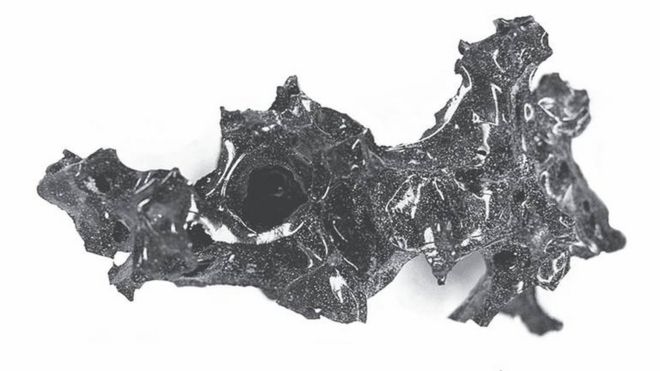
A team led by Pier Paolo Petrone, a forensic anthropologist at the Federico II University in Naples, determined that the victim’s brain matter had been vitrified, a process by which tissue is burned at a high heat and turned into glass, according to the study published by the New England Journal of Medicine. The fragments presented as shards of shiny black material spotted within remnants of the victim’s skull.

Read the rest of this article...

Mount Vesuvius eruption: Extreme heat 'turned man's brain to glass'

The black, shiny fragments are believed to be the glassy remains of a man's brain
THE NEW ENGLAND JOURNAL OF MEDICINE/DR PIER PAOLO

Extreme heat from the Mount Vesuvius eruption in Italy was so immense it turned one victim's brain into glass, a study has suggested.

The volcano erupted in 79 AD, killing thousands and destroying Roman settlements near modern-day Naples.

The town of Herculaneum was buried by volcanic matter, entombing some of its residents.

A team of researchers has been studying the remains of one victim, unearthed at the town in the 1960s.

A study, published in the New England Journal of Medicine on Thursday, said fragments of a glassy, black material were extracted from the victim's skull.

Read the rest of this article...