Thursday, November 26, 2015

Paleolithic elephant butchering site found in Greece

Excavation with some of the elephant bones exposed.
Credit: Greek Ministry of Culture

A new Lower Paleolithic elephant butchering site, Marathousa 1, has been discovered in Megalopolis, Greece, by a joint team of researchers from the Ephorate of Paleoanthropology and Speleology (Greek Ministry of Culture) and the Paleoanthropology group, University of Tübingen.
Marathousa 1 is located in an open-cast coal mine, on what was once the shore of a shallow lake. It has yielded stratified stone artifacts in association with a nearly complete skeleton of Elephas antiquus, as well as the exceptionally well-preserved remains of fauna (rodents, birds, amphibians, reptiles, mollusks and insects) and plants (wood, seeds, fruit). The association of lithic artifacts with the elephant remains, as well as the discovery of cutmarks on elephant bones, indicate that Marathousa 1 is an elephant butchering site.
Read the rest of this article...

Getting under the skin of a medieval mystery


A simple PVC eraser has helped an international team of scientists led by bioarchaeologists at the University of York to resolve the mystery surrounding the tissue-thin parchment used by medieval scribes to produce the first pocket Bibles. 


Non-invasive sampling extracting protein from parchment using eraser crumbs  [Credit: The John Rylands Library University of Manchester] 

Thousands of the Bibles were made in the 13th century, principally in France but also in England, Italy and Spain. But the origin of the parchment –often called “uterine vellum”– has been a source of longstanding controversy. 

Use of the Latin term abortivum in many sources has led some scholars to suggest that the skin of fetal calves was used to produce the vellum. Others have discounted that theory, arguing that it would not have been possible to sustain livestock herds if so much vellum was produced from fetal skins. Older scholarship even argued that unexpected alternatives such as rabbit or squirrel may have been used, while some medieval sources suggest that hides must have been split by hand through use of a lost technology.

Read the rest of this article...

Rural vicars ‘drowning’ amid battle to keep empty churches open


Clergy warn they are 'drowning' under pressure of maintaining medieval buildings as Church of England debates future of rural parishes


Rural churches have been hit not only by a fall in religious observance across society, but population shifts leaving some once-thriving parishes stranded in agricultural land Photo: Alamy

Rural clergy warned they are “close to drowning” under the pressure of maintaining multiple medieval buildings with dwindling congregations as the Church of England considers radical plans to scale back its ancient parish network to cope with decline.
But the bishop overseeing a review into the future of the 16,000 Anglican places of worship warned against “Dr Beeching-type cuts” with thousands of little-used parish buildings effectively closed.
The Bishop of Worcester, the Rt Rev John Inge, insisted that such a mass closure would send out a signal that the Church and Christianity itself had “had their day in this country”.
Read the rest of this article...

Tuesday, November 24, 2015

What did the Romans do for us?: Roman road unearthed under Dorchester car park


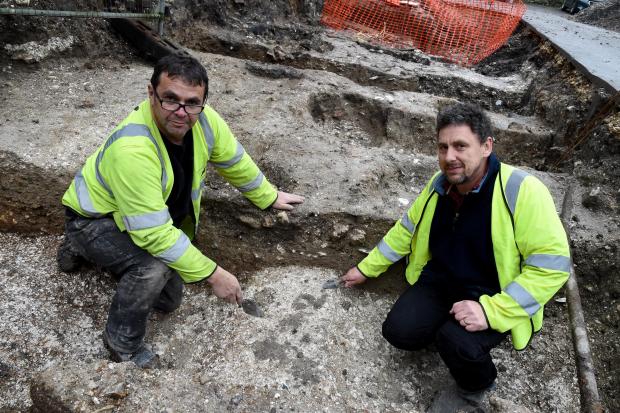
ARCHAEOLOGICAL excavations at a building site in Dorchester have uncovered remnants of the main Roman road through the town.
Experts have been digging at Bennett’s Court car park off Colliton Street, where two homes are being built as part of the redevelopment of the Stratton House former council office campus.
Mike Trevarthen, Peter Bellamy and their team from Terrain Archaeology have been working at the site for around three weeks and have discovered some fascinating traces of the town’s rich history dating back to its time as the Roman town of Durnovaria.
Mr Trevarthen said: “We have dug up the edges of what appears to be the main north to south street within the Roman town.
“We have got part of the road make up and several phases of road enlargement.
“We have also got the roadside drainage ditches.”
Read the rest of this article...

Italy roadworks unearth frescoed Roman room


A 2000-year old frescoed room has been discovered under a busy Roman street. Photo:Archaeological Superintendency Rome

Routine roadworks to install a gas pipeline under a busy street in central Rome have brought to light a 2000-year-old room plastered with frescoes.

The find was made three days ago, when workmen started to dig a hole for the pipeline in Via Alfonso Lamora.
As they began to remove pieces of earth from the road, a large chasm opened up in the road extending down into the dark, four meters below.
At first, the workmen thought it was an ordinary sinkhole and called in speleologists - or cave experts - to investigate. However, when the experts reached the bottom of the large cavern they were surprised to find themselves standing in the frescoed room of a once luxurious Roman home.
Read the rest of this article...

1,700-Year-Old Ring Depicts Nude Cupid, the Homewrecking God


An intricately carved gold ring containing a stone engraved with an image of Cupid — a god associated with erotic love — has been discovered near the village of Tangley in the United Kingdom.

In the engraving, Cupid (also known by his Greek name, "Eros") is shown standing completely nude while holding a torch with one hand. The ring dates back around 1,700 years, to a time when the Roman Empirecontrolled England. The ring was discovered by an amateur metal detectorist. Researchers who studied it say that it may have been worn by a man or a woman and is engraved with spiral designs that contain bead-shaped spheres.

The image of Cupid is engraved on a stone made of nicolo, a type of onyx that is dark at the base and bluish at the top. The image on the stone "depicts a standing naked adolescent with crossed legs, leaning on a short spiral column; the short wings which sprout from his shoulders identify him as Cupid," Sally Worrell, national finds adviser with the Portable Antiquities Scheme, and John Pearce, senior lecturer in archaeology at King's College London, wrote in an article published recently in the journal Britannia. [6 Most Tragic Love Stories in History]

Read the rest of this article...

4,000 coins found in Roman treasure trove in Swiss orchard


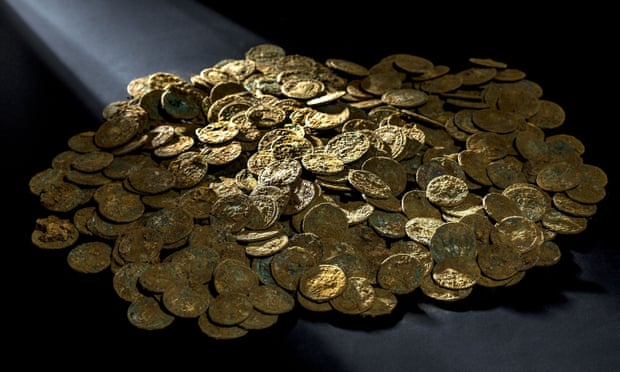
A trove of more than 4,000 bronze and silver coins dating back to ancient Rome, uncovered this summer in the orchard of a fruit and vegetable farmer, has been described as one of the biggest treasures of this kind found in Switzerland.
The huge hoard of coins, buried about 1,700 years ago and weighing 15kg (33lb), was discovered in Ueken, in Switzerland’s northern canton of Aargau, after the farmer spotted some shimmering green coins on a molehill in his cherry orchard.
He guessed the coins were Roman, following an archaeological discovery a few months earlier, of remains of an early Roman settlement in the nearby town of Frick. He contacted the regional archaeological service , which later labelled it one of the largest such finds for Switzerland.
On Thursday the archaeological service announced that after months of digs, 4,166 coins had been found at the site, most in excellent condition.
Read the rest of this article...

ARCHAEOLOGISTS REVISIT ENGLAND’S LEGENDARY GLASTONBURY ABBEY


The real history of Glastonbury Abbey, renowned for its links to the legendary King Arthur, has finally been uncovered thanks to ground-breaking new research from the University of Reading.
The four-year project reassessed and reinterpreted all known archaeological records from excavations at the Abbey between 1904 and 1979, none of which have ever been published. Analysis revealed that some of the Abbey’s best known archaeological 'facts’ are themselves myths - many of these perpetuated by excavators influenced by the fabled Abbey’s legends.
Research revealed that the site was occupied 200 years earlier than previously estimated - fragments of ceramic wine jars imported from the Mediterranean evidence of a ‘Dark Age’ settlement. The analysis also showed how the medieval monks spin-doctored the Abbey’s mythical links to make Glastonbury one of the richest monasteries in the country.
Glastonbury Abbey in Somerset holds a special place in popular culture. It was renowned in the early middle ages as the reputed burial place of the legendary King Arthur and the site of the earliest Church in Britain, thought to have been founded by Joseph of Arimathea.
The project, conducted with partners Trustees of Glastonbury Abbey and funded by the Arts and Humanities Research Council, involved a team of 31 specialists.

Read the rest of this article...

Large Roman villa unearthed in Kent


A Roman villa twice the size of Lullingstone's has been unearthed in Otford. The incredible find – revealed by the Chronicle this week – was discovered by amateur archaeologists digging on land near Otford Palace. 


Excavation work has started on the Roman villa at Otford
[Credit: West Kent Archaeological Society] 

The villa is thought to be the second largest Roman find of its kind in Kent and would have been occupied by a man of wealth and importance around the time of the Emperor Magnus Maximus. 

Chairman of West Kent Archaeological Society, Kevin Fromings said he had been waiting half his "archaeological life" for such a find. 

"It is big. There is Darenth Roman villa at Sutton-at-Hone which was excavated in the 60s and 70s – but this is certainly the next biggest in Kent.

Read the rest of this article...

Plongées archéologiques dans la Charente : l’Inrap réalise un diagnostic subaquatique à Saintes


Avant le projet d’aménagement d’un appontement pour une péniche-restaurant sur la Charente (à hauteur de la place Bassompierre), la municipalité de Saintes a effectué une demande de diagnostic archéologique. Sur prescription de l’État (Drac Poitou-Charentes - Service régional de l'Archéologie), une équipe de cinq archéologues-plongeurs de l’Inrap intervient donc du 16 au 27 novembre 2015 sur une zone de 760 m2.

Une zone au fort potentiel archéologique

Le projet d’aménagement est situé sur la rive droite de la Charente, à proximité immédiate de l’axe routier reliant dans l’Antiquité Lyon, capitale des Gaules, à Saintes, nouvelle capitale de la Gaule Aquitaine. 
L’arc dit de Germanicus, érigé dans les 20 premières années de notre ère, était alors situé à l’entrée du pont romain et marquait ainsi l’entrée de la cité antique de Mediolanum Santonum (Saintes), implantée sur la rive gauche. 

Read the rest of this article...

Genetic history of Europeans revealed


A study of ancient DNA has shed new light on European genetic history.
It confirms that farming spread across Europe due to the influx of ancient people from what is now eastern Turkey.
Many modern Europeans owe their taller stature to these early farmers - and a later influx of Bronze Age "horsemen" - say international researchers.
In the study, researchers mapped the genes of 273 ancient people who lived in West Europe and Asia from about 8,500 to 2,500 years ago.
Of these, 26 were part of a population that gave rise to Europe's first farmers.
Prof Ron Pinhasi of the School of Archaeology at University College Dublin, a lead researcher on the study, said: "We now have the first clear evidence that agriculture in Europe started with the first farmers coming from what is now Turkey.

Read the rest of this article...

DNA study finds London was ethnically diverse from start


A DNA study has confirmed that London was an ethnically diverse city from its very beginnings, BBC News has learned.
The analysis reveals what some of the very first Londoners looked like and where they came from.
These initial results come from four people: two had origins from outside Europe, another was from continental Europe and one was a native Briton.
The researchers plan to analyse more of the 20,000 human remains stored at theMuseum of London.
According to Caroline McDonald, who is a senior curator at the museum, London was a cosmopolitan city from the moment it was created following the Roman invasion 2,000 years ago.

Read the rest of this article...

Monday, November 16, 2015

Scientists discover the cause behind prehistoric climate change


Scientists now know why the climate underwent dramatic changes at the end of the last Ice Age.


The atmosphere plays an important role in the speed at which climate change can occur. During the last ice age, it meant that in some places on Earth temperatures increased by 10 degrees centigrade in a single decade. (Photo: Shutterstock)

Scientists have discovered the causes behind a period of dramatic climate change at the end of the last Ice Age, which will help predict how climate will change in the future.
Climate scientists are nervous about how man-made climate change may impact on the Gulf Stream--the ocean current that brings warm water from the tropics to the North Atlantic.
Changes to Gulf Stream, according to the new research, may not only result in a much colder Europe, but it might also lead to changes in ‘communication’ between the ocean and the atmosphere. Such changes could lead to the kinds of abrupt climate changes last seen at the end of the last Ice Age.
Read the rest of this article...

The ancient Greeks in Ukraine


By using aerial photographs and geophysical surveys, Warsaw archaeologists not only confirmed the location of settlement dating back more than two thousand years in Respublikaniec (Kherson Oblast), but also discovered previously unknown structures in its area - scientists from the Institute of Archaeology of the University of Warsaw summarised their research in Ukraine.
"In addition to non-invasive research, we also began regular excavations - said Marcin Matera from the Institute of Archaeology of the University of Warsaw, Polish coordinator of the project. - As a result we obtained archaeological material clarifying the position dating". The initiator of the cooperation of archaeologists from Poland and Ukraine is Dr. Nadezda Gavryljuk, and head of research from the Ukrainian side - Dmytro Nykonenko.

Archaeologists determined that the settlement was probably founded in the 2nd century BC. Researchers also discovered the exact outline of its fortifications - defensive walls and ditches. In addition to defensive functions, the place also served as a venue of trade between residents of the Dnieper steppes and the ancient world, represented by the nearby Greek colony - Olbia. The settlement could also have played a role in securing the waterway up the Dnieper.

Read the rest of this article...

Pieces of Roman building reunited after 2,000 years


Two pieces from a Roman building sign destroyed 2000 years ago, possibly by the legendary Boudica, have been reunited thanks to a remarkable discovery made by the University of Reading. 


Fragments of inscribed marble [Credit: University of Reading] 

During the last season of excavating Silchester Roman Town in 2013, Reading archaeologists found a fragment of stone inscribed with the letters ‘ba'. Expert analysis has now astonishingly revealed that this matches a piece with the letters ‘At' which was found at Silchester in 1891, and is now part of Reading Museum's Silchester Collection. 

Together these read At(e)ba(tum) -  'of the Atrebates' - the French tribe who likely founded Silchester in 1st Century BC.  The two pieces were found approximately ten metres apart in the SE quarter of Insula III, a block of the Roman Town. They are probably from a slab of marble from Purbeck in Dorset, which was either a sign commemorating the construction of a significant building, or a dedication to a deity.

Read the rest of this article...

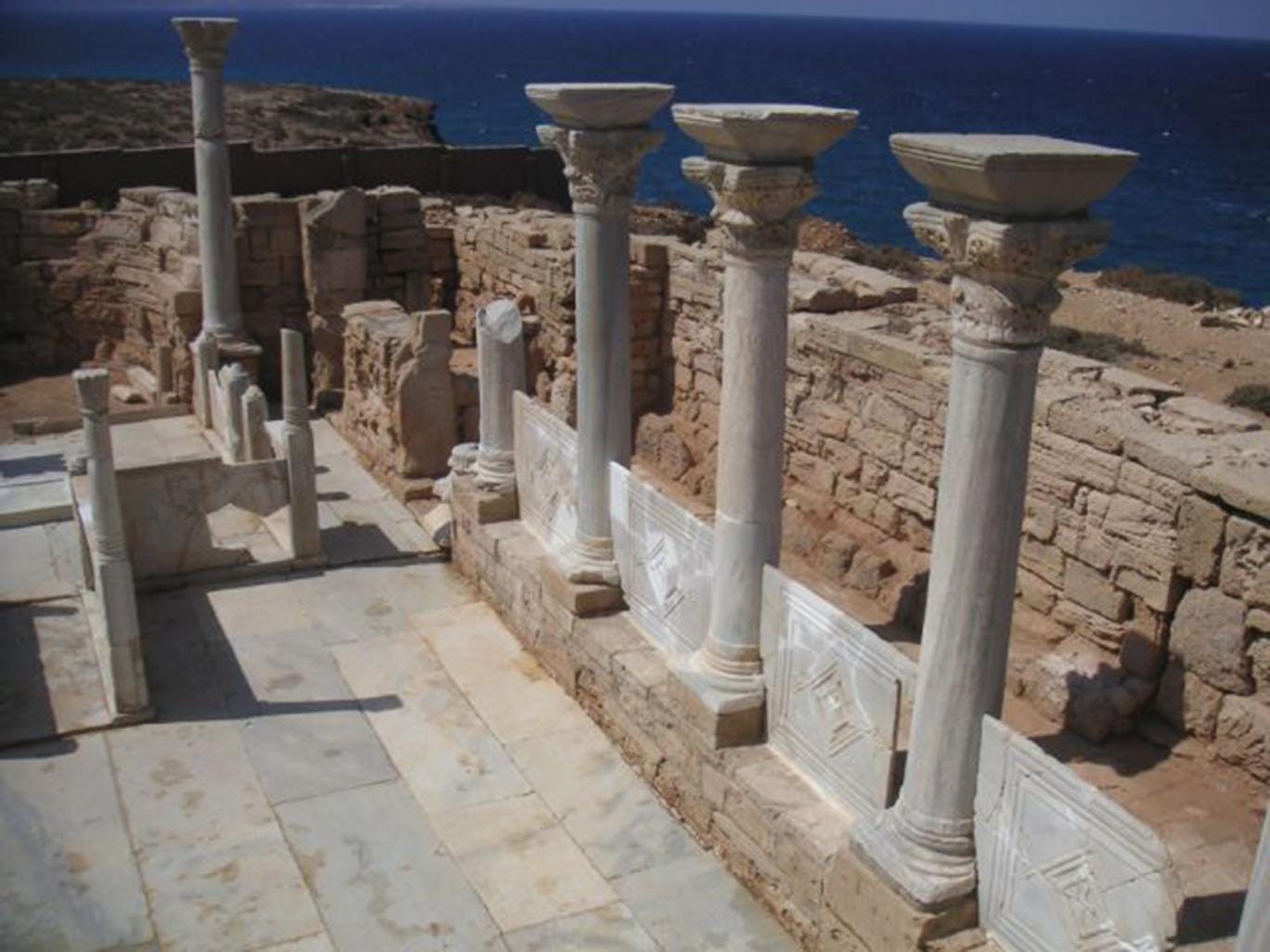
Byzantine 'flat-pack' church to be reconstructed in Oxford after spending 1,000 years on the seabed


Centuries before the Swedes started flat-packing their furniture, the Holy Roman Emperor Justinian had his own version, sending self-assembly churches to newly conquered parts of his empire. 
Now one of the “Ikea-style” churches, which spent more than 1,000 years on a seabed after the ship carrying it sank, is to be reconstructed for the first time in Oxford.
The Byzantine church will be on display at the Ashmolean Museum of Art and Archaeology as part of the exhibition Storms, War and Shipwrecks: Treasures from the Sicilian Seas, opening in June.
Read the rest of this article...

Sunday, November 15, 2015

Viking link to the North East of Scotland


Their exploits are more linked to the Northern Isles and the west coast of Scotland, with monastries raided, islanders murdered and gold and silver plundered. But new research - and a clutch of archaeological finds - has now suggested that the North East may not have escaped the fury of the Norsemen afterall. 


Vikings in Scotland have been more associated with the Northern Isles and the west coast, but research suggests they may have had a foothold in the north east too  [Credit: The Scotsman] 

Academics at Aberdeen University have been working to fill the “blank space” of Viking activity in Aberdeenshire and Moray, with written history barely touching on the area so far. Using finds recorded through the Treasure Trove system and the input a team of metal detectors in the North East, a picture of possible Viking activity in the old Pictish Kingdom of Fortriu during the 8th, 9th and 10th centuries is now emerging. 

Dr Karen Milek, senior lecturer in archaeology at the University of Aberdeen, said: “We tend to think of Viking activity in Scotland as linked to the Northern Isles or the raids on monasteries such as Iona. We have such a good understanding of Norse culture from the Atlantic coast but no one has been talking about the North East.”

Read the rest of this article...

Fragments of Roman building sign discovered at Silchester

The two pieces were found approximately ten metres apart in the SE quarter of Insula III. Image: University of Reading

Reading University archaeologists discovered a fragment of marble inscribed with the letters ‘ba’ during the final season of excavating Silchester Roman Town in 2013 (Hampshire, southeast England). This fragment matches another piece with the letters ‘At’ which was found at Silchester in 1891, and is now part of Reading Museum’s Silchester Collection.
Together these read At(e)ba(tum) –  ‘of the Atrebates’ – the French tribe who likely founded Silchester in 1st Century BC.  The two pieces were found approximately ten metres apart in the SE quarter of Insula III, a block of the Roman Town. They are probably from a slab of marble from Purbeck in Dorset, which was either a sign commemorating the construction of a significant building, or a dedication to a deity.
Read the rest of this article...

Roman amphitheatre found in Tuscany


Italian archaeologists have unearthed remains of an oval structure that might represent the most important Roman amphitheater finding over the last century. 


The amphitheatre emerges in Volterra  [Credit: Paolo Nannini] 

The foundations of the amphitheater, which is oval-shaped like the much larger arena in the heart of Rome, were found in the town of Volterra and might date back to the 1st century AD. Amphitheaters like these were used during Roman times to feature events including gladiator combats and wild animal fights. 

The archaeologists estimate this structure measured some 262 by 196 feet, although only a small part of it has been unearthed.

Read the rest of this article...

Thursday, November 12, 2015

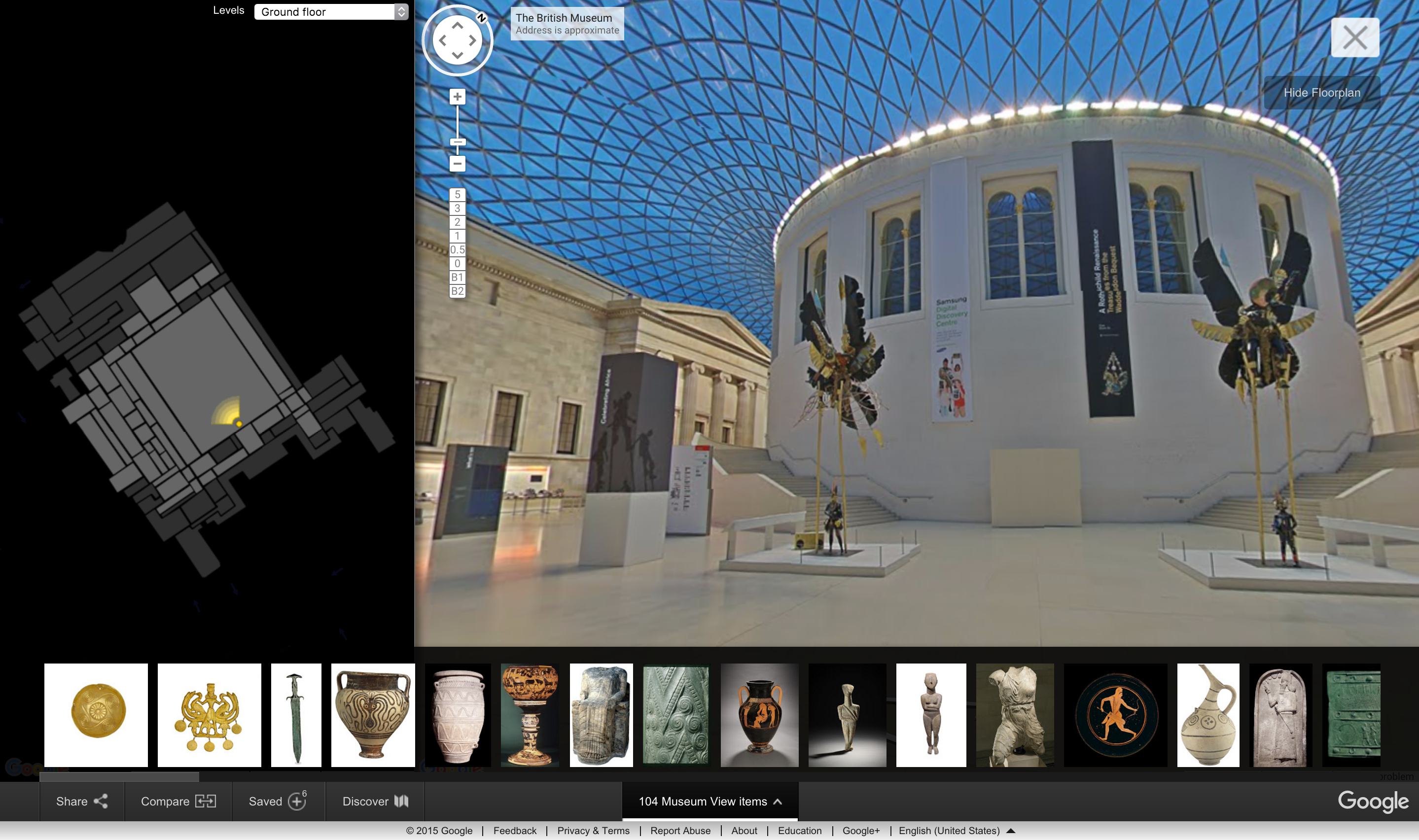
Explore 4,500 British Museum artifacts with Google's help


The British Museum in London holds an array of beautiful and historically significant artifacts including the Rosetta Stone, which helped historians to understand the ancient hieroglyphics used in Egypt. Today, the organisation is teaming up with Google to bring its various collections online as part of the Google Cultural Institute. The search giant has been developing this resource for years by continually visiting and archiving exhibits around the world. With the British Museum, an extra 4,500 objects and artworks are being added to its collection, complete with detailed photos and descriptions.
The most important addition is arguably the Admonitions Scroll, a Chinese text which dates back to the 6th-century. The piece is incredibly fragile, so it's only visible in the museum for a few months each year. Through the Cultural Institute, you can take a peek whenever you like -- and because it's been captured at "gigapixel" resolution you can zoom in to see some extraordinary details. All of the objects are searchable on Google's site, along with a couple of curated collections about ancient Egypt and Celtic life in the British Iron Age.
Read the rest of this article...