Sunday, August 02, 2015

HMS Victory: The mystery of Britain's worst naval disaster is finally solved - 271 years later


One of Britain’s greatest maritime mysteries has finally been solved.

More than two and a half centuries on, archaeologists have now worked out what caused one of the Royal Navy’s worst disasters – the sinking of the mid 18th century British fleet’s flagship, the Victory. The vessel sank in the English Channel in early October 1744 some 50 miles south-east of Plymouth – and all 1,100 men on-board perished.

It was the greatest single naval disaster ever sustained by Britain in the English Channel.

Read the rest of this article...

New research on the causes of the Viking Age


The Viking hit-and-run raids on monastic communities such as Lindisfarne and Iona were the most infamous result of burgeoning Scandinavian maritime prowess in the closing years of the Eighth Century. 


The Vale of York Cup - a Christian vessel from northern mainland Europe that was  probably held by Scandinavians for some time after its capture, before finishing  its life as the receptacle for a large silver hoard buried in Yorkshire  [Credit : York Museums Trust] 

These skirmishes led to more expansive military campaigns, settlement, and ultimately conquest of large swathes of the British Isles. But Dr Steve Ashby, of the Department of Archaeology at the University of York, wanted to explore the social justifications for this spike in aggressive activity. 

Previous research has considered environmental, demographic, technological and political drivers, as well as the palpable lure of silver and slave and why these forms of wealth became important at this stage. 

Read the rest of this article...

Friday, July 31, 2015

Roman temple dig under way at Keynsham cemetery


Fresh excavation work has begun at Keynsham cemetery, near Bristol, on the site of a possible Roman temple. 


During the early 1920s elaborate mosaic floors like this were found  by workmen cutting new graves [Credit: Freta Turland] 

In 1877 substantial remains of a large Roman building were uncovered by workers building mortuary chapels. 

Archaeologists have spent two years conducting geophysical surveys in part of the old Victorian burial ground. 

They believe they have located part of a religious healing sanctuary which could be connected to the recently identified Roman town of Trajectus. 

Read the rest of this article...

First glimpse inside the Siberian cave that holds the key to man's origins

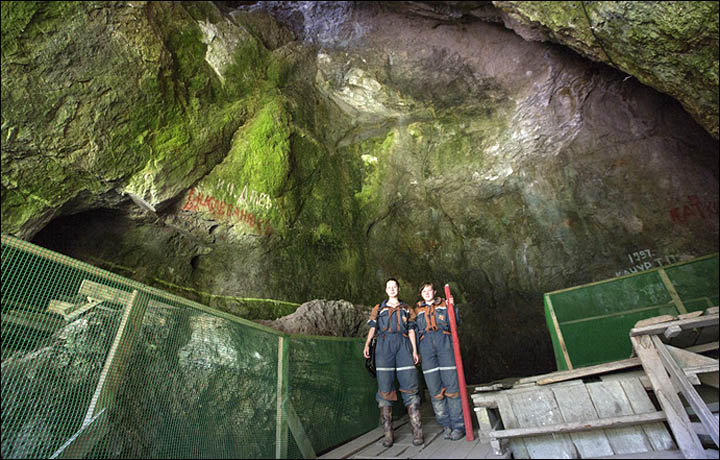
The significance of the cave is immense, and the experts are convinced it has more secrets to give up on human origins. Picture: Vera Salnitskaya

These exclusive pictures show the world famous Denisova Cave in the Altai Mountains from which a series of stunning scientific discoveries on man's origins have been made in recent years.
More are expected as a result of a hive of archeological activity - overseen by the specialists from Novosibirsk State University -  underway at this unique site inhabited continuously from the deep past.
Scientist Maksim Kozlikin said: 'We are working with Oxford University in the UK, they help us with radiocarbon and other dating and also conduct studies of ancient DNA. Currently, we continue cooperation and there can be new joint scientific articles.' 
The significance of the cave is immense, and the experts are convinced it has more secrets to give up on human origins. Here in 2008 was discovered a finger bone fragment of 'X woman', a juvenile female who lived around 41,000 years ago, analysis of which indicated that she was genetically distinct from Neanderthals and modern humans.
This previously unknown and long extinct hominin species or subspecies was christened Denisovan after this cave. In 2010 analysis on an upper molar from a young adult, found in the cave ten years previously, was also from a Denisovan.
Read the rest of this article...

Earliest Pictish fort yet discovered was situated on sea stack


An inhospitable sea stack on the Aberdeenshire coast has been confirmed as the site of the earliest Pictish Fort and pre-dates the iconic Dunnottar Castle, carbon dating has revealed. The sea stack to the south of Stonehaven, known as Dunnicaer, was excavated by archaeologists from the University of Aberdeen in April.

With the help of experienced mountaineers they scaled the rocky outcrop, which measures at most 20 by 12 metres and is surrounded by sheer drops on all side.
Despite its small size, the team led by Dr Gordon Noble, believed it would yield important archaeological finds. Their initial surveys found evidence of ramparts, floors and a hearth and now samples found in the excavation trenches have been carbon dated.
This suggests the site dates from the 3rd or 4th century – making it the oldest Pictish fort ever discovered.
Read the rest of this article...

Fragments of new female figurine found at Hohle Fels


Archaeologists, Prof. Nicholas Conard and his team member Maria Malina, present the discovery of two fragments of a new female figurine in today's edition of the journal: Archäologische Ausgrabungen Baden-Württemberg. The figurine shows similarities with the well-known Venus from Hohle Fels that Prof. Conard published in 2009. 


Fragments of a female figurine from Hohle Fels in southwestern Germany  dating to the Aurignacian period roughly 40,000 years ago  [Credit: J. Lipták/University of Tübingen] 

The two pieces of carved mammoth ivory fit together to form a find with dimensions of 23 x 22 x 13 mm. The find does not appear to be part of a depiction of an animal or lionman, both frequent motifs from the caves of the Swabian Jura of southwestern Germany. 

Instead, the find shows strong affinities with the only other female figurine known from the region. The find will be exhibited as part of a small research exhibit at the Museum of Prehistory in Blaubeuren.

Read the rest of this article...

French student finds tooth dating back 560,000 years

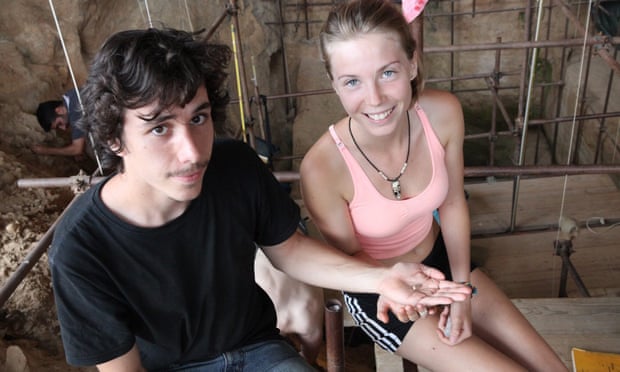
 Valentin Loescher, left, holding the tooth, and Camille Jacquey were working together on the dig. Photograph: Denis Dainat/EPA

A French student has found an adult tooth dating back around 560,000 years in south-western France, in what researchers are hailing as a major discovery.
Valentin Loescher, 20, was volunteering alongside Camille Jacquey, 16, on his first summer archaeological dig at the Arago cave near Tautavel, when he discovered the tooth.
The tooth could be the oldest human remains found in France. It predates by 100,000 years the famous Tautavel man, a 20-year-old prehistoric hunter and ancestor of Neanderthal man, who was discovered at the site in 1971 and whose remains dated back about 450,000 years.
Read the rest of this article...

Bulgarian Archaeologists Discover 11th Century Rakia Distillation Vessel

Fragment of a distillation vessel used for the production of rakia, which is dated back to the 11th century. Photo: National Historical Museum (NIM)

Bulgarian archaeologists recently discovered an 11th century fragment of a distillationvessel used for the production of the country's traditional fruit brandy, which is known as rakia.

The fragment was uncovered during the excavation works, which are being conducted by the National Historical Museum (NIM) at the medieval Lyutitsa fortress.

The fortress is situated on a hill above the town of Ivaylovgrad and the find was discovered by the team of archaeologist Filip Petrunov, press statement of NIM informs.

This is the second vessel for the distillation of rakia to be uncovered at the fortress and the third one in Bulgaria.

Read the rest of this article...

5,000-year-old fort found in Monmouth


Archaeologists in Monmouth have discovered the remains of an ancient wooden building that dates back 5,000 years. 


An artist impression of what the fort looked like nearly 5,000 years ago  [Credit: Monmouth Archaeological Society] 

Steve Clarke, who two years ago uncovered the remains of a huge post-glacial lake at the Parc Glyndwr building site, said the timber remains found under the new Rockfield estate were once part of a crannog, an ancient fortified dwelling built into a lake. 

Part of the wooden building set into the bed of what was once Monmouth’s prehistoric lake, pre-dates the only other known crannog in England and Wales by 2,000 years. 

Read the rest of this article...

Information Policy for (Digital) Information in Archaeology


Information Policy for (Digital) Information in Archaeology: current state and suggestions for development

The introduction of digital data capturing and management technologies has transformed information practices in archaeology. Digital documentation and digital infrastructures are integrated in archaeologists' daily work now more than ever. International and national institutions and projects have contributed to the development of digital archiving and curation practices. Because knowledge production in archaeology depends heavily on documentation and information dissemination, and on retrieval of past documentation, the question of how information is managed is profoundly intertwined with the possibilities for knowledge production. Regulations at different levels articulate demands and expectations from the emerging digital information practices, but how are these different regulations coordinated, and do they support archaeological knowledge production?

Read the rest of this article...

Tuesday, July 28, 2015

Archaeologists find ancient storage jar under Roman road


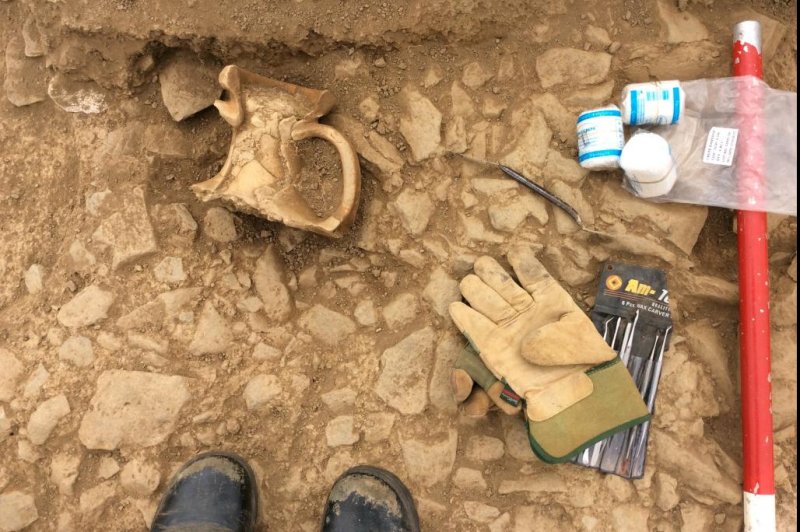
IPPLEPEN, England, July 27 (UPI) -- The excavation of an ancient Roman road that once ran through the British Isles has yielded a unique archeological find. Researchers with the University of Exeter has uncovered fragments of an ancient storage jar.
Archaeologists have been excavating the road, complete with potholes and wheel ruts, for nearly a year. Their work has offered new insight into how the communities of Roman Britain functioned.
The latest clue as to what life might have been like 2,000 years ago, near Ipplepen, England, is a pottery fragment -- a large piece of what's referred to as an amphora.
The storage jar was likely used to carry food stuffs across Europe, from Rome to "Britannia." Archaeologists say the jar likely carried olive oil or wine.
Read the rest of this article...

Mass medieval grave found at Aberdeen school


A mass grave with more than 20 medieval skeletons has been hailed a “major discovery”.

The remains, thought to date back to the 13th century, were discovered during installation works at a top private school in Scotland.

The bones were buried less than two feet underground in the quad area of the site and are now being examined by experts with a view to being reburied.

Robert Gordon University, in Aberdeen, ordered the boiler work - but the skeletons were discovered in the grounds of the neighbouring private school Robert Gordon College.

Contractors installing cables found the first skeleton near Schoolhill main library and called in Aberdeenshire Council archaeologists to carry out further excavations in the area.

Read the rest of this article...

Neolithic house discovery at Avebury stone circle dig


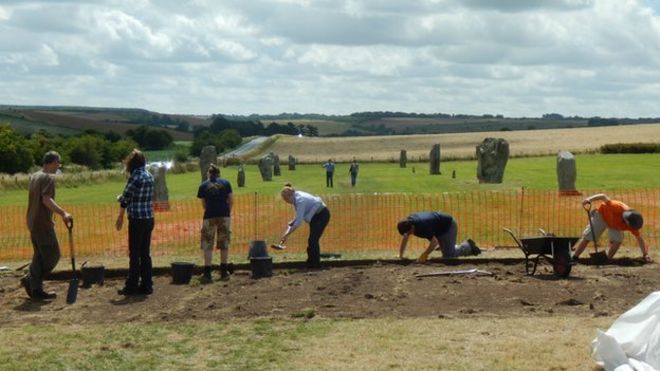
Archaeologists believe they may have found the remains of a house where people who built Avebury stone circle may have lived.
The three-week Between the Monuments project is researching the daily lives of Neolithic and Bronze Age residents at the Wiltshire site.
The dig is being led by The National Trust and Southampton and Leicester University archaeologists.
The National Trust said if it is a house they will have "hit the jackpot".
Spokesman Dr Nick Snashall said: "I could count the number of middle Neolithic houses that have been found on the fingers of one hand.

Read the rest of this article...

New research on the causes of the Viking Age


The Viking hit-and-run raids on monastic communities such as Lindisfarne and Iona were the most infamous result of burgeoning Scandinavian maritime prowess in the closing years of the Eighth Century.

These skirmishes led to more expansive military campaigns, settlement, and ultimately conquest of large swathes of the British Isles. But Dr Steve Ashby, of the Department of Archaeology at the University of York, wanted to explore the social justifications for this spike in aggressive activity.

Previous research has considered environmental, demographic, technological and political drivers, as well as the palpable lure of silver and slave and why these forms of wealth became important at this stage.

Read the rest of this article...

Sunday, July 26, 2015

Volcanoes linked to cultural upheaval since early Roman times


Large volcanic eruptions have cooled the global climate many times in the last 2,500 years and coincided with devastating famine across Europe, new research shows.

New research presents the most precise record yet of volcanic activity during the last 2,500 years.
In a study published this week in the journal Nature, an international team of scientists use ice-cores and tree-rings to show just how often and by how much volcanoes have cooled the climate of the northern hemisphere -- Finding links between large volcanic eruptions and societal upheaval as far back as the early Roman period.
Read the rest of this article...

Ancient carriage way discovered near Athens


A 300-metre section of an ancient carriage way dated to the 4th century BC was discovered by archaeologists at the Megalo Kavouri beach in the southern suburb of Vouliagmeni, the ministry of Culture announced on Monday. 


Section of the ancient carriage road discovered in Vouliagmeni 
[Credit: Greek Ministry of Culture] 

The road, paved with small stones placed close to one another, varies in width from 1.90 metres to 6.10 metres. It is delineated by retaining walls on either side that also serve to keep the pavement stable, as the earth underneath is soft and sandy.

Read the rest of this article...

Bronze Age skeleton unearthed in Wiltshire


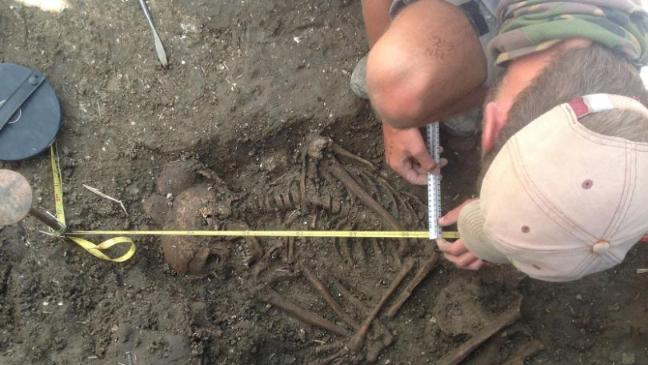
A 4,000-year-old Bronze Age skeleton, believed to be that of an adolescent child, has been unearthed by archaeologists.
The rare discovery was made by a team from the University of Reading, who are excavating Wilsford henge in the Vale of Pewsey, Wiltshire.
It is believed the skeleton will help shed light on the lives of those who lived and worshipped at nearby Stonehenge.
The body, around 1.5m in length, was found in a foetal position and was wearing an amber necklace. Efforts will now be made to determine the age and gender of the child and where they were from after the find was made on Tuesday.
The Vale of Pewsey, situated between Stonehenge and Avebury, is the subject of a three-year dig but over the last six weeks, archaeologists have focused on Marden henge and Wilsford henge.
Read the rest of this article...

Fortress older than the pyramids is uncovered in Monmouth


Archaeologists have unearthed a wooden island old enough to have been built by the Flintstones under a modern Barratt estate.
The fortified farmhouse on stilts in the middle of an ice age lake is so old it could have even been built before Stonehenge was created.
At 4,900 years old it's probably even older than the Pyramids and was probably built to provide a natural moat to protect the rich inhabitants from attackers in an area that is now on the Welsh borders.
It was around the time early man started to live communally and archaeologist Steve Clarke says it is only the second "crannog" to be found in England and Wales and much older than the first.
Read the rest of this article...

Irish motorway dig reveals finds dating back to 3500BC


A ‘mound’ used as a gathering point for rituals dating back to 3500 BC, evidence of medieval treasure-hunting and remains of Famine cottages are among the ancient finds along the M17 motorway. 


The excavation at Kilskeagh, which found, where a gathering point dating  back to 3500C was uncovered [Credit: Connacht Tribune] 

The finds at 26 excavated sites on the 30km stretch from Rathmorrissy (near Athenry) to Tuam have been recorded in a book entitled ‘Through the Lands of the Auteri and St Jarlath’, which will be launched next week. 

The book takes its title from the Auteri tribe which controlled large tracts of land in the second century AD in what is now Athenry, and 300 years later, where according to legend, St Jarlath founded Tuam.

Read the rest of this article...

Eine weitere Frauenstatuette aus dem Hohle Fels?


Ein neu entdecktes Elfenbeinfragment aus dem Hohle Fels in Baden-Württemberg gehört möglicherweise zu einer zweiten weiblichen Figurine. Der im letzten Jahr gemachte Fund aus der Altsteinzeit ist derzeit in einer Sonderpräsenation in Blaubeuren zu sehen.

Bei Ausgrabungen in der Höhle Hohle Fels auf der Schwäbischen Alb nahe Schelklingen hat das Team von Professor Nicholas Conard aus der Abteilung Urgeschichte und Quartärökologie der Universität Tübingen einen rätselhaften Fund gemacht: ein aus zwei Teilen zusammengesetztes Bruchstück aus Mammutelfenbein. Von Menschenhand bearbeitet, weist das Fragment deutliche, tief eingebrachte Rillen in musterhafter Anordnung auf.

Read the rest of this article...