Thursday, April 03, 2014

Pillage d’une nécropole antique à Prunay-Belleville


Depuis mi-février, les archéologues de l’Inrap interviennent à Prunay-Belleville, dans l’Aube, avant l’aménagement du gazoduc « Arc de Dierrey », réalisé sous la maîtrise d'ouvrage de GRT Gaz. Cette fouille, prescrite par l’État (Drac Champagne-Ardenne), vient de révéler trois ensembles funéraires majeurs : deux enclos de l’âge du Fer ainsi qu’un ensemble de sept sépultures antiques. Ces dernières, datées des IIe-IIIe siècles, très riche en mobilier funéraire, étaient particulièrement bien conservées. 
Mardi 4 mars, l’équipe de l’Inrap a constaté le pillage d’une partie des tombes gallo-romaines. Sur les lieux, la gendarmerie de Villenauxe-Grande a démarré une enquête. Une plainte a été déposée par l’Inrap.

Read the rest of this article...

Digging Up a Medieval Latrine: Photos


A number of Medieval latrines -- still filled with their original contents -- have been unearthed in Denmark, according to archaeologists working in one of the largest urban archaeological excavations in Danish history.

Read the rest of this article...

Copenhagen harbour founded on old rubbish


Based on the excavations by a team of archaeologists digging out Copenhagen’s first harbour area in Gammel Strand, the harbour was founded on a pile of rubbish.
The archaeologists have been excavating the area for the past two months and have found centuries-old rubbish stemming from Copenhagen in the 1600s. Similar finds were made in Christianshavn and Slotsholmen.
In the 1680s the city harbour needed expanding, and so small wooden land excavation crates were filled up with household and construction rubbish that helped expand the wharf by eight metres over the following century.
Read the rest of this article...

Study Finds Ancient Nomads Spread Earliest Domestic Grains Along Silk Road


This is a photo of the long-term settlement stratigraphy at the site of Tasbas. Mudbrick/clay oven (visible on right lower portion) contained earliest evidence for grain farming. Credit: Paula Doumani /Washington University in St. Louis (2011)


Findings push back earliest known East-West interaction along Silk Road by 2,000 years
Charred grains of barley, millet and wheat deposited nearly 5,000 years ago at campsites in the high plains of Kazakhstan show that nomadic sheepherders played a surprisingly important role in the early spread of domesticated crops throughout a mountainous east-west corridor along the historic Silk Road, suggests new research from Washington University in St. Louis.
“Our findings indicate that ancient nomadic pastoralists were key players in an east-west network that linked innovations and commodities between present-day China and southwest Asia,” said study co-author Michael Frachetti, PhD, an associate professor of archaeology in Arts & Sciences at Washington University and principal investigator on the research project.
Read the rest of this article...

Satellites and sensors to halt crumbling of Italy's Pompeii


ROME (Reuters) - The ruins of ancient Pompeii will be monitored by satellites and sensors under an agreement with Italian defense and technology group Finmeccanica to try to stop theUNESCO world heritage site from crumbling.

The state-controlled group will help train staff and donate its technology for free for three years in an investment worth up to 2 million euros ($2.75 million), after which the equipment will be left to the restoration project.

Regular collapses of walls and houses in the treasured Roman town that was covered by ash in a volcanic eruption in 79 AD have caused an international outcry and increased pressure for an end to delays dogging a 105-million-euro restoration project part-funded by the European Union and launched last year.


Read the rest of this article...

More on Neanderthals’ Genetic Legacy


SHANGHAI, CHINA—Neanderthals and modern humans are thought to have interbred at least once—probably in the Middle East—after modern humans left Africa. As a result, today’s Europeans and Asians carry a small amount of Neanderthal DNA. A new analysis of some of those Neanderthal gene variants, and an examination of brain tissues, suggests that today’s Europeans have three times as many Neanderthal genes involved in the breakdown of fats than Asians have. “This is the first time we have seen differences in lipid concentrations between populations. How our brains are built differently of lipids might be due to Neanderthal DNA,” evolutionary biologist Philipp Khaitovich of the CAS-MPG Partner Institute and the Max Planck Institute for Evolutionary Anthropology toldScience Now. Khaitovich thinks the fatty acid genes may have helped Neanderthals and Europeans adapt to living in the Northern Europe’s colder climates.

Read the rest of this article...

'Homo' is the only primate whose tooth size decreases as its brain size increases


Andalusian researchers, led by the University of Granada, have discovered a curious characteristic of the members of the human lineage, classed as the genus Homo: they are the only primates where, throughout their 2.5-million year history, the size of their teeth has decreased in tandem with the increase in their brain size.

The key to this phenomenon, which scientists call "evolutionary paradox," could be in how Homo's diet has evolved. Digestion starts first in the mouth and, so, teeth are essential in breaking food down into smaller pieces. Therefore, the normal scenario would be that, if the brain grows in size, and, hence, the body's metabolic needs, so should teeth.

Read the rest of this article...

Wednesday, April 02, 2014

PHOENICIAN COLONY IN SOUTHEAST SPAIN RE-EXAMINED

Cabezo Pequeño del Estany. Image: University of Alicante

Researchers in Spain have applied new remote sensing and aerial imaging to the Phoenician colony of Cabezo Pequeño del Estany of Guardamar under the project “Cultural Transfers in the Ancient Mediterranean” to begin a new round of archaeological works on the site.
The settlement was first discovered by chance in the late 1980s when it was partially destroyed by an illegal cement quarry and subsequently excavated in several seasons of rescue archaeology under the direction of Antonio García Menárguez, director of the Archaeological Museum of Guardamar.
Read the rest of this article...
Saudi royal family could pay for restoration of Roman monuments


Deal brokered by mayor of Rome could see Saudi Arabia provide millions of euros to restore neglected sites in exchange for loans of priceless artworks

The government in Riyadh have shown a particular interest in in the Emperor Augustus's mausoleum, a giant, circular structure located near the Tiber River Photo: Alamy

A training barracks used by Roman gladiators and the 2,000-year-old mausoleum of the Emperor Augustus could be restored with money from the Saudi royal family, in the latest effort by Italy to secure funding for its crumbling cultural heritage.
In a deal brokered by Ignazio Marino, the mayor of Rome, the Saudi royals are to provide millions of euros to pay for the restoration of some of the capital's neglected monuments.
The government in Riyadh has been presented with a dossier of nine historic sites to choose from, with greatest interest said to be in the Emperor Augustus's mausoleum, a giant, circular structure near the Tiber River that has been virtually abandoned for decades.
Read the rest of this article...

Monday, March 31, 2014

Teeth help scientists unearth secrets of Black Death


You can learn a lot from a tooth.
Molars taken from skeletons unearthed by work on a new London railway line are revealing secrets of the medieval Black Death — and of its victims.
This week, Don Walker, an osteologist with the Museum of London, outlined the biography of one man whose ancient bones were found by construction workers under London’s Charterhouse Square: He was breast-fed as a baby, moved to London from another part of England, had bad tooth decay in childhood, grew up to work as a labourer, and died in early adulthood from the bubonic plague that ravaged Europe in the 14th century.
The poor man’s life was nasty, brutish, and short, but his afterlife is long and illuminating.
Read the rest of this article...

Black Death skeletons unearthed by Crossrail project


The plague victims' bones reveal clues to their harsh lives in medieval London

Skeletons unearthed in London Crossrail excavations are Black Death victims from the great pandemic of the 14th Century, forensic tests indicate.

Their teeth contain DNA from the plague bacterium Yersinia pestis and their graves have been dated to 1348-50.

Records say thousands of Londoners perished and their corpses were dumped in a mass grave outside the City, but its exact location was a mystery.

Continue reading the main story

Archaeologists now believe it is under Charterhouse Square near the Barbican.

Read the rest of this article...

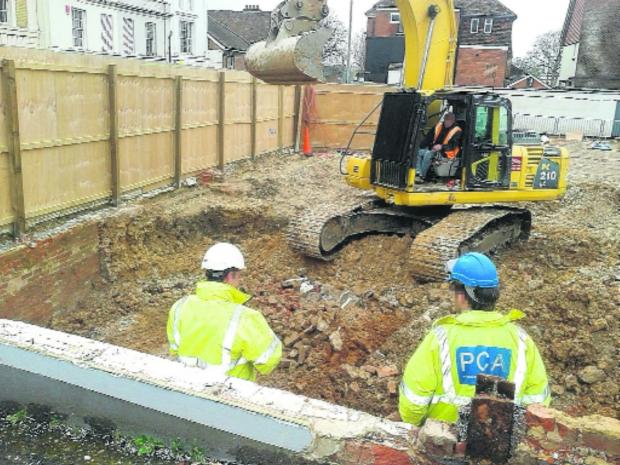
Developers destroy 2,000-year-old Winchester Roman wall

AFTER: The site after the wall was destroyed.

IT was a plan that sparked outrage.
But despite pleas to save a 2,000-year-old Roman wall from destruction, developers have gone ahead and carted the relic off in a lorry.
As previously reported, historians were angered when it emerged thatBargate Homes were considering breaking the wall down to make way for 14 homes at the site, in Southgate Street, Winchester.
But the proposal has now become a reality.
Colin Cook, of the Winchester Area Tourist Guides Association, witnessed the destruction.
He said: “It’s desperately sad. I have got sympathy with Bargate Homes but Winchester City Council planners need to be a lot more aware of the sensitivities of these sites when they’re giving permission. As far as I can see it’s gone away on a lorry. There is no possibility of rebuilding it anywhere else.”
Read the rest of this article...

3,000 year old cultivated fields unearthed in the Netherlands


Dr. Stijn Arnoldussen, an archaeologist at the University of Groningen, the Netherlands, has unearthed prehistoric cultivated field sites constructed more than 3,100 years ago that were subsequently used for centuries. 


[Credit: Stijn Arnoldussen, University of Groningen, the Netherlands] 

Dr. Arnoldussen’s research focuses on long-term development of cultural landscapes from the Late Neolithic onwards, with specific attention for the interplay of funerary and settlement domains within the wider cultural landscape, and additionally on Bronze Age settlements as foci for patterned deposition and the nature and dynamics of the Celtic field system of the later Bronze Age and Iron Age. Side-projects include pottery analysis (from the Neolithic up to the Roman Period), analyses of Bronze artefacts, computer applications in fieldwork and editorial work for the Journal for Archaeology in the Low Countries. 

Read the rest of this article...

Roman Emperor Dressed As Egyptian Pharaoh in Newfound Carving

A newfound stone carving reveals Roman Emperor Claudius dressed as an Egyptian pharaoh while wearing an elaborate crown. The hieroglyphs say Claudius is raising the pole of the cult chapel of Egyptian fertility god Min and suggests a ritual like this took place around the summertime.
Credit: Photo by Marleen De Meyer, line drawing by Troy Sagrillo.

An ancient stone carving on the walls of an Egyptian temple depicts the Roman emperor Claudius dressed as an Egyptian pharaoh, wearing an elaborate crown, a team of researchers has discovered.

In the carving, Emperor Claudius, who reigned from A.D. 41 to 54, is shown erecting a giant pole with a lunar crescent at the top. Eight men, each wearing two feathers, are shown climbing the supporting poles, with their legs dangling in midair.

Read the rest of this article...

Centuries-old grills of ancient BBQ lovers found in western Turkey

Among the findings are earth and kiln barbecues, their tools and cookers. AA photo

Pieces of grills, which date back to 2,200 years ago, have been unearthed in the ancient city of Assos in the northwestern province of Çanakkale’s Ayvacık district. The barbecues are made of earth and kiln. 

The head of the excavations in the ancient city, Çanakkale Onsekiz Mart University member Professor Nurettin Aslan said they had found important clues that locals in the area did not fry fish and meat, but grilled them in barbecues, cooking them in a healthier way. Among the findings are earth and kiln barbecues, their tools and cookers, Aslan said, adding, “These are small portable cookers. We see that some of them have the ‘bearded Hermes’ figure.”


Read the rest of this article...

Researchers suggest Vikings used crystals with sun compass to steer at night

Credit: Soren Thirslund

(Phys.org) —A team of researchers working in Hungary has proposed that a sun compass artifact found in a convent in 1948 might have been used in conjunction with crystals to allow Vikings to guide their boats even at night. In their paper published inProceedings of the Royal Society A: Mathematical, Physical & Engineering Sciences, the team describes theories they've developed that might explain how Viking sailors were able to so accurately sail to places such as Greenland.
Since the discovery of the sun compass fragment,  have theorized that Viking sailors used them to plot their course—at least when the sun was shining. They didn't have magnetic compasses, however, which suggest they must have had some other means for steering in the evening or the later hours. In this latest effort, the researchers describe a scenario where the Vikings might have used a type of crystal that they called a sunstone to help them use light from the sun below the horizon as a guide.
Read the rest of this article...
Hadrian’s Wall Trust to close within six months as funding evaporates


The trust set up to manage Hadrian’s Wall is to close in six months after funding dried up, leaving support for the World Heritage Site “uncertain”. 


Hadrian's Wall stretches 84 miles [Credit: Rex Features] 

Hadrian’s Wall Trust revealed it is to close this week, with a series of organisations scrabbling to put funding in place to ensure one of Britain’s most famous monuments can be adequately maintained in the long term.

 Linda Tuttiett, chief executive of the Trust, said: “We hope and pray resources can be found to keep the heritage site safe” after confirming that funding cuts had forced the trustees to close the seven-year-old organisation.

Read the rest of this article...

Forget GPS: Medieval Compass Guided Vikings After Sunset

The Uunartoq disc was discovered in an 11th century convent in Greenland in 1948. It is thought to have been used as a compass by the Vikings as they traversed the North Atlantic Ocean from Norway to Greenland.
Credit: Copyright Proceedings of the Royal Society A; Balazs Bernath; Alexandra Farkas; Denes Szaz; Miklos Blaho; Adam Egri; Andras Barta; Susanne Akesson; and Gabor Horvath

Often regarded as ruthless robbers, the Vikings were also impressive mariners capable of traversing the North Atlantic along a nearly straight line. Now, new interpretations of a medieval compass suggest the sea robbers may have skillfully used the sun to operate the compass even when the sun had set below the horizon.

The remains of the supposed compass — known as theUunartoq disc— were found in Greenland in 1948 in an 11th-century convent. Though some researchers originally argued it was simply a decorative object, other researchers have suggested the disc was an important navigational tool that theVikings would have used in their roughly 1,600-mile-long (2,500 kilometers) trek from Norway to Greenland.

Read the rest of this article...

Beachy Head Lady was young sub-Saharan Roman with good teeth, say archaeologists


Was this Sussex’s first sub-Saharan resident? Heritage Officer Jo Seaman reveals the quest for the Beachy Head Lady in Eastbourne

The figure known as Beachy Head Lady has gone on show to the public in Eastbourne
© Graham Huntley

“We had over 300 different individuals – most skeletons, but some cremations. The idea was to go back through all those. We had some information about some of them but others we had nothing on.

They were held in the basement of the town hall, where I keep my archaeology collection. They came primarily from two main Saxon cemeteries that were excavated – one in particular had over 200 graves.


Read the rest of this article...

Unearthing a Roman civilian's past at Maryport


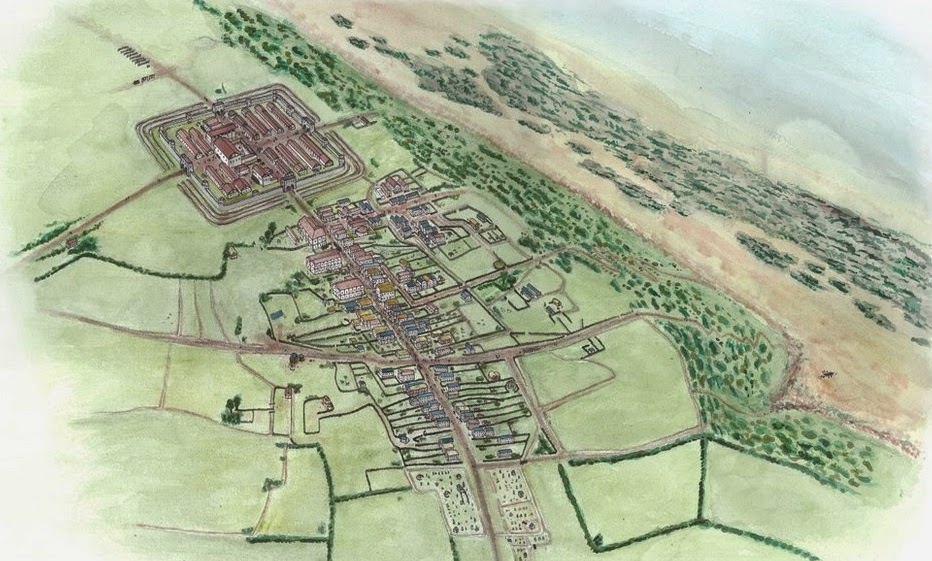
An archaeological team is unearthing the remains of a Roman fort and settlement in the hope of gaining a better understanding of everyday Roman civilian life. 


The settlement is believed to have been divided into a series of long plots which  extended along a 1,378ft (420m) length of Roman road leading to the  fort gate [Credit: Hadrian's Wall Trust] 

Oxford Archaeology (OA) and a team of volunteers are excavating an extramural settlement at Maryport Roman fort on the west coast of Cumbria. 

Built high on the cliffs overlooking Solway Firth, it is believed the fort was founded in the First Century AD when the Roman army initially entered the region.

Read the rest of this article...