Friday, April 28, 2023

Collectors guilty of illegal plot to sell historic Anglo-Saxon coins abroad


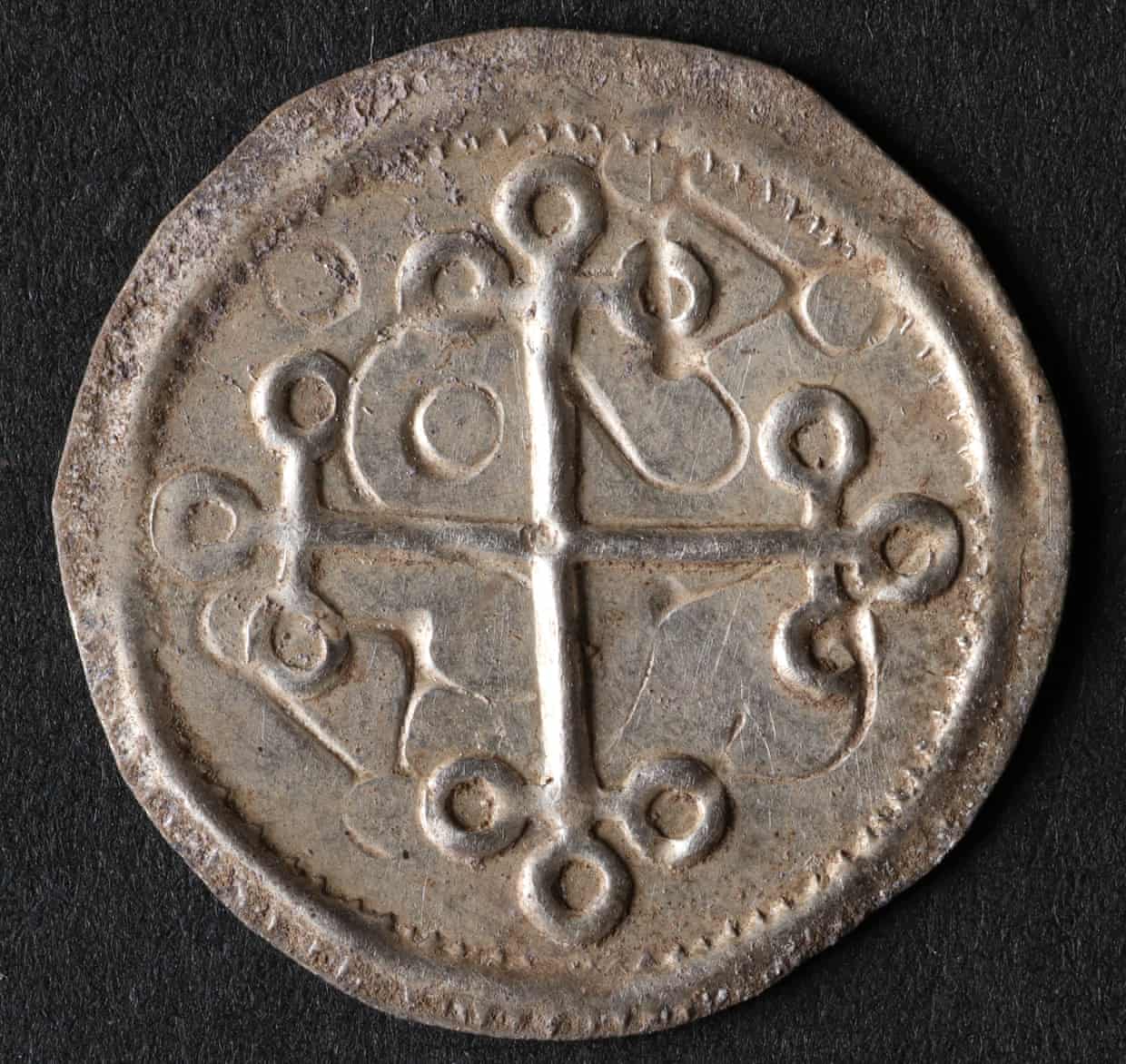
Two metal detectorists have been found guilty of hatching an illegal plot to sell Anglo-Saxon coins of “immense historical significance” abroad.

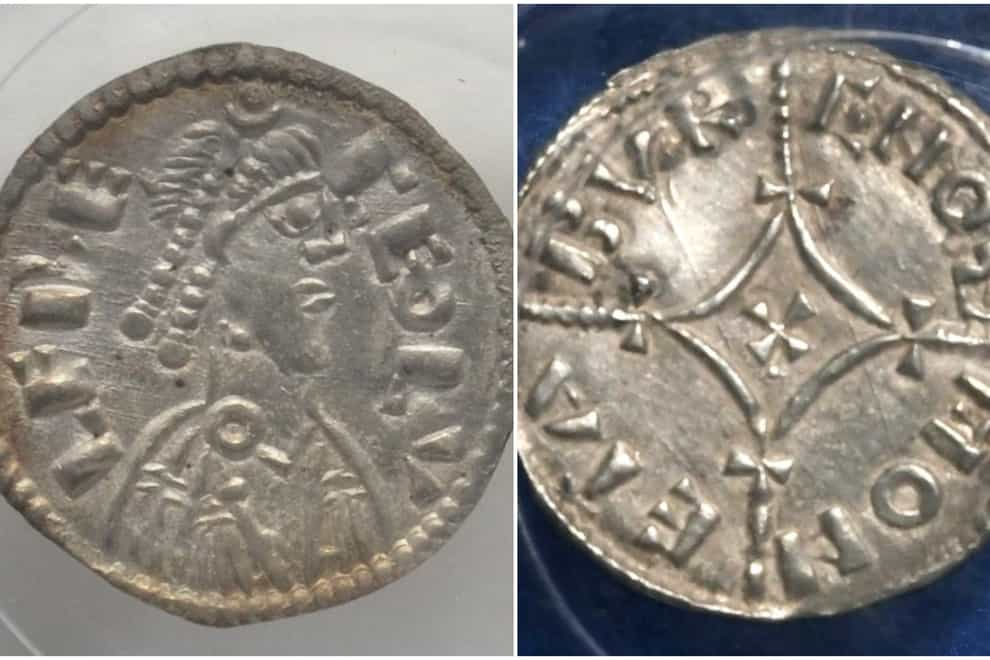
Craig Best, 46, and Roger Pilling, 75, were convicted of conspiring to sell criminal property worth £766,000, namely ninth century coins believed to have been buried by a Viking and which have never been declared as Treasure, and have not been handed to the Crown.

Following a trial at Durham Crown Court, the defendants were also convicted of separate charges of possessing the criminal property, which was thought to be part of a larger, undeclared find known as the Herefordshire Hoard.

Best, of South View, Bishop Auckland, was arrested with three coins at a Durham hotel in May 2019 in a police sting operation.

Read the rest of this article...

Burnt graves full of ancient Roman artifacts uncovered during construction in Belgium

Experts said they were surprised by their findings. Gemeente Zemst

What started as a pre-construction archaeological project in Belgium has evolved into a sprawling excavation uncovering a trove of Roman-era artifacts and ruins, government officials say. Ahead of refurbishing Sportpark Hubert Van Innis, archaeologists launched an investigation into the area given its location in Elewijt — which was under Roman rule thousands of years ago. Experts expected to find remains, but the extent of their discoveries was surprising, according to an April 25 news release from the Zemst government. First, as expected, archaeologists unearthed a building and well dating to the Middle Ages, according to officials. They also discovered several burial mounds.

Read the rest of this article...

Archaeologists Find Evidence of ‘Lost’ Ancient Roman Campaign in Arabia


The Romans tell that their conquest of the Nabateans was peaceful, but is that a tall tale of the victor? Or did they erase the memory of a fiasco in Arabia?

In the year 106, the Romans annexed the Nabatean kingdom and renamed it Arabia Petraea. The question is how exactly that was achieved.

Roman historians described this as a nonviolent process following the demise of the last Nabatean king, Rabbel II Soter. But now, in the barren desert of northern Arabia, archaeologists have detected what they believe were three Roman army camps. They're situated in a straight line between the Bayir oasis near the Nabatean capital of Petra and Dûmat al-Jandal in what is now northern Saudi Arabia.

Read the rest of this article...

Neanderthals Built Boats And Sailed 100,000 Years Ago – Long Before Modern Humans


Jan Bartek - AncientPages.com - Maritime history dates back thousands of years, och there is no doubt many ancient civilizations had excellent knowledge of navigation and sailing. Once ancient civilizations understood the value of trading, many maritime routes were established, and spices, gold, silk, and many other items were bought and sold. There is archaeological evidence magnificent ancient ships crossed the oceans, and curious explorers set foot on new lands

Still, modern humans were not the ones who invented the boat. According to a study, the first seafarers were the Neanderthals, who lived from about 400,000 to 40,000 years ago. On islands in the Mediterranean Sea, scientists have examined several artifacts and stone tools uniquely associated with the Neanderthals.

"Archaeological data from the southern Ionian Islands show human habitation since Middle Palaeolithic going back to 110 ka BP yet bathymetry, sea-level changes and the Late Quaternary geology, show that Kefallinia and Zakynthos were insular at that time. Hence, human presence in these islands indicates inter island-mainland seafaring. Seafaring most likely started some time between 110 and 35 ka BP and the seafarers were the Neanderthals. Seafaring was encouraged by the coastal configuration, which offered the right conditions for developing seafaring skills according to the “voyaging nurseries” and “autocatalysis” concepts," the research team writes in a paper published in the Journal of Archaeological Science.

Read the rest of this article...

Archaeologists Discover Ancient Necropolis Near Parisian Train Station

Researchers uncovered 50 burials dated to roughly the second century C.E.
© Camille Colonna / INRAP

Residents of Lutetia buried their dead at Saint-Jacques between the first and fourth centuries C.E.

Little is known about the Parisii, the ancient Gallic tribe that dwelled on the banks of the Seine some 2,000 years ago. At the time, the French capital that now bears the Parisii’s name was called Lutetia.

Last week, archaeologists unearthed 50 burials that may shed light on funerary traditions in the ancient city that preceded Paris. Discovered just a few feet away from a bustling train station, the graves are believed to be part of the largest known Lutetian burial site, the Saint-Jacques necropolis.

Dominique Garcia, president of the French National Institute for Preventive Archaeological Research (INRAP), tells Agence France-Presse (AFP) that the finds open “a window into the world of Paris during antiquity.”

Read the rest of this article...

Wednesday, April 26, 2023

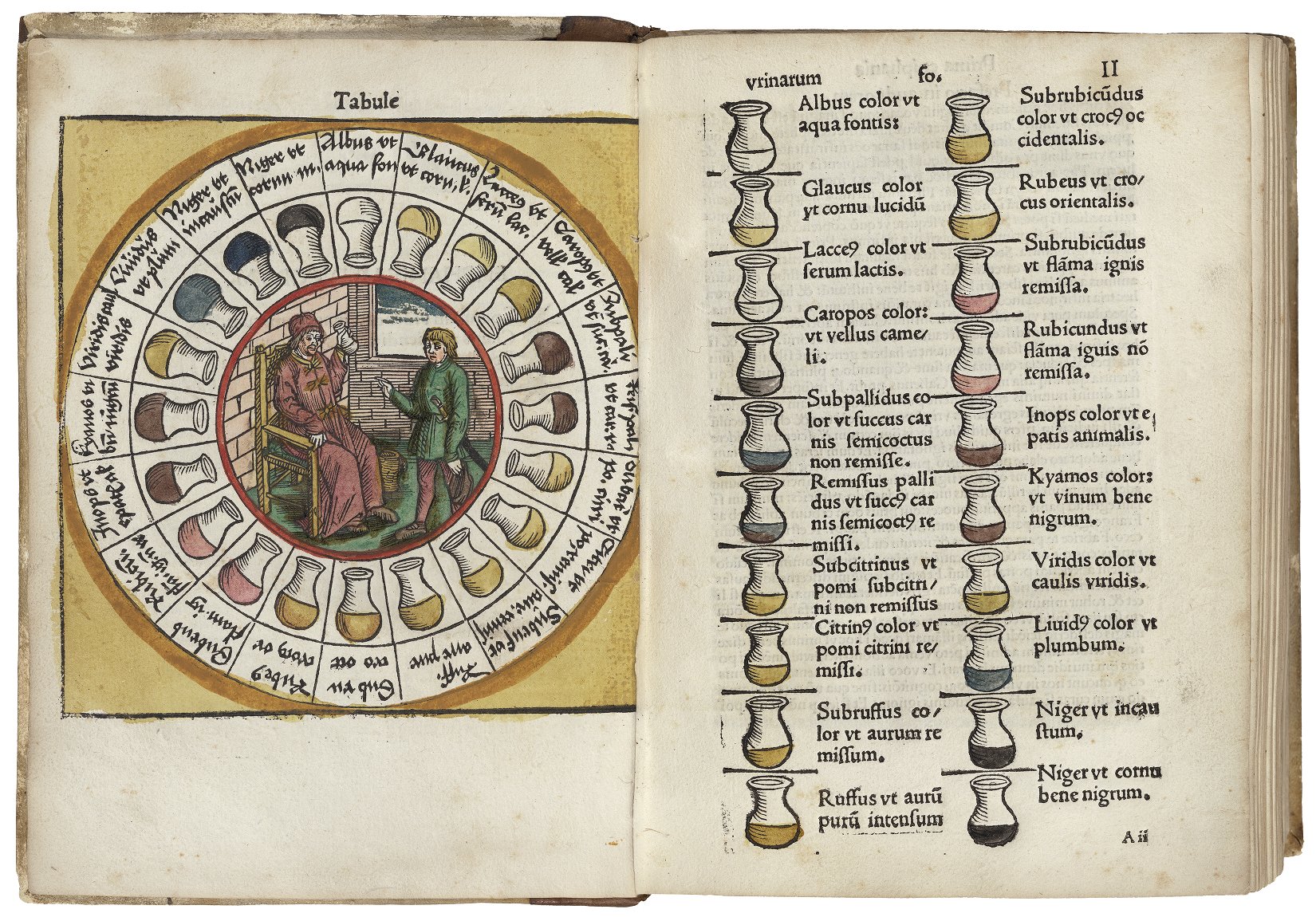
Urine Wheels in Medieval Manuscripts: Discover the Curious Diagnostic Tool Used by Medieval Doctors


If you went to the doctor in late medieval Europe hoping to get a health complaint checked out, you could be sure of one thing: you’d have to hand over a urine sample. Though it dates back at least as far as the fourth millennium BC, the practice of uroscopy, as it’s called, seems to have been regarded as a near-universal diagnostic tool by the thirteenth century. At Medievalists.net, you can read excerpts of the then-definitive text On Urines, written about that time by French royal physician Gilles de Corbeil.

When a skilled physician examines a patient’s urine, de Corbeil explains, “health or illness, strength or debility, deficiency, excess, or balance, are determined with certainty.” Urine “darkened by a black cloudiness, and muddied with sediment, if produced on a critical day of an illness, and accompanied by poor hearing and insomnia, portends a flux of blood from the nose”; depending on other factors, “the patient will die or recover.”

Read the rest of this article...

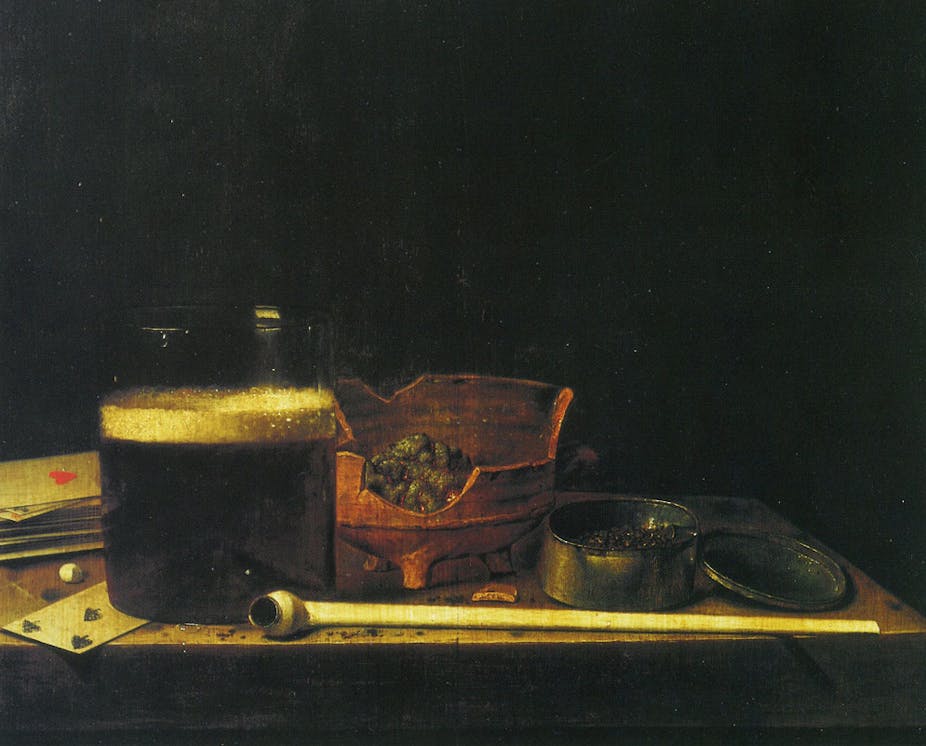
Researchers discover 18th century clay tobacco pipes were used as weapons and surgical tools

The ready availability of clay pipes meant that they were sometimes used for other activities other than smoking. Ashmolean Museum, CC BY-NC

Tobacco pipes were one of the first mass-produced, disposable objects in Britain. Through contact with indigenous peoples of the Americas, tobacco pipes and tobacco were introduced to Europe as early as the 16th century, but had been used in the Americas for centuries before this.

Pipes were adapted for European tastes using European materials, and in England the most popular material for pipes between 1600 and 1900 was clay. Shapes and styles varied over the years, but the basic design remained the same: a hand-held bowl to burn tobacco in and a stem to draw the smoke the mouth of the smoker.

Pipes were lightweight, rigid and made out of inexpensive materials. They were also rather breakable. This cheapness and breakability means they show up in large number across post-medieval archaeological sites in Britain.

The usefulness of pipes as artefacts is well established. Tobacco pipes found in archaeological digs can help researchers identify the dates when a particular site may have been occupied (based on bowl or stem size) and even who may have occupied these spaces (bite marks in stems may indicate workers holding them in their mouths while working, for example). Pipes can also inform researchers about patterns of tobacco consumption over time.

Read the rest of this article...

Archaeologists found a lost Roman fortlet in Scotland

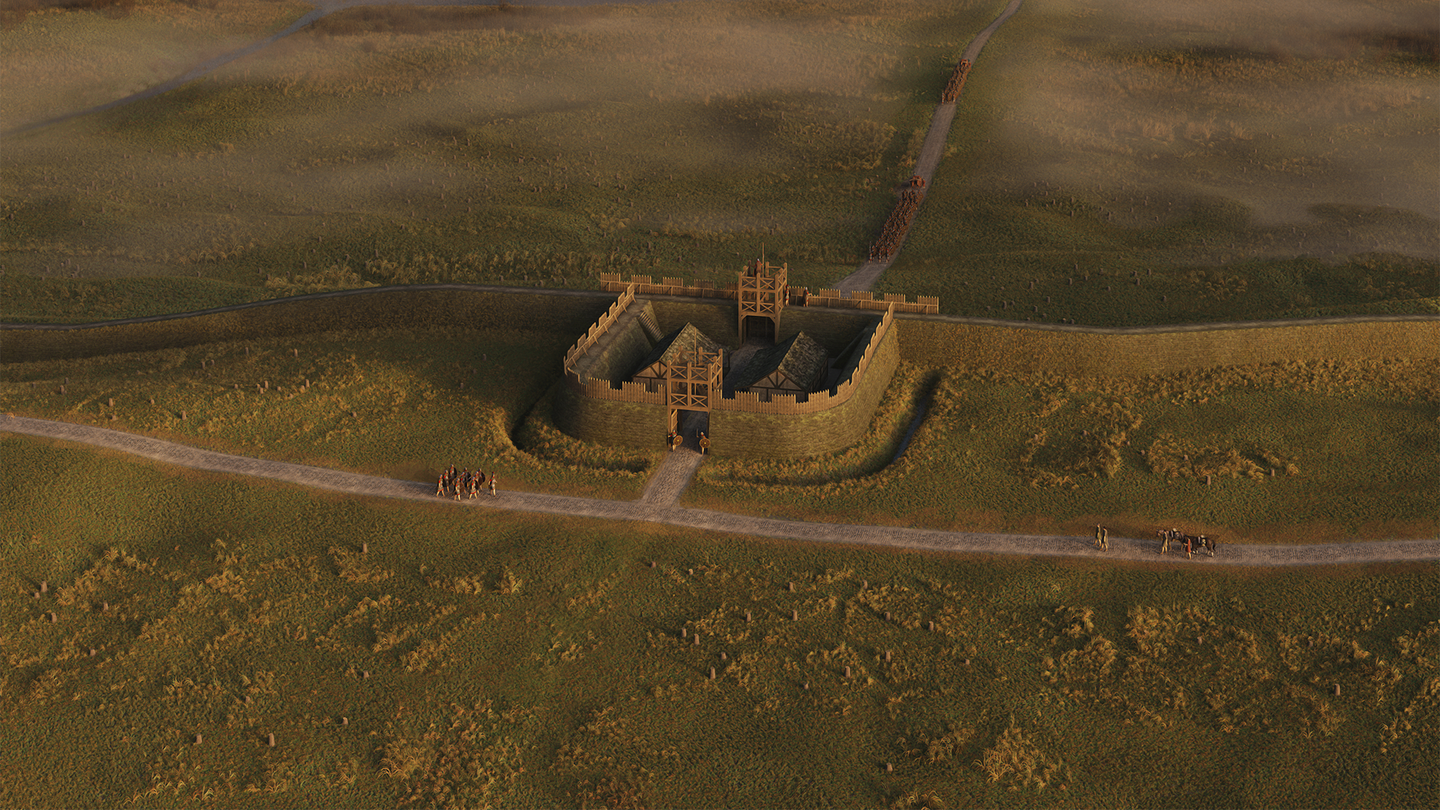
An artist's impression of Watling Lodge fortlet, which also once stood along the Antonine Wall, and would have been similar to the fortlet discovered near Carleith Farm. Historic Environment Scotland

Archaeologists in western Scotland have found the foundations of a Roman fortlet dating back to the Second Century CE. According to the government-run historic preservation commission Historic Environment Scotland, this fort was one of 41 defensive structures that was built near the Antonine Wall, one of Scotland’s six UNESCO World Heritage Sites.

This fortified wall made of mostly wood ran for roughly 40 miles across Scotland as part of the Roman Empire’s unsuccessful attempt to extend its control throughout Britain from roughly 410 to 43 CE. The Antonine Wall was defended as the northernmost frontier of the Roman Empire. Emperor Antoninus Pius ordered the building of the wall in 142 CE as a one-up to his predecessor Hadrian. The famed Hadrian’s Wall was built in the 120s CE about 100 miles south of the Antonine Wall.

The Romans called the people living in Scotland “Caledonians”, and later named them  the Picts after a Latin word meaning “painted people,” in reference to their body paintings or tattoos. The Romans retreated to the Hadrian Wall in 162 CE after 20 years of trying to hold a new northern line at the Antonine Wall.

Read the rest of this article...

Monday, April 24, 2023

Vikings in Greenland Imported Wood From Europe – and Canada

Christian Krohg's painting of Viking explorer Leif Erikson discovering America.
Credit: National Gallery of Norway

The Vikings built homes and ships from wood, but Greenland has no forests to speak of. Now a new analysis sheds light on how they survived for centuries on the frigid island

Greenland is on many minds because its glaciers are melting faster than expected, and are ultimately expected to raise global sea level by over 7 meters (23 feet). But though warming, the Arctic tundra was and remains inhospitable. That explains why early migrants to the island died out, leaving no descendants. Over thousands of years, one culture succeeded another.

Among the cultures that came and ultimately died or beat a retreat were Vikings, though their communities did manage to persist for centuries. The question is exactly how they did so.

Read the rest of this article...

Luck of the Vikings: Their Arrival Reversed Ireland's Decline, Say Archaeologists


Study debunks notion that Ireland had been populous when the Nordic migrants arrived in the 10th century: The island had been in decline for 200 years by then

Medieval Ireland's population had been shrinking for 300 years by the time the Vikings arrived in the 10th century C.E., a new study published in the Journal of Archaeological Science contends. The conclusion contradicts the widespread assumption that the island had been in a state of growing expansion and progression ahead of the Vikings' arrival.

The research, led by Rowan McLaughlin at Queen’s University Belfast, began from census records, genetic analyses of the Irish and the historic record – including the Norse settlement of the island in the 9th and 10th centuries C.E. It sought archaeological data to back the findings. To this day, as previous studies have found, the Irish have a small component of Viking ancestry.

Read the rest of this article...

Roman burial site discovered on Nuneaton land set for giant new housing estate

Before and after - the land at Top Farm, left, and the masterplan for its future use - including 1,700 homes. Now works are to be undertaken to investigate areas of archaeological interest

Roman archaeology has been discovered on Nuneaton land where a giant new housing estate is set to be built. Planning permission was given the go-ahead last year for the 1,700 home development with secondary school and leisure centre land on Top Farm.

It is already known that there is an animal foot and mouth burial pit on the sprawling site and a report has also revealed that a probable Roman cremation burial area was unearthed on the site. This was during an archaeological survey undertaken last year.

Further investigation work is now set to take place. It will be ahead of the first phase of the works starting on the site, which are pencilled in to start in late summer this year.

Read the rest of this article...

1,600-year-old temple to mysterious Roman god unearthed in Germany. Take a look

Lord Mayor Wolfram Leibe and Minister of the Interior Michael Ebling
at the excavations in Trier.

Torch lights flicker in the underground space, illuminating the stone statues and casting shadows on the gathering. Military men sit on brick benches and look at the stone carving. Looking back at them through the lantern light is their god — a figure simultaneously well-known and mysterious.

The cult scene feels part ominous, part reverent and entirely like part of a Netflix documentary. In reality, these shadowy gatherings took place across the ancient Roman world.

Archaeologists in Trier, Germany, recently uncovered a 1,600-year-old temple where this Roman cult gathered, according to an April 12 news release from the General Directorate for Cultural Heritage in Rhineland-Palatinate.

Read the rest of this article...

Sunday, April 23, 2023

Hoard of 1,000-year-old Viking coins unearthed in Denmark

The silver coins were found about 5 miles from the Fyrkat Viking ringfort, near the town of Hobro. Photograph: North Jutland Museum
Archaeology
Hoard of 1,000-year-old Viking coins unearthed in Denmark
Artefacts believed to date back to 980s found by girl metal-detecting in cornfield last autumn

Nearly 300 silver coins believed to be more than 1,000 years old have been discovered near a Viking fortress site in north-west Denmark, a museum has said.

The trove – lying in two spots not far apart – was unearthed by a girl who was metal-detecting in a cornfield last autumn.

“A hoard like this is very rare,” Lars Christian Norbach, the director of the North Jutland Museum, where the artefacts will go on display, told Agence France-Presse.

The silver coins were found about 5 miles (8km) from the Fyrkat Viking ringfort, near the town of Hobro. From their inscriptions, they are believed to date back to the 980s.

The trove includes Danish, Arab and Germanic coins as well as pieces of jewellery originating from Scotland or Ireland, according to archaeologists. Norbach said the finds were from the same period as the fort, built by King Harald Bluetooth, and would offer a greater insight into the history of the Vikings.

Read the rest of this article...

Who Were the Neanderthals & Why Are They Important to Modern Humans?


Since their discovery in 1856, the Neanderthals have been stereotyped as brutish characters, devoid of the complexities that make modern humans so dynamic and successful. Over the past few decades, research has completely upturned this notion.

Contrary to popular belief, they were a complex and intelligent species that made use of intricate tools and were capable of a wide range of activities that required mental powers of deduction and reasoning that until recently were thought only to reside in our own species.

To the average person, the Neanderthals that lived and died so long ago are not important enough to warrant any meaningful thought. But their relevance today is far more salient than people would expect.

Read the rest of this article...

Roman Temple Uncovered in Northwestern France

(© Emmanuelle Collado, Inrap)

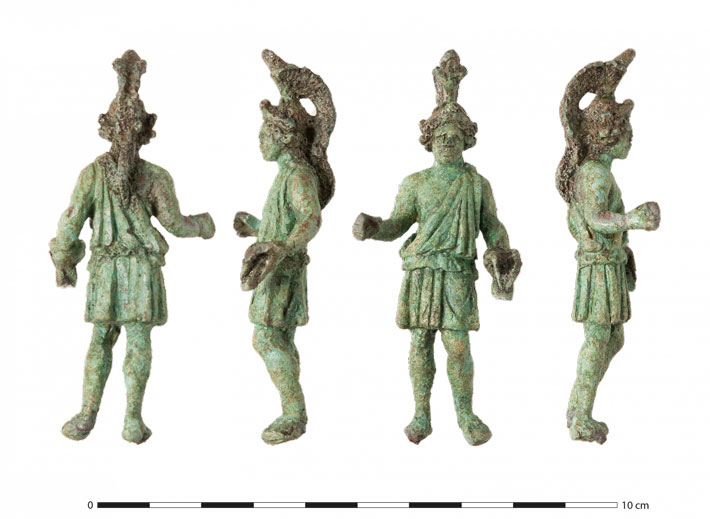
BRITTANY, FRANCE—Live Science reports that a structure thought to have been a temple dedicated to Mars, the Roman war god, has been uncovered in northwestern France at the site of La Chapelle-des-Fougeretz. Françoise Labaune-Jean of France’s National Institute of Preventive Archaeological Research (INRAP) said that the large sanctuary with a view of the Roman city of Condate was probably an important one. It is thought to have been established shortly after the region was conquered by Julius Caesar in 56 B.C., and occupied into the fifth century A.D. and the collapse of the western Roman Empire. Although no inscriptions have been found to date, a bronze statuette of Mars has been found at the site, in addition to iron weapons that had been deposited in a ditch around the sanctuary. Terracotta figurines that may represent Venus and mother goddesses were also recovered from a nearby pit. To read about another Roman city in France, go to "Gaul's University Town."

Read the rest of this article...

Huge Viking Treasure Hoard Found At Fyrkat Ring Castle By Metal Detectorists


Aerial view of the Fyrkat Viking ring castle ruins. Credit: Adobe Stock - Cavan

A group of metal detectorists examining a field near the Viking castle Fyrkat have discovered two remarkable treasures. The two Viking treasures were buried a few meters apart, and both contained many small silver coins and cut-up silver jewelry, which probably served as a means of payment by weight. Altogether, the two treasures include up to 300 pieces of silver, of which approximately 50 are whole coins.

Fyrkat is a former Viking ring castle in Denmark, dating from c. 980 AD.  About 1,000 years ago, legendary King Harald Bluetooth built several impressive Viking fortresses.

Finding Viking treasures in Denmark is not unusual, but finding two so close to Fyrkat is amazing. The metal detectors who are members of Nordjysk Detektorforening were lucky because due to modern ploughing, harrowing, and sowing, the hoards have been disturbed and spread over a larger area.

Read the rest of this article...

Wednesday, April 19, 2023

Evidence Norse Greenlanders Imported Timber From North America


he native trees of Greenland are unsuitable for larger construction projects or shipbuilding. Instead, the Norse colonists (AD 985–1450) relied on driftwood and imported timber. 

To study timber origins and distribution on Greenland, Lísabet Guðmundsdóttir from the University of Iceland examined the wood assemblages from five Norse sites in western Greenland, of which four were medium-sized farms and one a high-status episcopal manor.

All sites were occupied between AD 1000 and 1400 and dated by radiocarbon dating and associated artifact types.

A microscopic examination of the cellular structure of the wood previously found by archaeologists on these sites enabled the identification of tree genus or species.

The results show that just 0.27% of the wood examined were unambiguous imports, including oak, beech, hemlock, and Jack pine. Another 25% of the total wood studied could be either imported or driftwood, including larch, spruce, Scots pine and fir.

Because hemlock and Jack pine were not present in Northern Europe during the early second millennium AD, the pieces identified from the medieval contexts in Greenland must have come from North America.

Read the rest of this article...


Tuesday, April 18, 2023

Sea-level rise in Southwest Greenland as a contributor to Viking abandonment


Vikings occupied Greenland from 985 CE to the mid-15th century. Hypotheses regarding their disappearance include combinations of environmental change, social unrest, and economic disruption. Occupation coincided with a transition from the Medieval Warm Period to the Little Ice Age and Southern Greenland Ice Sheet advance. We demonstrate using geophysical modeling that this advance would have (counterintuitively) driven local sea-level rise of ~3 m (when combined with a long-term regional trend) and inundation of 204 km2. This largely overlooked process led to the abandonment of some sites and pervasive flooding. Progressive sea-level rise impacted the entire settlement and may have acted in tandem with social and environmental factors to drive Viking abandonment of Greenland.

Read the rest of this article...

Rising Sea Level Caused Vikings To Abandon Greenland – New Study


Vikings occupied Greenland from roughly 985 to 1450, farming and building communities before abandoning their settlements and mysteriously vanishing. Why they disappeared has long been a puzzle, but a new paper from the Harvard University Department of Earth and Planetary Sciences (EPS) determines that one factor—rising sea level—likely played a major role.

"There are many theories as to what exactly happened," to drive the Vikings from their settlements in Greenland, said Marisa J. Borreggine, lead author of the "Sea-Level Rise in Southwest Greenland as a Contributor to Viking Abandonment," which published this week [April 17] in Proceedings of the National Academy of Sciences (PNAS).

"There's been a shift in the narrative away from the idea that the Vikings completely failed to adapt to the environment and toward arguments that they were faced with a myriad of challenges, ranging from social unrest, economic turmoil, political issues, and environmental change," said Borreggine, a doctoral candidate in the Harvard Griffin GSAS in EPS.

"The changing landscape would've proven to be yet another factor that challenged the Viking way of life. Alongside these other challenges," said Borreggine, who works in the Mitrovica Group led by Frank B. Baird, Jr. Professor of Science Jerry X. Mitrovica. This likely led "to a tipping point before they abandoned the settlement."

Read the rest of this article...


Vikings left Greenland after growing ice sheet caused sea level rise

The settlement of Qassiarsuk in Greenland was once probably the site of Brattahlid, the home of Viking Leif Erikson, whose statue watches over the area
Cindy Hopkins/Alamy

The sea level around Greenland rose more than 3.3 metres from AD 1000 to 1450, contributing to the woes of Viking settlers and to their eventual abandonment of the island, researchers have found.

In AD 985, Erik the Red established a colony in Greenland after being exiled from Iceland. At the time, the North Atlantic region was unusually warm – the so-called medieval warm period – but after a massive volcanic eruption in Indonesia in 1257, conditions became much colder for several centuries, a period known as the little ice age.

That led to the expansion of the Greenland ice sheet, say Marisa Borreggine at Harvard University and their colleagues, causing the land adjacent to the ice sheet to subside because of the increased weight. The bigger ice sheet also had a greater mass and so exerted a stronger gravitational pull on the waters around Greenland. These two factors had roughly equal effects on sea level there.

Read the rest of this article...