Monday, October 24, 2022

500,000-Year-Old Tools In Polish Cave May Have Belonged To Extinct Hominid Species

Flint artifacts from the Tunel Wielki cave, made half a million years ago possibly by Homo heildelbergensis. Image credit: M. Kot

The findings suggest humans crossed into central Europe earlier than previously thought.

Stone tools created half a million years in what is now Poland were probably the work of an extinct hominid species called Homo heidelbergensis, thought to be the last common ancestor of Neanderthals and modern humans. Previously, researchers were unsure if humans had made it to central Europe by this point in history, so the new discovery may shed new light on the chronology of our expansion across the region.

“Peopling of Central Europe by Middle Pleistocene hominids is highly debatable, mainly due to the relatively harsh climatic and environmental conditions that require cultural and anatomical adjustments,” explain the authors of a new study on the artifacts. In particular, they note that evidence of human occupation north of the Carpathian Mountains during this period is extremely scarce, primarily thanks to the difficulty that ancient hominids would have faced when attempting to cross the range.

Read the rest of this article...

Ancient DNA reveals the social lives of the oldest known family group


Neanderthal is an insult still lobbed about to suggest someone is dim-witted and out of touch.

The more we learn about our Stone Age cousins, however, the more it appears the opposite is true. Neanderthals weren’t brutish cave dwellers — they made sophisticated tools, yarn and art, and they buried their dead with care.

A new discovery in a Siberian cave this week reveals an intimate portrait of Neanderthal family life and shows it may be time for Homo sapiens to ditch that superiority complex once and for all.

Scientists have uncovered the oldest known family group, using ancient DNA from Neanderthals who lived in Chagyrskaya Cave in southern Siberia in Russia.

Read the rest of this article...

East Walton silver pin find sheds light on end of Roman rule

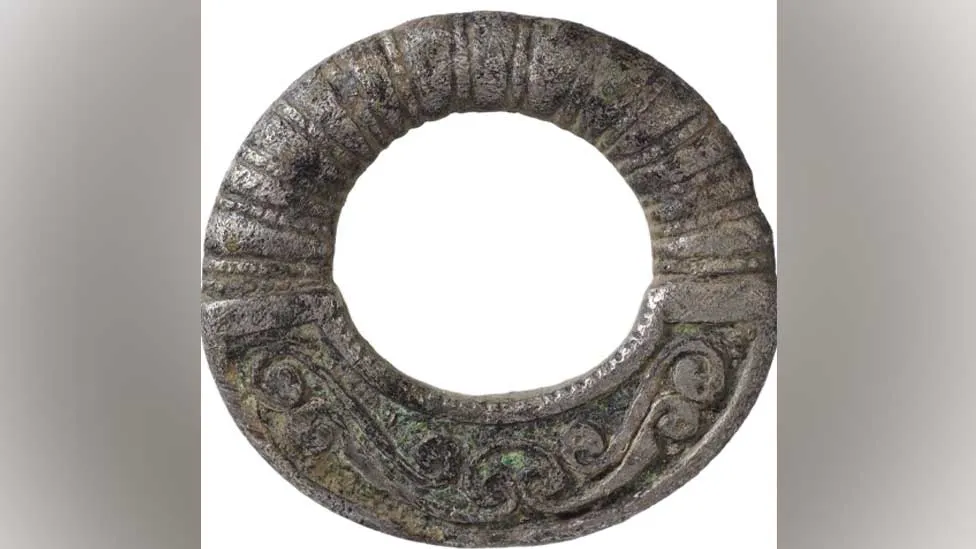
The pin has the remains of an enamel inlay

The discovery of a late Roman-era pin sheds light on a time when "certainties that held for centuries were beginning to shake up", a historian said.

The silver pin was found by a metal detectorist, near East Walton, Norfolk.

It is definitely late 4th or early 5th Century, despite having Iron Age-style designs, Dr Helen Geake said.

"As Roman Britain is collapsing, other influences are coming in and people aren't sure what's going to be the next big thing," she said.

"We know that Norfolk is going to become one of the heartlands of Anglo-Saxon culture, but late Roman-era people didn't know that," the Norfolk finds liaison officer added.

Read the rest of this article...

Archeologists find tomb of Saint Nicholas, 4th century bishop and inspiration for Santa Claus

St. Nicholas Church is an ancient East Roman basilica church in the ancient city of Myra, now a museum located in modern Demre, Antalya Province, Turkey. It was built above the burial place of St Nicholas, a fourth century Christian bishop of Myra. The basilica is on UNESCO's tentative list to become a World Heritage Site. | Getty Images

Archeologists have found the tomb that holds the remains of Saint Nicholas underneath an ancient church in Turkey. Nicholas, who became the basis for the Christmas character Santa Claus, died more than 1,600 years ago. 

“This is an extremely important discovery, the first find from that period,” Fox News quoted Osman Eravsar, chairman of the Antalya Cultural Heritage Preservation Regional Board, as saying about the discovery in a church in the Demre town in southern Turkey.

After rising sea levels in the Mediterranean submerged the church, a second church was built there centuries later.

Read the rest of this article...

Metal detectorist’s find of lifetime as rare 700AD gold sword pommel uncovered

The solid gold sword pommel was found near Blair Drummond and is valued at £30,000.

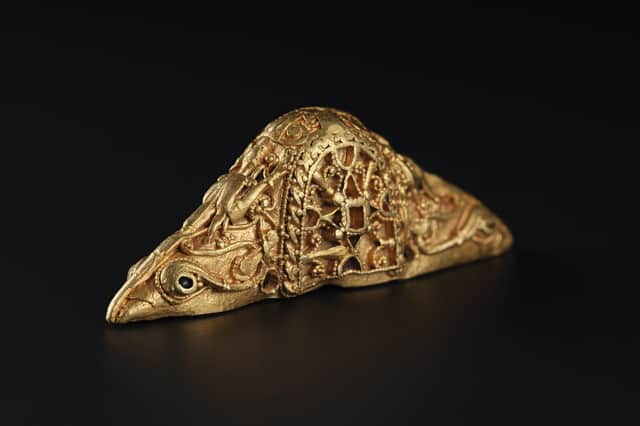
An “exceptionally rare” solid-gold sword pommel discovered by a metal detectorist and which dates back to the early medieval period has come into the ownership of Scotland’s national museums.

The impressive find was located near Blair Drummond, Stirling, and is believed to date back to 700AD.

Measuring 5.5cm wide and weighing 25g, the golden pommel – the fitting at the top of the handle – is valued at £30,000.

On recommendation of the Scottish Archaeological Finds Allocation Panel, the King’s and Lord Treasurer’s Remembrancer allocated the find to National Museums Scotland (NMS), which described the item as “exceptionally rare”.

Read the rest of this article...

Saturday, October 22, 2022

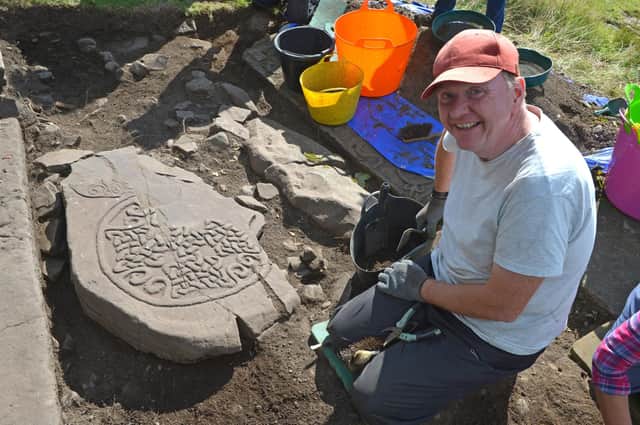
Remains of Pictish period cross with bird carvings uncovered in Scottish kirkyard


The surface of the fallen stone was partially revealed in 2019 by volunteers from the Rescuers of Old Kilmadock (ROOK) group during work in the historic kirkyard. Archaeologists returned last month [SEPT] and dug deeper to expose more of the stone.

The chiselled ogham strokes, which have still to be deciphered, are thought to be the first of their kind found in the Forth Valley.

Other fragments found nearby, which also appear to show carvings, may shed further light on the find.

Read the rest of this article...

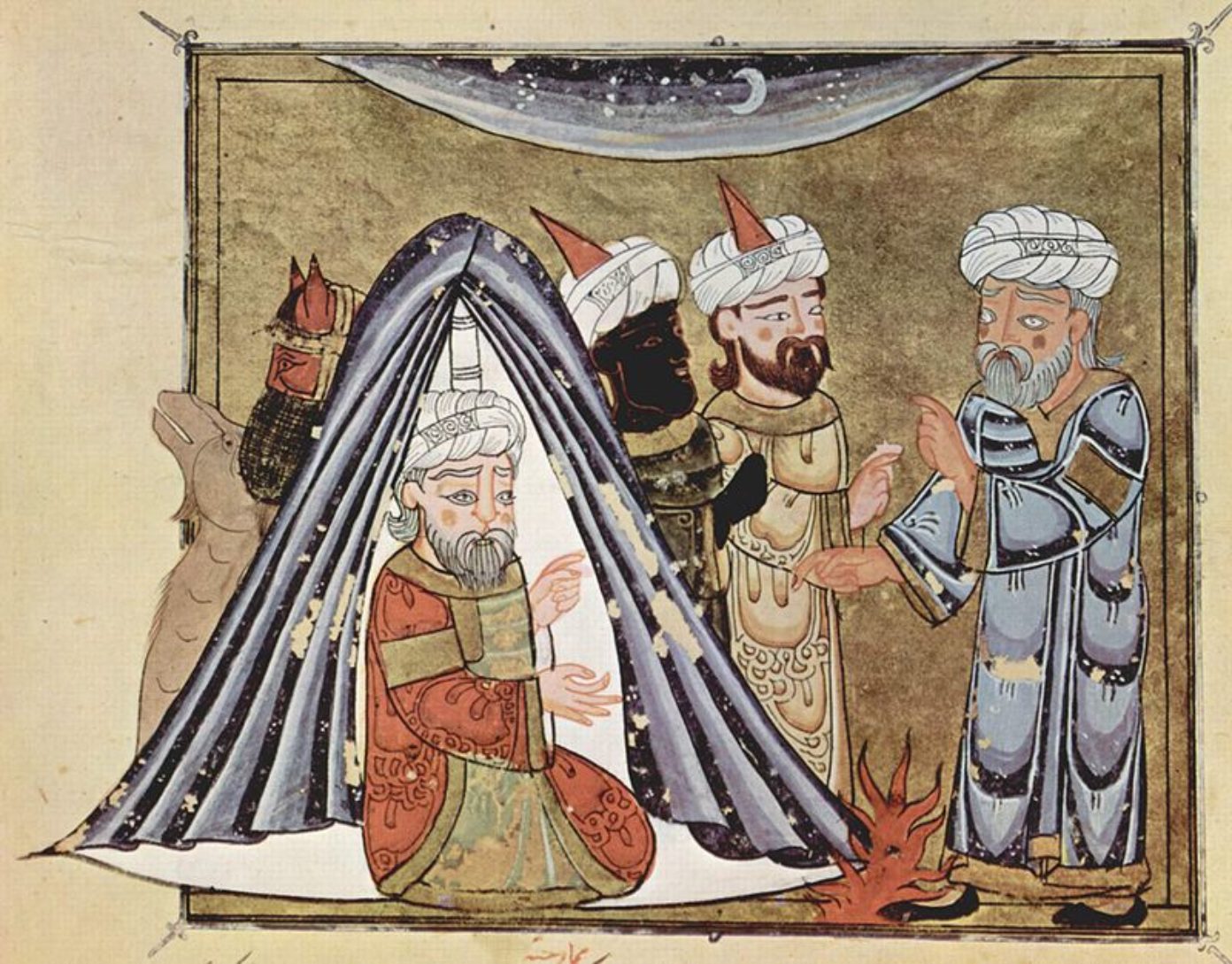
Arab DNA Shows Route of Early Human Migration from Africa


Recent studies on Arab DNA confirmed what researchers have believed for many years, but hadn’t been able to prove definitively. Testing suggests that ancient Arabia indeed served as a “cornerstone” for early human migration out of Africa.

In the largest-ever study of human genomes in the Arab world, the study was able to pinpoint the most ancient of all Middle Eastern populations, allowing researchers to trace very early human migration patterns, according to Smithsonian Magazine.

In the study, published online in the journal Nature Communications, the findings state that the area served as a key crossroads in the migration of people out of Africa.

Read the rest of this article...

The first horse herders and the impact of early Bronze Age steppe expansions into Asia


The Eurasian steppes reach from the Ukraine in Europe to Mongolia and China. Over the past 5000 years, these flat grasslands were thought to be the route for the ebb and flow of migrant humans, their horses, and their languages. de Barros Damgaard et al. probed whole-genome sequences from the remains of 74 individuals found across this region. Although there is evidence for migration into Europe from the steppes, the details of human movements are complex and involve independent acquisitions of horse cultures. Furthermore, it appears that the Indo-European Hittite language derived from Anatolia, not the steppes. The steppe people seem not to have penetrated South Asia. Genetic evidence indicates an independent history involving western Eurasian admixture into ancient South Asian peoples.

Read the rest of this article...

Secrets Of Iron Age Power Center Uppåkra Revealed By Archaeologists


New excavations in Uppåkra are at the forefront of cutting edge archaeological techniques. By combining big data, data modeling and DNA sequencing, researchers are currently solving significant parts of a historical puzzle. Perhaps we will learn whether the Justinianic Plague, the forerunner of the Black Death, reached Uppåkra. Until now, this has been uncertain.

Torbjörn Ahlström, professor of Historical Osteology at Lund University stands on a hill outside Lund. His gaze falls on the fertile soil that has served people in the area for centuries.

Read the rest of this article...

Thor’s hammer amulet found in Sweden


Archaeologists have discovered a lead Thor’s hammer amulet dating to the late 10th century in Ysby in southwestern Sweden’s Halland province. The hammer was unearthed at the site of future housing construction. Previous investigations at the site revealed archaeological remains from the Neolithic and Iron Age, but this is the first artifact from the Viking era discovered there. It’s also the first Thor’s hammer amulet found in Halland.

The amulet is 3 centimeters (1.18 inches) long and cast in lead in the stylized shape that represents Thor’s dwarf-crafted hammer Mjölnir. It has a hole in the shaft where a string or a tie of some sort was threaded through so it could be worn as a pendant. One side of the hammer’s head is engraved with an interlacing pattern.

Read the rest of this article...

Wednesday, October 05, 2022

10 of the Best Viking Museums in Europe

Image Credit: Tim Graham / Alamy Stock Photo

Get in touch with your inner Norseman and discover the greatest Viking museums across Europe.

The Viking Age is undeniably a fascinating period in history, inspiring countless books, films, television shows and somewhat questionable Halloween costumes. Characters such as Ragnar Lothbrok and Leif Erikson have become household names, while Norse Gods are not only subjects of old legends but modern blockbusters. Viking Museums help shed some light on this period which is often misunderstood, debunking many famous myths while showing a multifaceted view of early medieval Scandinavian life.

Here are ten of the best Viking museums across Europe, ranging from open-air museums where history is re-enacted to Viking ships and buildings that survived the elements.

Read the rest of this article...

Tuesday, October 04, 2022

Rendlesham: 1,400-year-old royal hall unearthed

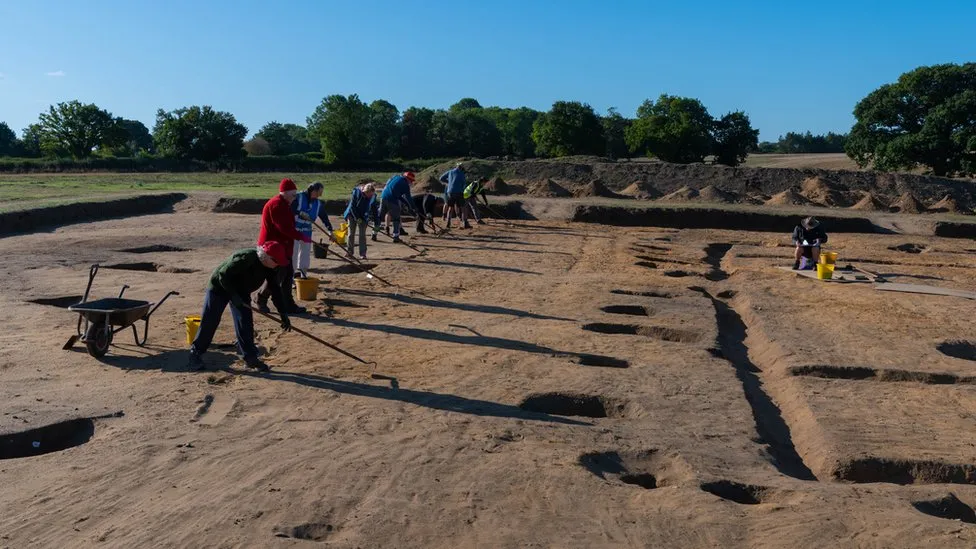
Volunteers working with Suffolk County Council fully excavated post holes on the east side of the hall

A royal hall of "international importance" that dates back 1,400 years has been unearthed on private land.

The Hall of the first Kings of East Anglia was discovered in Rendlesham, Suffolk, over the summer.

Prof Christopher Scull said it was the "most extensive and materially wealthy settlement of its date known in England".

It was discovered by a community dig as part of Suffolk County Council's Rendlesham Revealed project.

Read the rest of this article...

Thursday, September 29, 2022

DNA From Skeletons Reveals Large Migration to Early Medieval England

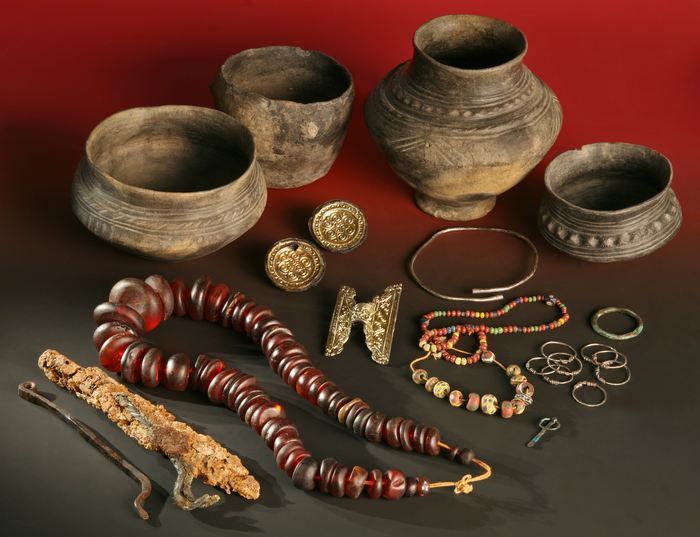
Goods from a grave site at Issendorf cemetery in Lower-Saxony, Germany. 
Landesmuseum Hannover

A new study could close a long-standing debate about movement of people post-Roman rule

In the 19th century, archaeologists in England unearthed remains that dated to the era after Roman rule, which ended around 400 C.E. The items revealed a shift from Roman artifacts to those originating in present-day Germany and the Netherlands. In that era, Roman-style tools and pieces of pottery were replaced with northern European jewelry, swords and architecture.

“You can’t deny there was a big shift in material culture—Roman Britain looks very different from the Anglo-Saxon period 200 years later,” Catherine Hills, an archaeologist at the University of Cambridge in England, tells Science’s Andrew Curry.

But as for what led to this change, historians have long been divided. Many archaeologists have rejected the idea of a mass migration as the cause. After all, just a small number of migrants could have introduced their culture to the island, writes New Scientist’s Clare Wilson.

Read the rest of this article...

Tuesday, September 27, 2022

How Vikings Influenced the Modern English Language


Knowledgable linguist Rob Watts of RobWords explained how the Old Norse language of the Vikings had a profound effect upon the modern English language with many very important words.

The Vikings raided, pillaged… and changed our language. Their Old Norse words invaded English and many remain to this day

This effect includes gender pronouns (she, he, them), key verbs (to be, to take, to crawl, to guess, to trust), words of violence (slaughter, ransack, club, knife, berserk), clothing words (skirt, shirt, shorts), words with “SK” origins (shabby, scabby, scatter, shatter, ship, skipper), doubled-up words (bathe, bask, ditch, dike, shriek, screech), English place names (Derby, Grimsby, Braithwaite, Langthwaite), Scottish place names (Jura, Lerwick), and surnames (Anderson, Carson, Harrison, MacAskill, MacArthur, MacIvor), and Norse gods (Thor, Tuesday, Wednesday).

Read the rest of this article...

Archaeologists Discover 1,200-Year-Old Shipwreck That Reveals A Lost Age: Report


Archaeologists have recently discovered a shipwreck off the coast of Israel, which is believed to be 1,200 years old. It is believed to be a merchant ship, that suggests trading continued after the Islamic co quest of the Holy Land, according to a report in Express.co.uk.

The shipwreck is dated to the 7th or 8th century AD. The Islamic republic, which had extended its dominance to the eastern Mediterranean area during this period, was trying to overwhelm the Christian Byzantine Empire.

According to the archaeologists, despite the religious tensions in the area, the shipwreck demonstrates that commerce was still thriving since it carried products from all over the Mediterranean, including Cyprus, Egypt, Turkey, and the coast of North Africa.

Read the rest of this article...

Genome Study Offers Clues to Anglo-Saxon Migration

(Landesmuseum Hannover)

According to a statement released by the University of Huddersfield, a team of researchers from the Max Planck Institute for Evolutionary Anthropology, the University of Central Lancashire, and the University of Huddersfield analyzed the genomes of more than 400 people who lived in Britain, Ireland, German, Denmark, and the Netherlands, and determined that there was a wave of migration from the North Sea region into eastern England during the Anglo-Saxon period, beginning some 1,500 years ago. The study suggests that as much as three quarters of eastern England’s early medieval population had ties to continental European countries bordering the North Sea. And analysis of mitochondrial DNA, which is inherited only through the maternal line, indicates that women, and likely whole families, had made the trip.

Read the rest of this article...

Sunday, September 18, 2022

Vikings: Raiders, Traders and Settlers (Online Course)


The University of Oxford online course will run from Wednesday, 28 Sep 2022 to Friday 09 Dec 2022 

You can find further details here...

Reykjavík 871±2


IN 2001, ARCHAEOLOGICAL EXCAVATIONS ON Aðalstræti unearthed the remains of a tenth-century longhouse with a wall dating back to 871±2, the oldest evidence of human habitation in Reykjavík.

The year is based on the layer of tephra deposited from a volcanic eruption in the Torfajökull area, which has been found all over Iceland and placed around 871 by carbon dating, with a range of possible inaccuracy of two years either way. The eruption coincides with the early years of Iceland’s settlement age, when the Norsemen started to migrate across the sea, as told by later medieval texts dealing with Icelandic history.

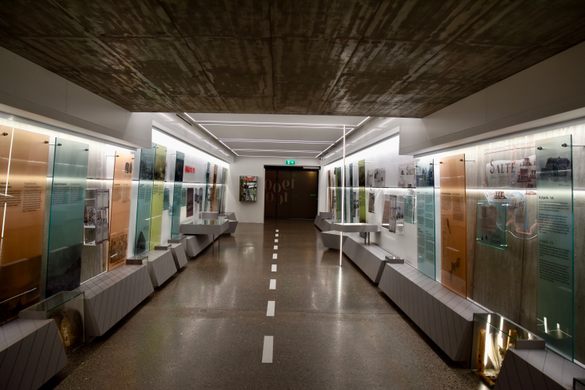
Managed by the City Museum, the Settlement Exhibition of Reykjavík 871±2 gives visitors a rare glimpse into the Viking Age, with the entirety of the excavated ruins displayed in the basement alongside a various collection of artifacts, from pieces of relics to everyday tools. Utilizing interactive multimedia, the exhibit gives an immersive experience and takes visitors back to the days of yore.

Read the rest of this article...
Viking Textiles Show Women Had Tremendous Power


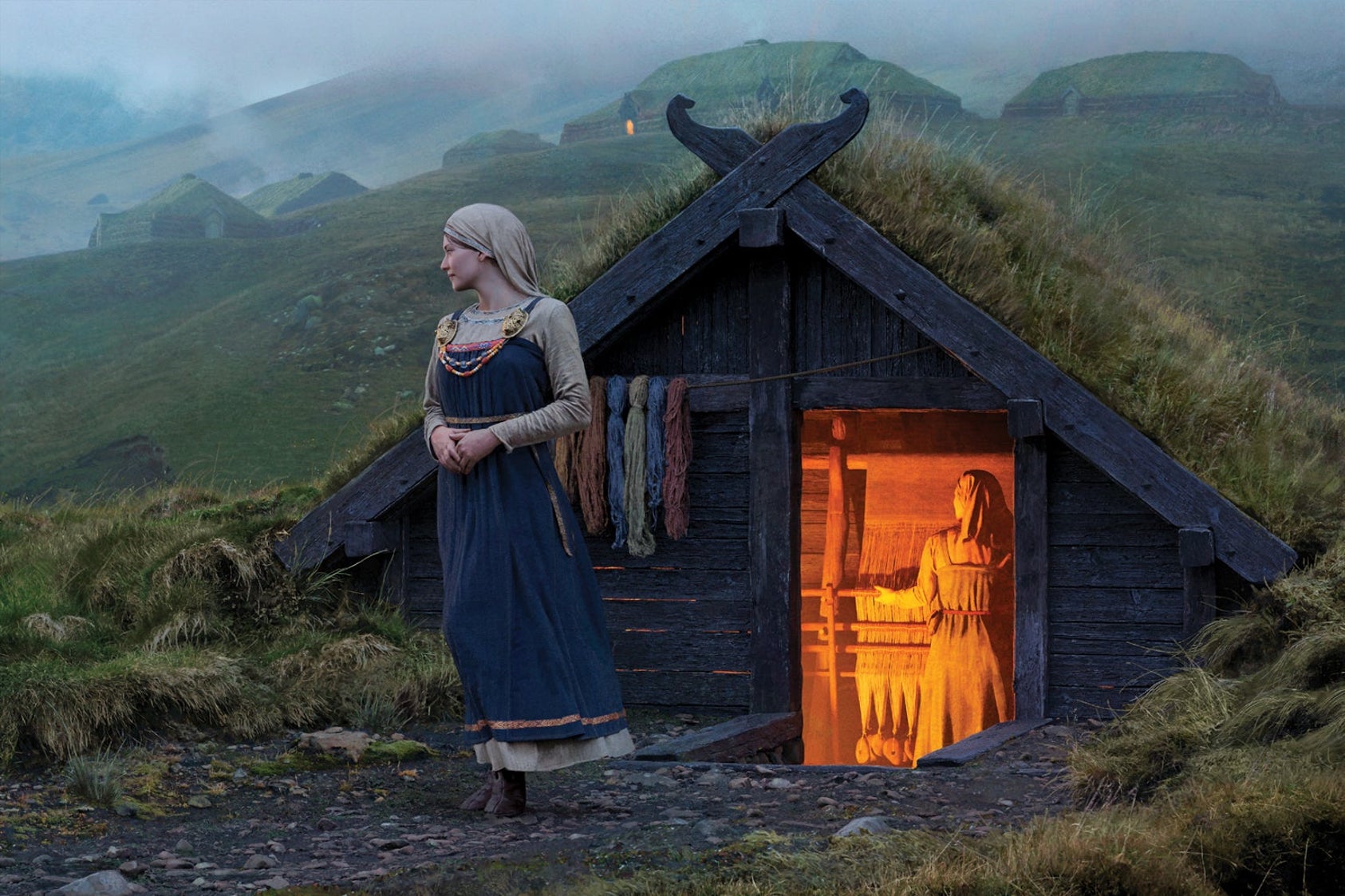
Cloth from Viking and medieval archaeological sites shows that women literally made the money in the North Atlantic

Archaeology has a representation problem. For most of the time that scholars have been probing the human past, they have focused mainly on the activities of men to the exclusion of women. There are a couple reasons for this bias. One is that the kinds of artifacts that tend to preserve well are made of inorganic materials such as stone or metal, and many are associated with behaviors stereotypically linked to men, such as hunting. Another reason is that early archaeologists were mostly men and more interested in men's work than in women's. As a result, our understanding of past cultures is woefully incomplete.

In recent years archaeologists have sought to fill that gap in our knowledge, in part by taking a closer look at traditionally ignored remains such as textiles, which had long been dismissed as trivial. Cloth rarely survives the centuries because it decomposes easily except under ideal preservation conditions. But even in a fragmentary state, it contains a wealth of information about the people who made and used it.

Read the rest of this article...
Early-medieval woman was buried with a rare item: a metal folding chair

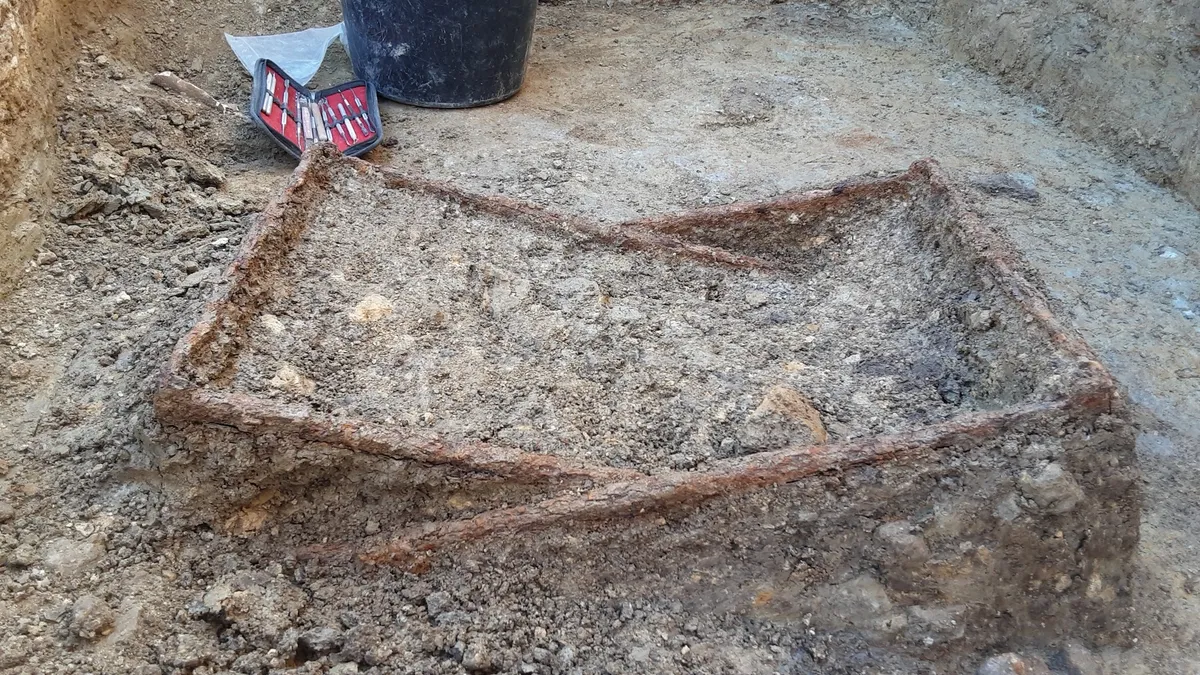
The 1,400-year-old iron folding chair was a symbol of power and status in medieval times.
(Image credit: BLfD/Zenger)

Coins, weaponry, jewels and other valuables are often found in the ancient burials of prominent people, but archaeologists recently discovered a truly rare grave good: a metal folding chair.

Constructed of an iron frame, the medieval chair measures approximately 28 by 18 inches (70 by 45 centimeters) when folded and was found by a team of archaeologists from the Bavarian State Office for Monument Protection (BLfD) last month in Endsee, a village in southeastern Germany.

Hubert Fehr, an archaeologist with the BLfD, told Live Science that the chair dates to approximately A.D. 600 and that it was associated with the burial of a woman who died in her 40s or 50s.

Read the rest of this article...