Tuesday, January 21, 2020
50 Roman Slaves Found Buried with ‘Care’ in England
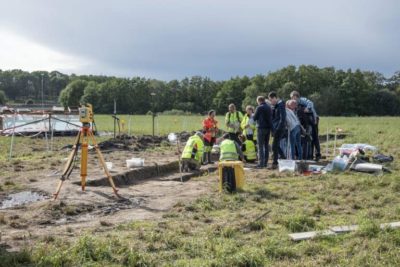
A Roman slave burial ground has been found near what was once a great ancient villa in Britain. Many of the graves are very unusual, and they provide a glimpse into the impact of Rome on the local Briton’s culture and beliefs. This find also allows researchers to better understand the nature of slavery in Roman Britain.
The cemetery was found in Somerton, Somerset, southwest England. The site was unearthed during the construction of a new school by workers. They alerted the relevant authorities and it was investigated by the South West Heritage Trust. Researchers, based on the discovery of shards of pottery and coins, established that it was a Romano-British cemetery that dated back to the 1 st century AD. It was found near the outhouses of a great villa that once stood in the area.
Strange Burials
In total, some 50 Roman slave graves were unearthed, and they were very different from the burial practices that took place before the invasion. The deceased were placed in the ground with great care, in graves that were capped and sealed with slabs. In one burial, these slabs were used to create a box-like feature, known as a cist, in which the dead person was placed before being buried. Steve Membery, who works with the South West Heritage Trust and who took part in the dig, told The Guardian that “they’ve actually built these graves. There’s been a lot of more care taken over these.”
Read the rest of this article...
How to hike the world's northernmost pilgrimage trail
The St Olavsleden trail takes you across Sweden and into Norway.
Photo: Tim Marringa
St Olavsleden is a hiking trail that runs from Sundsvall in the east of Sweden to Trondheim in the west of Norway. The historic pilgrim route has a long history that goes back to the time of the Vikings. The Local's contributor Tim Marringa gives you his best insider tips for hiking this fantastic trail.
In 2013 the old pilgrim route was restored to its former glory. The entire 580-kilometre trail was marked with distinctive red-brown signs and various stamping posts were placed along the way. The course of the trail is very diverse and lets you experience the best of Scandinavia as a hiker.
Where to start?
If you are coming from the Swedish capital, take the train to Sundsvall and buy a pilgrim passport at the local tourist office on the central square. In this passport you can receive a stamp in every special place. These are often churches or tourist offices along the way. The passport serves as proof to receive the certificate at the end and is a nice reminder of your journey.
Read the rest of this article...
Rot hastens Viking ship’s excavation
Preliminary excavation work at the Viking ship site at Gjellestad was carried out late last summer. Now experts recommend a full-scale dig of the entire area.
PHOTO: Riksantikvaren/Lene Buskoven
Archaeologists and Norway’s director of cultural heritage are calling for rapid excavation of a Viking ship found buried in a field at Gjellestad near Halden in the fall of 2018. They’ve won initial support from government officials, setting the stage for what could be the first full-scale Viking ship excavation in Norway for 114 years.
“A Viking ship is so important for Norwegian history, and we have an international responsibility here,” said Ola Elvestuen, government minister in charge of culture and the environment, just after test results from the site were presented on Friday. They were extracted during careful and preliminary digging around the vessel in August and September of last year.
Samples from the so-called “Gjellestad-ship’s” keel found last year have revealed signs of mildew or dry rot, indicating that the vessel could rapidly deteriorate if left in the ground. The overall condition of the ship was described as poor.
Read the rest of this article...
Roman Coin Found in Northern Norway May Redraw Historic Trade Map
The Roman coin was found only 15 centimetres deep in the soil; it dates back to the time of Emperor Marcus Aurelius and is the northernmost find of its kind, signalling that trade contacts in the area date back to the Iron Age.
In just a few days, hobby archaeologist Ben-Harry Johansen found a 2,000-year-old coin and a richly decorated 1,000-year-old Viking sword at Våg in the municipality of Dønna on the Helgeland coast, national broadcaster NRK reported.
“The coin lay only 15 centimetres into the earth, in the so-called plough layer, where people with metal detectors are allowed to search,” Ben-Harry Johansen recalled with excitement.
Read the rest of this article...
Council calls for archaeological digs before former Notcutts plans move forward
Plans have been submitted to develop the former Notcutts site in Ardleigh into a horse stable centre Picture: GOOGLE MAPS
Essex County Council has called on developers at a former Notcutts site to allow archeological work to be undertaken in the hopes of finding prehistoric treasures.
No stranger to rich finds under the soil, the village of Ardleigh in north Essex has been found to be built above prehistoric, bronze age, Roman and Anglo Saxon settlements.
In the 1950s, a bronze age cemetery was also found by local farmer Felix Erith.
And now, as plans have been unveiled for part of the former garden centre, the local authority's historic environment officer Teresa O'Connor has recommended a team of archaeologists should carry out works in the hopes of finding more artefacts.
Read the rest of this article...
Ancient Roman Walls Damaged During Luxury Hotel Construction
Private developers building luxury hotel apartments in England are being taken to task for their part in the collapse of an ancient Roman City wall in Chester, an iconic feature of the city.
The ancient walls of Chester, on the River Dee in England close to the border with Wales, were first built by the Romans between 70 and 80AD. On Thursday night, while private developers Walker and Williams were building luxury apartments, part of the 2000-year-old structure collapsed and the crumbled section of the ancient monument, near Newgate Street, Chester, fell after developers compromised the integrity of the ancient monument.
An Iconic Ancient Monument
According to an article on Chester's Historic Walls the walls comprise “the most complete Roman and medieval defensive town wall system in Britain” and the entire circuit of the walls, together with the towers and gates, is recognized by Historic England as a Scheduled Monument. What’s more, almost every section of the wall is scheduled in the National Heritage List for England as a designated Grade I listed building, regarded by the Secretary of State to be of ‘national importance.’
Read the rest of this article...
Archaeologists in Poland were stunned to discover the skeletal remains of four Scandinavian warriors many hundreds of miles from their homeland.
Two of the graves containing the remains of Scandinavian warriors
[Credit: Z. Ratajczyk, PAP]
Archaeologists in Poland were stunned to discover the skeletal remains of four Scandinavian warriors many hundreds of miles from their homeland.
The 11th-century remains were discovered at a peculiar burial site dubbed by the archaeologists a death house. A chemical and genetic analysis of the remains found the four men were from Scandinavia, most likely from Denmark.
According to Dr Sławomir Wadyl of the Gdańsk Archeological Museum, the warriors were buried alongside a plethora of trinkets and armaments.
The archaeologist told the Polish Press Agency (PAP): “In the central part of the cemetery, there were four very well-equipped chamber graves.
Read the rest of this article...
Sunday, January 19, 2020
‘Most dramatic find!’ How archaeologist uncovered ancient Roman battleground ‘massacre’
The discovery was made at Maiden Castle (Image: YOUTUBE)
AN ARCHAEOLOGIST uncovered what he believed to be the remains of a Roman massacre of Britons in Dorset, describing it as his “most dramatic find”.
Archaeologist Francis Pryor visited the site during his “Britain BC” series, where he explained the area in more detail.
He said in 2011: “This was a place where things happened, where communities met. Land had acquired a new meaning to ancient Britain and these patches of common land, packed with ancestral bones, became magic.
“What began as a celebration of a new relationship with land became a way of life.
“The people who constructed the hill fort thousands of years later knew they were building on a sacred place.
Read the rest of this article...
Treasure trove of medieval history rises from the ashes of Notre Dame
The fire last April exposed parts of the building that have never been studied
GEOFFROY VAN DER HASSELT/GETTY IMAGES
Nine months after it was engulfed in a fire that shocked the world, the cathedral of Notre Dame in Paris has become a “gigantic laboratory for archaeology.”
More than 100 researchers, including archaeologists, engineers, historians and chemists, have started a lengthy study of the medieval structure and thousands of pieces of charred debris.
Their goal is to unravel secrets not only of the cathedral’s construction in the 12th-14th centuries but also the earlier buildings on the site and gothic architecture more widely. The multimillion-euro joint project by the French national research organisation CNRS and the Ministry of Culture will go on for six years, but initial findings are already rewriting the cathedral’s story.
Read the rest of this article...
Saturday, January 18, 2020
The real Vikings: the early medieval world behind the hit drama
The exploits of Norse warrior Ragnar Lothbrok and his kin in hit TV drama Vikings has brought fresh interest to the myths and figures of the early medieval world. As the final series continues, Professor Howard Williams explores how the show’s sweeping ambition has tackled historical issues of the Viking era while creating an immersive world – one with more reality than you might think…
From 2013 to the sixth and final series, now airing, History Channel’s Vikings has brought a hit multi-season historical drama about the early Viking world to international audiences. Following the adventures of the legendary figure Ragnar Lothbrok (or Loðbrók) and his sons including Bjorn, Ubba and Ivar, writer Michael Hirst portrays a 9th-century world of seaborne conflict, far-flung connections and family feuding on an unprecedented scale. Despite numerous films over the years, occasional documentaries and an ongoing rival BBC drama series The Last Kingdom, nothing can compare in scale and duration to Vikings in bringing the early medieval world to global television viewers.
Read the rest of this article...
Roman-Era Trade Center Mapped Off Africa’s Northern Coast
A magnetometer survey in Djerba, an island off the coast of Tunisia, has mapped the site of the ancient commercial center of Meninx, according to a statement released by Ludwig Maximilian University. The city was founded in the fourth century B.C., and became a trade power between the first and third centuries A.D. Archaeologist Stefan Ritter and his colleagues investigated the city’s well-protected port, which had a wide, deep channel in its shallow bay, wooden and stone quays, and warehouses for storing goods. The survey also revealed that the city’s streets ran parallel to the island’s coastline. Ritter said he and his colleagues carried out some excavations, and uncovered a private bathhouse with mosaic floors, wall paintings, and statuary. New evidence suggests that the purple dye produced by the city’s residents from the sea snail Murex trunculus was not exported as a raw material, but rather used at Meninx to dye textiles for export. To read about the discovery of a submerged Roman mercantile city, go to "World Roundup: Tunisia."
Read the rest of this article...
PREMIER SITE ANTIQUE MIS AU JOUR SUR LA COMMUNE DE BASTIA
Dans la commune de Bastia, les archéologues de l’Inrap ont révélé les vestiges de deux maisons datant de la fin de l’Antiquité (IVe-VIe siècle de notre ère), un témoignage très rare pour la période qui permet d’approfondir les connaissances sur l’occupation antique de la Corse.
Préalablement à la construction d’un habitat résidentiel, la prescription d’une fouille archéologique par les services de l’État (Drac de Corse) a permis de mettre au jour un ensemble de vestiges antiques remarquables dans la commune de Bastia. Ces travaux sont pris en charge à 100 % par l’État par le biais du fonds national pour l’archéologie préventive (Fnap).
Read the rest of this article...
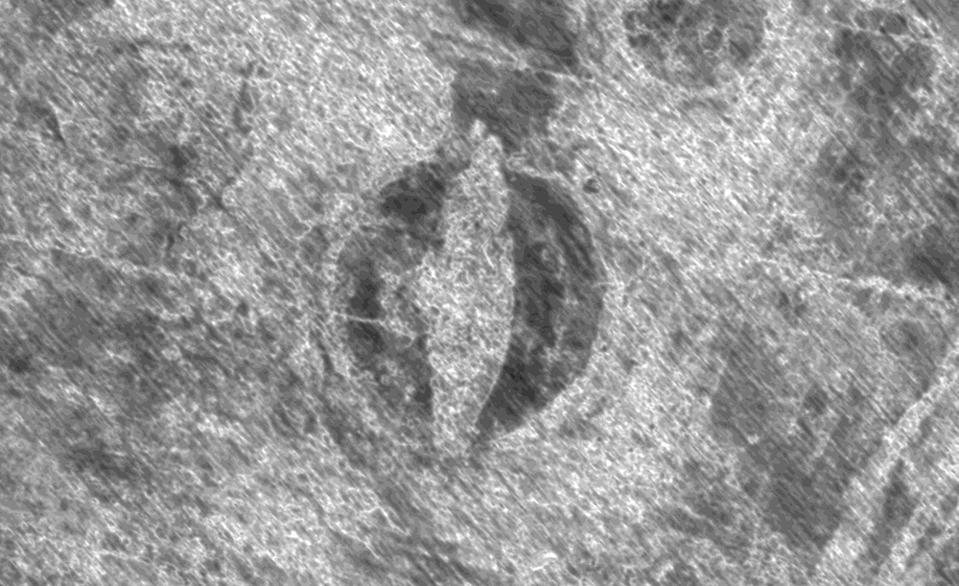
Confirmed: Norway’s Gjellestad Ship Is From The Viking Age
The Gjellestad ship grave was discovered by georadar survey in 2018.
Norwegian Institute for Cultural Heritage Research
Archaeologists from Norway’s Museum of Cultural History have confirmed that the Gjellestad Viking ship grave discovery in southeast Norway is almost certainly from the early days of the Viking age.
The 2018 discovery by the Norwegian Institute for Cultural Heritage Research (NIKU) made headlines around the world. Several longhouses and at least one ship burial were discovered by new ground-penetrating radar (GPR) technology. While the site was known to be of importance during the Viking era, the dating of the ship had been an educated guess, until now.
Dating a Viking ship grave
“The investigations happily confirm our hypothesis from 2018, when we found the ship by ground-penetrating radar (GPR),” said Knut Paasche, head of Digital Archaeology at NIKU.
Read the rest of this article...
Chester's Roman wall collapses after digging work
The council said it was taking the collapse "very seriously"
@LOVELIFELOSSTOM
Cheshire West and Chester Council said a section of the wall fell on Thursday evening, causing the development to be suspended.
"Early indications appear to show that earth was removed from the bottom of the city walls," a spokesman said.
Chester MP Chris Matheson claimed the developers had received safety warnings about digging so close to the wall.
Chester is the only city in Britain that retains the full circuit of its ancient defensive walls.
The city walls, parts of which are almost 2,000 years old, are the oldest, longest and most complete in Britain, according to Visit Cheshire.
Read the rest of this article...
UK museums may have to follow 'decolonisation' checklist
Arts Council England has called on experts to draw up new guidelines to address sacred and significant objects like the Parthenon Marbles and Rosetta Stone
British museums will be asked to assess their collections with a new "decolonising" checklist to ease the repatriation of cultural treasures, and could face financial repercussions if they fail to do so.
Arts Council England has called on experts to draw up new guidelines to address sacred and significant objects like the Parthenon Marbles and Rosetta Stone, which have long provoked pleas for repatriation from aggrieved nations after being seized in the age of empire.
The Government-backed body already requires its portfolio organisations to follow protocols on diversity in order to receive funding, so could demand institutions adhere to its planned credo on colonialism.
It is hoped the checklist would be followed by all UK museums and fill a gap in guidance, but the Arts Council said it was “too soon” to say there would be a financial impact for the organisations it funds.
Read the rest of this article...
Thursday, January 16, 2020
Neanderthals went underwater for their tools
Clam shells (stock image).
Credit: © Vatchara / Adobe Stock
Neanderthals collected clam shells and volcanic rock from the beach and coastal waters of Italy during the Middle Paleolithic, according to a new study.
Neanderthals collected clam shells and volcanic rock from the beach and coastal waters of Italy during the Middle Paleolithic, according to a study published January 15, 2020 in the open-access journal PLOS ONE by Paola Villa of the University of Colorado and colleagues.
Neanderthals are known to have used tools, but the extent to which they were able to exploit coastal resources has been questioned. In this study, Villa and colleagues explored artifacts from the Neanderthal archaeological cave site of Grotta dei Moscerini in Italy, one of two Neanderthal sites in the country with an abundance of hand-modified clam shells, dating back to around 100,000 years ago.
The authors examined 171 modified shells, most of which had to be retouched to be used as scrapers. All of these shells belonged to the Mediterranean smooth clam species Callista chione. Based on the state of preservation of the shells, including shell damage and encrustation on the shells by marine organisms, the authors inferred that nearly a quarter of the shells had been collected underwater from the sea floor, as live animals, as opposed to being washed up on the beach. In the same cave sediments, the authors also found abundant pumice stones likely used as abrading tools, which apparently drifted via sea currents from erupting volcanoes in the Gulf of Naples (70km south) onto the Moscerini beach, where they were collected by Neanderthals.
Read the rest of this article...
Arctic island woolly mammoth shows strongest evidence yet of human slaughter and butchering
The extinct mammoth remains were dated by radiocarbon analysis to 21,000 years of age by the Jikei University School of Medicine in Tokyo. Picture: Albert Protopopov
Ancient men cut all the meat, severed the trunk, removed the brain and pulled out bone marrow from all the limbs.
The Kotelny island woolly mammoth was killed by humans some 21,000 years ago, say scientists.
Dr Albert Protopopov shared new pictures of the remains found at a location which was then part of the vast Beringia Land Bridge connecting what is now Siberia and North America.
'The traces on the bones show that the mammoth was killed and butchered by ancient people,' he said.
'I believe no other mammoth previously found in the world had such clear signs of being hunted by humans.'
'We found cuts all over its ribs, there were traces of spear strikes with chips left from the darts.'
Read the rest of this article...
Always counterclockwise
IMAGE: AERIAL PHOTO OF THE EXCAVATION AREA OF AN EARLY NEOLITHIC SETTLEMENT NEAR VRÁBLE IN SLOVAKIA.
CREDIT: © NILS MÜLLER-SCHEESSE
Human behaviour is influenced by many things, most of which remain unconscious to us. One of these is a phenomenon known among perception psychologists as "pseudo-neglect". This refers to the observation that healthy people prefer their left visual field to their right and therefore devide a line regularly left of centre.
A study published on Friday, January 10, in the online magazine PLOS ONE now shows for the first time what effect this inconspicuous deviation had in the prehistoric past. A Slovak-German research team has investigated the alignment of early Neolithic houses in Central and Eastern Europe. Scientists of the Collaborative Research Centre (CRC) "Scales of Transformation" of Kiel University (CAU) and the Slovakian Academy of Sciences were able to prove that the orientation of newly built houses deviated by a small amount from that of existing buildings and that this deviation was regularly counterclockwise.
Read the rest of this article...
Gladiator chamber found at the Roman amphitheatre in Cartagena
Credit: Ayuntamiento de Cartagena
As excavation continues at the Roman amphitheatre in Cartagena, a large part of which lies beneath the 19 century bullring, archaeologists have found various fragments of ceramics and an ossuary ground during their dig prior to work to shore up the exterior walls.
This preliminary campaign has now ended and the next phase will be to reinforce the bull ring and the amphitheatre, a project which is co-financed by the Town Hall and the national Ministry of Development.
The campaign began in December and has included the full documentation of all of the structures of the amphitheatre, during which another 'carcer' or service room has come to light: these rooms were used to hold gladiators and animals captive before they were released to do battle in the arena itself.
Read the rest of this article...
Subscribe to:
Posts (Atom)