Wednesday, April 03, 2019

Neolithic Britons travelled across country for regular mass national feasts 4,500 years ago, new research claims

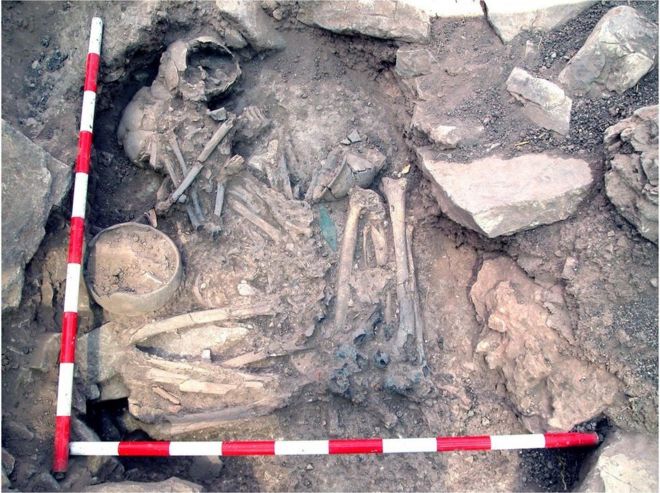
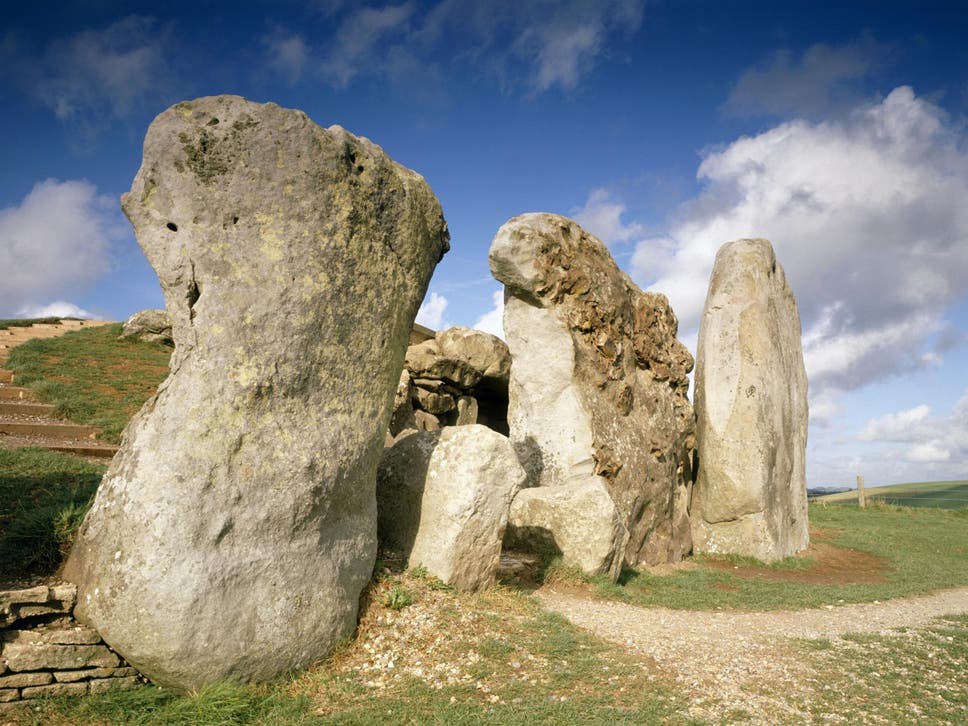
Feasts were held at ritual sites, including Avebury ( English Heritage )

Findings suggest prehistoric tribes may have established cultural and political bonds – and an early national identity – long before previously believed

New scientific discoveries are set to dramatically transform our understanding of prehistoric Britain.

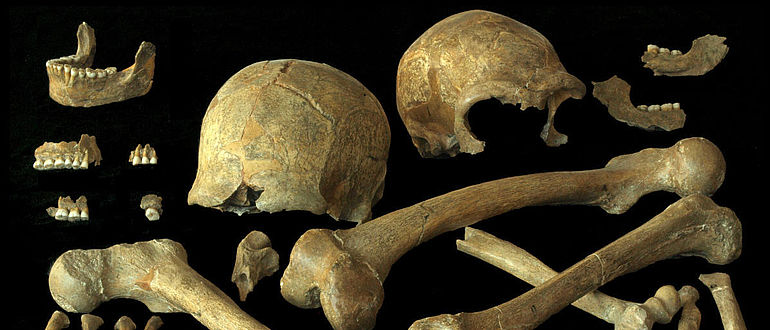
A study of Stonehenge-era archaeological material from large-scale ceremonial feasts is revealing that neolithic Britain was, in key respects, much more interconnected and unified than previously thought.

The evidence reveals that people from virtually every part of the country came together to participate in major, almost certainly politico-religious, ceremonies.

Some participants travelled hundreds of miles from Scotland, northeast England, the midlands and Wales to significant ritual locations in what are now Wiltshire and Dorset.

Read the rest of this article...

Norway finds another Viking ship


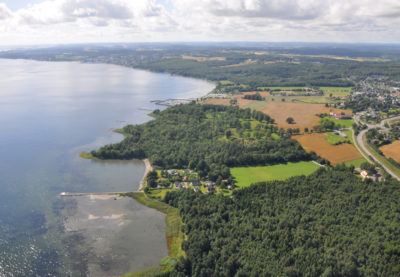
The fields and forests of Borre in Vestfold run along the west side of the Oslo Fjord, in a county that has produced Norway’s other famed Viking ships. 
PHOTO: Vestfold fylkeskommune


On an open field along the Oslo Fjord, among grave mounds from the Viking Age, archaeologists have found what they believe is another buried Viking ship. The discovery was made with the help of georadar that shows a ship-shaped object.

The ship’s form was actually first spotted nearly two years ago, but many examinations were needed in order to confirm that it’s another Viking ship. Ola Elvestuen, Norway’s government minister in charge of climate and the environment, announced the discovery on Monday along with the local Vestfold County Governor Rune Hogsnes.

“It’s not every day we find a new Viking ship, so this is really exciting,” Hogsnes told reporters at a press conference Monday morning. “For us locals it’s no surprise. A lot of treasures from the Viking times are hidden under the turf in our county.”

Read the rest of this article...

Pompeii ‘fast food’ bar unearthed in ancient city after 2,000 years

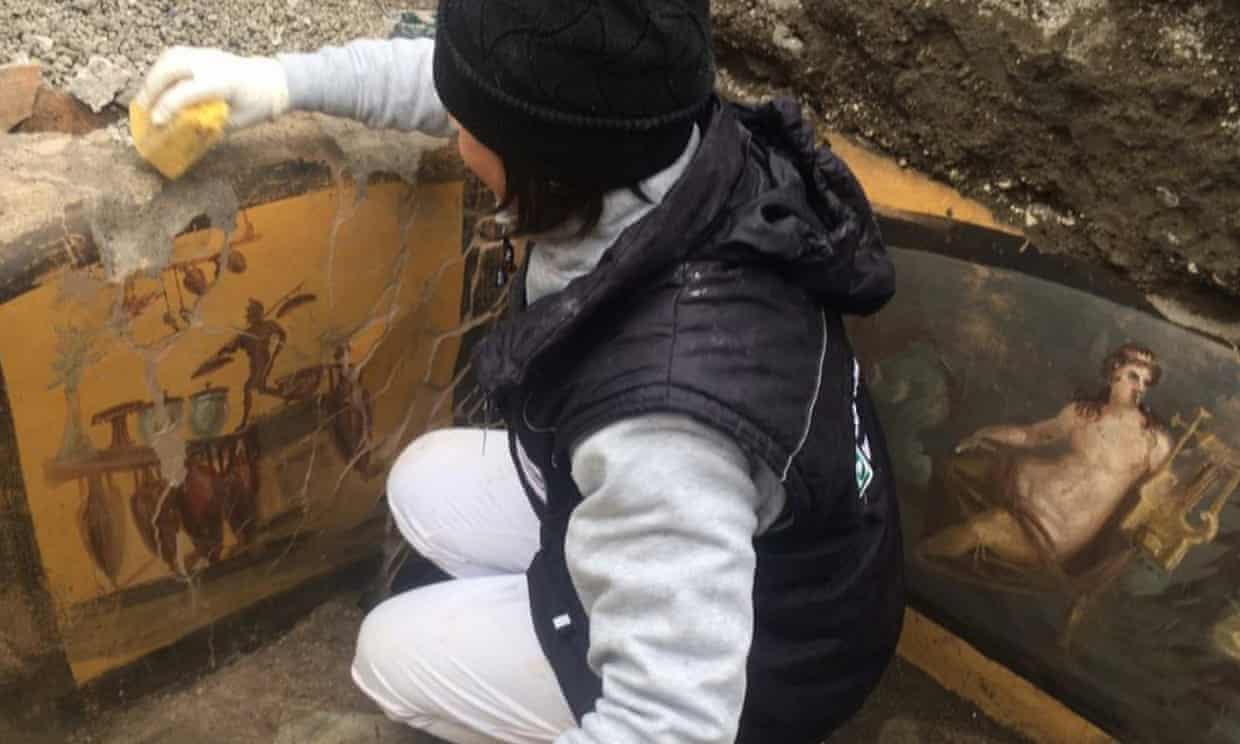
Dozens of thermopolia, or snack bars, have been found across Pompeii.
Photograph: Massimo Ossana/Instagram

Thermopolia used by poorer residents with few cooking facilities, archaeologists say

A well-preserved frescoed “fast food” counter is among the latest discoveries unearthed by archaeologists in the ancient Roman city of Pompeii.

The 150 or so thermopolia, or snack bars, dotted across the city were mostly used by the poorer residents, who rarely had cooking facilities in their home, to grab a snack or drink. Typical menus included coarse bread with salty fish, baked cheese, lentils and spicy wine.

An image of the 2,000-year old relic, found in Regio V, a 21.8-hectare (54-acre) site to the north of the archaeological park, was shared on Instagram by Massimo Ossana, the site’s outgoing superintendent.

“A thermopolium has been brought back to light, with its beautiful frescoed counter,” he wrote.

Read the rest of this article...

LES ARCHÉOLOGUES DE L’INRAP DÉCOUVRENT UNE TOMBE ÉTRUSQUE EN HYPOGÉE À ALERIA–LAMAJONE


Une équipe d’archéologues de l’Inrap fouille actuellement une exceptionnelle sépulture étrusque à Aleria-Lamajone (Haute-Corse). Menée sur prescription de l’État (DRAC Corse), cette fouille a mis en évidence deux tronçons de voies et une nécropole étrusque et romaine. La découverte, parmi les sépultures, d’une tombe étrusque en hypogée creusée dans la roche, a entraîné la publication d’un arrêté complémentaire de prescription de fouilles.

Read the rest of this article...

Ancient teeth hint at mysterious human relative

The gorges of Guizhou Province glimmer in the sunlight in China. Fossil teeth found in this province suggest that millions of years ago, a cave here was home to a mysterious branch of the human family tree.
PHOTOGRAPH BY NOVARC IMAGES/ ALAMY

The find adds to a growing number of fossils from China that don't fit neatly in the existing human family tree.

FOUR TEETH FOUND in a cave in the Tongzi county of southern China have scientists scratching their heads.

In 1972 and 1983, researchers extracted the roughly 200,000-year-old teeth from the silty sediments of the Yanhui cave floor, initially labeling them as Homo erectus, the upright-walking hominins thought to be the first to leave Africa. Later analysis suggested they didn't quite fit with Homo erectus, but that's where the story paused for nearly two decades.

Now, a study published in the Journal of Human Evolution takes a fresh look at these ancient teeth, using modern methods to examine the curious remains. The new analysis excludes the possibility that the teeth could come from Homo erectus or the more advanced Neanderthals, but the elusive owner remains unknown.

Read the rest of this article...

Concerns mount over plans for two-mile road tunnel past Stonehenge

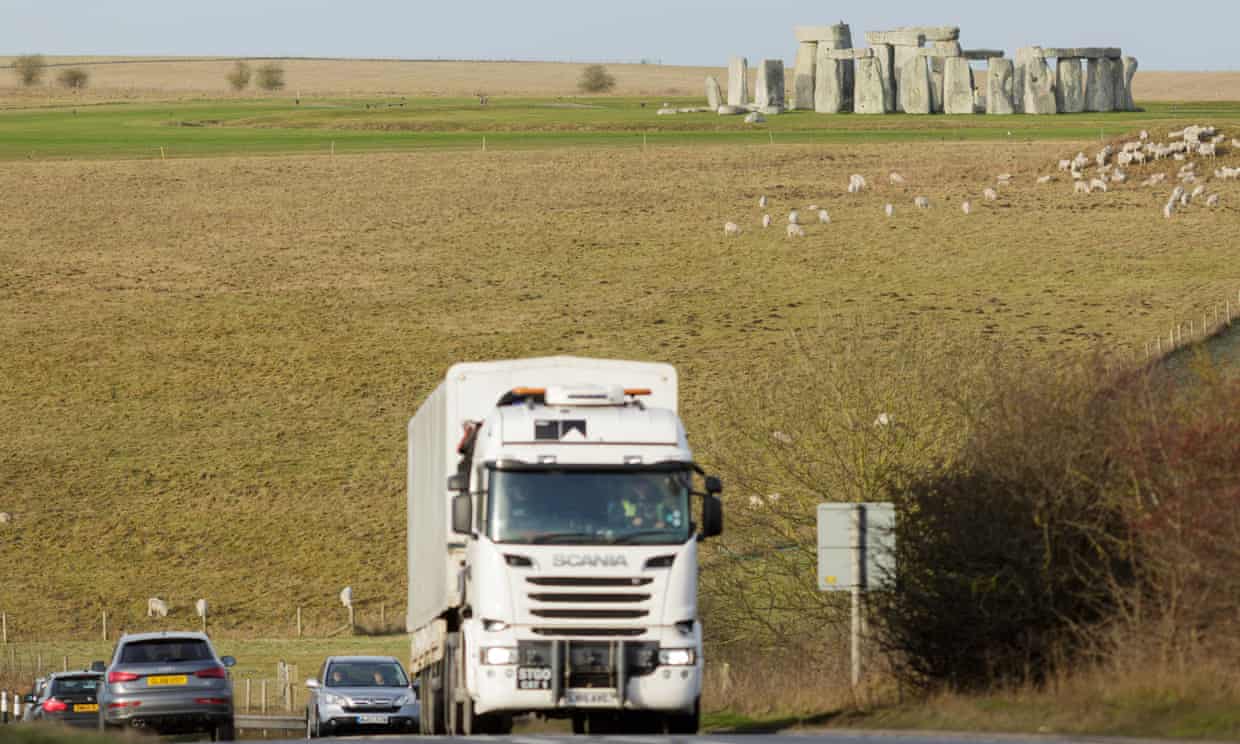
Stonehenge lies within 165 metres of the A303, a key transport link for people travelling to and from England’s south-west. Photograph: Sam Frost/The Guardian

Highways England claims scheme will improve travel and visits to site but many oppose it

Environmentalists, archaeologists, residents and druids have expressed deep concerns about a controversial scheme to build a road tunnel through the Stonehenge landscape as the £1.6bn project reaches a key milestone.

A six-month long examination of the scheme that will consider issues ranging from the impact on precious archaeological remains to how it may affect endangered birdlife and the darkness of the night sky begins on Wednesday.

At a packed preliminary meeting at Salisbury racecourse on Tuesday, there were protests about the scheme, which some have branded vandalism. More than 2,000 people, many of them opposed, have said they want to make submissions and hundreds want to give evidence in person over the next six months.

Read the rest of this article...

Monday, March 18, 2019

Mary Rose crew 'was from Mediterranean and North Africa'

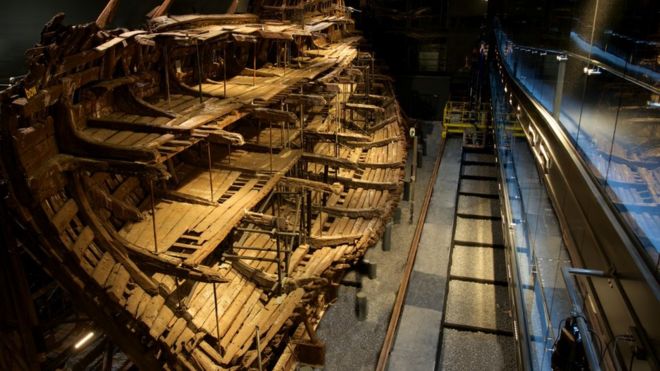
The Mary Rose Museum in Portsmouth's Historic Dockyard houses a cross section of the ship's hull as well as thousands of artefacts, including weapons and jewellery
STEPHEN FOOTE

The crew on board the sunken Henry VIII ship the Mary Rose was from the Mediterranean, North Africa and beyond, researchers have found.

Bone structure and DNA of 10 skeletons found on board were analysed by team at Cardiff and Portsmouth universities.

They said four of the skeletons were of southern European heritage, and one seems to have hailed from Morocco or Algeria.

The findings cast fresh light on the ethnic makeup of Tudor Britain.
The Mary Rose sank in 1545 in the Solent during a naval battle with the French, with the loss of between 400 and 600 lives.

Read the rest of this article...

Archaeologists discovered a flintstone workshop of Neanderthals in the southern Poland; it is approx. 60,000 years old


Researchers discovered a flint workshop of Neanderthals in Pietraszyno (Silesia). According to scientists, it is the first such large workshop in Central Europe that was not located in a cave. So far, researchers have counted 17,000 stone products created 60 thousand years ago.

Neandertals (Homo neanderthalensis) were very close relatives of contemporary man (Homo sapiens). They probably appeared in Poland approximately 300,000 years ago. The oldest stone tools they used, discovered on the Vistula, are over 200,000 years old, and the remains are over 100,000 years old.

"On the bank of the river in Pietraszyno, we discovered an unprecedented amount of flint products - 17,000 - abandoned by Neanderthals approximately 60,000 years ago" - says Dr. Andrzej Wiśniewski from the Institute of Archaeology, University of Wrocław. Since 2018, the researcher has been conducting joint excavations with researchers from the Max Planck Institute for Evolutionary Anthropology in Leipzig in the framework of a National Science Centre project. In his opinion, this is the first such large Neandertal workshop discovered in Central Europe that was not located in a cave.

Read the rest of this article...

Ancient switch to soft food gave us an overbite—and the ability to pronounce ‘f’s and ‘v’s

An ancient woman from Romania shows an edgeto-edge bite (left). A Bronze Age man from Austria had a slight overbite (right). D. E. BLASI ET AL., SCIENCE, 363, 1192 (2019)

Don't like the F-word? Blame farmers and soft food. When humans switched to processed foods after the spread of agriculture, they put less wear and tear on their teeth. That changed the growth of their jaws, giving adults the overbites normal in children. Within a few thousand years, those slight overbites made it easy for people in farming cultures to fire off sounds like "f" and "v," opening a world of new words.

The newly favored consonants, known as labiodentals, helped spur the diversification of languages in Europe and Asia at least 4000 years ago; they led to such changes as the replacement of the Proto-Indo-European patēr to Old English faeder about 1500 years ago, according to linguist and senior author Balthasar Bickel at the University of Zurich in Switzerland. The paper shows "that a cultural shift can change our biology in such a way that it affects our language," says evolutionary morphologist Noreen Von Cramon-Taubadel of the University at Buffalo, part of the State University of New York system, who was not part of the study.

Read the rest of this article...

Artificial intelligence for the study of sites


Three examples of the different types of notches 
[Credit: A. Moclán]

An experimental study led by researcher Abel Moclán, from the Centro Nacional de Investigación sobre la Evolución Humana (CENIEH), has just been published in the Archaeological and Anthropological Sciences journal, which proposes a new method to understand how the faunal assemblages were generated in archaeological sites, and how they could have interacted with groups of humans and carnivores in the places they occupied.

This new method involves the use of artificial intelligence and machine learning algorithms to decipher whether faunal assemblages were generated by hominids or carnivores, specifically hyenas and/or wolves. "Thanks to this method, we can discern among the acting agents with a certainty of over 95%," says Abel Moclán.

To carry out this study, bone fractures have been analyzed in order to interpret whether they were fractured by human groups to consume the bone marrow, or if, on the contrary, the carnivores fractured the bones when trying to access this same resource.

Read the rest of this article...

Ancient migration transformed Spain's DNA

Bronze Age burials: Iberia saw a dramatic genetic shift during this period
L BENITEZ DE LUGO ENRICH - JOSE LUIS FUENTES SANCH

A migration from Central Europe transformed the genetic make-up of people in Spain during the Bronze Age, a study reveals.

DNA evidence shows the migrants streamed over the Pyrenees, replacing existing male lineages across the region within a space of 400 years.

It remains unclear whether violence played a role or whether a male-centric social structure was more important.

The result comes from the most extensive study of its kind.

Researchers reconstructed the population history of Iberia (modern Spain, Portugal, Gibraltar and Andorra) over 8,000 years - the biggest slice of time tackled by a single ancient DNA study. The region has been a crossroads for different cultures over time.

Read the rest of this article...

Neandertaler und moderne Menschen hatten ähnliche Speisezettel

Knochen aus Spy geben Aufschluss über Ernährung und Mobilität der dortigen Neandertaler. Foto: Royal Belgian Institute of Natural Sciences (RBINS)

Internationale Studie findet mehr gemeinsame Nahrungsvorlieben als angenommen ‒ Rätselhafte Spuren von Kannibalismus

Neandertaler und der frühe moderne Mensch ernährten sich vermutlich sehr ähnlich: Zu diesem Schluss kommt eine internationale Studie und widerspricht damit der Annahme, die Neandertaler seien ausgestorben, weil ihr Ernährungsspektrum eingeschränkt war. Die Ergebnisse zeigten aber auch, dass moderne Menschen dennoch einen Vorteil hatten, weil sie vermutlich mobiler und besser vernetzt waren, berichtet das Team um Dr. Christoph Wißing von der Universität Tübingen.

Read the rest of this article...

Anglo-Saxon gold pendant found in Norfolk declared treasure

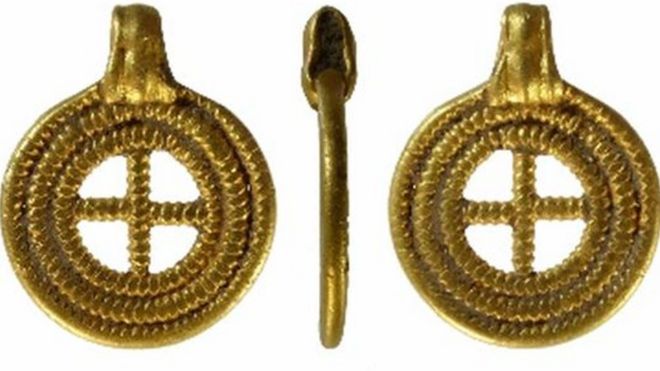
The gold pendant would have belonged to a "high status woman", like the famous Winfarthing Pendant
COURTESY OF THE PORTABLE ANTIQUITIES SCHEME

An Anglo-Saxon gold pendant, found near a site where a similar item worth £145,000 was dug up, probably belonged to a woman of "high social status".

The Winfarthing Pendant was found in 2014 near Diss in Norfolk.

The latest pendant, with a central cross motif, was found in 2017 and it has been declared treasure.

Julie Shoemark, Norfolk's finds liaison officer, said it made a "valuable contribution to our understanding of Saxon society".

Read the rest of this article...

Thursday, March 14, 2019

Hominids may have hunted rabbits as far back as 400,000 years ago

BUNNY TRAIL  Fossils from southern European sites indicate that ancient relatives of humans hunted small, fast animals as early as around 400,000 years ago. Ends of rabbit bones (shown) were probably snapped off to remove marrow.

In Europe, Stone Age hominids began adding small, fast animals to their menus much earlier than previously thought, scientists say.

Now-extinct members of the human genus, Homo, hunted rabbits and, to a lesser extent, hares in southern France and probably other Mediterranean parts of Europe by around 400,000 years ago, researchers report online March 6 in Science Advances. Hunters also bagged larger creatures such as wild goats and deer. The new finding may highlight the flexibility and innovativeness of these ancient relatives of humans.

That dietary shift to smaller animals away from eating primarily large game emerged long before a previously recognized change in ancient humans’ eating habits, concludes a team led by paleoanthropologist Eugène Morin of Trent University in Peterborough, Canada. In the later transition, Stone Age people dramatically broadened what they ate, including a wide variety of small animals, starting around 36,000 years ago.

Read the rest of this article...

Researchers find a piece of Palaeolithic art featuring birds and humans

A tracing of the engraved figures over the stone [Credit: University of Barcelona]

It is not very common to find representations of scenes instead of individual figures in Palaeolithic art, but it is even harder for these figures to be birds instead of mammals such as goats, deer or horses. So far, historians have only found three scenes of Palaeolithic art featuring humans and birds in Europe.

Now, an article published in the journal L'Anthropologie tells how University of Barcelona researchers found -in the site of Hort de la Bequera (Margalef de Montsant, Priorat)-, an artistic piece from 12,500 years ago in which humans and birds try to interact in a pictorial scene with exceptional traits: figures seem to star a narration on hunting and motherhood.

Regarding the Catalan context in particular, this is an important finding regarding the few pieces of Palaeolithic art in Catalonia and it places this territory within the stream of artistic production of the upper Palaeolithic in the Mediterranean.

Read the rest of this article...

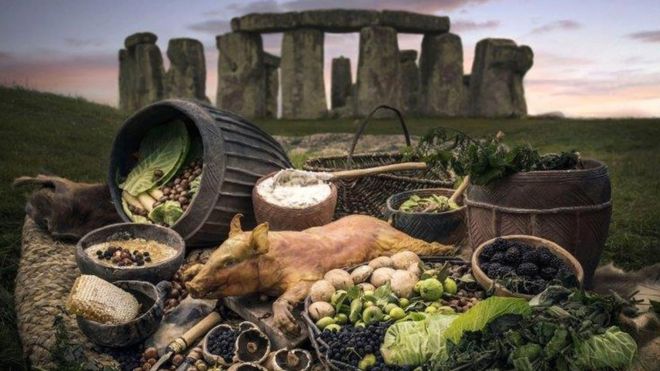
Stonehenge was 'hub for Britain's earliest mass parties'

Pigs were the main food at the feasts and were brought from as far away as Scotland and the North East of England to Stonehenge
ENGLISH HERITAGE/PA

Evidence of large-scale prehistoric feasting rituals found at Stonehenge could be the earliest mass celebrations in Britain, say archaeologists.

The study examined 131 pigs' bones at four Late Neolithic sites, Durrington Walls, Marden, Mount Pleasant and West Kennet Palisade Enclosures.

The sites, which served Stonehenge and Avebury, hosted the feasts.

Researchers think guests had to bring meat raised locally to them, resulting in pigs arriving from distant places.

Read the rest of this article...

HABITATS DE L’ÂGE DU BRONZE, SILOS ET RITUELS GAULOIS À FAUX-FRESNAY


À Faux-Fresnay, dans la Marne, une équipe d’archéologues de l’Inrap a découvert des vestiges de deux villages de l’âge du Bronze et de l’âge du Fer qui témoignent d’une importante activité agricole. Des silos où reposent des restes d’animaux interrogent sur des rituels qui auraient impliqué le cheptel. Cette fouille est réalisée en amont de l’aménagement d’un poste électrique par RTE.

Read the rest of this article...

In Europa lebten im frühen Jungpaläolithikum im Schnitt nur 1.500 Menschen


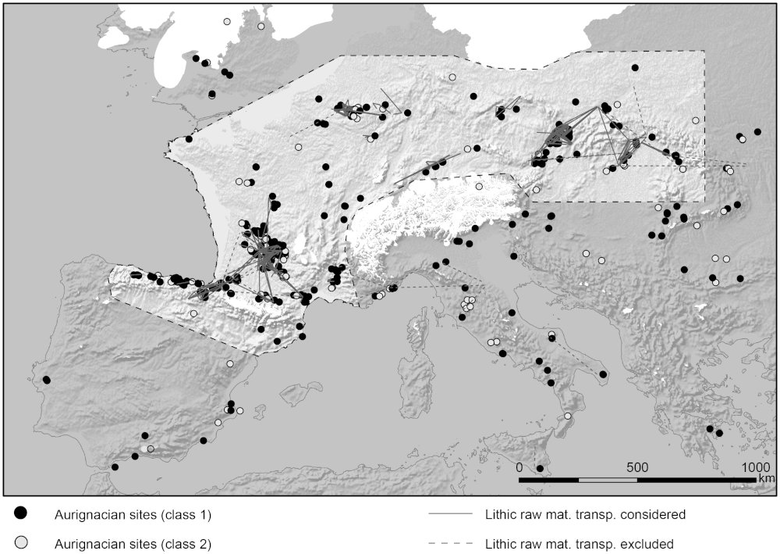
Mit einem an der Universität zu Köln entwickelten Protokoll können die Forscherinnen und Forscher des Sonderforschungsbereiches 806 "Our Way to Europe" rekonstruieren, wie die Besiedlung Europas durch den anatomisch modernen Menschen verlief. Die Daten zeigen, dass die Population der gesamten europäischen Jäger und Sammler in der Zeitspanne von etwa 42.000 bis etwa 33.000 Jahren vor heute – dem sogenannten Aurignacien – durchschnittlich nur etwa 1.500 Personen betrug.

Read the rest of this article...

Tuesday, March 12, 2019

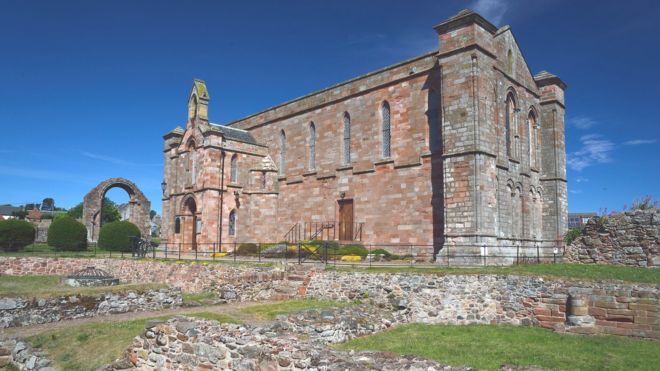
Home of 7th Century princess unearthed in Coldingham

The dig concentrated on ground around Coldingham Priory in the Borders
DIGVENTURES/AERIAL-CAM

Archaeologists believe they have found remains of the long-lost home of a 7th Century princess in the Borders.

A monastery was founded near the village of Coldingham by Princess Æbbe nearly 1,400 years ago.

It was destroyed by Viking raiders in the 9th Century and previous attempts to pinpoint its location have failed.

However, excavations led by DigVentures have found traces of a large, narrow ditch which they believe was the boundary of the religious settlement.

Read the rest of this article...

'Hobbit' human story gets a twist, thanks to thousands of rat bones


The limestone cave of Liang Bua, on the Indonesian island of Flores, is widely known as the hobbit cave, the site where the surprisingly tiny and enormously controversial extinct human relative Homo floresiensis was discovered. But to the scientists who excavate there, the site is known as something else entirely: the rat cave.
“The first time I went to the excavations at Liang Bua, I remember watching the bones coming out of the ground and being amazed at how it was almost all rat,” recalls Matthew Tocheri, the Canada Research Chair in Human Origins at Lakehead University.
Read the rest of this article...