Wednesday, December 14, 2016

Late Bronze Age Grave Of Yound Girl Wearing Elaborate Diadem Found In Northern Greece

The skeleton of the young girl as found during the discovery of the tomb [Credit: Ethnos]

The coronet was unearthed among a trove of other valuable personal items found in the grave of a young girl thought to be between 6-7 years of age.

The diadem, which is comprised of three rows of spherical bronze plates mounted on a perishable material (leather or, more likely, a fabric), was wrapped at least twice around the girl's head.

Archaeologist Konstantinos Noulas said the skeleton of the girl, found in a strongly contacted position in the grave, was adorned with numerous jewels and precious items. Among these was a necklace with glass and carnelian beads, a bracelet, three bronze rings, two bronze girdles or belts, while pottery surrounded the interior of the grave.

Read the rest of this article...

Why don't humans have a penis bone? Scientists may now know


Speed of human mating might be behind the lack of a baculum in humans, suggests study tracing bone’s evolution


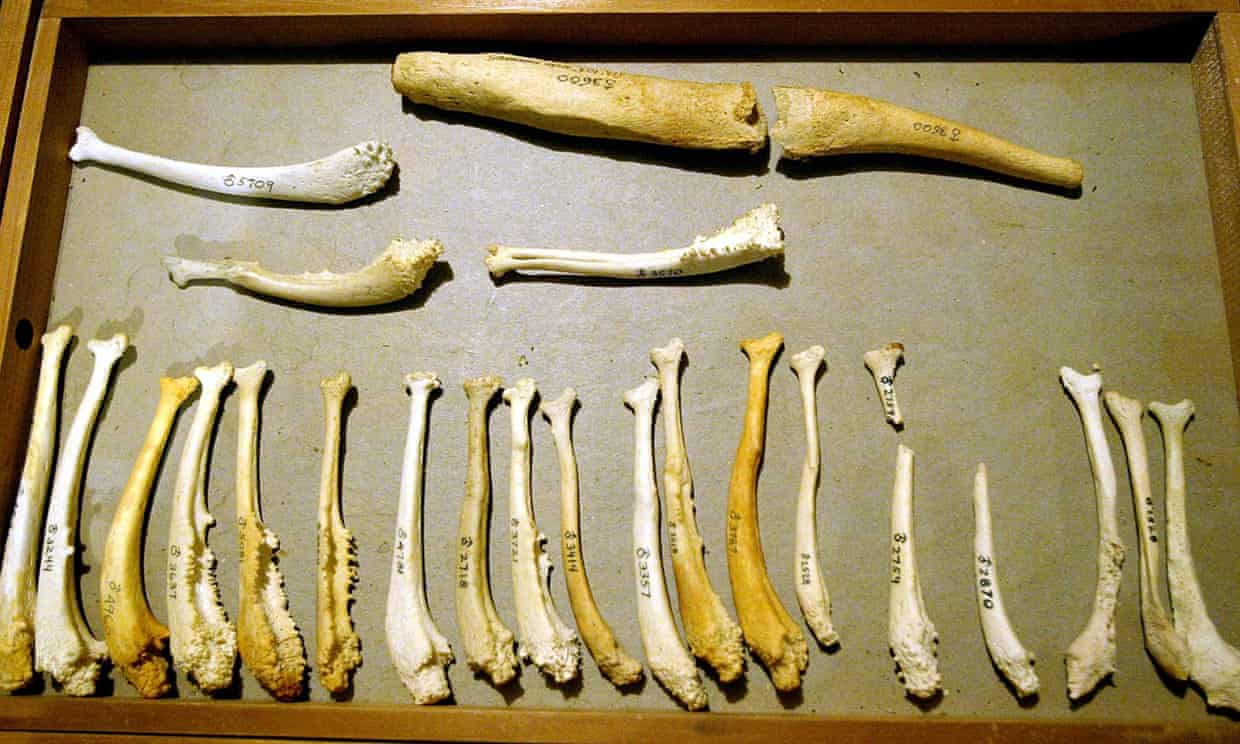
It can be as long as a finger in a monkey. In the walrus, it can be two feet long. But the human male has lost it completely. And researchers are a little stumped.
Known as the baculum to scientists with an interest, the penis bone is a marvel of evolution. It pops up in mammals and primates around the world, but varies so much in terms of length and whether it is present at all, that it is described as the most diverse bone ever to exist.
Prompted by the extraordinary differences in penis bone length found in the animal kingdom, scientists set out to reconstruct the evolutionary story of the baculum, by tracing its appearance in mammals and primates throughout history.
Read the rest of this article...

Watch Richard III The King in the Car Park: Telegraph Now Showing


When a skeleton was found under a council car park in Leicester in September 2012, the news broke around the world. Could these be the remains, lost for 500 years, of our most infamous King, Richard III?

The discovery of the body, and the battery of scientific tests conducted to establish its identity, were carried out in complete secrecy. This film – made by the only team allowed to follow the scientists – tells every twist and turn of the story. 

Richard III: The King in the Car Park is one of several shows available to watch for free as part of our Telegraph Now Showing series. Until the end of January, enjoy watching a range of quality dramas and documentaries including The Hour, Joanna Lumley's Jewel in the Nile and Miracle of the Hudson Plane Crash.

Read the rest of this article...

Sunday, December 11, 2016

France to unveil stunning copy of landmark prehistoric art cave


More than 70 years after the original cave was discovered, France will unveil a stunning real-to-life copy of the 18,000 year-old Lascaux cave, which cost €66 million and took four years to create.
The last of four boys who discovered the Lascaux cave paintings, a stunning display of prehistoric art in southwest France, will visit a new replica of the site Saturday.
Simon Coencas, now 89, will join President Francois Hollande for the inauguration of the display at a visitors' centre in Montignac, a village at the foot of the hills where he discovered the cave as a teenager.
More than seven decades after he got his first look at the site, Coencas will -- health permitting -- revisit a complete copy of the caves.
Read the rest of this article...

Digging Deeper

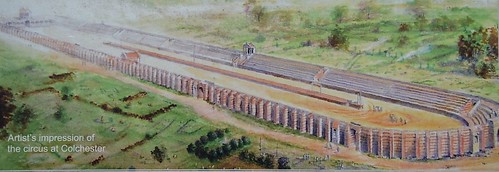
Artist's rendition of the Colchester Roman circus. Carole Raddato, Wikimedia Commons

Colchester, in the county of Essex, England, is perhaps best known as Britain’s oldest recorded town. The earliest record of Colchester’s existence is a reference by the Roman writer, Pliny the Elder in AD 77. In describing the island ofAnglesey, a large island off the northwest coast of present-day Wales, he wrote that ‘it is about 200 miles from Camulodunum, a town in Britain’. Camulodunum was the pre-Roman name for Colchester, the first known reference to any named settlement in this country.” It was a settlement that featured, among other things, a Roman circus.
The site of the Roman circus was identified in 2004 by the Colchester Archeological Trust, and it represents the only known Roman circus in Britain. The once monumental structure, at 400m long and 80m wide, is thought to have seated up to 8,000 spectators, and would have been used as a venue for various spectator sports, including chariot-racing. The circus is sited on the former army garrison site about 500 metres south of the southern Roman wall of Colchester. Rather poetically, part of the circus resides under the former garrison stables.
The circus starting gates were found first in the garden of the Sergeants’ Mess in Le Cateau Road. In 2005 the TV programme ‘Time Team’ subsequently located the starting gates, some of the wall, and the spina, the centre wall in the circus which acted as a barrier for chariot racing. 
Read the rest of this article...

Human blood, organs, and a surprising virus detected in ancient pottery

The vessels were interred in a burial mound near an Iron Age hillfort in Germany, known as the Heuneburg, reconstructed here.

Sometime between 600 and 450 B.C.E., a high-status individual in what is today Germany developed some disturbing symptoms: large bruises, bleeding from the nose and gums, and bloody diarrhea and urine. His fellow villagers, shocked—or perhaps intrigued—by his condition, stored his blood and organs in pottery vessels after he died, and interred them in a burial mound. Now, using a novel technique based on analyzing ancient proteins, archaeologists have reconstructed the contents of these vessels to conclude that the individual likely died from Crimean-Congo hemorrhagic fever virus (CCHFV), a severe tick-borne disease that still kills people across the world today.
"This is the first identification of CCHFV or any hemorrhagic fever virus in the archaeological record," says Conner Wiktorowicz, the study's lead researcher and a Ph.D. candidate in archaeology at Purdue University in West Lafayette, Indiana. It’s also the only known example of human blood and organs being buried in pottery vessels during this time in this region, raising the question of whether this was a more widespread practice, previously unknown to archaeologists.
The contents of ceramic vessels decay over time, leaving a film of residue containing proteins from any organic matter stored within. Archaeologists are exploring new ways to recover and analyze these proteins. In the new study, a team led by Wiktorowicz ground up a small portion of each of the pottery fragments (or sherds), used detergent and other chemicals to dislodge any proteins stuck to them, and isolated and analyzed the protein fragments using various techniques. The team then fed this information into a national protein database.
Read the rest of this article...

Viking gold discovered in Denmark – on live TV

The new find was made in the same field that yielded these seven bracelets over the summer. Photo: Nick Schaadt, Museet på Sønderskov

A team of Danish archaeologists digging in a field east of Ribe knew they had a better-than-average chance of discovering a treasure trove.
They were, after all, digging in the same field that back in June produced the largest ever discovery of Viking gold in Denmark. Having discovered seven bracelets, six gold and one silver, that date to around the year 900 the archaeologists went back to the field on Monday. 
 
 
This time they had a production crew from regional broadcaster TV Syd in tow. 
 
Already by midday, the archaeologists and the TV crew had cause to celebrate. In front of rolling cameras, the excited diggers pulled out what appeared to be part of another Viking gold bracelet. 
Read the rest of this article...

Rare 1,500 Year Old Odin Amulet Found In Denmark


A local treasure hunter named Carsten Helm, along with his 10 and 12-year-old sons, discovered a trove of gold on the island of Lolland that dates back 1,500 years.

The Odin amulet was called a "rare and exciting discovery" 
[Credit: Museum Lolland-Falster]

Among the gold discovered was a so-called bracteate, a thin gold medallion worn as jewellery during the Germanic Iron Age. Archaeologists at Museum Lolland-Falster believe that the image on the amulet depicts Nordic god Odin. Their conclusion was based on other finds of similar bracteates that include a rune inscription reading ‘The High One’, one of Odin’s nicknames.

“It is a very exciting find,” museum spokeswoman Marie Brinch said. “Even though it is a previously-known type, it is a rare and exciting discovery. Throughout history there have only been three found on Lolland, the latest in 1906, and in all of Northern Europe there are only around 1,000 of them.”

Helm and his sons also found an additional gold pendant, three gold pieces that were likely parts of a necklace, a gold ring and assorted pieces of silver.

Their finds will go on display at the Maribo County Museum on Friday.


Read the rest of this article...

Friday, December 09, 2016

An Archaeological Study of the Bayeux Tapestry by Trevor Rowley


An Archaeological Study of the Bayeux Tapestry is the latest book by Trevor Rowley.

“An Archaeological Study of the Bayeux Tapestry provides a unique re-examination
of this famous piece of work through the historical geography and archaeology of
the tapestry. Trevor Rowley is the first author to have analysed the tapestry through
the landscapes, buildings and structures shown, such as towns and castles, while
comparing them to the landscapes, buildings, ruins and earthworks which can be
seen today. By comparing illustrated extracts from the tapestry to historical and
contemporary illustrations, maps and reconstructions Rowley is able to provide the
reader with a unique visual setting against which they are able to place the events
on the tapestry.”


Wednesday, December 07, 2016

Archaeology sheds light on Mongolia’s uncertain nomadic future


As a herding lifestyle practiced for millennia is threatened by contemporary climate change, archaeology offers a long-term perspective


Around the world, traditional subsistence practices provide a resilient source of ecological knowledge that improves humanity’s ability to respond to environmental crises. In Central Asia, a herding lifestyle practiced for millennia is increasingly threatened by the speed and magnitude of climate change.
Although the global mean temperature is predicted to rise by 2C over the coming century, this trend will likely be more severe in high altitude and high latitude environments. In the subarctic steppes of Mongolia, nearly one-third of the population makes their living through migratory herding of livestock – sheep, goat, horse, cattle, camel, and yak. For these herders, the effects of climate change have been immediate and dramatic. Mongolia has experienced summer droughts, extreme winter weather, pasture degradation, a shrinking water supply, and desertification, leading to seasonal herd die-offs. These processes have a cascading effect, reinforcing other issues caused by human activity and globalisation.
How will nomadic society respond to these obstacles? Archaeology offers a long-term perspective on the relationship between people and the environment.
Read the rest of this article...

Mysteries of deserted pre-Famine village on Achill Island revealed


Keem Bay on the western-most tip of Achill Island is one of the most remote spots in Ireland. Today, the beautiful valley is largely desolate, the boggy flanks of Croaghaun Mountain slope down to a sheltered white sandy beach. In summer campervans line up along the shorefront and holiday makers brave the cold sea, but during the winter the place is abandoned to sheep, the occasional hiker and the ferocious gales that lash the Atlantic coast. But there is more to the site than meets the eye. If you leave the beach, clamber up the old hairpin bend road, past the early 20th-century coastguard station, you start to notice strange lumps and bumps in the grass. This is the site of a village of over forty houses that stood in the valley c.1838.

Read the rest of this article...

Archaeologists uncover clues to life of Iron Age man


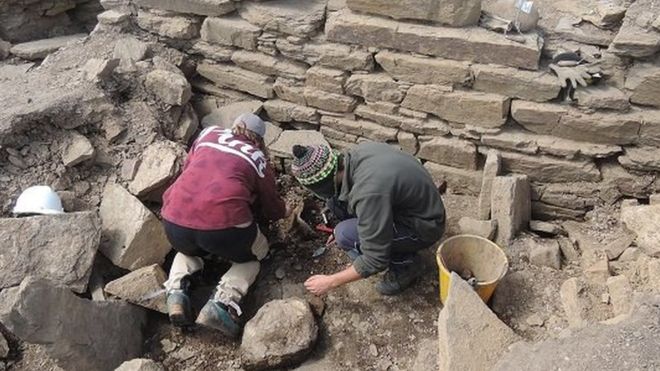
Archaeologists have been able to provide insights into the life of a man whose remains were found at an Iron Age site on Orkney.
A human jaw with two teeth was discovered centrally placed in a large, carved whalebone vertebra within the ruins of a broch earlier this year.
Analysis, including radiocarbon dates, of the find on South Ronaldsay show the man died when he was 50 or older.
His diet also appears to have been unusually rich in fish.

Read the rest of this article...

Anglesey dig discovers human remains at 'internationally important' neolithic site


Archaeologists have also unearthed a fourth house from the period at the Llanfaethlu dig.
CR Archeology have been working at the site since late 2014 and have called the discoveries made there "unparalleled".
More than 6,000 artefacts have been recovered which is the most of any Prehistoric site in North Wales and these include a massive range of pottery styles from both the neolithic and Bronze age.
The discovery of two partial sets of human remains could cause a "revolution" in how historians view the origins of North Wales agriculture, say CR Archeology, who have been working with Anglesey Council, Wynne Construction and Gwynedd Archaeological Planning Services.
Read the rest of this article...

FOUILLES ARCHÉOLOGIQUES AU PIED DE LA TOUR SAINT-NICOLAS À LA ROCHELLE : PREMIERS RÉSULTATS


Si la première mention de La Rochelle apparaît dans une charte de l’abbaye Saint-Cyprien de Poitiers (998-1000), la ville ne se développe véritablement qu’à partir du XIIe siècle. La première enceinte de ville, probablement fondée dans les années 1160-70, permet d’asseoir le statut de cette nouvelle cité portuaire qui s’émancipe progressivement des pouvoirs locaux, notamment au début du XIIIesiècle en englobant deux nouveaux quartiers - Saint-Jean du Perrot et Saint-Nicolas.

CONTEXTE HISTORIQUE

Le quartier du Gabut, situé entre le rivage et le quartier Saint-Nicolas, est partiellement intégré à la ville à la fin du XIVe siècle, suite à la construction d’une nouvelle enceinte reliant la tour Saint-Nicolas à la porte du même nom. Ce secteur de la ville se développe ensuite progressivement. Des bâtiments très allongés (corderies, magasins pour l’artillerie) sont en effet représentés sur les plans de la période moderne et perdurent jusqu’au démantèlement de l’enceinte, à la fin du XIXe siècle.
Read the rest of this article...

Researchers find overwhelming evidence of malaria's existence 2,000 years ago


MCMASTER UNIVERSITY—HAMILTON, Dec. 5, 2016 - An analysis of 2,000-year-old human remains from several regions across the Italian peninsula has confirmed the presence of malaria during the Roman Empire, addressing a longstanding debate about its pervasiveness in this ancient civilization.
The answer is in mitochondrial genomic evidence of malaria, coaxed from the teeth of bodies buried in three Italian cemeteries, dating back to the Imperial period of the 1st to 3rd centuries Common Era.
The genomic data is important, say researchers, because it serves as a key reference point for when and where the parasite existed in humans, and provides more information about the evolution of human disease.
"Malaria was likely a significant historical pathogen that caused widespread death in ancient Rome," says evolutionary geneticist Hendrik Poinar, director of McMaster's Ancient DNA Centre where the work was conducted.
Read the rest of this article...

Moderner als gedacht - Neandertaler passten ihre Überlebensstrategien aktiv an


Wissenschaftler des Senckenberg Center for Human Evolution and Palaeoenvironment an der Universität Tübingen haben herausgefunden, dass Neandertaler auch ohne äußere Einflüsse, wie Umwelt- oder Klimaveränderungen ihre Überlebensstrategien variierten. Mit einer neuen Methode zeigen sie anhand von Karbonatisotopie an fossilen Zähnen, dass die Vorfahren der heutigen Menschen vor 250.000 Jahren moderner in ihrer Entwicklung waren als bisher gedacht.

Read the rest of this article...

Tuesday, December 06, 2016

‘Bronze Age burial reveals its long held secret’


Archaeologists studying Neolithic and Early Bronze Age human remains in the Manx Museum collection for the ‘Round Mounds of the Isle of Man’ project have made an exciting discovery. 

Contained within a box of cremated bones excavated in 1947, osteologist Dr Michelle Gamble, discovered a collection of small bone objects that had not been noticed by the excavators. The bones had been buried almost 4000 years ago at Staarvey Farm in what is now German parish, Isle of Man. 

The site was excavated by Basil Megaw (1913-2002) who was director of the Manx Museum (1945-1957). Mr Megaw had been contacted by the farmer who had hit a large stone during ploughing. Excavations revealed a stone-built cist (a box made out of stone slabs) containing fragments of burnt bone, two flint tools, and two Collared Urns (Bronze Age pots) buried upside-down. But it is only now that the bones have been studied in detail.


Read the rest of this article...

Somerset skeletons are oldest evidence of monks found in UK


Carbon dating of remains unearthed in Beckery chapel near Glastonbury indicate monastic life dating back to fifth or early sixth centuries


Skeletons excavated at a site near Glastonbury are the oldest examples of monks ever found in the UK, carbon dating has proved.
The remains, unearthed at the medieval Beckery chapel in Somerset, said to have been visited by legendary figures such as King Arthur and St Bridget, indicate a monastic cemetery dating back to the fifth or early sixth centuries AD, before Somerset was conquered by the Saxon kings of Wessex in the seventh century.
Archaeologists first located an extensive cemetery of between 50 and 60 bodies during an excavation in the 1960s. The fact all were male – apart from one female, thought to have been a visitor, nun or patron, and two juveniles, who may have been novices – left little doubt this was a monastic graveyard.
Read the rest of this article...

Friday, December 02, 2016

Bitumen from Middle East discovered in 7th century buried ship in UK


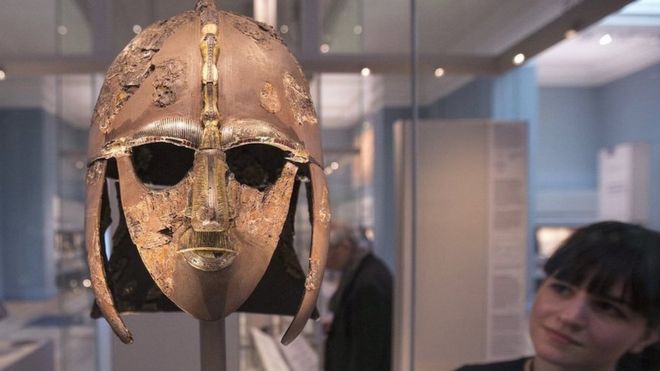
Middle Eastern Bitumen, a rare, tar-like material, is present in the seventh century ship buried at Sutton Hoo, according to a study published in the open-access journal PLOS ONE on December 01, 2016 by Pauline Burger and colleagues from the British Museum, UK and the University of Aberdeen.
The seventh century ship found within a burial mound at Sutton Hoo, UK was first excavated in 1939 and is known for the spectacular treasure it contained including jewellery, silverware, coins, and ceremonial armour. The site is thought to be an example of the European ship-burial rites of the time, and also includes a burial chamber where a corpse was likely laid. Fragments of black organic material found in this chamber were originally identified as locally-produced 'Stockholm Tar' and linked to repair and maintenance of the ship. The authors of the present study re-evaluated these previously-identified samples, as well as other tar-like materials found at the site, using imaging techniques and isotopic analysis and found the samples had been originally misidentified.

Read the rest of this article...

Sutton Hoo bitumen links Syria with Anglo-Saxon England


Analysis of black organic fragments found in the Sutton Hoo boat burial has revealed they are bitumen from Syria.
The Suffolk site was excavated in 1939. Gold and garnet jewellery, silverware and ceremonial armour were discovered. 
The small black objects scattered among the 7th Century finds were believed to be pine tar used for boat maintenance.
British Museum and Aberdeen University experts have revealed they are bitumen Andrew said they demonstrated the "far-reaching" Anglo-Saxon trade network.

Read the rest of this article...