Monday, December 19, 2022

U.K. Archaeologists Say That Ancient Tools Discovered Around Stonehenge Point to a More Advanced Society Than Previously Known


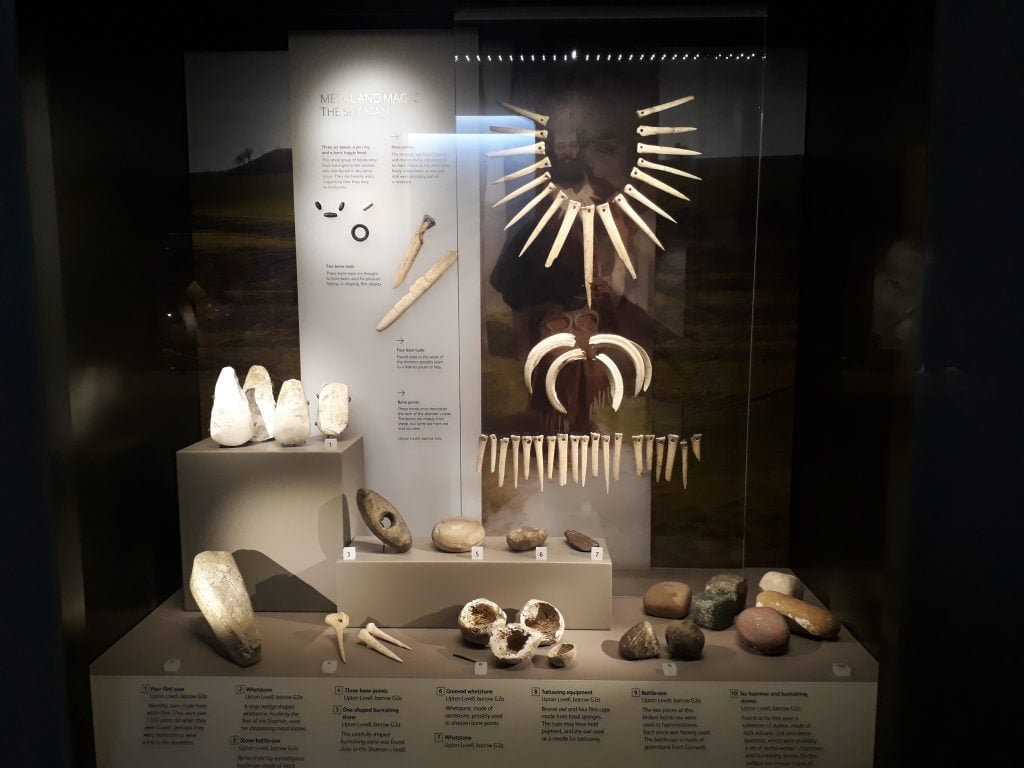
Archaeologists at the University of Leicester have just re-examined five 4,000-year-old tools like flint cups and Neolithic axes that have puzzled experts since their discovery 220 years ago in a Bronze-Age burial near Stonehenge. Four were examined for the first time.

Based on the bones, cups, and cobbles surrounding two bodies at the grave—most recently dated 1850–1700 B.C.E.—researchers have hypothesized over the past century that these grave goods belonged to a costumed shaman, or a goldsmith of status.

Applying contemporary technologies including microwear analysis and scanning electron microscopy to the tools’ surfaces, researchers have revealed their owner was more likely a gold worker who coaxed the precious metal into sheets to gild other items.

Read the rest of this article...

Tuesday, December 13, 2022

Vikings: Raiders, Traders and Settlers


The University of Oxford online course: Vikings: Raiders, Traders and Settlers is currently enroling for Trinity Term when the course will begin on 25 January.

Find out more about this course...

Monday, December 12, 2022

Early medieval female burial site is ‘most significant ever discovered’ in UK

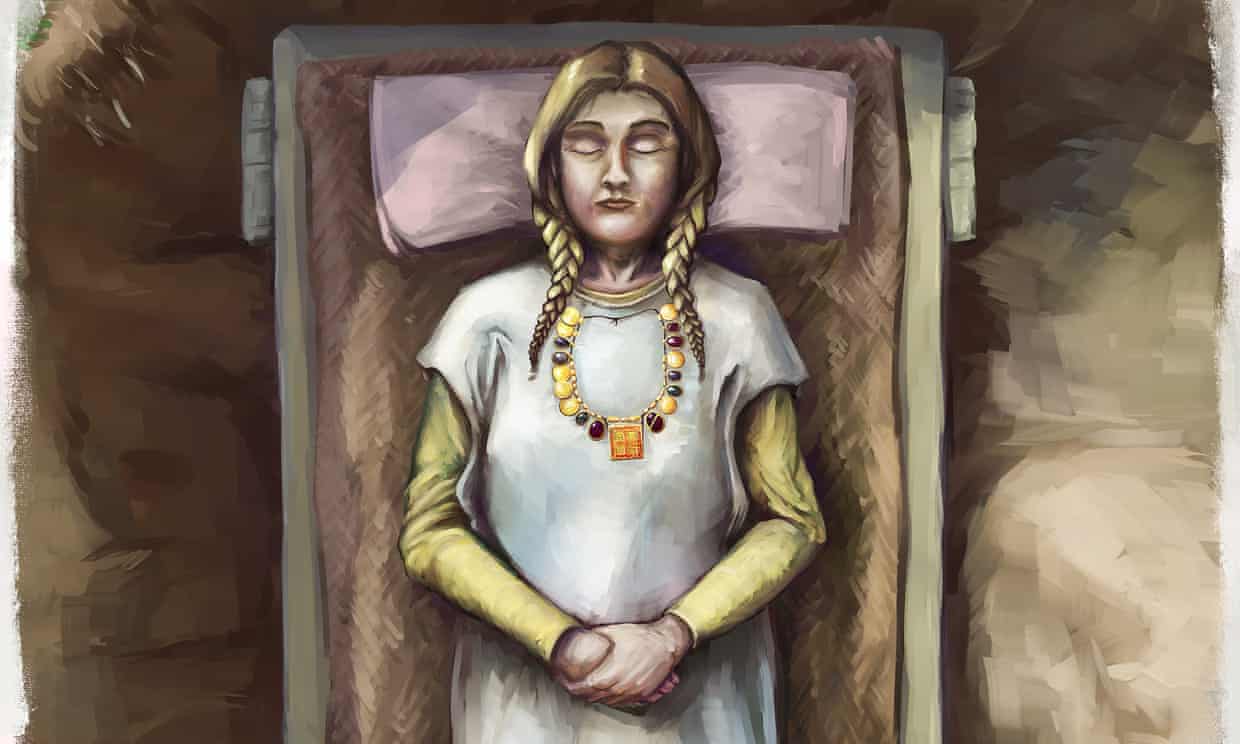
A reconstruction of the burial site near Harpole in Northamptonshire. 
Photograph: MOLA (Museum of London Archaeology)

Find dating from about 650AD in Northamptonshire includes jewelled necklace and changed archaeologists’ view of the period

Archaeologists don’t often bounce with excitement, but the Museum of London archaeology team could hardly contain themselves on Tuesday as they unveiled an “exhilarating” discovery made on the last day of an otherwise barren dig in the spring.

“This is the most significant early medieval female burial ever discovered in Britain,” said the leader of the dig, Levente Bence Balázs, almost skipping with elation. “It is an archaeologist’s dream to find something like this.”

“I was looking through a suspected rubbish pit when I saw teeth,” Balázs added, his voice catching with emotion at the memory. “Then two gold items appeared out of the earth and glinted at me. These artefacts haven’t seen the light of day for 1,300 years, and to be the first person to see them is indescribable. But even then, we didn’t know quite how special this find was going to be.”

What Balázs had found was a woman buried between 630 and 670 AD – a woman buried in a bed alongside an extraordinary, 30-piece necklace of intricately-wrought gold, garnets and semi-precious stones. It is, by a country mile, the richest necklace of its type ever uncovered in Britain and reveals craftsmanship unparalleled in the early medieval period.

Read the rest of this article...

A 1,300-Year-Old Gold Necklace Found in an Early Christian Burial in England Is a ‘Once-in-a-Lifetime Discovery,’ Says Archaeologist

Collection of pendants from the Harpole Treasure. Photo by Andy Chopping; © MOLA.

An exquisite gold necklace from the seventh century C.E. has been found in England at the burial site of a powerful woman who was interred some 1,300 years ago, according to the Associated Press.  

The necklace, known as the Harpole Treasure after the Northamptonshire village where it was discovered, is decorated with 30 pendants and beads fashioned from gold Roman coins and semi-precious stones. The large rectangular pendant features a cross, iconography that suggests the deceased may have been an early Christian religious leader. The use of precious metals and stones suggests she was also very wealthy.

Read the rest of this article...

Great Viking Fortresses Built By King Harald Bluetooth

Aerial view of the Viking ring fortress of Aggersborg. The similarity in design with Trelleborg near Slagelse, is clearly evident. Image credit: View author information - CC BY 2.0

About 1,000 years ago, legendary King Harald Bluetooth built several impressive Viking fortresses. Today, there is not much left of these once powerful ancient buildings, but re-constructions give us a unique glimpse of what life was like inside the circular ringforts.

Harald Bluetooth was the Viking king of Denmark between 958 and 970.

King Harald was famous for uniting parts of Denmark and Norway into one nation and converting the Danes to Christianity.

The impressive remains of one of the Vikings’ great ring fortresses were originally constructed around AD 980 by King Harald Bluetooth, and the museum at Trelleborg has models, archaeological finds, and reconstructions that hekp to experience some of  Trelleborg’s history, its inhabitants and the function of the fortress in the distant past.

Read the rest of this article...

Revisiting one of Scotland's rarest Viking burials


One hundred and forty years ago Victorian antiquarians excavated a rare Viking boat grave in the Inner Hebrides.

What they uncovered on the coastal meadow, called machair, at Kiloran Bay in Colonsay remains Scotland's single richest male Viking burial site to be found so far.

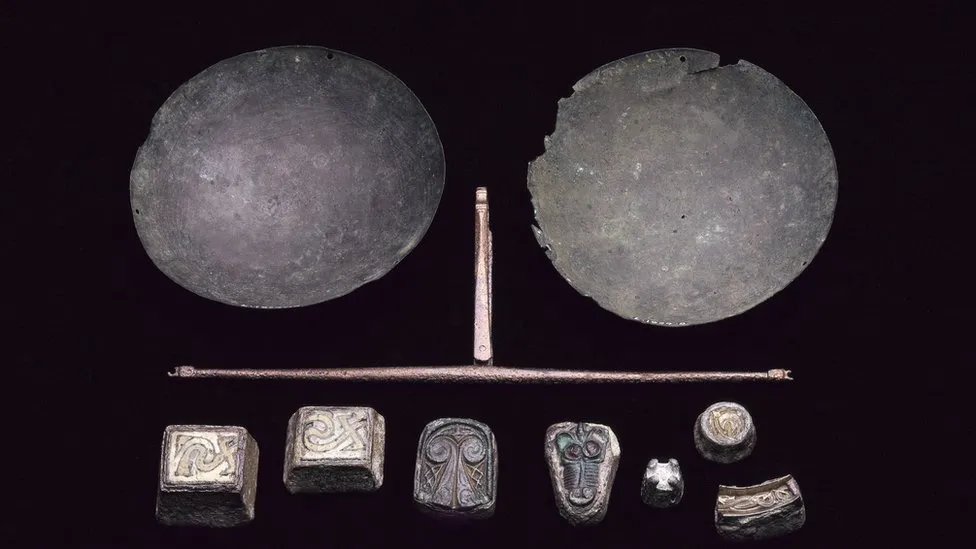
The finds included weapons, a silver dress pin and a set of scales and elaborately decorated weights for trading.

A boat had been placed over the top of the man's grave chamber and buried next to it was his horse, which had been sacrificed. There was also possible evidence of a human sacrifice having taken place.

"The grave was discovered after rabbits, digging in the soft machair, scooped up some boat rivets," says Prof James Graham-Campbell, an expert on pagan Norse graves of Scotland.

Read the rest of this article...

Who were the Normans?


How did a group of rowdy itinerant Scandinavians come to dominate swathes of Europe for more than two centuries? Alex Burghart tackles the big questions about the origins of the Normans and their enduring influence

The Normans were the violent parvenu opportunists of their day: Vikings who settled in Normandy and became French before conquering England and becoming English.

From obscure Scandinavian origins, the Normans relied on their military proficiency – and ruthlessness – to dominate the institutions and elites of Europe, and assimilated cultures, ideas and whole political systems in their pursuit of glory. Norman knights and generals occupied areas from the lowlands of Scotland to the deserts of the near east, thrusting themselves into the midst of conflicts and seizing chances whenever they appeared. They also left behind some of the most remarkable ecclesiastical and military architecture of the period, which speaks volumes about both their self-importance and their piety.

Read the rest of this article...

Monday, November 28, 2022

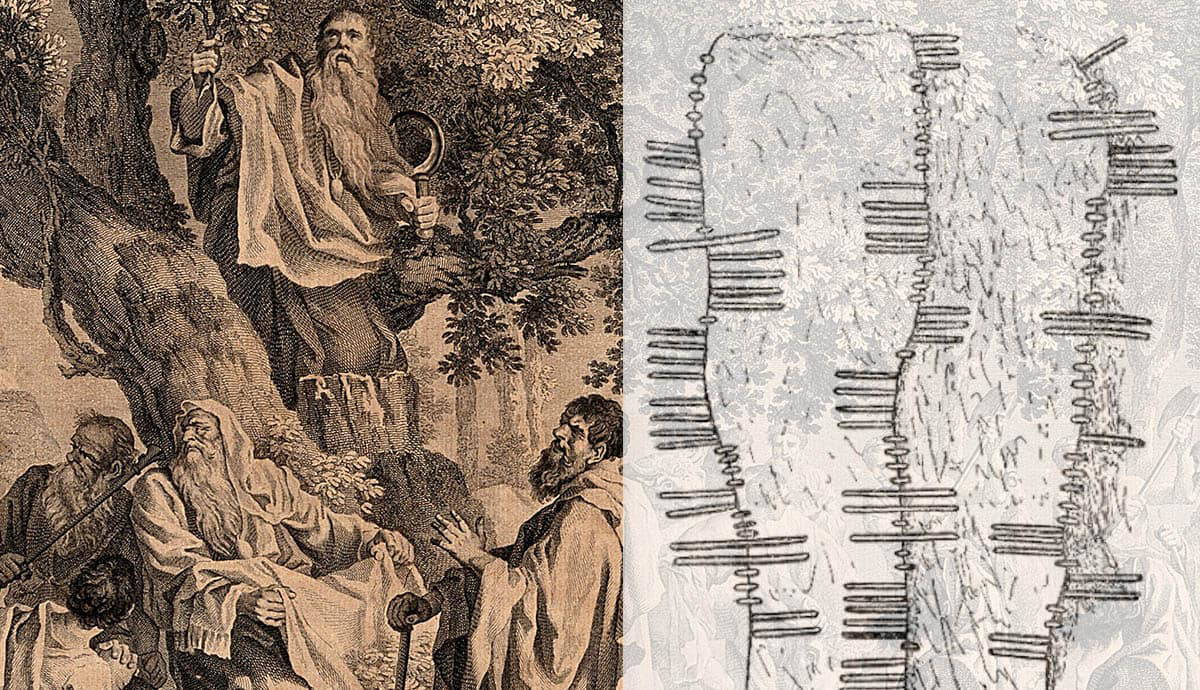
Currower Ogham Stone


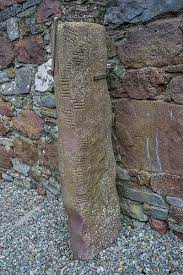
Dated possibly from the fourth to seventh centuries these inscribed stones were located at various sites near ecclesiastical sites or souterrains throughout Ireland also in counties Cork, Waterford or Kerry where the highest number were recorded.  Ogham stones consist of parallel lines in groups of 1-5 carved on the faces of the stones. They were carved vertically along the natural angle or edge that served as a natural stemline.  The script was written wrapped around the stone it produced a unique three-dimensional aspect.  Several were later moved: discovered near parish or townland boundaries or re-used in souterrains.

Read the rest of this article...

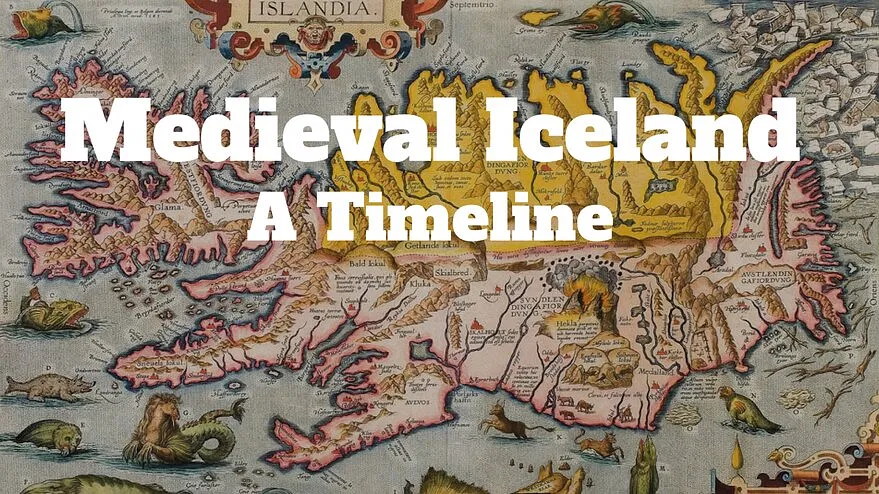
Medieval Iceland: A Timeline


A look at the events and history of Iceland between the ninth and fifteenth centuries.

Iceland’s history begins with its exploration and settlement, with a unique type of nation forming. By the mid-thirteenth century it would suffer its own civil war and then come under the control of Norway (and later Denmark). During the later Middle Ages, Iceland would be hit hard by natural disasters and plague.

Early-ninth century – a few Irish monks are the only inhabitants of Iceland

860 – a Norse sailor named Naddoðr gets lost while sailing to the Faroe Islands. He lands in Iceland and explores the territory for a short time before sailing back to the Faroes. He names the land Snæland (Snowland).

Read the rest of this article...
Monday, November 21, 2022

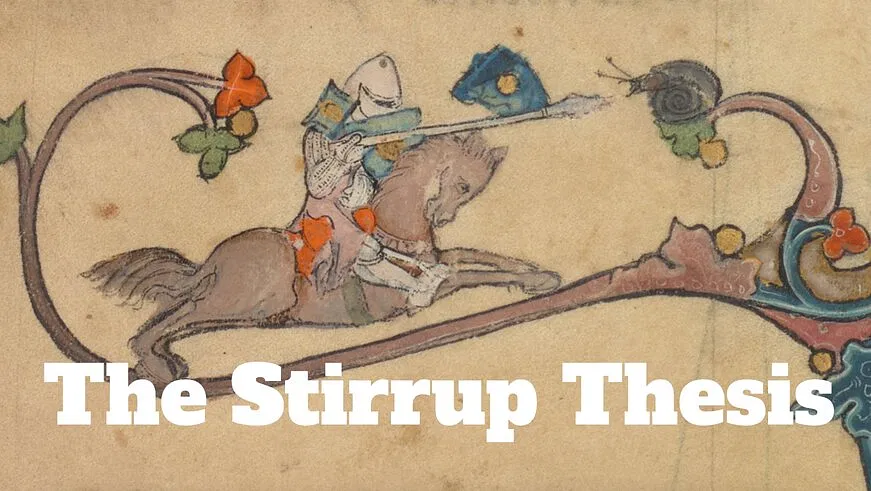
The Stirrup Thesis: A transformative technology that wasn’t


Sometimes there is a story that’s just so simple and explanatory that it just must be true … even when it isn’t. Such is the so-called ‘Stirrup Thesis’ most tightly connected to a story that Lynn White, Jr. told in his 1962 book Medieval Technology and Social Change, which has been one of the few medieval history textbooks to remain continuously in print since its publication.

Put simply – and it is simplistic – the Stirrup Thesis argued that when the Franks discovered the stirrup in the eighth century, they used it to develop a new form of mounted shock combat with the couched lance, made cavalry the dominant military arm and knights the backbone of the military aristocracy (and that then led to a wholesale r/evolution in society to support the horse-owning aristocracy that gets shorthanded in another quasi-mythical concept, ‘feudalism’), and promptly turned back the Umayyad invasion of Gaul from the Iberian Peninsula, thus securing Europe for Christendom.

Read the rest of this article...

The ancient golden treasure rewriting Danish history


A chance discovery is shedding new light on early Norse history, after two old school-friends, armed only with a metal detector stumbled across a gold treasure trove.

More than 20 gold artefacts, weighing almost a kilo, were found buried in a field in the Danish village of Vindelev. Hidden for almost 1,500 years, the treasure includes Roman medallions and ornate pendants called 'bracteates' - some as large as a saucer.

There are mysterious inscriptions and never-seen-before runes, which researchers think are some of the earliest references to Norse gods.

Read the rest of this article...
Wednesday, November 16, 2022

The Viking Axe

A ‘Danish’ Axe discovered in the Thames River. it dates from the 11th century.
Photo by Medievalists.net

Few weapons were so feared or as evocative as the axe used by the Vikings in their feuds and in battle, as well as on their raids throughout Europe in the eighth and ninth centuries and beyond. With its long shaft, wielded in both hands, its iron head and sharp edge, it was formidable indeed – cleaving heads and bodies at a single blow. But what was it really like?

Read the rest of this article...
Thursday, November 03, 2022

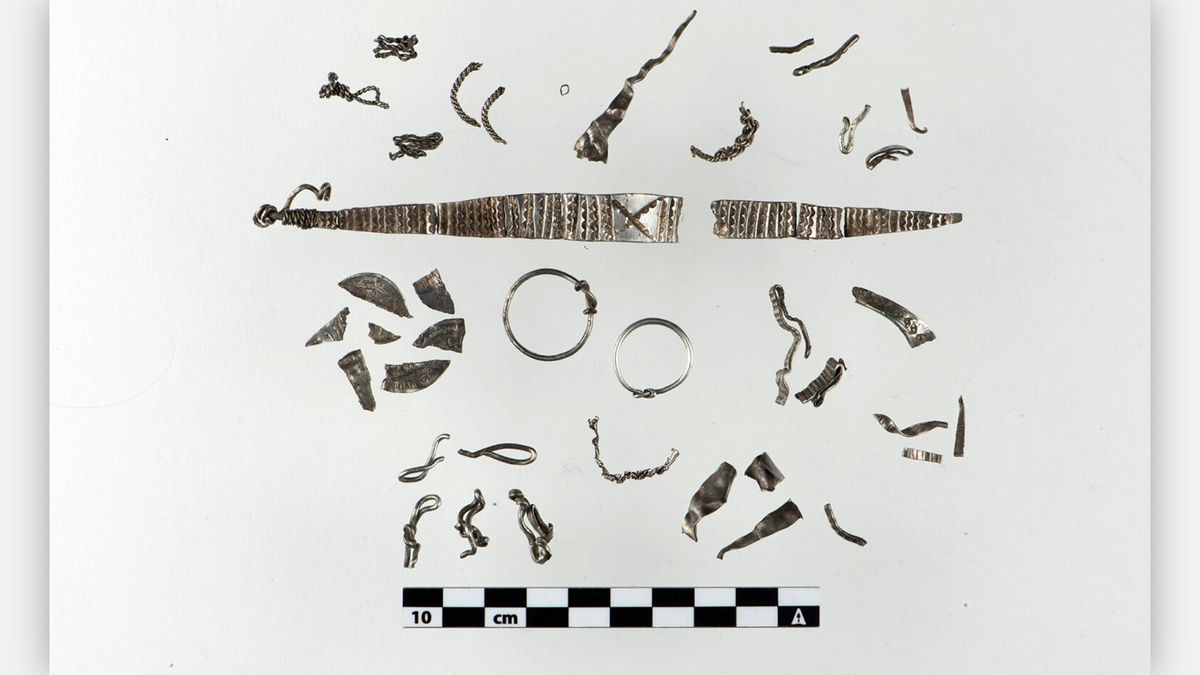
Metal detectorist stumbles across Viking treasure hoard in Norway

In the ninth century A.D., this treasure might have bought half a cow. 
(Image credit: Brigit Maixner)

Using a metal detector in a field, a Norwegian man stumbled upon a number of silver pieces dating back to the Viking Age.

Many people dream of finding buried treasure, but very few people actually do. For one man in central Norway that dream became a reality just before Christmas last year, when he took his metal detector for a stroll in a field near his home and unearthed a hoard of silver fragments from the Viking Age.

At first, Pawel Bednarski wasn't sure of the value of the fragments he'd found buried under just a couple of inches of soil. There were a pair of rings, what looked like chopped-up Arabic coins and fragments of a silver bracelet, among other pieces. But when he reached out to local historians and archaeologists, the truth became clear: This was a significant find.

Tuesday, November 01, 2022

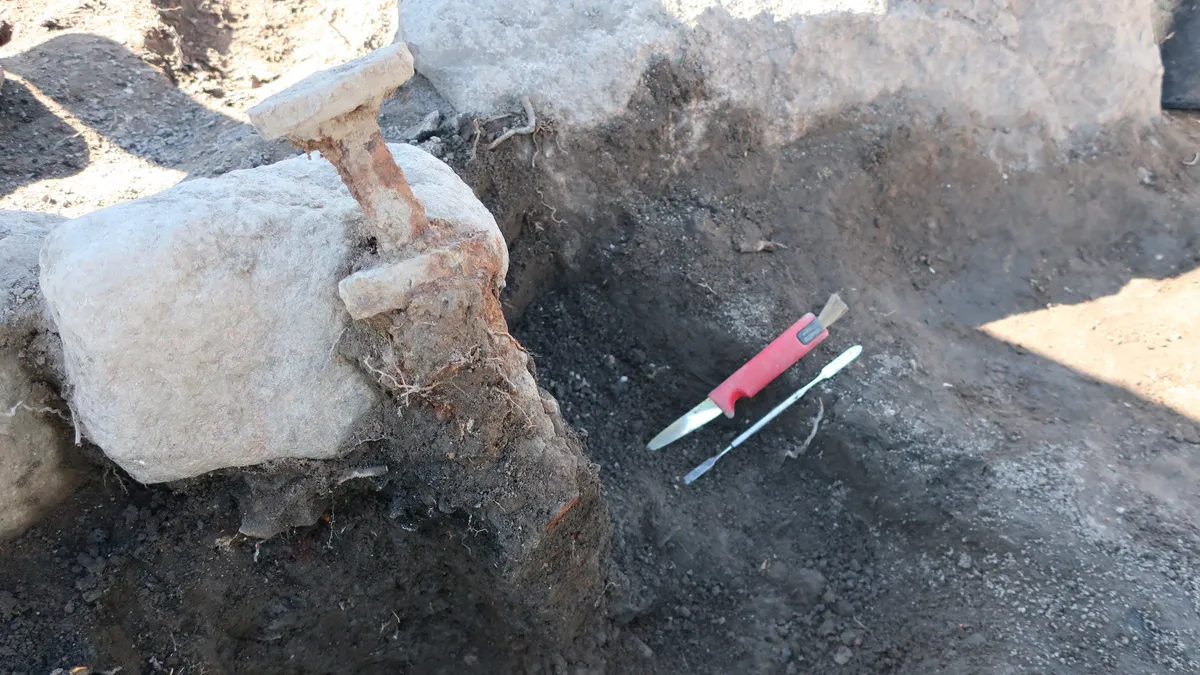
2 Viking swords buried upright might have connected the dead to Odin and Valhalla

This sword has a preserved pommel (a knob at the end of the handle) with a "button" on top.
(Image credit: The Archaeologists/National Historical Museums, CC BY)

Archaeologists in Sweden excavating a Viking grave field have uncovered two burials containing swords standing upright.

Archaeologists in Sweden have unearthed two Viking swords in neighboring graves that were buried upright, as if they were standing on their points.

Whoever installed the iron swords perpendicular to the surface about 1,200 years ago clearly did so on purpose, as it would have taken a lot of effort — possibly involving a rock or hammer — to wedge the weapons roughly 16 inches (40 centimeters) into the ground, archaeologists told Live Science. 

"The placement of the swords reflects an action with a lot of symbolism," Anton Seiler(opens in new tab), Fredrik Larsson(opens in new tab) and Katarina Appelgren(opens in new tab), archaeologists at Arkeologerna, an archaeology firm in Sweden that is part of the government agency National Historical Museums, told Live Science in an email. "When you find swords in graves — which you don't do very often — they often lie beside the buried individual, as a faithful companion on the voyage to the next world."

Read the rest of this article...
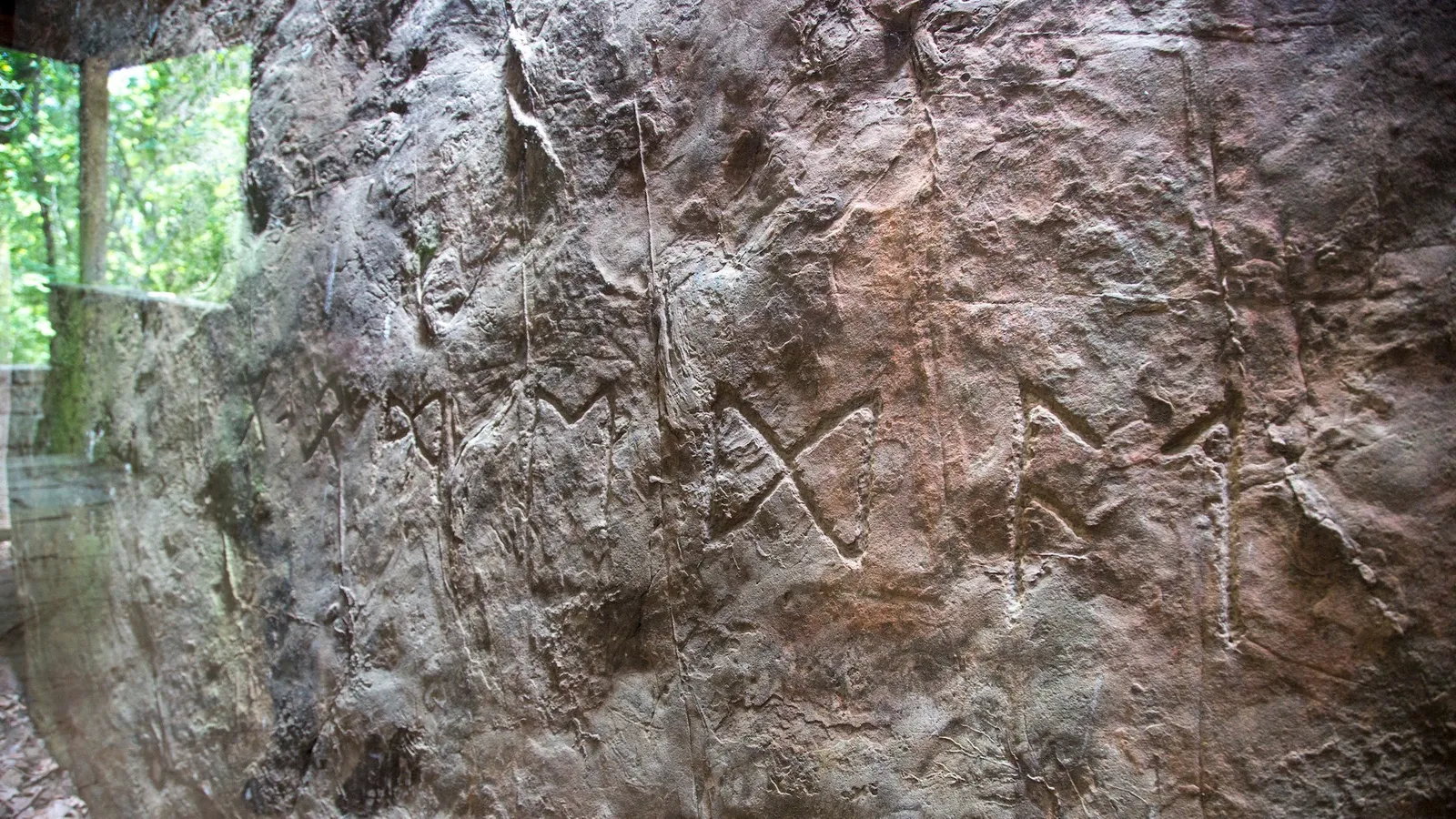
The mysterious Viking runes found in a landlocked US state


Did Vikings find their way to a remote part of Oklahoma? Some in a small community believe so, thanks to controversial runic carvings found in the area.

"[Farley] spent the majority of her adult life researching the stone," said Amanda Garcia, Heavener Runestone Park manager. "She travelled all around the US, went to Egypt and went to different places looking at different markings."

Faith Rogers, an environmental-science intern and volunteer at the Heavener Runestone Park, led me down a cobblestone path toward one of the 55-acre woodland's biggest attractions – which is also one of the US' biggest historical mysteries. We were deep in the rolling, scrub-forest foothills of the Ouachita Mountains in far eastern Oklahoma, and we were on our way to view a slab of ancient sandstone that still has experts scratching their heads and debating about the eight symbols engraved on its face. 

Some believe that these cryptic inscriptions are runes (ancient alphabetical characters) carved into the towering stone circa 1000 CE by Norse explorers who travelled up the Arkansas River to this remote part of landlocked America.

Read the rest of this article...

Monday, October 31, 2022

Sex with humans – not climate change, disease or war – spelled the end for Neanderthals, scientists believe


They began to encounter each other around 60,000 years ago across Europe and Asia but within 20,000 years, Neanderthals had died out

The demise of the Neanderthals is often blamed on climate change, disease, or violent clashes with modern humans.

However, an expert at the Natural History Museum (NHM) in London believes it was making love, not war, with Homo sapiens that may have led the rival Neanderthals down an evolutionary cul-de-sac.

The NHM’s Prof Chris Stringer said it was telling that the DNA of Homo sapiens is never found in Neanderthal specimens, despite their DNA being found in modern humans.

Read the rest of this article...

Six recent discoveries that have changed how we think about human origins


Scientific study of human evolution historically reassured us of a comforting order to things. It has painted humans as as cleverer, more intellectual and caring than our ancestral predecessors.

From archaeological reconstructions of Neanderthals as stooped, hairy and brutish, to “cavemen” movies, our ancient ancestors got a bad press.

Over the last five years discoveries have upended this unbalanced view. In my recent book, Hidden Depths: The Origins of Human Connection, I argue that this matters for how we see ourselves today and so how we imagine our futures, as much as for our understanding of our past.

Six revelations stand out.

1. There are more human species than we ever imagined

Species such as Homo Longi have only been identified as recently as 2018. There are now 21 known species of human.

Read the rest of this article...
Sunday, October 30, 2022

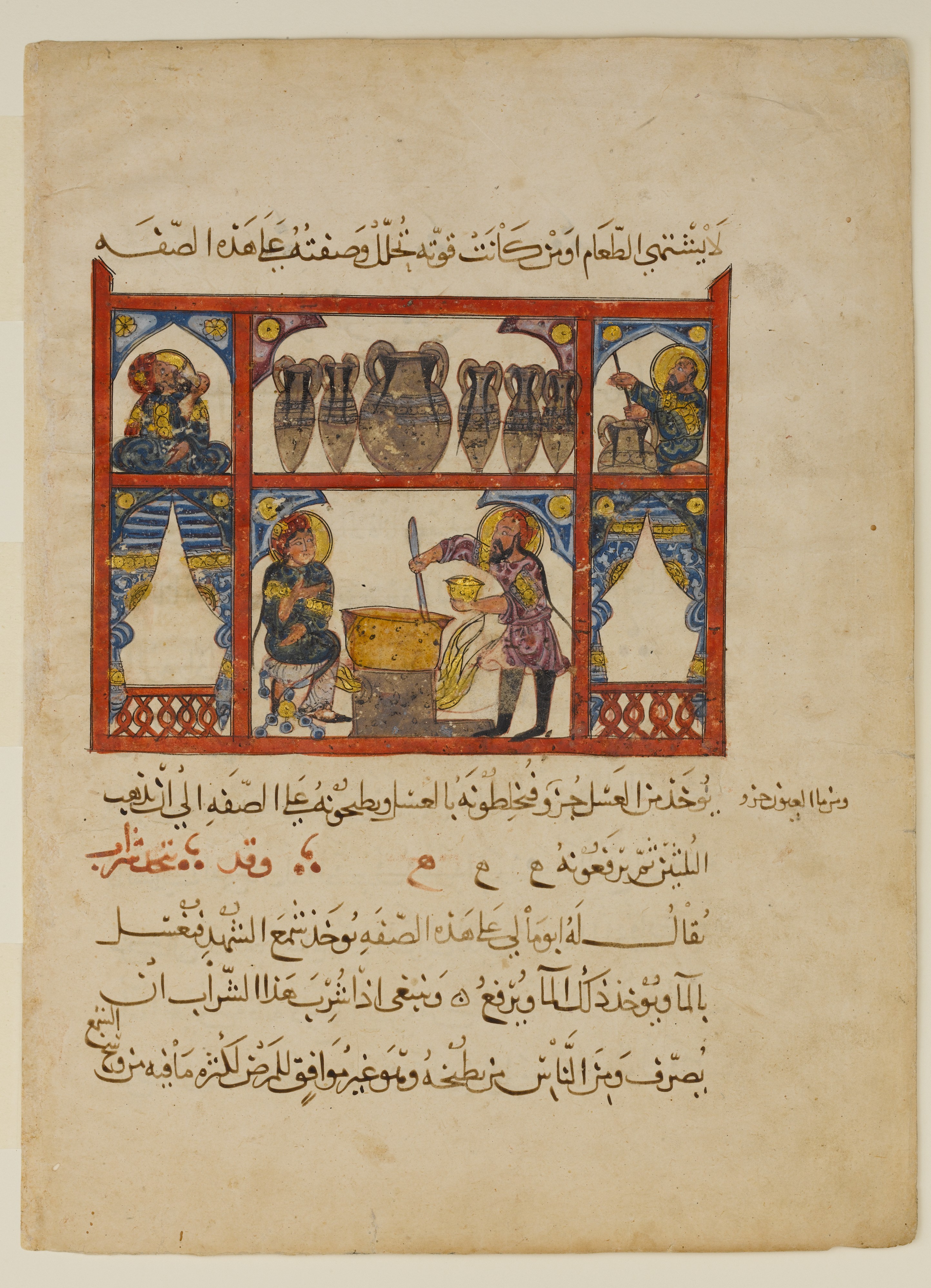
"Preparing Medicine from Honey"

"Preparing Medicine from Honey", from a Dispersed Manuscript of an Arabic Translation of De Materia Medica of Dioscorides
dated A.H. 621/ A.D. 1224

One of the most influential medical treatises handed down to Muslims was De Materia Medica, by a first-century B.C. Greek physician in Cilicia (southern Anatolia). The left page concerns making medicine from honey and water, prescribed to cure weakness and loss of appetite. A doctor holds a gold cup while stirring the boiling honey and water in a cauldron as he prepares to scoop it up for the seated patient. The architectural setting suggests that the drugs are being produced in a pharmacy like those attached to hospitals in the Seljuq lands. In the illustration on the right, a doctor and his assistant or patient stand on either side of a sieve through which grapes are pressed and then combined with brine and an onion-like herb to produce a medicine to cure digestive disorders.

Read the rest of this article...
Harald Hardrada: King of Norway


Coming back to Norway meant that Harald Hardrada had two relatives to deal with – Sweyn and Magnus. It would make for an interesting path to the Norwegian throne. 

By 1043 the wheel of fortune had turned once more, and the family of Harald Hardrada was triumphant. While Harald had busied himself in his exile waging war across the wine-dark sea in the employ of the empire of the Romans, his nephew Magnus, the illegitimate son of Harald’s half-brother King Olaf II, had become the figurehead of a powerful bloc of Norwegian aristocrats disaffected by the burdens and excesses of Danish overlordship. With their support and after a decade of warfare, Magnus was able to not only secure his hold on Norway, doing much to establish and disseminate notions of royal authority, but also capture the throne of Denmark. Their traditional enemies and tormentors had all fallen by the wayside or been bent to purpose. Cnut the Great and his sons, their power fragmented by internecine rivalries and squabbles, all fell victim to illness and tragedy while the Norwegian aristocrats who had overthrown and then slain Olaf II had all reconciled themselves to Magnus and the notion of Norwegian kingship.

Magnus, whose role in the political unification of Norway and establishment of the kingdom has all too often been overlooked and undervalued, is known to history as Magnus the Good. He earnt this epithet we are told by the 13th-century saga material because rather than seek revenge against his father’s killers and perpetuate a destructive blood feud, Magnus chose to forgive them and work together in challenging Danish hegemony over Norway. Of course, Magnus was only eleven when he was first proclaimed king in 1035, therefore despite the support of several powerful advocates, such as his stepmother Queen Astrid and her brother King Arnud Jacob of Sweden, the extent to which he could have struck back against his aristocratic sponsors is highly questionable. Harald’s epithet of Hardrada on the other hand translates into English into something along the lines of the severe or stern. Wars fought between those famed for their decency and gentleness of heart and those known for their severe and forceful nature seldom last long.

And it was to be war, for Harald arrived in Scandinavia intent upon seizing the throne of Norway for himself. Perhaps he felt like he had come too far, seen too much and served too many simply to present himself to his nephew as just another poor relation, a potential military proxy and advisor in a royal court already replete with vested interests and aristocratic affinities. Harald had departed Constantinople with considerable haste with a meagre handful of ships and a few hundred diehard followers at the most. Yet he was a force to be reckoned with.

Read the rest of this article...
The Value and Power of Books in Anglo-Saxon England

The St Cuthbert Gospel of St John. (formerly known as the Stonyhurst Gospel) is the oldest intact European book

Despite the ‘Dark Ages’ myth, Anglo-Saxon England actually had an impressive wealth and sophistication, and books were prized possessions. The printing press was still centuries away and so the creation of each book required a painstaking amount of time and effort. Thus, those available became symbols of power and wealth and were highly-valued among the upper echelons of Anglo-Saxon society.

In what different ways did books hold such value and power during this period?

Valuable possessions

One of the most notable figures who placed high value on literature was King Alfred the Great. His famous beautifully-crafted jewel, the Alfred Jewel, is thought to have originally been the handle of his reading stick, used for pointing at words when reading.

We also know Alfred championed the making of books. In the mid 880s, Alfred summoned Asser, a Welsh monk from the monastery at St David’s, to write the Life of King Alfred – while the king was still alive.

Read the rest of this article...

Saturday, October 29, 2022

Landscapes of the Norman Conquest


An exciting new book “Landscapes of the Norman Conquest” by Trevor Rowley has now been published.

For a long time, the Norman Conquest has been viewed as a turning point in English history; an event which transformed English identity, sovereignty, kingship, and culture. The years between 1066 and 1086 saw the largest transfer of property ever seen in English History, comparable in scale, if not greater, than the revolutions in France in 1789 and Russia in 1917. This transfer and the means to achieve it had a profound effect upon the English and Welsh landscape, an impact that is clearly visible almost 1,000 years afterwards.

Although there have been numerous books examining different aspects of the British landscape, this is the first to look specifically at the way in which the Normans shaped our towns and countryside.

The castles, abbeys, churches and cathedrals built in the new Norman Romanesque style after 1066 represent the most obvious legacy of what was effectively a colonial take-over of England. Such phenomena furnished a broader landscape that was fashioned to intimidate and demonstrate the Norman dominance of towns and villages.

The devastation that followed the Conquest, characterised by the ‘Harrying of the North’, had a long-term impact in the form of new planned settlements and agriculture. The imposition of Forest Laws, restricting hunting to the Norman king and the establishment of a military landscape in areas such as the Welsh Marches, had a similar impact on the countryside.

You can find further details here…

Viking beadmakers’ secrets revealed in new study


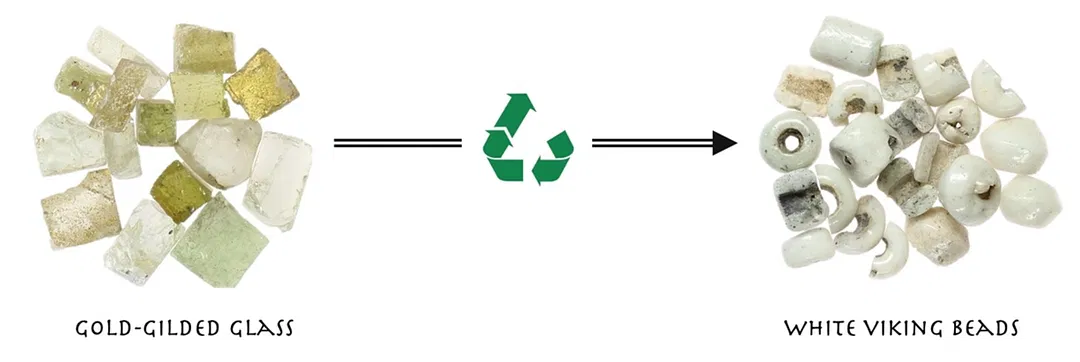
The Viking Age bead makers were more advanced than previously believed. New research shows that craftsmen in Denmark around the year 700 used sophisticated and sustainable methods when they gave old Roman glass mosaics new life as glass beads.

Ribe was an important trading town in the Viking Age. At the beginning of the 8th century, a trading place was established on the north side of the river Ribe, to which traders and craftsmen flocked from far and wide to manufacture and sell goods such as brooches, suit buckles, combs and coloured glass beads.

When glass became a scarce commodity in the Early Medieval period, coloured glass cubes – so-called tesserae – were torn down from mosaics in abandoned Roman and Byzantine temples, palaces and baths, transported North and traded at emporia towns such as Ribe, where the beadmakers melted them down in large vessels and shaped them into beads.

Read the rest of this article...
Viking silver treasure uncovered in Täby in Stockholm

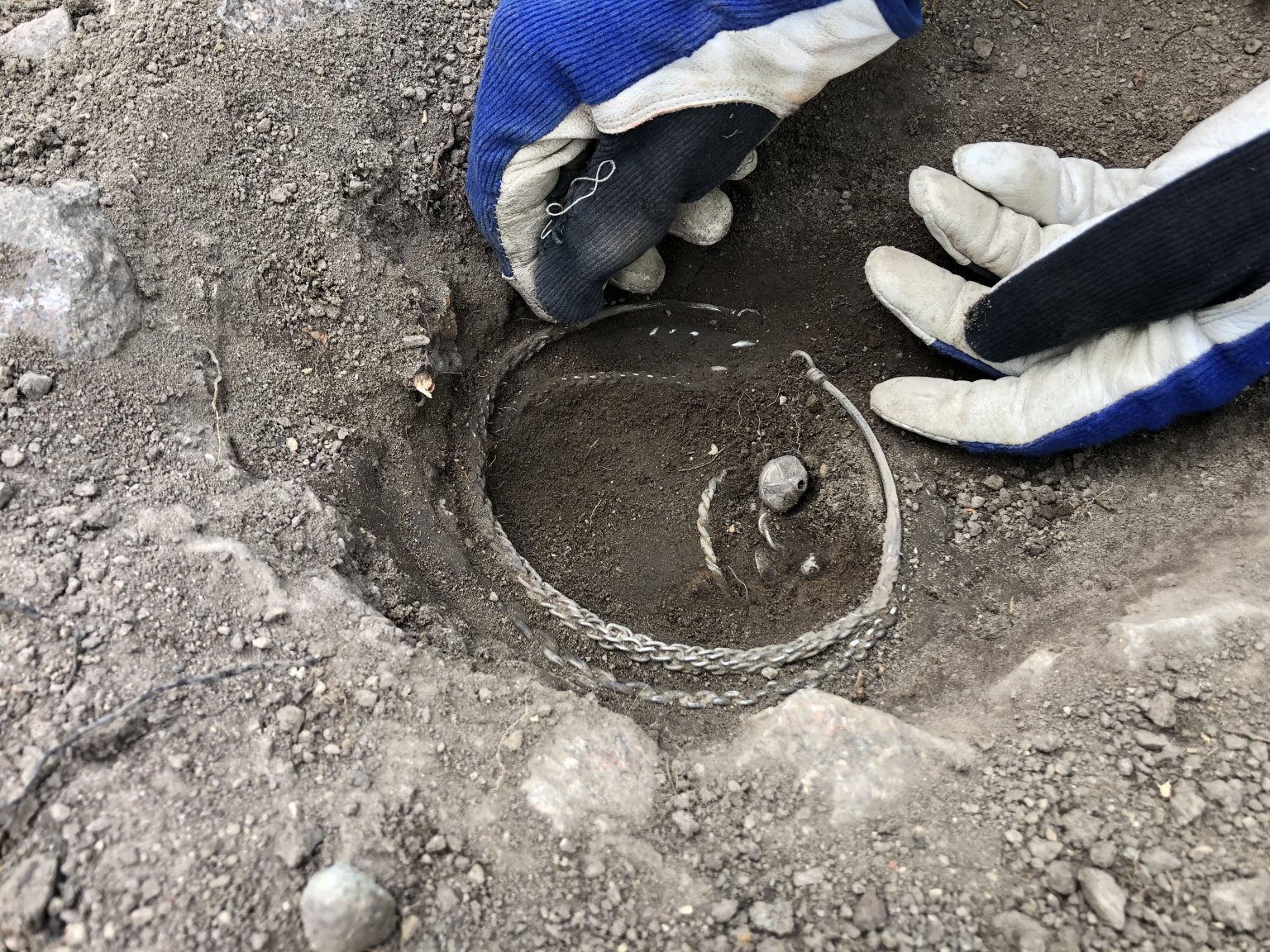
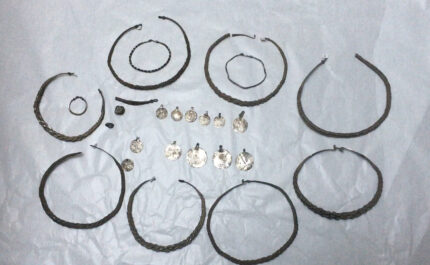
A unique treasure hoard dating from the Viking Age has been uncovered in Täby, Stockholm. Consisting of arm rings, coins and eight torque-style neck rings. Photo: The Archaeologists

A 1000-year-old silver hoard containing several beautiful torque-style neck rings, arm rings and coins has been discovered in Viggbyholm, Täby, outside Stockholm. “This is something you probably only experience once in a lifetime”, says Maria Lingström at The Archaeologists, National Historical Museums in Sweden.

The treasure was found during an archeological excavation of a Viking Age settlement in Täby outside Stockholm, an area thought to have been inhabited for several hundred years. The archeologists have found more than 20 houses and buildings, the earliest dating from around 400 AD, continuing into the Viking Age (800–1050 AD) and early Middle Ages. The treasure was buried under what was once a wooden floor in a building. The coins were deposited in a pouch made of linen, which together with the jewellery had been put into a small ceramic pot.

Read the rest of this article...
Viking unhacked silver hoard found in Sweden


Sweden sees Norway’s Viking hack silver hoard and raises with a Viking hoard of silver jewelry and coins in pristine unhacked condition. The hoard was discovered in an excavation of the Viking settlement of Täby, outside Stockholm. It was cached under the wooden floor of one of the Viking Age (800-1050 A.D.) houses about 1,000 years ago.

Read the rest of this article...
Monday, October 24, 2022

Norwich timber henge burnt in Neolithic winter solstice excavated

The late Neolithic to Bronze Age monument is close to many other prehistoric sites, including burial barrows and mines

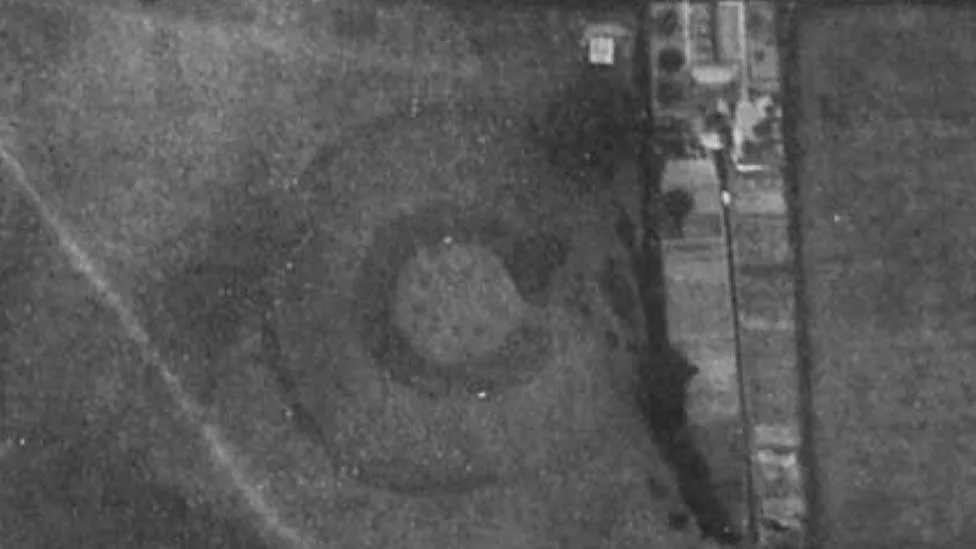
A 5,000-year-old timber circle burnt down during a Neolithic midwinter solstice has been excavated for the first time since the 1930s.

Arminghall Henge, just outside Norwich, was discovered by a pilot in 1929 surveying for ancient monuments.

The blaze would have created "a hell of a bonfire which burnt for days", archaeologist Andy Hutcheson said.

Dr Hutcheson said following the dig they now believe it was deliberately set alight during a winter gathering.

Radiocarbon dating in 2010 suggested it was built between 3525BC to 2700BC.

Read the rest of this article...

500,000-Year-Old Tools In Polish Cave May Have Belonged To Extinct Hominid Species

Flint artifacts from the Tunel Wielki cave, made half a million years ago possibly by Homo heildelbergensis. Image credit: M. Kot

The findings suggest humans crossed into central Europe earlier than previously thought.

Stone tools created half a million years in what is now Poland were probably the work of an extinct hominid species called Homo heidelbergensis, thought to be the last common ancestor of Neanderthals and modern humans. Previously, researchers were unsure if humans had made it to central Europe by this point in history, so the new discovery may shed new light on the chronology of our expansion across the region.

“Peopling of Central Europe by Middle Pleistocene hominids is highly debatable, mainly due to the relatively harsh climatic and environmental conditions that require cultural and anatomical adjustments,” explain the authors of a new study on the artifacts. In particular, they note that evidence of human occupation north of the Carpathian Mountains during this period is extremely scarce, primarily thanks to the difficulty that ancient hominids would have faced when attempting to cross the range.

Read the rest of this article...

Ancient DNA reveals the social lives of the oldest known family group


Neanderthal is an insult still lobbed about to suggest someone is dim-witted and out of touch.

The more we learn about our Stone Age cousins, however, the more it appears the opposite is true. Neanderthals weren’t brutish cave dwellers — they made sophisticated tools, yarn and art, and they buried their dead with care.

A new discovery in a Siberian cave this week reveals an intimate portrait of Neanderthal family life and shows it may be time for Homo sapiens to ditch that superiority complex once and for all.

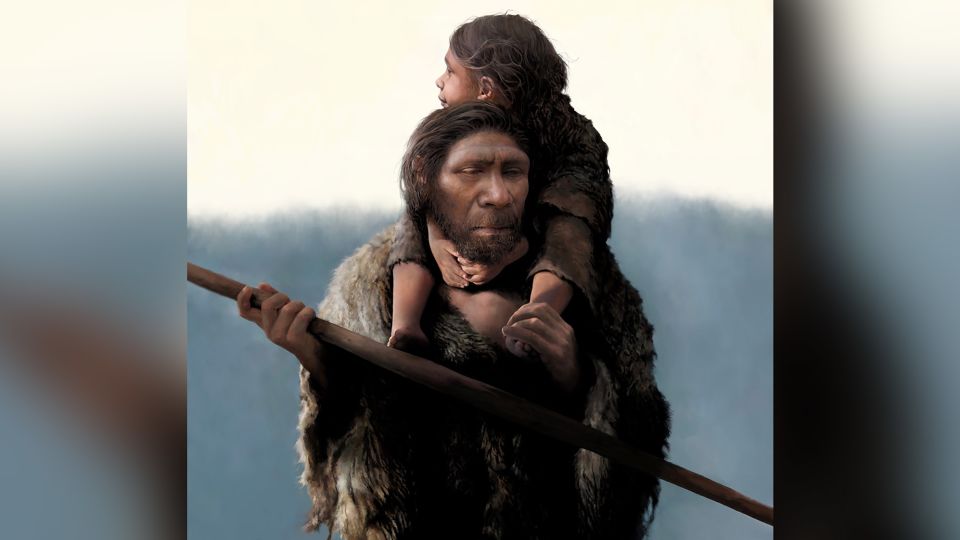
Scientists have uncovered the oldest known family group, using ancient DNA from Neanderthals who lived in Chagyrskaya Cave in southern Siberia in Russia.

Read the rest of this article...
East Walton silver pin find sheds light on end of Roman rule

The pin has the remains of an enamel inlay

The discovery of a late Roman-era pin sheds light on a time when "certainties that held for centuries were beginning to shake up", a historian said.

The silver pin was found by a metal detectorist, near East Walton, Norfolk.

It is definitely late 4th or early 5th Century, despite having Iron Age-style designs, Dr Helen Geake said.

"As Roman Britain is collapsing, other influences are coming in and people aren't sure what's going to be the next big thing," she said.

"We know that Norfolk is going to become one of the heartlands of Anglo-Saxon culture, but late Roman-era people didn't know that," the Norfolk finds liaison officer added.

Read the rest of this article...
Archeologists find tomb of Saint Nicholas, 4th century bishop and inspiration for Santa Claus

St. Nicholas Church is an ancient East Roman basilica church in the ancient city of Myra, now a museum located in modern Demre, Antalya Province, Turkey. It was built above the burial place of St Nicholas, a fourth century Christian bishop of Myra. The basilica is on UNESCO's tentative list to become a World Heritage Site. | Getty Images

Archeologists have found the tomb that holds the remains of Saint Nicholas underneath an ancient church in Turkey. Nicholas, who became the basis for the Christmas character Santa Claus, died more than 1,600 years ago. 

“This is an extremely important discovery, the first find from that period,” Fox News quoted Osman Eravsar, chairman of the Antalya Cultural Heritage Preservation Regional Board, as saying about the discovery in a church in the Demre town in southern Turkey.

After rising sea levels in the Mediterranean submerged the church, a second church was built there centuries later.

Read the rest of this article...
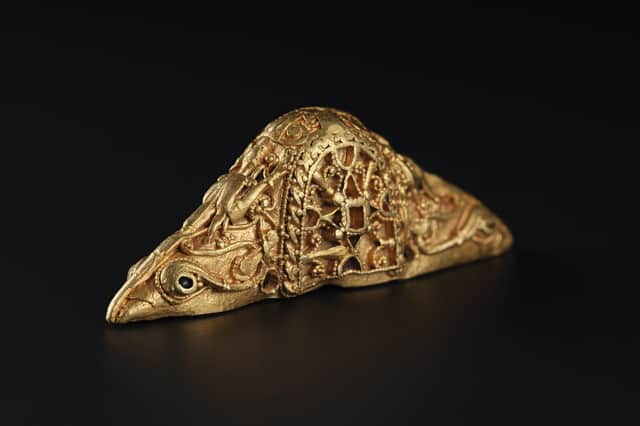
Metal detectorist’s find of lifetime as rare 700AD gold sword pommel uncovered

The solid gold sword pommel was found near Blair Drummond and is valued at £30,000.

An “exceptionally rare” solid-gold sword pommel discovered by a metal detectorist and which dates back to the early medieval period has come into the ownership of Scotland’s national museums.

The impressive find was located near Blair Drummond, Stirling, and is believed to date back to 700AD.

Measuring 5.5cm wide and weighing 25g, the golden pommel – the fitting at the top of the handle – is valued at £30,000.

On recommendation of the Scottish Archaeological Finds Allocation Panel, the King’s and Lord Treasurer’s Remembrancer allocated the find to National Museums Scotland (NMS), which described the item as “exceptionally rare”.

Read the rest of this article...
Saturday, October 22, 2022

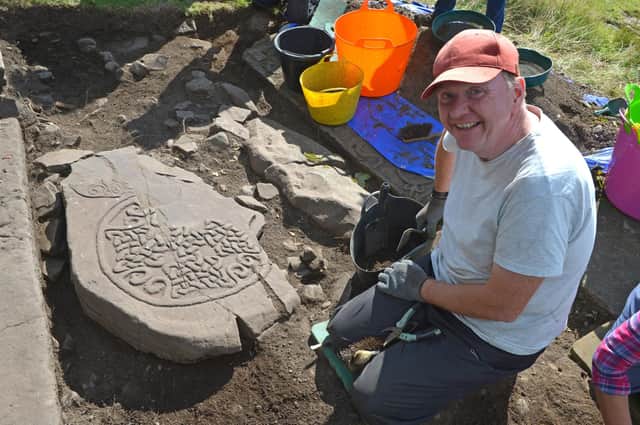
Remains of Pictish period cross with bird carvings uncovered in Scottish kirkyard


The surface of the fallen stone was partially revealed in 2019 by volunteers from the Rescuers of Old Kilmadock (ROOK) group during work in the historic kirkyard. Archaeologists returned last month [SEPT] and dug deeper to expose more of the stone.

The chiselled ogham strokes, which have still to be deciphered, are thought to be the first of their kind found in the Forth Valley.

Other fragments found nearby, which also appear to show carvings, may shed further light on the find.

Read the rest of this article...

Arab DNA Shows Route of Early Human Migration from Africa


Recent studies on Arab DNA confirmed what researchers have believed for many years, but hadn’t been able to prove definitively. Testing suggests that ancient Arabia indeed served as a “cornerstone” for early human migration out of Africa.

In the largest-ever study of human genomes in the Arab world, the study was able to pinpoint the most ancient of all Middle Eastern populations, allowing researchers to trace very early human migration patterns, according to Smithsonian Magazine.

In the study, published online in the journal Nature Communications, the findings state that the area served as a key crossroads in the migration of people out of Africa.

Read the rest of this article...
The first horse herders and the impact of early Bronze Age steppe expansions into Asia


The Eurasian steppes reach from the Ukraine in Europe to Mongolia and China. Over the past 5000 years, these flat grasslands were thought to be the route for the ebb and flow of migrant humans, their horses, and their languages. de Barros Damgaard et al. probed whole-genome sequences from the remains of 74 individuals found across this region. Although there is evidence for migration into Europe from the steppes, the details of human movements are complex and involve independent acquisitions of horse cultures. Furthermore, it appears that the Indo-European Hittite language derived from Anatolia, not the steppes. The steppe people seem not to have penetrated South Asia. Genetic evidence indicates an independent history involving western Eurasian admixture into ancient South Asian peoples.

Read the rest of this article...
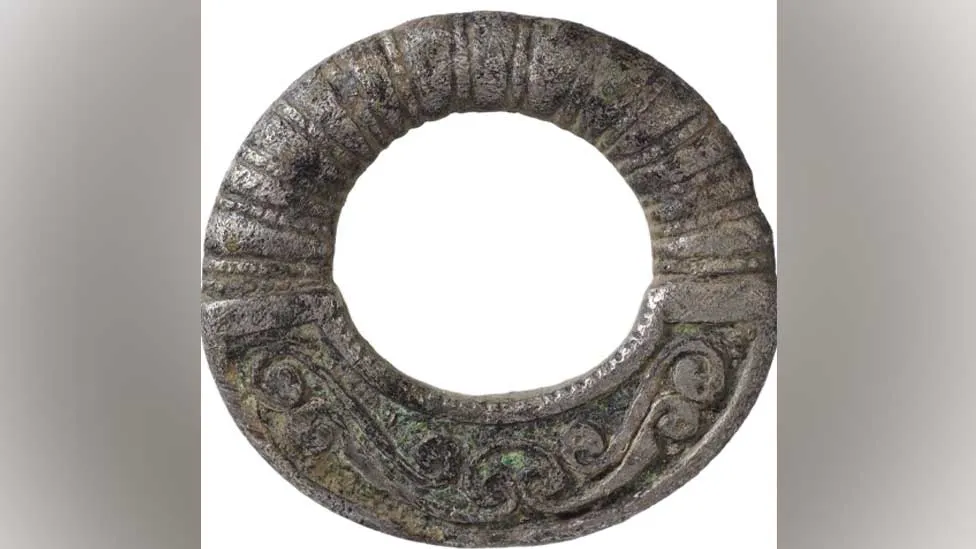
Secrets Of Iron Age Power Center Uppåkra Revealed By Archaeologists


New excavations in Uppåkra are at the forefront of cutting edge archaeological techniques. By combining big data, data modeling and DNA sequencing, researchers are currently solving significant parts of a historical puzzle. Perhaps we will learn whether the Justinianic Plague, the forerunner of the Black Death, reached Uppåkra. Until now, this has been uncertain.

Torbjörn Ahlström, professor of Historical Osteology at Lund University stands on a hill outside Lund. His gaze falls on the fertile soil that has served people in the area for centuries.

Read the rest of this article...

Thor’s hammer amulet found in Sweden


Archaeologists have discovered a lead Thor’s hammer amulet dating to the late 10th century in Ysby in southwestern Sweden’s Halland province. The hammer was unearthed at the site of future housing construction. Previous investigations at the site revealed archaeological remains from the Neolithic and Iron Age, but this is the first artifact from the Viking era discovered there. It’s also the first Thor’s hammer amulet found in Halland.

The amulet is 3 centimeters (1.18 inches) long and cast in lead in the stylized shape that represents Thor’s dwarf-crafted hammer Mjölnir. It has a hole in the shaft where a string or a tie of some sort was threaded through so it could be worn as a pendant. One side of the hammer’s head is engraved with an interlacing pattern.

Read the rest of this article...
Wednesday, October 05, 2022

10 of the Best Viking Museums in Europe

Image Credit: Tim Graham / Alamy Stock Photo

Get in touch with your inner Norseman and discover the greatest Viking museums across Europe.

The Viking Age is undeniably a fascinating period in history, inspiring countless books, films, television shows and somewhat questionable Halloween costumes. Characters such as Ragnar Lothbrok and Leif Erikson have become household names, while Norse Gods are not only subjects of old legends but modern blockbusters. Viking Museums help shed some light on this period which is often misunderstood, debunking many famous myths while showing a multifaceted view of early medieval Scandinavian life.

Here are ten of the best Viking museums across Europe, ranging from open-air museums where history is re-enacted to Viking ships and buildings that survived the elements.

Read the rest of this article...
Tuesday, October 04, 2022

Rendlesham: 1,400-year-old royal hall unearthed

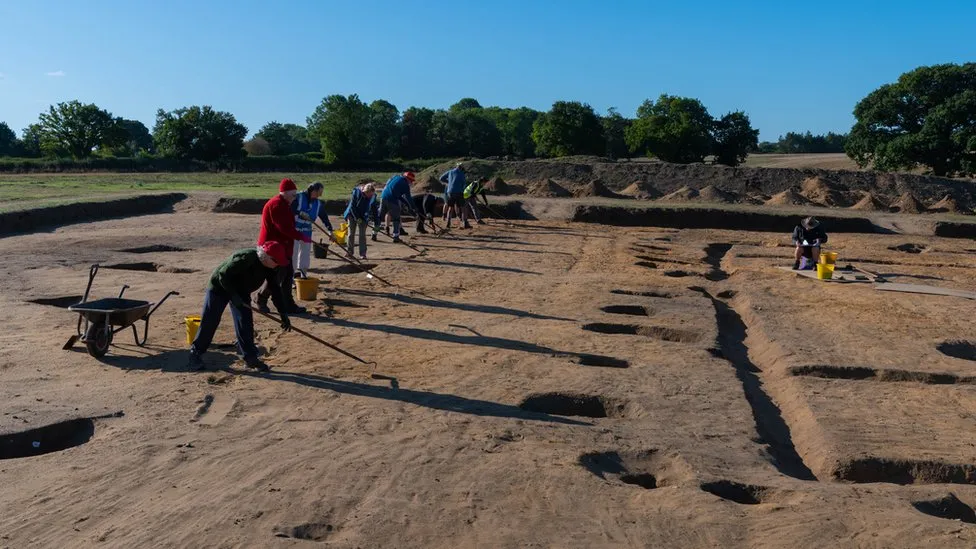
Volunteers working with Suffolk County Council fully excavated post holes on the east side of the hall

A royal hall of "international importance" that dates back 1,400 years has been unearthed on private land.

The Hall of the first Kings of East Anglia was discovered in Rendlesham, Suffolk, over the summer.

Prof Christopher Scull said it was the "most extensive and materially wealthy settlement of its date known in England".

It was discovered by a community dig as part of Suffolk County Council's Rendlesham Revealed project.

Read the rest of this article...
Thursday, September 29, 2022

DNA From Skeletons Reveals Large Migration to Early Medieval England

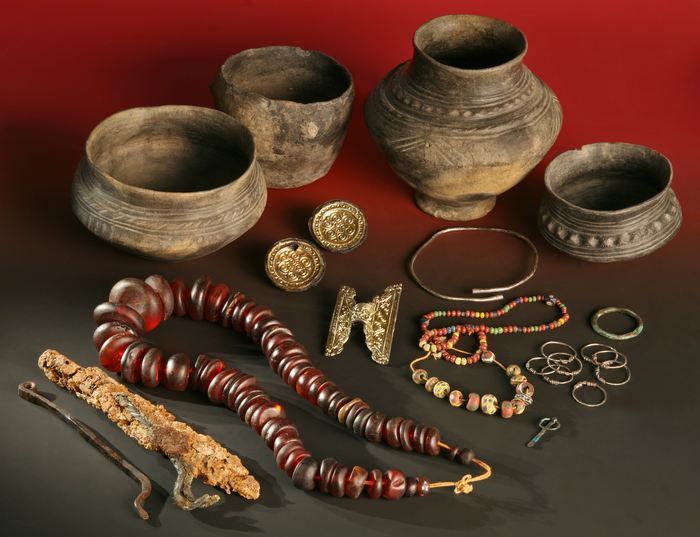
Goods from a grave site at Issendorf cemetery in Lower-Saxony, Germany. 
Landesmuseum Hannover

A new study could close a long-standing debate about movement of people post-Roman rule

In the 19th century, archaeologists in England unearthed remains that dated to the era after Roman rule, which ended around 400 C.E. The items revealed a shift from Roman artifacts to those originating in present-day Germany and the Netherlands. In that era, Roman-style tools and pieces of pottery were replaced with northern European jewelry, swords and architecture.

“You can’t deny there was a big shift in material culture—Roman Britain looks very different from the Anglo-Saxon period 200 years later,” Catherine Hills, an archaeologist at the University of Cambridge in England, tells Science’s Andrew Curry.

But as for what led to this change, historians have long been divided. Many archaeologists have rejected the idea of a mass migration as the cause. After all, just a small number of migrants could have introduced their culture to the island, writes New Scientist’s Clare Wilson.

Read the rest of this article...

Tuesday, September 27, 2022

How Vikings Influenced the Modern English Language


Knowledgable linguist Rob Watts of RobWords explained how the Old Norse language of the Vikings had a profound effect upon the modern English language with many very important words.

The Vikings raided, pillaged… and changed our language. Their Old Norse words invaded English and many remain to this day

This effect includes gender pronouns (she, he, them), key verbs (to be, to take, to crawl, to guess, to trust), words of violence (slaughter, ransack, club, knife, berserk), clothing words (skirt, shirt, shorts), words with “SK” origins (shabby, scabby, scatter, shatter, ship, skipper), doubled-up words (bathe, bask, ditch, dike, shriek, screech), English place names (Derby, Grimsby, Braithwaite, Langthwaite), Scottish place names (Jura, Lerwick), and surnames (Anderson, Carson, Harrison, MacAskill, MacArthur, MacIvor), and Norse gods (Thor, Tuesday, Wednesday).

Read the rest of this article...

Archaeologists Discover 1,200-Year-Old Shipwreck That Reveals A Lost Age: Report


Archaeologists have recently discovered a shipwreck off the coast of Israel, which is believed to be 1,200 years old. It is believed to be a merchant ship, that suggests trading continued after the Islamic co quest of the Holy Land, according to a report in Express.co.uk.

The shipwreck is dated to the 7th or 8th century AD. The Islamic republic, which had extended its dominance to the eastern Mediterranean area during this period, was trying to overwhelm the Christian Byzantine Empire.

According to the archaeologists, despite the religious tensions in the area, the shipwreck demonstrates that commerce was still thriving since it carried products from all over the Mediterranean, including Cyprus, Egypt, Turkey, and the coast of North Africa.

Read the rest of this article...

Genome Study Offers Clues to Anglo-Saxon Migration

(Landesmuseum Hannover)

According to a statement released by the University of Huddersfield, a team of researchers from the Max Planck Institute for Evolutionary Anthropology, the University of Central Lancashire, and the University of Huddersfield analyzed the genomes of more than 400 people who lived in Britain, Ireland, German, Denmark, and the Netherlands, and determined that there was a wave of migration from the North Sea region into eastern England during the Anglo-Saxon period, beginning some 1,500 years ago. The study suggests that as much as three quarters of eastern England’s early medieval population had ties to continental European countries bordering the North Sea. And analysis of mitochondrial DNA, which is inherited only through the maternal line, indicates that women, and likely whole families, had made the trip.

Read the rest of this article...

Sunday, September 18, 2022

Vikings: Raiders, Traders and Settlers (Online Course)


The University of Oxford online course will run from Wednesday, 28 Sep 2022 to Friday 09 Dec 2022 

You can find further details here...
Reykjavík 871±2


IN 2001, ARCHAEOLOGICAL EXCAVATIONS ON Aðalstræti unearthed the remains of a tenth-century longhouse with a wall dating back to 871±2, the oldest evidence of human habitation in Reykjavík.

The year is based on the layer of tephra deposited from a volcanic eruption in the Torfajökull area, which has been found all over Iceland and placed around 871 by carbon dating, with a range of possible inaccuracy of two years either way. The eruption coincides with the early years of Iceland’s settlement age, when the Norsemen started to migrate across the sea, as told by later medieval texts dealing with Icelandic history.

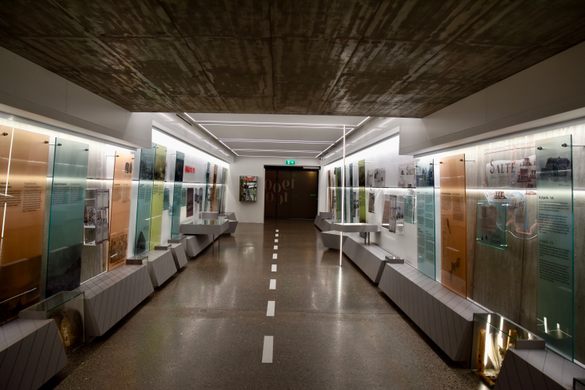
Managed by the City Museum, the Settlement Exhibition of Reykjavík 871±2 gives visitors a rare glimpse into the Viking Age, with the entirety of the excavated ruins displayed in the basement alongside a various collection of artifacts, from pieces of relics to everyday tools. Utilizing interactive multimedia, the exhibit gives an immersive experience and takes visitors back to the days of yore.

Read the rest of this article...

Viking Textiles Show Women Had Tremendous Power


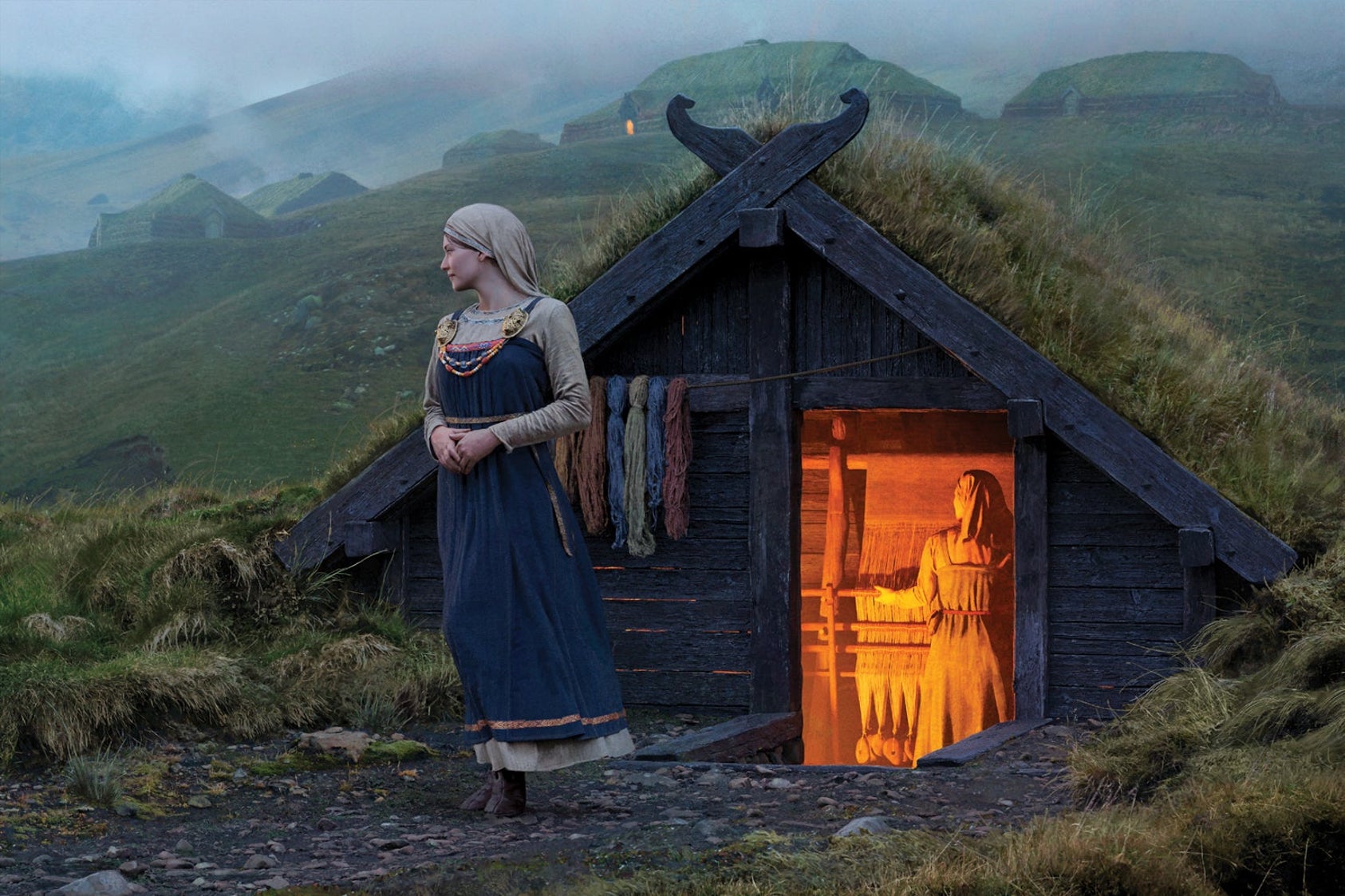
Cloth from Viking and medieval archaeological sites shows that women literally made the money in the North Atlantic

Archaeology has a representation problem. For most of the time that scholars have been probing the human past, they have focused mainly on the activities of men to the exclusion of women. There are a couple reasons for this bias. One is that the kinds of artifacts that tend to preserve well are made of inorganic materials such as stone or metal, and many are associated with behaviors stereotypically linked to men, such as hunting. Another reason is that early archaeologists were mostly men and more interested in men's work than in women's. As a result, our understanding of past cultures is woefully incomplete.

In recent years archaeologists have sought to fill that gap in our knowledge, in part by taking a closer look at traditionally ignored remains such as textiles, which had long been dismissed as trivial. Cloth rarely survives the centuries because it decomposes easily except under ideal preservation conditions. But even in a fragmentary state, it contains a wealth of information about the people who made and used it.

Read the rest of this article...

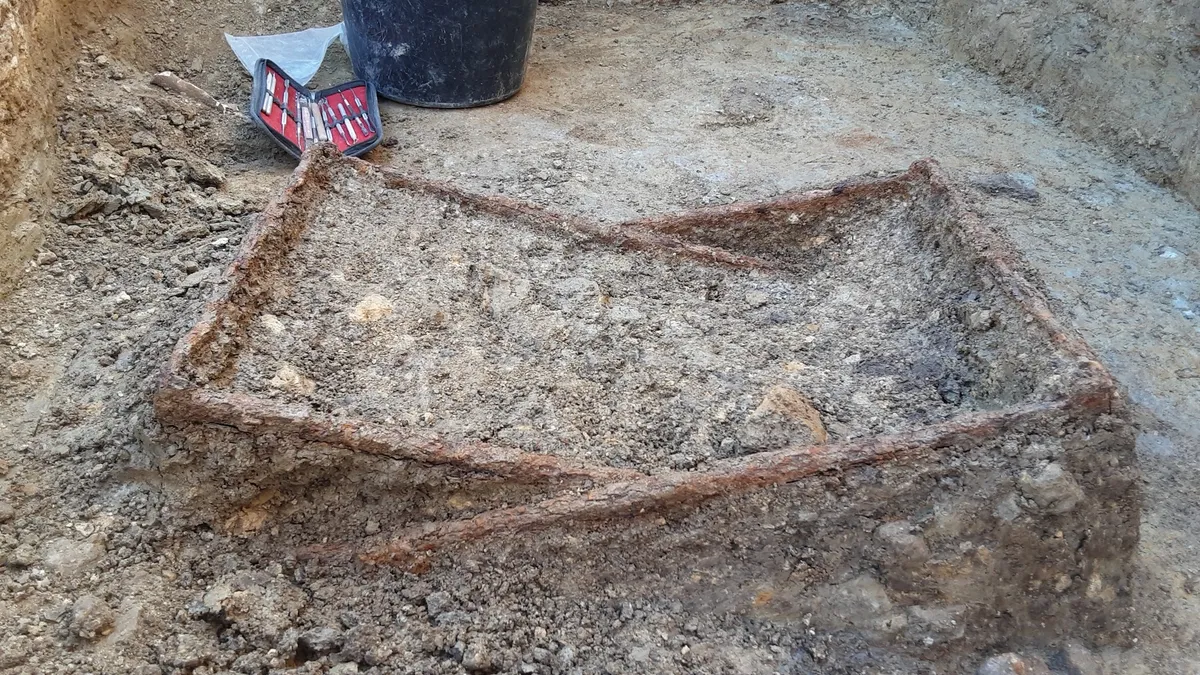
Early-medieval woman was buried with a rare item: a metal folding chair

The 1,400-year-old iron folding chair was a symbol of power and status in medieval times.
(Image credit: BLfD/Zenger)

Coins, weaponry, jewels and other valuables are often found in the ancient burials of prominent people, but archaeologists recently discovered a truly rare grave good: a metal folding chair.

Constructed of an iron frame, the medieval chair measures approximately 28 by 18 inches (70 by 45 centimeters) when folded and was found by a team of archaeologists from the Bavarian State Office for Monument Protection (BLfD) last month in Endsee, a village in southeastern Germany.

Hubert Fehr, an archaeologist with the BLfD, told Live Science that the chair dates to approximately A.D. 600 and that it was associated with the burial of a woman who died in her 40s or 50s.

Read the rest of this article...

Thursday, August 11, 2022

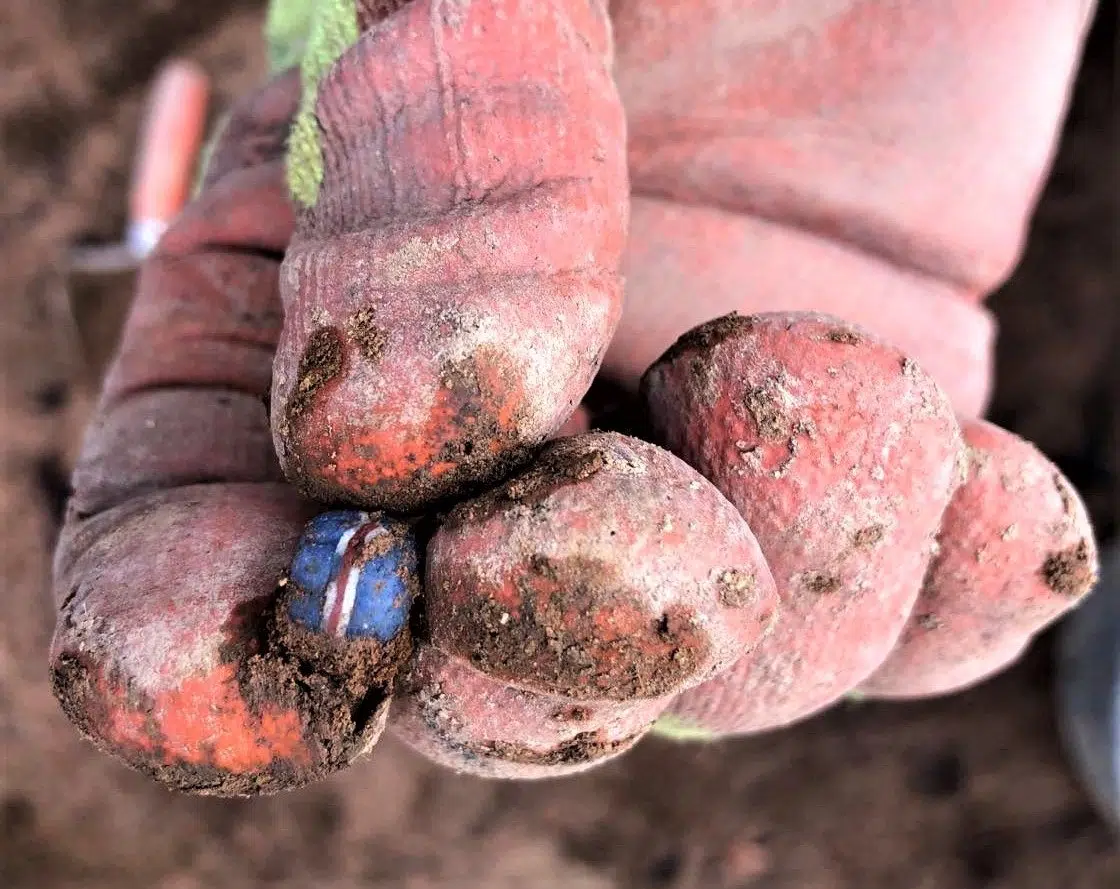
Excavation in Seyðisfjörður Unearths Jewelry from Earliest Period of Settlement

Photo: Fjörður – Seyðisfjörður fornleifar – Facebook


Archaeologists in Seyðisfjörður have excavated jewelry that dates from 940 – 1100, just after the initial settlement of Iceland. Notably, one of the beads found in the excavation even bears the colours of the Icelandic national flag.

Remarkably well-preserved structures in Seyðisfjörður

Archaeological digs have been underway in Seyðisfjörður, a fishing village in the East Fjords of Iceland, since 2020. Due to the high slopes of the valley, Seyðisfjörður is subject to land slides, and local authorities plan to build defensive barriers to protect the village, which has suffered damage in recent years. However, these same land slides have also preserved archaeological sites in the region particularly well. Archaeologists have been called in to perform exploratory digs where the defensive barriers will be erected, and have found remarkably intact manmade structures and artifacts such as game pieces and pearls.

Read the rest of this article...

Medieval Artifacts Uncovered in Iceland


SEYðISFJÖRðUR, ICELAND—Traces of a farmstead dated to the earliest settlement of Iceland have been uncovered in the East Fjords of the island by a team of researchers led by archaeologist Ragnheiður Traustadóttir, according to Iceland Review. The site is situated in a valley where landslides from the high slopes and tephra from volcanic eruptions have protected archaeological materials and provided a means of dating them. So far, researchers have found human remains; the bones of a horse; a spear; a boat; and jewelry, including a red, white, and blue bead dated to between A.D. 940 and 1100. To read about a Viking Age site in Iceland's lava fields, go to "The Blackener's Cave."

Read the rest of this article...

Wednesday, July 06, 2022

How Literate Were the Ancient Celts?


The ancient Celts are commonly viewed as primitive barbarians, at least in comparison to the Greeks and the Romans. One of the reasons for this is that they are commonly thought to have been illiterate. However, this is not true. Numerous pieces of Celtic writing have been discovered across Europe. But what type of writing did they use, and where did it come from?

In the ninth century BCE, the alphabet used by the Phoenicians in the Levant was adopted by the Greeks. From the Greeks, it was adopted by the Etruscans and then the Romans in Italy in the seventh century BCE.

In about 600 BCE, the Greeks established a trading colony in the south of Gaul called Massalia, where the modern city of Marseille is now. This was Celtic territory. The Celts occupied almost the entirety of Gaul, as well as parts of Iberia to the west. Thus, with the founding of Massalia, the Greeks and other Mediterranean nations began to build a close trading relationship with the Celts. The Etruscans in particular exerted a strong cultural influence over the Celts by means of trade, especially from the fifth century BCE onwards. This influence was primarily seen in artwork, but it also became evident in writing.

Read the rest of this article...

Vikings Actually Reached the Americas Long Before Columbus

Reconstructed Viking-Age building next to the site of L'Anse aux Meadows.
(Image: Glenn Nagel Photography)

Vikings were active at a Newfoundland settlement nearly 500 years before Christopher Columbus crossed the Atlantic, research suggests.

On the northernmost tip of the northernmost peninsula of Newfoundland, Canada, is a prehistoric Viking settlement known as L’Anse aux Meadows. The site has been explored by archaeologists since the 1960s, but a firm date for the settlement has proven elusive.

Research published in Nature adds some much-needed clarity to the issue. A team led by archaeologist Michael Dee from the University of Groningen in The Netherlands provides new evidence showing that Vikings were active at L’Anse aux Meadows by 1021 CE — exactly 1,000 years ago. In an email to Gizmodo, Dee said his team’s findings represent the “first, and only, known date for Europeans in the Americas before Columbus,” who crossed the Atlantic in 1492 CE. 

Read the rest of this article...