Monday, July 15, 2013

Construction Magnate Donates Millions To Restore Pompeii As UNESCO Criticises Italian Government


Italian construction magnate Pietro Salini wants to donate €20 million to restore Pompeii.
Reuters news agency reports that Salini wants to donate funds to restore the archaeological site that has been damaged by weather, and has suffered from corrupt management and mafia interference. Salini aims to attract other international donors to restore the Ancient Roman city, telling a press conference: “It would be a crime to let Pompeii crumble.”
Salini’s announcement comes at a time when the head of the UNESCO National Commission in Italy, Giovanni Puglisi, warned the Italian government that it needs to accelerate ongoing restoration work at the archaeological site, saying the government “has until 31 December to adopt suitable measures for Pompeii”. In January 2013, UNESCO documented structural problems and damage Pompeii. UNESCO is due to make a progress assessment in February 2014.
Puglisi cited “irregular buildings not included in the previous plan and a lack of personnel” at the site. He called for “a new observance zone” around the site to protect it from illegal construction infringing the area.
Read the rest of this article...

Ancient Jewish tombstones found in Vienna


 It was 1943 when Vienna's Nazi overlords gave the order to destroy the city's oldest Jewish cemetery, demanding it be leveled and the tombstones attesting to centuries of Jewish existence there be destroyed.
Desperate to save their heritage, the city's shrinking Jewish community decided to act. Defying the possibility of prison, deportation or execution, they buried the gravestones and kept them from Nazi hands.
Some 70 years later, Jewish leaders in the Austrian capital say the long-lost stones have been rediscovered. It is a find they say could transform a small obscure graveyard into one that rivals the significance of Prague's Jewish cemetery, the oldest known burial ground of its kind.
The cemetery has no name and is hard to find, with the only entrance through a city home for the elderly in Vienna's 9th district. Weathered but restored gravestones poke through weedy, uncut grass, with faded Hebrew inscriptions.
Read the rest of this article...

Unique medieval harness found at Cork castle


The 13th-14th century leather harness, which went around a horse’s chest and was attached to the saddle, is covered in gilt, copper-alloy shields, and boasts heraldic symbols. 

It may have belonged to a medieval knight and is the only intact example ever found in Britain or Ireland. 

The treasure trove of artefacts includes scores of pieces uncovered around the castle at Caherduggan, near Doneraile, Co Cork. 

The finds were made by archaeological consultants commissioned by Cork County Council. 


Read the rest of this article...

Enhancement of the Eleusinean Telesterion


The green light has been given for the enhancement project of the Telesterion (“Initiation Hall”) in the archaeological site of Eleusis (project budget: 100,000 €), after an agreement of cultural development has been signed between the Ministry of Education and Religious Affairs, Culture and Sports and the Region of Attica.

Enhancement of the Eleusinean Telesterion
The Telesterion in ancient Eleusis.[Credit: DIAZOMA]
The project includes the following aims: preliminary works, topographic and architectural mapping, full documentation of the current state of the monument, archaeological-architectural documentation, and submission of proposals about its protection and the enhancement of the Telesterion area.

In particular, the surrounding area of the Telesterion will be cleaned, an archaeological survey will be carried out during the first three months of the project, the current state of the Telesterion area will be documented and digitized, ortho-images of the current state of the monument will be taken during the first month of the project, and a series of ortho-images will be taken after the removal of the scattered members. 


Read the rest of this article...

Possible vampire graves found in Poland


Archaeologists in Gliwice, southern Poland have discovered a burial ground where the dead were laid to rest in accordance with practices for alleged vampires.

Possible vampire graves found in Poland
Skeletons at the site in Gliwice [Credit: Regional Conservator of Monuments, Polamd]
Four skeletons were found at the site, where mandatory digs were being carried out prior to the construction of a ring road. In each case, the deceased had been buried with the head between the legs.

According to folk beliefs, this prevented a possible vampire from finding his or her way back to the land of the living.

There was no trace at the burial ground of any earthly possessions, such as jewellery, belts or buckles.

“It's very difficult to tell when these burials were carried out,” archaeologist Dr Jacek Pierzak told the Dziennik Zachodni newspaper.


Read the rest of this article...

Saturday, July 13, 2013

Worm poo's window into past climate

The worm secretions may act as a "self-produced indigestion tablet"

Earthworm faeces can be used to measure past temperatures, providing a window into the ancient climate.
A study shows that the chemistry of small balls of chalky crystals secreted into soil by the worms varies with temperature.
A UK team said the granules could be compared with other climatic "proxies", such as ice cores and deep sea sediments.
Scientists from the universities of Reading and York report that the calcium carbonate (calcite) nodules dug up from archaeological sites give a unique measure of the ancient local temperatures.
Because the ratios of different isotopes, or forms, of oxygen within the calcite crystals vary with temperature, they record the conditions present as they grow inside the worms.
Read the rest of this article...

Wednesday, July 10, 2013

Scholars Assemble to Discuss Archaeology of Sound


Academics, researchers, musicologists and others will gather on the Mediterranean Island of Malta in February, 2014, to reveal the state of current research and science related to the archaeology of sound, or Archaeoacoustics, as the field is called.

Discoveries in ancient architecture at a number of archaeological sites across the globe have raised new questions and hypotheses related to the role and effects that the science of acoustics, or the manipulation of sound in context with human-made or modified spaces, has played in the development and expression of culture in history. Now, a body of scientists who have been involved in the study of this phenomenon over the past few decades are bringing their knowledge, research results and plans together in one 4-day forum to discuss and publish through a series of presentations what we now know about the science, and what may be forthcoming.
"We are particularly interested in the role acoustic behavior may have had in the development and design of important architecture and ritual spaces throughout the ancient world, and its possible biological impact on human brain activity", says Linda Eneix, President of the Old Temples Study Foundation and a key conference organizer. 
Read the rest of this article...

Unearthed Late Roman well may have modern-day significance


Archaeologists from the University of York say a virtually intact Late Roman well discovered near Heslington, on the outskirts of the city, may have had significance in contemporary local agricultural cycles and fertility practices.
The well, which is thought to have been in use for several decades in the late 4th and early 5th centuries, was unearthed during  on the site of the University's campus expansion at Heslington East.
From at least the Early Bronze Age, a range of methods were used here to access natural springs, including watering holes and primitive wells. In contrast, this Late Roman feature was carefully engineered, positioned high on a hillside and used newly acquired, good-quality masonry.
Read the rest of this article...

Volunteer army drafted to map every ancient hill fort

Tap o'Noth hill fort in Aberdeenshire. There are more than 5,000 of these ancient structures in Britain and Ireland but they have been little researched until now

Archaeologists are drafting a volunteer army to help map every ancient hill fort across Britain and Ireland.
It is part of a project to create an online atlas of around 5,000 of theseIron Age monuments.
Prehistory enthusiasts are being asked to identify and record features such as ramparts, ditches and entrances.
Prof Gary Lock, of Oxford University, said: "We want to shed new light on why they were created and how they were used."
Despite their large numbers there has been little academic work on hill forts, how they were used and how they varied across Britain and Ireland, the researchers say.
Read the rest of this article...

Medieval ruins discovered in Somerset puzzle archaeologists


Wessex Archaeology team aim to crack mystery of unidentified foundations before work begins on housing estate at the site

Aerial view of Longforth farm in Somerset, where the ruins were discovered.
Foundations of a mysterious collection of medieval buildings, once an imposing complex with beautiful expensive floor and roof tiles, and substantial stone buildings set around courtyards, which vanished apparently leaving no trace of its existence 600 years ago, have been uncovered under farmland in Somerset.
The handsome floor tiles match some from nearby Glastonbury Abbey, suggesting that the site may have had religious connections. But although thousands of monastic foundations were demolished and their materials sold or scavenged for new buildings, this site appears to have been abandoned well before the dissolution of the monasteries. It is rare for one of any significance to disappear completely – this was a major complex, covering 0.4 hectares – leaving no evidence either in the landscape or in historical accounts.
Read the rest of this article...

Chersonesus, Crimea, 2300-Year-Old Massacre


Chersonesus , an ancient Greek colony founded approximately 2,500 years ago in the southwestern part of the Crimean Peninsula, known then as Taurica, was established in the 6th Century BC by settlers from Heraclea Pontica.

“We’ve learned things that have changed our view of what life was like in the Chersonesean countryside, which the Greeks called chora. The city’s rural territory, particularly on the Herakleian and Tarkhankut peninsulas, is incredibly well preserved. The houses of the rural population dating back to about 300 BC lie dotted around the untouched landscape in the form of ruins that are still visible. For instance, in one of the excavated ruins we have found the remains of a whole family. So we’re working on a murder scene dating back 2,300 years,” reports project director Vladimir Stolba, an archaeologist from Aarhus University.

Read the rest of this article...

City quarters from Late Bronze Age revealed


The 2013 field season at the Late Bronze Age harbour city of Hala Sultan Tekke, near Larnaka International Airport, has been completed.. The excavations, which took place for over five weeks during May and June, were conducted under the direction of Professor Peter M. Fischer from the University of Gothenburg, Sweden.

City quarters from Late Bronze Age revealed
Aerial photograph of the building excavated at the site in 2012
[Credit: Department of Antiquities, Republic of Cyprus]
The excavations exposed hitherto unknown city quarters dating to the 14th – 12th centuries BC. The size of this city is estimated between 25 and 50 ha. Only a small portion of the city, the history of which goes back to the 16th century BC, has so far been excavated. At the beginning of the 12th century BC the city was destroyed and abandoned, and never inhabited again. The discovery of a city quarter was made possible through the use of a sophisticated ground penetrating radar device in 2010 and 2012, as part of a cooperative project between the University of Gothenburg (Prof. Peter M. Fischer) and the University of Vienna (Dr Immo Trinks). A ground penetrating radar may produce “X-ray images” of the soil up to 2m beneath the surface. The 2013 excavations, which exposed 200 square metres of the city, confirmed the interpretation of the radar survey.

Read the rest of this article...

Sunday, July 07, 2013

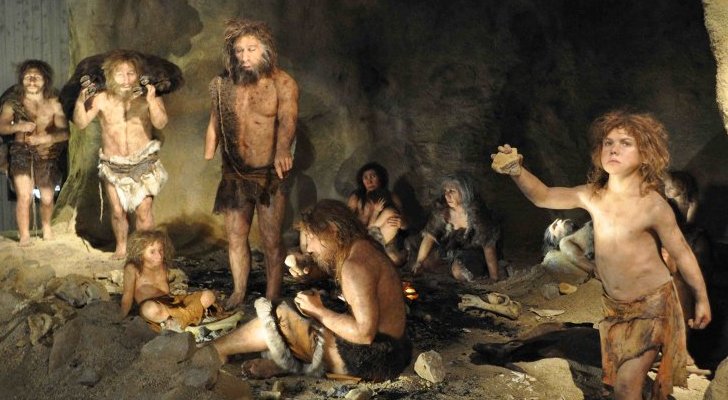
Neanderthals Had Homes, Returned to Them After Going on Hunting Expeditions

Researchers say our ancestors liked certain caves better than others, considered them their homes

Neanderthals used to have homes to which they returned after going on hunting expeditions, Oxford University and Gibraltar Museum researchers claim. 

Granted, their homes would've probably never made it on MTV's “Cribs,” but they were surprisingly clean and tidy, the scientists argue. 

While exploring ancient caves in Gibraltar, archaeologists reportedly found that some of them contained more artifacts than others did. 

The best explanation for this discovery is that the Neanderthals preferred certain caves to others. These “privileged” caves are the ones believed to have been their homes. 

They were both bigger and brighter than the ones Neanderthals only inhabited for short periods of time. 


Read the rest of this article...

Roman villa to serve tourism

Workers clean the mosaics during restorations in the Roman villa. AA Photo

Mosaics in a villa from the late Roman period, found five years ago in a green area, are undergoing restoration works. The mosaics depict the figure of a women, sitting among bunches of grapes, and a man with a dagger in his hand trying to kill her. 

The restoration started with four experts and 12 workers headed by the Director of the Ereğli Museum Ahmet Mercan and archaeologist Ünver Göçen. After a one-month restoration and cleaning process, the mosaics will be covered and the area will open to tourists.


Read the rest of this article...

Archaeologists find secret chamber at Drum Castle

Drum Castle, near Banchory, is the oldest intact building in the care of the National Trust for Scotland. Picture: Complimentary

ARCHAEOLOGISTS have discovered a secret medieval chamber and its ancient loo - hidden for centuries - during a conservation scheme to protect the oldest castle keep in Scotland.
The remarkable discovery has been made at the 700-year-old medieval tower at the National Trust for Scotland’s Drum Castle near Banchory
Drum Castle, the seat of the Chief of Clan Irvine for centuries, has the oldest keep in Scotland and is the oldest intact building in the care of the trust.
The trust is planning to bring in specialists to remove cement pointing on the ancient tower and replace it with traditional, breathable lime mortar to help preserve the historic keep.
Read the rest of this article...

Archaeologists unearth carved head of Roman god in ancient rubbish dump

Dr David Petts on site with the Binchester head

An 1,800-year-old carved stone head of what is believed to be a Roman god has been unearthed in an ancient rubbish dump.
Archaeologists made the discovery at Binchester Roman Fort, near Bishop Auckland, in County Durham.
First year Durham University archaeology student Alex Kirton found the artefact, which measures about 20cm by 10cm, in buried late Roman rubbish within what was probably a bath house.
The sandstone head, which dates from the 2nd or 3rd century AD, has been likened to the Celtic deity Antenociticus, thought to have been worshipped as a source of inspiration and intercession in military affairs.
A similar sandstone head, complete with an inscription identifying it as Antenociticus, was found at Benwell, in Newcastle upon Tyne, in 1862.
Read the rest of this article...

Neuer alter Löwenmensch


Mit Fragementen aus den Nachgrabungen im Stadel soll die bekannte Figur des »Löwenmenschen« aus dem Lonetal weiter ergänzt werden. Das aktuelle Restaurierungsprojekt wurde am vergangenen Mittwoch der Öffentlichkeit vorgestellt.

Regierungspräsident Johannes Schmalzl präsentierte gemeinsam mit dem Abteilungspräsidenten des im Stuttgarter Regierungspräsidium angesiedelten Landesamtes für Denkmalpflege Prof. Claus Wolf die Restaurierungsarbeiten an einem der ältesten Kunstwerke der Menschheit.

Read the rest of this article...

Friday, July 05, 2013

Dig seeks to establish age of Swedish castle


Archaeologists are working to establish the age of Kalmar Castle in southern Sweden, which has long been accepted to have been built in the 1100s but could be significantly older, or younger.
    "Recent excavations were made in the 1930s and 1940s. Back then they dug in a different way and they didn't have the same advanced dating methods as we have today," said Magnus Stibéus at the National Heritage Board (Riktsantikvarieämbetet).

    The archaeological dig has been facilitated by the renovation of kitchen and restaurant areas at the castle and will continue for three days, according to the local Barometern daily.


    Read the rest of this article...

    Barrow Clump 2013: Phil's Round-up Week One


    Following on from the fantastic success of the Operation Nightingale excavation at Barrow Clump last summer, the soldiers have returned for a second year. The 2013 excavations will explore new areas of this Bronze Age burial mound and aim to identify the extent of the Saxon cemetery.
    Site Director, Phil Andrews has agreed to produce his popular weekly round-ups for the blog again this year, starting with week one below:
    Here we go again!
    A year passes very quickly and we started again at Barrow Clump last week, this time for five weeks until the end of July. Site camp was established, nettles cleared and trees trimmed, whilst the badgers appear to have temporarily vacated the site.
    Read the rest of this article...

    How X-Rays Demystified a 2,500-Year-Old Battle Wound (Op-Ed)


    Dr. Helise Coopersmith (left), North Shore-LIJ musculoskeletal radiologist, joins Anagnostis Agelarakis, professor and chair of anthropology at Adelphi University, and Argie Agelarakis, a scientific illustrator, as they examine a 2,500-year-old bone fragment.
    CREDIT: North Shore-LIJ Health System. 


    Dr. Helise Coopersmith is a musculoskeletal and body imaging radiologist for the North Shore-LIJ Health System, assistant professor of radiology at the Hofstra North Shore-LIJ School of Medicine and a member of the Hofstra medical school's admissions committee. She contributed this article to LiveScience's Expert Voices: Op-Ed & Insights.

    I have worked as a musculoskeletal radiologist for many years and have seen a wide range of bone injuries. But recently, I found myself for the first time using my X-ray table to look at a 2,500-year-old bone and a piece of an ancient arrow.

    Read the rest of this article...

    German Society for Pre- and Protohistory hands over petition against funding cuts


    The DGUF has today handed over its petition against the cuts and the planned axing of the Federal State funding for archaeology and the preservation of ancient buildings and monuments in North-Rhine Westphalia (NRW) to Carina Gödecke (SPD), President of the NRW Parliament, and Michael Groschek (SPD), Minister for Building, Housing, City Development and Transport. More than 27,000 people signed the petition, including over 13,000 from NRW. This petition is thus the largest collection of signatures ever against cuts in the budget for the preservation of historic monuments in Germany.

    German Society for Pre- and Protohistory hands over petition against funding cuts
    Reconstruction of Homo neanderthalensis at Neanderthal Museum, Mettmann, Germany
    [Credit: Erich Ferdinand/WikiCommons]
    "The message has hit home," said Carina Gödecke. It would receive serious consideration in the 2014 budget deliberations in the autumn. The DGUF petition demands that the Federal State funding for archaeology and the preservation of buildings and monuments be neither axed nor cut. The NGO demands that, in the long term, the funding provided by the Federal State of NRW itself to support archaeology and the preservation of buildings and monuments be kept at the level of the 2012 fiscal year at least. In this year 11.3 million euros were available (lines 883 60 and 893 60 in the NRW Federal State budget of the Ministry for Building, Housing, City Development and Transport). The funding for 2013 has already been cut by 2 million euros.

    Read the rest of this article...

    Head of Roman god found in ancient rubbish dump


    An 1,800-year-old carved stone head of what is believed to be a Roman god has been unearthed in an ancient rubbish dump. Archaeologists made the discovery at Binchester Roman Fort, near Bishop Auckland, in County Durham.

    Carved head of Roman god found in ancient rubbish dump
    The late Roman stone head was found by Durham University archaeologists at Binchester Fort, County Durham, UK [Credit: Durham University]
    First year Durham University archaeology student Alex Kirton found the artefact, which measures about 20cm by 10cm, in buried late Roman rubbish within what was probably a bath house.

    The sandstone head, which dates from the 2nd or 3rd century AD, has been likened to the Celtic deity Antenociticus, thought to have been worshipped as a source of inspiration and intercession in military affairs. A similar sandstone head, complete with an inscription identifying it as Antenociticus, was found at Benwell, in Newcastle upon Tyne, in 1862.


    Read the rest of this article...

    Wednesday, July 03, 2013

    Ravenglass Roman fort: Call for volunteers


    Archaeologists in Cumbria are calling for volunteers to help them explore the remains of a Roman naval base.
    Ravenglass Roman fort was occupied from AD 120 through to the 4th Century.
    During the dig, due to begin on 4 September, archaeologists hope to find evidence of a civilian settlement from more than 1,800 years ago.
    The £125,000 project received funding from the Heritage Lottery Fund, Lake District National Park Authority and Copeland Community Fund.
    Holly Beavitt-Pike, Lake District National Park's archaeology and heritage assistant, said the first dig would end on 28 September and participants would be able to volunteer for a maximum of five days.
    Read the rest of this article...

    Ancient Anchors from Punic Wars Found Off Sicily


    A key episode of the Punic Wars has emerged from the waters near the small Sicilian island of Pantelleria as archaeologists discovered a cluster of more than 30 ancient anchors.
    Found at a depth between 160 and 270 feet in Cala Levante, one of the island’s most scenic spots, the anchors date to more than 2,000 years ago.
    According to Leonardo Abelli, an archaeologist from the University of Sassari, the anchors are startling evidence of the Romans’ and Carthaginians’ struggle to conquer the Mediterranean during the First Punic War (264 to 241 B.C.).
    “They were deliberately abandoned. The Carthaginian ships were hiding from the Romans and could not waste time trying to retrieve heavy anchors at such depths,” Abelli told Discovery News.
    Read the rest of this article...

    The stonemasons keeping Lincoln Cathedral alive


    Lincoln Cathedral is considered one of the UK's most beautiful places of worship. Reportedly the tallest building in the world for 238 years, work started on the structure in the 11th Century.
    The methods of quarrying and shaping the stone at the cathedral may have evolved since those times, but today's masons use modern technology to keep the stone structures and carvings looking as fresh as when they were first put in place.
    Picks, mauls, saws and axes have now been replaced with power tools that run on compressed air. Fire-sharpened metal chisels make way for tungsten steel and nylon mallets are used instead of wooden ones.
    But one thing has not changed: the dedication and skill of the craftsmen and women in preserving and adding to the great structure.
    Read the rest of this article...

    Get handy with history

    From left, Lorraine Lindsay-Gale from the county council’s Culture and Community Service, Nicola Blackwood MP and Debbie Dance, director of the Oxford Preservation Trust, with artefacts at Oxford Castle. Picture: OX59922 Greg Blatchford

    HISTORY enthusiasts can discover Oxford’s past with a range of activities at a free archaeological day.
    There will be demonstrations, hands-on activities and mini-lectures during Archaeology Day at Oxford Castle on Sunday, July 14, from 11am, organised by the Oxford Preservation Trust and Oxford Castle Unlocked.
    Visitors can also find out about archaeological projects happening in the city.
    Debbie Dance, director of the Oxford Preservation Trust, said: “If you have ever been interested in what is going on under the ground you should come to the castle and see first-hand.”
    Read the rest of this article...

    Tuesday, July 02, 2013

    Exhibition opening overshadowed by diplomatic row


    The exhibition Bronze Age. Europe without borders. Fourth-first millenia BC opened last Friday on June 21st. The exhibition is one of the most important museum and research projects of Russia and Germany in 2009-2013 and it closes the Year of Germany in Russia. However, the event of the grand opening has been overshadowed by a diplomatic row between Germany and Russia, with Moscow objecting to Angela Merkel’s plan to use her speech to refer to hundreds of German works of art looted by Red Army soldiers after the war.

    Exhibition opening overshadowed by diplomatic row
    Golden bowl. One of the items, which were obtained in the result of the Second World War Treasure of Eberswalde [Credit: Pushkin Museum of Fine Arts]
    One of the highlights of the exhibition is the Eberswalde Hoard, which consists of 81 ancient gold pieces including plates, rings and ornate bowls that has not been seen in public since the end of the war. The hoard, discovered during an excavation of north-east of Berlin in 1913, was removed from a museum in the German capital by Soviet troops and transported to Moscow as war booty. According to George Streiter, the German government spokesman, the German chancellor had planned to use her speech to call for the return of the art in accordance with international law. Mr Streiter said Russia had cancelled the opening speeches, blaming time constraints, which prompted outrage in the German media.

    Read the rest of this article...

    Wartburg Castle: 1,000 years of German history


    As part of our tour of Germany's UNESCO World Heritage sites, we check out the beautiful 12th century Wartburg castle in Thuringia.
    Wartburg Castle, which is almost 1,000 years old, is one of Germany's most well-known and best preserved castles. According to legend, it was founded in 1067, and its history can be traced back to the times of the Landgraves of Thuringia. 

    Read the rest of this article...

    Longforth Farm Archaeology Day


    Wessex Archaeology invites you to explore Wellington’s hidden heritage at the Longforth Farm Archaeology Day.
    Excavations at Longforth Farm, Wellington have revealed a previously unknown complex of high status medieval buildings. Be the first people in 600 years to view these discoveries, experience a real archaeological dig and meet the professionals from Wessex Archaeology.
    The Archaeology Day will run from 10am until 4pm on Saturday 13th July. Everyone is welcome and entry is free.
    Find out more about Longforth Farm on the project webpage.

    Saxon skeleton discovered in Lincoln Castle


    A Saxon skeleton believed to be a king or bishop has been discovered in Lincoln Castle.


    The Saxon skeleton was in a stone sarcophagus believed to date from about AD900.
    Its sarcophagus has not yet been opened but an endoscopy revealed the remains were buried alongside other objects, such as gold.
    Mary Powell, from Lincoln Castle, said: "We think it's somebody terribly important, possibly a bishop or a Saxon king.
    "At the moment, we can see the side of the coffin, but not the lid. It's going to be incredibly challenging to get it out, so we are being very careful.
    "There is a danger it could disintegrate because of the change in environmental conditions.
    Read the rest of this article...

    Monday, July 01, 2013

    Lindisfarne Gospels: university outreach in the curriculum


    Through school programmes like this, universities can influence the content of classroom teaching to enhance knowledge and make higher education more accessible, says Chris Higgins

    Durham University educating schoolchildren on what the Lindisfarne Gospels mean for North-East culture and heritage. Photograph: Richard Kenworthy

    Engaging with schoolchildren at an early age to improve motivation and encourage their aspirations around higher education is an important aspect of university life. The imminent welcoming back to its spiritual and scholarly home of one of the 'great landmarks of human cultural achievement' in Durham – the Lindisfarne Gospel Book – has provided a unique opportunity for Durham University to engage in some creative educational outreach activity.
    One of our main roles as a university has been to raise awareness withinschools about what is arguably the finest and most important western manuscript and everything it represents for North-East culture and heritage.
    Read the rest of this article...
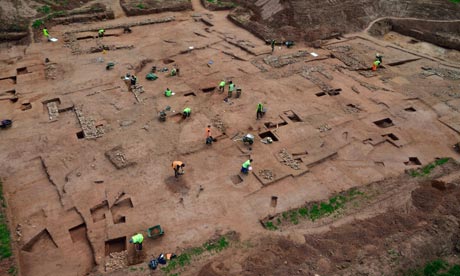
    Prehistoric cave art in the Dordogne


    Caves in the Dordogne's Vézère valley contain some of the oldest artworks known to man. Robin McKie enjoys the visit both below – and above – ground

    Off the wall: a close-up view of cave art in the Vallee de la Vezere. 
    Photograph: Jean-Daniel Sudres/Corbis

    At some point in remote prehistory, roughly 12,000 years ago, a group of men and women – no more than half a dozen, scientists believe – crawled into the labyrinth of Rouffignac cavern in the Dordogne's Vézère valley. Once in its deepest recess, they lay on their backs and, in flickering candlelight, started painting on the rock ceiling 3ft above them. More than 60 images of mammoths, horses and ibex were outlined, each animal depicted in simple, confident lines that reveal startling artistic talent.
    This is the Great Ceiling of Rouffignac, one of the world's oldest and most beautiful art galleries. We have few clues as to who created it, though it was probably the work of the Cro-Magnons, the first members of Homo sapiens to settle in Europe 45,000 years ago and survivors of the Ice Age that later gripped the continent. Nor do we know why these artists picked such an inaccessible spot to display their genius – though fortunately it can be reached easily today. A tiny electric train runs from Rouffignac's entrance to the Great Ceiling, the floor of which has been lowered to allow visitors to gaze up at its wonders.
    Read the rest of this article...

    Roman shrine found at Rutland Water nature reserve


    Archaeologists have uncovered a Roman shrine at Rutland Water nature reserve.
    The team from Northamptonshire Archaeology investigated the site ahead of a 240-acre extension to the reserve by Anglian Water.
    They found the remains of an Iron Age farmstead, and Roman shrine dating from about AD100.
    Jo Everitt, Anglian Water's environment and heritage assessor, said: "Finding Roman shrines is not the norm, so we were delighted."
    Read the rest of this article...

    Richard III team return to dig


    The University of Leicester team which uncovered the remains of King Richard III under a car park is to return to the historic site to begin work on a new dig.

    Archaeologists from the university want to extend their excavation to discover more about the Church of the Grey Friars where King Richard III was buried.

    The excavation team will also exhume a 600-year-old stone coffin that should contain a high status burial. It may be the remains of a medieval knight called Sir William Moton, who is believed to have been buried at the site in 1362 - over a century before King Richard III.

    Read the rest of this article...