Monday, November 06, 2023

Exploring the Mästermyr chest discovery and its Viking-era tools

Unearthed in a onetime peat bog near Gotland, Sweden, the Mastermyr chest is a cache of Viking artifacts showcasing advanced early medieval craftsmanship and technology. Source: The Swedish History Museum, Stockholm (CC BY-SA 2.0)

You know the scene. A horde of ravenous Vikings are rushing off their longship and about to destroy, burn, plunder, and pillage an unsuspecting medieval village. 

Whilst this scene has occurred multiple times throughout the world, from the Iberian Peninsula to the eastern shores of the Black Sea and everywhere in between, this is only part of the story of the Viking Age. 

The societies that produced Viking warriors also excelled in creating great works of art and advanced naval technology, bequeathing to us priceless cultural artifacts from runestones to the Norse sagas. 

Thanks to recent generations of historians, we are beginning to look afresh at people from Viking societies. 

Read the rest of this article...

Tuesday, October 24, 2023

How the Vindelev Hoard changed our understanding of the worship of Odin

The Vindelev Hoard, a treasure trove of golden artifacts dating back to centuries before the Viking Age, was accidentally discovered by an amateur metal detectorist in Denmark in 2020. Source: Vejlemuseerne / Vejle Konserveringscenter (CC BY-SA 4.0)

What secrets about the spiritual beliefs of Viking societies did an unsuspecting metal detectorist uncover among the gold he found beneath the Danish soil?

I recently listened to a BBC History Extra podcast discussing archaeology. Both the host and the guest, a Professor of Archaeology from University College London, expressed their chagrin about the influence on archaeology in recent decades.

Much of this influence has been attributed to "the man in the hat with the whip" - the fictional movie character and swashbuckling archaeologist Indiana Jones, portrayed by Harrison Ford.

Throughout the podcast, much was made of the unrealistic depictions of archaeology in the Indiana Jones movies. 

Read the rest of this article...
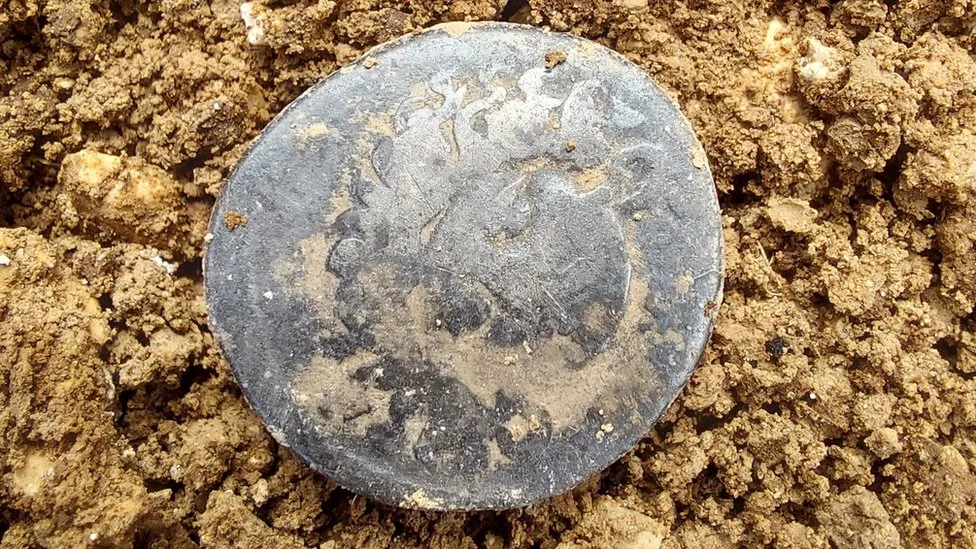
Roman grave found at water pipeline construction site

A 2,000-year-old coin was found during excavations

Archaeologists have unearthed a Roman grave and a 2,000-year-old coin on the route of a planned water pipeline.

The discoveries were made at the proposed Southern Water site in Hampshire.

Members of Wessex Archaeology have been carrying out the excavations before pipelines are installed between Andover, Otterbourne and Portsmouth.

The scheme is linked to plans for a new reservoir at Havant Thicket, the first to be built in England for 25 years.

Dr Nicola Meakins of Southern Water said: "Roman graves are not uncommon - when the Romans built roads, legionnaires who died were simply buried by the side of the road.

Read the rest of this article...

Meet Denny, The Only Human Hybrid Remains Ever Unearthed

A few finger bone fragments are all that is left of Denny.
Image credit: Brown et al., Scientific Reports, 2016 (CC BY 4.0)

The bones of “Denny” are the only known physical remains of a first-generation human hybrid, born as a result of a Neanderthal breeding with a Denisovan. As exceptional as her remains might be, a deep dive into the genome of modern-day Homo sapiens shows there were once plenty more hominin hybrid individuals around.

The finger bones were unearthed in 2012 within the Denisova Cave, a cave in the Altai mountains of Siberia that has yielded an immense amount of remains belonging to Denisovans, Neanderthals, and Homo sapiens. Estimated to be around 90,000 years old, the researchers named the remains "Denisova 11", or Denny for short. 

As reported in the journal Nature in August 2018, scientists carried out a DNA analysis of the bone and revealed it was even more fascinating than they initially realized: it belonged to a teenage female who had a Neanderthal mother and a Denisovan father. 

Read the rest of this article...

Monday, October 23, 2023

New Discovery Uncovers a Forgotten Viking Queen More Celebrated Than Kings

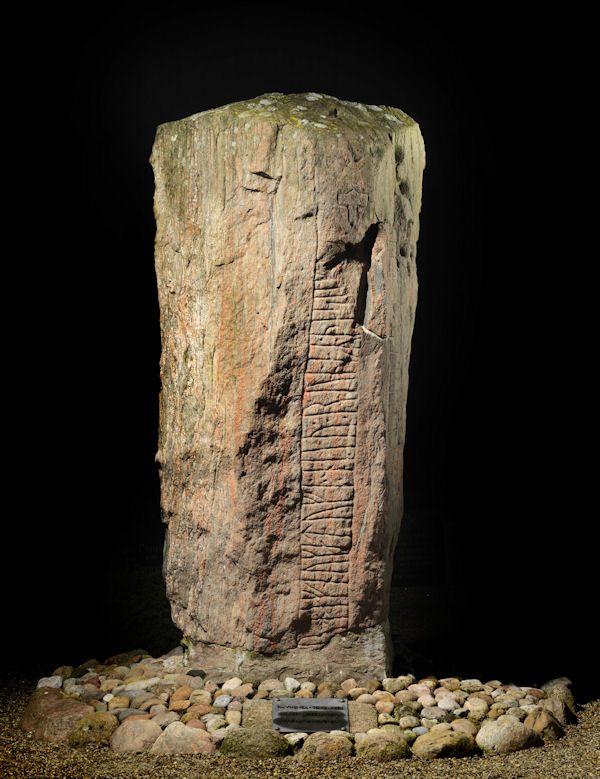
The runestone from Læborg is dedicated to Thyra as the dróttning, meaning “lady” or “queen.” NATIONAL MUSEUM OF DENMARK

WHEN YOU THINK OF VIKINGS, your mind may imagine the muscular Norse Gods: Thor, Odin, or Loki. Or perhaps you might picture fierce-looking bearded men aboard slender, symmetrical boats rowing oars in unison, commanded by feared war heroes like Ragnar Lothbrok.

Yet a recent investigation has found that, during the Viking Age, one of the most celebrated leaders was actually a woman. A recent study has found that Queen Thyra is honored on runestones far more than any male counterpart.

Read the rest of this article...

Scientists reveal the cause of Earth's last ice age

At the beginning of the last ice, local mountain glaciers grew and formed large ice sheets, like the one seen here. (CREDIT: Creative Commons)

For quite some time, paleo-climate specialists have been perplexed by two enigmas: What was the origin of the ice sheets that defined the final ice age, and how could they expand so rapidly?

Fresh research conducted by University of Arizona's experts suggests a plausible explanation for the swift expansion of the ice sheets that coated a considerable portion of the Northern Hemisphere during the last ice age. Furthermore, the study's findings may be applicable to other glacial periods in the Earth's past.

Read the rest of this article...

‘A Neolithic feat of engineering’: Orkney dig reveals ruins of huge tomb

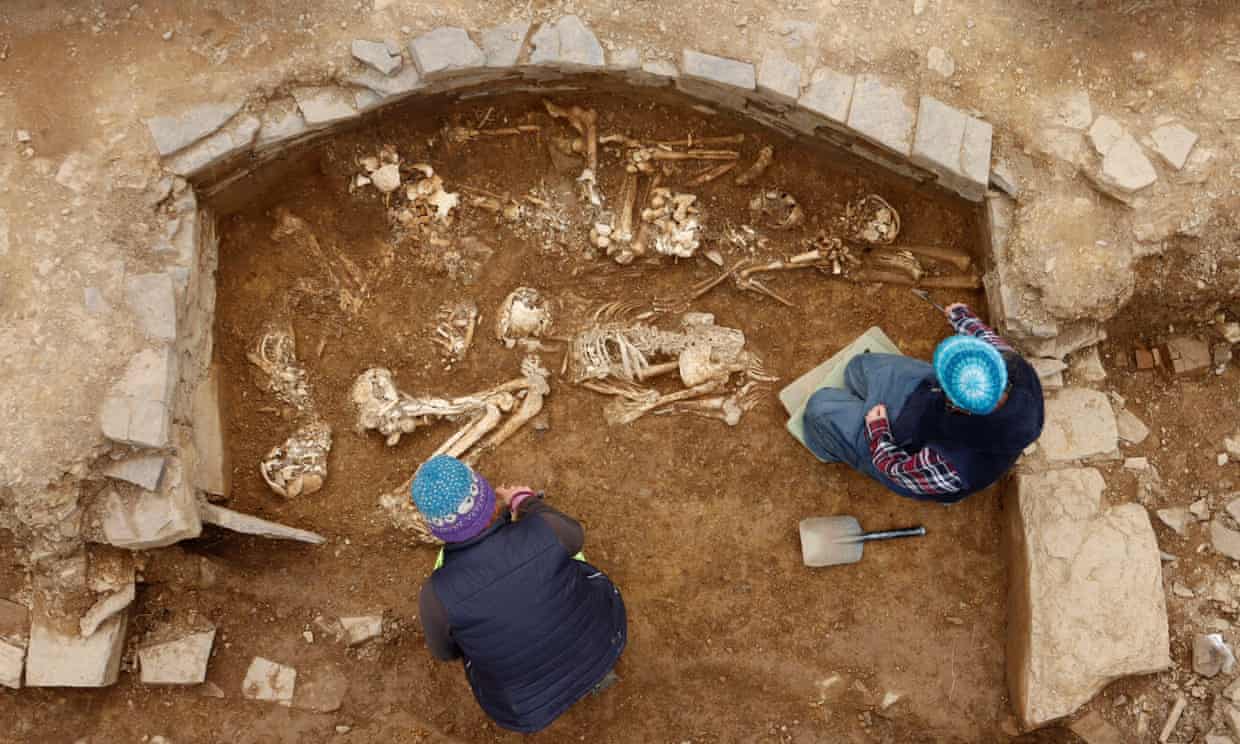
Fourteen skeletons were found in one of six rooms surrounding the main chambeer at the site. Photograph: National Museums Scotland

‘A Neolithic feat of engineering’: Orkney dig reveals ruins of huge tomb
Clues unearthed more than 100 years ago inspired archeologists to locate the 5,000-year-old site

The ruins of a 5,000-year-old tomb in a construction that reflects the pinnacle of neolithic engineering in northern Britain has been unearthed in Orkney.

Fourteen articulated skeletons of men, women and children – two positioned as if they were embracing – have been found inside one of six cells or side rooms.

The tomb measures more than 15m in diameter and contains a stone structure accessed through a long passage of around seven metres. The excavation was headed by Dr Hugo Anderson-Whymark, senior curator of prehistory (neolithic) at the National Museums Scotland, and Prof Vicki Cummings, professor of neolithic archaeology at Cardiff University.

Read the rest of this article...

‘Orkney dig reveals ruins of huge tomb’

Staff and students from the UHI Archaeology Institute with Professor Vicki Cummings during a visit to the excavation site in September 2023. (📷 Sigurd Towrie)

In August and September, excavation in the East Mainland parish of Holm revealed the remains of a Maeshowe-type chambered cairn.

At the helm of the three-week dig were Dr Hugo Anderson-Whymark and Professor Vicki Cummings.

Read the rest of this article...

Wednesday, October 18, 2023

Medieval Cemetery Discovered in Finland

(Riikka Saarinen / Turku Museum Center)

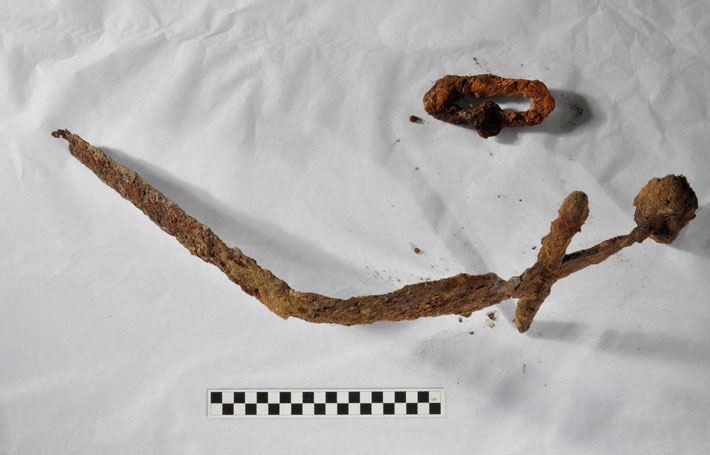
SALO, FINLAND—YLE reports that construction work to install geothermal pipes in western Finland’s Salonjoki River Valley turned up an iron sword dated to between A.D. 1050 and 1150. The sword has a straight cross guard and a three-sided pommel. Juha Ruohonen of the University of Turku determined that the weapon belonged to a burial in what could be a cemetery containing 200 Christian burials situated near a church.

Read the rest of this article...

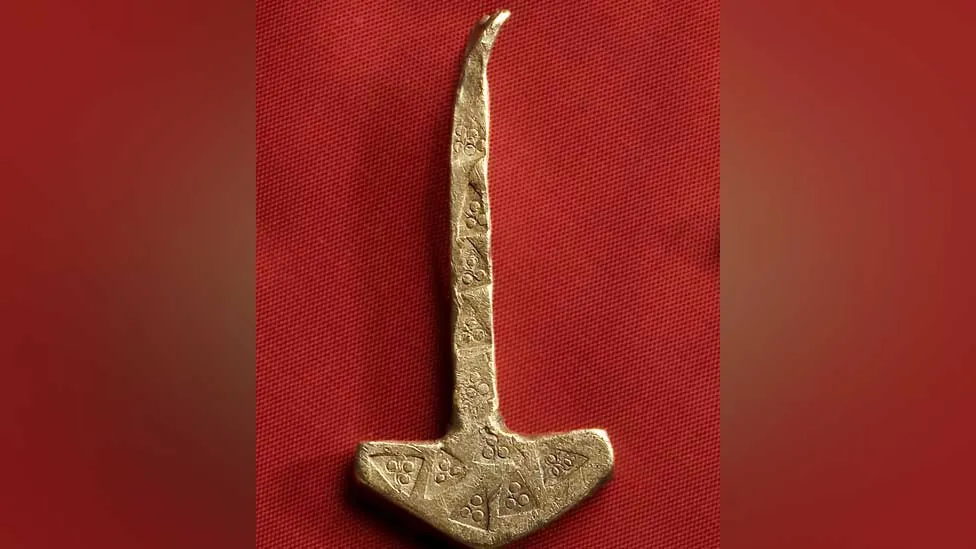
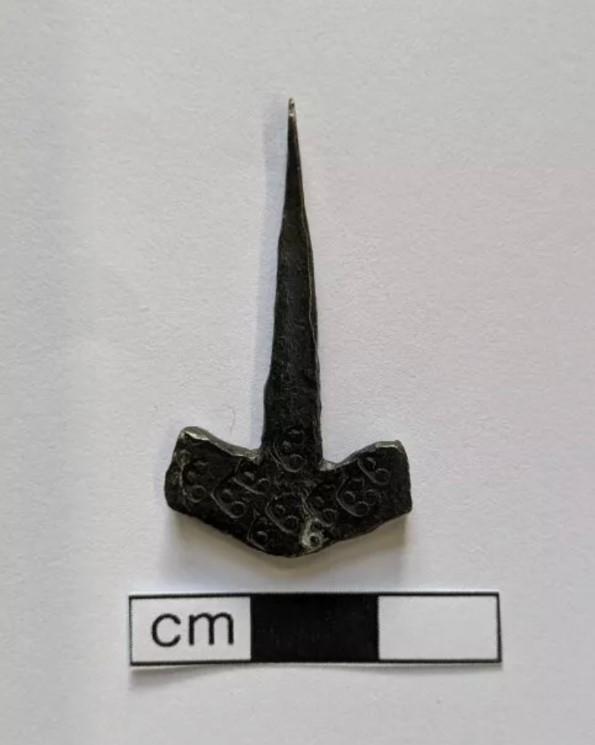
Thor's hammer part of Viking finds returning to Thetford

The Thor's hammer pendant, which could have been worn by one of the invaders, was found just outside South Lopham, about 11 miles (17km) from Thetford

A Thor's hammer and a pottery lamp are among Viking Great Army finds returning to the town where they were discovered.

Thousands of Scandinavians formed an army in England to raid and conquer between AD865-878, and Thetford in Norfolk was one of their winter camps.

The story of how this led to the town becoming a major Viking settlement will be told at its Ancient House Museum.

Curator Oliver Bone said the exhibits "show how important this area was in the Viking story".

Read the rest of this article...

Thor's hammer pendant unearthed in Norfolk declared treasure


A silver pendant bearing the hammer of the Norse god Thor unearthed in Norfolk may be linked to the first Viking invaders of Britain.

The artefact, estimated to have been made in either the 9th or 10th century, is made largely of silver and is in the shape of the hammer symbol associated with the deity. 

During a treasure inquest into the find, a report from Gareth Williams, a curator at the British Museum, said the discovery - at an undisclosed location in Norfolk  - may have been linked to the Viking Great Army which invaded Britain in the 9th century.

Read the rest of this article...

Crusader Era Cemetery and Sword Discovered in Finland

Crusader era sword found in Salo, Finland.
COURTESY RIIKKA SAARINEN

Crusader era burials have been found in a cemetery by archaeologists in Salo, Finland, according to Heritage Daily.

While a pipe trench was being dug near a medieval stone church, a local landowner noticed an iron object in the dirt earlier this year in August. The object, which was identified as a sword, was reported to archaeologists at Turku University and the Turku Museum Centre.

The sword was found with a bent blade, a straight hilt, and a three-sided oval pommel. It dates between 1050–1150 CE or the Crusader era, during which time the Swedish brought Christianity to Finland.

The team also found part of the scabbard, additional pieces of blade, iron objects, and human remains in the same area.

A leather belt with 30 square rosette-patterned bronze ornaments is among the most notable finds, along with a buckle, several end and animal head buckles, strap dividers, and leather pieces.

Read the rest of this article...

Sunday, October 15, 2023

Norwegian Archaeologists Are Salvaging Priceless Artefacts From Melting Glaciers—Before It’s Too Late

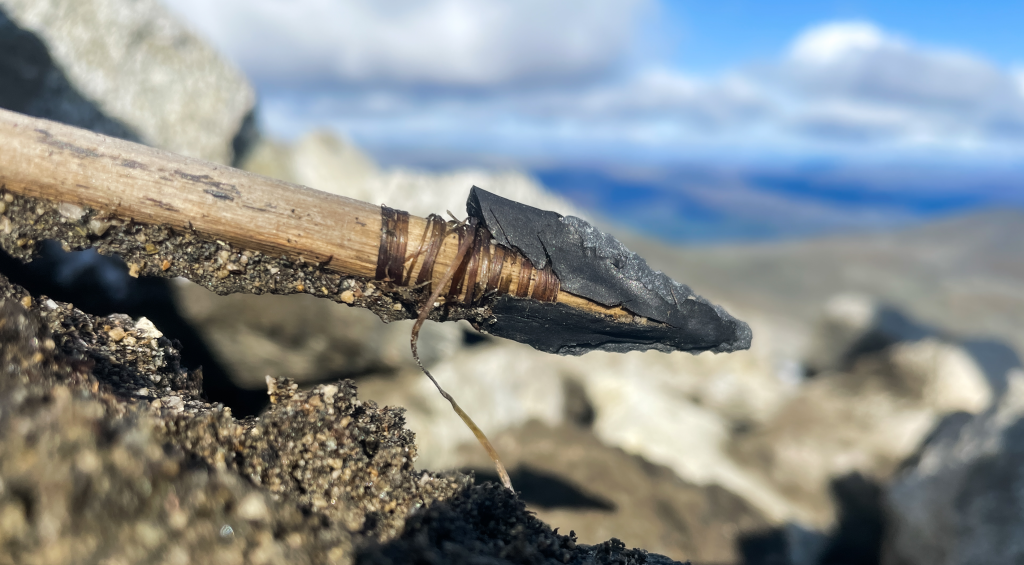
The arrow found by Glacier Archaeology Program. Image: Espen Finstad/secretsoftheice.com.

There is surely little upside to the environmental changes posed by global warming, but nevertheless, a group of Norwegian archaeologists is seizing the opportunities presented by the country’s rapidly melting glaciers.

That group is Glacier Archaeology Program—snappy internet alias: Secrets of the Ice—and since receiving permanent government funding in 2011 it has been responsible for 90 percent of Norway’s glacial finds.

Granted, the group’s success is partly tied to the topography of Innlandet. The county boasts many of Norway’s highest peaks, and the team has pursued salvaging artefacts from remote locations in a comprehensive and systematic manner. To date, it has made 4,000 finds across 66 sites

Read the rest of this article...

Saturday, October 14, 2023

Varangian Guard, the Vikings of the Byzantine Empire

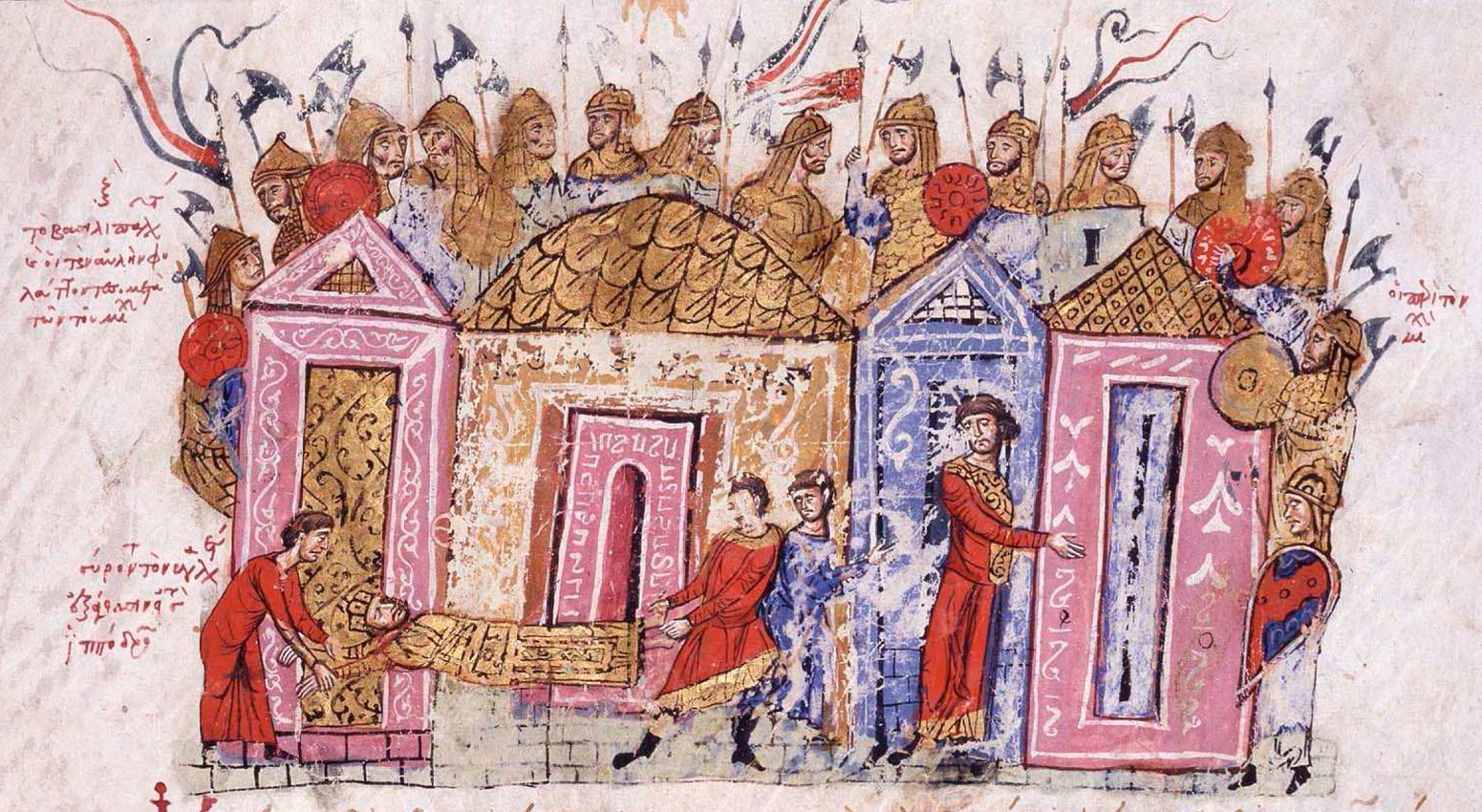
Depiction of the Varangian Guard,the Vikings of the Byzantine Empire.
Image: Joannis Scylitza, 12th century. Credit: Public domain

The Vikings were seafaring from Scandinavia. They most famously raided in and around the British Isles and the western coasts of Europe. However, what many people do not know is that they were active much further east, too. They played a surprising yet significant role in the Byzantine Empire, where they formed the Varangian Guard. What do we know about the Varangian Guard, the Vikings of the Byzantine Empire?

The Origin of the Varangians

The Varangians were Vikings from Sweden. In the ninth century, a group of them settled in Northwest Russia, where the city of Novgorod is located today. A man named Rurik was the legendary leader of this group. He was referred to as the Rus’, and the settlement, established in the year 862 according to a twelfth century chronicle, was likewise referred to as such.

Read the rest of this article...

1,000-Year-Old Viking Runes May Finally Solve Mystery of an Ancient Queen

Jelling 2 with runes chosen for analysis. (3D-scanning by Zebicon, drawing by Laila Kitzler Åhfeldt.)3D-scanning by Zebicon, drawing by Laila Kitzler Åhfeld

A team of archaeologists from the National Museum of Denmark has used 3D scanning technology to analyze runes carved in stone that date back to more than 1,000 years ago. Their study of the ancient texts, published in the peer-reviewed journal Antiquity, has revealed new details about a mysterious Danish queen, Thyra, which together suggest she played a significant role in the emergence of the Scandinavian nation as a political force.

The discovery was made by re-analyzing two sets of runestones which were carved by Vikings in Denmark in the 10th century C.E. The first set, the Jelling Stones, was linked to Harald Bluetooth, a 10th century Danish King who is widely-regarded as the creator of Denmark. Bluetooth was the son of King Gorm and Queen Thyra — but historians had scant information about the couple or their reign. 

But the second set of runestones, called the Ravnunge-Tue Stones after its rune-carver, sheds a little more light on royals, and some historical analyses had theorized that several stones were inscribed in honor of Thyra on Bluetooth’s orders.

Read the rest of this article...
Extremely Rare Medieval Folding Chair Reveals Its Secrets


A rarity: this iron folding chair was found during an excavation in Steinsfeld, Bavaria. Credit:BLfD/​dpa

In 2022, archaeologists made a very unusual find. A Medieval folding chair was discovered in a woman's grave in Steinsfeld in Central Franconia in the Ansbach district, Germany.

Examinations of the woman's skeleton showed she was around 40 to 50 when she died. The dead woman had a necklace of colored glass beads around her neck.

At the time of the discovery, the Bavarian State Office for the Preservation of Monuments was only the second discovery of an iron folding chair from the early Middle Ages in Germany. Across Europe, 29 sites of early medieval graves with folding chairs have been handed down, only six of which are made of iron.

Read the rest of this article...

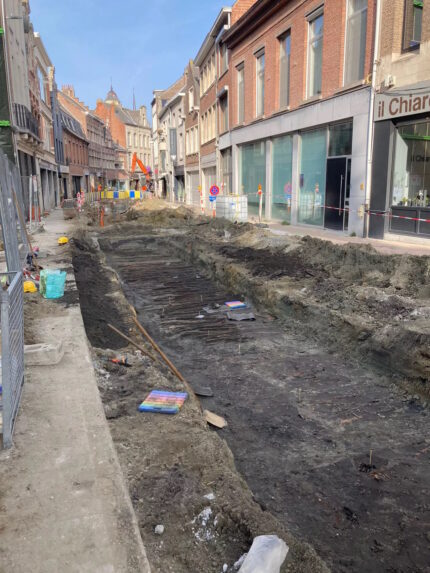
15th c. wood road found in Belgium


The wooden foundations of a 15th century road have been unearthed in Lier, a city on the outskirts of Antwerp, Belgium. The wood road emerged from under a modern street during city sewer works. The original sewers were built in the 1930s and by happy coincidence they were installed next to the medieval street instead of over it or crossing it, so the road was not exposed or damaged at that time.

The town of Lier grew around the hermitage of its most famous son, the 8th century saint Gummarus, on the banks of the Nete River. Settlements around the hermitage were destroyed in 9th century Norman raids, but the the relics and chapel of St. Gummarus made it a site of pilgrimage, drawing permanent construction and residents to the area. The earliest historical references to what would become Lier date to 970 A.D. The oldest surviving building is the Romanesque St. Peter’s Chapel, originally built in the 13th century. The medieval city center is located at the confluence of the Grote Nete (Big Nete) and Kleine Nete (Little Nete) where the two rivers come together to form the Nete. It was granted official municipal status in 1212, and by the end of that century it was a regionally important center of the textile trade.

Read the rest of this article...
Neanderthals Hunted Lions with Spears, and New Research Reveals How They Might Have Done It


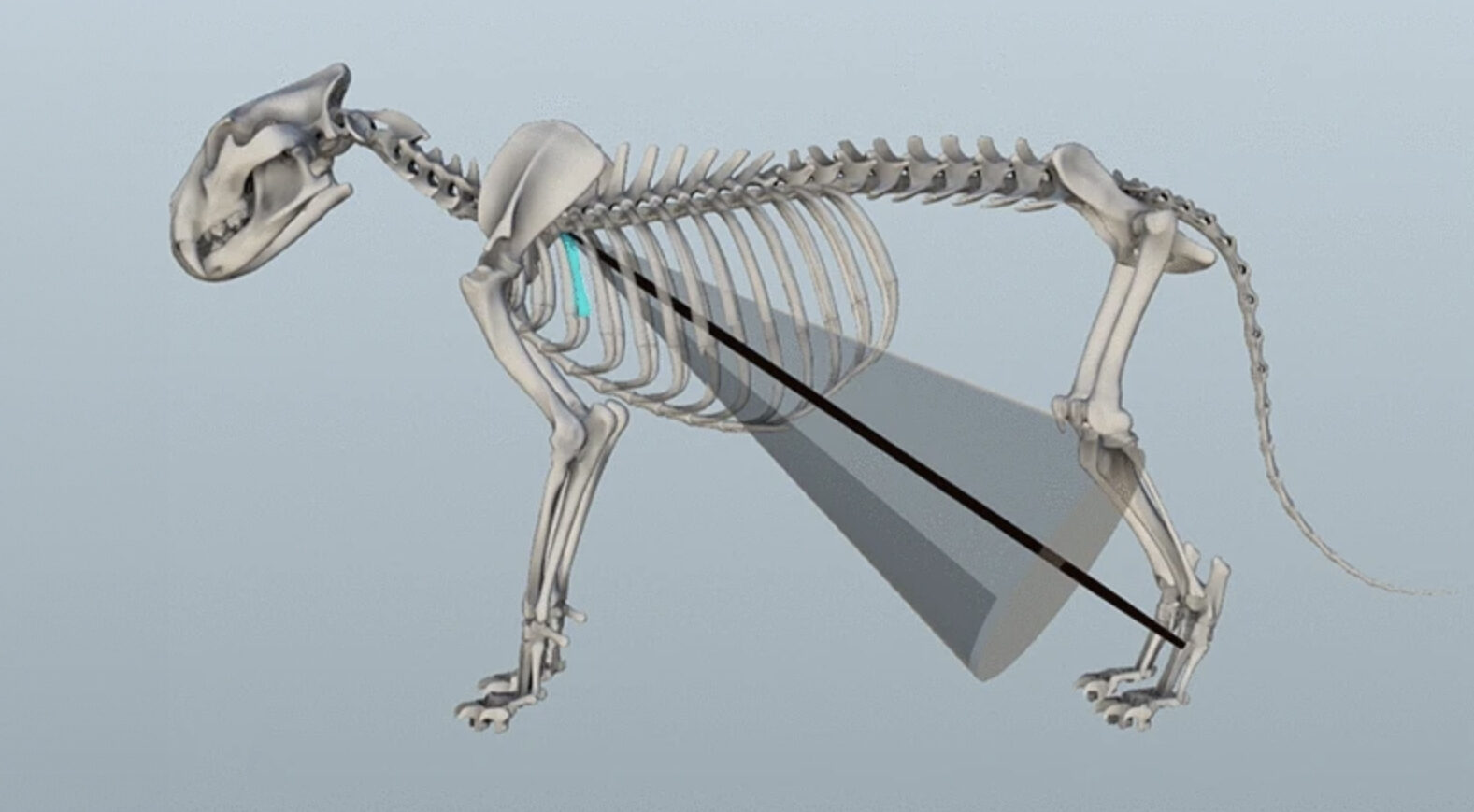
A 48,000-year-old lion skeleton found in a cave in modern-day Germany has provided researchers with new evidence of early predator hunting by hominids, according to new evidence outlined in a study published by Scientific Reports Thursday. The same study reports potential evidence of hominids turning cave lion skins into pelts based on new analysis of different, much older remains. These findings represent the earliest known proof that Neanderthals were effective hunters of large carnivores rather than just scavengers trying to avoid them.

A skeleton of a cave lion with a significant puncture wound in its rib was discovered in 1985 near Siegsdorf in southeastern Germany, at the foot of the Bavarian Alps. The puncture wound and surrounding cracks are located on the interior side of the rib, indicating that a spear likely struck it from the inside after passing through the lion’s vitals. Other “lesions,” probably the result of butchering, mark other bones.

“The hunting lesions include a partial puncture and possible drag marks,” the study reads. “The partial puncture was observed on the [rear] side … of rib III … It is oval-shaped in outline, exhibits circumferential and radial cracking on the impact … side, and lacks an exit wound.”

Read the rest of this article...

A Horse Is a Horse?

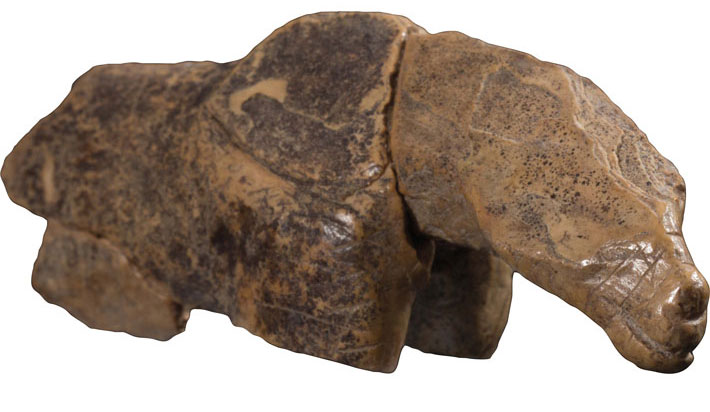
Nearly 25 years ago, a team working in Hohle Fels Cave in southern Germany’s Swabia region unearthed a small piece of carved ivory they believed represented a horse’s head. Even as three more small ivory pieces that were part of the same figurine were found subsequently, their judgment didn’t change. A fifth piece of the Ice Age sculpture has recently been discovered, and researchers now believe it depicts an entirely different animal. “As soon as the pieces were fit together, it was clear from the shape of the shoulder and body that they couldn’t belong to a horse,” says archaeologist Nicholas Conard of the University of Tübingen.

Read the rest of this article...
Wednesday, October 11, 2023

Viking Queen Thyra’s Power And Position Revealed On Famous Jelling Runestones

New research not only reveals who carved the runes into the Jelling stones, but also hints at how important Queen Thyra was.
Image credit: auralaura/Shutterstock.com

Today we recognize that handwriting is unique to each person. From the way we form our letters to the amount of pressure we place on pen and paper, the details of our individual writing can be used to identify us. The same, it seems, is true for ancient runesmiths, which has allowed archaeologists to finally identify the person who carved the amazing Jelling stones in Denmark and reveal the power of a 10th-century Viking queen.

The Jelling stones are located in the town of Jelling, near the eastern coast of Denmark. They consist of two massive stone monuments that date back to the 10th century CE. The oldest was erected by King Gorm the Old to honor his wife Thyra, while the second stone was raised by his son, Harald Bluetooth (of hands-free fame) to commemorate his parent’s memory. This second stone also contains intricate carvings that describe Harald’s achievements. It celebrates his conquest of Denmark and Norway and how he converted the Danes to Christianity. 

The markings on these stones are beyond impressive. They contain both runic inscriptions as well as carved images – one side of the youngest stone displays the oldest known image of Christ in Scandinavia. 

Read the rest of this article...