Friday, October 06, 2017

Mysterious Stone Tools Unearthed at Bronze-Age Site in Wales

The stone tools found by the CRAG team vary in size, from around 220 millimeters (8.5 inches) in length, down to about 50 millimeters (2 inches).
Credit: Ian Brooks/CRAG

Amateur archaeologists excavating a Bronze Age site in the United Kingdom have discovered a cache of unusual stone tools unlike any that have been found before.

The tools appear to have been deposited deliberately — perhaps ceremonially — in what would have been a stream around 4,500 years ago, according to the researchers.

Around 20 of the roughly triangular stone hand tools, of various sizes, were found at the excavation site in the Clwydian Range, a series of hills in Denbighshire in northeast Wales, by the Clwydian Range Archaeological Group (CRAG) during four weeks of excavations in July and August. [See More Photos of the Stone Tools at the Bronze-Age Site]

Read the rest of this article...

Antikythera Shipwreck Yields More Amazing Finds

For the third consecutive year, the Greek Ephorate of Underwater Antiquities has conducted an underwater excavation at the site of the Antikythera shipwreck. Work was carried out between the 4th and the 20th of September, under particularly good weather conditions, as has been announced by the Ministry of Culture and Sports.


Finds from the excavation at the site of the Shipwreck of Antikythera 
[Credit: Ministry of Culture and Sports]

During research, excavations continued in the sea area, from where come the remains of skeletons from last year’s operation, as well as components from the ship itself such as: sections of lead tubing, counterweights and aggregates of iron objects. At the same time, a multitude of shards of amphorae and other vessels were recovered in this year’s excavation season.

Read the rest of this article...

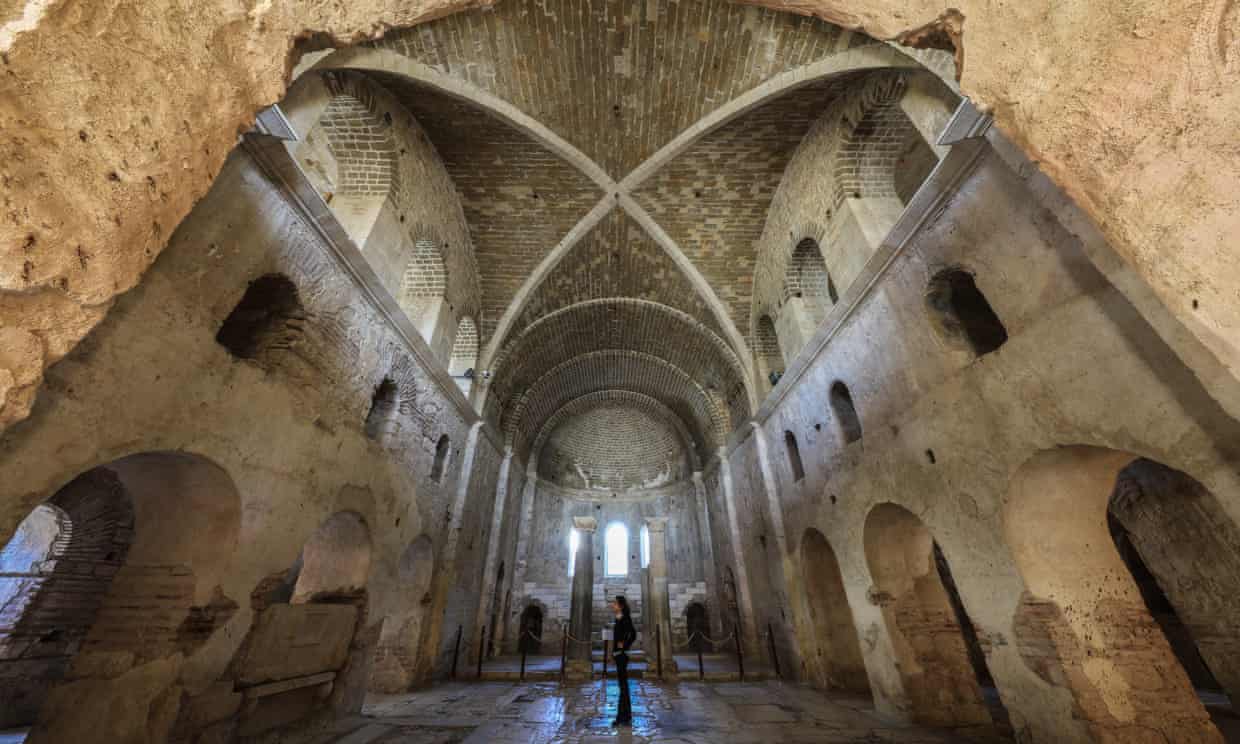
Santa Claus's tomb may have been uncovered beneath Turkish church

Archaeologists say they have found almost fully intact temple and burial grounds of Saint Nicholas in Antalya


St Nicholas Church in Antalya, where Saint Nicholas is believed to have been born. 
Photograph: Anadolu Agency/Getty Images

Turkish archaeologists have dashed the hopes of millions of children by claiming to have uncovered the likely burial place of Saint Nicholas.

Surveys have uncovered an intact temple and burial grounds below St Nicholas church in the province of Antalya, where he is believed to have been born, archaeologists told the Turkish newspaper Hurriyet.

“We have obtained very good results but the real work starts now,” said Cemil Karabayram, the director of surveying and monuments in Antalya. “We will reach the ground and maybe we will find the untouched body of Saint Nicholas.” 

Read the rest of this article...

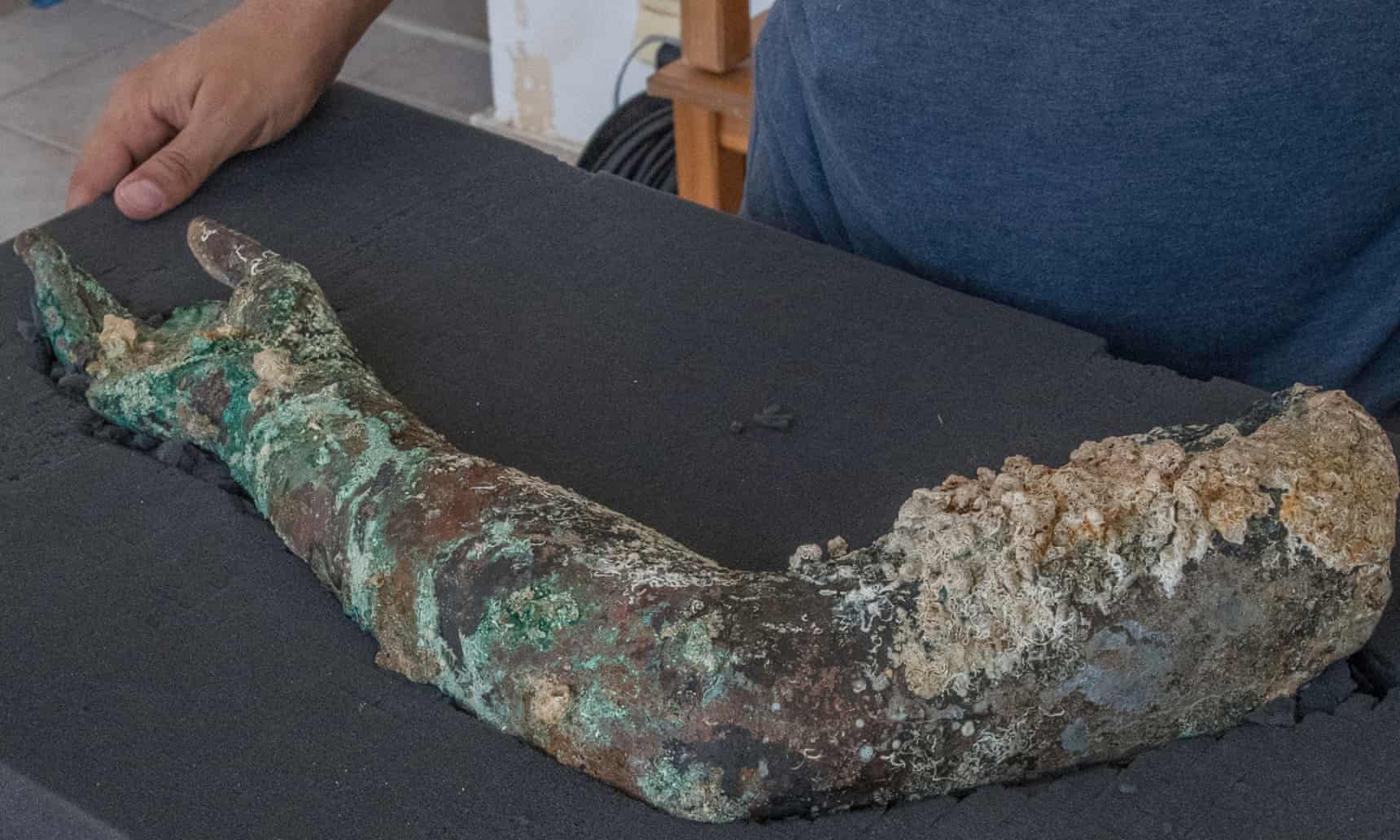
Antikythera shipwreck yields bronze arm – and hints at spectacular haul of statues

Arm points to existence of at least seven statues from Greek shipwreck, already the source of most extensive and exciting ancient cargo ever found


This bronze arm was discovered with a bespoke underwater metal detector, which has revealed the presence of other large metal objects nearby under the seabed. 
Photograph: Brett Seymour/EUA/ARGO 2017

Marine archaeologists have recovered a bronze arm from an ancient shipwreck off the Greek island of Antikythera, where the remains of at least seven more priceless statues from the classical world are believed to lie buried.

Divers found the right arm, encrusted and stained green, under half a metre of sediment on the boulder-strewn slope where the ship and its cargo now rest. The huge vessel, perhaps 50m from bow to stern, was sailing from Asia Minor to Rome in 1BC when it foundered near the tiny island between Crete and the Peloponnese.

Read the rest of this article...
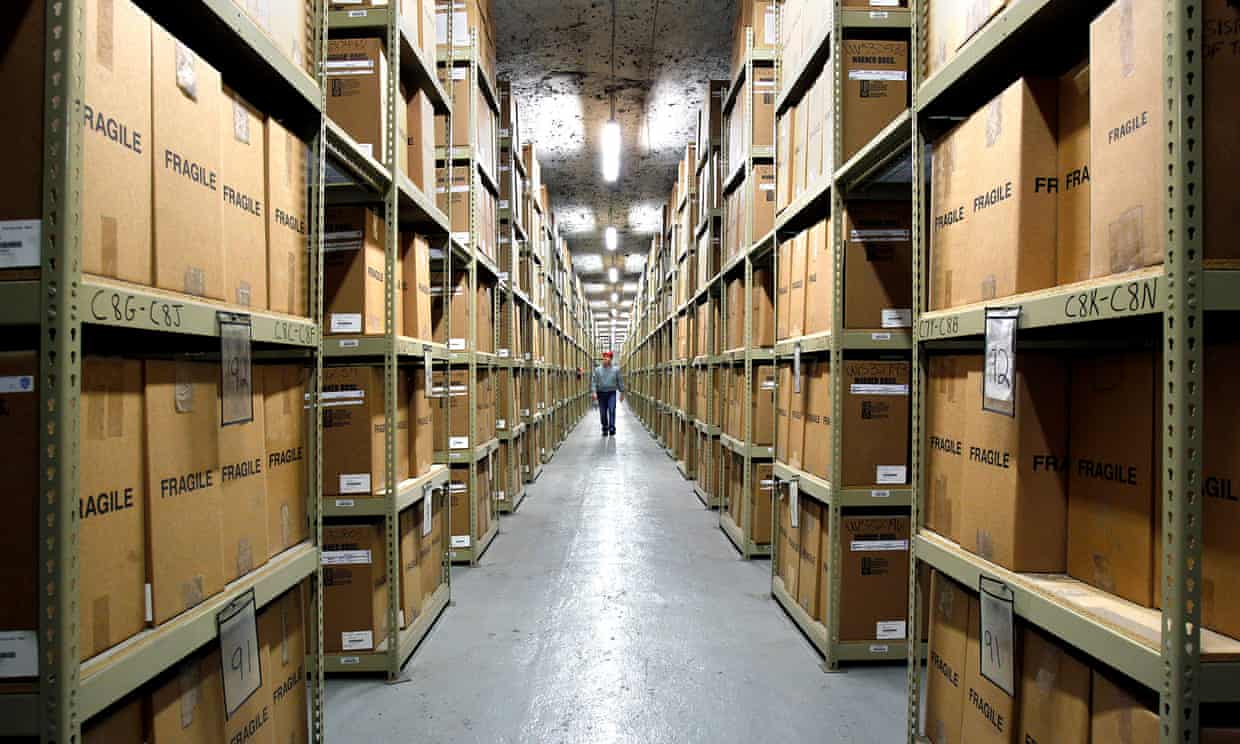
Archaeology and blockchain: a social science data revolution?

Blockchain technology is revolutionising financial systems. Could it do the same for archaeological data?

Museum and data storage might both be aided in the future with blockchain technology. Photograph: Keith Myers/MCT via Getty Images

This month the world’s first “archaeology coin” launched to fanfare from a small community; however, it might be part of a coming social science data revolution. Named Kapu, the digital currency is similar to Bitcoin, but specifically designed for archaeology. The technology underlying Kapu and Bitcoin is called blockchain and it may change data storage and cultural heritage protection. While the public is unaccustomed with blockchain, there is good reason to believe we may be witnessing the first step in what will become a standard technology over the next decade.

Read the rest of this article...

Tuesday, September 26, 2017

New scientific dating research unravels the story of life in prehistoric Orkney Read

A new study, published today in Antiquity journal, is challenging the previously understood narrative for prehistoric life on Orkney. It was led by Professor Alex Bayliss of Historic England and is based on the interrogation of more than 600 radiocarbon dates, enabling much more precise estimates of the timing and duration of events in the period c.3200-2500 BC. 


Excavating the Smerquoy Hoose [Credit: © Colin Richards]

The study is part of a much wider project, The Times of Their Lives, funded by the European Research Council (2012-2017), which has applied the same methodology to a wider series of case studies across Neolithic Europe. That project has demonstrated many other examples of more dynamic and punctuated sequences than previously suspected in 'prehistory'.

Neolithic Orkney is well-preserved and is a time of stone houses, stone circles and elaborate burial monuments. World-renowned sites such as the Skara Brae settlement, Maeshowe passage grave, and the Ring of Brodgar and Stones of Stenness circles have long been known and are in the World Heritage Site (given this status in 1999). They have been joined by more recent discoveries of great settlement complexes such as Barnhouse and Ness of Brodgar.

The new study reveals in much more detail than previously possible the fluctuating fortunes of the communities involved in these feats of construction and their social interaction. It used a Bayesian statistical approach to combine calibrated radiocarbon dates with knowledge of the archaeological contexts that the finds have come from to provide much more precise chronologies than those previously available.

Read the rest of this article...

Rare tiles found near Basingstoke shed insight on Roman history


Evidence of one of the Roman Empire’s best-known rulers has been discovered near Basingstoke.
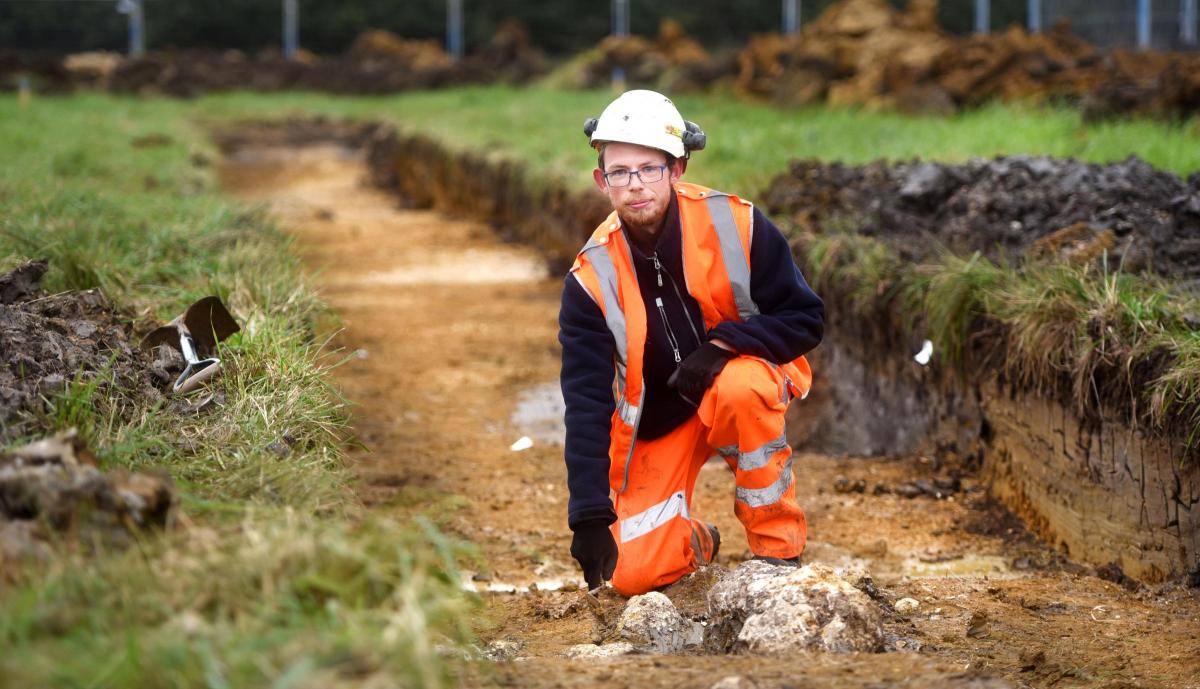
A team of archaeologists from the University of Reading has found three tiles bearing the stamp of Emperor Nero at a site in Little London.
The tiles date back almost 2,000 years, and were found earlier this month at the Roman Tile Kiln site.
Only 14 such tiles have ever been found in the UK, including another found at Little London back in 1925 and four discovered within a ritual put at a temple in nearby Silchester.
The University of Reading team is currently excavating a series of Roman kiln structures at the Little London site, which includes some huge brick and tile production facilities.
Read the rest of this article...
House “older than Stonehenge” found in East Ayrshire field

The field near Kilmarnock where man settled some 6,000 years ago. PIC: Scottish Water.

The remains of a pre-historic dwelling older than Stonehenge or the Callanish Stones have been found in a field in East Ayrshire.

Archaeologists believe the site near Kilmarnock is 6,000-years-old and was settled as man moved away from nomadic existence towards farming the land.

The discovery has been described as one of the most important of its kind in recent years.

Read the rest of this article...
Storytelling flints and the original Oxen Ford: Oxford flood scheme archaeology begins


THIS tiny piece of flint is barely an inch long, but it tells an incredible story.

A stone flake reveals that 6,000 years ago, for just a few short minutes, a tribe of Mesolithic hunters stopped in this field in South Hinksey to sharpen their tools.

The miniscule fragment is just the first of thousands of discoveries archaeologists are hoping to make in 200 trenches across South Oxford in the next two months.

The team from Oxford Archaeology are excavating the area that in due course will become the Environment Agency's £120m Oxford flood alleviation channel.

They are looking for evidence of Saxon huts, Norman roads and even the very Oxen Ford, which our city is named after.

Read the rest of this article...
Viking Boat Burial Found In Norway

On one of the last days of the excavation in the market square, archaeologists from the Norwegian Institute for Cultural Heritage Research (NIKU) became aware of a feature with a somewhat special shape.


The boat dates between the seventh and 10th centuries, around the time the Vikings began exploring and raiding Europe 
[Credit: Norwegian Institute for Cultural Heritage Research (NIKU)]

The feature, which was dug into the natural deposits, had been disturbed in several places by later pits and postholes, but it was quite clearly boat-shaped.

"Careful excavation revealed that no wood remained intact, but lumps of rust and some poorly-preserved nails indicated that it was a boat that was buried here", says archaeologist Ian Reed.

The remains of the boat show that it was at least 4 meters long and oriented more or less north-south.

Read the rest of this article...
Bronze Age Arrows and a Viking Sword – The 2017 Fieldwork Was Awesome!

Finally, the long wait was over and we were so ready for fieldwork!

We had chosen two large sites for the main fieldwork in 2017 – the Lauvhøe and Storfonne ice patches, both situated in the northeastern part of the Jotunheimen Mountains. More details on why these two particular sites were chosen can be found here.


he Storfonne ice patch, photographed in September 2014 during a major melt. Notice the light grey lichen-free zone surrounding the ice. This area was exposed by ice melt in the last 15-20 years. Photo: Lars Pilø, Secrets of the Ice/Oppland County Council.

Both sites had only seen short visits prior to this field-season. This had resulted in a number of artifact recoveries, especially arrows, found close to the melting ice. However, we knew that there were other finds on these sites, and that they were lying on the surface, exposed to the elements. The main job would be to rescue these artefacts. To achieve this, we planned to conduct a systematic and thorough survey of the lichen-free zone (where the ice has melted recently) surrounding the ice on both sites.

Read the rest of this article...
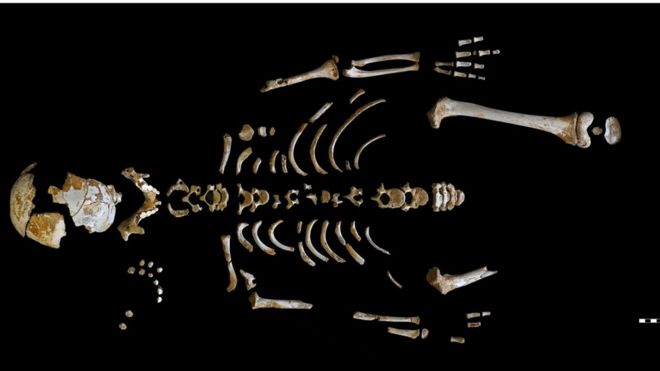
Neanderthal brains 'grew more slowly'

The skeleton of a boy that shattered our view of Neanderthal brain development

A new study shows that Neanderthal brains developed more slowly than ours.

An analysis of a Neanderthal child's skeleton suggests that its brain was still developing at a time when the brains of modern human children are fully formed.

This is further evidence that this now extinct human was not more brutish and primitive than our species.
The research has been published in the journal Science.

Until now it had been thought that we were the only species whose brains developed relatively slowly. Unlike other apes and more primitive humans, Homo sapiens has an extended period of childhood lasting several years.

Read the rest of this article...

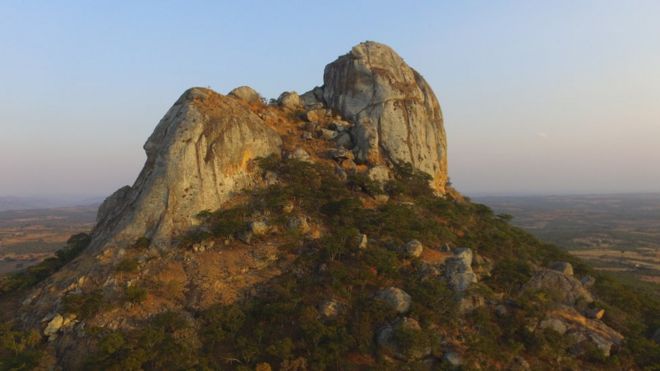
Ancient DNA sheds light on African history

Burials at Mount Hora in Malawi yielded DNA used in the study

DNA from ancient remains has been used to reconstruct thousands of years of population history in Africa.

Researchers sequenced the genomes of 16 individuals who lived between 8,000 and 1,000 years ago.
The data shows how the invention and spread of farming had a major impact on the genes of people in Africa - just as it did in Europe and Asia.

The findings are published in the journal Cell.

The results suggest that populations related to the indigenous people of southern Africa had a wider distribution in the past.

This southern African-like genetic background is found in hunter-gatherers from Malawi and Tanzania in the east of the continent. These hunters lived between 8,100 and 1,400 years ago.

Read the rest of this article...
Lakes of mercury and human sacrifices – after 1,800 years, Teotihuacan reveals its treasures

When archaeologists found a tunnel under Mexico’s ‘birthplace of the gods’, they could only dream of the riches they would discover. Now its wonders – from jewel-eyed figures to necklaces of human teeth – are being revealed to the world


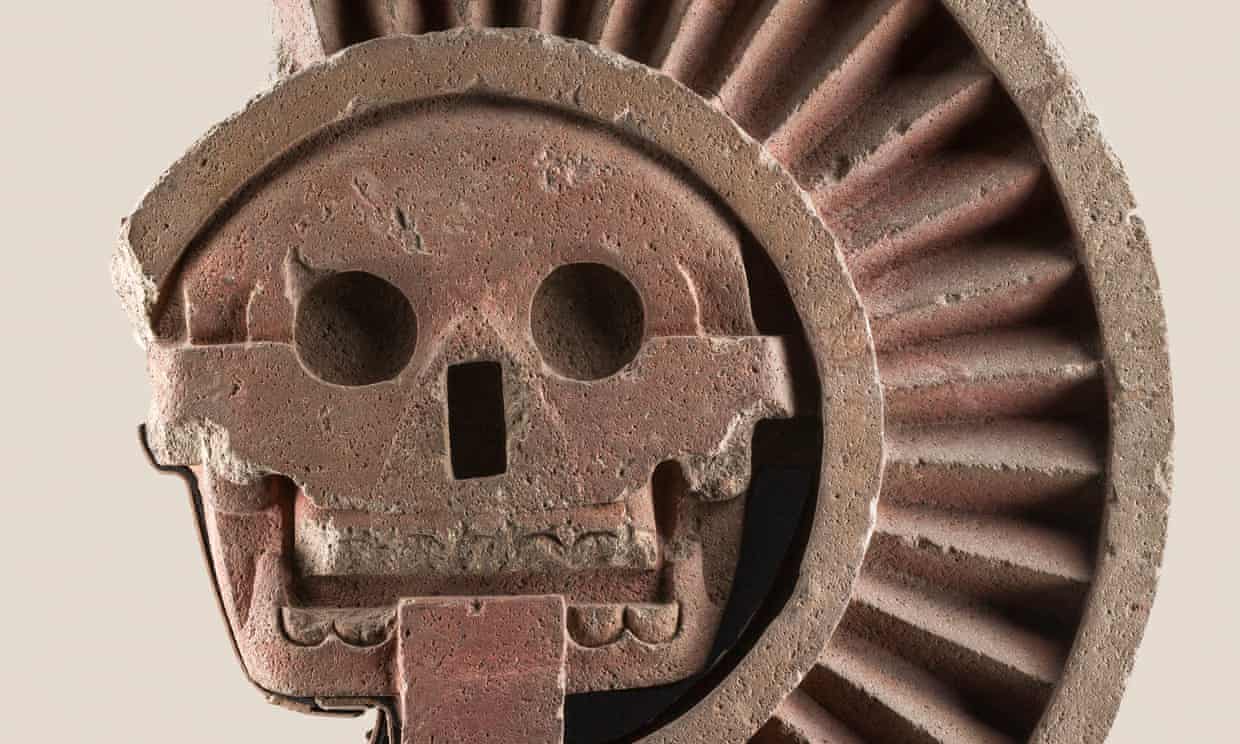
A skull statue that will be on display in Teotihuacan: City of Water, City of Fire, at the De Young Museum in San Francisco. Photograph: Photographer:Jesus Valdovinos Al/Fine Arts Museums of San Francisco

Sunday 24 September 2017 18.52 BST Last modified on Monday 25 September 2017 12.43 BST
In 2003, a tunnel was discovered beneath the Feathered Serpent pyramid in the ruins of Teotihuacan, the ancient city in Mexico. Undisturbed for 1,800 years, the sealed-off passage was found to contain thousands of extraordinary treasures lying exactly where they had first been placed as ritual offerings to the gods. Items unearthed included greenstone crocodile teeth, crystals shaped into eyes, and sculptures of jaguars ready to pounce. Even more remarkable was a miniature mountainous landscape, 17 metres underground, with tiny pools of liquid mercury representing lakes. The walls of the tunnel were found to have been carefully impregnated with powdered pyrite, or fool’s gold, to give the effect in firelight of standing under a galaxy of stars.

Read the rest of this article...

Wednesday, September 20, 2017

Ancient British stone circles were used for ‘Neolithic parties’, study finds

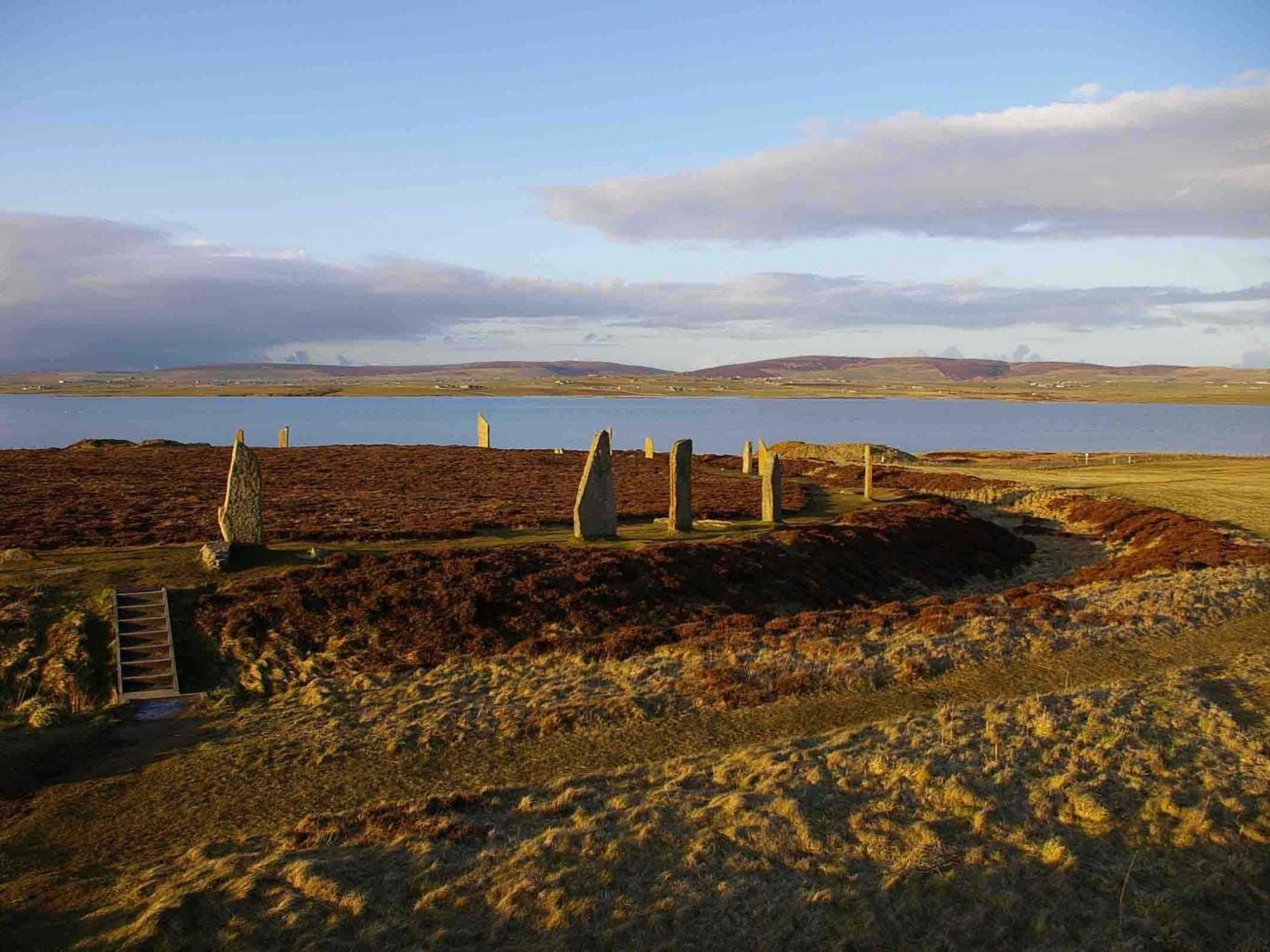
The Ring of Brodgar originally had 60 stones, but now has 27 
Colin Richards, Historic England

Orkney is home to a host of Neolithic stone houses, stone circles and elaborate burial monuments, but a new study into the area has allowed experts to add a new purpose to the prehistoric communities’ use of some of these sites – partying.

New research led by Professor Alex Bayliss at Historic England has challenged the previously understood narrative for prehistoric life on the islands and painted a clearer picture of how communities farmed, gathered together at festivals and buried their dead.

The islands are home to renowned sites such as the Skara Brae settlement, Maeshowe passage grave, the Ring of Brodgar – which originally had 60 stones and is 104 metres in diameter - and Stones of Stenness circles, which were granted UNESCO World Heritage status in 1999.

Read the rest of this article...

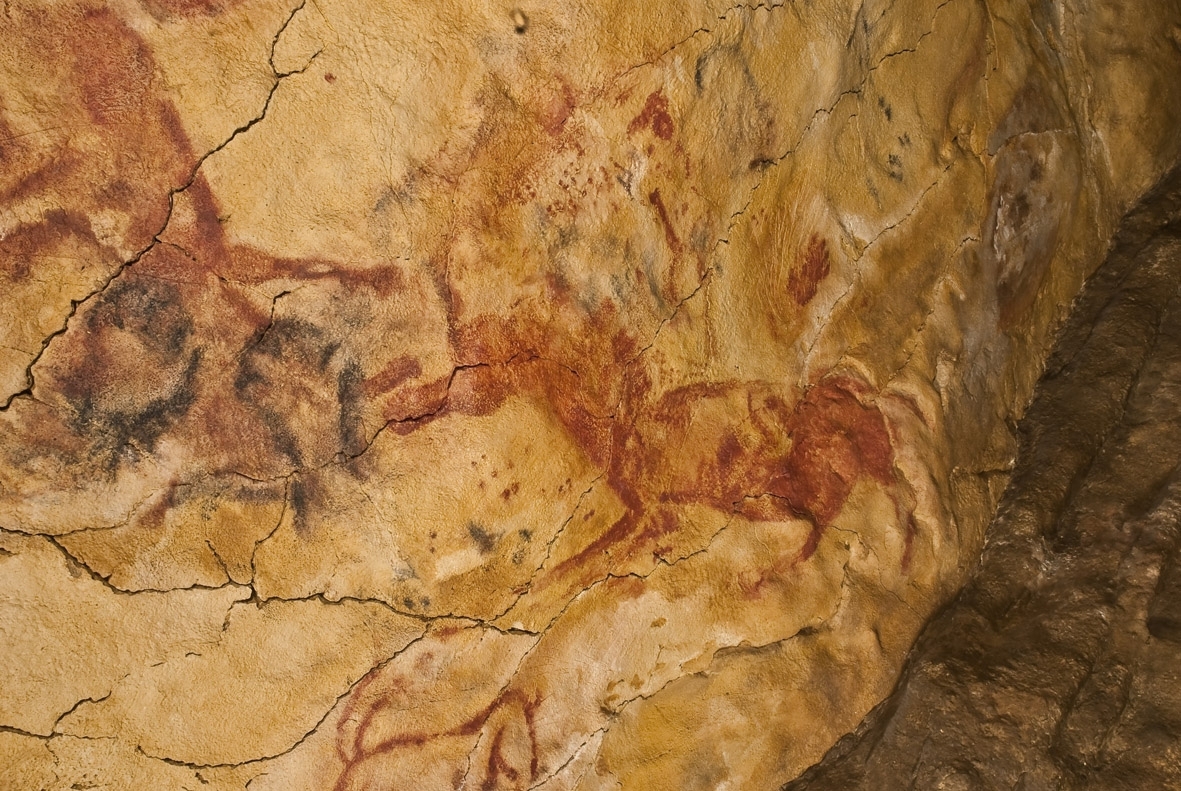
Spanish researchers discover 30,000 year-old cave paintings


Cave drawings at Altamira.Museo de Altamira/D. Rodríguez

Researchers have discovered four new sets of cave paintings in Cantabria, northern Spain, the oldest of which was made nearly 30,000 years ago – making it one of the earliest known examples of prehistoric art in the world.

The team from the Museum of Prehistory of Cantabria, led by Spanish prehistorian Roberto Ontañón, used cutting-edge imaging techniques to identify the drawings.

Twenty years ago, a speleologist – a scientist who studies caves – had informed archaeologists of the possible existence of ancient paintings in various rock cavities in Cantabria. However, the techniques available at the time were not sufficient to confirm the existence of the art.

The paintings, like much prehistoric artwork, had degraded so much over time that they were difficult to identify with the naked eye. To overcome this, Ontañón and his team used a 3D laser scanning method, which reproduced the artwork on a computer.

Read the rest of this article...

Secrets of ancient Irish burial practices revealed


Carrowkeel neolithic passage tomb in Co. Sligo.

A new analysis of bones taken from a century-old excavation at Carrowkeel in County Sligo has revealed evidence of the burial practices and death rites of the ancient people of Ireland.
The findings, which have been published in the journal Bioarchaeology International, are part of a project applying modern techniques and research questions to the human remains. 
The team of researchers includes Sam Moore, lecturer in Prehistoric Archaeology at IT Sligo, and the group’s work focussed on the 5300 years-old Passage Tomb Complex at Carrowkeel. This site is one of the most impressive Neolithic ritual landscapes in Europe.
“The bones were analysed from an original excavation of Carrowkeel in 1911, led by Prof R.A.S. McAlister,” explains Sam. “They were subsequently presumed missing or lost until a group of boxes with the name ‘Carrowkeel’ on them was discovered in the archive in the University of Cambridge in 2001. The bones date from between 3500 and 2900 BC."
Read the rest of this article...

Medieval porpoise 'grave' on Channel island puzzles archaeologists

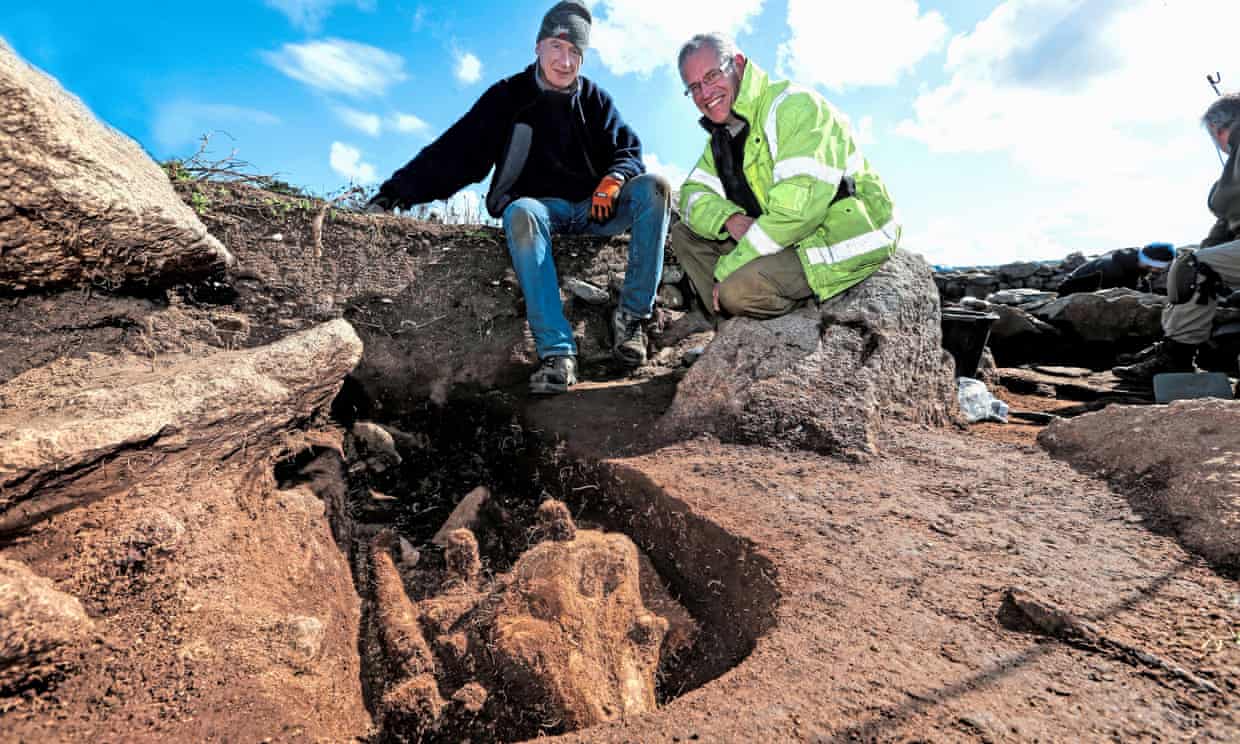
Dr Phil De Jersey, right, and Mike Deane alongside the skeleton of a medieval porpoise.
Photograph: Guernsey Press / SWNS.com
Archaeologists digging at an island religious retreat have unearthed the remains of a porpoise that, mystifyingly, appears to have been carefully buried in its own medieval grave.
The team believe the marine animal found on the island of Chapelle Dom Hue, off the west coast of Guernsey, was buried in the 14th century.
When they first spotted the carefully cut plot they were convinced it was a grave and would hold human remains, but they were taken aback when they dug further and unearthed the skull and other body parts of a porpoise.
Quite why the porpoise was buried so carefully on the island, which is thought to have been used by monks seeking solitude, is a mystery.
Read the rest of this article...

'Exceptionally rare' crucifix found by metal detectorist in England

An "exceptionally rare" ancient crucifix has been unearthed by an amateur metal detectorist. The 2cm (0.78in) tall lead object, which depicts Christ on the cross, was found in the village of Skidbrooke, Lincolnshire, by Tom Redmayne. It is thought to date from between AD 950-1150.


The 2cm artefact depicts Christ on the cross [Credit: Adam Daubney]

Archaeologist Adam Daubney, from Lincolnshire County Council, said it is one of only three known examples in the country.

Mr Redmayne, who found the crucifix on Sunday, said he did not initially realise the significance of his discovery. He said he knew it was a crucifix, and was possibly old due to its crude design.

However, he said it was only when he researched the item online he realised it was something special. Despite the artefact having little monetary value, he said, it offers a unique insight into the lives of ordinary people at the time.

Read the rest of this article...

Thursday, September 14, 2017

The enigma of early Norwegian iron production

Ancient Norwegians made top-quality iron. But where did the knowledge to make this iron come from? A professor emeritus from the Norwegian University of Science and Technology may have solved this riddle.


Where did the expertise to smelt iron ore come from?
And how did it actually get to Norway to begin with? 
[Credit: Colourbox]

For centuries, people in Norway’s Trøndelag region, in the middle of the country, made large amounts of first-class iron out of bog ore for use in weapons and tools. Production peaked at about 40 tonnes a year at around 200 AD. With production levels this high, it is likely that they exported iron to the European continent as well.

But where did the expertise to smelt the ore come from? And how did it actually get to Norway to begin with?

Arne Wang Espelund, a professor emeritus at the Norwegian University of Science and Technology’s (NTNU) Department of Materials Science and Engineering, has been interested in iron making since the 1970s.

He himself has helped to smelt iron with a method described in the 1700s by Ole Evenstad in Stor-Elvdal, just north of Lillehammer.

Read the rest of this article...