Tuesday, April 12, 2016

Roman Imperial leaders had wine empire away from the battlefield, study suggests

Archaeologists from the University of Sheffield have uncovered a unique insight into the life of one of the Roman Empire’s most prominent landowners.
Until now, very little was known about Rome’s Imperial leaders aside from their battle triumphs, territorial conquests and monumental legacies.
Researchers from the University of Sheffield’s Department of Archaeology investigating the vast Imperial estate of Vagnari in Italy, have now unearthed evidence of wine production on an industrial scale – shedding light on their home life away from the battlefield.
The excavation team discovered the corner of a cella vinaria, a wine fermentation and storage room, in which wine vessels, known as dolia defossa, were fixed into the ground.
Read the rest of this article...

Monday, April 11, 2016

Neanderthal Y chromosome offers clues to what kept us separate species


CELL PRESS—Researchers reporting in the American Journal of Human Genetics, published by Cell Press, have completed the first in-depth genetic analysis of a Neanderthal Y chromosome. The findings offer new insights into the relationship between Neanderthals and modern humans and some of the genetic factors that might have kept the two lineages apart.

The Y chromosome was the main component remaining to be analyzed from the Neanderthal genome, the researchers say.

"Characterizing the Neanderthal Y chromosome helps us to better understand the population divergence that led to Neanderthals and modern humans," says Fernando Mendez of Stanford University. "It also enables us to explore possible genetic interactions between archaic and modern [gene] variants within hybrid offspring."

Mendez and his colleagues, including Carlos Bustamante, also at Stanford, and Sergi Castellano, from the Max Planck Institute for Evolutionary Anthropology in Germany, analyzed the Y chromosome from a Neanderthal male found in El SidrĂ³n, Spain. Their analysis suggests that Neanderthals and modern humans diverged almost 590,000 years ago, consistent with earlier evidence.

Read the rest of this article...

Rare chess piece found in back yard of museum


THE smallest medieval Arabic chess piece to be discovered in the country has been unearthed in an archaeological dig at Wallingford Museum. 

At first curators at the museum in High Street thought the artefact was a tiny carving of a cat. 

But a closer examination revealed it was a chess piece made from the tip of an antler, and further pieces could be found when a second dig is carried out at the visitor attraction in July. 

Curator Judy Dewey said: "We have joked that we will pick up the other 31 pieces and the board but of course that's very unlikely."

Read the rest of this article...

Modern men lack Y chromosome genes from Neanderthals


Although it's widely known that modern humans carry traces of Neanderthal DNA, a new international study led by researchers at the Stanford University School of Medicine suggests that Neanderthal Y-chromosome genes disappeared from the human genome long ago. 


Modern men lack Y chromosome genes from Neanderthals Scientists believe Neanderthals died out about 40,000 years ago [Credit: Nicolas Primola/Shutterstock] 

The study is published in The American Journal of Human Genetics, in English and in Spanish, and will be available to view for free. The senior author is Carlos Bustamante, PhD, professor of biomedical data science and of genetics at the School of Medicine, and the lead author is Fernando Mendez, PhD, a postdoctoral scholar at Stanford. 

The Y chromosome is one of two human sex chromosomes. Unlike the X chromosome, the Y chromosome is passed exclusively from father to son. This is the first study to examine a Neanderthal Y chromosome, Mendez said. Previous studies sequenced DNA from the fossils of Neanderthal women or from mitochondrial DNA, which is passed to children of either sex from their mother.

Read the rest of this article...

'Cremation pits' found at Vale of Glamorgan housing site


Work on part of a Vale of Glamorgan housing development has been suspended after human 'cremation pits' were uncovered during surveys.

It is understood skeletal remains were found at the St Athan site.

Vale of Glamorgan council confirmed "a number of cremation plots" had been indentified at the Tathana Court development.

House builder Barratt Developments said building work had been "paused" until archaeological investigations end.

Read the rest of this article...

New spectroscopy method to offer on-site carbon dating


Researchers from Istituto Nazionale di Ottica (INO), within Consiglio Nazionale delle Ricerche (CNR), Italy have demonstrated a new compact spectroscopic instrument that offers a highly sensitive optical method for detecting radiocarbon dioxide concentration, which can be used to carbon date fossils and archaeological artifacts. New spectroscopy method to offer on-site carbon dating 


A new spectroscopic technique offers ultra-sensitive optical detection of radiocarbon dioxide. The approach shows promise as a measurement tool in many fields, including carbon dating and greenhouse gas detection [Credit: Saverio Bartalini, CNR] 

The instrument, which uses a new approach called saturated-absorption cavity ring-down (SCAR), is described in The Optical Society's journal for high impact research, Optica. SCAR offers significant time and cost savings compared to the standard approach for carbon dating and could be useful for a host of other applications such as measuring emissions from fossil fuels or certifying the amount of biogenic content in biofuels.

Read the rest of this article...

Viking Treasures seen for the first time in a thousand years

More than ten centuries after being buried in a field in Galloway, conservators are releasing images that reveal the contents of a pot of Viking treasure for the first time.


Although the objects are not currently on  display, a series of images will give the public a chance to see the Viking treasure for the first time, following a painstaking conservation project to remove and conserve the rare items, which date from 9th-10th centuries AD.
The project is being funded by Historic Environment Scotland, working in partnership with the Treasure Trove Unit, and the Queen’s and Lord Treasurer’s Remembrancer (QLTR).

The cache of objects were, until recently, contained in a ‘Carolingian’ (West European) vessel, or pot, which was part of a wider hoard, amounting to around a hundred items, which includes a large number of silver ingots and armrings, a beautifully-preserved cross, and an ornate gold pin in the likeness of a bird. 


Read the rest of this article...
Neanderthals may have died of diseases carried by humans from Africa


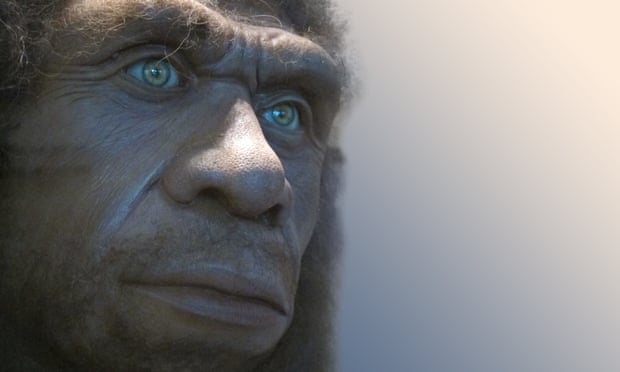
Diseases and infections passed on by the ancestors of modern humans when they moved out of Africa and into Europe may have helped wipe out the Neanderthals who previously dominated the continent.

The unfortunate Neanderthals, who would only have developed resistance to the diseases of their European environment, are most likely to have been infected with a bacterium that causes stomach ulcers, the virus that causes genital herpes, tapeworms and tuberculosis. 

The impact on the Neanderthals was described as catastrophic by the scientists behind the new research, who published their findings in the American Journal of Physical Anthropology. The diseases and infections to which the hunter-gatherers were exposed would have made them less able to find enough food and remain healthy. The diseases would have spread through sexual contact between the two species.

Read the rest of this article...

Christian sects drop their differences, and their fists, to restore Jesus's tomb

 The Aedicule at the heart of the Church of the Holy Sepulchre is in need of repairs 
Credit: GALI TIBBONGALI TIBBON/AFP/Getty Images

The Church of the Holy Sepulchre, the Jerusalem holy site where Jesus is thought have been crucified, is as often the scene of Christian rivalry as brotherly love. 

Catholic, Armenian and Greek Orthodox priests jostle for space under its great dome, sing during each other's prayers and occasionally engage in sectarian fist fights

But the three communities have set aside their differences for a task all can agree is of critical importance: restoring the crumbling structure of Jesus's tomb. 

At the heart of the church is the Aedicule, a towering shrine built on what is said to be the spot where Jesus was buried before rising from the dead three days later.

Read the rest of this article...

Wednesday, April 06, 2016

Microbiologists unmask the Hannibal route enigma


Microbiologists based in the Institute for Global Food Security and School of Biological Sciences at Queen's University Belfast have recently released results that may have answered one of ancient history's greatest enigmas: Where did Hannibal cross the Alps? 


Hannibal crosses the Alps on an elephant  [Credit: Nicolas Poussin] 

Hannibal was the Commander-in-Chief of the Carthaginian army during the Second Punic War with Rome (218 -201 BC). He famously led his troops (thirty thousand men, just thirty seven elephants and over fifteen thousand horses and mules) across the Alps to invade Italia - bringing the Roman army to its knees. 

While the great general was ultimately defeated at Zama in 202 BC, this campaign is rightly regarded today as one of the finest military endeavours of antiquity. We can say, in retrospect, that these events ultimately shaped the future Roman Republic, eventually with Caesar morphing into the Empire, and therefore into European civilisation as we know it.

Read the rest of this article...
Curse Tablets Discovered in 2,400-Year-Old Grave

Written in Greek, the curse on this lead tablet targets Demetrios and Phanagora who were husband-and-wife tavern keepers who lived in Athens around 2,400 years ago.
Credit: Jessica Lamont

Five lead tablets that cursed tavern keepers some 2,400 years ago have been discovered in a young woman's grave in Athens, Greece.

Four of the tablets were engraved with curses that invoked the names of "chthonic" (underworld) gods, asking them to target four different husband-and-wife tavern keepers in Athens. The fifth tablet was blank and likely had a spell or incantation recited orally, the words spoken over it.

All five tablets were pierced with an iron nail, folded and deposited in the grave. The grave would have provided the tablets a path to such gods, who would then do the curses' biddings, according to ancient beliefs.

Read the rest of this article...

Bronze Age treasure discovered in Poland


Treasure of bronze objects has been discovered on the outskirts of a Polish town in Lubuskie Province. The objects are probably associated with the Lusatian culture and period of the Bronze Age - head of the GorzĂ³w branch of the Regional Office for the Protection of Monuments BÅ‚ażej SkaziÅ„ski told PAP. 


Some of the finds presented at the Jan Dekerta Lubuskie Museum in GorzĂ³w Wielkopolski  
[Credit: PAP/Lech MuszyÅ„ski] 

The collection of artefacts, initially dated to the IV-V period of the Bronze Age (1100-700 BC) consists of several dozens of items, including those associated with the religious beliefs and rituals of the community that produced them. 

The collection consists of 5 bronze vessels, 6 wheels and 6 other parts of a cult cart, as well as 24 buttons. In addition, the find was accompanied by fragments of pottery from the vessel in which the deposit was placed. 

Read the rest of this article...

Study shows human sacrifice was less likely in more equal societies

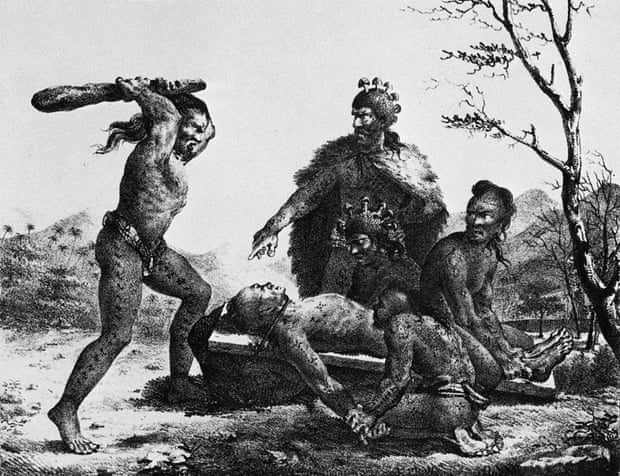
This lithograph from 1819 by Jacques Arago shows human sacrifice under the direction of a Hawaiian priest. Photograph: Alamy

Ritual human sacrifice played a powerful role in the construction and maintenance of stratified societies, according to new research.
The more egalitarian the society, the less likely it was that a human being would be chosen to die for it; the more stratified and rigid, the more likely someone from the lower orders would be selected as a sacrificial victim, scientists from Australian and New Zealand report.
They analysed data and observations from 93 traditional cultures that flourished from Taiwan to Madagascar, and from New Zealand to Hawaii to Easter Island, to confirm the hypothesis that human sacrifice “stabilises social stratification once stratification has arisen, and promotes a shift to strictly inherited class systems.”
And they add, in their paper in Nature: “Whilst evolutionary theories of religion have focused on the functionality of prosocial and moral beliefs, our results reveal a darker link between religion and the evolution of modern hierarchical societies.”
Read the rest of this article...

Has Hannibal's route across the Alps been uncovered? Scientists use 2,000-year-old trail of dung to track legendary general

The Col de la Traversette, a narrow pass between Grenoble in France and Turin in Italy 
CREDIT: GOOGLE

It was one of the most outrageously bold manoeuvres in military history - and 2,000 years on experts are still trying to work out how he pulled it off.

But now the mystery of how Hannibal's army managed to catch the Romans off guard by crossing the Alps in an improbable 1,000-mile march could be solved, it is claimed, by tracking a trail of dung.

Scientists say that a thin crust of ancient excrement left by Hannibal's animals, which famously included 37 elephants, could reveal the route the legendary Carthaginian general took.

Hannibal's 30,000-strong army trudged through deep snow in the grip of winter in 218BC with more than 15,000 mules and horses before crossing into Italy where they nearly made it to the gates of ancient Rome.

But, according to experts, such a large movement of men and animals must have left what they describe as a "mass animal deposition event".

Read the rest of this article...

Stone Age humans 'brought deer to Scotland by sea'

Scientists say red deer were transported "considerable distances" by boat to Scottish islands. CREDIT: ALAMY

Stone Age humans populated the Scottish islands with red deertransported "considerable distances" by boat, said researchers, who admitted surprise at our prehistoric ancestors' seafaring prowess.

DNA analysis revealed that deer on Scotland's northermost islands were unlikely to have come from the closest and seemingly most obvious places - mainland Scotland, Ireland or Norway, said a study in the Royal Society journal Proceedings of the Royal Society B.

"Our results imply that Neolithic humans were transporting deer considerable distances, by sea, from an unknown source" some 4,500-5,500 years ago, co-author David Stanton, of Cardiff University, said.


"These results are surprising... The evidence suggests that we have misunderstood our relationship with this species," he added.

Read the rest of this article...
Monday, April 04, 2016

Ancient theatre of Larissa opens to public


One of the largest ancient Greek theatres, the ancient theatre of Larissa dated back to the 3rd century BC, has opened its doors to the public. 


Ancient theatre of Larissa opens to public According to the Larissa Antiquities Ephorate decision, the ancient theatre will be open for visitors every day from 10.00-13.00 as of April 1 with free entrance. 

Visitors to the site will have access to the area of the orchestra and the stage, but the seats and the other areas of the theatre will not be accessible, since restoration works are still in progress.

Read the rest of this article...

Did Alabama space archaeologist just help rewrite history of Vikings in North America?

Sarah Parcak revealed her plan for a $1 million grant to the world during an impassioned speech on stage at the TED2016 event in Vancouver on Tuesday night. 
(Photo courtesy TED)

An expert team of archaeologists, including University of Alabama at Birmingham archaeologist Sarah Parcak, has uncovered what may be the first new Norse site discovered in North America in decades.

Parcak's international renown grew last year when she was announced as the winner of a $1 million TED prize, which she is using to fight looting using satellite technology.

Now she is part of a group of scientists who have uncovered what could prove to be North America's second Viking site.

Parcak, a researcher and professor of anthropology at UAB, was awarded the 2016 TED Prize because of her innovative work preserving ancient Egyptian sites using satellites. She has discovered 17 lost pyramids, more than 1,000 tombs and more than 3,100 ancient settlements in Egypt.

Read the rest of this article...

A Viking village in Canada, spotted from space

Space archaeologist Sarah Parcak on the site of a possible Viking settlement on the southern coast of Newfoundland in July 2015.
Credit: Freddie Claire/ BBC

Evidence at an archaeological site in southern Newfoundland suggests it may once have been inhabited by a group of the seafaring Scandinavians. If borne out by further research, this would be only the second Viking site in North America, and the first uncovered in more than 50 years.

“You can explain away one site,” said Sarah Parcak, the archaeologist from the University of Alabama at Birmingham who led the discovery. “It’s a one-off. But I think if there’s two, there’s definitely more.”

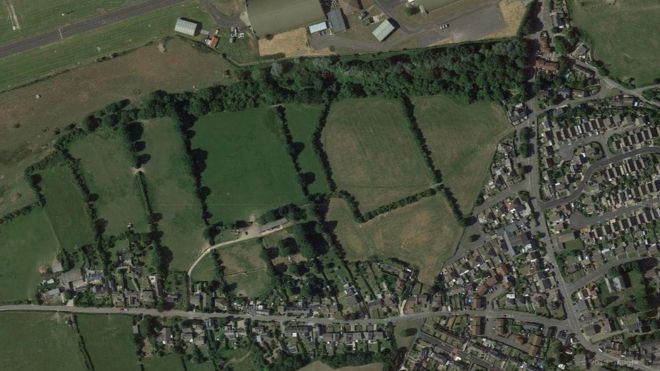
Parcak first discovered the ancient ruin in a thoroughly modern fashion: through satellite images taken hundreds of miles above earth. Her team scanned the coastline of eastern Canada and northern New England using Google Earth to search for evidence of past human settlements.   

When the team found areas where plant growth seemed disrupted, they ordered high-resolution satellite imagery for a closer look. That led them to the southwestern corner of Newfoundland and a site researchers are now calling “Point Rosee.”

Read the rest of this article...

Discovery Could Rewrite History of Vikings in New World

Archaeologists have unearthed a stone hearth that was used for iron-working, hundreds of miles away from the only other known Viking site in North America.


It’s a two-mile trudge through forested, swampy ground to reach Point Rosee, a narrow, windswept peninsula stretching from southern Newfoundland into the Gulf of St. Lawrence. Last June, a team of archaeologists was drawn to this remote part of Canada by a modern-day treasure map: satellite imagery revealing ground features that could be evidence of past human activity.
The treasure they discovered here—a stone hearth used for working iron—could rewrite the early history of North America and aid the search for lost Viking settlements described in Norse sagas centuries ago.
To date, the only confirmed Viking site in the New World is L’Anse aux Meadows, a thousand-year-old way station discovered in 1960 on the northern tip of Newfoundland. It was a temporary settlement, abandoned after just a few years, and archaeologists have spent the past half-century searching for elusive signs of other Norse expeditions.


Read the rest of this article...

Friday, April 01, 2016

New evidence of Viking life in America?


A new discovery has revealed that the Vikings may have travelled hundreds of miles further into North America than previously thought. It's well known that they reached the tip of the continent more than 1,000 years ago, but the full extent of their exploration has remained a mystery, writes historian Dan Snow. 

After a long hike across boggy ground and through thick pine forests, clutching pepper spray to protect against bear attacks, Sarah Parcak and her small team of archaeologists stood on an exposed, wind-blasted headland in North America.

Exhausted but happy, they had been led to Point Rosee in Newfoundland by the most high-tech weaponry in the modern archaeological arsenal - satellite data captured 383 miles (600km) above the Earth. But once here they were back to using trowels and brushes. I joined them to see how this powerful combination of new and old allowed them to make what could be a seismic discovery.

Read the rest of this article...