Thursday, February 23, 2023

54,000-Year-Old Stone Points Are Oldest Signs of Bow and Arrow Use in Europe

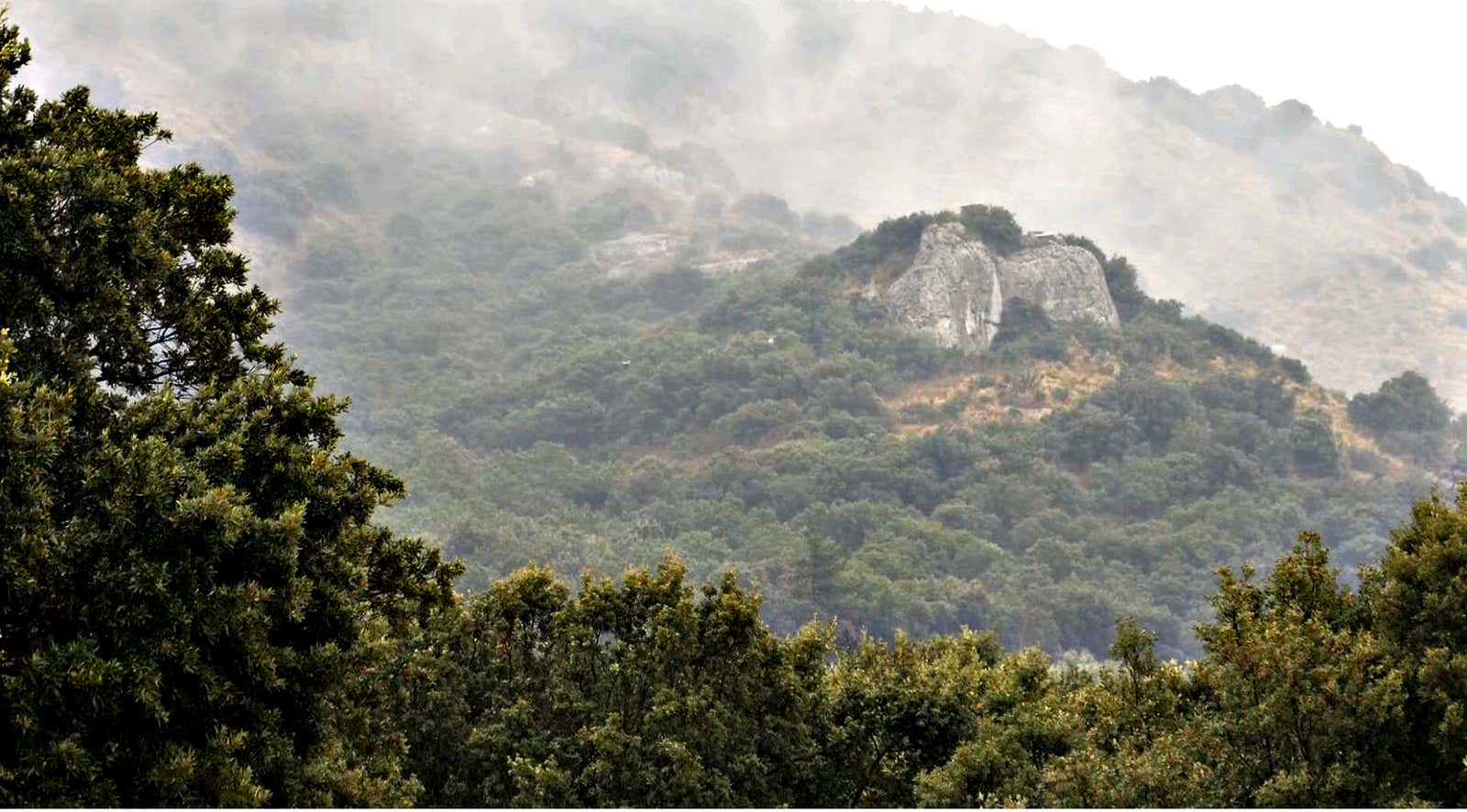
The site of Grotte Mandrin, in France

Artifacts discovered in a rock shelter suggest Homo sapiens was launching stone projectiles in Europe 40,000 years earlier than previously thought.

Hundreds of stone artifacts and 54,000-year-old human teeth have been found in a rock shelter in the south of France, pushing back evidence for Homo sapiens wielding the bow and arrow in Europe by 10,000 years.

The shelter—Grotte Mandrin, near the Rhône River valley—has yielded 852 artifacts, including cut stone points, blades, and flakes, which indicate to researchers that projectile weapons were being used by ancient humans there. The team’s study is published today in Science Advances, and it builds on a paper published last year that established the ancient human presence based on 54,000-year-old teeth.

Read the rest of this article...

When in Rome: Archaeologists discover ancient wooden phallus that may be exactly what it looks like

HEXHAM, United Kingdom — Vindolanda served as an ancient Roman auxiliary fort in the north of what is now the United Kingdom for nearly 300 years (roughly 85 AD -370 AD). Now, a new analysis has identified what looks to be the first ever known example of a disembodied phallus made of wood recovered anywhere in the Ancient Roman world.

Phalli were actually quite ubiquitous at the time across the Roman Empire, as they were believed to help promote good luck and ward off bad fortune. People would wear necklaces featuring phallic pendants, and phallic images were often seen in painted frescoes and mosaics. They even formed part of the decoration of other objects such as knife handles or pottery.

Read the rest of this article...

This Man Underwent Brain Surgery 3,500 Years Ago

Two brothers’ remains were found buried together under the floorboards of their home. One had a hole in his skull consistent with surgery. Kalisher et al., 2023, PLOS One, CC-BY 4.0

While excavating a 3,500-year-old tomb in Tel Megiddo, Israel, scientists discovered a skull with a surprising feature: a square hole that’s clear evidence of an ancient brain surgery.

Nobody knows whose steady hands performed the operation, or what experience made the surgeon feel prepared to remove part of a living human’s cranium. Was the patient administered some anesthesia or a mind-altering substance? Or was he left to experience the operation in excruciating pain? And what desperate straits or last-ditch hopes led to such an extreme step?

“I can only hypothesize based off of the amount of pathological evidence that is on this individual that this was an intervention because of deteriorating conditions,” says Rachel Kalisher, a bioarchaeologist at Brown University. “But we don’t really have a clear answer.”

Read the rest of this article...

Centuries Before Stonehenge, This Settlement Housed the First European Stone Monument Builders


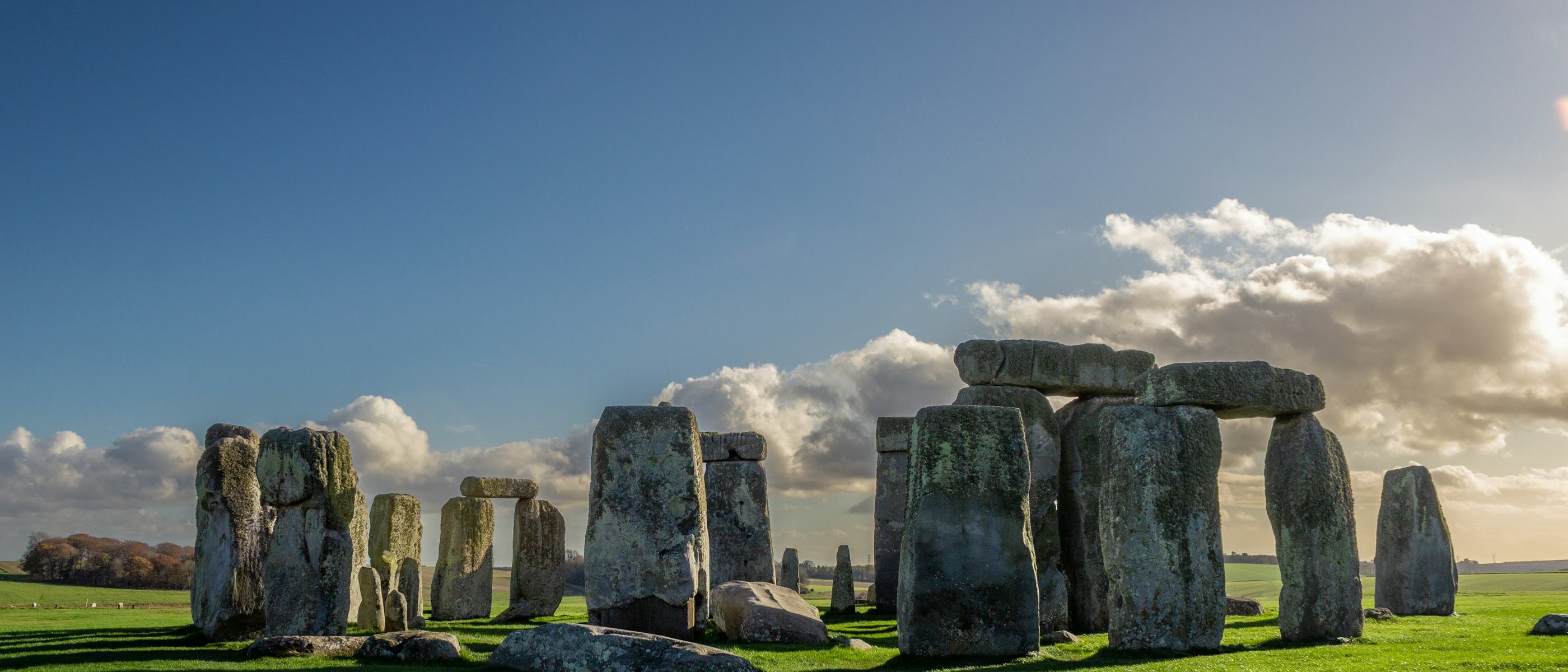
Whether its Stonehenge, the pyramids, or a myriad of other ancient places, we’ve long been fascinated by impressive monuments from the distant past. But more often than not, the stories of the people who built these ancient marvels are lost to the mists of time.

It’s rare to get a glimpse into the lives of the laborers whose handiwork still towers over landscapes today. But a newly-described site in France reveals the likely home base of some of Europe’s first stone monument builders, dating back to the Middle Neolithic period (4700-3700 BC).

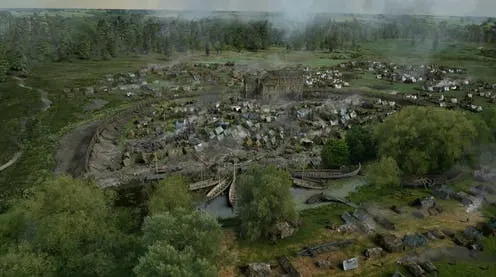
Described this week in the journal Antiquity, researchers reconstructed a 6500-year-old settlement where a group of workers may have lived just a few kilometers from their job site. They pieced together the details of life at the settlement, including how it met a destructive fate.

Read the rest of this article...

Neanderthals spread diverse cultures across Eurasia (before we came along)

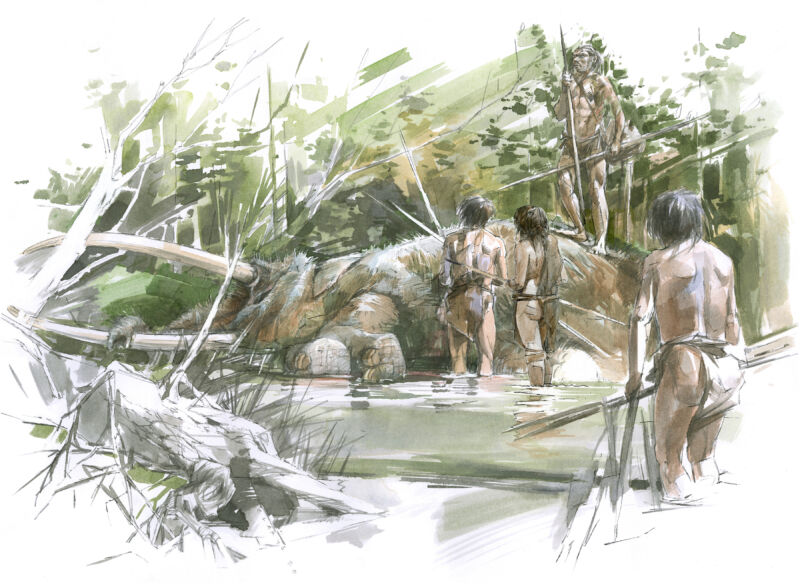
This artist's conception shows how Neanderthals might have faced down the mammoth task of butchering a freshly-killed elephant.

Two recent studies of Neanderthal archaeological sites (one on the coast of Portugal and one in central Germany) demonstrate yet again that our extinct cousins were smarter and more adaptable than we’ve often given them credit for. One study found that Neanderthals living on the coast of Portugal 90,000 years ago roasted brown crabs—a meal that’s still a delicacy on the Iberian coast today. The other showed that 125,000 years ago, large groups of Neanderthals came together to take down enormous Ice Age elephants in what’s now central Germany.

Individually, both discoveries are fascinating glimpses into the lives of a species that's hauntingly similar to our own. But to really understand the most important thing these Neanderthal diet discoveries tell us, we have to look at them together. Together, they show that Neanderthals in different parts of Europe had distinct cultures and ways of life—at least as diverse as the cultures that now occupy the same lands.

Read the rest of this article...

Did Byzantine Christian Icons Conceal Pagan Gods?

Early Christian icons may have derived some of their stylistic elements from pagan religious portraits, according to some historians. Credit: Ministry of Culture

Religious icons of Christ, the Blessed Mother Mary, and the saints are integral to the religious practices of Orthodox Christians. The tradition was largely handed down to modern Christians by the iconographers of the Byzantine/Eastern Roman Empire.

However, the practice may have evolved from earlier pagan religious rituals. That the peoples of the ancient world worshipped statues and figures of their gods is well known, but newer evidence suggests that they also commissioned portraits of their gods to be venerated in their own homes, not unlike Orthodox Christian icons.

Read the rest of this article...

Interview: Ave Caesar! Romans, Gauls and Germanic tribes on the Banks of the Rhine


JBW: Many thanks for speaking with me yet again, Dr. Esaù Dozio. For thousands of
years, people have viewed the Rhine River as a boundary of sorts, dividing northern and
southern Europe. The Rhine River was a conduit of wealth and exchange. Nonetheless, I am curious to know why you and your fellow curators chose the Rhine River as the focus of the Antikenmuseum’s latest exhibition. I would suspect that Basel’s location, sitting astride the Rhine, had some role in this.

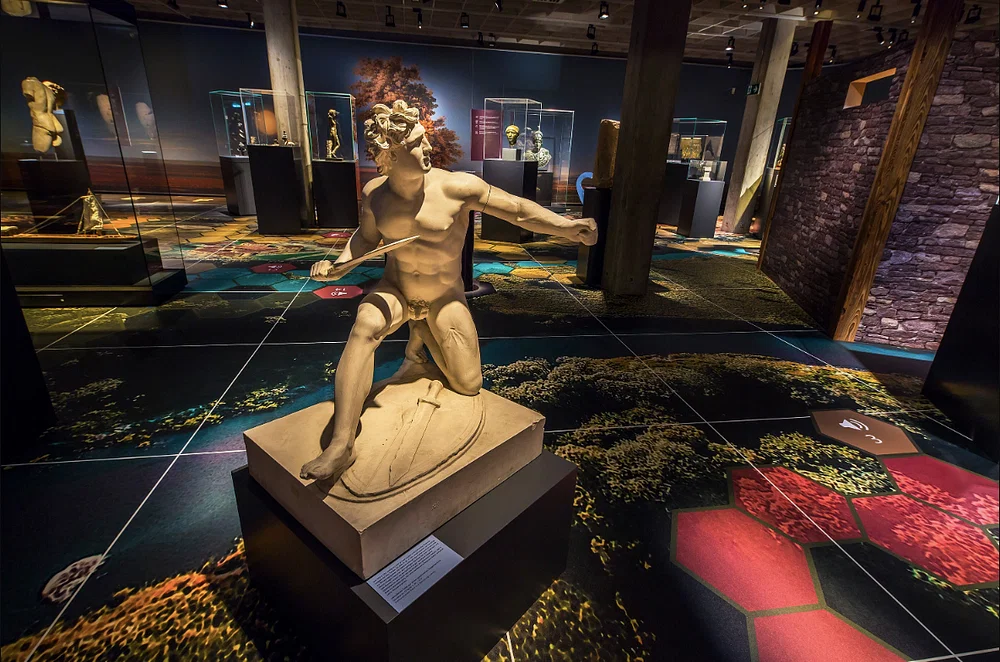
ED: Between fall 2022 and summer 2023, the Netzwerk Museen is dedicating an international exhibition series to the Rhine. Thirty-eight museums from Germany, France, and Switzerland highlight the importance of this river for our region from different perspectives. For the Antikenmuseum, it was a fitting occasion to present the ancient history of the Rhine. In this context, Basel and the surrounding region have a special role to play, especially since the Celtic settlement of Basel-Gasfabrik, the fortified oppidum on the local Münsterhügel and the nearby Roman colony of Augusta Raurica provide outstanding conditions for such a project.

Read the rest of this article...

Sunday, February 19, 2023

The Meols Pub Boat: a hypothesis

Satellite view of the Railway Inn Pub. The position of the vessel is marked by an ellipse. 

In 2007 Ground Penetrating Radar confirmed the existence of an old boat buried deep under
a car park/patio area of a pub near the Railway Station in Meols, Wirral (Fig. 1), a find that
had been reported some 70 years earlier. 

1938 Discovery
In 1938 the Railway Inn Pub was being rebuilt further away from the road with the site of the
old building becoming a car-park. Workers unearthed part of an old clinker boat buried in
waterlogged blue clay some 2-3m underneath the surface. One of the workers, Mr John
McRae, made detailed notes about the vessel - its size and clinker design (built with
overlapping planks) - and noted its location before it was covered over. In 1991 his son - also
John - compiled the notes together into a report with a sketch (Fig 2), and presented it to
Liverpool Museum (now National Museums: Liverpool) in 1991, after which the information
was entered by an assitant curator into the Sites and Monuments Record [1]. No further
action was taken. 

Read the rest of this article...

Saturday, February 18, 2023

Artist’s impression of the viking camp established in 873 at Repton (Derbyshire, England). Compost Creative, Author provided Hideouts, harbours and homes: how vikings may have owed their success to their encampments

Artist’s impression of the viking camp established in 873 at Repton (Derbyshire, England).
Compost Creative, Author provided

For many years, archaeologists and historians have provided an increasingly informed insight into the dynamic world of the vikings, chipping away at the clichés of a crazed, capricious people preoccupied with beards and bloodshed. One particular approach to understanding viking activity has been to study the encampments they set up along the coasts and rivers of western Europe, allowing them to substitute their ships for a fixed, onshore position whenever cold, fatigue, hunger, or other conditions compelled them to.

Often called “winter camps” or longphuirt, more than 100 of these sites were witnessed across the Atlantic archipelago and European mainland during the ninth century alone, and their tangible remains have been uncovered in places like Repton and Torksey in England, and Woodstown in Ireland. Most recently, potential viking encampments have also been pointed to near Zutphen in the Netherlands, as well as the Coquet Valley in Northumbria.

Read the rest of this article...

Could there be a Viking boat buried underneath a Wirral pub carpark?

80 years ago when the pub was built, workers made a discovery which is thought could be a Viking boat

Dominga Dett, Chair of Wirral Archaeology said: "There has been intense local interest in this buried object for many years.

"It has been thought that the boat dates from the Viking era but no professional investigation has ever been carried out to establish the truth, so everyone is really delighted at the prospect of what we might discover."

Lisa Jones, General Manager at The Railway, said: "Team Railway is very happy to be part of this historic moment and supports the work of the archelogy group.

"There is a buzz and excitement around this and we look forward to finding out more about what is buried beneath the car park.

Read the rest of this article...

Standing Swords

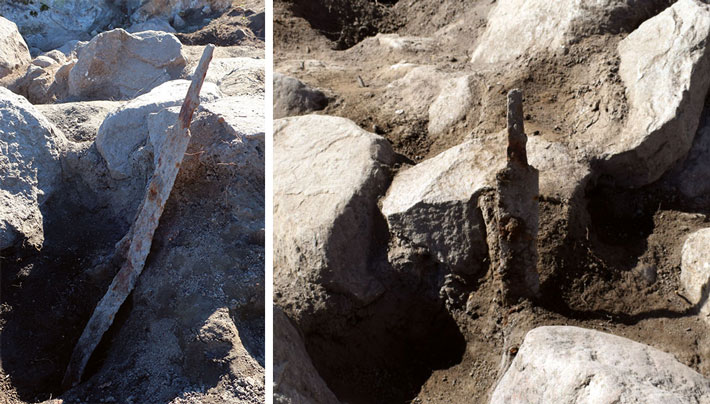
(Arkeologerna Statens historiska museer)Upright swords, Köping, Sweden

While excavating a Viking cemetery near the Swedish town of Köping, archaeologists discovered a pair of sword hilts protruding curiously from the earth. After further investigation, they determined that the handles belonged to Viking swords that had been thrust into the earth above two burials and had remained upright for 1,200 years. “Viking Age graves containing swords are very rare,” says Anton Seiler, an archaeologist working with Sweden’s National Historical Museums. “Graves where swords were set in a vertical position are even rarer.”

Because it would have taken a great amount of force to hammer the weapons through the soil and large stones that covered the burials, researchers do not believe the blades were in this position by chance. “It was clearly a conscious action,” Seiler says, though he is not certain why the swords were arranged in this unusual way. Perhaps, he says, it was a gesture meant to aid the deceased warriors’ journey to Valhalla. It also may have been a way of commemorating the dead. Family members visiting the graves would have been able to touch the sword handles, thereby maintaining a close connection with the departed.

Read the rest of this article...

ARCHAEOLOGISTS INVESTIGATE ANCIENT BOAT BURIED BENEATH CAR PARK


ARCHAEOLOGISTS FROM THE UNIVERSITY OF NOTTINGHAM ARE INVESTIGATING AN ANCIENT BOAT BURIED BENEATH A PUB CAR PARK IN WIRRAL, ENGLAND.

The boat was first discovered in 1938 by workmen, who partially exposed the vessel at the Railway Inn pub in Meols. The workmen reburied the boat after making several notes and sketches, with no further archaeological studies conducted until now.

A closer study of the sketches suggest that the boat is a clinker design (overlapping planks), technique that developed in the Nordic shipbuilding tradition, and was commonly used by the Anglo-Saxons, Frisians and Scandinavians.

Read the rest of this article...

Thursday, February 16, 2023

Ewelme, Oxfordshire: The medieval almshouses set up by Chaucer’s grand-daughter and still running today


Country Life's 21st century Grand Tour of Britain stops off at the remarkable church and almshouses at Ewelme, Oxfordshire.

You feel you can almost touch the late Middle Ages at Ewelme. This small settlement near Wallingford, south of Oxford, is where William de la Pole, Duke of Suffolk, and his wife, Alice Chaucer — granddaughter of Geoffrey and a great heiress — maintained and extended their palace.

Although little remains of that splendid house, several other structures survive. Medieval manors were rather like camp sites, scattered with disparate structures. As the spirit world seemed almost as vivid as the material one, they needed a church or chapel in which to offer Divine Service.

Read the rest of this article...

Greek Archaeologists Strike Over Newly Approved Law That Could Reshape Several Museums


Several well-attended museums in Greece closed this week as archaeologists in the country demonstrated in protest of a newly approved law that could permanently alter those institutions and reshape how looted antiquities are shown abroad.

The law would effectively make it so that the five museums in question—the National Archaeological Museum of Athens, the Byzantine and Christian Museum, the Archaeological Museum and the Museum of Byzantine Culture of Thessaloniki, and the Archaeological Museum of Heraklion, Crete—are split from control by the Ministry of Culture and Sports. The move would make it so that these museums are allowed to run more freely, but they will also have to undertake certain efforts on their own, most notably fundraising.

Read the rest of this article...

Stunning reconstruction reveals 'lonely boy' with deformed skull who died in cave in Norway 8,300 years ago

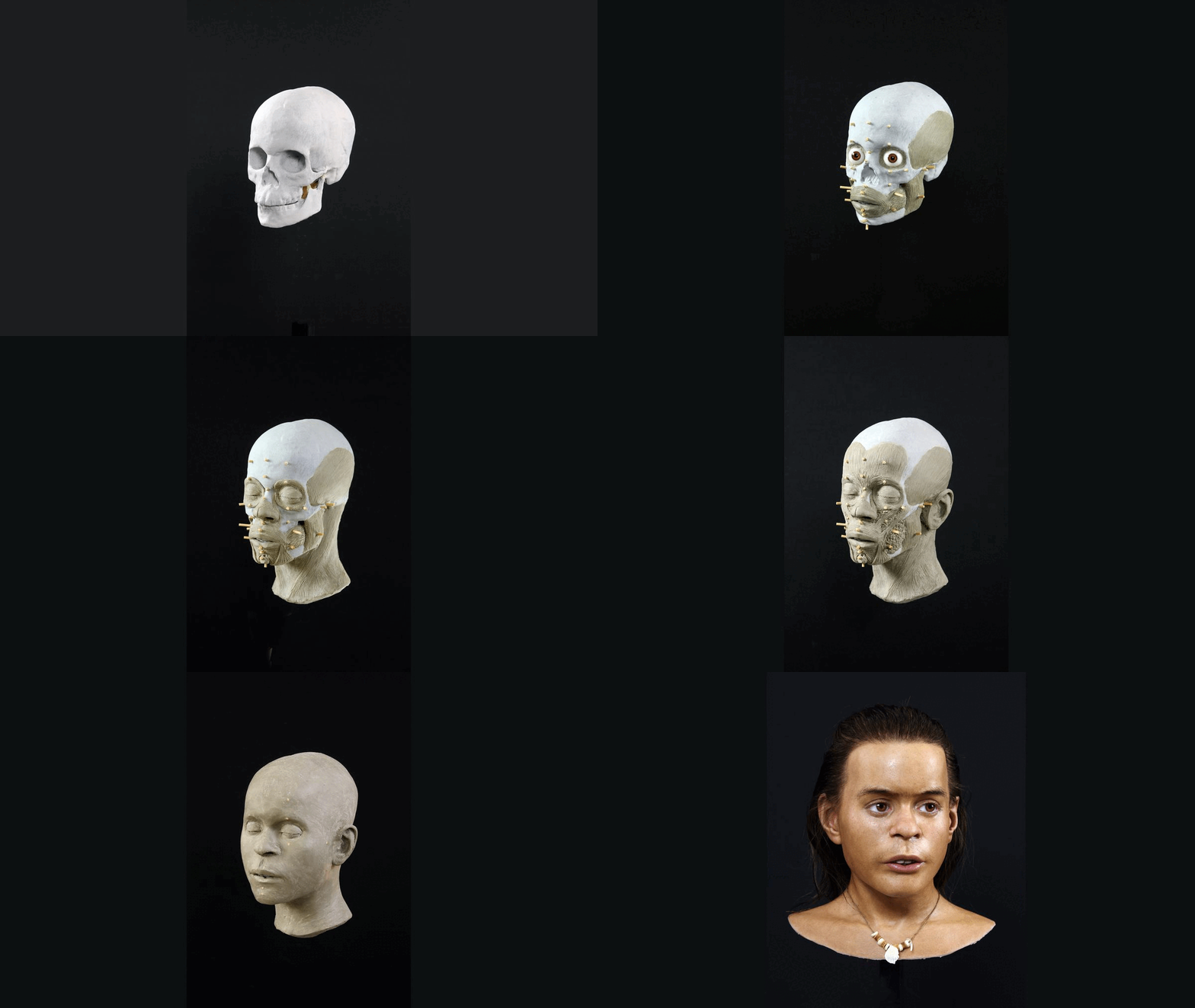
Here we see a gif of a skull that gets muscles, eyes and finally hair and coloring added to it in 10 steps.It took Oscar Nilsson, a forensic artist based in Sweden, months to complete a reconstruction based on the boy's skull. (Image credit: Oscar Nilsson)

About 8,300 years ago, a teenage boy with an unusual skull and short stature may have scampered along the rocky coast of what is now Norway, pausing to regain his balance as he clutched a fishing rod. Now, a new full-body reconstruction of the Stone Age teenager — nicknamed Vistegutten, Norwegian for "the boy from Viste" — is on display at the Hå Gamle Prestegard museum in southern Norway.

The boy's reconstruction was a months-long project, but researchers have known about Vistegutten since 1907, when archaeologists found his remains in a Mesolithic, or Middle Stone Age, cave in Randaberg, along Norway's western coast. 

Read the rest of this article...

Roman city uncovered by archeologists in Luxor


Luxor, which translates as “The Palaces” in Arabic, was formerly known as “The City of Hundred Doors” in ancient times. It is regarded by many as the world’s largest open-air museum due to the presence of some of the most majestic temples on a 417 sq km (161 sq mi) area, including the Valley of the Kings, the Karnak Temple, Queen Hatshepsut Temple, and the Luxor Temple, which houses some of the most extraordinary ruins and artifacts. Luxor is a portion of the ancient city of Thebes and is situated in the southern region of Upper Egypt on the east bank of the Nile River. Luxor served as both the nation’s capital under the New Kingdom and was regarded as a very significant city in ancient Egypt.

Millions of tourists come to the city from around the world to see this amazing beauty. Over 500,000 people still live in the city in an active population who are almost exclusively reliant on tourism. Luxor experiences an extremely hot and sunny environment, with summertime highs of 40 C (104 F) and wintertime lows of 22 C (71.6 F).

Read the rest of this article...

How medieval monasteries survived Viking raids

Lyminge Archaeology | Twitter | Fair Use

Archaeologists now claim that English monasteries were more resilient to Viking attacks than previously thought.

The monastery of Lyminge is known for being an Anglo-Saxon royal monastery. Archaeological research demonstrates that Lyminge is one of the best preserved monastic sites in Kent – a region where Christianity first gained a foothold in Anglo-Saxon England. Because of its importance, it was repeatedly attacked by Vikings, until Alfred the Great won a decisive victory in the Battle of Edington (878) and made an agreement with the Vikings, dividing England between Anglo-Saxon territories and the Viking-ruled Danelaw. Alfred also oversaw the conversion of the Danish Viking warlord Guthrum to Christianity, and soon became the dominant ruler in England, even taking London back from its Viking occupants.

Read the rest of this article...

Welcome to Roman Times!


Roman Times is a new organization dedicated to exploring life in the ancient Roman Empire. Our mission is to foster and perpetuate an appreciation and knowledge of the history, culture, and greatness of the ancient Roman Empire; educating both members and the public through living history events, workshops and research into the daily lives and material culture of the soldiers and civilians of ancient Rome and the cultures with which they interacted. History does not have to be boring, especially when it is interactive. Much has been written and shown in movies (often more fiction than fact) and media series about the people of ancient Rome. If you have ever wondered what it would be like to live in ancient Rome; then this experience is for you. Roman Times provides the opportunity for history to come alive. An opportunity for you to wear the clothes, the armor, or use the tools used by ancient Romans. Our immersion events allow you to do all of this while learning about the life of Roman soldiers, citizens, those who became Roman citizens, or opposed Roman rule.

Read the rest of this article...

Monday, February 13, 2023

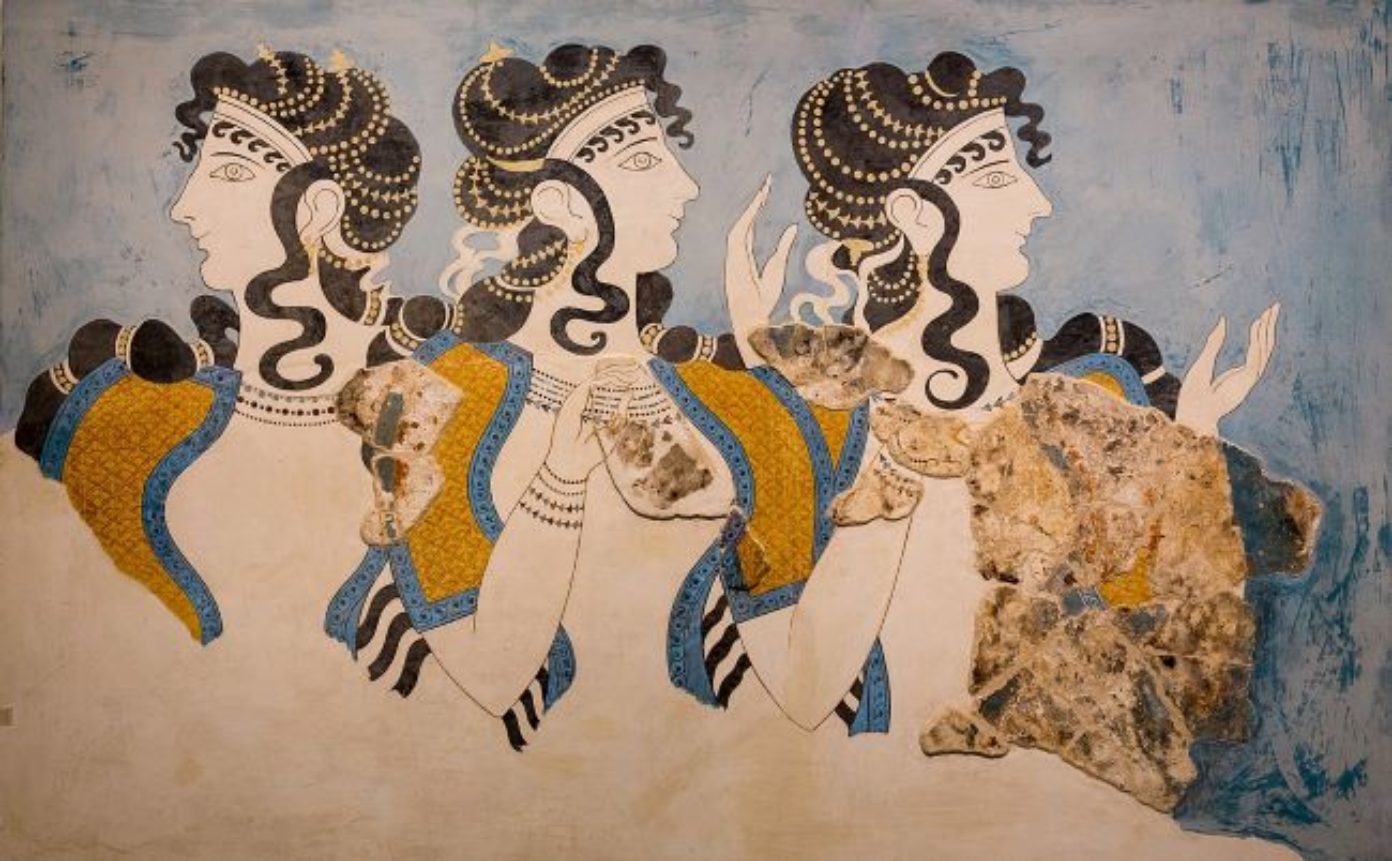
Never-Before-Seen Minoan Artifacts Exhibited in Oxford Museum

Minoan ladies women artifact Never-Before-See Minoan Artifacts Exhibited in Oxford’s Museum. Credit: ArchaiOptix / Wkimedia Commons CC BY-SA 4.0 

Over a hundred Minoan artifacts that have never left Crete and Greece before -including some which have never been displayed anywhere- launched on February 10 at Oxford’s Ashmolean Museum.

Labyrinth – Knossos, Myth and Reality is the first UK exhibition focusing on Knossos, the center of the Minoan civilization, which had been excavated by British archaeologist Sir Arthur Evans in the early 20th century.

The selection of Minoan artifacts, many of which were discovered after World War II, has been lent by the Archaeological Museum and the Ephorate of Antiquities of Heraklion, Crete, and will be exhibited until July 30, 2023, alongside discoveries from the Ashmolean’s Sir Arthur Evans Archive.

Read the rest of this article...

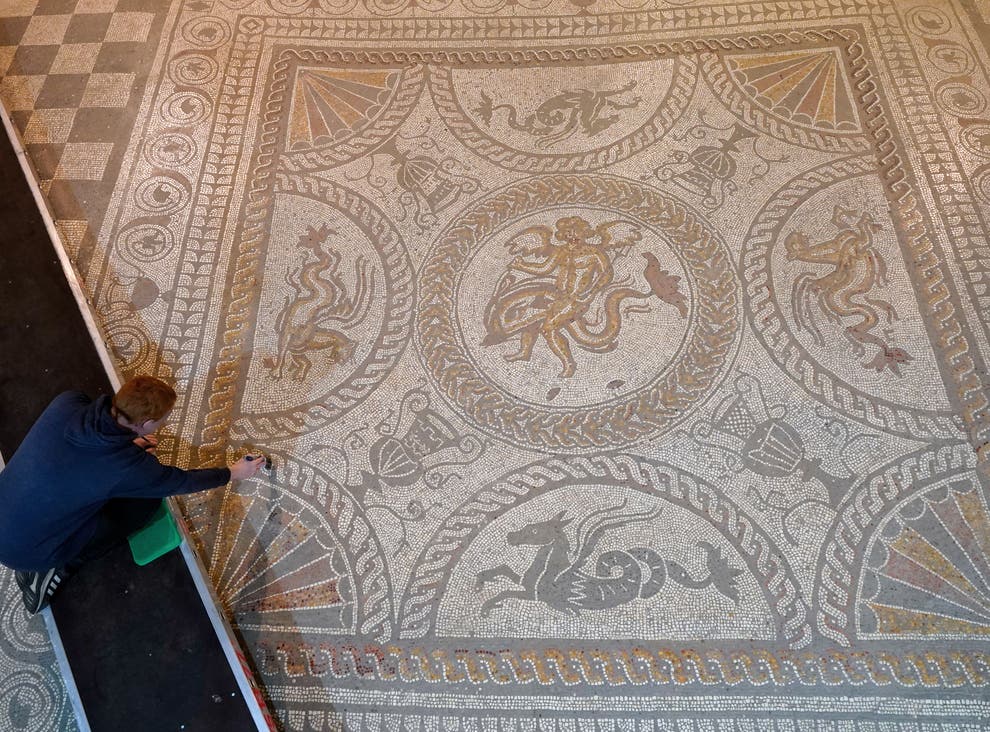
Fishbourne Roman Palace starts brush-up for 2,000-year-old mosaics

Mosaic of Cupid riding on a dolphin, which was first laid in AD150, at Fishbourne Roman Palace in Chichester. (Andrew Matthews/PA) (PA Wire)

The world-renowned mosaics at Fishbourne Roman Palace are getting a spruce-up ahead of the heritage site reopening on Saturday.

The site, near Chichester, West Sussex, is home to the largest collection of in-situ Roman mosaics in the country.

With the attraction due to reopen to the public on February 11, a team of conservators has been delicately cleaning the 2,000-year-old decorative floors.

Each of the 29 mosaics takes up to 10 hours to clean as a small fine brush is used to sweep the dust away, charity Sussex Past, which owns the site, said.

Fishbourne Roman Palace curator Dr Rob Symmons said: “We’re proud to be the guardians of probably the finest collection of in-situ mosaics in the country.

Read the rest of this article...