Monday, November 15, 2021

Harald Hardrada: why there’s more to the last great Viking than his death in 1066


King Harald Sigurdsson of Norway – remembered by the name Hardrada, meaning ‘hard ruler’ – was a complex, fierce and ultimately doomed antihero. If the myriad ancient sagas and tales of him bear any truth, he was one of the great Vikings worthy of epic television series such as Game of Thrones or Vikings. An outcast son of a petty king, he rose to win a fortune, romance an empress, marry a princess, and carve himself a kingdom by the strength of his sword arm.

Harald made his first mark in history as a 15-year-old warrior, when he fought alongside his elder half-brother King Olaf II (later Saint Olaf) against Danes loyal to Cnut the Great in the battle of Stiklestad in 1030. The day ended with defeat, and for Olaf, death.

According to the Icelandic poet Snorri Sturluson, the fighting took place in part under a total eclipse of the Sun; a night fight in the middle of the day. Pagans may have believed the hole in the sky was the one-eyed god Odin watching over the battle and choosing the slain for Valhalla, while Christians may have recalled the midday darkness at the Crucifixion, a thousand years past. Eclipses have customarily been regarded as a bad omen throughout history, and here it would have been no different. Not only was Olaf slain, but Harald barely got away from the battle with his life.

Read the rest of this article...

Friday, November 12, 2021

The St Brice’s Day Massacre: what really happened?


The 11th century in English history features its fair share of bloodshed in battles, but right at the start of the new millennium, there is one event that has always seemed to stand out for its violence: the St Brice’s Day Massacre of 13 November 1002.

“It continues to exercise a curious allure over successive generations of undergraduate essay-writers and their lecturers, whose own occasionally lurid interest follows a historiographical tradition going back almost a millennium, beginning with the Norman observers who sought to depict the event as one of the great, gory English national sins justifying the conquest of 1066.”

That’s a quote from Dr Benjamin Savill, of Trinity College, Dublin, in his article Remembering St Brictius: Conspiracy, Violence and Liturgical Time in the Danish Massacre of 1002, published in the Journal of Ecclesiastical History.

The massacre is a striking incident, but one for which we have only limited evidence (in common with most of the events of the period). There is a reference to it in the Anglo-Saxon Chronicle, which notes that “in this year the king ordered to be slain all the Danish men who were in England”, and a further more detailed comment in a diploma of King Æthelred (the reigning monarch at the time) for the monastery of St Frideswide, Oxford, of 1004. That diploma describes how the Danes in that city sought sanctuary in a church, which was set upon and burnt down by “all the people in pursuit”.

Read the rest of this article...

Metal detectorist unearths largest Anglo-Saxon treasure hoard ever discovered in England

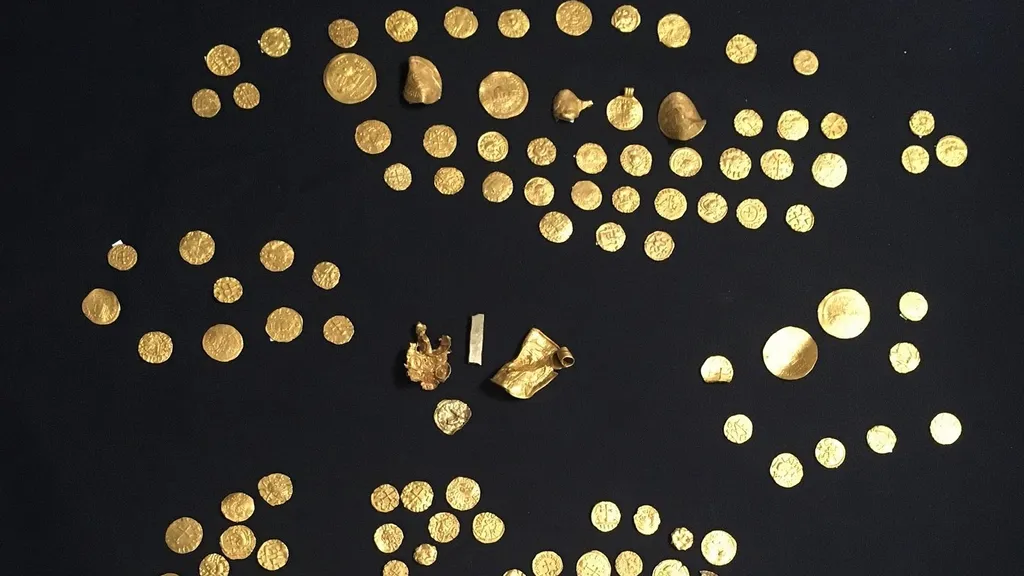
 A number of gold coins and objects from the Norfolk hoard (Image credit: British Museum) 

A metal detectorist in West Norfolk, England, has unearthed the largest Anglo-Saxon treasure hoard ever discovered: a bounty of 131 coins and four golden objects. Most of the items were found over the course of six years by a single detectorist, who wishes to remain anonymous, according to the British Museum. 

Ten of the coins were dug up by former-police officer David Cockle, also using a metal detector, the Evening Standard reported. However, Cockle kept his discovery secret and then illegally sold the coins for 15,000 British pounds (about $20,000), according to BBC News. When the authorities discovered his theft in 2017, he was charged with converting criminal property and sentenced to 16 months in prison for "pure greed," presiding Judge Rupert Overbury said at the sentencing. Cockle was also dismissed from the police force. Of the 10 coins he sold, eight have been recovered.

Read the rest of this article...

First finished pieces of Sutton Hoo replica ship joined together


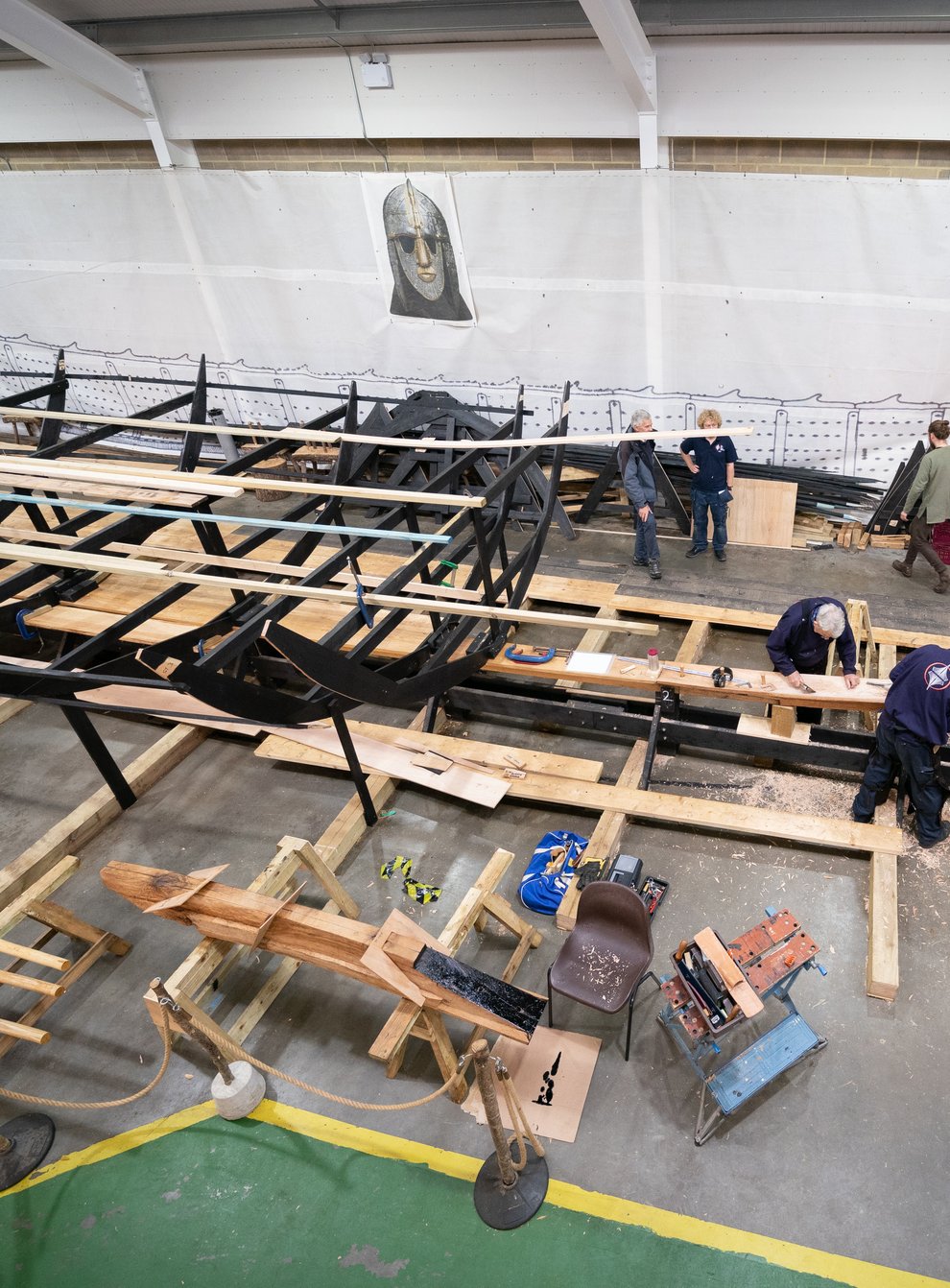
The first two finished pieces of an 88ft-long replica of the Sutton Hoo longship have been joined together.

Archaeologist Angela Care Evans, who worked on a dig at Sutton Hoo in the 1960s while working as a research assistant for the British Museum, knocked in the first of three wooden pegs to join the keel to an extension piece.

The full-size reconstruction of the Saxon ship that was excavated in 1939 is being built in a shed beside the River Deben in Woodbridge, Suffolk.

It is to be made of oak donated by Suffolk farmers and secured with iron rivets.

Dating from the early 7th century, the original Sutton Hoo longship has been described as a ghost ship, as its timber had rotted away in the acidic soil, leaving only an imprint in the sand.

The project’s master shipwright, Tim Kirk, said: “Through building this, and it is really just a big experimental archaeology programme, we’re hoping to learn how the ship actually sailed.

Read the rest of this article...

Tuesday, November 09, 2021

A Viking axe struck a Newfoundland tree in the year 1021. Here’s how scientists proved it


Hundreds of years before Christopher Columbus, the Norse became the first Europeans to cross the Atlantic and settle in North America. This long-posited theory was finally proven in the 1960s, following an archeological expedition to the site of L’Anse aux Meadows on the northernmost tip of the island of Newfoundland. Until recently, the exact timing of the Viking settlement was only speculation, based on architectural remains, a few surviving artefacts and interpretations of Icelandic sagas written in the 1200s. But, as this video from Nature explains, using new carbon dating techniques, scientists at the University of Groningen in the Netherlands have found the exact year that a tree was felled by a Viking axe – 1021 CE. Further, this research also marks the earliest known point in history by which human migration had encircled the globe.

Watch the video...

Did Vikings and their stowaway mice beat Portugal to the Azores?

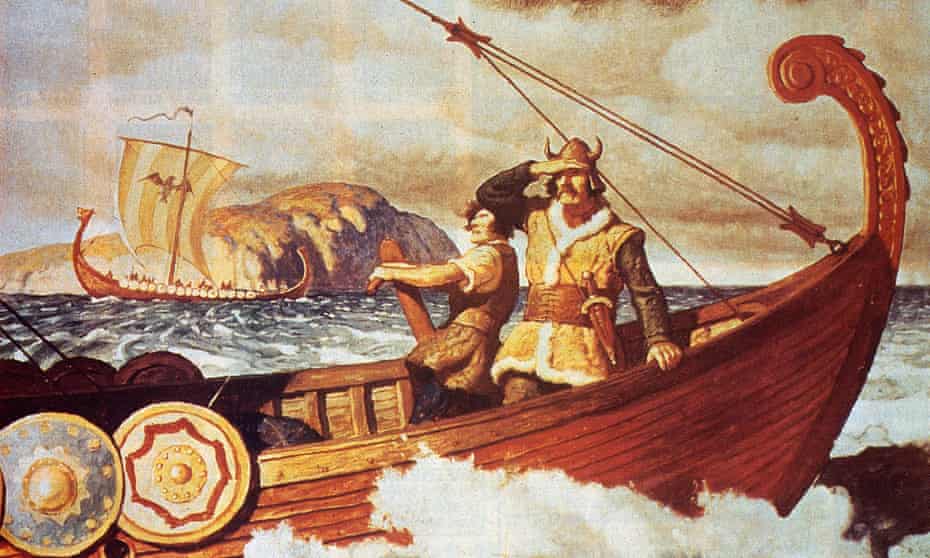
Vikings, as imagined by NC Wyeth, and their stowaway mice are now thought to be the earliest settlers on the Azores. Photograph: Hulton Archive/Getty

They came from the land of the ice and snow and the midnight sun – but still ended up in some balmy destinations. This is the conclusion of researchers who have discovered evidence to support the idea that the Vikings settled on the clement shores of the Azores several hundred years before the Portuguese arrived in 1427.

Given that the Vikings are usually associated with the frozen north, the claim is startling. Nevertheless, it is based on solid science, says a group of international researchers who recently analysed lakebed sediments in the Azores, an archipelago in the mid-Atlantic.

These were found to be rich in organic compounds that are found in cow and sheep faeces. At the same time, these samples were also found to contain high levels of charcoal but were low in pollen from native trees.

Read the rest of this article...

Thursday, October 21, 2021

Breakthrough Discovery Shows Vikings Were Active in North America 1,000 Years Ago

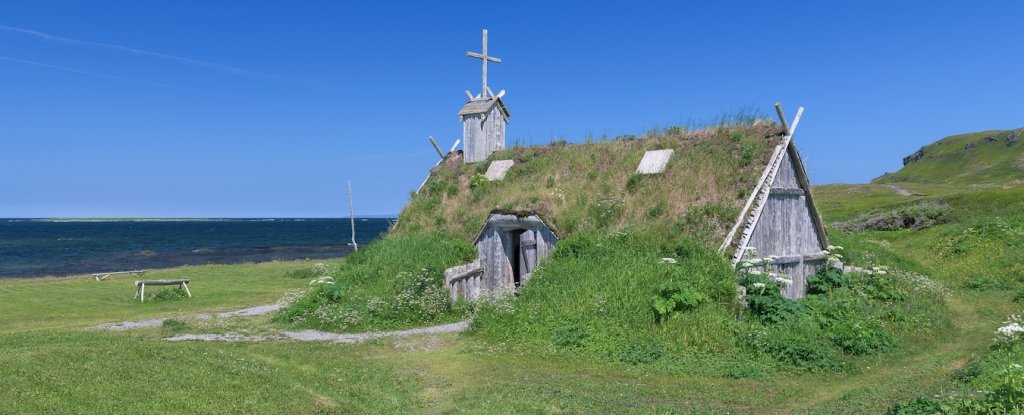
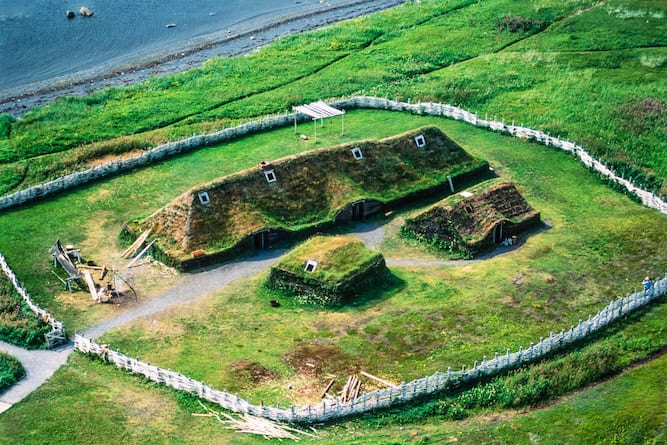
Reconstruction of a Viking building near L’Anse aux Meadows. (Glenn Nagel Photography)

New archaeological evidence has allowed scientists to refine the timeline for the Viking presence in North America.

Pieces of wood scarred with cut marks have been precisely dated to the year 1021 CE – exactly 1,000 years ago – and the metal tools that made those marks were not produced by the indigenous population, according to a team of archaeologists led by the University of Groningen in the Netherlands.

Vikings, however, did make and use metal tools, and were known to have settled at the archaeological site of L'Anse aux Meadows, where the wood was found.

This is the earliest and most accurate date yet not just for the European settlement of the Americas, but for circumnavigation of the globe, the researchers said, giving us a definitive reference point for understanding the global transference of knowledge, goods, and genetic information.

Read the rest of this article...

Wednesday, October 20, 2021

When the Vikings reached the Americas

Reconstructed Viking-Age building adjacent to the site of L’Anse aux Meadows. 
Credit: Glenn Nagel Photography

New research from the Netherlands has more accurately dated a Viking settlement in Newfoundland, Canada, revealing that the seafaring people were active in North America by at least AD 1021.

Vikings are known to have sailing vast distances in their iconic longships, and forays into a mysterious foreign land out to the west were described in ancient sagas, but these stories were thought to be fantasy until the 1960s discovery of Norse buildings at L’Anse aux Meadows in Newfoundland.

A new study from the University of Groningen, Netherlands, published today in the journal Nature, has revealed the most accurate dating yet of the L’Anse aux Meadows site.

In order to accurately place L’Anse aux Meadows in history, the researchers studied three pieces of wood from archaeological contexts containing Viking materials. Each piece showed clear evidence of being cut with metal, a material First Nations Americans weren’t using at that time.

Read the rest of this article...

Tuesday, October 12, 2021

Word Of Viking Settlements In North America Reached Italy 150 Years Before Columbus


Word of the Viking exploration of North America appears to have reached Genoa, Christopher Columbus's hometown in Italy, centuries before Columbus sailed. This conclusion, based on a translation of a 14th-century history raises the possibility the Viking settlements in Vinland had previously unrecognized influence on subsequent events.

Around 1345, Galvaneus Flamma, a Milanese Dominican friar, wrote a document called Cronica universalis. The original was lost, but a copy made 50 years later was rediscovered in 2013. Professor Paolo Chiesa, an expert in Medieval Latin at the University of Milan, has made a translation. In the journal Terrae Incognitae, Chiesa reports that a portion of the text refers to Markalada, west of Greenland.

Four Icelandic sagas include accounts of Markland, thought to be modern Newfoundland or Labrador.

Flamma attributes this information to Genoese sailors, and Chiesa sees this as evidence that knowledge of the Viking voyages had reached Italy 150 years before Columbus arrived in the Americas.

Read the rest of this article...
Wednesday, October 06, 2021

The Best-Preserved Pair of Skis from Prehistory


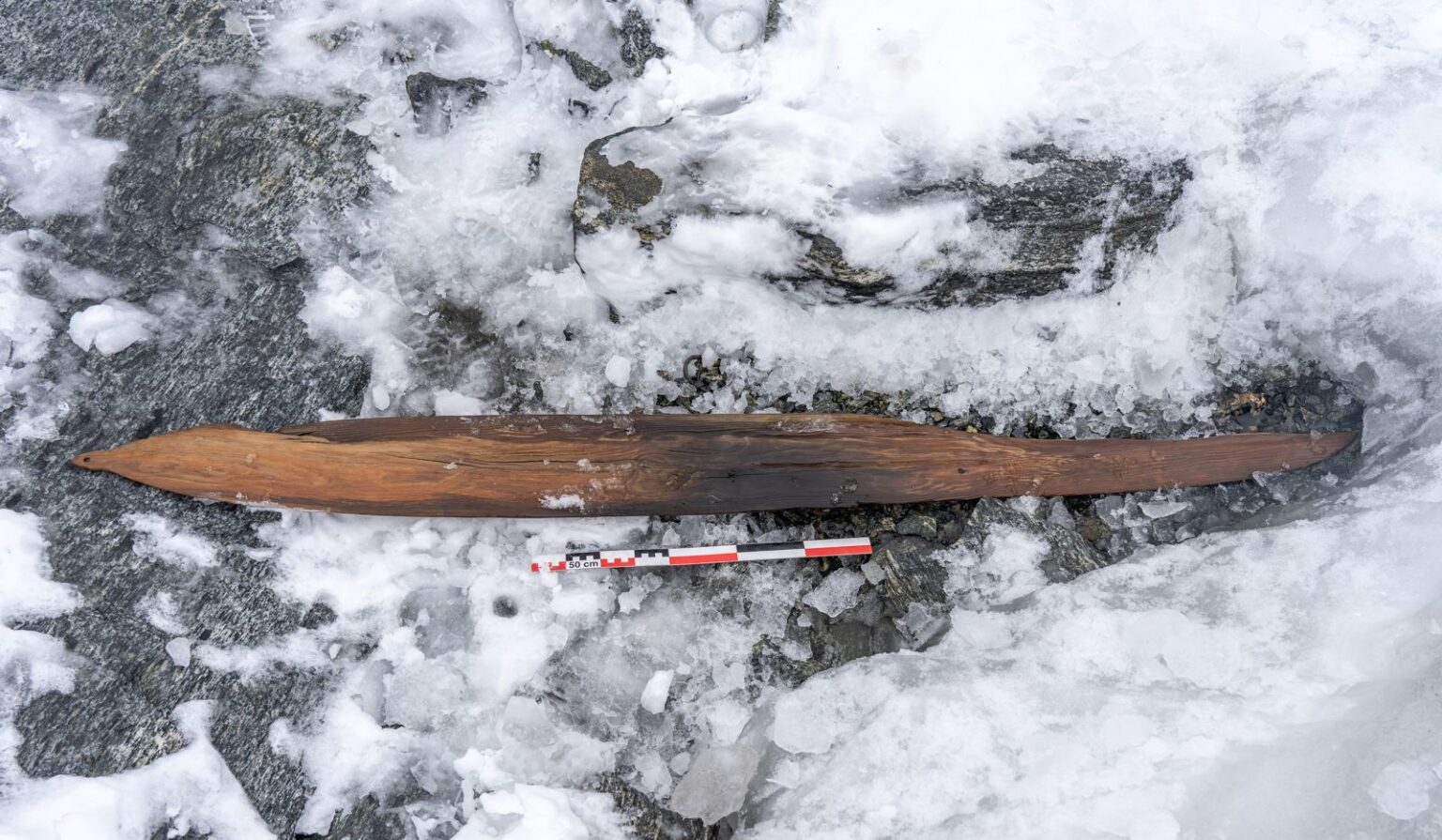
The second Digervarden ski, completely free of ice. 
Photo: Espen Finstad, secretsoftheice.com.

We have found the best-preserved pair of skis from prehistory! Back in 2014, the Secrets of the Ice program found an exceptional pre-Viking ski, 1300 years old, at the Digervarden Ice patch in Norway. The ski was complete, including the binding – one of only two skis from prehistory in this condition. Ever since, we have monitored the ice patch, hoping and praying for the second ski of the pair to melt out. Now it has happened! The new ski is even better preserved than the first one! It is an unbelievable find.
The new discovery

It has been seven years since the discovery of the first ski at the Digervarden ice patch. We have patiently monitored the melt of the ice patch, in case the second ski of the pair should melt out. We were back in 2016 for a general survey of the ice patch, but the ice had not retreated much then. This year, we could see on satellite imagery that the ice patch had retreated compared to 2014. We decided to send out an archaeologist to check it.

Read the rest of this article...
Two men to face trial over £1m Viking hoard of coins and silver


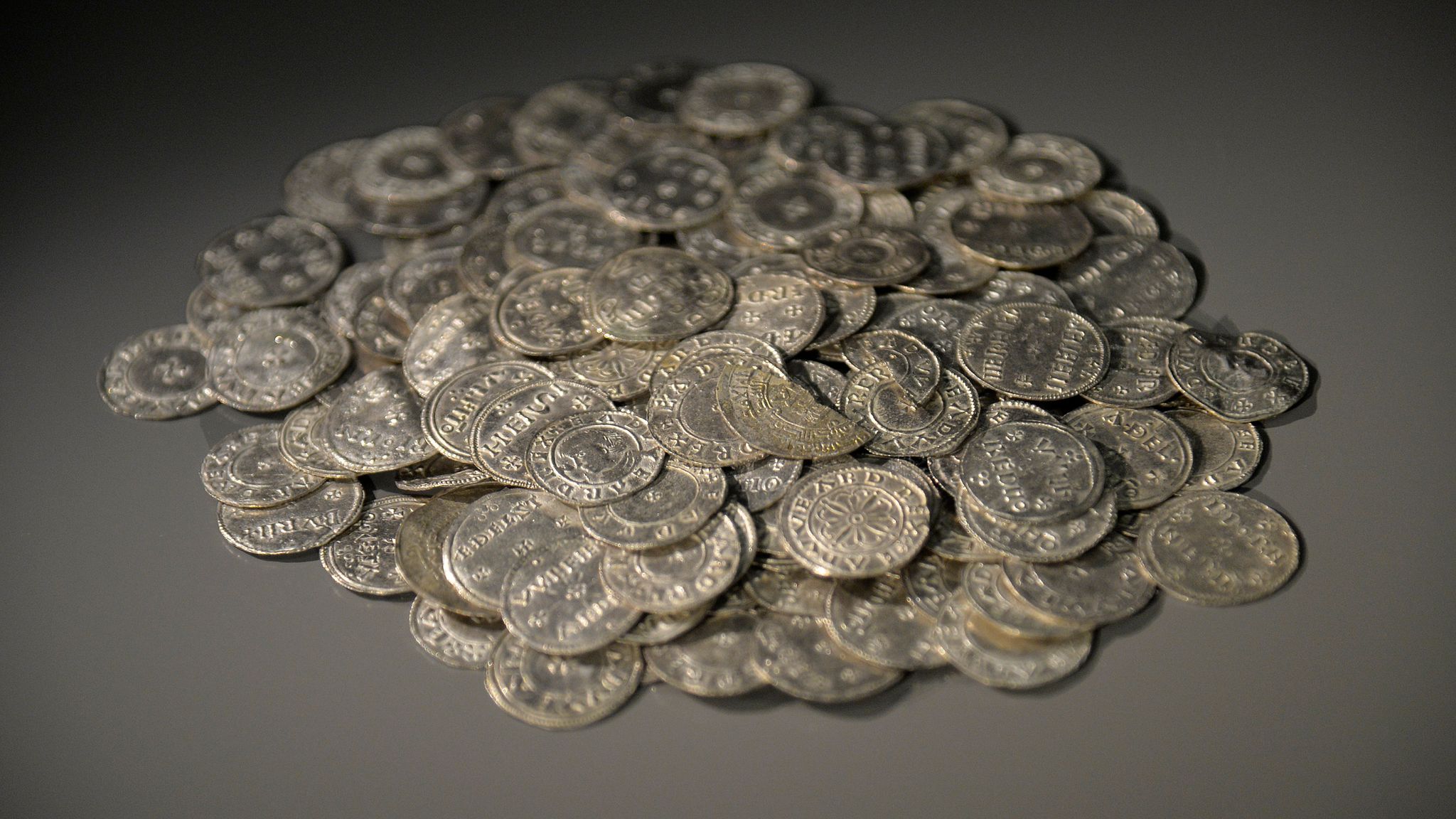
Officers from Durham Police seized a large number of coins and a silver ingot in two raids in 2018 and 2019. The hoard contained coins of Alfred the Great of Wessex and his less well-known contemporary Ceolwulf II of Mercia.

Two men have denied charges relating to a Viking hoard of historically important coins and silver worth almost £1m.

Roger Pilling, 73, and Craig Best, 44, appeared before Durham Crown Court to plead not guilty to all charges.

They denied a charge of conspiracy to convert criminal property - Anglo-Saxon coins - between September 2018 and May 2019.

Pilling, of Loveclough, Lancashire, also denied two charges of possessing criminal property - Anglo-Saxon coins and a silver ingot.

Read the rest of this article...
Wednesday, September 29, 2021

A Danish man found buried treasure from the Iron Age using a metal detector, just hours after turning it on for the first time


Gold medallions, coins, and jewelry comprise an Iron Age hoard that a rookie metal detectorist recently discovered in Denmark. Conservation Center Vejle

Ole Ginnerup Schytz had never used a metal detector before. He first gave it a shot on a former classmate's land in Vindelev, Denmark, in December.

Within hours of turning his detector on, Schytz stumbled across one of the largest treasure hoards ever found in the country.

"Well, that's the epitome of improbable luck," the rookie detectorist said in an interview with Danish outlet TV Syd earlier this month. "Denmark is 43,000 square kilometers, and then I happen to choose to put the detector exactly where this find was."

Read the rest of this article...

Tiles ‘Fit for the Emperor’ Found in Roman Ruins Beneath English Cricket Club


The letters "IMP" stand for imperator, meaning the tile maker was "supplying tiles fit for the emperor" or "on the emperor's demands." Dot Boughton

Excavation of a Roman building on the grounds of a cricket club in the northern English city of Carlisle has yielded tiles with rare imperial stamps linked to Emperor Septimius Severus, reports Ted Peskett for the News & Star.

“The Romans would quite often stamp their tiles,” says archaeologist Frank Giecco, who is leading the dig for British firm Wardell Armstrong. “The legions would stamp tiles, the auxiliaries would stamp tiles; but this is the very top of the pile. This is the imperial court stamping the tile.”

Giecco says similar tiles have previously been found “in random places” across Carlisle. Since researchers discovered the ruined bathhouse in 2017, they’ve uncovered about a dozen of the tiles there, suggesting that the others also originated at the site.

Read the rest of this article...
Viking Hygiene, Clothing, & Jewelry


Viking clothing was made of wool, linen, and animal hides, and for the wealthy, silk. Combs – which it seemed almost every Viking carried – were carved from antler, bone, ivory, and wood and often kept in their own cases. Jewelry of the upper class was fashioned from silver, gold, gemstones, and polished glass, but the lower class adorned themselves within their limits as well, using tin, lead, iron, and possibly copper. Shoes and boots were made of animal hide and without heels. Except for slaves, generally speaking, Scandinavians were well-dressed and took great pride in their personal appearance. They began each morning with a personal hygiene regimen, and Saturday was set aside for bathing and washing clothes; a practice the Anglo-Saxon chroniclers found both strange and objectionable.

Read the rest of this article...
‘Prickles down the neck’: project reveals unsung female heroes of Sutton Hoo dig


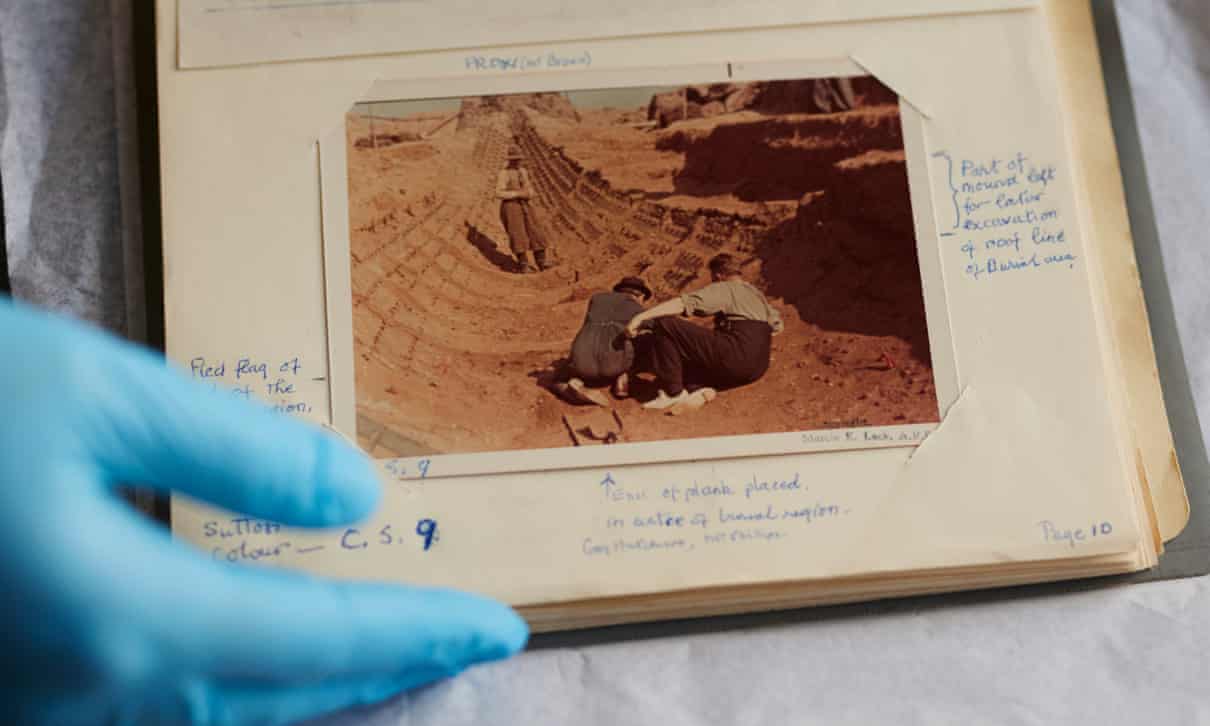
The trust believes the resulting images are among the earliest surviving colour photographs of any major archaeological dig. Photograph: David Levene/The Guardian

Barbara Wagstaff and Mercie Lack’s photographs of 1939 excavation left in plastic bag at National Trust

It was 12 years ago that conservator Anita Bools first laid eyes on photographs which had been left in a plastic bag at the reception of the National Trust site Sutton Hoo by a mystery donor.

She remembered they were laid out on tables for her to see and decide how important they might be. “It was one of those moments you get prickles down the back of your neck. I thought ‘my goodness … this is the genuine thing’. It almost felt like the archaeological discovery itself.”

The hundreds of images in meticulously prepared albums were from August 1939. In fascinating detail they captured the excitement of one of the most extraordinary archaeological digs in British history.

On Wednesday, the trust announced it had completed a project conserving, digitising and making the photographs taken by Barbara Wagstaff and Mercie Lack, two schoolteachers and friends with a passion for photography and archaeology, publicly available.

Read the rest of this article...

Monday, September 27, 2021

Whence the White Horse of Uffington?


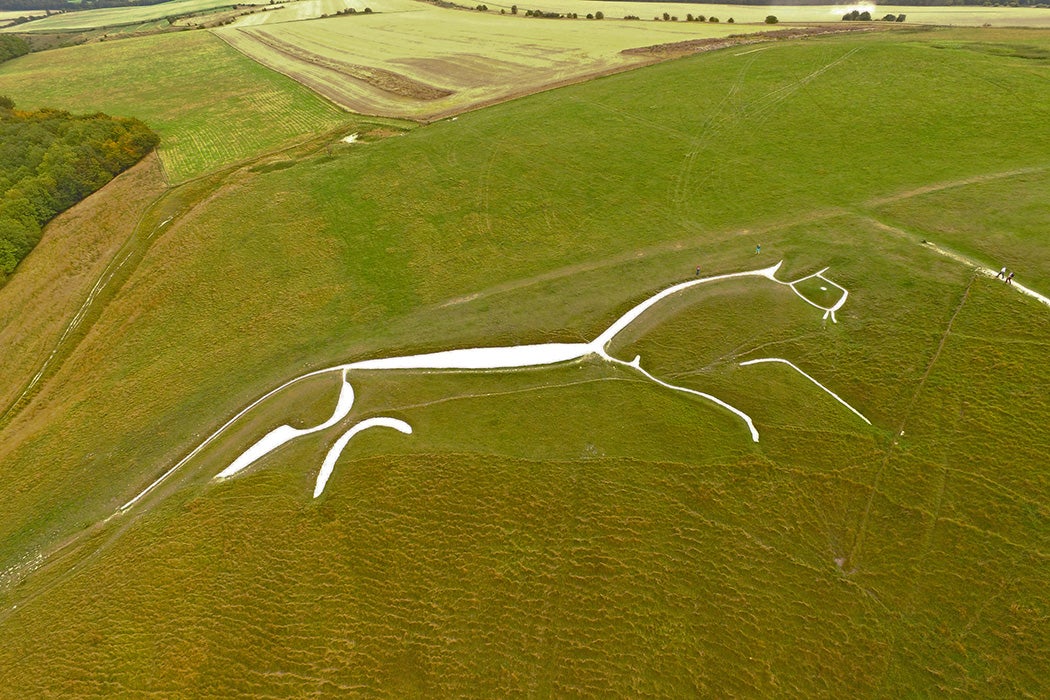
The White Horse of Uffington, a spectacular chalk figure on an English hillside, challenges the very idea of “heritage” as an unbroken line of descent. Made sometime between 1380 and 550 BCE by people who cut meter-deep trenches and filled them with chalk, the horse pattern should have disappeared under encroaching vegetation long ago. But it has been the work of generations to “scour” it—weeding, cleaning, and adding more chalk. It’s this tradition of scouring which so intrigues scholar Philip Schwyzer.

“Like other monuments of similar antiquity, the Horse has been the site of shifting and contested meanings,” writes Schwyzer. “Yet the White Horse is unique among such artifacts in that it has never been neglected, but has always possessed a real and active significance for the inhabitants of the immediate vicinity.”

Read the rest of this article...

Viking Map of North America Identified as 20th-Century Forgery

 It seemed too good to be true. Acquired by Yale University and publicized to great fanfare in 1965, the Vinland Map—supposedly dated to mid-15th century Europe—showed part of the coast of North America, seemingly presenting medieval Scandinavians, not Christopher Columbus, as the true “discoverers” of the New World.

The idea wasn’t exactly new. Two short Icelandic sagas relate the story of Viking expeditions to North America, including the construction of short-lived settlements, attempts at trade and ill-fated battles with Indigenous peoples on the continent’s northeastern coast. Archaeological finds made on Newfoundland in the 1960s support these accounts. But this map suggested something more: namely, that knowledge of Western lands was reasonably common in Scandinavia and central Europe, with Vikings, rather than Columbus and his Iberian backers, acting as the harbingers of the colonial age.

Read the rest of this article


Amateur divers discover 'enormously valuable' hoard of Roman coins


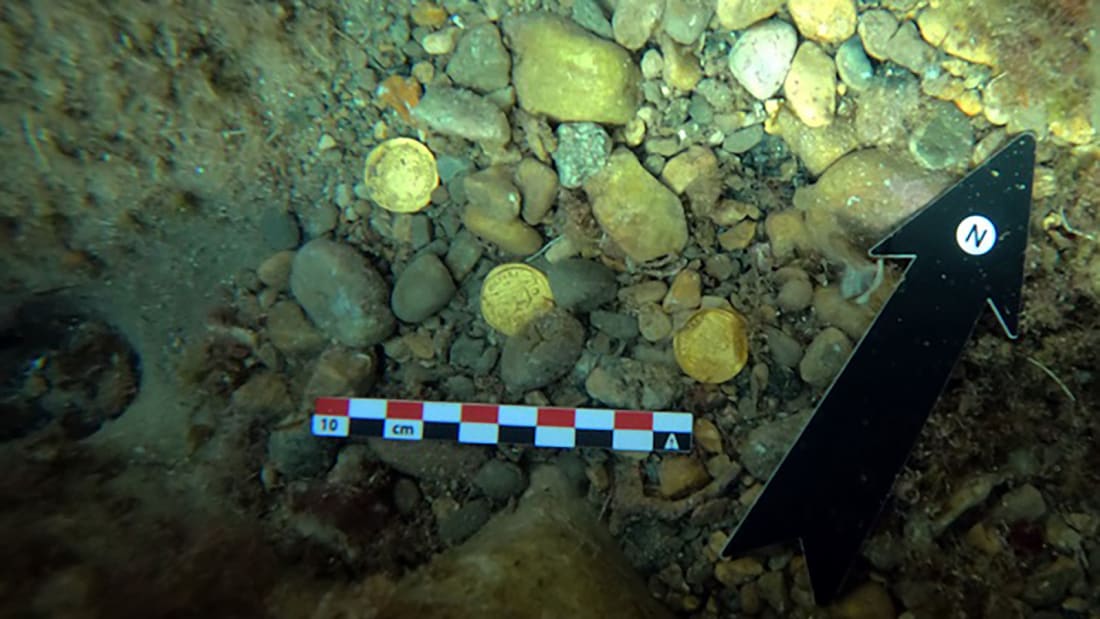
Two amateur free divers have found one of the largest collections of Roman coins in Europe off the east coast of Spain.

Luis Lens and César Gimeno were diving off the island of Portitxol in Xàbia on August 24 when they found eight coins, before further dives by archaeologists returned another 45 coins, according to a press release from the University of Alicante on Tuesday.
 
Scientists from the university's Institute in Archaeology and Historical Heritage then analyzed the perfectly preserved coins, dating them to between the end of the 4th century and the beginning of the 5th century.
 
The coins were in such good condition that the inscriptions were legible, allowing the team to identify coins from the reign of a number of Roman emperors.

Read the rest of this article...
Temple at Uppsala

.
Temple at Uppsala History Channel

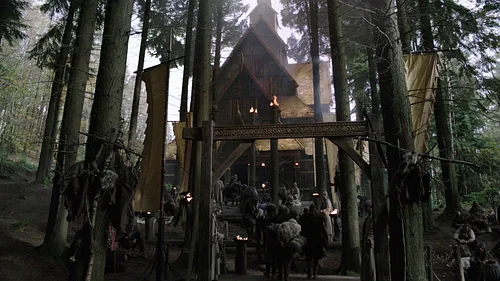
The Temple at Uppsala was a religious center dedicated to the Norse gods Thor, Odin, and Freyr located in what is now Gamla Uppsala in Sweden. It is described by the 11th-century historian Adam of Bremen as the most significant pagan site in the region and was destroyed by the Christian King Inge the Elder c. 1080.

The site is also referenced in the Ynglinga Saga of the Heimskringla written by the Icelandic mythographer Snorri Sturluson (l. 1179-1241) and the Gesta Danorum of Saxo Grammaticus (l. c. 1160 - c. 1220). In every case, it is associated with the gods of the Norse religion and in Adam and Saxo with human sacrifice. At the time Adam was writing (c. 1070), Christianity was still contending with the old Norse beliefs for supremacy in the region, while in Saxo’s time, it was more established. Both wrote from a Christian point of view and so cast the temple and its rites in a negative light. Sturluson was recounting ancient myths for his age and so humanized the gods, making deities like Odin into great kings of the past rather than gods and so avoided having to demonize the site for a Christian audience.

Read the rest of this article..

Was 536 AD the worst year in history?


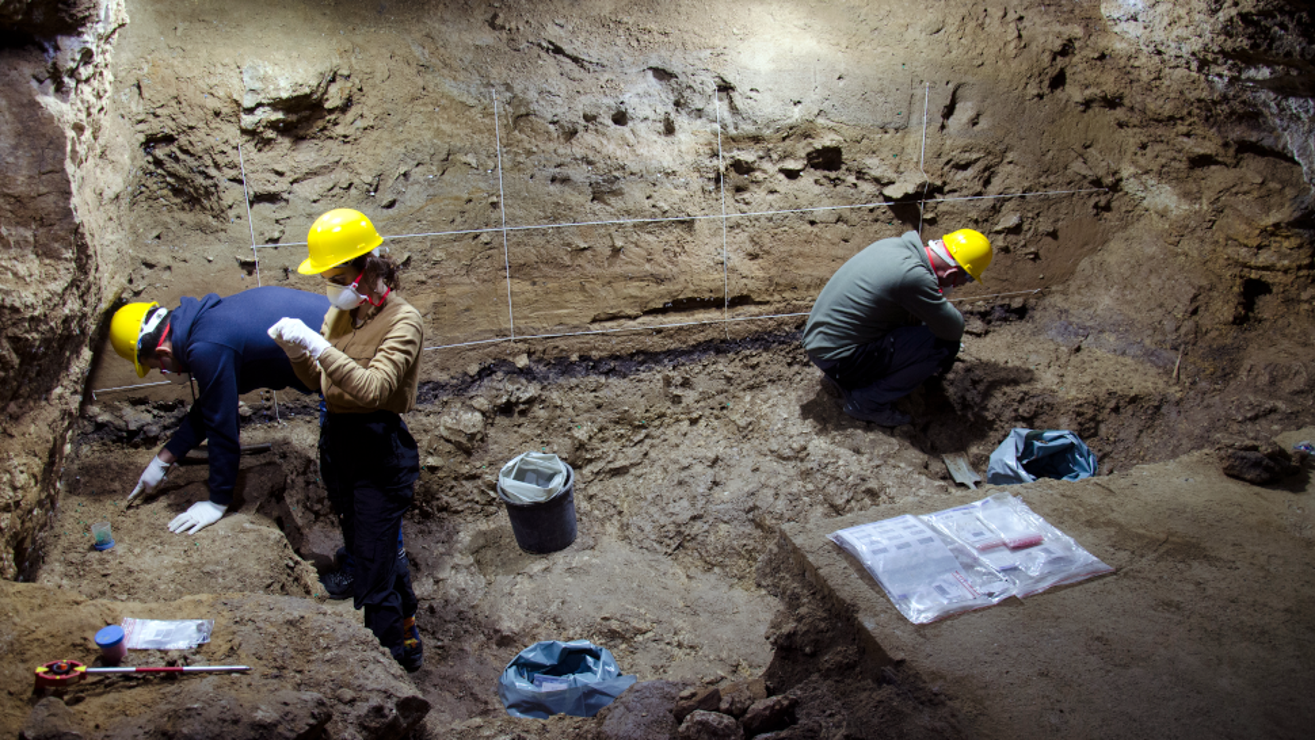
Archaeologists working in Bacho Kiro Cave earlier this year.
Image: Tsenka Tsanova, MPI-EVA Leipzig, License: CC-BY-SA 2.0

Europe was considerably colder 44,000 years ago than previously thought, according to new research. The finding is forcing a rethink about early human migration patterns and where our ancestors preferred to settle.

“The expansion of Homo sapiens across Eurasia marked a major milestone in human evolution that would eventually lead to our species being found across every continent,” write the authors of new research published today in Science Advances.

But scientists still aren’t sure how early modern humans managed to pull off this remarkable migrational trick, given considerable environmental variations around the world. The new study, co-authored by Sarah Pederzani from the Max-Planck-Institute for Evolutionary Anthropology, sought to explore the climatic conditions experienced by Homo sapiens when venturing from southwest Asia to Europe.

Read the rest of this article...