Monday, May 18, 2020

10 Great Castles in England & Wales

Conwy Castle

The Norman Conquest of 1066 CE brought sophisticated motte and bailey castle architecture to England but it was really in the 12th and 13th centuries CE that stone castle-building reached its zenith. Edward I of England (r. 1272-1307 CE) was a huge fan of using castles as a way to keep control of conquered territories in northern Wales and they became an impressive and lasting symbol of royal power. In this collection of resources, we examine ten of the most famous castles in England and Wales, all of which can still be visited today. From the dark events within the Tower of London to the perfection of concentric castle design that is Beaumaris on Anglesey, we look at the evolution of these great structures, their tumultuous history, their decay and their restoration in modern times. We also include a general look at the key parts of medieval castles and provide a detailed visual glossary of all their distinctive architectural features.

Read the rest of this article...

Science Notes – Bridging the gap in London’s prehistory

An aerial view of MOLA archaeologists excavating at Principal Place in Shoreditch – the site of the new Amazon UK HQ. [Image: © MOLA]

Over recent decades, developments in radiocarbon dating techniques have revolutionised our ability to establish the age of archaeological material and to interpret the past (see CA 359). In this month’s Science Notes we will be exploring how, thanks to further advances in this field, ‘the most significant group of Early Neolithic pottery ever uncovered in London’ has shed intriguing light on the capital’s prehistoric past.

Neolithic finds from central London are extremely rare, previously limited to a few individual fragments of pottery and stone axes – and so the discovery of almost 6.5kg of ceramics of this period, comprising 436 fragments from at least 24 separate vessels, was always going to be an important find.

Discovered by MOLA (Museum of London Archaeology) during excavation on behalf of Brookfield Properties at Principal Place in Shoreditch – the location of the new Amazon UK HQ – the pot sherds have now been analysed using a brand-new radiocarbon dating technique on traces of milk fats extracted from their surfaces.

Read the rest of this article...

12 podcasts about medieval history to listen to right now


1 Back to the Black Death

I enjoyed recording this conversation recently, with Professor Jane Whittle from Exeter University, about the government’s response to Black Death in the mid-14th century. You don’t get more topical than that.

Read the rest of this article...

Historical city travel guide: Rome, 1st century AD

The Roman Forum, study for theatrical scene in Shakespeare's 'Coriolanus'. Hodgkin, 1800-1860. 
Pen and grey ink with watercolour.

Location

Rome in Latium, central Italy, is the capital of the Roman Empire. The great city is said to have been founded by Romulus, who was raised with his brother Remus by a she-wolf. He was a descendant of the prince Aeneas, who escaped his home city of Troy after it was sacked by the Greeks. However, the city’s origins are likely to have been slightly less romantic, developing in the 8th century BC through the merging of several villages.

Spanning seven hills on the left bank of the river Tiber, Rome is located about 22 km (14 miles) inland from the Mediterranean Sea as the crow flies. The area is suitable for farming and characterised by warm weather, but the plains between the hills were originally swampy and subject to flooding. That is why, initially, different villages developed on the hilltops rather than in the Tiber valley.

The city now sits at the centre of an empire which stretches from Spain to Syria and is rapidly growing.

Read the rest of this article...

Sunday, May 17, 2020

Practical joke or toy? Leather ‘mouse’ shows Romans' playful side

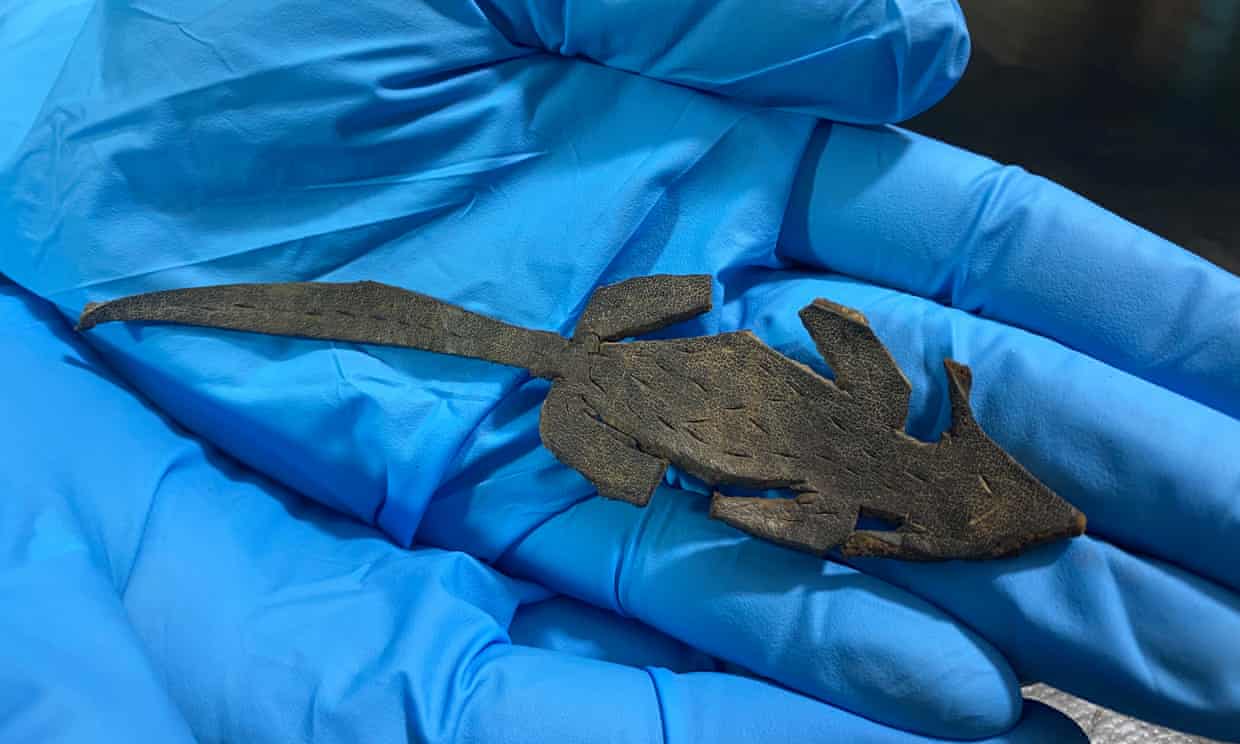
A mouse made out of leather, about 12cm long, has been discovered at the Roman fort of Vindolanda, south of Hadrian’s Wall, in Northumberland. Photograph: The Vindolanda Trust

The Roman author Pliny the Younger advised “kissing the hairy muzzle of a mouse” as a cure for the common cold. His fellow countrymen linked mice to the god Apollo, who could bring deadly plague upon them with his arrows.

So they might not have seen the funny side of a lifelike mouse made out of a strip of leather which has been newly discovered at the Roman fort of Vindolanda, south of Hadrian’s Wall, near Hexham, Northumberland.

About the size of a real rodent and lying unnoticed until now among thousands of leather offcuts held by the Vindolanda Museum since 1993, it looks as if it had been squashed flat after being run over – perhaps by a Roman cart.

Read the rest of this article...

Drowned Paleo-Agulhas Plain was an Eden for Early humans


The Paleo-Agulhas Plain in South Africa had diverse, verdant ecosystems and abundant game for early Humans.
In contrast to ice age environments elsewhere on Earth, it was a lush environment with a mild climate that disappeared under rising sea levels around 11,500 years ago.

An interdisciplinary, international team of scientists has now brought this pleasant cradle of humankind back to life in a special collection of articles that reconstruct the paleoecology of the Paleo-Agulhas Plain, a now-drowned landscape on the southern tip of Africa that was high and dry during glacial phases of the last 2 million years.

“These Pleistocene glacial periods would have presented a very different resource landscape for early modern human hunter-gatherers than the landscape found in modern Cape coastal lowlands, and may have been instrumental in shaping the evolution of early modern humans,” said Janet Franklin, a distinguished professor of biogeography in the department of Botany and Plant Sciences at UC Riverside, an associate member of the African Centre for Coastal Palaeoscience at Nelson Mandela University in South Africa, and co-author of several of the papers.

Read the rest of this article...
Thursday, May 14, 2020

Study suggests remnants of human migration paths exist underwater at 'choke points'

Artist’s re-creation of the first human migration to North America from across the Bering Sea
[Credit: DEA Picture Library/Deagostini/Getty Images]

Today, sea-level rise is a great concern of humanity as climate change warms the planet and melts ice sheets in Greenland and Antarctica. Indeed, great coastal cities around the world like Miami and New Orleans could be underwater later in this century. But oceans have been rising for thousands of years, and this isn't the first time they have claimed land once settled by people. A new paper published in Geographical Review shows evidence vital to understanding human prehistory beneath the seas in places that were dry during the Last Glacial Maximum. Indeed, this paper informs one of the "hottest mysteries" in science: the debate over when the first Asians peopled North America.

The researchers behind the paper studied "choke points" -- narrow land corridors, called isthmuses but often better known for the canals that cross them, or constricted ocean passages, called straits. Typically isthmuses would have been wider 20,000 years ago due to lower sea levels, and some straits did not even exist back then.

"We looked at nine global choke points -- Bering Strait, Isthmus of Panama, Bosporus and Dardanelles, Strait of Gibraltar, straits of Sicily and Messina, Isthmus of Suez, Bab al Mandab, Strait of Hormuz and Strait of Malacca -- to see what each was like 20,000 years ago when more water was tied up in ice sheets and glaciers," said lead author Jerry Dobson, professor emeritus of geography at the University of Kansas and president emeritus of the American Geographical Society. "During the Last Glacial Maximum, the ocean surface was 410 feet lower than today. So, worldwide the amount of land that has been lost since the glaciers melted is equivalent to South America."

Read the rest of this article...

Ancient Tap O' Noth hillfort in Aberdeenshire one of 'largest ever'

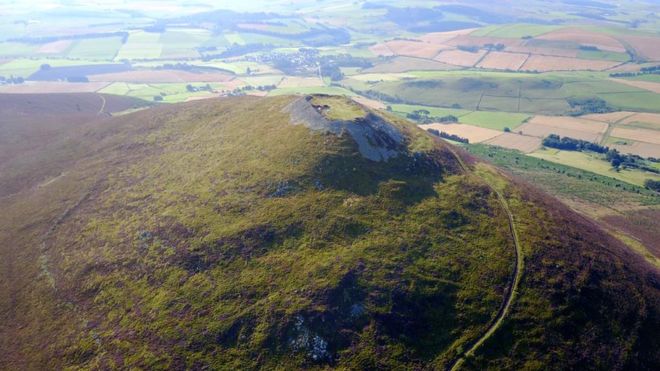
Tap O' Noth overlooks Rhynie
UNIVERSITY OF ABERDEEN

A hillfort in Aberdeenshire is one of the largest ancient settlements ever discovered in Scotland, researchers have said.

University of Aberdeen archaeologists say 4,000 people may have lived in more than 800 huts perched high on the Tap O' Noth near Rhynie.

Many had thought it dated from the Bronze or Iron Age.

The team said carbon dating suggested it was likely to be Pictish, dating back as far as the third century AD.

They believe at its height it may have rivalled the largest known post-Roman settlements in Europe.

Archaeologists from the university have conducted extensive fieldwork in the surrounding area since 2011.

Read the rest of this article...

6000 Jahre altes Gerstenmalz vom Bodensee

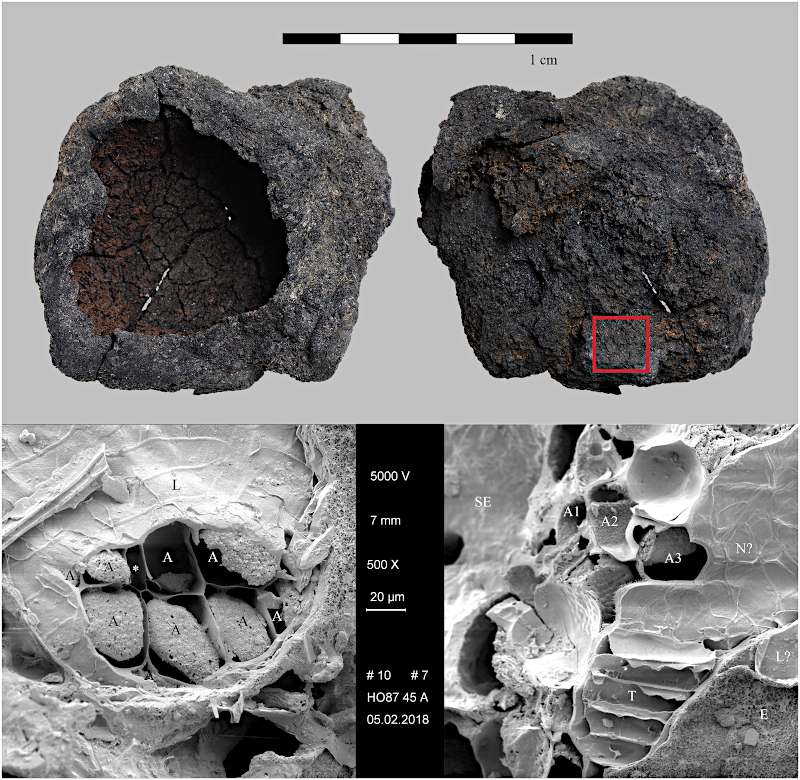
Ein schalenförmiges verkohltes Getreideprodukt von Hornstaad-Hörnle. (Abb: Naturalis Biodiversity Center, Leiden / L. Kubiak-Martens [https://doi.org/10.1371/journal.pone.0231696.g009])

Stammt das älteste Bier Europas aus Baden-Württemberg?

Einem internationalen Forscherteam unter der Leitung des Archäobotanikers Dr. Andreas Heiss (Österreichische Akademie der Wissenschaften) ist es gelungen, gemälzte Gerste in prähistorischen Gefäßen aus Pfahlbausiedlungen am Bodensee nachzuweisen. Die Forschungsergebnisse bestätigen, dass malzhaltige Getränke bereits im 4. Jahrtausend vor Christus in Baden-Württemberg zubereitet wurden.

Bisher galten keltische Fundstellen des 5. bis 4. Jahrhunderts vor Christus, ebenso im heutigen Baden-Württemberg, als älteste Brauereien Mitteleuropas. Weltweit stammen die ältesten Brauereinachweise bisher aus Israel mit Datierungen aus dem 12. Jahrtausend vor Christus.

Read the rest of this article...

Dig This: An Online Field School for Junior Archaeologists

All you need is a good tool, the right patch of dirt, and an internet connection. 
HERITAGE DAILY / CC-BY SA 3.0

THERE COMES A TIME IN every kid’s quarantine when the outside world starts to look awful irresistible. Maybe it’s the familiar warmth of springtime, or perhaps the stir craze that has come with being cooped up in the accrued months of social distancing. Whatever the cause, most kids right now are unable to hang with friends on the nearest (temporarily closed) playground and get their hands dirty.

“What can you do if you’ve got a bunch of kids with nothing better to do?” says Carenza Lewis, an archaeologist at the University of Lincoln in England. “Get them digging.”

So was created Dig School—a partnership between the university, the Council for British Archaeology, and the preservation organization Historic England. Led by Lewis, Dig School is now offering 20 online workshops, styled for junior archaeologists between ages 10 and 15, that teach the basics of excavatory science through at-home exercises and lessons from the field.

Read the rest of this article...
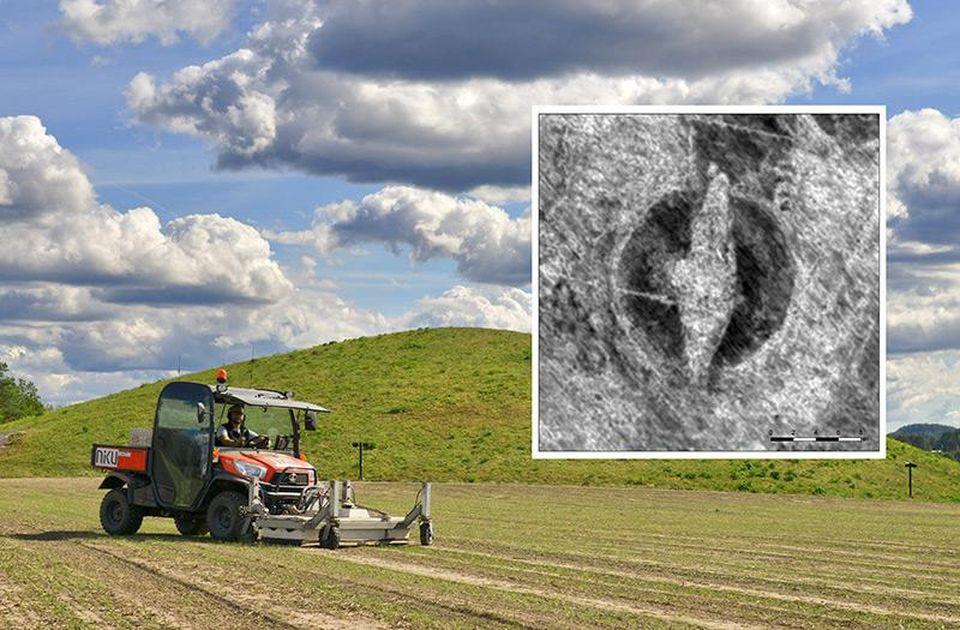
Norway to excavate first Viking ship burial mound in 100 years


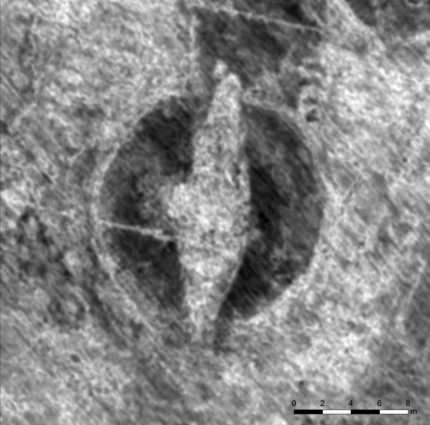
In October 2018, a geophysical survey of a field in Halden, southeastern Norway, revealed the presence of Viking ship burial. The landowner had applied for a soil drainage permit and because the field is adjacent to the monumental Jell Mound, archaeologists from the Norwegian Institute for Cultural Heritage Research (NIKU) inspected the site first. Using a four-wheeler with a georadar mounted to the front of it. The high-resolution ground-penetrating radar picked up the clear outline of a ship 20 meters (65 feet) long.

The ship was found just 50 cm (1.6 feet) under the surface. It was once covered by a burial mound like its neighbor, but centuries of agricultural work ploughed it away. Subsequent investigation of the area found the outlines of at least 11 other burial mounds around the ship, all of them long-since ploughed out as well. The georadar also discovered the remains of five longhouses.

Read the rest of this article...
Wednesday, May 13, 2020

Coronavirus: Lockdown boost for archaeology as amateurs uncover Roman remains

The technology can 'strip away' vegetation and modern features to reveal what is underneath

Self-isolating volunteers analyse aerial survey maps to reveal ancient roads and settlements.

Lockdown has given archaeology an unexpected boost with volunteers finding previously unrecorded Roman, prehistoric and medieval sites from the comfort of their own homes.

In a project coordinated by a team at Exeter University, enthusiastic amateurs have been analysing images derived from Lidar (light detection and ranging) data - laser technology used during aerial surveys to produce highly detailed topographical maps.

Modern vegetation and buildings can be digitally removed, allowing archaeologists to look at the shape of the land surface to find the remains of archaeological earthworks.

The data is being systematically examined and cross-referenced with records of known archaeology and historic maps, meaning the total of new discoveries regularly changes.

Read the rest of this article...
Archeologists discover prehistoric sites – while working from home

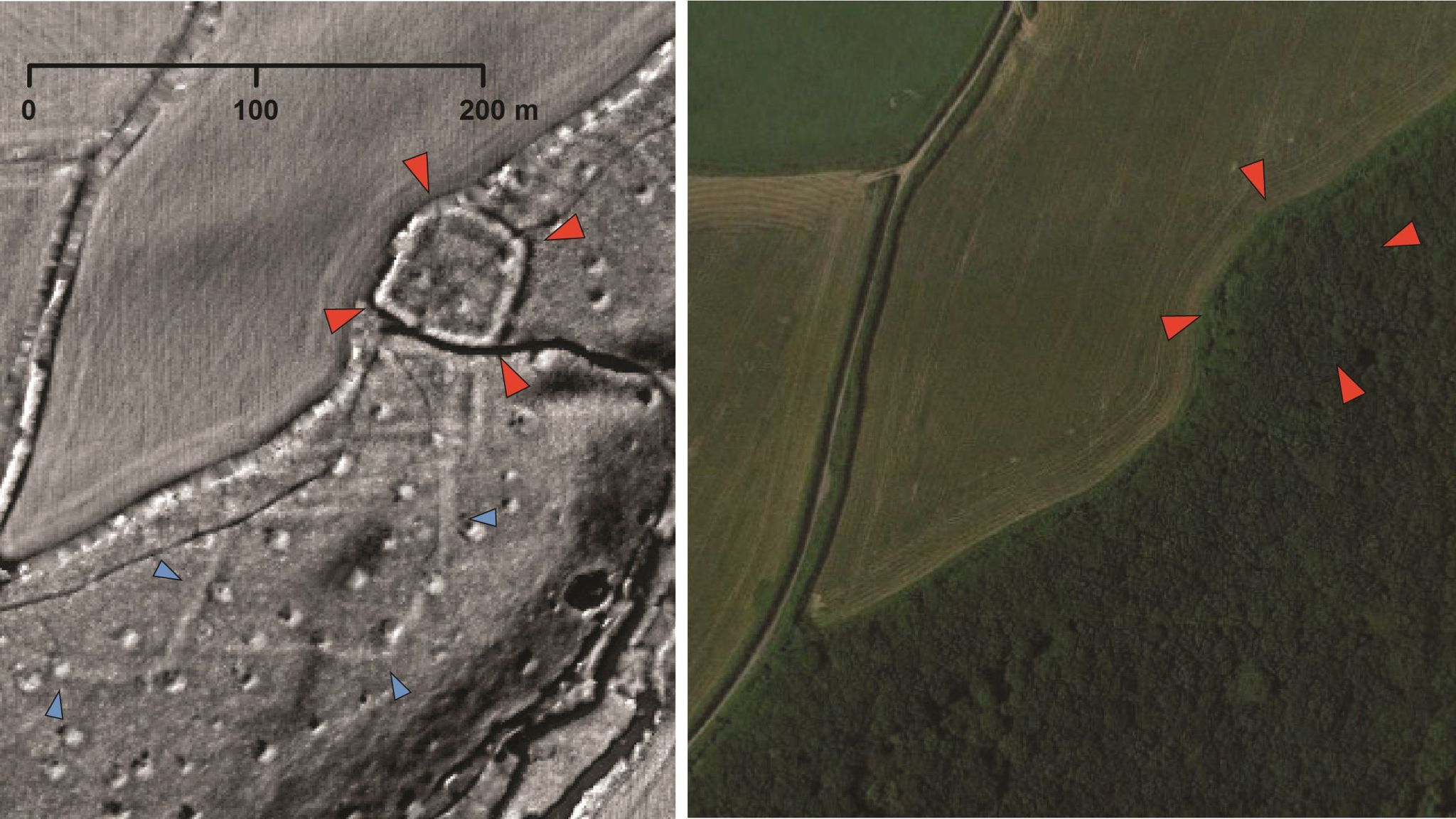
A probable Iron Age or Roman enclosed settlement (indicated by red arrows) and an associated field system (inidicated by blue arrows), which is hidden beneath woodland but has been revealed by volunteers using light detection and ranging (LiDAR) data during lockdown. (Credits: PA)

Dozens of previously-unrecorded Roman, prehistoric and medieval sites have been discovered by archaeology volunteers based at home during the coronavirus lockdown. Digging may be on hold due to the pandemic, but the team have found parts of two Roman roads, around 30 prehistoric or Roman large embanked settlement enclosures, and some 20 prehistoric burial mounds, as well as the remains of hundreds of medieval farms, field systems and quarries. 

Those leading the project believe they will make many more discoveries in the coming weeks. 

The team are analysing images derived from LiDAR (light detection and ranging) data.

Read the rest of this article...
Tuesday, May 12, 2020

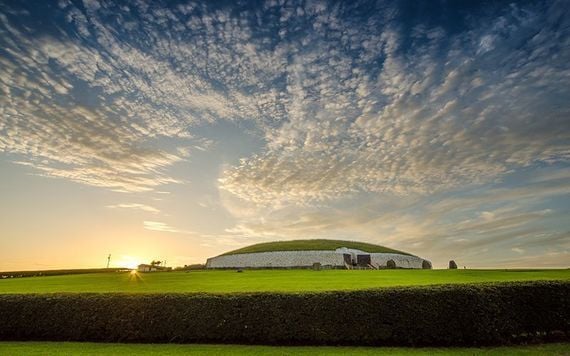
Archaeologists find Neolithic quay near Newgrange

The quay was discovered near Newgrange GETTY

The archaeologists told a conference that they had discovered "features that were clearly manmade" under the surface of the River Boyne.

Archaeologists may have uncovered a 5,000-year-old quay on the bottom of the River Boyne, near the famous Newgrange Neolithic passage grave. 

Annalisa Christie, of University College Dublin, and Dr. Kieran Westley, of the University of Ulster, carried out the sonar study at the end of February. 

The scientists made the discovery close to the Brú na Bóinne complex in County Meath, which contains about 100 Neolithic monuments, including the passage graves at Newgrange, Dowth, and Knowth. 

Brú na Bóinne is one of the most important Neolithic sites in the world and it looks as though scientists have made yet another discovery close to the historic area. 

Read the rest of this article...
Why These Ancient Scottish Seafarers Didn’t Snack on Fish

To detail the Picts' diet, researchers studied 137 skeletons buried under Portmahomack's old Tarbat Parish Church. (Rudhach via Wikimedia Commons under CC BY-SA 3.0)

The Picts were one of Scotland’s earliest—and most mysterious—civilizations. Known for rebuffing Rome’s advances, they vanished from the historical record toward the end of the first millennium A.D. Information on the coastal culture’s culinary preferences is scarce, but thanks to new research published in the Journal of Archaeological Science: Reports, scholars now have a better understanding of these ancient people’s diets.

Forensic analysis of skeletons thought to belong to sixth-century Picts suggests their owners eschewed fish despite the community’s seafaring prowess and proximity to the ocean, reports Alison Campsie for the Scotsman.

To conduct the new assessment, archaeologists studied 137 skeletons excavated at the Tarbat Parish Church in Portmahomack. The remains span hundreds of years, including the Pictish period.

“The Picts are commonly associated with being war-like savages who fought off the Romans, but there was so much more to these people, and echoes of their civilization [are] etched in their artwork and sculpture,” says Shirley Curtis-Summers, a forensic archaeologist at the University of Bradford and lead author of the study, in a statement. “Sadly, there are almost no direct historical records on the Picts, so this skeletal collection is a real golden chalice.”

Read the rest of this article...

Norway To Excavate Viking Ship, First Time In 100 Years


Gjellestad, Norway: The site of the discovery of a viking ship burial site. ERICH NAU, NIKU

The Norwegian government has confirmed it will provide substantial funding to begin an excavation of the Gjellestad Viking ship. It will be the first full excavation of a Viking ship in Norway for more than 100 years.

Despite high recent government expenditure because of the coronavirus crisis, the government has included the expected excavation bill of 15.6 million Norwegian kroner ($1.5 million) in its revised budget.

A time sensitive project

While the Gjellestad ship has been buried for more than 1,000 years, time is of the essence. Norway’s Minister of Climate and Environment, Sveinung Rotevatn, said that getting the ship out of the ground is urgent.

Read the rest of this article...
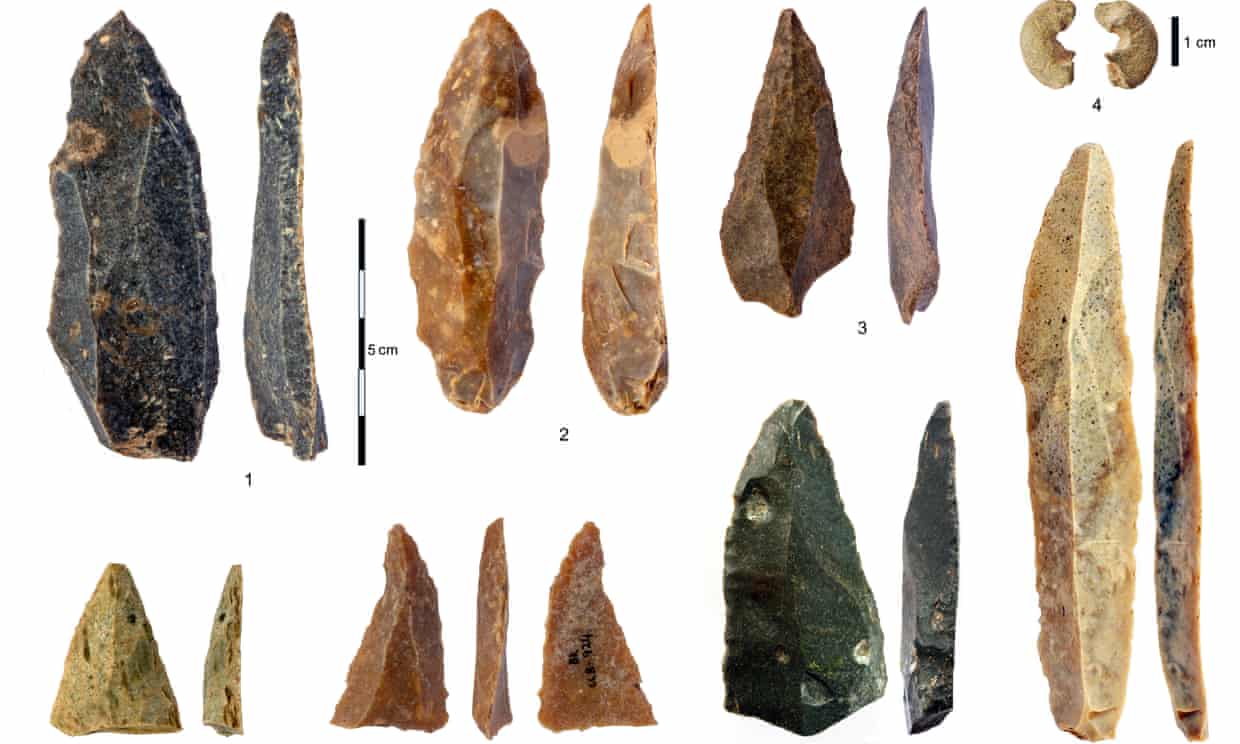
Humans and Neanderthals 'co-existed in Europe for far longer than thought'

Stone artefacts found at Bacho Kiro cave. Photograph: Tsenka Tsanova/SWNS

Cave objects suggest modern humans and Neanderthals shared continent for several thousand years

Modern humans were present in Europe at least 46,000 years ago, according to new research on objects found in Bulgaria, meaning they overlapped with Neanderthals for far longer than previously thought.

Researchers say remains and tools found at a cave called Bacho Kiro reveal that modern humans and Neanderthals were present at the same time in Europe for several thousand years, giving them ample time for biological and cultural interaction.

“Our work in Bacho Kiro shows there is a time overlap of maybe 8,000 years between the arrival of the first wave of modern humans in eastern Europe and the final extinction of Neanderthals in the far west of Europe,” said Prof Jean-Jacques Hublin, from the Max Planck Institute for Evolutionary Anthropology, a co-author of the research, adding that that was far longer than previously thought. Some scholars have suggested a period of not more than 3,000 years.

Read the rest of this article...

Roll up, roll up: how the Roman mosaics at Fishbourne Palace were saved


Sixty years ago this year, one of the most exciting discoveries in Romano-British archaeology was made. Workmen digging a ditch for a water main in 1960 in a field near Chichester hit upon some solid foundations in the earth, and the traces of a Roman mosaic. Work was stopped, and it wasn’t long before Barry Cunliffe (now Sir Barry Cunliffe, emeritus professor of European archaeology at Oxford University) – then still an undergraduate archaeology student – was on site with a team of diggers.

Excavations went on at Fishbourne through the 1960s as a remarkable site was uncovered. What was eventually unearthed was a very grand villa, constructed in the late first century AD, with four wings enclosing a central garden and some 100 rooms. Most famously, over 20 mosaics were revealed, and the mid-second century ‘Cupid on a Dolphi’n pavement is justly famous for its beauty and design.

Read the rest of this article...
Roman-Era Burial Mound Excavated in Bulgaria


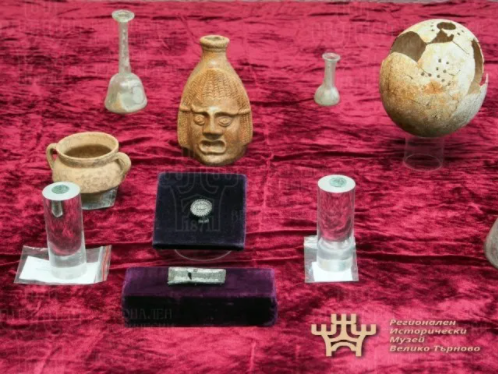
Archaeology in Bulgaria reports that archaeologist Kalin Chakarov of the Regional Museum of History in Veliko Tarnovo and his team conducted a rescue excavation of a Thracian burial mound in north-central Bulgaria. The mound held 19 graves. The cremated dead had been placed in chambers with offerings and personal belongings. The grave in the center of the mound held parts of a vessel made from an ostrich eggshell that was probably imported from Africa or Asia; a gold-plated silver brooch, or fibula, bearing an image of the deity known as the Thracian Horseman; and a ceramic jug decorated with a sculpture resembling a theatrical face mask. “The fibula is extremely expensive,” said museum director Ivan Tsarov. “It was custom-made, probably in the atelier of some Aegean craftsman. 

Read the rest of this article...
How Climate Change is threatening Heritage in the Arctic

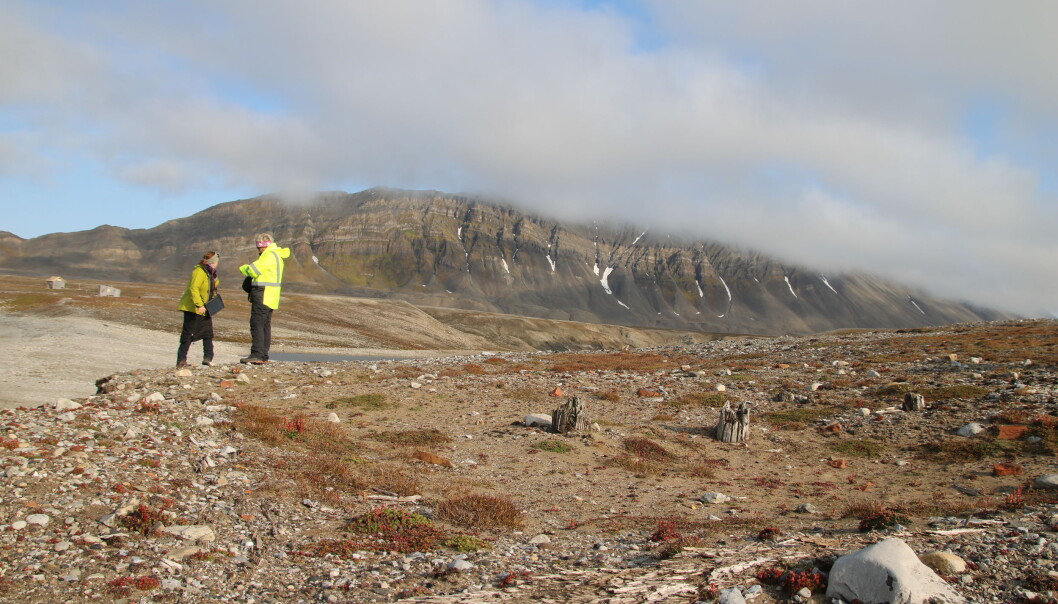
On route to field work, the scientists stumbled upon the remains of a Russian hunting cabin from the 1800s. These remains have been known for a while, but not its quickly deteriorating current state. (Photo: Thomas Wrigglesworth/NIKU)

As the Arctic experiences rising temperatures, thawing permafrost and increased rainfall, cultural heritage sites and objects are under threat of disintegration.

Not only are weather conditions changing, but tourism and growth have led to further strain on the natural environment. Researchers involved with the interdisciplinary project CULTCOAST are examining climate effects on coastal cultural heritage in the High North areas of Norway but also in relation to the influence of tourism.

The recent discovery of an unknown grave
While conducting fieldwork for the project, researchers recently discovered a partially eroded, unknown grave near other known heritage sites in the Russekeila area on Svalbard’s Kapp Linné.

“This is a classic example of a heritage object that is about to completely disappear before we have the possibility of learning anything from it. And that is very sad,” says project leader Vibeke Vandrup Martens of the Norwegian Institute for Cultural Heritage Research (NIKU). She says the grave would eventually end up in the sea, but this process is hastened by climate changes.

It was found at the point where the Linné -river meets the fjord, and is an unusual location for a grave, sparking theories about the circumstances around the burial.

Read the rest of this article...