Thursday, July 19, 2018

Brú na Bóinne: Megalithic tomb discovered in Meath

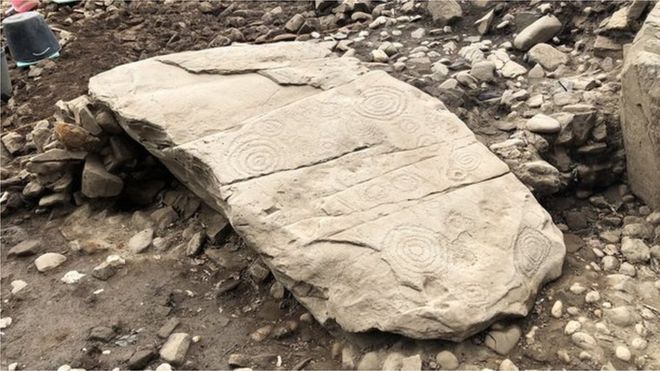
One kerbstone is heavily decorated with Neolithic carvings

The discovery of a 5,500-year-old megalithic tomb in County Meath has been described as the "find of a lifetime" by archaeologists.

Two burial chambers, six kerbstones and two suspected satellite tombs have been found during the dig.

The find was made at the 18th Century Dowth Hall, within the Brú na Bóinne complex, a Unesco World Heritage site.

The project is being carried out by the agri-technology company Devenish and University College Dublin (UCD).

Read the rest of this article...

Unsere weitverzweigten afrikanischen Wurzeln

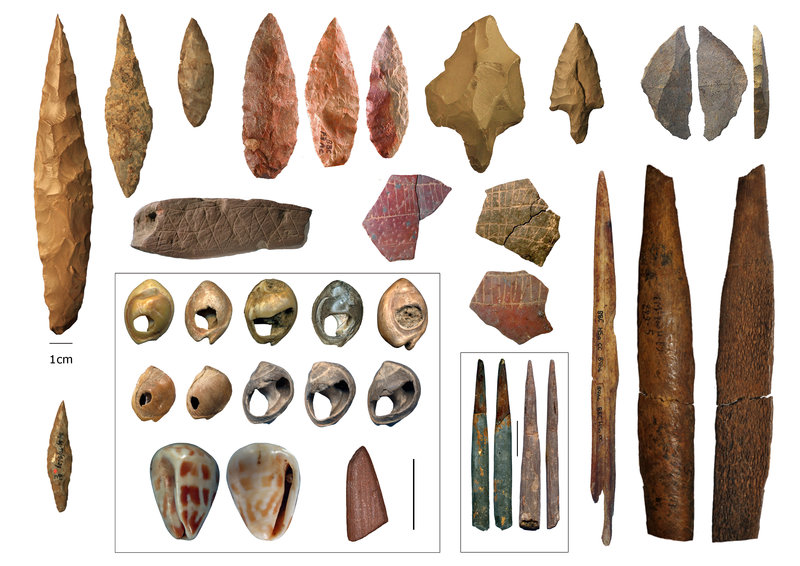
Artefakte aus der Mittleren Steinzeit, die im Norden und Süden des afrikanischen Kontinents gefunden wurden. Bild: Eleanor Scerri/Francesco d»Errico/Christopher Henshilwood

Während allgemein anerkannt ist, dass der moderne Mensch seinen Ursprung in Afrika hat, wurde der Frage, wie sich der Mensch innerhalb des Kontinents entwickelt hat, bislang wenig Aufmerksamkeit geschenkt. Vielfach ging man davon aus, dass die frühen Vorfahren des Menschen als eine einzige, relativ große Bevölkerungsgruppe entstanden sind, welche Gene und Technologien, wie die Herstellung von Steinwerkzeugen, mehr oder weniger zufällig untereinander austauschten.

In einer diese Woche in Trends in Ecology and Evolution veröffentlichten Studie eines wissenschaftlichen Expertenteams unter der Leitung von Eleanor Scerri, Wissenschaftlerin an der British Academy der Universität Oxford und am Max-Planck-Institut für Menschheitsgeschichte in Jena, wird diese Sichtweise nicht nur durch die Untersuchung von versteinerten Knochen (Anthropologie), Steinwerkzeugen (Archäologie) und Genen (Populationsgenetik) in Frage gestellt, sondern auch durch neue und detailliertere Rekonstruktionen von Afrikas Klimazonen und Lebensräumen während der letzten 300.000 Jahre

Read the rest of this article...

Thursday, July 05, 2018

Lincoln Developers Stumble Across Roman Burials


Three perfectly-preserved Roman skeletons, believed to be part of the same burial ground where 23 skeletons were unearthed in a 2015 dig, have been discovered at the site of a new student accommodation development in Lincoln.

They were unearthed at the former site of the Taste Of Marrakesh restaurant in the city centre where a development of 400 student flats is to be built. Among the discoveries were some from the Medieval era - including cellars, wells and a bone ice skate.

Network Archaeology and city archaeologist Alastair Macintosh have spent a month on the dig in collaboration with developer Jackson & Jackson.

Read the rest of this article...

Power company project becomes one of Europe's largest archeological digs

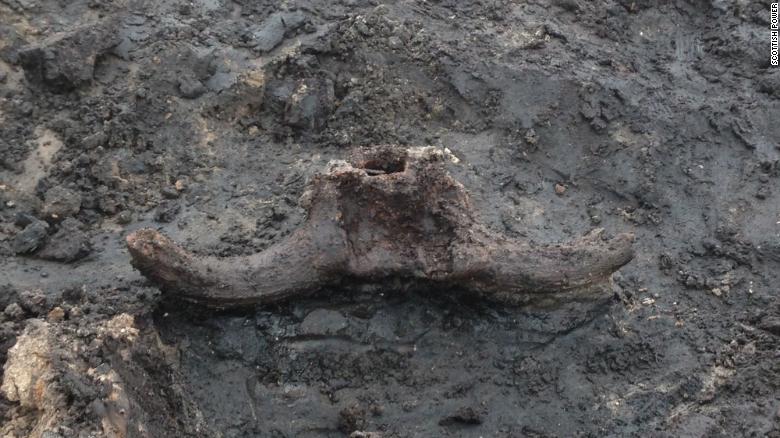
The site included the skull of an auroch, an extinct species of cattle.

A Neolithic trackway dating to 2300 B.C. was uncovered in a nondescript field in Suffolk, on the east coast of England, thanks to a power company.

Among the findings at the site were the skull of an auroch -- an extinct species of wild cattle dating to about 4000 B.C. -- as well as pottery, building structures, bones, coins and poles to designate the route of the ancient trackway, the centerpiece of this particular excavation. Trackways are ancient roadways that formed when people or animals repeatedly tread the same path.

"Undoubtedly this is a site of international archaeological significance. It is exceptionally rare to find preserved organic materials from the Neolithic period, and we will learn a great deal from this discovery," said Richard Newman, associate director at Wardell Armstrong, the company overseeing the dig.

Read the rest of this article...

'German Stonehenge' Yields Grisly Evidence of Sacrificed Women and Children

A reconstruction of the 4,300-year-old Pömmelte enclosure.
Credit: Landesamt für Denkmalpflege und Archäologie Sachsen-Anhalt” (State Office for Heritage Management and Archaeology Saxony-Anhalt); photographer Juraj Lipták

The broken, battered bones of children, teenagers and women discovered at the newly excavated "German Stonehenge" may be evidence of ancient human sacrifice, a new study finds.

Archaeologists found the fractured skulls and rib bones buried in pits alongside axes, drinking vessels, butchered animal bones and querns (stone mills) at an archaeology site near Pömmelte, a village in Germany about 85 miles (136 kilometers) southwest of Berlin.

The victims' last moments were gruesome; it appears they were thrown or pushed into the pit, and that at least one of the teenagers had their hands bound together, said study lead researcher André Spatzier, an archaeologist at the State Office for the Preservation of Historic Monuments at Baden-Württemberg, a state in southwest Germany. 

Read the rest of this article...

Archaeologists stumble on Neolithic ritual site in Suffolk

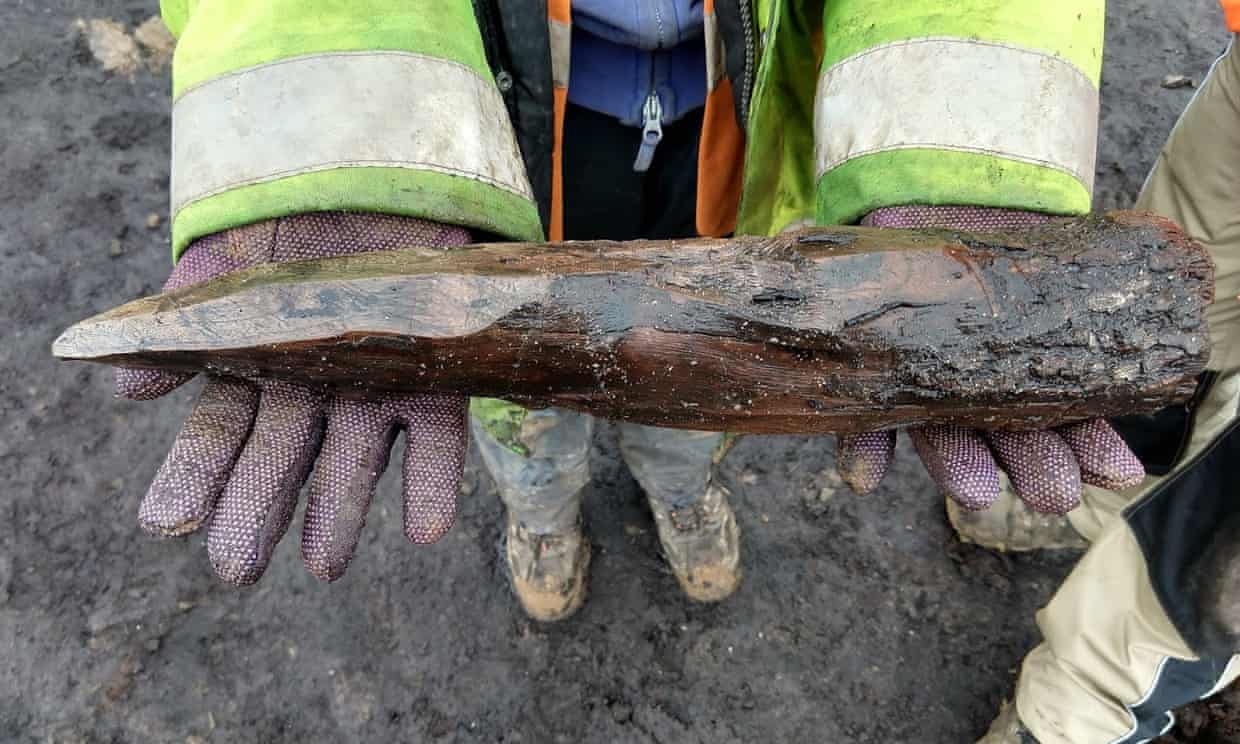
A 4,300-year-old stake discovered in a field in Suffolk. Photograph: Scottish Power

As diggers began to strip the daisies and buttercups and carve down through the parched clay of a field near Woodbridge in Suffolk that sloped down to a riverbank, with archaeologists watching over the pretty but apparently featureless site, something extraordinary began to emerge. Clear spring water came bubbling from the ground, and with it came massive timbers preserved so perfectly that tool marks were still visible and stake posts were sharply pointed.

The archaeologists first thought the timbers must be medieval or even Victorian, and were puzzled to find them so deeply buried. But as 30 metres of timber track were exposed, alongside other unexpected objects too, such as the massive horns and skull of an aurochs, an extinct breed of giant cattle, they realised they were dealing with something far more ancient. The timbers were 4,300 years old, according to the first carbon-14 tests, and underlying ones may be much older.

The Neolithic trackway, which had evidence of being repeatedly restored and renewed over decades and probably generations, seems to have led up to a level timber platform, with spring water deliberately channelled to surround it. From the platform, objects were dropped into the running water, including metal, pottery and the horned aurochs skull. The skull had been carefully shaped either to fix to a pole or use as part of a headdress – and as the archaeologists who had to lift and carry it down the hill could testify, lugging it to the site would have taken considerable effort.

Read the rest of this article...

Ancient Roman ‘hand of god’ discovered near Hadrian’s Wall sheds light on biggest combat operation ever in UK

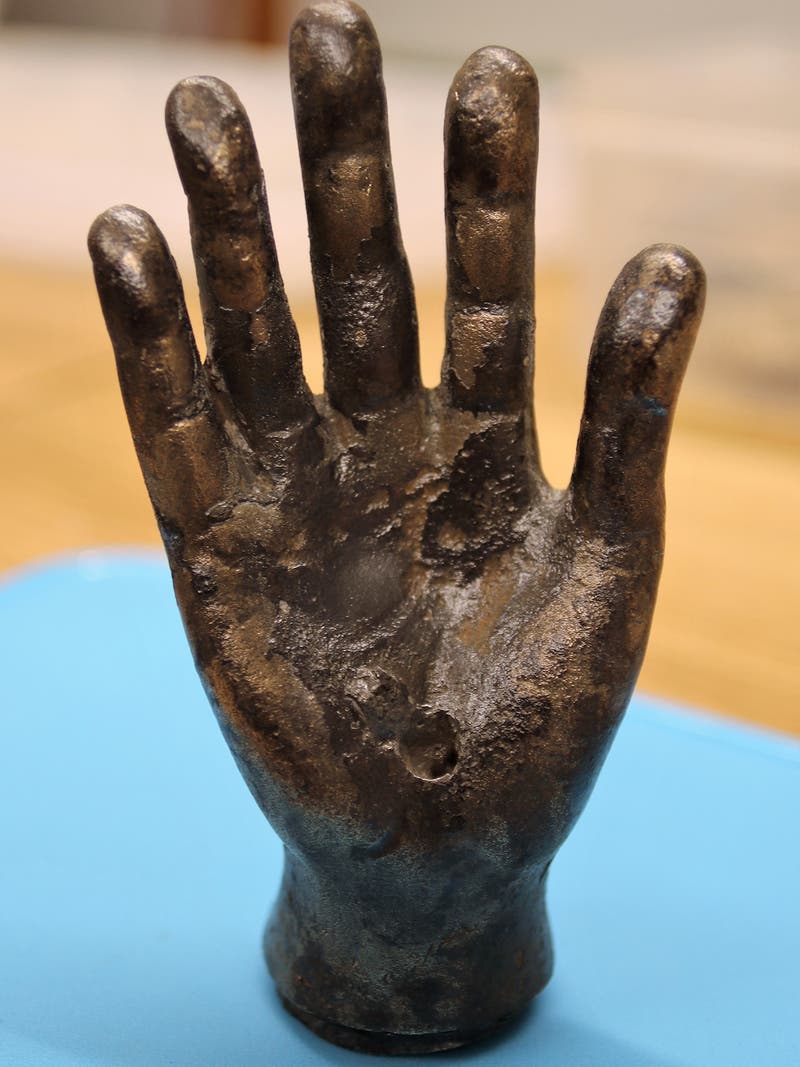
It is likely that the hand was ritually buried by one of the Roman commanders who took part in the conflict (Vindolanda Trust)

Archaeologists have discovered an ancient Roman “hand of god” – but the story it tells is tragically anything but heavenly.

The hand – unearthed near Hadrian’s Wall and made of 2.3 kilos of solid bronze – was almost certainly a gift to a military deity for giving the Romans victory in the largest military combat operation ever carried out in Britain, before or since.

The operation – a relatively little-known Roman invasion of Scotland in 209-210 AD – was also probably one of the bloodiest events in British history.

Read the rest of this article...

Mycenaean vessels among finds at Dromolaxia, Cyprus

Chariot krater from Tomb RR, Dromoloaxia-Vyzakia 
[Credit: Cyprus Department of Antiquities]

The Department of Antiquities in Cyprus announced that, during five weeks in April and June 2018, a Swedish team, headed by Professor Peter M. Fischer from the University of Gothenburg, carried out excavations at the Late Cypriot harbour city of Dromolaxia-Vyzakia (Hala Sultan Tekke). The team consisted of 27 students and specialists. Amongst the latter were those trained in osteology, botany, conservation, Aegean and Near Eastern ceramics, and geophysical prospecting.

In June 2017, the site was surveyed with a magnetometer with ten sensors mounted on a 5 m wide cart. This arrangement allowed the mapping of 23 hectares within a week, demonstrating stone structures and “pits” down to a depth of roughly 1.5 m.

The architectural remains point to numerous man-made structures in the entire area of the survey, demonstrating the vast extent of the city. In 2018, 0.6 hectares of the magnetometer-surveyed area were re-investigated with georadar in order to see details of the buried features which facilitates the subsequent excavations.

However, the results of the georadar survey were of limited value: the strong radar attenuation at the site, due to clay-rich soil, did not allow electromagnetic waves to penetrate deeper than a few decimeters from surface.

Read the rest of this article...

Four hundred-year-old fort discovered in County Tyrone


A 400-year-old fort has been discovered in Brockagh, County Tyrone.

Students from Queen's University in Belfast have taken part in the dig over the past month.

Evidence of a settlement going back thousands of years has also been found.

Read the rest of this article...

Ötzi – a new understanding of the holy grail of glacial archaeology

Reinhold Messner (right) looking at Ötzi after more ice had melted or been hacked away. Notice the wooden stick in his companion’s right hand. It was used during the first attempts to hack Ötzi out of the ice. It is in fact part of the frame for Ötzi’s backpack. In the upper right corner, we can see Ötzi’s bow resting against the rock. 

Ötzi the iceman is the holy grail of glacial archaeology, nothing less. The discovery of the 5300-year-old mummified body and the associated artefacts created a media frenzy and great public interest. Today, 250000 people visit the Ötzi Museum in Bolzano each year to get a glimpse of Ötzi and the exhibited artefacts. A wealth of scientific papers, popular books and documentaries have been published.

Ötzi was discovered in 1991 in a gully at the Tisenjoch pass close to the Italian/Austrian border. The original interpretation by the Innsbruck-based archaeologist Konrad Spindler was that Ötzi froze to death in the gully. He was quickly covered by a glacier and remained encased in ice until he melted out in 1991. How else could the body and artefacts be so well preserved?

Read the rest of this article...

Archäologen entdecken mittelalterliche Steinarchitektur im Zentrum von Minden


Bei aktuellen Ausgrabungen im Zentrum von Minden haben Archäologen unter Leitung des Landschaftsverbandes Westfalen-Lippe (LWL) die Mauern nobler Bürgerhäuser aus dem Mittelalter entdeckt. Wo ein Fundamentgraben für den Neubau entstehen sollte, stieß der Bagger unerwartet auf mittelalterliche Häuser. Dank der Umsicht der Mindener Denkmalbehörde untersuchen nun Wissenschaftler diese Gebäudereste.

Read the rest of this article...

Wednesday, June 20, 2018

New technique provides accurate dating of ancient skeletons


EUROPEAN SOCIETY OF HUMAN GENETICS—Milan, Italy: Interest in the origins of human populations and their migration routes has increased greatly in recent years. A critical aspect of tracing migration events is dating them. However, the radiocarbon techniques*, that are commonly used to date and analyze DNA from ancient skeletons can be inaccurate and not always possible to apply. Inspired by the Geographic Population Structure model that can track mutations in DNA that are associated with geography, researchers have developed a new analytic method, the Time Population Structure (TPS), that uses mutations to predict time in order to date the ancient DNA.

Dr Umberto Esposito, a postdoctoral researcher in the laboratory of Dr Eran Elhaik, Department of Animal and Plant Sciences at the University of Sheffield, Sheffield, UK, will tell the annual conference of the European Society of Human Genetics today (Monday) that TPS can calculate the mixtures of DNA deriving from different time periods to estimate its definitive age. “This introduces a completely new approach to dating. At this point, in its embryonic state, TPS has already shown that its results are very similar to those obtained with traditional radiocarbon dating. 

Read the rest of this article...

Enigmatic Stone Balls from 5,000 Years Ago Continue to Baffle Archaeologists

The 3D models of the carved balls of stone, including the spiral-carved Towie ball (center), are now posted online.  Credit: National Museums Scotland

Some of the most enigmatic human-made objects from Europe's late Stone Age — intricately carved balls of stone, each about the size of a baseball — continue to baffle archaeologists more than 200 years after they were first discovered.

More than 500 of the enigmatic objects have now been found, most of them in northeast Scotland, but also in the Orkney Islands, England, Ireland and one in Norway.

Archaeologists still don't know the original purpose or meaning of the Neolithic stone balls, which are recognized as some of the finest examples of Neolithic art found anywhere in the world. But now, they've created virtual 3D models of the gorgeous balls, primarily to share with the public. In addition, the models have revealed some new details, including once-hidden patterns in the carvings on the balls.

Read the rest of this article...

Archaeologists in Cambridgeshire find graves of two men with legs chopped off

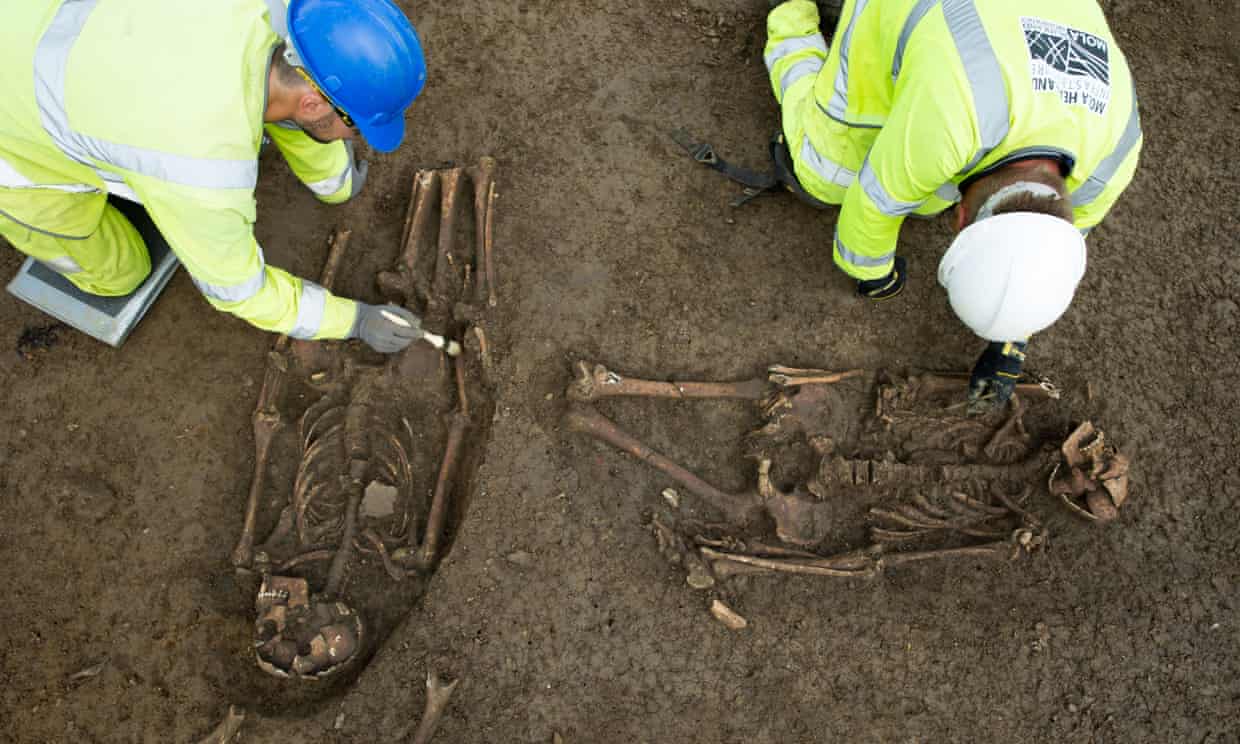
‘Somebody really, really didn’t like these guys,’ says Jonathan House, archaeologist with the Mola Headland Infrastructure team. 
Photograph: Highways England, courtesy of Mola Headland Infrastructure

Exclusive: men believed to be from late Roman or early Saxon period were found in pit being used as rubbish dump

The graves of two men whose legs were chopped off at the knees and placed carefully by their shoulders before burial have been discovered by archaeologists working on a huge linear site in advance of roadworks in Cambridgeshire.

The best scenario the archaeologists can hope for is that the unfortunate men were dead when their legs were mutilated. It also appears their skulls were smashed in, although that could be later damage.

“Was it to keep them in their graves and stop them from running away?” said Kasia Gdaniec, the senior archaeologist with Cambridge county council. “Or had they tried to run away and was this a punishment – and a warning to everyone else not even to think of it?”

Read the rest of this article...

How to decorate like a Viking

Grand Designs, Viking edition. A new report recreates some of the colours used by Vikings to decorate their houses, including ochre and charcoal pigments. (Photo: Sagnlandet Lejre)

To begin with you will need a handy Viking paint chart. Luckily, archaeologists in Denmark have just made one.
Green is the colour of hope, white symbolises surrender or innocence, and black binds the living to the dead.

Colour has always carried meaning for people, including the Vikings, for whom it symbolised power and wealth.

But what colours did the Vikings use?

Archaeologists and chemists have now studied colour use in the Viking Age based on the chemical analyses of pigments from a number of objects and a review of existing information on the topic.

These colours are now available to all in the form of a colour palette: A Viking paint chart.

Read the rest of this article...

DNA study reveals fate of Irish women taken by Vikings as slaves to Iceland

The Sea Stallion from Glendalough, a reconstructed Viking ship [Credit: Eric Luke]

The mapping of DNA from some of the settlers who colonised Iceland more than 1,000 years ago offers an insight into the fate of thousands of slaves – mostly women – who were taken by Norse Vikings from Ireland and Scotland before they put down roots on the North Atlantic island.

Anthropologist Sunna Ebenesersdóttir, of the University of Iceland and the company deCODE Genetics in Reykjavik, analysed the genomes of 25 ancient Icelanders whose skeletal remains were found in burial sites across the island.

Sequencing using samples from teeth revealed the settlers had a roughly even split of Norse (from what are today Norway and Sweden) and Gaelic ancestry. It is the first in-depth investigation of how a new population is formed through a genetic process known as “admixture”.

When the researchers compared the ancient genomes to those of modern people in Iceland and other European countries, they found contemporary Icelanders, on average, draw about 70 per cent of their genes from Norse ancestry.

This suggests that in the 1,100 years between settlement and today, the population underwent a surprisingly quick genetic shift in favour of Norse genes, the researchers report in the journal Science.

Read the rest of this article...

Anger at bird hide damage to Neolithic burial site

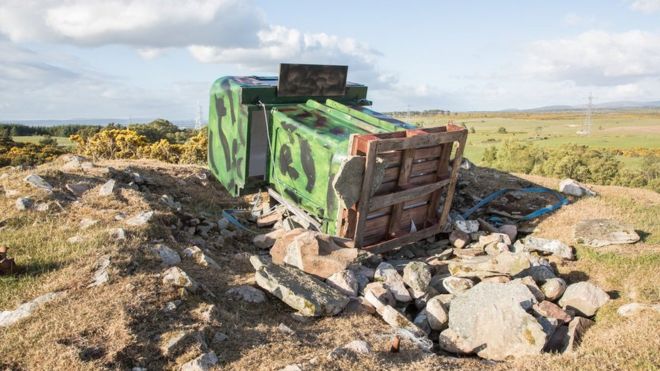
The hide, which has toppled over, was constructed on an ancient burial cairn
PAUL CAMPBELL

A makeshift bird hide has been built on the site of a Neolithic burial cairn, damaging the 3,000-year-old archaeological site.

Made from the canopy for a pick-up truck and a wooden pallet, it was constructed on one of three ancient cairns at Carn Glas, near Inverness.

Police Scotland said it was aware of the structure at Essich.

Historic Environment Scotland (HES) said it was taking enforcement action to have the hide removed.

Turf and stones were moved at the cairn, one of three at the site which are of a design usually found further north in the Highlands and also in Orkney.

The hide, which has toppled over, had been fixed in place by heavy metal pins.

Read the rest of this article...

Monday, June 18, 2018

Inscribed seventh-century window ledge unearthed at Tintagel

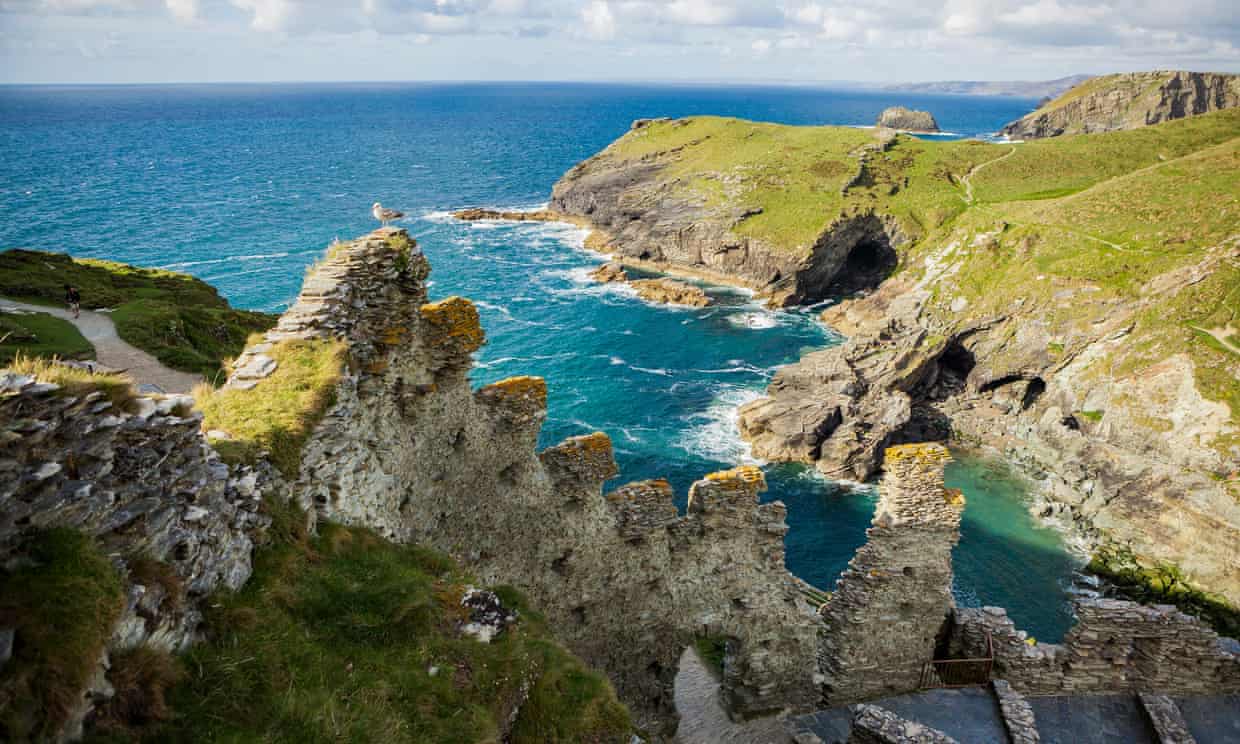
The slate ledge was found during excavations of Tintagel Castle in Cornwall, a site associated with the stories of King Arthur. Photograph: Nigel Wallace-Iles/English Herit/PA

A seventh-century slate window ledge inscribed with an intriguing mix of Latin, Greek and Celtic words, names and symbols has been unearthed at in north Cornwall.

The discovery adds weight to the view that the rugged coastal site, which is most often , was home in the early middle ages to a sophisticated and multicultural port community.

Put together with other finds including Iberian goblets and bowls from what is now Turkey, the slate ledge suggests Tintagel may well have been an important royal base with trade links stretching from Europe’s Atlantic coast to the eastern Mediterranean.

Read the rest of this article...

Large-scale whaling in north Scandinavia may date back to 6th century

Top: a board-game piece made from whalebone at the end of the 6th century CE, found in Gnistahögen near Uppsala, Sweden (photograph by Bengt Backlund, Uppland County Museum). Bottom: the bone structure of the gaming piece compared with reference bone from minke whale (photograph by Rudolf Gustavsson, Societas Archaeologica Upsaliensis, SAU) [Credit: Bengt Backlund/Rudolf Gustavsson]

Museum collections in Sweden contain thousands of Iron Age board-game pieces. New studies of the raw material composing them show that most were made of whalebone from the mid-6th century CE. They were produced in large volumes and standardised forms. The researchers therefore believe that a regular supply of whalebone was needed. Since the producers would hardly have found the carcasses of beached whales a reliable source, the gaming pieces are interpreted as evidence for whaling.

Apart from an osteological survey, species origin has been determined for a small number of game pieces, using ZooMS (short for Zooarchaeology by Mass Spectrometer). The method shows that all the pieces analysed were derived from the North Atlantic right whale (Eubalaena glacialis), a massive whale weighing 50-80 tonnes. It got the name because it was the right whale to hunt: it swam slowly, close to shore, and contained so much blubber as to float after being killed.

Read the rest of this article...
Bedfordshire's first Roman town wall unearthed in Sandy

Items discovered by Les Capon and his team include the skeleton of a woman, a funeral pyre, Roman rubbish and a pottery kiln

Archaeologists excavating a former allotment site in a market town have made the "absolutely brilliant" find of a previously-unknown Roman wall.

The dig in Sandy, Bedfordshire, has uncovered about 200 items dating from the Iron Age in 500 BC to the Saxon period in 800 AD.

Among the finds is the remains of a Saxon house.

The site, in Stratford Road, is to be turned into a cemetery, car park and council depot.

Read the rest of this article...