Monday, July 17, 2017

Roman coin find in Orkney thrills archaeologists

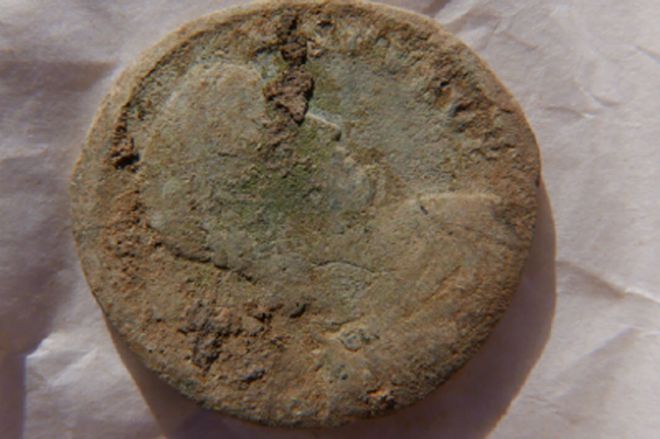
The coin was uncovered in a dig on Rousay in Orkney

Archaeologists are thrilled by the discovery of a Roman coin during the excavation of an archaeological site in Orkney.
The copper alloy coin was found at the Knowe of Swandro, the location of a Neolithic chambered tomb, Iron Age roundhouses and Pictish buildings.
The archaeological site is at risk from coastal erosion.
Roman finds have been made before in Orkney, and other Scottish islands including the Western Isles.
The coin found in the Knowe of Swandro dig on Rousay is believed to date from the mid 4th Century AD.
Read the rest of this article...

Breakthrough in dating Viking fortress

In 2014 archaeologists discovered the previously unknown Viking fortress at Borgring south of Copenhagen. Since then the search has been on to uncover the life, function, destruction and, not least, the precise dating of the Viking fortress. Now a new find has produced a breakthrough in the investigation.


The carved oak timber object recently found in peat layers just outside the south gateway of the fortress. The piece has been cut and sampled for dendrochronological sampling (left). The function of the piece is unknown, but it may be a part of a door or building.

Credit: The Museum of South East Denmark / Nanna Holm

In the period 2016-18 a programme of new excavations is made possible by a grant from the A.P. Møller Foundation. The team from the Museum of South East Denmark and Aarhus University are joind by leading experts from the Environmental Archeology and Materials Research at the Danish National Museum and the National Police Department's Section for arson investigation. Prior to this year's excavations it was only known that the massive, 150m wide fortress dated to the tenth century. Experts suspected that it was built in the reign of Viking king Harold Bluetooth (c.958-c.987), but the association could not be proven.
On June 26, the archaeological team opened new trenches is the meadow next to the fortress to search for evidence of the landscape surrounding the fortress. Around 2.5 meters below the current surface of the valley was found a c. 1m long piece of carved oak wood with drilled holes and several wooden pegs in situ. The wood carries clear traces of wear, but it is not currently possible to say what function the wood piece has had.
Read the rest of this article...

Sunday, July 16, 2017

Ancestors of Stonehenge people could be buried inside ‘House of the Dead’ discovered in Wiltshire


The site in a farmer's field was identified in aerial photographs 

[Credit: University of Reading]

A ‘House of the Dead’ has been discovered in Wiltshire dating back 5,000 years by University of Reading archaeologists and students, and could contain the ancestors of those who lived around Stonehenge and Avebury.

As part of the University’s final Archaeology Field School in the Pewsey Vale, students and staff, with the support of volunteers from the area, have investigated the site of a Neolithic long barrow burial mound in a place known as Cat’s Brain – the first to be fully investigated in Wiltshire in half a century.

The monument, which predates nearby Marden Henge by over 1,000 years, may contain human remains buried there in around 3,600 BC. The monument was first spotted by aerial photography and followed up by geophysical survey imagery.


Read the rest of this article...

One of the most important buildings in history of Christianity discovered off Scottish coast


Archaeologists have located one of the most important buildings in the history of Western European Christianity – but it’s not a vast cathedral or an impressive tomb, but merely a humble wattle and daub hut on a remote windswept island.
Using radiocarbon dating techniques and other evidence, the  scholars –  from the University of Glasgow – believe they have demonstrated that the tiny five-metre square building was almost certainly the daytime home of early medieval Scotland’s most important saint, St Columba.
Located on the island of Iona, off the west coast of Scotland, the unprepossessing hut was probably the first administrative hub of the monastic community he founded – and whose monks, over succeeding centuries, went on to establish similar monasteries in mainland Scotland, in north-east England, in Belgium, in France and in Switzerland.
Read the rest of this article...

Tintagel excavations reveal refined tastes of medieval settlers

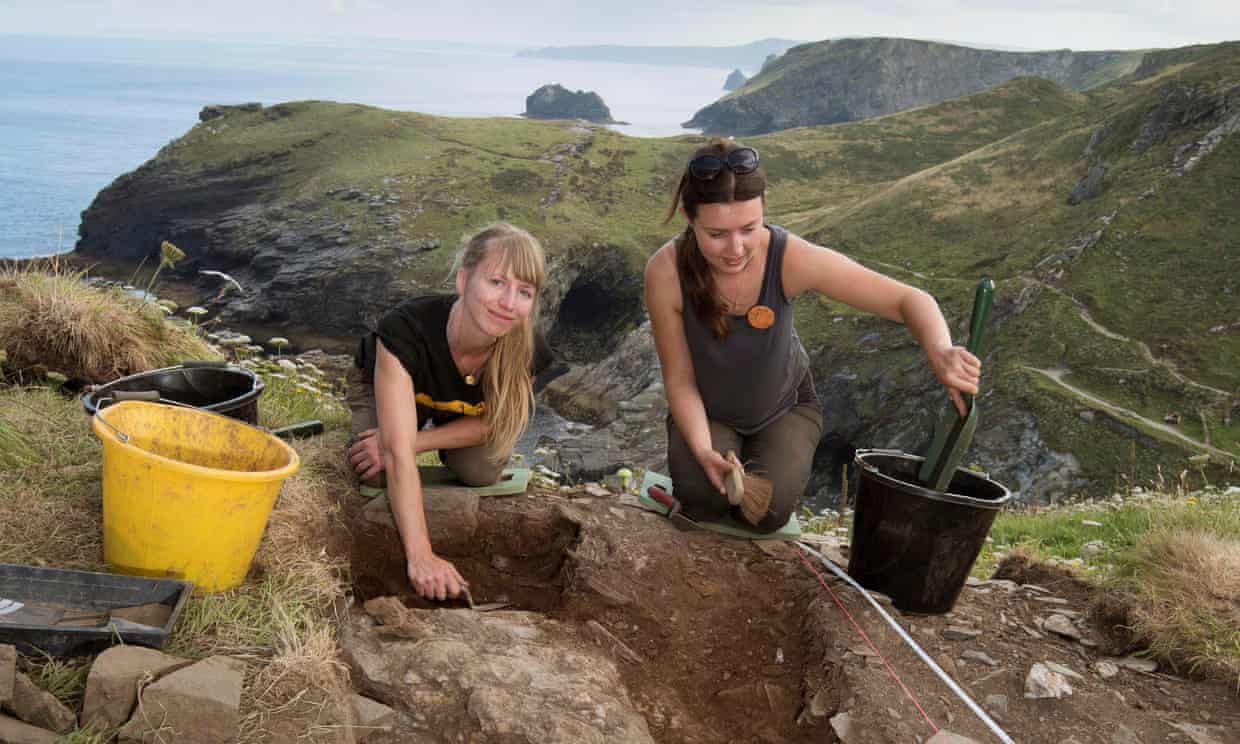
 Archaeologists conducting the first research excavations at Tintagel in decades. 
Photograph: Emily Whitfield-Wicks/English He/PA

Early Cornish kings feasted on a diet of oysters, roast pork and fine wine, eating and drinking from bowls imported from Turkey and glass goblets from Spain, a new dig at Tintagel Castle has suggested.
Discoveries made by the Cornwall archaeological unit (CAU) support the view that Tintagel was a royal site during the 5th and 6th centuries, with trading links reaching as far as the eastern Mediterranean.
Perched on Cornwall’s rugged north coast, Tintagel has for centuries been associated with the legend of King Arthur. Over the past 18 months, its custodian, English Heritage, has been accused of putting too much emphasis on the stories of Arthur and Merlin, rather than focusing on the site’s true, ancient Cornish heritage. The excavations, the first at Tintagel for decades, may help redress the balance.
Read the rest of this article...
Tintagel excavations reveal refined tastes of early Cornish kings

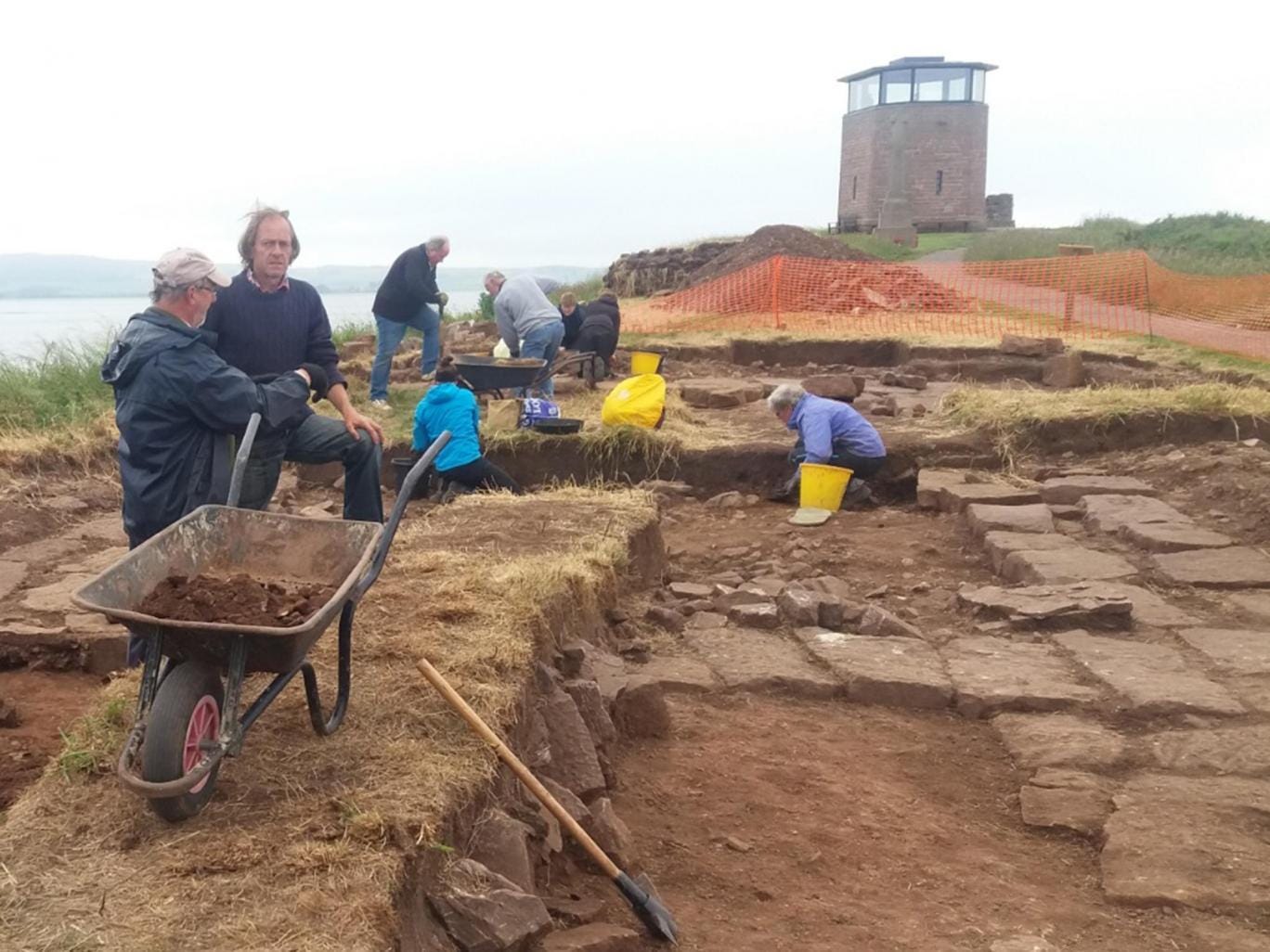
Tintagel is intricately bound up in the legend of King Arthur 
[Credit: Emily Whitfield-Wicks/English Heritage Trust]

Discoveries made by the Cornwall archaeological unit (CAU) support the view that Tintagel was a royal site during the 5th and 6th centuries, with trading links reaching as far as the eastern Mediterranean.

Perched on Cornwall’s rugged north coast, Tintagel has for centuries been associated with the legend of King Arthur. Over the past 18 months, its custodian, English Heritage, has been accused of putting too much emphasis on the stories of Arthur and Merlin, rather than focusing on the site’s true, ancient Cornish heritage. The excavations, the first at Tintagel for decades, may help redress the balance.

The excavation also uncovered stone-walled structures on the southern terrace of Tintagel’s island area, with substantial stone walls and slate floors, accessed by a flight of slate steps.

Read the rest of this article...

Sunday, July 09, 2017

Pearls, Viking swords, spears and shields among hundreds of items excavated in N. Iceland


THE SECOND SWORD Both swords were badly damaged by rust. 
Photo/Hildur Gestsdóttir, Twitter.

Archeologists working at Dysnes, a recently discovered Viking age burial site in Eyjafjörður fjord in North Iceland are still busy excavating invaluable treasures. Hundreds of items have been found at the site, among them two swords, three spears and three shields. 

2 out of 6 burials fully explored

A total of six Viking age graves have been found at the site, including two confirmed boat burials. Only two of the burials have been fully excavated and archeologists are currently exploring the third burial. The site is unusual for many reasons, not least that two boat burials have been discovered: Viking age boat burials are very rare in Iceland. 

Read the rest of this article...
Wednesday, July 05, 2017

New discovery could rewrite Viking fortresses’ history

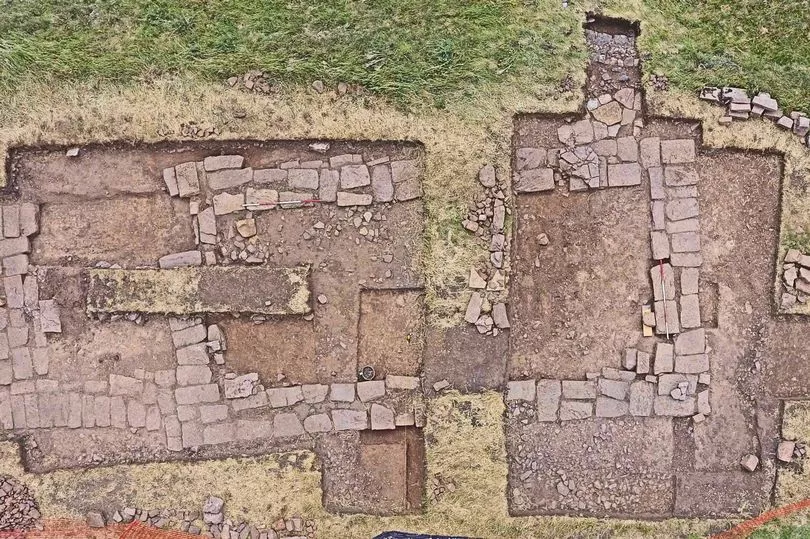
Someone brought ceramics through the gates at the Viking ring fortress “Borgring” after it had burnt down. The discovery reveals an afterlife at the fortress that archaeologists had not previously considered. (Photo: Screenshot from video by Archaeological IT Aarhus University)

While most archaeologists and historians can agree that Denmark’s five Viking ring fortresses were most likely built by Harold Bluetooth around 980 CE, they remain divided regarding their purpose.
Was it to defend the kingdom? A demonstration of power? Or to cement the Christianisation of the Danes?
Many archaeologists think that the fortresses were built with just one goal in mind, and then disappeared more or less as fast as they had appeared in the first place.
But newly discovered pieces of ceramic pottery found in the main gates of Denmark’s fifth Viking ring fortress, “Borgring,” are now challenging this theory.
The pottery belongs to the first half of the 11th century, which puts it well after the assumed construction of the fortress. Shards of the same type of pottery were discovered in 2016 at the fortress’ eastern gate.
Read the rest of this article...

One of Britain’s oldest churches discovered on Holy Island of Lindisfarne


Archaeologists have discovered one of Britain’s oldest churches.
The find – on the Holy Island of Lindisfarne, off the Northumberland coast – is of great historical importance because the newly discovered ancient church may originally have been built in or shortly after the mid 7th century AD as part of the monastic spiritual epicentre from which much of northern and central England was eventually Christianised.
It’s also important because it is likely to have been a key site at the spiritual heart of the early 8th-century monastic community that made Britain’s most famous early medieval illuminated manuscript – the Lindisfarne Gospels.
The evidence suggesting that this could be the site of one of Holy Island’s original early Anglo-Saxon period churches – perhaps even one built by the founder of Lindisfarne, St Aidan – is complex but persuasive.
Read the rest of this article...
British Museum goes digital to ease congestion at most popular exhibits


The British Museum is developing "tailor-made" technology to combat congestion in its most popular galleries, as it works to lure visitors away from seeing just its star exhibits towards lesser-known items elsewhere.

The museum is examining the tastes and decisions of its visitors, to develop technology which will match the artefacts they already want to see with similar items they did not know existed.

The “tailor-made solution” will be designed to help tourists branch out from the Rosetta Stone, Parthenon sculptures and mummies, and utilise the less populated parts of its galleries.

The research is part of long-terms plans for the gallery, which include opening the Reading Room for exhibitions and bringing more objects from the Americas and Polynesia out of storage.

Read the rest of this article...
Thursday, June 29, 2017

First new church found on Holy Island, Northumberland, in over a thousand years

The newly-excavated church on Holy Island (Photo: Handout)

For the first time in more than a thousand years, a service will be held today within the boundaries of a newly-discovered church on Holy Island in Northumberland.

The find in the dig by volunteers has been described by historic buildings expert Peter Ryder as “probably the most significant archaeology find ever on Holy Island.”

The excavations, led by Richard Carlton of The Archaeological Practice and Newcastle University, began around a fortnight ago and will finish at the end of this week.

He said: “It is a very exciting and hugely significant find.”

The community archaeology project is part of the Peregrini Lindisfarne Landscape Partnership project, which is backed by the Heritage Lottery Fund.

Read the rest of this article...

Analysis of Neanderthal teeth grooves uncovers evidence of prehistoric dentistry

Three views of the four articulated teeth making up KDP 20. a. occlusal view showing lingually placed mesial interproximal wear facet on P4 (arrow) and buccal wear on M3; b. lingual view showing a mesially placed interproximal wear facet on P4 (arrow), chips from lingual faces of all teeth and rotated, partially impacted M3; c. buccal view showing rotated buccal face of M3 (arrow) and hypercementosis on its root.
Credit: David Frayer, University of Kansas

Neanderthals treating toothaches?
A discovery of multiple toothpick grooves on teeth and signs of other manipulations by a Neanderthal of 130,000 years ago are evidence of a kind of prehistoric dentistry, according to a new study led by a University of Kansas researcher.
"As a package, this fits together as a dental problem that the Neanderthal was having and was trying to presumably treat itself, with the toothpick grooves, the breaks and also with the scratches on the premolar," said David Frayer, professor emeritus of Anthropology. "It was an interesting connection or collection of phenomena that fit together in a way that we would expect a modern human to do. Everybody has had dental pain, and they know what it's like to have a problem with an impacted tooth."
Read the rest of this article...

Dead heads: Turkish site reveals more evidence of neolithic 'skull cult'

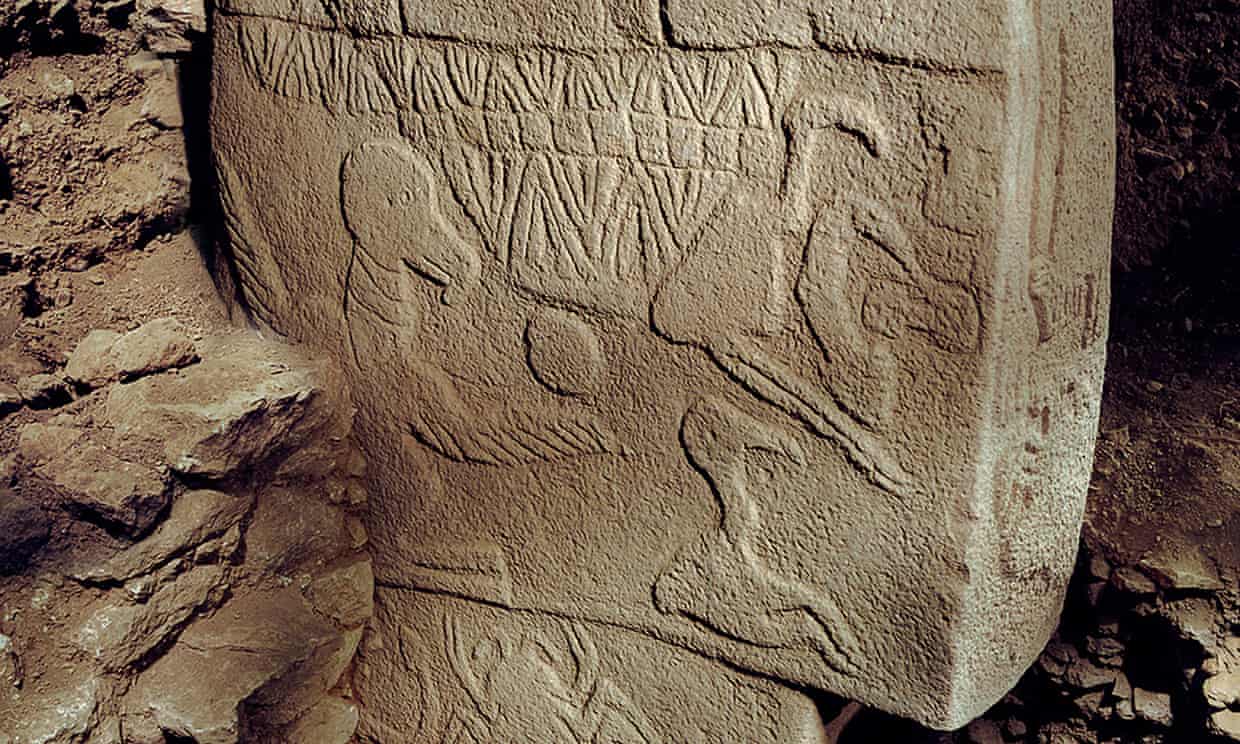
Fragments of three skulls found at Göbekli Tepe have hallmarks of being carved with flint after being scalped and defleshed first


 A carving found on a pillar at Göbekli Tepe, apparently showing a figurine holding a head. Photograph: German Archaeological Institute (DAI)

Wednesday 28 June 2017 20.06 BST Last modified on Wednesday 28 June 2017 20.12 BST
Fragments of carved bone unearthed at an ancient site on a Turkish hillside are evidence that the people who spent time there belonged to a neolithic “skull cult” – a group that embraces rituals around the heads of the dead.

The remains were uncovered during field work at Göbekli Tepe, an 11,000-year-old site in the south-east of the country, where thousands of pieces of human bone were found, including sections of skulls bearing grooves, holes and the occasional dab of ochre.

Pieces of three adult skulls recovered from the sitehave hallmarks of being carved with flint after being scalped and defleshed first. Evidence that the latter was not always an effortless affair is found in multiple scrape marks where the muscles once attached to the bone.

Read the rest of this article...
Roman oil and wine pottery found at Ipplepen dig site

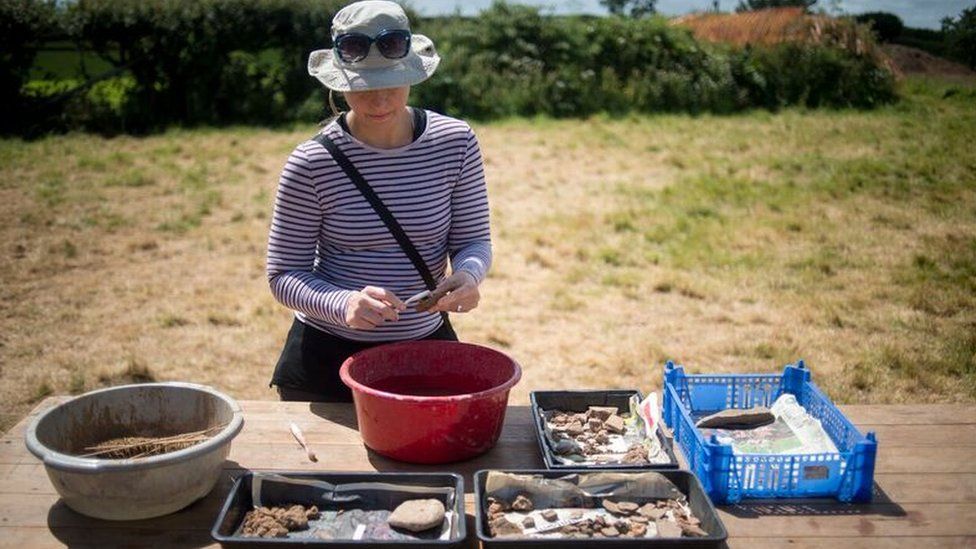
Archaeologists washing evidence of the iron works and pottery

Archaeologists say pre-Roman Britons who lived in a rural location since the 4th Century BC may have enjoyed Mediterranean oil and wine.

Radiocarbon analysis of a dig site showed there was a settlement at Ipplepen, Devon, for about 1200 years longer than previously thought.

The discovery of Roman pottery suggests there was a community trading widely with the Roman world.

University of Exeter archaeologists are digging at the site this month.

Read the rest of this article...

Podkarpackie / Unique figurine from 7 thousand years ago discovered in arable field

Photo by Piotr Alagierski
While walking in a field in one of the villages of Podkarpacie, an archaeologist from Wielkopolska came across a fragment of a clay figurine from around 7 thousand years ago, depicting a man. This is one of the few finds of this type from this period in Poland - believes the finder.
Archaeologist Piotr Alagierski spent his vacation in the village Kosina in Podkarpacie. On a Sunday walk in a cultivated field, he stumbled upon a 7-centimeter fragment of a man figurine made of fired clay. Most of the clearly shaped head, torso and part of the hand have survived to our times - according to the information provided to PAP by the finder.

"There is no doubt that this is a national-level monument - one of the oldest depictions of a human in our country. Similar finds from that period are very rare" - the archaeologist noted in an interview with PAP.

Read the rest of this article...
7,000 year old human remains discovered in Swiss city

The remains of ancient villages dating back to 5,500BC have been discovered on a construction site in Sion in the Valais.

Burial found at the site [Credit: Valais Archaeological Service]

The find was made by archaeologists during building work on the site of the the Arsenaux cultural centre in the city, Sion authorities said in a statement on Thursday. 

The archaeologists uncovered evidence of human habitation, including graves and the remains of houses, which date back as far as the Neolithic period (5,500-4,800 BC). 

Construction work at the site – intended to be a new centre for the city’s archives – has been suspended until in mid-September so archaeologists can carry out their work. 

Read the rest of this article...

Avebury stone circle contains hidden square, archaeologists find

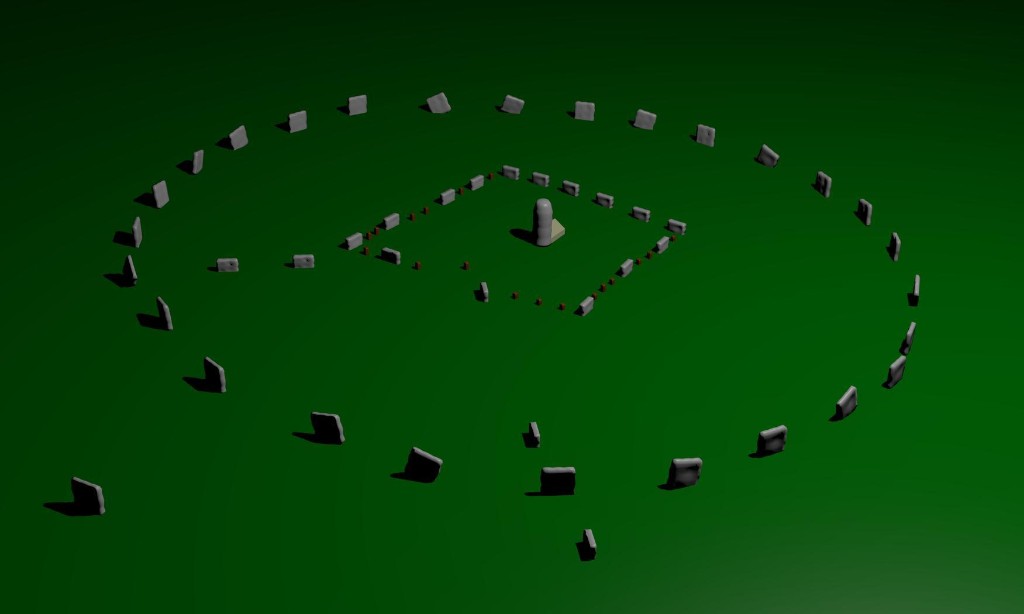
A model of the inner square at the Avebury Neolithic stone circl.
Photograph: Mark Gillings / University of Leicester


Radar technology detects inner stone structure thought to commemorate Neolithic building dating to 3500BC and a focal point for Neolithic communityA mysterious square formation has been discovered within the Neolithic stone circle monument at Avebury, rewriting the narrative of one of the wonders of the prehistoric world.
Archaeologists believe the hidden stones, discovered using radar technology, were one of the earliest structures at the site and may have commemorated a Neolithic building dating to around 3500 BC.
Read the rest of this article...

Rome Metro Excavations Unearth 3rd Century 'Pompeii-Like Scene'

Digging for Rome's new subway has unearthed the charred ruins of an early 3rd-century building and the 1,800-year-old skeleton of a crouching dog that apparently perished in the same blaze that collapsed the structure.

A significant discovery was made under Rome’s metro system [Credit: Getty]

Archaeologists on Monday said they made the discovery on May 23 while examining a 10-meter (33-foot) -deep hole bored near the ancient Aurelian Walls as part of construction work for the Metro C line.

"A Pompeii-like scene" was how the Culture Ministry described the findings that evoked comparisons to the inhabitants trapped by the 79 A.D. Vesuvius volcanic explosion and preserved for centuries in the ruins of Pompeii.

Read the rest of this article...

UN ATELIER DE POTIER DU IER SIÈCLE DE NOTRE ÈRE À THONON-LES-BAINS


À Thonon-les-Bains, en Haute-Savoie, une équipe de l’Inrap étudie, sur une surface de 1 400 m²,  un atelier de potier de la seconde moitié du Ier siècle de notre ère qui s’insère dans un quartier artisanal situé au sud-est de l’agglomération antique de Thonon.

Read the rest of this article...

Monday, June 26, 2017

Cyprus reveals rare Roman horse race mosaic in Akaki


Scenes from a chariot race are depicted in a rare Roman mosaic found in rural Cyprus.
Dating from the 4th Century AD, it lies in Akaki, a village not far from Nicosia.
Only nine similar mosaics - showing a hippodrome race - have been found at ancient Roman sites.
The ornate 26-metre-long (85ft) mosaic was probably part of a wealthy man's villa. The excavation is led by archaeologist Fryni Hadjichristofi.

Read the rest of this article...