Thursday, November 22, 2012
Excavating a Roman Floor
Not only have our archaeologists have been hard at work carefully excavating the heart of Roman Londinium, they’ve been given a chance to play with some new kit. And now we have a chance to take you out on site with us through the power of time-lapse video! In a series of videos we recorded the whole process of uncovering, recording and lifting a Roman tessellated floor! The first video follows our archaeologists (and our friendly McGee site labourers) uncovering the tessellated floor by removing the trampled material that lay on top.
So here is the first in our series of videos featuring our lovely archaeologists, a massive Roman tessellated floor, and some homegrown rock and roll for good measure:
Watch the video...
ANCIENT GREEKS IN THE LAND OF DIONYSOS - EXCAVATION OF EMPORION PISTIROS, THRACE
Project type: field school (excavations) THE PROJECT IS SUITABLE FOR BOTH BEGINNERS AND ADVANCED IN FIELD ARCHAEOLOGY!
Site: Emporion Pistiros, between the small towns of Septemvri and Vetren, Southern
Bulgaria.
Project Venue: the spa village of Varvara, Southern Bulgaria is situated 14 km away from
the site, in the foothills of majestic Rhodopi Mountains. There
are several spa & wellness hotels and swimming pools with mineral
water in the village that is also a stop on the picturesque narrow gauge
railway (the last functioning one in Bulgaria) from Septemvri to
Dobrinishte.
Period(s) of occupation: Classical, Hellenistic
(5th – 2nd century BC)
Further information...
Wednesday, November 21, 2012
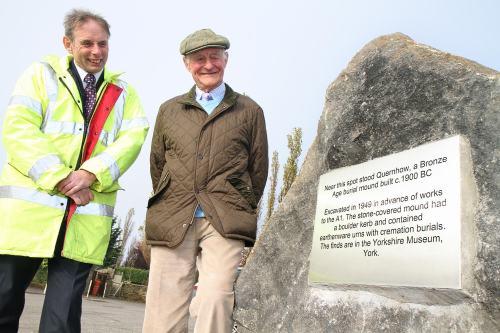
Ancient Quernhow monument commemorated
Highways Agency project
manager David Brindle with former Quernhow Cafe owner Brian Lye with the
new stone and plaque commemorating the Bronze Age burial mound.
A BRONZE Age monument has been commemorated after a long-running campaign.
The 4,000-year-old Quernhow burial mound, which was obliterated by the upgrading of the A1(M), has been marked with a plaque and stone by the Quernhow Café, near Ainderby Quernhow, by the Highways Agency.
Archaeologists say the site was “of primary importance in prehistoric times” as it stood on the plain between the three great henges of Thornborough to the north and those on Hutton Moor to the south, accompanied by a number of other tumuli nearby.
Read the rest of this article...
Ancient tunnels in Rome reopen to the public
The network of underground passageways beneath the Baths of Caracalla is also home to the largest temple of Mithra in the Roman Empire
Few people have ever visited the long network of
underground tunnels under the public baths of Caracalla, which date back
to the third century AD and are considered by many archaeologists to be
the grandest public baths in Rome. This underground network, which is
due to be reopened in December, is also home to a separate structure,
the largest Mithraeum in the Roman Empire, according to its director
Marina Piranomonte. The Mithraeum has just reopened after a year of
restoration work which cost the city’s archaeological authorities around
€360,000.
Read the rest of this article...
Archaeologist to discuss Pictish discoveries in Aberdeenshire
A University of Aberdeen archaeologist is to share news of the fascinating Pictish finds from an excavation at Rhynie with the local community.
Dr Gordon Noble, Senior Lecturer in Archaeology, will give a public talk at Rhynie School on Thursday (November 22) at 7.30pm where he will explain just how significant the region was during the time of the Picts.Dr Noble has been part of a team working in the area around the famous Craw Stane for around two years. Their findings have revealed that Rhynie was a key seat of Pictish power and may even have been a royal settlement in the 5th and 6th centuries AD.
He said: “Rhynie has always been noted as somewhere special because of the many Pictish standing stones that come from the village. One in particular, the Craw Stane, is particularly significant as it still stands in its original position.
Read the rest of this article...
Pyramids 3D at Tap! The iPhone and iPad magazine
Pyramids 3D app lets you
fly across the Giza plateau with 360° views of The Great Pyramid, The
Sphinx and the rest of the ancient complex. It gives aspiring explorers
and armchair travellers an equally fulfilling way to sample one of the
Seven Wonders of the Ancient World. But it’s once you enter the tombs
that the app really comes into its own.
Read review on www.tapmag.co.uk
Watch the video...
Mexican silver made it into English coins
Chemical studies of old English coins are helping unravel a centuries-old mystery: What happened to all the silver that Spaniards dug out of the New World?
Silver from Mexican mines started being incorporated into English coins around the mid-1550s, a new study shows. But silver from the legendary Potosí mines, in what is now Bolivia, didn’t show up until nearly a century later, researchers report online November 6 in Geology.
The new study adds hard data to theories linking the transatlantic influx of silver to price inflation across Europe from about 1515 to 1650.
Read the rest of this article...
Hunters used stone-tipped spears 200,000 years earlier than previously thought
A University of Toronto-led team of anthropologists has found evidence that human ancestors used stone-tipped weapons for hunting animals 500,000 years ago — 200,000 years earlier than previously thought.
"This changes the way we think about early human adaptations and capacities before the origin of our own species," says Jayne Wilkins, a PhD candidate in the department of anthropology at the University of Toronto and lead author of a new study in Science magazine.
"Although both Neanderthals and humans used stone-tipped spears, this is the first evidence that the technology originated prior to or near the divergence of these two species."
Attaching stone points to spears — known as "hafting" — was an important advance in hunting weaponry for early humans, says Wilkins. Hafted tools require more effort and foreplanning to manufacture, but a sharp stone point on the end of a spear can increase its killing power.
Hafted spear tips are common in Stone Age archaeological sites beginning about 300,000 years ago. This new study shows that they were also used in the early Middle Pleistocene, a period associated with the Homo heidelbergensis species, who were the last common ancestor of Neanderthals and modern humans.
Read the rest of this article...
Tuesday, November 20, 2012
Mary Rose: scientists identify shipwreck's elite archers by RSI
A company of elite longbow archers perished aboard Henry VIII's flagship the Mary Rose when it sank almost five centuries ago, scientists have discovered.
Researchers have identified the elite archers who died alongside sailors on Henry VIII's flagship, due to evidence of repetitive strain in their shoulders and spines.
The ship sank off Spithead in The Solent in 1545, while leading an attack on a French invasion fleet. It stayed on the seabed until it was raised in 1982 and put on public display.
Over the past two years, scientists from the University of Swansea have been working to identify almost 100 skeletons kept at the Mary Rose Museum, in Portsmouth.
DNA identification has been difficult because they have been contaminated by cockles, molluscs and algae.
The Mary Rose archers were among the elite soldiers of the 16th century, research reveals
The archers who fought on Henry VIII’s warship the Mary Rose, which sank in 1545, would have been elite soldiers for their time, standing over 6 feet tall and able to pull weights over 200 lbs. These findings come from a new research project being carried out by sports scientists at Swansea University and the Mary Rose Trust to discover more about the lives of the 16th century archers on board the ship.
When the ship was raised from the Solent in 1982, many thousands of medieval artefacts along with 92 fairly complete skeletons of the crew of the Mary Rose were recovered.
Nick Owen, Sport and Exercise Biomechanist from the College of Engineering at Swansea University said, “This sample of human remains offers a unique opportunity to study activity related changes in human skeletons. It is documented that there was a company of archers aboard when the ship sank, at a time when many archers came from Wales and the South West of England.
“These archers had specialist techniques for making and using very powerful longbows. Some bows required a lifetime of training and immense strength as the archers had to pull weights up to 200lbs (about 90kg).”
Read the rest of this article...
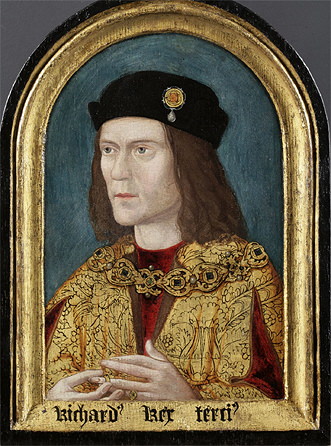
Is it King Richard III? We we will know in January
The DNA and scientific testing to confirm whether or not the remains of an individual discovered in Leicester is that of England’s King Richard III will be known early in the new year, according to officials from the University of Leicester.
DNA testing, environmental sampling and radiocarbon dating are some of the tests being undertaken to determine whether the skeleton found in Leicester was once Richard III – and there are also plans to do a facial reconstruction.
Lead archaeologist Richard Buckley, of the University of Leicester’s Archaeological Services, explains “We are looking at many different lines of enquiry, the evidence from which all add up to give us more assurance about the identity of the individual. As well as the DNA testing, we have to take in all of the other pieces of evidence which tell us about the person’s lifestyle – including his health and where he grew up.
“There are many specialists involved in the process, and so we have to coordinate all of the tests so the analysis is done in a specific order. The ancient DNA testing in particular takes time and we need to work in partnership with specialist facilities. It is not like in CSI, where DNA testing can be done almost immediately, anywhere – we are reliant on the specialist process and facilities to successfully extract ancient DNA.”
Read the rest of this article...You may also be interested in this Oxford summer school course about Richard:
The Life and Times of Richard III...
Two-tonne Witch computer gets a reboot
The world's oldest original working digital computer is going on display at The National Museum of Computing in Buckinghamshire.
The Witch, as the machine is known, has been restored to clattering and flashing life in a three-year effort.
In its heyday in the 1950s the machine was the workhorse of the UK's atomic energy research effort.
A happy accident led to its discovery in a municipal storeroom where it had languished for 20 years.
Read the rest of this article...
How Vikings killed time
The Vikings played ball, lifted stones and wrestled. Often the games turned violent and bloody, occasionally resulting in death.
When Viking men played their games, the women watched - except in drinking games. This is a scene from at saga play in Steigen, Norway. (Photo: Mari Pedersen)
Life in the Viking Age was tough and hard, and physical work filled much of their days, but their lives were not without leisure.In a new study, Leszek Gardela uses archaeological findings and careful reading of Viking sagas to describe how Vikings killed time when they were in mood for entertainment.
The archaeologist paints a vivid picture of Viking life, but the familiarity of many of the activities suggests that while Vikings had shorter lives and arguably vented their frustrations in more violent ways than what most people do today, leisure time in the Viking Age was not too different from leisure time in 2012.
Read the rest of this article...
Sorry, vegans: Eating meat and cooking food made us human
A feast fit for ... our prehuman ancestors? While vegetarian, vegan and
raw diets can be healthy today — likely far healthier than the typical
American diet, to continue to call these diets "natural" for humans, in
terms of evolution, is a bit of a stretch.
Vegetarian, vegan and raw diets can be healthy — likely far
healthier than the typical American diet. But to continue to call these
diets "natural" for humans, in terms of evolution, is a bit of a
stretch, according to two recent, independent studies.
Although this isn't the first such assertion from archaeologists and evolutionary biologists, the new studies demonstrate, respectively, that it would have been biologically implausible for humans to evolve such a large brain on a raw, vegan diet and that meat-eating was a crucial element of human evolution at least 1 million years before the dawn of humankind.
Read the rest of this article...
Stone Age houses are discovered on our doorstep!
STONE Age records of the first native people in Britain has been found after archaeologists discovered three houses from nearly 8,000 years ago that could ‘rewrite the history books'.
Environment Agency officials were undertaking a project in Lunt Meadows to help clean water supplies but commissioned archaeology experts from the Museum of Liverpool to oversee any excavations.
Over the summer, several finds were made including the foundations of three houses preserved one meter underground, several tools, remains of camp fires and even nearby snacks such as hazelnut shells.
There are only three other sites of similar importance in the country and this is the only one based in the North West.
The finding is a first for archeologists, who have always assumed that Mesolithic man was nomadic, but this site presents the possibility that several families could have lived in just one place.
Radiocarbon dating that took place towards the end of last month proved the findings, based near Sefton Village church, dated back to around 5,800BC.
Read the rest of this article...
Archaeologists unearth Stone Age dwelling on the banks the of new Forth crossing
new forth crossing artists impression of the dwelling that archaeological excavation
from the mesolithic period
THE remains of an ancient dwelling believed to be Scotland’s oldest house have been discovered on the banks of the River Forth.
Experts say the Stone Age timber structure – which may have resembled the wigwams constructed by North American Indians – was built more than 10,000 years ago, possibly as a winter retreat, in the period after the last ice age.
It was discovered in a field outside the village of Echline, near South Queensferry, during routine archaeological excavations in advance of work on the new Forth Replacement Crossing over the Forth estuary and contained flint arrowheads used by the original occupants.
Dated from the mesolithic era, the remains consist of a large oval pit, seven metres long and half a metre deep, with a series of holes which would have held upright wooden posts. They would have supported walls possibly made from animals skins, although some experts believe there may have been a flatter turf roof.
Read the rest of this article...
Greenland's viking settlers gorged on seals
Archaeologists dig up skeletons of Norse settlers in 2010 at the Norse farm Ø64,
Igaliku Fjord, Østerbygden, Greenland. Photo: Jette Arneborg
UNSOLVED MYSTERY
Greenland's viking settlers, the Norse, disappeared suddenly and mysteriously from Greenland about 500 years ago. Natural disasters, climate change and the inability to adapt have all been proposed as theories to explain their disappearance. But now a Danish-Canadian research team has demonstrated the Norse society did not die out due to an inability to adapt to the Greenlandic diet: an isotopic analysis of their bones shows they ate plenty of seals.“Our analysis shows that the Norse in Greenland ate lots of food from the sea, especially seals,” says Jan Heinemeier, Institute of Physics and Astronomy, Aarhus University.
“Even though the Norse are traditionally thought of as farmers, they adapted quickly to the Arctic environment and the unique hunting opportunities. During the period they were in Greenland, the Norse ate gradually more seals. By the 14th century, seals made up between 50 and 80 per cent of their diet.”
Read the rest of this article...
Monday, November 19, 2012
Bulgarians Want Unique Thracian Treasure Back in Hometown
An object from the unique gold Thracian treasure recently discovered in Bulgaria.
Photo by BGNES
Residents of Bulgaria’s town of Isperih plan to launch a petition to have the unique gold Thracian treasure, recently discovered in the nearby famous Sveshtari tomb, to be returned to them.
The news was reported by Standard daily, citing the secretary of the Town Hall.
The precious find is now on display at the Archeology Museum in the capital Sofia, but locals demand from the Culture Ministry to have it back in Isperih.
Isperih Mayor, Beysim Basri, has talked to the Director of the local museum, Boryana Mateva. Together with the museum and the police, the municipality is committed to preserve both the treasure and the archaeological reserve Sboryanovo with the Sveshtari tomb since treasure hunters have shown huge interest after the latest find.
The tomb is on the world cultural-historical heritage list of UNESCO.
Mateva notes that according to the Cultural and Historical Heritage Act, archaeological discoveries must be transferred to the museum which initiated the unearthing or to the storage closer to the site.
Read the rest of this article...
Ancient cistern found in SW Turkey
A cistern has been found during the archaeological excavation of King Hecatomnus' grave in Milas district of Muğla province in southwestern Turkey.
The vaulted and rectangular-shaped cistern is located 100 meters from Hecatomnus' grave.
"We suppose that it might be only one part of a complex of cisterns" the director of the Milas Museum, Ali Sinan Özbey, said, adding that this region will be opened for visitors as an archaeo-park when the excavation of the 2,400-year-old remains of Hecatomnus is finished.
Read the rest of this article...
A significant part of the Cononian walls of Piraeus, which measured approximately 450 m in length, will be restored, aiming at the promotion of the remains of Antiquity at the Athenian port. The restoration will be based on a new study, which has been approved by the Central Archaeological Council. The part which will be restored is located at the Themistocles coast, in front of the Cruise Passenger Terminal B of the Piraeus Port Authority, and beside the new conference and exhibition centre of the port.
Apart from the restoration of the walls, the project includes the landscaping of the surrounding area for the accessibility to the outdoor spaces of the Kanellos Terminal. It should be noted that this terminal has recently been extended, in order to be used as a waiting room for passengers. The new sections also includes shops, restaurants, offices etc.
A small bridge made of wood and glass floor, passing over the walls, will allow visitors to view them. The project also includes a minor intervention at the spot where the scarce remains of one of the fortification’s towers lie.
Read the rest of this article...
Subscribe to:
Posts (Atom)