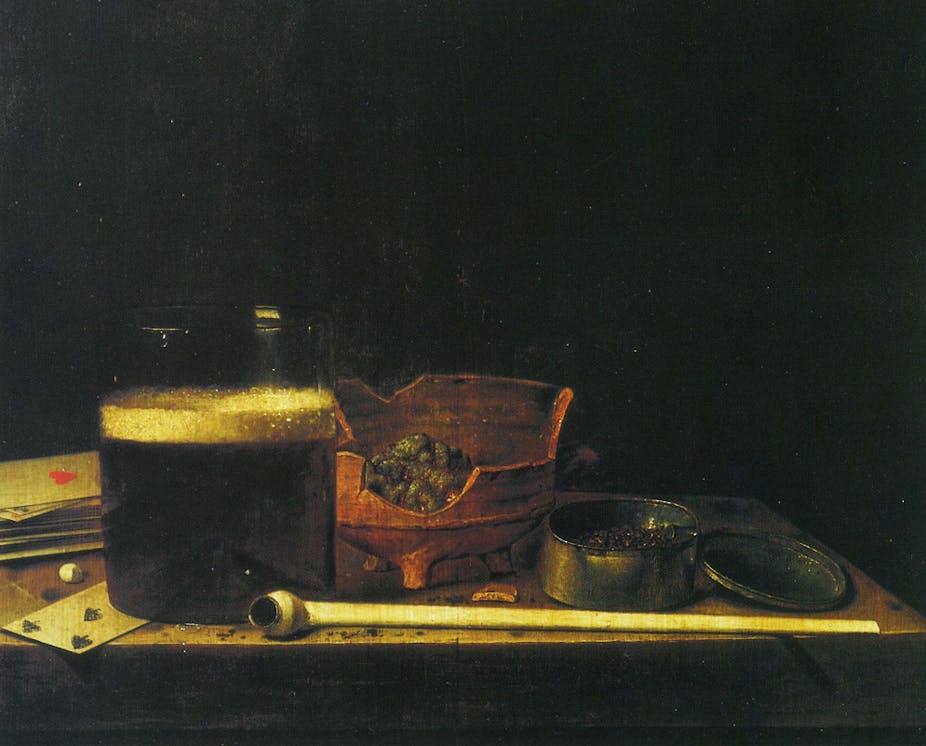
The ready availability of clay pipes meant that they were sometimes used for other activities other than smoking. Ashmolean Museum, CC BY-NC
Tobacco pipes were one of the first mass-produced, disposable objects in Britain. Through contact with indigenous peoples of the Americas, tobacco pipes and tobacco were introduced to Europe as early as the 16th century, but had been used in the Americas for centuries before this.
Pipes were adapted for European tastes using European materials, and in England the most popular material for pipes between 1600 and 1900 was clay. Shapes and styles varied over the years, but the basic design remained the same: a hand-held bowl to burn tobacco in and a stem to draw the smoke the mouth of the smoker.
Pipes were lightweight, rigid and made out of inexpensive materials. They were also rather breakable. This cheapness and breakability means they show up in large number across post-medieval archaeological sites in Britain.
The usefulness of pipes as artefacts is well established. Tobacco pipes found in archaeological digs can help researchers identify the dates when a particular site may have been occupied (based on bowl or stem size) and even who may have occupied these spaces (bite marks in stems may indicate workers holding them in their mouths while working, for example). Pipes can also inform researchers about patterns of tobacco consumption over time.
Read the rest of this article...