Wednesday, October 16, 2019

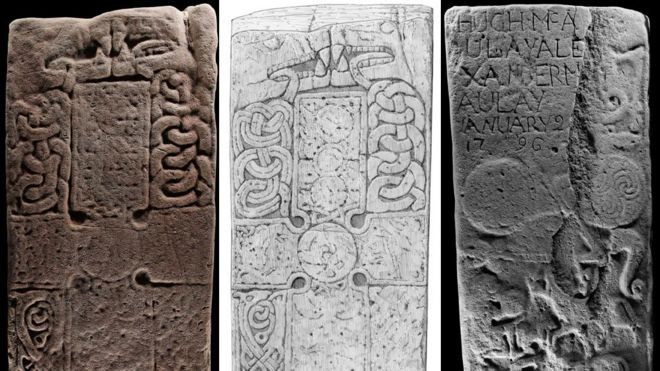
Pictish carved beasts 'unlike anything found before'

Pictured from left the stone's carved beasts, an illustration of the beasts carvings and 
a side of stone later used as a grave marker
Image copyrightJOHN BORLAND/NOSAS

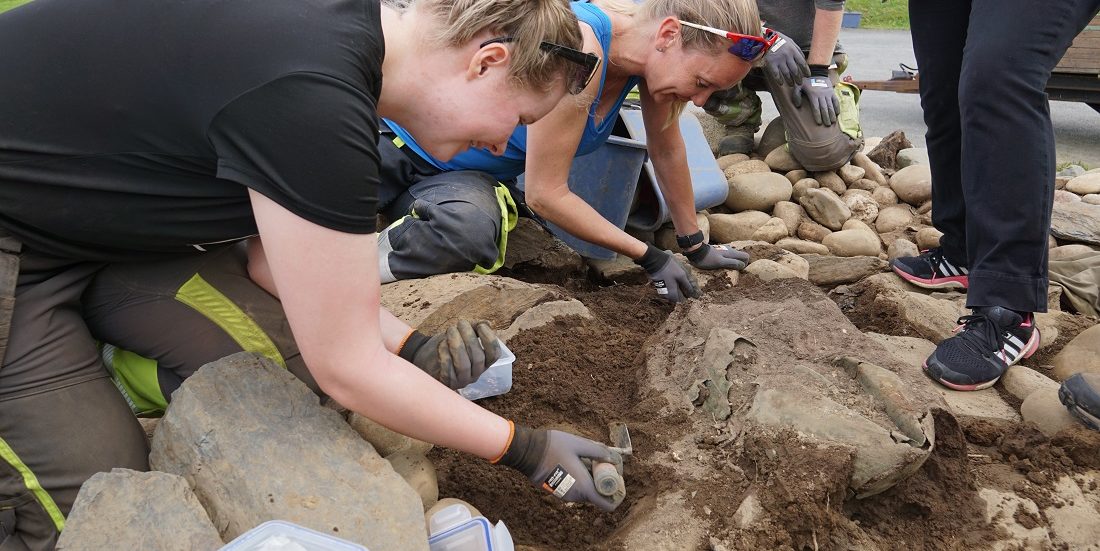
A 1,200-year-old standing stone discovered in the Highlands has carvings never before seen on a Pictish stone, archaeologists have said.

The stone was found lying in the ground and covered by vegetation at an early Christian church site near Dingwall.

Archaeologists have now revealed the side of the stone that was down in the earth and hidden from view was decorated with "two massive beasts".

Just over a metre of the original two metre-tall (6ft) stone survives.

Read the rest of this article...

Hundreds of archaeological sites uncovered across NI


Hundreds of important archaeological discoveries have been made at excavations across Northern Ireland during the past four years.

The Department for Communities licensed 800 digs, mainly as a requirement of the planning process where developers are required to record important sites.

It has now made details of significant finds available to the public in a booklet entitled Unearthed.

The sites range from Stone Age farms to 19th Century urban industry.

Read the rest of this article...

Soziale Ungleichheit in bronzezeitlichen Haushalten

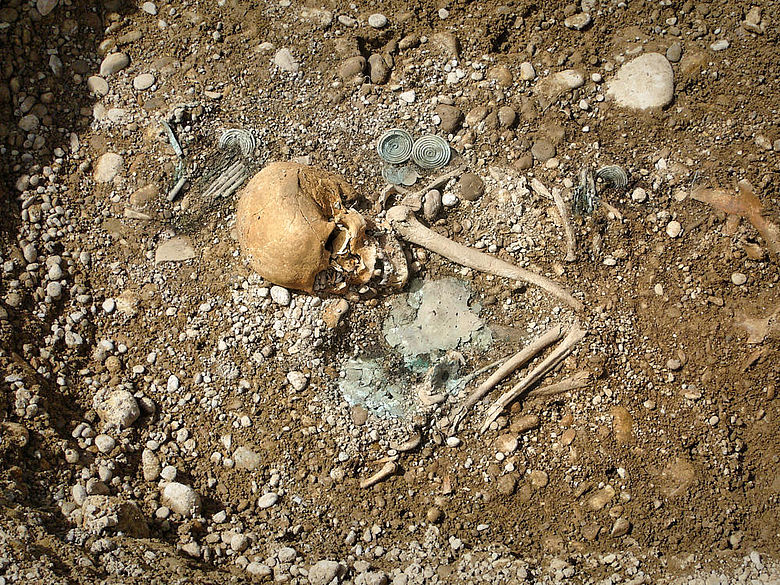
Hochrangige und nicht-lokale Frauenbestattung aus Kleinaitingen »Gewerbegebiet Nord«. Der Kopfschmuck und der Bestattungsritus spiegeln die lokalen Traditionen wider, aber die Isotopenwerte zeigen die fremde Herkunft. Diese Bestattung einer Frau ist eine der reichsten bekannten Bestattungen Süddeutschlands. Foto: © ABK Süd


Das archäologisch-naturwissenschaftliche Projekt an der Heidelberger Akademie der Wissenschaften wurde von Philipp Stockhammer von der LMU in München zusammen mit Johannes Krause und Alissa Mittnik vom Max-Planck-Institut für Menschheitsgeschichte in Jena und der Universität Tübingen geleitet. Die Ausgrabungen südlich von Augsburg ermöglichen es den Archäologen, auf bislang ungeahnte Weise tief in die Bronzezeit herein zu zoomen und zu untersuchen, wie sich der Umbruch von der Steinzeit zur Bronzezeit auf die Zusammensetzung der damaligen Haushalte auswirkte. »Reichtum korrelierte entweder mit biologischer Verwandtschaft oder Herkunft aus der Ferne. Die Kernfamilie vererbte ihren Besitz und Status weiter. Aber in jedem Bauernhof haben wir auch arm ausgestattete Personen lokaler Herkunft gefunden«, sagt Philipp Stockhammer, Professor für Prähistorische Archäologie an der LMU und einer der Leiter der Studie. Dieser Befund spricht für eine komplexe Sozialstruktur von Haushalten, wie sie aus dem klassischen Griechenland und Rom bekannt ist. So waren zu römischer Zeit auch die Sklaven Teil der Familie, hatten aber einen anderen sozialen Status. Aber diese Menschen im Lechtal lebten über 1.500 Jahre früher. »Das zeigt erstmals, wie lang die Geschichte sozialer Ungleichheit in Familienstrukturen zurückreicht«, so Stockhammer weiter.

Read the rest of this article...

Thursday, October 10, 2019

Hoards Of Viking Coins Discovered On The Island Of Saaremaa

Some of the silver coins and other finds dating from viking-era Saaremaa. 
Source: Saaremaa museum

Located in the Baltic Sea, Saaremaa is the largest Estonian island. Archaeologists can now investigate two large hoards of silver coin that will offer new light on Vikings’ presence on the island.

The archaeological discovery was made by a licensed hobby detector, who reported the findings to the Heritage Protection Board.
According to EER Estonia, “two separate hoards were found. One of these dating to the second half of the 10th century contained silver coins which came via the Viking trade route which crossed the Baltic from the present-day Swedish island of Gotland to Saaremaa's southern coast, and then on to Lääne County and on to present-day Tallinn.”

Among the coins was also a 1,700-year-old gold bracelet that may be of Viking origin. During the Viking Age in Estonia, the area of Estonia was divided between two distinct cultural areas – Northern and Western Estonia and Southeastern Estonia.

Read the rest of this article...

Another Saaremaa archaeological haul includes viking-era silver coins

Some of the silver coins and other finds dating from viking-era Saaremaa. 
Source: Saaremaa museum

Another archaeological find has been made on the island of Saaremaa, just weeks after a major haul including a 1,700-year-old gold bracelet came to light.

The recent find dates from a later era, the viking period, ERR's online news in Estonian reports, and includes a large number of silver coins, according to both the Heritage Protection Board (Muinsuskaitseamet)  and Saaremaa Museum.

As with the earlier treasure trove, the latest find was the work of a metal detector hobbyist, who, in line with Estonian law, informed the authorities.

Read the rest of this article...
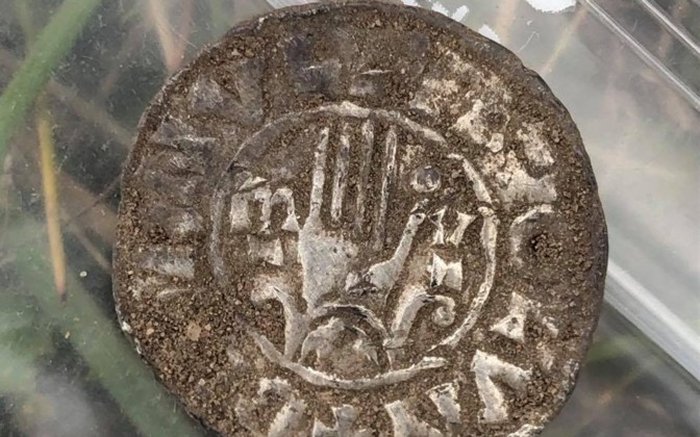
1,800-year-old head-shaped balsamarium found in Bulgaria

Dating back about 1,800 years, the brass balsamarium shows the head of a man wearing
a cap made from the skin of a feline [Credit: Daniela Agre]

The skeleton of an ancient sports fan was discovered alongside an 1,800-year-old jar shaped like the head of a wrestler or boxer who may have had his nose broken, archaeologists reported

The "spectacular" balsamarium — a jar used to store liquids such as balm or perfumes — was found in a grave in southeastern Bulgaria (ancient Thrace).

It dates to a time when the Roman Empire controlled Thrace — an ancient area that encompassed parts of Bulgaria, Greece and Turkey.

Read the rest of this article...

Israel cave bones: Early humans 'conserved food to eat later'

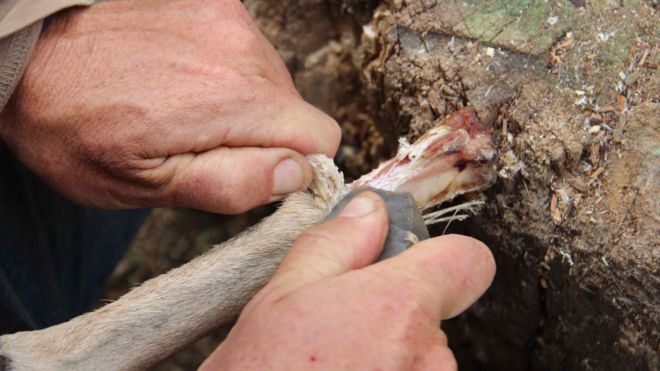
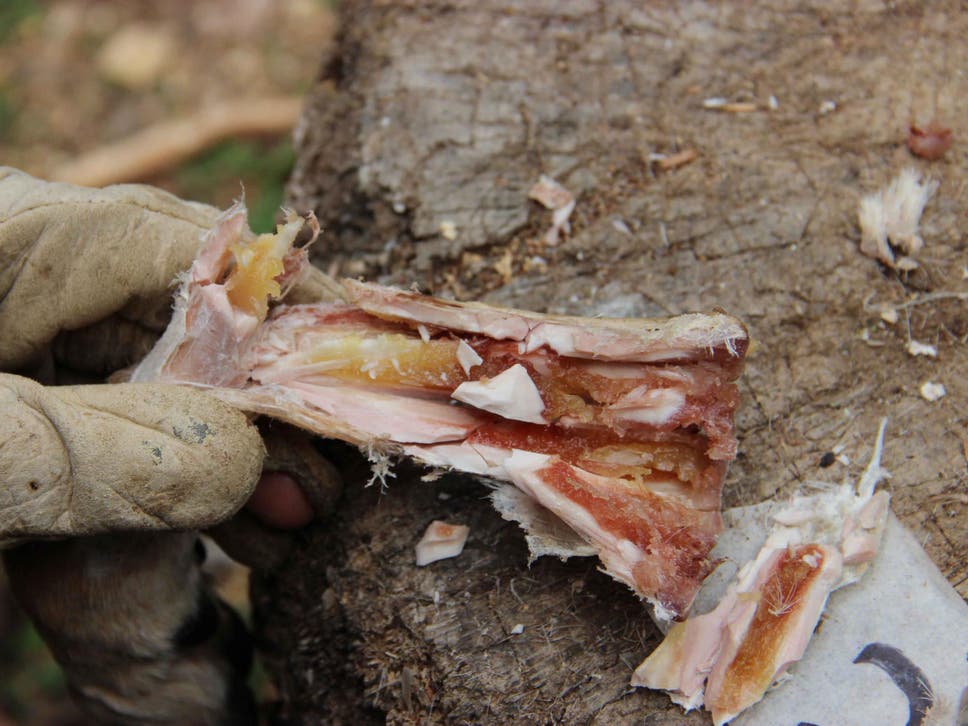
In experiments, researchers removed skin from stored bones to match cut marks 
found on bone fragments PA MEDIA

Scientists in Israel say they have found evidence that early humans deliberately stored bones from animals to eat the fatty marrow later.

It is the earliest evidence that humans living between 200,000 and 420,000 years ago had the foresight to anticipate future needs, they say.

Early humans had not previously been thought capable of such dietary planning.

Researchers analysed bone specimens at Qesem cave near Tel Aviv.

They identified cut marks on most of the bone surfaces - consistent with preservation and delayed consumption.

The researchers suggest the marks came about because the early humans had to make greater effort to remove skin which had dried on bones which had been kept longer.

Read the rest of this article...

L’ENVIRONNEMENT DE NÉANDERTAL ET DE HOMO SAPIENS À ITTENHEIM


Une équipe d’archéologues de l’Inrap a mené une opération archéologique à Ittenheim (Bas-Rhin), sur prescription de l’État. Elle permet d’accéder à des vestiges très anciens, dont deux dents de lait d'un mammouth, datant du Paléolithique, soit entre 22 000 et 115 000 ans avant notre ère. Il est très rare d’étudier des vestiges de cette période qui correspond entre autres à celle de l’homme de Néandertal.

Read the rest of this article...

Lost Kirkwall Cathedral Buildings Found During Roadworks in Orkney

Part of the wall of the sub deans manse looking towards 
St Magnus Cathedral, Kirkwall, Orkney

A team from ORCA Archaeology discovered sections of wall that were part of the St Magnus Cathedral Close last week while undertaking a watching brief for an Orkney Islands Council infrastructure project in the heart of historic Kirkwall. 

A series of walls, pottery and animal bones were unearthed only inches under the surface of the road near the entrance to Victoria Street. Archaeologists know from previous work that remains of structures dating back to the Iron Age exist in this area, but this is the first time that structures directly relating to the cathedral precinct have been identified in this particular area.

Read the rest of this article...

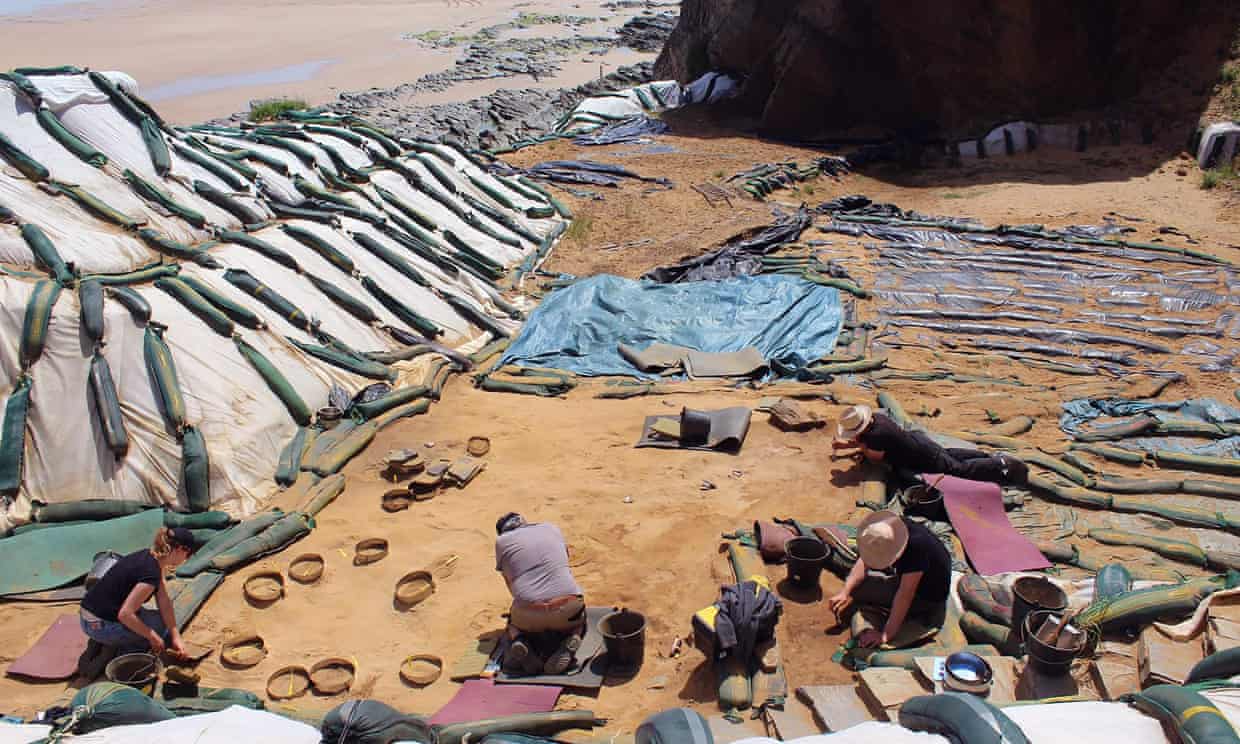
Climate change endangers Scotland's archaeological treasures

FILE PHOTO: Neolithic Buildings are seen at Skara Brae in the Orkney Islands, Scotland Britain September 25, 2019. REUTERS/George Sargent

The Orkney Islands, situated off the north coast of the Scottish mainland, are home to more than 3,000 historical sites.

Evidence has been found of human habitation there going back 8,500 years. Some buildings on the islands date to the Iron Age, Viking rule and medieval times.

But around 1,000 sites are situated on the coastline and are under threat.

One such site is the Iron Age building South Howe Broch on the island of Rousay. Dating from between 600-400AD, the sea has taken much of the site’s western area. Now the broch wall itself is falling into the sea.

Read the rest of this article...

Early humans stored bone marrow like tins of soup 400,000 years ago

The earliest evidence of delayed food consumption: 
pictured is bone marrow after six weeks 
( AFTAU )

Prehistoric humans stored bone marrow in their caves like tins of soup for up to nine weeks before eating it, a new study has found. 

Previously, scientists thought Paleolithic people lived a hand-to-mouth existence but this research shows they were sophisticated enough to preserve meat using bones like we use modern-day cans. 

The study shows this was happening between 420,000 and 200,000 years ago in Qesem cave near what is now Tel Aviv. It is the earliest evidence of delayed consumption of food in the world, according to the study published in Science Advances. 

“The bones were used as ‘cans’ that preserved the bone marrow for a long period until it was time to take off the dry skin, shatter the bone and eat the marrow,” said Professor Ran Barkai from Tel Aviv University, who was involved in the research.

Read the rest of this article...

Monday, October 07, 2019

Archaeology: Hoard of gold coins found in Bulgaria’s Devnya


Archaeologists have found a valuable gold treasure in the town of Devnya, about 25km from Bulgaria’s Black Sea city of Varna.

Fifteen gold coins were found on September 29, along with more than 20 bronze coins, and another gold coin, with the image of Emperor Theodosius II and dating from the fifth century, was found on September 30.

This brings to 16 the number of Theodosius II gold coins that have been found. Also found was a gold coin with the image of the emperor’s cousin Valentinian III.

It is though that the hoard was hidden during an attack by the Huns on the ancient city of Marcianopolis in the fifth century, according to Dr Hristo Kuzov of the Regional History Museum in Varna, a statement by the municipality of Devnya said.

Read the rest of this article...

Ancient genomes provide insight into genetic history of second plague pandemic

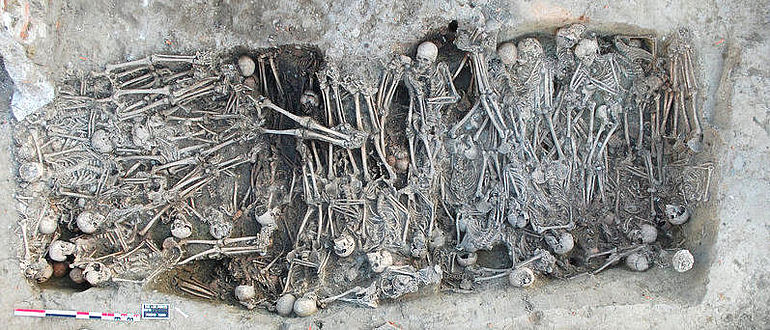
Mass grave dating to the Black Death period, identified in the
 '16 rue des Trente Six Ponts' archaeological site in Toulouse, France 
[Credit: Archeodunum SAS, Gourvennec Michael]

The second plague pandemic, which began with the Black Death in the mid-14th century and continued with devastating outbreaks in Europe and the vicinity until the 18th century, decimated the continent, causing the death of up to 60% of the population. But where did this strain of Yersinia pestis, the plague causing bacterium, come from? And how did it evolve and expand once it arrived?

Read the rest of this article...

Alte Genome geben Einblick in die genetische Geschichte der zweiten Pestpandemie

Die Analyse von 34 Pestgenomen aus der Zeit des Schwarzen Todes und nachfolgender Epidemien zwischen dem 14. und 17. Jahrhundert in Europa zeigt, wie sich das Bakterium nach einem einzigen Eintrag nach Europa diversifizierte.

Ein internationales Forschungsteam hat menschliche Überreste aus zehn archäologischen Stätten in England, Frankreich, Deutschland, Russland und der Schweiz analysiert, um Einblicke in die verschiedenen Stadien der zweiten Pestepidemie (14. bis 18. Jahrhundert) und die genetische Vielfalt des Pestbakteriums während und nach der Pandemie des »Schwarzen Todes« zu gewinnen. In einer in Nature Communications veröffentlichten Studie rekonstruierte das Team 34 Yersinia-pestis-Genome, um die genetische Geschichte des Bakteriums nachzuverfolgen. Dabei konnten wichtige Erkenntnisse über den Beginn und den Verlauf der zweiten Pestpandemie gewonnen werden.

Read the rest of this article...

Thursday, October 03, 2019

Man’s name found on the 1100 year-old Galloway Hoard

The Egbert Rune. © National Museum Scotland

Egbert was here! Name discovered and deciphered from a runic inscription on the spectacular Galloway Hoard

Perhaps more than anything else in the hypothesis-filled world of archaeology, burial hoards invite the most conjecture. What does they mean? Who buried them and why?

Archaeologists in Scotland are however a step closer to answering these questions after they discovered a message left by one of the people who may have deposited the Galloway Hoard 1100 years ago.

Described as one of the most significant Viking discoveries ever found in Britain and Ireland, the hoard consists of more than 100 gold and silver objects from the Viking age and was discovered on Church of Scotland land in Kirkcudbright, Dumfries and Galloway in September 2014.

Read the rest of this article...

Ancient asteroid apocalypse destroyed early human civilisations, scientists claim

A map showing the ‘platinum spikes’ found across the world


A cataclysmic asteroid impact caused a global disaster which destroyed early human proto-civilisations in Africa and America, researchers have claimed. 

In a study published in a respected journal, scientists presented evidence which indicates Earth was struck by an asteroid 12,800 years ago. 

This caused a worldwide catastrophe which plunged animal species into extinction and may have caused the abrupt demise of the mysterious Clovis people, although this hypothesis is controversial. 

The Clovis was a prehistoric society that lived in North America but abruptly disappeared. 

Now a team from the University of the Witwatersrand in Johannesburg have uncovered evidence of a gigantic impact which preceded a period of massive climate change, spelling doom for the Clovis and potentially other early societies around the world

Read the rest of this article...

Fragments of 100 Viking swords unearthed in north Estonia

Part of the hilt of the sword of the XI-XIII centuries from Läänemaa. Picture is illustrative. 
Source: Department for the Protection of Antiquities

Archaeologists have discovered fragments of about a hundred Viking swords, the largest find of Viking swords in Estonia to date, in northern Estonia.

The fragments were found in two closely located sites in a coastal area of north Estonia, in the territory of the ancient Estonian county of Ravala, late last autumn. 

The finds consisted of dozens of items, mostly fragments of swords and a few spearheads. 

Mauri Kiudsoo, archaeologist and keeper of the archaeological research collection of Tallinn University, told BNS the two sites were located just 80 meters apart. The swords date from the middle of the 10th century and are probably cenotaphs, grave markers dedicated to people buried elsewhere.

Read the rest of this article...

Archaeologists explore Shakespearean-era Whitechapel playhouse site

An archaeologist holding part of a money pot found on site at the Boar's Head. 
Picture: MOLA

A money pot and a bone needle pin are among the artifacts uncovered during the excavation of a Shakespearean-era playhouse in Whitechapel.

The Boar's Head was converted from an inn to a playhouse in 1598, but there are references to open air performances on the site as early as 1557.

And the dig, carried out by a team from the Museum of London Archaeology (MOLA), aims to uncover artefacts relating to the playhouse, as well as its performers and audience.

Archaeologist Heather Knight said: "Theatre emerges and booms in 16th century London and made its lasting mark on theatre across the world.

Read the rest of this article...

Archives, Possible Throne Room Discovered in Ancient Palace on Crete

Source: Ministry of Culture

The Greek Ministry of Culture announced on Thursday that a new storage room for valuables in Zominthos Palace, on the plateau of Mount Psiloritis on Crete, was discovered at the sprawling site during this year’s excavation season.

Supporting evidence for the Palace room being used as a type of archive includes its location and other circumstantial evidence.

Besides the multitude of vessels found throughout the site, discoveries included a hallway with pillars, leading to what could possibly be a throne room. The remains of a seat were found in that room, which was ostensibly used in earlier periods as well, from 1900 BC to Mycenaean times, ca. 1400 BC.

Read the rest of this article...

Roman shipwreck loaded with amphorae discovered off coast of Majorca

Preliminary investigations suggest that the wreck dates from the third or fourth century and
was a merchant vessel carrying amphorae between Majorca and the Spanish mainland
[Credit: IBEAM. Instituto Balear de Estudios en Arqueología Marítima]

Incredible footage reveals a Roman shipwreck containing more than 100 perfectly preserved amphorae that underwater archaeologists are painstakingly recovering.

The wreck — which experts have dated back to around 1,700 years ago — was found off of the coast of Mallorca back in July 2019.

Based on some of the inscriptions on the long, two-handled jars, the archaeologists believe that the amphorae were used to store fish sauce, oil and wine.

Read the rest of this article...

Zentralismus in den ältesten vorstädtischen Siedlungen Europas

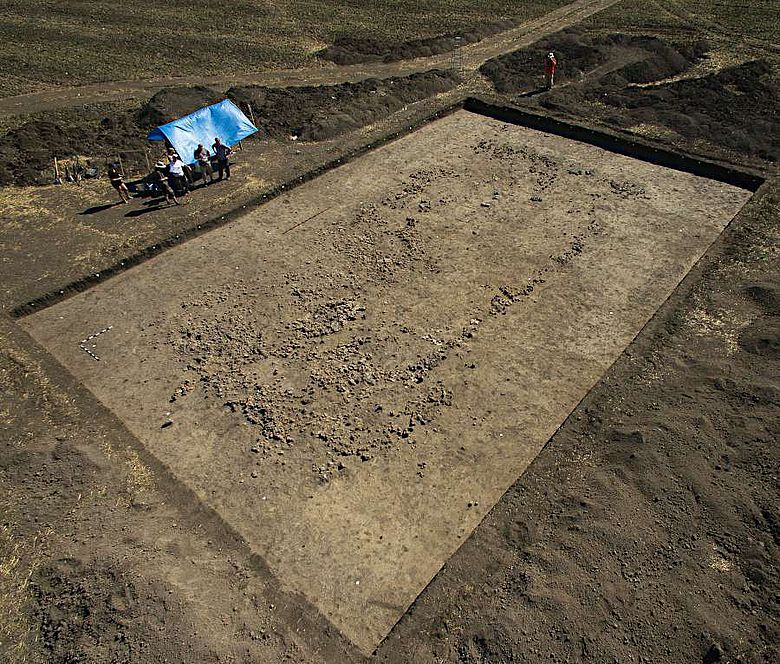
Kupferzeitliches Versammlungshaus nach der Freilegung: In einem offenen Hof und einem angrenzenden, überdachten Gebäudeteil fanden eine Vielzahl unterschiedlicher integrativer Aktivitäten statt. (© SFB 1266)

Ein ukrainisch-deutsches Forschungsteam sieht in undemokratischen Entscheidungsstrukturen und der Bündelung von Macht die vermutliche Ursache für den Zusammenbruch der ältesten vorstädtischen Großsiedlungen Europas um 3.700 vor Christus.

Zwischen 5000 und 2700 vor Christus breitete sich in Osteuropa auf dem heutigen Gebiet der Ukraine, Moldawiens und Rumäniens die sogenannte Tripolye-Kultur aus und schuf die größten bekannten Siedlungen dieser Zeit in Europa: sogenannte Megasiedlungen mit bis zu 15.000 Einwohnern, die sich über Flächen von bis zu 340 Hektar erstreckten.

Staatliche Strukturen waren zu dieser Zeit unbekannt und so wirft die Größe dieser Siedlungen viele Fragen bezüglich ihrer gesellschaftlichen Organisation auf: Wie liefen Entscheidungsprozesse ab? Gab es gesellschaftliche Unterschiede, demokratische Prozesse, Führer? Insbesondere bewegt die Wissenschaft aber die Frage, warum die Siedlungen nach nur wenigen hundert Jahren wieder verschwanden.

Read the rest of this article...

Sunday, September 29, 2019

Viking Age mortuary house found in central Norway

The construction style of the mortuary house is similar to that used for stave churches. 
Credit: Raymond Sauvage, NTNU University Museum

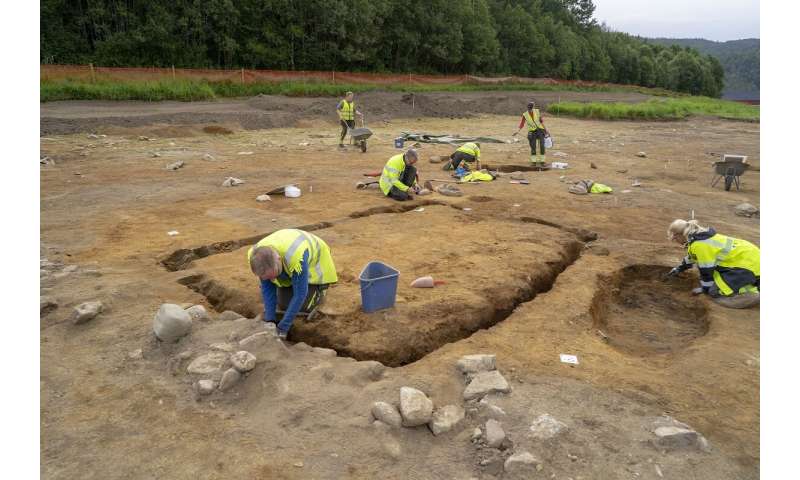
A Viking Age mortuary house was discovered during the excavation of the burial ground of one of the Viking Age farms on Vinjeøra in Hemne in Trøndelag. The house measured five by three meters. It had corner posts, and the walls were made of standing planks, in a building style similar to that used in early stave churches. Archaeologists could see that the building was solidly constructed, even though the only thing that remains is a rectangular ditch with a slight impression from the house and some retaining stones where the walls once stood.

Even though the style of building is typical of the Viking Age, this house was far from ordinary. Archaeologists think it was most likely home to a Viking grave. Hundreds of years of farming in the area have plowed away the grave that was likely found inside the structure.

"We can see that the house once stood in the middle of a burial mound. That's how we know that there probably was a grave inside the house," said Sauvage, who is project manager for the dig.

The burial mound itself is also gone, but the ring ditch that once surrounded the mound has been filled in, rather than plowed away, and is therefore still visible.

Read the rest of this article...

Did a common childhood illness take down the Neanderthals?

MAGE: THIS ILLUSTRATION SHOWS THE STRUCTURE OF THE EUSTACHIAN TUBE IN NEANDERTHAL MAN AND IT'S SIMILARITY TO THE HUMAN INFANT.

BROOKLYN, NY - It is one of the great unsolved mysteries of anthropology. What killed off the Neanderthals, and why did Homo sapiens thrive even as Neanderthals withered to extinction? Was it some sort of plague specific only to Neanderthals? Was there some sort of cataclysmic event in their homelands of Eurasia that lead to their disappearance?

A new study from a team of physical anthropologists and head & neck anatomists suggests a less dramatic but equally deadly cause.

Published online by the journal, The Anatomical Record, the study, "Reconstructing the Neanderthal Eustachian Tube: New Insights on Disease Susceptibility, Fitness Cost, and Extinction"1 suggests that the real culprit in the demise of the Neanderthals was not some exotic pathogen.

Read the rest of this article...

Saturday, September 28, 2019

Roman fort accidentally discovered under bus station

Archaeologists called the find a ‘very important’ part of the history of the Roman empire
 (Picture: PA)

Builders were surprised to uncover a Roman fort underneath a bus station in Exeter. 
The military structure was unexpectedly discovered while archaeologists oversaw routine excavation ahead of the site’s redevelopment. 

Experts say find shows how much history has survived despite the city being pounded with bombs during WWII and plenty of construction work being carried out ever since. 

The present bus station was constructed in the early 1960s, back when there were no planning requirements for developers to record historical remains.

A Warming Climate Threatens Archaeological Sites in Greenland

The site of Brattahlid, the eastern settlement Viking colony in southwestern Greenland founded by Erik the Red near the end of the 10th century A.D. 
(Werner Forman / Universal Images Group via Getty Images)

In Norse mythology, there are many myths that once known, are now lost. But the Norse, of course, left behind more than their tales. They also left behind their things and, in places like Anavik, on the western coast of Greenland, their dead.

And long before Vikings came to Greenland, the indigenous Inuit people left behind mummies, as well as hair with intact DNA.

Elsewhere in the Arctic, on an icy island called Spitsbergen, there’s a place called the Corpse Headlands, where there are graves filled with the bodies of 17th and 18th century whalers. When archeologists excavated the site in the 1970s, they found down-filled pillows, mittens, and pants sewn together from pieces of other pants.

The Arctic’s ice helps preserve these snippets of human history. But snippets of organic material rot when it’s hot, and new research is finding that as the world warms, remains like those at Anavik and Corpse Headlands will decompose before archaeologists are ever able to unearth them.

Read the rest of this article...

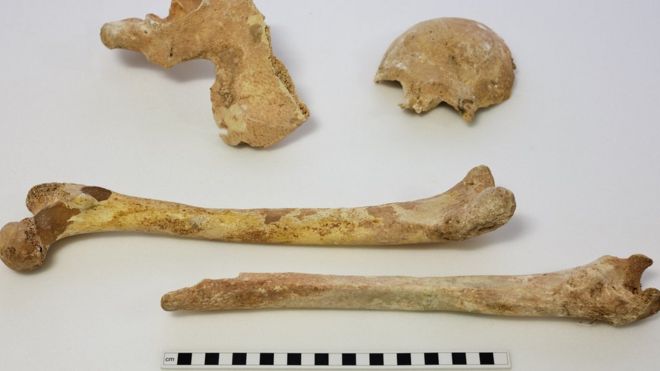
Somerset human remains 'as old as Cheddar Man'

The human remains were found to be as old as Britain's oldest complete skeleton, the Cheddar Man
SOUTH WEST HERITAGE TRUST

Two boxes of human remains rediscovered after 55 years have been found to be as old as the Cheddar Man - Britain's oldest complete skeleton.

The bones were discovered in a cave in Cannington Park Quarry near Bridgwater, Somerset, in the 1960s.

Soon after they "disappeared", and were recently found at Somerset Heritage Centre near Taunton, Cotswold Archaeology said.

Radiocarbon dating has shown them to be more than 9,000 years old.

Read the rest of this article...

Thursday, September 26, 2019

Roman bronze cauldron unearthed in central Norway burial cairn

The cauldron has been uncovered, and Heidi Fløttum Westgaard, Ellen Grav Ellingsen 
and Kjell André Brevik carefully clean it off. 
Photo: Astrid Kviseth / NTNU University Museum

“Vessels like these were imported from the Roman Empire and confirm that this was an area of status and wealth during Roman times,” says archaeologist Merete Moe Henriksen.

Sometime around 150-300 CE a person died at the place now called Gylland in the Gaula River valley, in southern Trøndelag county. After the body was cremated, the remains were laid in a bronze vessel. This was then covered or wrapped in birch bark before being buried under several hundred kilos of stone.

And there it stayed – until this summer, when archaeologists from the NTNU University Museum lifted a stone slab and almost lost their breath from excitement when they saw what lay below it.

“We’d gone over the spot with the metal detector, and so we knew that there was something under one of the stone slabs in the burial cairn,” says archaeologist Ellen Grav Ellingsen, who filmed the discovery with her mobile phone when the rock was lifted away.

Read the rest of this article...

Historic find suggests bottle-feeding not a modern phenomenon

A reconstruction of a baby being fed using a vessel. 
Photograph: Helena Seidl da Fonseca/PA

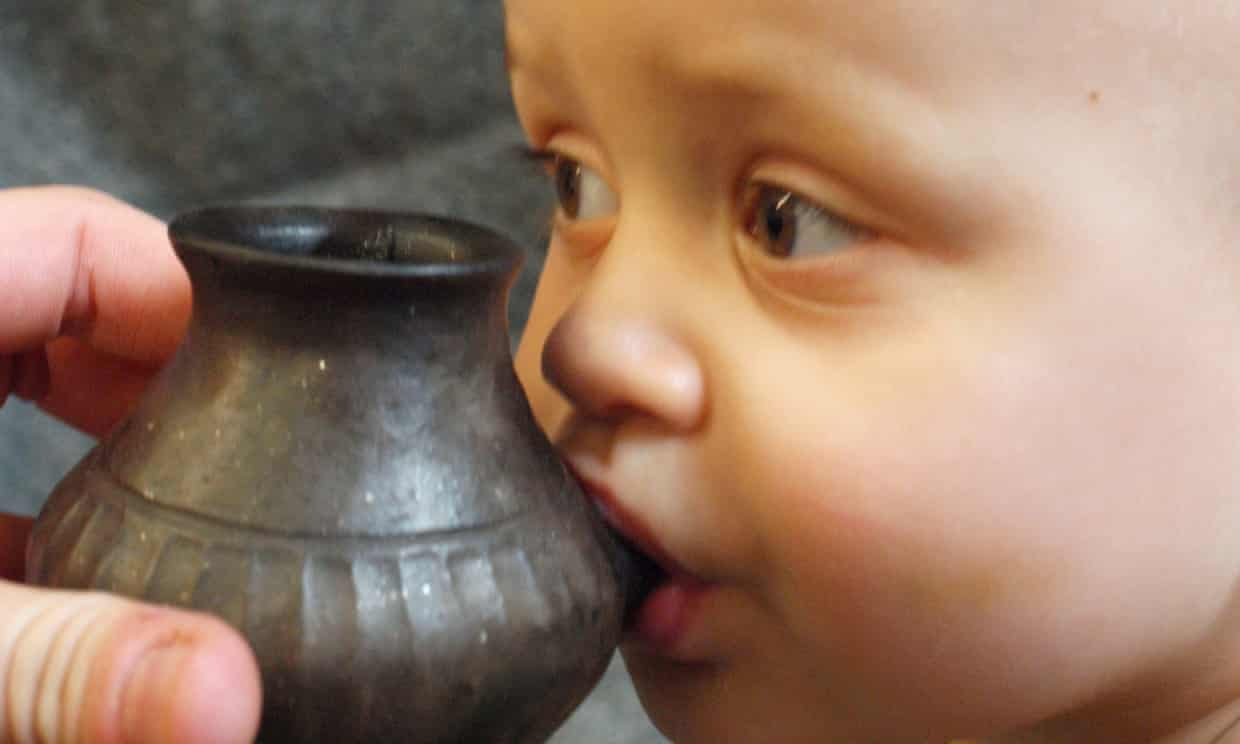
Babies from prehistoric cultures were fed animal milk in small ceramic pots, according to a study that suggests bottle-feeding is not a modern phenomenon.

The drinking vessels, which were excavated from children’s graves in Bavaria, date to between 450 and 1,200BC. They have teat-shaped spouts, appear designed to be easily held by an older baby or toddler and one is shaped as an imaginary animal, suggesting it may have doubled as a toy.

Julie Dunne, a chemist at the University of Bristol and lead author, said: “These very small, evocative, vessels give us valuable information on how and what babies were fed thousands of years ago, providing a real connection to mothers and infants in the past.”

Read the rest of this article...

Prehistoric babies fed animal milk in bottles

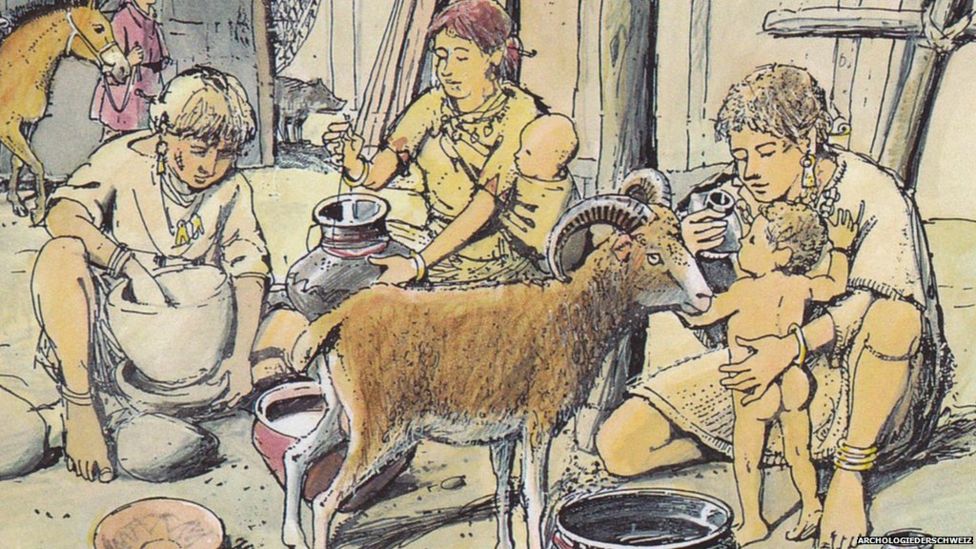
Prehistoric family scene ARCHOLOGIEDERSCHWEIZ

Prehistoric babies were bottle-fed with animal milk more than 3,000 years ago, according to new evidence.

Archaeologists found traces of animal fats inside ancient clay vessels, giving a rare insight into the diets of Bronze and Iron Age infants.

The discovery suggests milk was given to infants to supplement breast feeding and could have contributed to a baby boom.

The type of milk is unknown, but goats or cows are likely suspects.

This is the first direct evidence for how prehistoric infants were fed, said Dr Julie Dunne of the University of Bristol, adding that the practice could have boosted fertility.

Read the rest of this article...

Wednesday, September 25, 2019

Neanderthal footprints found in France offer snapshot of their lives

The excavation site of the footprint layer in Le Rozel, France. 
Photograph: Dominique Cliquet/AFP/Getty Images

Scientists find 257 prints that were preserved in wind-driven sand 80,000 years ago

Scientists have found hundreds of perfectly preserved footprints, providing evidence that Neanderthals walked the Normandy coast in France.

The prints suggest a group of 10-13 individuals, mostly children and adolescents, were on the shoreline 80,000 years ago.

Neanderthals, the closest evolutionary cousins to present-day humans and primates, have long been thought to have lived in social groups, but details have been hard to establish.

The 257 footprints discovered at Le Rozel in western France give a snapshot of how Neanderthals lived and suggest they may have been taller than previously thought.

Read the rest of this article...

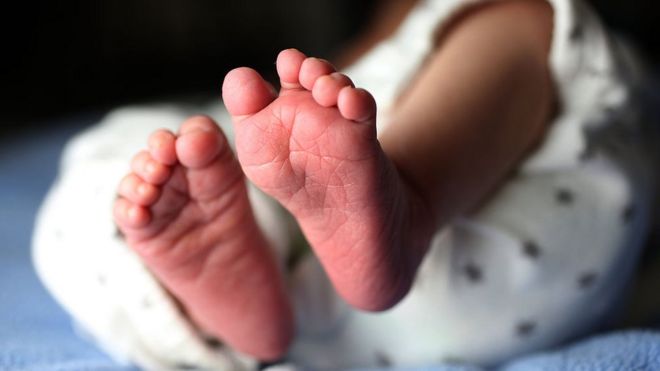
Giving birth two million years ago was 'relatively easy'

Human childbirth can be a long, painful, drawn-out process, needing assistance 
and sometimes taking days. GETTY IMAGES

Human childbirth can be a long, painful, drawn-out process, needing assistance and sometimes taking days.

So why do close living relatives like chimps have an easier labour, giving birth in hours and on their own?

In an attempt to answer this evolutionary question, scientists have been looking at how ancient members of the human family tree gave birth.

Human-like relatives two million years ago had it "pretty easy", according to birth reconstruction in a fossil.

For Australopithecus sediba, which lived 1.95 million years ago in South Africa, we see "a relatively easy birth process", says study researcher Dr Natalie Laudicina.

"The foetal head and shoulder breadth have ample space to pass through even the tightest dimensions of the maternal birth canal," she says.

Read the rest of this article...

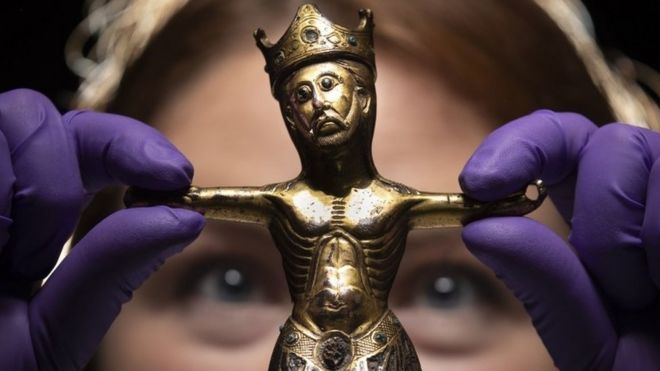
Rare 800-year-old figure of Christ returned to York

The statue is embellished with stone settings on the crown, eyes and loincloth
PA MEDIA

An 800-year-old figure of Christ that once adorned St Mary's Abbey in York will be returned to the city after nearly two centuries.

The rare object, made in Limoges, France, in the 13th Century, was found in 1826 in the ruins of the abbey.

It disappeared for 100 years before it became part of a private German art collection in the 1920s.

It was bought by York Museums Trust and will be displayed at the Yorkshire Museum, on the site of the old abbey.

The 16cm figure would have been mounted on an enamelled cross and decorated a religious object, such as a manuscript cover or a casket.

Read the rest of this article...

‘Ghostly outlines’ of woman who died 1,400 years ago discovered

Ghostly outlines of a woman who died 1,400 years ago have been discovered. (Picture PA) 

Archaeologists have discovered the ‘ghostly outlines’ of a woman who died around 1,400 years ago.

 The partially preserved remains were found during an excavation near Muir of Ord on the Black Isle in the Scottish Highlands. 

The discovery was made on the final day of a three-week project at one of the largest Pictish cemeteries in Scotland and has left experts ‘astonished’. 

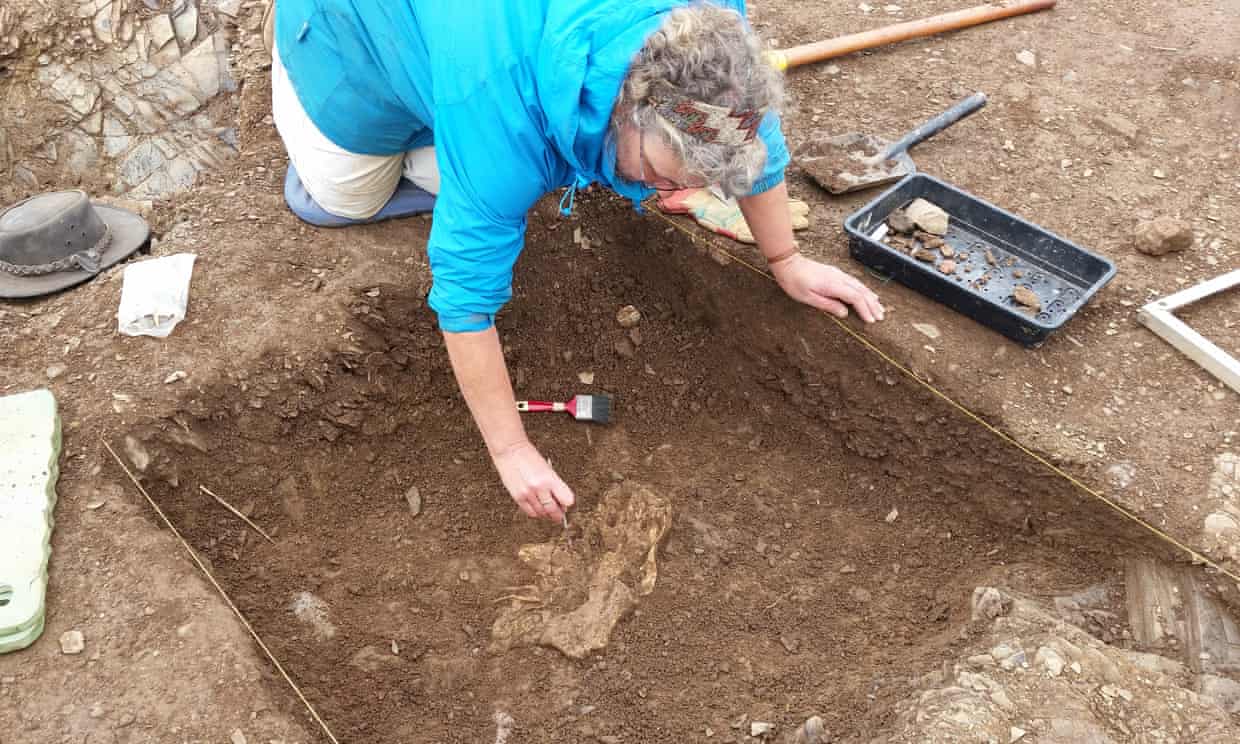
Dark patches revealed the stains of a skeleton that has been broken down in acidic soil of the ancient grave. Steve Birch, archaeological supervisor at the site, said: ‘After I found some blackened patches in the ground I decided to trowel back at that level and to my astonishment, the ghostly outlines of a skeleton started to appear.

Read the rest of this article...
Monday, September 16, 2019

Large '1,400-year-old cemetery' uncovered in Highlands

The possible Pictish cemetery is being excavated in a field in the Black Isle
ANDY HICKIE

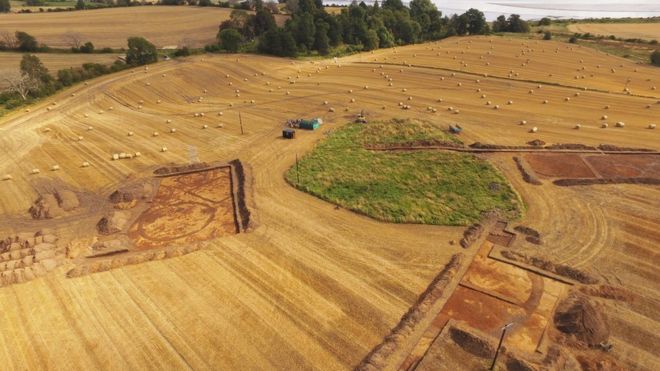
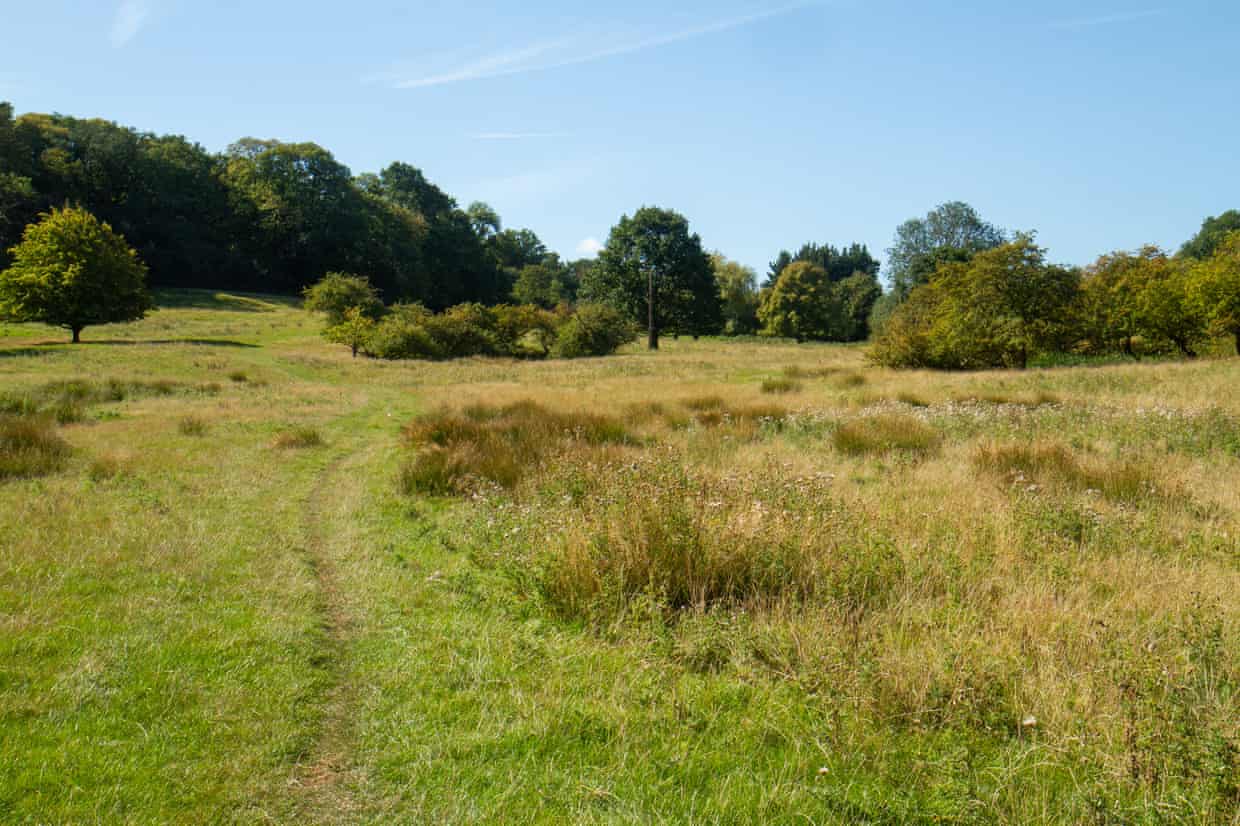
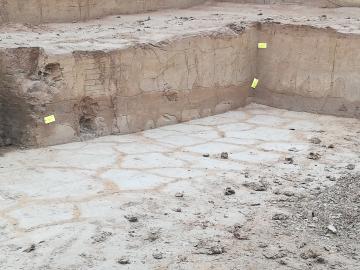
What could turn out to be one of Scotland's largest Pictish burial grounds is being excavated on the Black Isle in the Highlands.

Archaeologists have confirmed the presence of a number of barrows, or burial mounds, near Muir of Ord.

Enclosures ranging in size from about 8m (26ft) to more than 40m (131ft) across have also been uncovered.

Archaeologists said the possible Pictish barrow cemetery could be about 1,400 years old.

Read the rest of this article...
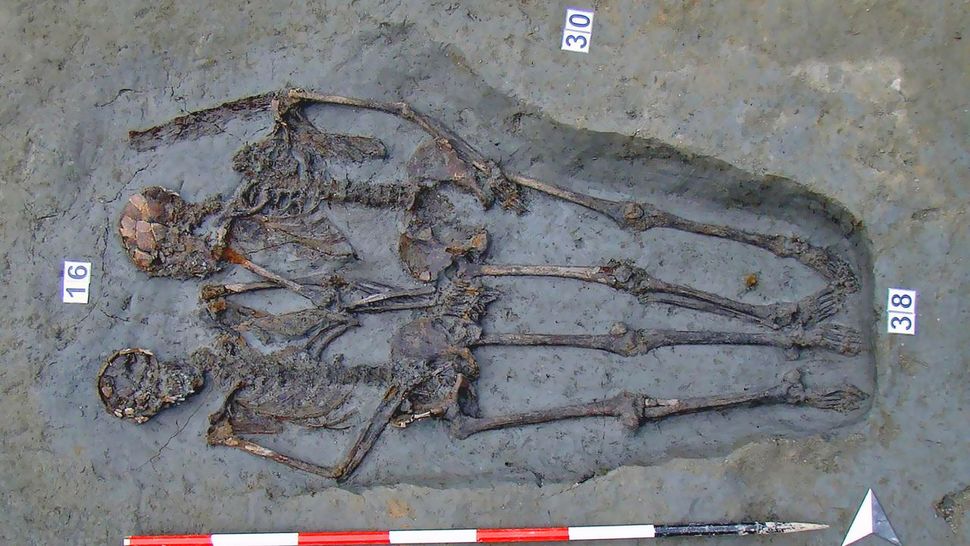
'Lovers of Modena' Buried Hand-in-Hand Turn Out to Be Men


Two men were buried holding hands in an ancient cemetery in Modena, Italy. (Image: © University of Bologna/EPA/Shutterstock)
The "lovers of Modena" — two 1,600-year-old skeletons found holding hands inside their grave — are both men, new research reveals. 

There are few known examples in the ancient world of skeletons buried holding hands and most of those found have been male-female and not same sex.

Unearthed in an ancient cemetery in 2009, the skeletons attracted media attention because of their seemingly romantic death poses, which earned the skeletons the amorous nickname. But archaeologists couldn't determine the sexes of the perished lovers because of the poor condition of the skeletons.

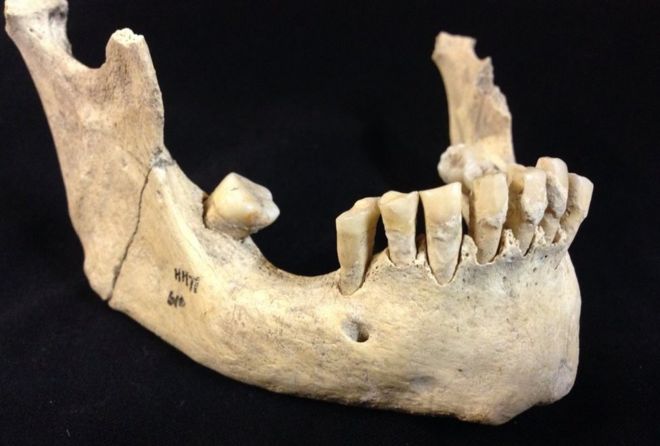
However, a team of scientists has now analyzed the skeletons' teeth enamel and identified both skeletons as male, they reported online Sept. 11 in the journal Scientific Reports.

Read the rest of this article...

Earliest direct evidence of milk consumption

The evidence comes from dental plaque from Neolithic remains
SOPHY CHARLTON / DORSET COUNTY MUSEUM

Scientists have discovered the earliest direct evidence of milk consumption by humans.

The team identified milk protein entombed in calcified dental plaque (calculus) on the teeth of prehistoric farmers from Britain.

It shows that humans were consuming dairy products as early as 6,000 years ago - despite being lactose intolerant.

This could suggest they processed the raw milk into cheese, yoghurt or some other fermented product.

This would have reduced its lactose content, making it more palatable.

The team members scraped samples of plaque off the teeth, separated the different components within it and analysed them using mass spectrometry.

They detected a milk protein called beta-lactoglobulin (BLG) in the tartar of seven individuals spanning early to middle Neolithic times.

Read the rest of this article...

Country diary: an old map provides new insight

Every detail of this field was captured by cartographers in 1882. 
Photograph: Sarah Niemann

Sandy, Bedfordshire: This single field illustrates one of the greatest mapmaking achievements of the pre-digital age
Some remarkable Victorians tramped over every foot of Britain to create precise pictures for posterity, though they used neither camera nor canvas. Even the unremarkable slopes beneath ancient Lord’s Wood came into focus on a certain day in 1882, when a team of men visited to grant it immortality.

They marked out the meadow’s boundaries, measured its area (14.738 acres), hand-drew its crescent-shaped pond and stippled a nearby “hoofprint” that was annotated with “Old Sand Pit”. And they plotted the trees. Every scattered tree in this meadow, all 31 of them, was faithfully and accurately represented by a miniature cloud on a stick.

In its attention to detail, this single field illustrates one of the greatest mapmaking achievements of the pre-digital age – the 25 inch to a mile Ordnance Survey series. And over the course of a morning, a printout of the old map in hand, I found that snapshot of the past sharpening my images of the present.

Read the rest of this article...
New finds beef up case for redrawing map of Roman empire

The remains of a high-quality Romano-British butcher’s business and centre for crafts have been unearthed by archaeologists in Devon. Photograph: Handout

Dig at Ipplepen extends Roman realm of influence further south-west in UK than Exeter

The remains of a high-quality Romano-British butcher’s business and centre for crafts have been unearthed by archaeologists in Devon.

Experts believe the fourth-century abattoir was set up to prepare the best cuts of beef that were transported to customers miles away along a Roman road found at the site.

They suggest the butchers at Ipplepen, near Newton Abbot in south Devon, worked alongside a string of talented craftspeople specialising in deer antler, leather and textiles.

Previous digs at Ipplepen have unearthed Roman coins, a stretch of Roman road and the remnants of vessels from France and the Mediterranean once full of wine, olive oil and garum – fish sauce.

Read the rest of this article...

Church of Scotland sues for share of $2.5 million Viking treasure trove unearthed on church land

Treasures from the Galloway Hoard are displayed at the National Museums of Scotland on 
October 26, 2017 in Edinburgh.

The Church of Scotland is suing a man for a share of a $2.5 million Viking treasure trove he discovered with a metal detector on church land in 2014.

Retired businessman and detectorist Derek McLennan uncovered the 10th-century hoard in a field in the Dumfries and Galloway region of western Scotland.

The treasure trove, known as the Galloway Hoard, is regarded as one of the richest and most significant finds of Viking objects ever found in the United Kingdom. It included rare silver bracelets and brooches, a gold ring, a bird-shaped gold pin and an enameled Christian cross.

"I unearthed the first piece, initially I didn't understand what I had found because I thought it was a silver spoon and then I turned it over and wiped my thumb across it and I saw the Saltire-type of design and knew instantly it was Viking," McLennan told the BBC at the time of the discovery.

Fiona Hyslop, the Scottish culture secretary, noted that the Galloway Hoard "is one of the most important collections ever discovered in Scotland," and "opens a window on a significant period in the history of Scotland," according to National Museums Scotland.

Read the rest of this article...

Treasure hunter sued by Church of Scotland over record £2million haul of Viking relics he found on their land

Derek McLennan is being sued by the Church of ScotlandCredit: PA:Press Association

The metal detector buff now faces a legal challenge at the Court of Session in Edinburgh over cla­ims he hadn’t responded to church pleas for their share of the cash.

One source said last night: “There was an indication he was going to pay the church a finder’s fee. That’s why he is being taken to court.

“The church has been unable to get a hold of him. It doesn’t seem like there’s anything that would preclude him from being in touch, it appears to be a choice.

Read the rest of this article...
Church sues metal detectorist for share of £2m Viking treasure trove unearthed on its land

The Church of Scotland is taking legal action for a share of a Viking hoard 

The Church of Scotland is taking legal action for a share of a Viking hoard worth almost £2 million found on land it owns.

Metal detectorist Derek McLennan uncovered the 10th-century hoard, which includes silver bracelets and brooches, a gold ring, an enamelled Christian cross and a bird-shaped gold pin, in a Dumfries and Galloway field in 2014.

National Museums Scotland raised £1.98 million to acquire the treasure trove of items for the nation.

Rules on discoveries in Scotland mean only the finder receives payment, differing from the rest of the UK, where awards are split with the land owner.

But it was reported at the time the church would share in the proceeds.

Church trustees are now taking legal action at the Court of Session in Edinburgh.

Read the rest of this article...