Thursday, November 21, 2013

Deformed, Pointy Skull from Dark Ages Unearthed in France

A woman's deformed skull was found in one of the tombs, which dates to around 1,650 years ago.

The skeleton of an ancient aristocratic woman whose head was warped into a deformed, pointy shape has been unearthed in a necropolis in France.

The necropolis, found in the Alsace region of France, contains 38 tombs that span more than 4,000 years, from the Stone Age to the Dark Ages.

Rich valley

The Obernai region where the remains were found contains a river and rich, fertile soil, which has attracted people for thousands of years, Philippe Lefranc, an archaeologist who excavated the Stone Age burials, wrote in an email.

Read the rest of this article...

More on Stone coffin excavated at Lincoln Castle


The bones of a holy figure, still wearing shoes and initially wrapped in a finely-woven textile, have been found buried within a wall beneath Lincoln Castle in a discovery pointing to the remains of a church dating to “at least” 1,000 years ago, according to experts.

More on Stone coffin excavated at Lincoln Castle
Archaeologists take a 3D scan of the sarcophagus
[Credit: Lincolnshire County Council]
Archaeologists believe the remains of several skeletons found during the dig at the castle, which was built by William the Conqueror more than 900 years ago, date to a stone church created between the departure of the Romans and the arrival of the conquering Normans.

At least one of the remnants, found in a tiny space three metres below ground level, is a stone coffin, with the bones found in a niche embedded in the foundations of an early stone wall on the opposite side of the site.


Read the rest of this article...

Rome ancient frescoes reignite debate over women priests

one of the contested images showing a woman with outstretched hands

The re-opening of a labyrinth of catacombs in Rome has reignited a debate over women priests in early Christianity.
Women's groups say frescoes on the walls at the Catacombs of Priscilla are evidence that women occupied the role of priests in ancient times.
A major clean-up operation which that five years has revealed the images in greater clarity.
But the Vatican has dismissed them as pure "fable, a legend."
The catacombs - discovered in the 16th Century - are famous for housing the oldest known image of the Madonna and Child dating from around 230-240 AD.
Read the rest of this article...

Monday, November 18, 2013

VIKING RUNESTONE FOUND ON MEDIEVAL SCHOLAR’S FARMLAND

The runestone found at Naversdale, Orphir. (Picture:www.theorcadianphotos.co.uk)

In what has been described as an “amazing coincidence”, a viking runestone with a religious inscription has been discovered on a farm owned by archaeologist Dr Sarah Jane Gibbon, an expert on Norse church history.
Found by Dr Gibbon’s father, Donnie Grieve, a retired teacher from Harray, the runes on the broken stone are a 19-character Latin passage of part the Lord’s Prayer — “who art in heaven hallowed”.
Measuring approximately 8cm by 24cm, it was discovered by Mr Grieve at Naversdale farm in Orphir while he was gathering building stone from a field on September 26.
He said: “I recognised it right away as being runes. It’s very recognisable and very clear.
“It’s unusual, because it’s a Latin inscription — part of the Lord’s Prayer. I don’t think there’s any record of any inscription like that in Orkney or Shetland, so it’s unusual.
Read the rest of this article...

Saturday, November 16, 2013

Thousand-year old swordsman rises from the earth


Archaeology hobbyists were stunned when they unearthed a remarkable historical find from a field in Janakkala, southern Finland. The ancient grave site appeared to be that of an early crusader buried with two swords from different eras.

The well-preserved grave contained an uncharacteristically large 12th-century sword as well as what appeared to be a Viking-age blade that may have been part of a cremation ceremony.
The amateur historians were using a metal detector in a field in Hyvikkälä, Janakkala, which had showed signs of pre-historic settlement. After uncovering a few minor objects, the metal detector picked up a spear tip and an axe blade. After some digging, the group discovered a broken sword. At this point, the hobbyists broke off their work to alert the National Board of Antiquities (NBA).
Read the rest of this article...

Roman chamber tomb found in ancient Corinth


A well-preserved and ornately decorated underground Roman tomb, complete with vaults and wall paintings, was found in Corinth during works to extend the Corinth-Patras national road, archaeologists said on Wednesday. The find came to light a bit more than a year after the revealing of another ornate Roman tomb in the same location.

Roman chamber tomb found in ancient Corinth
The interior of the Roman chamber tomb from ancient Corinth
[Credit: Taxydromos]
Measuring 3.30m by 2.63m., the tomb has been initially dated to between the 1st and 2nd centuries AD, but may be earlier. It was entered from the south through a staircase decorated on either side with two ceramic tiles in deep relief, one showing a quadriga (four-horse chariot), and the other depicting a chariot pulled by dolphins next to a sea creature.  Inside, there were vaults over niches where ash urns were placed, and three larnaces (terracotta coffins) containing bones, oil lamps, bronze coins and pottery shards. One of the coffins was painted to depict bed covers. The interior of the tomb also contained very well-preserved wall paintings, depicting garlants, fruit and three figures, two men and a woman.

Read the rest of this article...

DNA hint of European origin for dogs

Some dog-looking remains are more than 30,000 years old

The results of a DNA study suggest that dogs were domesticated in Europe.
No-one doubts that "man's best friend" is an evolutionary off-shoot of the grey wolf, but scientists have long argued over the precise timing and location for their emergence.
The new research, based on a genetic analysis of ancient and modern dog and wolf samples, points to a European origin at least 18,000 years ago.
Olaf Thalmann and colleagues report the investigation in Science magazine.
Read the rest of this article...

Wednesday, November 13, 2013

Roman child's coffin found in Leicestershire opened


Scientists have removed fragments of bone and a jet bead from inside a 1,700-year-old lead coffin. The experts have now opened and started examining the contents of the Roman casket, which was discovered beneath a field west of Hinckley by metal detectorists last month.

Roman child's coffin found in Leicestershire opened
Analysis of the coffin has shown that it was made from a single sheet
of lead and its corners had been sealed with molten lead
[Credit: Archaeology Warwickshire]
The casket, which is less than three feet long, is thought to contain the remains of the child of a rich Roman family.

The team of archaeologists and conservators from Archaeology Warwickshire and York University removed the damaged lid yesterday (MON) morning revealing a cavity filled with silt which had been washed into the coffin through cracks in the lining.

They then began the delicate task of removing layers of silt.


Read the rest of this article...

PREPARING FOR DEATH IN BRONZE AGE GALLOWAY


The discovery of 3 cists found within close proximity to one another has intrigued archaeologists. One of the cists contained the burial of a juvenile, while the other two were completely devoid of human remains.
The investigation began in April 2012 after a rectangular stone cist was accidentally damaged by ploughing at Blairbuy Farm in Dumfries and Galloway, southwest Scotland.   A team from GUARD Archaeology, led by Warren Bailie, was sent to investigate by Historic Scotland and it was during the excavation process that the other two cists were uncovered; one rectangular and one roughly oval in shape.

Juvenile burial

There were no artefacts present with the burial from cist 1 and no evidence of botanical offerings. The dead juvenile had been placed in a crouch position, facing north with its head resting on the left hand and the right hand placed near the pelvis.

Read the rest of this article...

'Roman child's coffin' opened for first time


A coffin dating back more than 1,600 years has been opened by scientists in a bid to learn more about life and death in Roman Britain.
Tests being carried out are expected to confirm later this week that it contains the remains of a child.
Made of lead, the coffin was discovered last month in a field in Witherley, west Leicestershire.
Scientists said they hoped it would reveal more about the culture of Roman Britain and even Romans' diets.
They had previously used an endoscope to probe inside the coffin, but said it was "almost entirely full of clay silt".
Read the rest of this article...

Peterborough solar farm: Archaeologists unearth Roman finds


Roman pottery, evidence of a Roman settlement and "possibly Saxon" artefacts have been found at a proposed solar farm site near Peterborough.
The land at Newborough is being excavated ahead of a city council decision about the solar farm plan.
Richard O'Neill, from Wessex Archaeology, described the finds as "locally and regionally significant".
Work is expected to continue for three weeks, after which the council will consider the archaeologists' report.
Plans for the solar energy farm at three council-owned sites at Newborough, Morris Fen and America Farm were put on hold after English Heritage stepped in suggesting the area could be "nationally important".
Read the rest of this article...

Roman statue found at underwater palace near Naples


Italian archaeologists on Thursday said they have recovered an ancient Roman marble statue spotted by a diver in an imperial palace that is now under water in the Bay of Naples.
"The discovery is significant and quite important for us because of the quality of the marble and the excellent workmanship of the sculpture," said Paolo Caputo, a local heritage official.
The statue is of a woman and was discovered in October just off the shore near the town of Baia in what is already an underwater archaeological park.
Read the rest of this article...

Dig sheds light on prehistoric Cambridge


A huge archaeological dig on the edge of Cambridge has uncovered evidence of people living in the area in prehistoric times.

Dig sheds light on prehistoric Cambridge
Excavations at Countryside Properties Great Kneighton development on the southern fringe of Cambridge have uncovered prehistoric activity stretching back over 5,000 years [Credit: Cambridge News]
In what is described as the largest single excavation undertaken in the city, experts have uncovered traces of field systems, enclosures and settlements dating back to the Middle Bronze Age - 3,500 years ago.

Finds include pottery and metalwork, among them a bronze spearhead, and a variety of body parts, including human skulls.


Read the rest of this article...

Thursday, November 07, 2013

UNRAVELLING THE SOCIAL HIERARCHY WITHIN VIKING SOCIETY


Six Late Iron Age (AD 550–1030) graves were discovered in the northern Norwegian island of Flakstad and partially excavated in the period 1980–1983. There were ten individuals making up three single burials, two double and one triple and unusually for this region the bones were in a good state of preservation.
Although much of the contextual information had been lost due to farming activity, the double and triple burials contained one intact individual in each, along with the post-cranial bones of the other occupants. This situation has been interpreted as decapitated slaves buried with his/her master and the theory is supported by a number of double burials found within Norse societies indicating this practice.
Elise Naumann from the University of Oslo led a study to investigate stable isotope and ancient mitochondrial DNA fragments in order to better understand the social status, geographical and/or familial links within the Flakstad group.
Read the rest of this article...

Archeologists get multi-million pound grant for Roman excavations


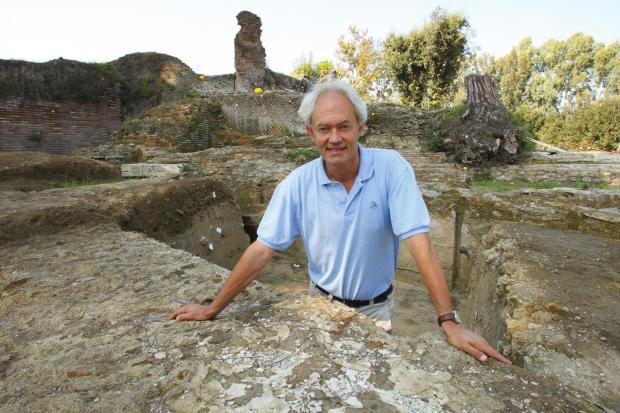
Prof Simon Keay

RESEARCHERS at Southampton University will be at the forefront of unearthing Europe’s Roman ports after securing a multi-million pound grant.
The university has been awarded £2.1 million by the European Research Council to study a large network of ports stretching from Turkey to Spain.
The Southampton team will be based at the university’s faculty of humanities and will work with others from across Europe on the Roman Mediterranean Ports project, which will see archaeologists carry out fieldwork at eight of the 31 ports, including Ephesus, Pitane and Kane in Turkey, Gades and Tarraco in Spain and Portus and Putroli in Italy.
Read the rest of this article...

Pompeii workers say wall of ancient house crumbling


A portion of a wall in a house in the archaeological site at Pompeii is crumbling, a union said Monday.

Pompeii workers say wall of ancient house crumbling
Via dell'Abbondanza, Pompeii [Credit: Cameron Booth/flickr]
According to Antonio Pepe, CISL secretary at the excavation site, guards during a tour Monday morning in the area reported crumbling on the upper portion of a wall at a house in the via dell'Abbondanza.

A section about 80 centimetres, or 2.7 feet, long is involved, said Pepe.

Critics have complained that not enough is being done to preserve and protect the site, which has been plagued for decades by accusations of mismanagement and neglect.


Read the rest of this article...

The Corrard gold torc – Bronze Age jewellery with a twist to the tale

The Corrard gold torc. © National Museums Northern Ireland: Collection Ulster Museum

Dr Greer Ramsey, Curator,
National Museums Northern Ireland
I am not sure if this happens to anyone else, but my work routine seems to revolve around how quickly I can get the computer turned on in the morning to view my inbox of emails. Then of course the ‘ping’ of incoming mail catches my eye at the bottom right hand corner of the screen. I know that I should not let it distract me from whatever I am doing but it inevitably does.
Such was the case when I received an attached image of an object to identify that was found at Corrard in County Fermanagh. With a click of the mouse the most intriguing artefact materialised on screen – a Bronze Age torc, quite simply the most fantastic single item of prehistoric gold jewellery ever found in Northern Ireland.
Read the rest of this article...

Tuesday, November 05, 2013

Placenames such as Smelting Hill and Burton Bole recall a poisonous history


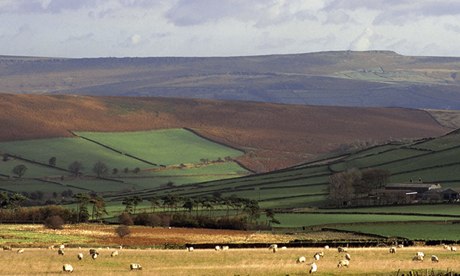
Abney, Derbyshire: In some areas the lead industry left the earth too toxic to allow cattle and sheep to graze safely

Wool and lead have left a heavy impression on the Peak District and both were in evidence walking up from the village of Abney on a wild morning. The sheep were deliberate and shifting landmarks on the slope of Abney Moor, but the lead was there only in the name of my location: Smelting Hill.
Many placenames in this part of Derbyshire, like fallen leaves from a dead tree, are yellowing reminders of the lead mining and processing industry that dominated the waking lives and nightmares of the families who worked in it.
Its focus shifted in tune with technology. At the bottom of the hill on the fringe of Hathersage is Leadmill, with ready access to the energy of the Derwent to drive bellows that kept wood burning hot enough to smelt the metal.
Read the rest of this article...

Warwickshire archaeologists find Roman coffin in Witherley field, Leicestershire


A Warwickshire archaeology team has started the process of examining a suspected child coffin found in a field in the Leicestershire village of Witherley.

Metal detectorist, Chris Wright, pinpointed the coffin and immediately called in Leicestershire Country Council.

Senior planning archaeologist, Teresa Hawtin, approached Archaeology Warwickshire on behalf of Mr Wright, as specialist archaeological procedures were required. 

She was able to advise Mr Wright that the coffin could not be moved without Ministry of Justice approval.

Read the rest of this article...

Monday, November 04, 2013

Current Archaeology LIve


Joint-CA-Live-and-Institute-logo
In 2014, our annual archaeology conference will return to the University of London’s Senate House.
We will be hearing from the foremost archaeological experts on the latest astonishing finds and ground-breaking research, with sessions taking place on 28th Feb-1st Mar 2014 (Friday/Saturday).  Join us for the evening reception on Friday night, as we pay tribute to this year’s outstanding contributors and the recipients of the Current Archaeology Awards, as voted by you.
How to book
Tickets are £80 for subscribers to Current Archaeology magazine, and £125 for non-subscribers. Call us on 020 8819 5580 and quote code CONF14WC to book your place, or order your tickets online using the links below:

    Subscribers

£80

    Non-Subscribers

£125


Read the rest of this article...

6,000 years of occupation revealed at French site


In advance of the construction of an industrial business park by the associated communes of Pays de Sainte Odile, Inrap has just finished a large excavation at Obernai, under the curation of the State (DRAC Alsace).

6,000 years of occupation revealed at French site
Deliberately distorted skull unearthed in a necropolis of the Late Empire
in Obernai (Bas-Rhin), 2013 [Credit: © Denis Gliksman, Inrap]
Across more than 7.5 hectares, Neolithic, Gallic, Gallo-Roman and Merovingian societies succeeded each other through time. The excavation of this site sheds new light on the cultural evolution and population movements over nearly 6 millennia, as well as on the territorial organisation of Alsace.

Around 6900 years ago: a Neolithic necropolis 

In the south-eastern part of the excavated area, the archaeologists uncovered a funerary sector containing around twenty graves. The oldest of them date from 4900 to 4750 BC. Another sector yielded around fifteen additional Neolithic graves. Most of the deceased were adorned with pendants and bracelets composed of small limestone or mother-of-pearl beads. One of them was wearing two stone ring-disks.


Read the rest of this article...

Resourceful Neanderthals in France


How "smart" were the Neanderthals, really? The question has been at the center of scholarly debate for decades. But the findings of recent research, including archaeological investigations at a site known as Abri du Maras, near Ardèche, southeastern France, have yielded clues that may expand the known repertoir of tools and behaviors that Neanderthals used to survive in the world that existed about 74,000 years ago. 

An international team of scientists from France, the U.S. and Spain recently conducted residue analysis and zooarchaeological analysis on stone tools and other materials, including otherwise perishable materials such as wood fragments, recovered from excavations at the archaeological site of Abri du Maras in France's Middle Rhône Valley.
What they found was enlightening. 
Read the rest of this article...

Viking Graves Yield Grisly Find: Sacrificed Slaves


Viking graves in Norway contain a grisly tribute: slaves who were beheaded and buried along with their masters, new research suggests.

In Flakstad, Norway, remains from 10 ancient people were buried in multiple graves, with two to three bodies in some graves and some bodies decapitated. Now, an analysis reveals the beheaded victims ate a very different diet from the people with whom they were buried.

"We propose that the people buried in double and triple burials might have come from very different strata of society, and that slaves could have been offered as grave gifts in these burials," study co-author Elise Naumann, an archaeologist at the University of Oslo in Norway, wrote in an email.

Read the rest of this article...

PERSIAN SILK IN VIKING BURIALS

Detail of the silk textiles from the Persian region that were found in the Oseberg ship. 
Photo: KHM-UiO

The silk trade was far more comprehensive than we have hitherto assumed and recent research may change our perceptions of the history of the Norwegian Vikings.

After four years of in-depth investigation of the silk trade of the Viking Age, Marianne Vedeler, Associate Professor at the Museum of Cultural History, University of Oslo has found that the Norwegian Vikings maintained trade connections with Persia and the Byzantine Empire through a network of traders from a variety of places and cultures who brought the silk to the Nordic countries.

One hundred small silk fragments

In the Oseberg ship, which was excavated nearly a hundred years ago, more than one hundred small silk fragments were found. This is the oldest find of Viking Age silk in Norway. At the time when the Oseberg silk was discovered, nobody conceived that it could have been imported from Persia. It was generally believed that most of it had been looted from churches and monasteries in England and Ireland.
Read the rest of this article...

Exceptionally rare Roman statue unearthed in City of London building site


An “exceptional” Roman sculpture thought to have adorned the tomb of a wealthy man in the 1st or 2nd century AD has been found in the City of London, as archaeologists proclaim it the finest of its kind in the world.
The statue, which shows an eagle clasping a serpent in its beak, was found on the building site of a boutique hotel near Aldgate tube station, and will now go on display in the Museum of London.
Experts have hailed it as being among the finest Roman pieces ever discovered in Britain, and the best-preserved example of the eagle and snake motif in the world.
This statue, made from limestone from the Cotswolds, is believed to symbolise the struggle between good and evil, and triumph over death.
Read the rest of this article...

Hi-tech explorers map Rome's ancient aqueduct

A speleo-archaeologist makes his way through a perfectly preserved tunnel section of the Acqua Claudia on the grounds of a Franciscan convent in Vicovaro 60km out of Rome. (Filippo Monteforte, AFP)

Vicovaro - Armed with laser rangefinders, GPS technology and remote control robots, a group of speleologists is completing the first ever mapping of the aqueducts of ancient Rome on archaeology's "final frontier".

They abseil down access wells and clamber through crevices to access the 11 aqueducts that supplied Rome, which still run for hundreds of kilometres underground and along stunning viaducts.

The mission of these "speleo-archaeologists" is to update the last above-ground map of the network compiled at the beginning of the 20th century by British Roman archaeologist Thomas Ashby.


Read the rest of this article...

Norwegian Vikings purchased silk from Persia


The Vikings did not only go West to pillage and plunder. Most of the silk found in the Oseberg ship may have been purchased by honest means from Persia.

Norwegian Vikings purchased silk from Persia
Silk textiles from the Persian region were found in the Oseberg ship. Among the motifs, we can see parts of special birds associated with Persian mythology, combined with clover-leaf axes, a Zoroastrian symbol taken from the Zodiac. The textiles have been cut into thin strips and used for adornment on clothing. Similar strips have also been found in other Viking Age burial sites [Credit: KHM- UiO]
The Norwegian Vikings were more oriented towards the East than we have previously assumed, says Marianne Vedeler, Associate Professor at the Museum of Cultural History, University of Oslo in Norway. After four years of in-depth investigation of the silk trade of the Viking Age, she may change our perceptions of the history of the Norwegian Vikings. The silk trade was far more comprehensive than we have hitherto assumed.

The Norwegian Vikings maintained trade connections with Persia and the Byzantine Empire. A network of traders from a variety of places and cultures brought the silk to the Nordic countries. Her details are presented in the book “Silk for the Vikings”, to be published by Oxbow publishers this winter, but in this article you can glimpse some of her key findings.


Read the rest of this article...

Sunday, October 27, 2013

'Roman child's coffin' found in Leicestershire


A child's coffin believed to date back to the 3rd Century AD has been found beneath a Leicestershire field by metal detectorists.

'Roman child's coffin' found in Leicestershire
A 1,700-year-old lead coffin, thought to contain the remains of a Roman child, has been found by a metal detecting club in a field in Leicestershire. The exact location of the burial is being kept a secret to protect the rare coffin from grave robbers [Credit: Raymonds Press]
The Digging Up The Past club found the lead coffin and Roman coins at a farm in the west of the county.

Club spokesman David Hutchings said: "I knew it was something a bit special as soon as I saw it."


Read the rest of this article...

Sunday, October 20, 2013

Navenby dig: Another building found at Roman site

Project leader Ian Cox said the excavation would be filled in by volunteers when the digging is finished

Archaeologists believe they have found another Roman building at the site of a dig in a private garden in Lincolnshire.
The work in Navenby has already uncovered several buildings used as workshops in the 3rd Century.
Volunteers and specialists will continue to dig for another 11 days before the site is filled back in.
The project, which started in April, has also uncovered a portable altar and an offertory stone.
Read the rest of this article...

The stomach-turning truth about what the Neanderthals ate?

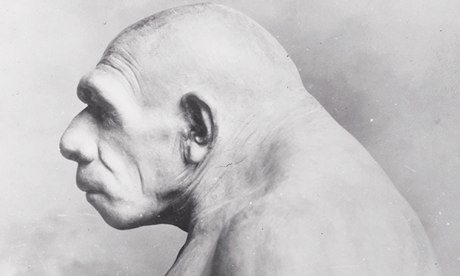
New thinking suggests that Neanderthals may have eaten the contents of animals' stomachs – 'a consistency and a flavour that is not unlike cream cheese'. Photograph: Corbis

The idea of these early humans being plant-eating, self-medicating sophisticates has been brought into question by the findings of researchers at London's Natural History Museum.

It was the tell-tale tartar on the teeth that told the truth. Or at least, that is what it appeared to do. Researchers – after studying calcified plaque on Neanderthal fossil teeth found in El Sidrón cave in Spain – last year concluded that members of this extinct human species cooked vegetables and consumed bitter-tasting medicinal plants such as chamomile and yarrow.
These were not brainless carnivores, in other words. These were smart and sensitive people capable of providing themselves with balanced diets and of treating themselves with health-restoring herbs, concluded the researchers, led by Karen Hardy at the Catalan Institution for Research and Advanced Studies in Barcelona. Our vision of these long-extinct people needs adjusting, they argued.
Read the rest of this article...

Remains of York's 'lost' St John's church revealed

Trainee archaeologists from all over the world worked on Hungate site to discover the remains of the 12th century St John the Baptist Church

The remains of one of York's "lost" medieval churches have been revealed to the public for the first time in about 450 years.
The precise location of the 12th Century St John the Baptist church in Hungate was never recorded before its demolition in the 16th Century.
But York Archaeological Trust (Yat) staff, using old maps, have worked over the summer to reveal the church.
Arran Johnson, from Yat, said the find was "an archaeologist's dream".
Read the rest of this article...

Pre-Viking Age Monuments Unearthed Near Burial Ground In Sweden


Archaeologists in Sweden said Thursday they have unearthed the remains of unusually large wooden monuments near a pre-Viking Age burial ground.
As archaeologists dug in preparation for a new railway line, they found traces of two rows of wooden pillars in Old Uppsala, an ancient pagan religious center. One stretched about 1,000 yards (1 kilometer) and the other was half as long.
Archaeologist Lena Beronius-Jorpeland said the colonnades were likely from the 5th century but their purpose is unclear. She called it Sweden's largest Iron Age construction and said the geometrical structure is unique.
"It is a completely straight line and they have dug postholes every 20 feet (6 meters)," she said. "They have had an idea of exactly where this line is going and where to build it. It is a fairly modern way of thinking and we don't have many traces of these sorts of constructions from that time."
Read the rest of this article...

More on lead coffin found at Greyfriars dig


The mysterious lead coffin found yards from the grave of Richard III has delivered another twist in the tale of the Greyfriars excavation.

More on lead coffin found at Greyfriars dig
Archaeologists expose the lead casket found inside a stone coffin at
Greyfriars [Credit: This is Leicestershire]
Archaeologists had thought the 600-year-old metal casket, which was found in a stone tomb at Greyfriars in August, might belong to knight Sir William de Moton.

The University of Leicester team – which uncovered Richard III a year earlier – also identified two other potential candidates, in Peter Swynsfeld, who died in 1272, and William of Nottingham, who died in 1330 – both former leaders of the Franciscan friars.


Read the rest of this article...

Jersey's place in Neanderthal history revealed in study

A large portion of the site contains sediments dating to the last Ice Age

A study on a Jersey site that revealed a significant piece of late Neanderthal history has been published.
Scientists working on an archaeological dig in St Brelade said teeth found at La Cotte suggest Jersey was one of the last places Neanderthals lived.
The team of British archaeologists have unearthed items which show the presence of Stone Age hunters at the headland.
They said the finds were helping scientists understand more about the early relatives of modern humans.
Read the rest of this article...