Wednesday, December 12, 2012

Researchers find clues to the Baltic Crusades in animal bones, horses and the extinct aurochs

Stanford Assistant Professor Krish Seetah and Reading University student Rose Calis analyze animal bones in the basement of Riga Castle, Latvia. Credit: Aleks Pluskowski

Stanford researchers have discovered that pagan villages plundered by medieval knights during the little-known Baltic Crusades had some problems in common with the modern-day global village. 

Among them: deforestation, asymmetric warfare and species extinction. 

According to a research paper published in Science, a project investigating the Baltic Crusades' profound environmental legacy could yield valuable insight into colonialism, cultural changes and ecological exploitation – relevant issues not only throughout history, but especially in today's increasingly globalized society.

Read the rest of this article...

Iron Age Feast Found in England

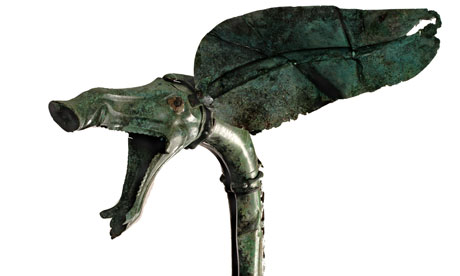
Remnants of an Iron-Age feast, including cattle skulls and 13 cauldrons, have been unearthed in Chiseldon, United Kingdom, according to a report in the latest British Archaeology The discovery marks the largest grouping of early cauldrons ever found in Europe. One cauldron features a handle plate in the form of a cow's head; zoomorphic decoration is otherwise unknown on a British cauldron.

"Analysis of the interiors of the cauldrons has even revealed traces of animal fats, a tantalizing suggestion that these objects might have been used in cooking and serving meat-rich stews at Iron-Age feasts over 2,000 ago," Julia Farley, curator of European Iron Age collections at the British Museum, told Discovery News. 

Farley's colleague Jody Joy, as well as Alexandra Baldwin and Jamie Hood from the museum, are still studying the artifacts, which were found buried in a 6.6-feet-wide pit. The cauldrons were made from iron and copper alloy in the second or first century B.C.

Read the rest of this article...

Send for the bard! Carnyx discovery leaves archaeologists little the wiser


In the Asterix books, Cacofonix the bard is forbidden to sing because his voice causes wild boar, villagers, Normans and Romans alike to flee. But Cacofonix does play the carnyx, a long, slender trumpet-like instrument decorated with an animal's head at the top end, and used by the Celts in the last three centuries BC.

The Greek historian Polybius (206-126BC) was so impressed by the clamour of the Gallic army and the sound of the carnyx, he observed that, "there were countless trumpeters and horn blowers and since the whole army was shouting its war cries at the same time there was such a confused sound that the noise seemed to come not only from the trumpeters and the soldiers but also from the countryside which was joining in the echo".

When the remains of seven carnyx were unearthed recently, Christophe Maniquet, an archaeologist at Inrap, the national institute for preventive archaeological research (Institut National de Recherches Archéologiques Préventives), was curious to find out exactly what sound it produced when it drove the Romans mad, or was used to call upon the god Toutatis.

Read the rest of this article...

When Homo sapiens hit upon the power of art

A reindeer bone engraved with two reindeer, part of the ice age art show at the British Museum. Photograph: British Museum

A staggering collection of ice age artefacts from museums across Europe will showcase the explosion of technical and imaginative skill that experts say marked the human race's discovery of art

Rail engineer Peccadeau de l'Isle was supervising track construction outside Toulouse in 1866 when he decided to take time off to indulge his hobby, archaeology. With a crew of helpers, he began excavating below a cliff near Montastruc, where he dug up an extraordinary prehistoric sculpture. It is known today as the Swimming Reindeer of Montastruc.

Made from the 8in tip of a mammoth tusk, the carving, which is at least 13,000 years old, depicts two deer crossing a river. Their chins are raised and their antlers tipped back exactly as they would be when swimming. At least four different techniques were used to create this masterpiece: an axe trimmed the tusk, scrapers shaped its contours; iron oxide powder was used to polish it; and an engraving tool incised its eyes and other details.

Read the rest of this article...

The Flores Hobbit's face revealed


An Australian anthropologist has used forensic facial reconstruction techniques to show, for the first time, how the mysterious Flores 'hobbit' might have once looked.

Homo floresiensis, as the hobbit is officially known, caused a storm of controversy when it was discovered in Flores, Indonesia in 2003. Some argued the hobbit was an entirely new species, while others suggested it may have simply been a diseased specimen of an existing human species. 


Using techniques she has previously applied to help police solve crimes, Honorary Senior Research Fellow at the University of Wollongong and specialist facial anthropologist, Dr Susan Hayes, moulded muscle and fat around a model of the hobbit's skull to flesh out her face. The results show a suprisingly familiar face, with high cheekbones, long ears and a broad nose.

Read the rest of this article...
Archaeology: Basilica from the time of Constantine the Great found at Sofia’s Serdica West Gate


Archaeologists in Bulgaria’s capital city Sofia have found a basilica said to date from the time of emperor Constantine the Great in the area of the West Gate of Serdica, as the city was known in Roman times.

The basilica is 27 metres wide and about 100m long, according to Yana Borissova-Katsarova, head of research at the site. It featured multi-coloured mosaics. Further exploration of the find will be difficult because of its location under the modern city.

Sofia deputy mayor in charge of culture, Todor Chobanov, said that the discovery of the basilica may be proof that Constantine intended to establish the city as a centre of Christianity.

Constantine, who ruled from 306 to 337 CE, was the first Roman emperor to convert to Christianity. Sofia, as Serdica, was under Roman rule from 29 BCE and remained under Roman and later Byzantine rule, with some interruptions because of Hun invasions and destruction, for a number of centuries.

Read the rest of this article...

Gallic elite prospered from Roman occupation


In 2010 French archaeologists carried out excavations on a 3.5 hectares site in Bassing, Moselle. Over a period of one thousand years – 200 BCE to 800 CE – this site had been occupied by a Gallic aristocratic establishment, a Gallo-Roman villa and several medieval buildings.

Elite farmer and warrior

Between 150 and 120 BCE, a large rural settlement was built at Bassing. A 3 metre wide ditch with sloping sides and palisade surrounded the habitation area (1 hectare in size). Inside this stood wooden farm buildings and a farmhouse. This group lasted until 14 CE.

The size of the farm and its ditches and the richness of the excavated materials has reveal the privileged status of the occupants. The jewellery featured bracelets of cobalt blue glass along with a piece of Baltic amber and123 fibulae, some of which had been produced on-site. In fact, the site produced evidence for foundry activities, spinning, weaving and shoemaking. It is also apparent from the discovery of many amphorae and Italian drink strainers that wine imported from the Mediterranean was drunk in large quantities.

Read the rest of this article...

First Harbor of Ancient Rome Rediscovered

Aerial view of Ostia and the position of its filled in ancient harbour basin (in the foreground). On the left of the picture, the Tiber flows along the Imperial Palace. In red, the coring sites. 
(Credit: © S. Keay)

Archaeologists have unearthed the great ancient monuments of Ostia, but the location of the harbour which supplied Rome with wheat remained to be discovered. Thanks to sedimentary cores, this " lost " harbour has eventually been located northwest of the city of Ostia, on the left bank of the mouth of the Tiber. Stratigraphy has revealed that at its foundation, between the 4th and 2nd century BC, the basin was deeper than 6.5 m, the depth of a seaport.

his research was carried out by a French-Italian team of the Maison de l'Orient et de la Méditerranée (CNRS / Université Lumière Lyon 2), the Ecole Française de Rome and Speciale per i Beni Soprintendenza Archeologici di Roma -- Sede di Ostia* and will be published in the Chroniques des Mélanges de l'Ecole Française de Rome in December 2012.

According to ancient texts, Ostia was founded by Ancus Marcius, the 4th king of Rome. This new settlement is supposed to have aimed three goals: to give Rome an outlet to the sea, to ensure its supply of wheat and salt and finally, to prevent an enemy fleet to ascend the Tiber. Archeological excavations showed that the original urban core (castrum) dates back to the turn of the 4th and 3th centuries BC. Major ancient buildings and main roads were progressively revealed, but the location of the Ostia river mouth harbour remained unknown to this day. For some, it was considered as lost forever.

Read the rest of this article...

Winter of discontent as we await the truth


In the New Year we’ll learn if bones from a city car park really are those of Richard III. Michael Hickling reports on the future for the last King of the House of York.

History is written by the victors, or most memorably in this case by one of the inheritors of the victors’ story, William Shakespeare.

He created the Richard III we know, with a hump and a limp and a shrivelled arm, a character who gleefully confides to the theatre audience that he’s so ugly dogs bark at him. He’s a child murderer, a sexual predator, a psychopath crippled in mind and body. It’s a magnificent creation. But Shakespeare had no first-hand knowledge of the man he wrote about. 

His play Richard III was published just over a century after the naked body of this last Plantagenet monarch, newly-slain in battle at nearby Market Bosworth, was displayed at Leicester in the summer of 1485. To create his monstrous character, the playwright drew on unreliable sources which put a spin on scarce facts to suit the outlook of the victor of Bosworth, Henry Tudor and his successors.

Read the rest of this article...

Roman road uncovered in York

This is the 10,000th post on the 
Archaeology in Europe News Blog!


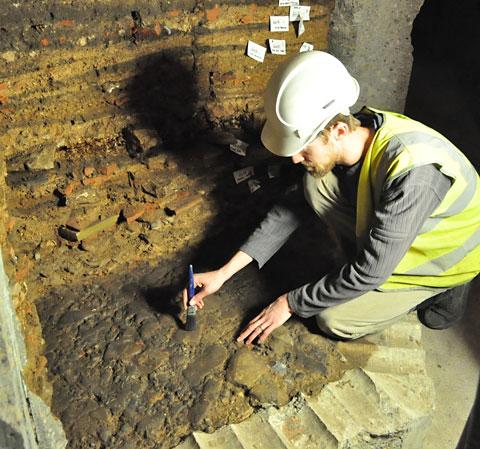
Ian Milstead Lead Archaeologist from YAT cleaning Roman Road beneath York Minster.

A SECTION of Roman Road has been discovered beneath York Minster. 

Archaeologists from York Archaeological Trust unearthed it during construction work on the new visitor development in the Undercroft, a Minster spokeswoman said today. 

The archaeologists believe the road was a backstreet, part of the Via Quintana, and believe it ran behind the Roman basilica that once stood on the Minster site. 

A Minster spokeswoman said: "The backstreet was used for hundreds of years and was frequently patched and repaired, falling into disuse at the same time as the Basilica itself."

Read the rest of this article...

Saturday, December 08, 2012

Lottery grant could help buy Bath Roman coin hoard

A coin from 32 BC similar to the one pictured was the oldest identified so far

A £50,000 lottery grant could help keep a hoard of Roman coins in Bath.

The Beau Street Hoard of 20,000 silver coins was discovered by archaeologists in 2007 and is thought to be the fifth largest find of its kind in the UK.

Some of the coins date back as far as 32BC and are currently being cleaned at the British Museum.

The initial support from the Heritage Lottery Fund could lead to a further £480,000 grant in 2013.

Bath and North East Somerset Council said it wanted to develop learning and community activities around the hoard.

Read the rest of this article...

European Romani Exodus Began 1,500 Years Ago, DNA Evidence Shows

Europe's widespread Romani population shares a common, if complex, past, beginning in northwestern India about 1,500 years ago, according to a new study that offers the first genome-wide perspective on Romani origins and demographic history. 
(Credit: © seewhatmitchsee / Fotolia)

Despite their modern-day diversity of language, lifestyle, and religion, Europe's widespread Romani population shares a common, if complex, past. It all began in northwestern India about 1,500 years ago, according to a study reported on December 6th in Current Biology, a Cell Press publication, that offers the first genome-wide perspective on Romani origins and demographic history.

The Romani represent the largest minority group in Europe, consisting of approximately 11 million people. That means the size of the Romani population rivals that of several European countries, including Greece, Portugal, and Belgium.

"We were interested in exploring the population history of European Romani because they constitute an important fraction of the European population, but their marginalized situation in many countries also seems to have affected their visibility in scientific studies," said David Comas of the Institut de Biologia Evolutiva at Universitat Pompeu Fabra in Spain.

Read the rest of this article...

Classics professor unearths archaeological clues about ancient Roman vineyards

They may not look like much to the untrained eye, but these ancient Roman grape seeds, believed to back to the 1st century A.D., could provide “a real breakthrough” in the understanding of the history of Chianti vineyards in the area, de Grummond says. (Phys.org)—Call it a toast to the past. A Florida State University classics professor whose decades of archaeological work on a remote hilltop in Italy have dramatically increased understanding of the ancient Etruscan culture is celebrating yet another find.

Read more at: http://phys.org/news/2012-12-classics-professor-unearths-archaeological-clues.html#jCp
They may not look like much to the untrained eye, but these ancient Roman grape seeds, believed to back to the 1st century A.D., could provide “a real breakthrough” in the understanding of the history of Chianti vineyards in the area, de Grummond says. (Phys.org)—Call it a toast to the past. A Florida State University classics professor whose decades of archaeological work on a remote hilltop in Italy have dramatically increased understanding of the ancient Etruscan culture is celebrating yet another find.

Read more at: http://phys.org/news/2012-12-classics-professor-unearths-archaeological-clues.html#jCp
They may not look like much to the untrained eye, but these ancient Roman grape seeds, believed to back to the 1st century A.D., could provide “a real breakthrough” in the understanding of the history of Chianti vineyards in the area, de Grummond says.

Read more at: http://phys.org/news/2012-12-classics-professor-unearths-archaeological-clues.html#jCp
They may not look like much to the untrained eye, but these ancient Roman grape seeds, believed to back to the 1st century A.D., could provide “a real breakthrough” in the understanding of the history of Chianti vineyards in the area, de Grummond says. 

(Phys.org)—Call it a toast to the past. A Florida State University classics professor whose decades of archaeological work on a remote hilltop in Italy have dramatically increased understanding of the ancient Etruscan culture is celebrating yet another find. 

 This time around it's not the usual shards of pottery and vessels, remnants of building foundations or other ancient artifacts unearthed in past years, but rather a treasure that's far more earthy: grape seeds. 

Actually, Nancy Thomson de Grummond has discovered some 150 waterlogged grape seeds that have some experts in vineyard-grape DNA sequencing very excited.

Read the rest of this article...
Maori stones hold magnetic clues


Scientists are studying the Earth's magnetic field using the stones that line Maori steam ovens.
The cooking process generates so much heat that the magnetic minerals in these stones will realign themselves with the current field direction.

An archaeological search is under way in New Zealand to find sites containing old ovens, or hangi as they are known.

Abandoned stones at these locations could shed light on Earth's magnetic behaviour going back hundreds of years.

"We have very good palaeomagnetic data from across the world recording field strength and direction - especially in the Northern Hemisphere," said Gillian Turner from Victoria University, Wellington, New Zealand.

Read the rest of this article...

Resurrecting the ancient city of Laodicea


Cranes, excavators, teams of workmen in hard-hats and foremen shouting into their mobile phones are a ubiquitous feature of today's Turkey, a country where, in spite of a global economic slowdown, new buildings continue to be erected at a staggering rate. Take a trip to Laodicea, however, and you'll see a “building site” with a twist. For here a long abandoned Greek-Roman city is being resurrected wholesale from its ruins by … construction cranes and teams of workmen in hard-hats!

Sprawling across a low hill between the prosperous textile town of Denizli and the iconic travertine formations of Pamukkale in western Turkey, ancient Laodicea is generally overlooked by the vast majority of visitors, who tend to be drawn instead to Pamukkale and its associated site of Hierapolis, or the wonderful remains at Aphrodisias, not too much further away. Only bible groups, attracted to Laodicea because it is one of the Seven Churches mentioned in the New Testament's Revelation of John, buck the trend.

That Laodicea is relatively little visited is hardly surprising given its press. The current edition of Lonely Planet Turkey says “there's not much of interest left,” the Rough Guide to Turkey doesn't even mention the site. A late 1980s version of the more specialist, archaeology and history-orientated Blue Guide writes of Laodicea, “Much of its worked stone has been removed for building purposes and, unfortunately, little is being done to preserve its remaining structures from further damage.”


Read the rest of this article...

Greek island to be declared an archaeological site


The 'chora' or main town on the Aegean island of Serifos is to be declared an archaeological site, according to a decision of Greece's Central Archaeological Council (KAS) that was announced on Thursday.

The island has a rich history, featured in ancient myth and legend as the home of the hero Perseus, and has been settled since prehistoric times. Its chora, situated high on a hill overlooking the island's main harbour, is notable for its dramatic views and is classic example of traditional Cycladic architecture.

Included in the archaeological site are the town's medieval settlement, the 'Kastro' or fort, its post-Byzantine churches, a large segment of open land where mosaic floors have been discovered and the Church of the Nativity of the Virgin. Excluded from the site is the neighbourhood Lakka, where no archaeological remains have been found.www.amna.gr


Read the rest of this article...

New way to protect historic limestone buildings


Buildings and statues constructed of limestone can be protected from pollution by applying a thin, single layer of a water-resistant coating, new research suggests.

That's the word from a University of Iowa researcher and her colleagues from Cardiff University in a paper published in the journal Scientific Reports, from the publishers of Nature. In the study, the researchers report a new way to minimize chemical reactions that cause buildings to deteriorate, according to Vicki Grassian, F. Wendell Miller professor in the UI departments of chemistry and chemical and biochemical engineering.

The coating includes a mixture of fatty acids derived from olive oil and fluorinated substances that increase limestone's resistance to pollution.


Read the rest of this article...

Gypsies arrived in Europe 1,500 years ago, genetic study says

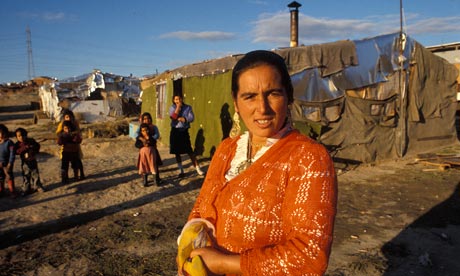
Gypsies in a shanty town in Madrid, Spain. Photograph: Navia/Cover/Getty Images

Migrants from India came to continent much earlier than previously thought, analysis suggests, and arrived in the Balkans

In parts of Europe they are still shunned as disruptive outsiders or patronised as little more than an exotic source of music and dance, but Gypsies have ancient roots that stretch back more than a millennium, scientists have proved.

A genetic analysis of 13 Gypsy groups around Europe, published in Current Biology journal, has revealed that the arrival on the continent of their forebears from northern India happened far earlier than was thought, about 1,500 years ago.

The earliest population reached the Balkans, while the spread outwards from there came nine centuries ago, according to researchers at Spain's Institute of Evolutionary Biology and elsewhere.

Read the rest of this article...

Norwich Castle Museum set to acquire 'curious' treasure


A gold earring disc, found in Norfolk by a metal detector enthusiast, has left treasure experts baffled as to the exact meaning of its decoration.

Discovered in Keswick, near Norwich, the disc "is an unusual find for the Roman period", said a Norwich Castle Museum spokesman.

It features a scorpion, phallus, snake and crab, but the meaning of the combination "is lost" an expert said.
The Norwich museum hopes to acquire the disc for its collection.

The value of the item will now be determined by experts at the British Museum.

Read the rest of this article...

Thursday, December 06, 2012

Archaeologist of the Year – Nominees


We always look forward to escaping from the office to meet archaeologists working in the field: their hard work and dedication is inspiring. This year we would like to put forward the following individuals for special recognition of their work. 

Vote now!

Read the rest of this article...

Researchers find evidence of early man in caves near Naples


Remains of both Neanderthals and Homo sapiens in same caves

Rome, December 4 - Researchers are poring over thousands of tiny artifacts - including a child's milk tooth - found in a southern Italian cave that appears to have been shared by both Neanderthals and early man.

The caves of Roccia San Sebastiano, which overlook the Tyrrhenian Sea north of Naples, are being combed for traces of those who once lived there.


On the slopes of the medieval fortress of Montis Dragonis, near Mondragone in Caserta province, researchers say they've uncovered layers of history, rich in early historical finds.


The discovery is telling them "a story of the evolution that goes from 40,000 to 20,000 years ago, when the cave was used for uninterrupted time by Neanderthals and Sapiens," says prehistoric archaeologist Carmine Collina.

Read the rest of this article...

Experts uncover medieval moat in Havel Library's future seat


Experts have uncovered a medieval trench filled with ground layers coming from a cemetery and containing a number of human bones during research into the courtyard of a Prague building that is to host the Vaclav Havel Library after reconstruction, Jana Marikova Kubkova told CTK.

Marikova Kubkova is the spokeswoman for the Archaeological Institute carrying out the research.
The planned reconstruction of the historical house, built in the 16th century near Prague Castle, has stirred up stormy discussions.

A couple of years ago, the house was bought by businessman Zdenek Bakala, whose foundation sponsors the Vaclav Havel Library. The reconstruction design was presented by Spanish architect Ricardo Bofill.

Apart from publicly accessible premises, the building is to offer accommodation capacities and a private flat.

Read the rest of this article...

Tracing Wine's "Turkish" Roots


Do French merlots or German rieslings have Turkish ancestors? That's the intriguing proposition raised by a Swiss botanist, who, using DNA analysis, is arguing that many of the wine grapes used today in western Europe and other parts of the world descend from wild grape varieties domesticated by Stone Age farmers in what is now Turkey. Reports AFP:

Today Turkey is home to archaeological sites as well as vineyards of ancient grape varieties like Bogazkere and Okuzgozu, which drew the curiosity of the Swiss botanist and grape DNA sleuth Jose Vouillamoz, for the clues they may offer to the origin of European wine.

Together with the biomolecular archaeologist Patrick McGovern, Vouillamoz has spent nearly a decade studying the world's cultivated and wild vines.


"We wanted to collect samples from wild and cultivated grape vines from the Near East -- that means southeastern Anatolia, Armenia and Georgia -- to see in which place the wild grape was, genetically speaking, linked the closest to the cultivated variety."


"It turned out to be southeastern Anatolia," the Asian part of modern Turkey, said Vouillamoz, speaking at the EWBC wine conference in the Turkish city of Izmir this month. "We propose the hypothesis that it is most likely the first place of grape vine domestication."


Read the rest of this article...

Genome of the Black Death reveals evidence for an antique bubonic plague pandemic

Black death: Scanning electron micrograph depicting a mass of Yersinia pestis in the foregut of a flea vector 
[Credit: Rocky Mountain Laboratories, NIAID, NIH]

In a comparison of more than 300 contemporary strains of Yersinia pestis, the bacterium that causes bubonic plague, with ancient bacterial DNA isolated from victims of the Black Death (1347 -- 1351), a team led by researchers at University of Tuebingen obtained evidence suggestive of a bubonic plague outbreak in the late antique period (8th to 10th centuries AD). The study published online November 30 in PLoS ONE raises strong suspicion that the plague of Justinian, a massive pandemic that is thought to be in part responsible for the collapse of the East Roman Empire, may have been caused by the same bacterium implicated in the Black Death.

After the initial reconstruction of the complete medieval genome of Y.pestis from a Black Death cemetery in London last year, the researchers from the University of Tuebingen used a published genome wide dataset from more than 300 modern Y.pestis strains to reconstruct the relationship of ancient and modern plague bacteria. Due to the well-established age of the ancient remains they were able to date major radiation events in the history of this pathogen that are likely linked to major pandemics in the human population.

Read the rest of this article...

Gladiator's Tomb to Be Reburied


The tomb of the ancient Roman hero believed to have inspired the Russell Crowe blockbuster "Gladiator," might be returned to oblivion four years after its discovery in Rome.

A lack of fundings is forcing Italian archaeologists to bury again the large marble monument of Marcus Nonius Macrinus, a general and consul who achieved major victories in military campaigns for Antoninus Pius, the Roman emperor from 138 to 161 A.D., and Marcus Aurelius, emperor from 161 to 180 A.D.

Unearthed in 2008 on the banks of the Tiber near the via Flaminia, north of Rome, the tomb, complete with the dedicatory inscription, was hailed as "the most important ancient Roman monument to come to light for 20 or 30 years."

Read the rest of this article...

Africa's Homo sapiens were the first techies

This is a Bone point from the Middle Stone Age levels at Peers Cave. The exact context is unknown (see d’Errico and Henshilwood 2007); b–g Bone tools from the Still Bay levels at Blombos Cave; b–e bone awls; f–g bone points; h–i engraved lines on tools c and g (see Henshilwood et al. 2001a; d’Errico and Henshilwood 2007); j engraved bone fragment (see d’Errico et al. 2001) 220 J World Prehist (2012) 25:205–237 123

The search for the origin of modern human behaviour and technological advancement among our ancestors in southern Africa some 70 000 years ago, has taken a step closer to firmly establishing Africa, and especially South Africa, as the primary centre for the early development of human behaviour.

A new research paper by renowned Wits University archaeologist, Prof. Christopher Henshilwood, is the first detailed summary of the time periods he and a group of international researchers have been studying in South Africa: namely the Still Bay techno-traditions (c. 75 000 – 70 000 years) and the Howiesons Poort techno-tradition (c. 65 000 – 60 000 years).

The paper, entitled Late Pleistocene Techno-traditions in Southern Africa: A Review of the Still Bay and Howiesons Poort, c. 75 ka, has been published online in the Journal of World Prehistory on 6 November 2012.

Read the rest of this article...
The First Modern Humans Arose in South Africa, Say Researchers


The synthesis of years of research at prehistoric sites in southern Africa, as represented by research recently published in the Journal of World Prehistory, has led a number of scientists to suggest that South Africa was the primary center for the early development of modern human behavior. This would mean cognitive behavior as manifested in technology much like the material culture of modern hunter-gatherer groups throughout the world today. 

The new research paper by renowned Wits University archaeologist, Prof. Christopher Henshilwood, is the first detailed summary of Middle Stone Age (280,000 - 50,000 years ago) technologies and cultural remains discovered at a number of sites in southern Africa, artifacts that fall within two established overall  "techno-tradition" periods:  Still Bay  (dated to c. 75,000 – 70,000 years ago) and Howiesons Poort (c. 65,000 – 60,000 years ago). 

Henshilwood maintains that these periods were significant markers in the development of Homo sapiens behavior in southern Africa. They featured a number of innovations including, for example, the first abstract art (engraved ochre* and engraved ostrich eggshell); the first jewellery (shell beads); the first bone tools; the earliest use of the pressure flaking technique, used in combination with heating to make stone spear points; and the first probable use of stone tipped arrows launched by bow. (See examples pictured below).

Read the rest of this article...

Kent Iron Age helmet 'incredibly rare'


A rare Iron Age helmet discovered in Kent is the only example of its kind in Britain, researchers claim.

Experts from the British Museum, Canterbury Archaeological Trust and the University of Kent talk about the importance of the find.

Watch the video...

Silver coin hoard from 1600s found in Sweden


Archaeologists have uncovered over 1,000 silver coins dating back to the 1600s in a field in southern Sweden, coins believed to have been buried by rich and worried farmers in during the Scanian War.

“This is quite extraordinary,” Bo Friman, archaeologist at the Swedish National Heritage Board (Riksantikvarieämbetet), told Sveriges Television (SVT).

“We were so focused that we forget to stop for food.”

With the help of metal detectors and spades, archaeologists in Helsingborg pulled up a total of 1,150 silver coins - what they consider to be a record haul for the area.


Read the rest of this article...

Iron Age bronze helmet found on farmland


More or less intact helmets of the era are very rare finds, said University of Kent archaeologist Dr Steven Willis [Credit: BBC]

A rare Iron Age helmet unearthed by a metal detector enthusiast on farmland near Canterbury has been described as a significant find by the British Museum.

The bronze helmet was found with bone fragments, and had been used to hold human remains after a cremation, Canterbury Archaeological Trust said.

The finder contacted archaeologists because he was confident he had made a significant discovery, the trust said.

University of Kent experts have found it dates back to the 1st Century BC.


Read the rest of this article...

Tuesday, December 04, 2012

'First tartan' on Roman statue


The Caledonian warrior on the bronze statue appears to be wearing tartan trews
 
Remnants of a Roman statue in North Africa could be the "first-ever depiction of tartan", according to a BBC Scotland documentary.

A piece of a bronze statue of the Emperor Caracalla contains the small figure of a Caledonian warrior wearing what appears to be tartan trews.

The third century Roman emperor Caracalla styled himself as the conqueror of the Caledonians.
A statue marking his achievements stood in the Moroccan city of Volubilis.
Read the rest of this article...

A Late Iron Age helmet found near Canterbury


A rare prehistoric helmet has been unearthed on farmland outside Canterbury.

The helmet, made of bronze and dating to the first century BC, was discovered by an amateur metal detectorist.  Andrew Richardson, then our Finds Manager, takes up the story.

“Arriving home from work one October evening, I received a telephone call from a local metal detectorist who I know from my time as Kent Finds Liaison Officer. This chap had also in the past worked as a volunteer for the Trust and so, having made what he described as a ‘significant discovery’, he decided to contact me. He said that he had found what he believed to be a ‘Celtic bronze helmet’.

I knew of no such helmets from Kent; the famous ‘Deal warrior’ excavated by Keith Parfitt at Mill Hill had a bronze head-dress, but that was not a helmet as such. Even for Britain as a whole, I knew such a find would be incredibly rare. But the finder seemed very confident and I knew he was an experienced detectorist, so I arranged to visit him first thing the next morning to have a look.

Read the rest of this article...

Ancient Human Poop: Ah, the Tales It Can Tell


Doctoral student Robert D'Anjou with sediment core taken from Lake Liland in the 
Lofoten Islands in northern Norway

In the wee hours of the morning in a lab in Amherst, Massachusetts, geoscience graduate student Rob D’Anjou sat looking over test results, a pot of coffee nearby. He’d been pulling long days to analyze two narrow columns of silt, mud, and other sediment cored from the bottom of Lake Liland in Arctic Norway, and, frustratingly, was seeing no sign of the molecules with which he’d been hoping to reconstruct the temperature and precipitation records during the lake’s last 7,000-odd years.

There were a number of other substances in the cores, though. And some of those other substances, he realized with a jolt, looked familiar. He turned to a cache of chemistry papers and, with their help, confirmed his suspicion: He was looking at human fecal sterols, the last chemical hurrah of poop. And these feces were decidedly ancient ones, manufactured, as it were, starting more than 2,000 years ago.

Read the rest of this article...

Monday, December 03, 2012

History uncovered in Fermanagh crannog


One of the most important and interesting archaeological digs in Northern Ireland is to be revealed to the public during an open day on Saturday.

Workers at the crannog - an artificial island in a lake - in County Fermanagh have been making discoveries almost weekly since the dig began in June.

The Institute for Archaeologists (IfA) had raised concerns about "the apparently imminent destruction" of the historical site. They regarded the crannog as too fragile to preserve rather than excavate after the nearby engineering works for the road scheme drained water from the site.

The new A32 Cherrymount link road near Enniskillen will eventually be built on top of the crannog.

Read the rest of this article...

New Roman Circus visitor centre plans unveiled


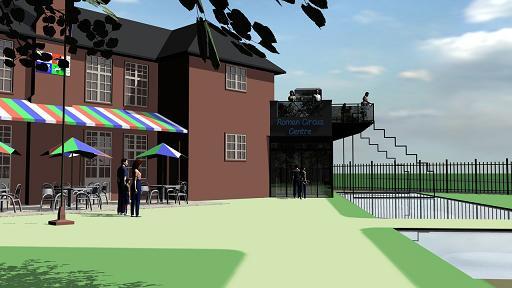
THESE are the first images of what Colchester’s Roman Circus visitor centre could look like.
Colchester Archaeological Trust has submitted new and more ambitious £1.3million plans to the Heritage Lottery Fund. 

They include recreating the circus’s entrance gates, a roof top viewing platform and a tea room at Roman Circus House in Circular Road North, Colchester. 

Displays inside the heritage centre will feature giant models of the circus and the Roman town.
Philip Crummy, trust director, said: “We are very excited about the project."

Read the rest of this article...

Helmets, Viking gold and Royal boars: Portable Antiquities Scheme releases 2011 report


Nearly 100,000 archaeological discoveries – ranging from Roman helmets to Viking gold – were made during 2011, according to the annual report by the Portable Antiquities Scheme.

In a typically eventful year of soil digging, including primetime exposure for the Scheme’s greatest breakthroughs on the ITV series Secret Treasures, the official figures show an eight percent rise in finds, with a total of 970 Treasure cases.

Huge online interest also saw the accompanying website, finds.org.uk, honoured as the best research and online collection at the Best of the Web awards, with more than 463,000 people looking at 820,000 finds on the database of discoveries.

“It is a scheme which is envied the world over,” said Neil MacGregor, the Director of the British Museum, praising the Department for Culture Media and Sport and Treasure Hunting magazine, the appropriately-named periodical which published the report.

Read the rest of this article...

Building Stonehenge: A New Timeline Revealed


Ancient people probably assembled the massive sandstone horseshoe at Stonehenge more than 4,600 years ago, while the smaller bluestones were imported from Wales later, a new study suggests.

The conclusion, detailed in the December issue of the journal Antiquity, challenges earlier timelines that proposed the smaller stones were raised first.

"The sequence proposed for the site is really the wrong way around," said study co-author Timothy Darvill, an archaeologist at Bournemouth University in England. "The original idea that it starts small and gets bigger is wrong. It starts big and stays big. The new scheme puts the big stones at the center at the site as the first stage."

Read the rest of this article...

Native Americans and Northern Europeans More Closely Related Than Previously Thought


Using genetic analyses, scientists have discovered that Northern European populations -- including British, Scandinavians, French, and some Eastern Europeans -- descend from a mixture of two very different ancestral populations, and one of these populations is related to Native Americans. This discovery helps fill gaps in scientific understanding of both Native American and Northern European ancestry, while providing an explanation for some genetic similarities among what would otherwise seem to be very divergent groups.

This research was published in the November 2012 issue of the Genetics Society of America's journal Genetics.

According to Nick Patterson, first author of the report, "There is a genetic link between the paleolithic population of Europe and modern Native Americans. The evidence is that the population that crossed the Bering Strait from Siberia into the Americas more than 15,000 years ago was likely related to the ancient population of Europe."

Read the rest of this article...

Prehistoric Skeletons Reveal First Sicilians Avoided Seafood


Despite a seaside home overlooking the Mediterranean, the very first human settlers of Sicily weren't seafood lovers, new research finds.

In an analysis published today (Nov. 28) in the journal PLOS ONE, skeletal remains of the people who occupied the site around 10,000 years ago show no telltale signs of seafood eating. Instead, researchers say, these hunter-gatherers chowed down on game such as deer and boar.

These first settlers, found on the modern-day island of Favignana, which was once connected to Sicily by a land bridge, probably ate little seafood for two reasons, said study researcher Marcello Mannino, a scientist at the Max Planck Institute for Evolutionary Anthropology in Germany. First of all, the Mediterranean is relatively nutrient-poor — there just aren't that many fish in the sea. Second, these Mesolithic people likely didn't have the technology to do much fishing.

Read the rest of this article...

Main excavations completed at 8-10 Moorgate


MOLA has completed the main excavation in the central part of the 8-10 Moorgate site in the City of London and the discoveries have proven to be even more exciting than our initial investigations in 2010! The redevelopment of the site by Stanhope and Mitsui Fudosan has provided MOLA with an exciting opportunity to investigate a large area on the banks of the Walbrook stream, a tributary of the Thames that flowed through the heart of the Roman City. 

The buildings uncovered date from the 1st century (the time when the Roman city was founded) to the 3rd century and include both masonry, and clay and timber buildings as well as circular wattle structures; thought to be animal pens. 
 
In addition to the main buildings, fences, gravel alleyways and wells have been discovered, creating a vivid picture of a community living and working at the eastern edge of the Walbrook stream.

Read the rest of this article...

Sunday, December 02, 2012

Wall at Pompeii collapses after heavy rain


A photo taken in September 2012 shows a cordonned-off area after the collapse of a roofing beam at the Pompeii archaeological site. A Roman wall at the site has collapsed, local archaeologists said Friday, in the latest in a series of accidents at the ancient city buried by a volcanic explosion 2,000 years ago [Credit: AFP]

A Roman wall at Pompeii in southern Italy has collapsed, local archaeologists said Friday, in the latest in a series of accidents at the ancient city buried by a volcanic explosion 2,000 years ago.

The section of wall some two metres (seven feet)long was part of the ruins of a house at the sprawling site near Naples. The area has seen heavy rain in recent weeks, and previous collapses have been linked to bad weather.

The area was already closed to the public because it was believed to be at risk. It was scheduled for restoration as part of the "Great Pompeii Project".


Read the rest of this article...

Stadelhof gibt wieder ein Stück Geschichte Paderborns frei


Die aktuellen Baumaßnahmen im Bereich des Stadelhofes des Paderborner Domkapitels ermöglichen den Fachleuten der Stadtarchäologie Paderborn weitere Einblicke in die mittelalterliche Geschichte dieses Ortes, der für die Stadtentwicklung eine wichtige Rolle spielte.

Der Stadelhof bekam im 12. Jahrhundert ein völlig neues Gesicht. Damals, vor gut 900 Jahren, veränderte sich Paderborn grundlegend. Ein ganz neues Straßenraster wurde entwickelt, neue Grundstücke entstanden und wurden eingemessen. Die Stadt bekam die äußerliche Form, die sie heute noch prägt. 

Read the rest of this article...