Monday, July 16, 2012

2,000 year old coins found in Leicestershire


A man from Leicestershire has stumbled across a set of 2,000 year old coins, which will be unveiled at the start of the county's two week archaeology festival. 
The coins date back to the Iron Age [Credit: Leicestershire County Council]
The ten gold coins were discovered in Peatling Magna by Steve Bestwick. 

It is thought that they were made in Northern France, between 60-50 BC, suggesting that people living in Leicestershire had contact with their French counterparts. 

“These coins bring up so many questions. Why did they come to Leicestershire? What sort of journey they have been on? How did they get here from the continent, so long ago before cross –channel ferries? Who was the last person to hold them and what did they mean to them?” – Steve Bestwick, metal detectorist

Saturday, July 14, 2012

Hidden Doggerland underworld uncovered in North Sea


A map of the UK with Doggerland marked as red

A huge area of land which was swallowed up into the North Sea thousands of years ago has been recreated and put on display by scientists.

Doggerland was an area between Northern Scotland, Denmark and the Channel Islands.

It was believed to have been home to tens of thousands of people before it disappeared underwater.

Now its history has been pieced together by artefacts recovered from the seabed and displayed in London.
The 15-year-project has involved St Andrews, Dundee and Aberdeen universities.

Friday, July 13, 2012

Scapa Flow's historic wrecks mapped in sub-sea survey


A new sub-sea survey of Scapa Flow at Orkney has mapped 18 important historic wrecks.

Historic Scotland commissioned sonar surveys of the sea bed, which revealed new details on scuttled merchant ships from WWI and WWII.

It also showed a German submarine, and a trawler used to operate boom defences at the entrance to Scapa Flow.

The survey findings will help Historic Scotland to consider the case for a Historic Marine Protected Area.

This would improve protection for Scapa Flow's most important marine heritage sites under the Scottish Parliament's new marine legislation.

Celtic cross fundraising appeal launched


A FUND raising campaign is under way in Innerleithen to ensure that part of an ancient Celtic cross can be preserved for public viewing. 

The Runic Cross, which has been based at several locations in recent years was originally found by master builder Robert Mathison when he was commissioned to demolish the old church at Kirklands in 1871. 

Now the plan is to site the Runic Cross within the Parish Church on Leithen Road, the exciting new plans will see information boards and lighting erected within the porch way of the church to ensure the public can properly view the remains of the cross which Historic Scotland suggests once stood 12 feet high.

Surprise Human-Ancestor Find—Key Fossils Hidden in Lab Rock


Posing with an A. sediba skull, student Justin Mukanku points to the tooth he found in a fossil-filled rock.

Single tooth tipped researchers off to a bonanza right under their noses.

Last month a prehistoric tooth protruding from a boulder tipped off researchers to hidden evolutionary treasure: remarkably complete human-ancestor fossils trapped in a rock that had been sitting in their lab for years.

Scans later showed that the rock contains two-million-year-old fossils that will "almost certainly" make one Australopithecus sediba specimen "the most complete early human ancestor skeleton ever discovered," anthropologist Lee Berger said in a statement Thursday.


The bones are nearly invisible from the outside, and were discovered only after a technician noticed the small tooth in the three-foot-wide (meter-wide) rock, which was retrieved from a South African cave in 2008 and brought to a lab at the University of the Witwatersrand in Johannesburg.

Thursday, July 12, 2012

Archaeology Live


Archaeology Live! 2012 - Site Diary (Weeks 1-6)

We have not moved far from last year, across the road in fact. There are some details about the dig on the web pages - http://www.dighungate.com/content.asp?ID=43

Basically we have been given the opportunity to see if we can follow what we were finding across the road in Block H, and so far it seems that we have amazing preservation of the Victorian layers and earlier.

Lost Viking Military Town Unearthed in Germany?


Archaeologists excavate an eighth-century town in northern Germany.
Photograph courtesy Andres S. Dobat, Aarhus Universitet
 
A battle-scarred, eighth-century town unearthed in northern Germany may be the earliest Viking settlement in the historical record, archaeologists announced recently.

Ongoing excavations at Füsing (map), near the Danish border, link the site to the "lost" Viking town of Sliasthorp—first recorded in A.D. 804 by royal scribes of the powerful Frankish ruler Charlemagne.

Used as a military base by the earliest Scandinavian kings, Sliasthorp's location was unknown until now, said dig leader Andres Dobat, of Aarhus University in Denmark.

Whether it proves to be the historic town or not, the site offers valuable insights into military organization and town planning in the early Viking era, according to the study team.

Silver treasure found at Swedish shipwreck


Divers have recovered a number of 16th century silver coins from the wreckage of the legendary Swedish warship Mars, which was discovered last year off the coast of the Baltic sea island of Öland.

"The coins are in excellent condition and of great historic interest, especially considering where they were found," the diving expedition organizers which found the wreck, Ocean Discovery/Deep Sea Productions, said in a statement, according to local news website Barometern.se.

According to the divers, the silver coins date from the time of Sweden's King Erik XIV, who ruled over Sweden between 1560 and 1568.


The mighty Mars was one of the largest ships of its time with 107 guns and a crew of 800 men, both out-sizing and outgunning the famous warship Vasa, which has been on show in Stockholm since it was lifted from city's
harbour in the 1960s. 

Historian Gives Readers Glimpse of Medieval Life


In a SPIEGEL interview, British historian Ian Mortimer discusses the often brutal reality of everyday life during the Middle Ages, the violent excesses of the time, his lively approach to writing historical tomes and his need to empathize with the subjects he is covering. 

At one time, historian Ian Mortimer, 44, was an ambitious student at the University of Exeter. But, frustrated after his exams, he moved back to the remote village of Moretonhampstead in Devon, in southwestern England. He started a family, bought a house and built a bell tower.

For years, he raged against all the academics who torment their audiences with "boring and tedious" treatises. But then he started writing his own books.

Since Mortimer doesn't like to travel and hasn't boarded an airplane in years, it might seem odd that his best-known work is essentially a travel guide. In the book "The Time Traveler's Guide to Medieval England," Mortimer explains what travelers would expect if they were catapulted back to the Middle Ages in a time machine. Instead of writing about famous battles, kings and wars, he describes how it smelled in the narrow alleyways, what kinds of meals the people cooked in their crooked houses, and how they washed their backsides.

Roots of medieval rights of common stretch back thousands of years


The Uffington white horse marks an area of open grassland that has been subject to common rights of pasture for over 3,000 years. Image: Dave Price (Flickr, used under a CC )

In the 1920s archaeologists discovered more than 1,000 cattle skulls buried at an early Iron Age stock enclosure at Harrow Hill in Sussex, while a huge Iron Age midden (rubbish heap) covering at least 2.5 hectares has been found at East Chisenbury in Wiltshire. Each is thought to represent the remains of vast annual feasts on grasslands shared between local communities, perhaps during the annual round-ups of their collective herds.

A chance for a good meal

These meetings were much more than the chance for a good meal. Feasts reinforced links and relationships within and between communities: such occasions provided at very least a context for resolving disputes about livestock and grazing, at times when animals were taken to the pastures in the spring or rounded up in the autumn and disagreements were most likely to occur. Post-medieval folklore suggests that these meetings may have been accompanied by games and competitions, the making of marriages and other formal agreements between groups, and opportunities to catch up between members of extended families.

Archaeology team search for Roman cemetery in Middlewich


AN archaeological dig is currently taking place in Middlewich in a bid to find a Roman cemetery.

Experts from Oxford Archaeology North are excavating land in King Street industrial estate and are expected to stay on site until late August.

They are also hoping to make discoveries relating to Roman industry.

It follows tests on the site in 2008 which revealed evidence of cremation urns.

Read the rest of this article...

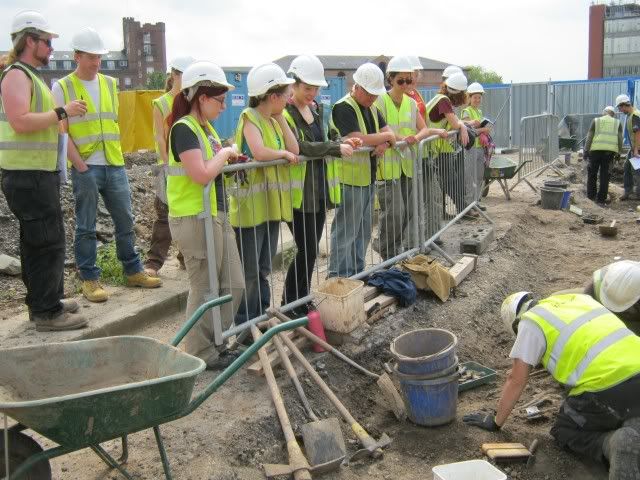
Archaeologists unearth Ewell's Roman past


Amateur archaeologists are painstakingly unearthing Ewell’s Roman past before the site is turned into a graveyard. 

Since the start of the month members of the Epsom and Ewell History and Archaeology, and Surrey Archaeological Societies have continued work to uncover evidence of Roman life in Church Field, opposite the ancient site of St Mary’s Church in Church Street, Ewell. 

The church is likely to extend its cemetery into the field in the future and the excavation is being conducted to clear the land and rescue any historical items buried there.

Excavations at ancient Side to run through summer


The archaeology department of Anatolian University has started its summer excavations in Antalya's ancient city of Side, home to several historic temples, including the Temple of Apollo and the Temple of Tyche, which have now been placed under protection to preserve the cultural and historic assets of the city. 
The ancient Greek Temple of Apollo is located at the end of Side's peninsula [Credit: Wiki Commons]
The archeological excavation team of 100 archeologists is being led by Assistant Professor Hüseyin Alanyalı in the touristic hub and historic city. Alanyalı said on Tuesday that excavations will continue until the end of the September. 

The excavations will be carried out to preserve and restore sites in Side of the Temple of Apollo, the Temple of Tyche, the Temple of Dionysus, the Temple of Athena and a basilica, Alanyalı said. The site of the Temple of Apollo will be put under protection and will be closed to visitors during the summer months of 2012. Alanyalı underlined that the ancient city of Side was treated with a lack of care, with motorcycles and trucks passing near the site and harming the environment.


Temple to Demeter unearthed in Sicily


Archaeologists have discovered what may be among the oldest remains at the ancient site of Selinunte in Sicily, an ancient temple. 

Inside, fragments have been found that help explain the site's significance: an offering to Demeter, the goddess of grain and agriculture; a small flute, made of bone and dating to 570 BC; a small Corinthian vase. 


These findings are critically important in helping archaeologists to date the temple where they were found, to around the 6th century BC - possibly the oldest at the Selinunte site. 


They've been unearthed in recent months by a team led by Clemente Marconi of New York University, working with the Department of Culture and Identity in Sicily and Selinunte Archaeological Park Together, they've also identified the remains of a central colonnade and nearby are pottery shards dated from around 650 BC, including a long vessel decorated with grazing animals.

Read the rest of this article...

Die ältesten Menschenknochen Schleswig-Holsteins sind rund 7.400 Jahre alt


Ausgrabungsarbeiten am steinzeitlichen Fundplatz in Schleswig-Holstein, sechs Meter unter der Wasseroberfläche. Foto: © Florian Huber

Die bisher ältesten Menschenknochen Schleswig-Holsteins wurden jetzt vor der Ostseeküste bei Stohl während der Grabung einer mesolithischen Siedlung entdeckt.

Im Juni bargen Forschungstaucher und Studierende des Instituts für Ur- und Frühgeschichte der Christian-Albrechts-Universität zu Kiel (CAU) diese Knochen und weitere archäologische Funde aus sechs Metern Wassertiefe.

Wednesday, July 11, 2012

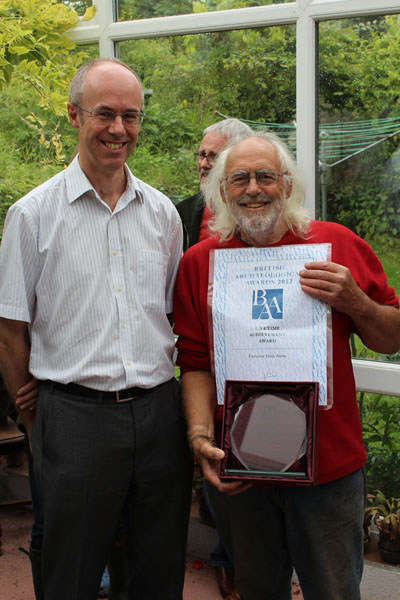
Lifetime achievement award for Mick Aston


Professor Mick Aston has been presented with a Lifetime Achievement Award at the 2012 British Archaeological Awards
 
Held at the British Museum, the awards celebrate various aspects of archaeology, as nominated by the archaeological community.

Best known for his appearances on Time Team and his academic work at the University of Bristol, Mick Aston was recognised for his long‐term commitment to public education and for his on‐going support for developing understanding of past human behaviour, as well as major personal contributions to archaeological knowledge and the development of new methodologies.

Must Farm excavation and Thames Discovery Programme win British Archaeological Awards


An unprecedented landscape-wide investigation into prehistoric life, the longest open air archaeological site in London, a scheme to help injured soldiers and, of course, Channel 4’s Time Team are among the winners in this year’s British Archaeological Awards.

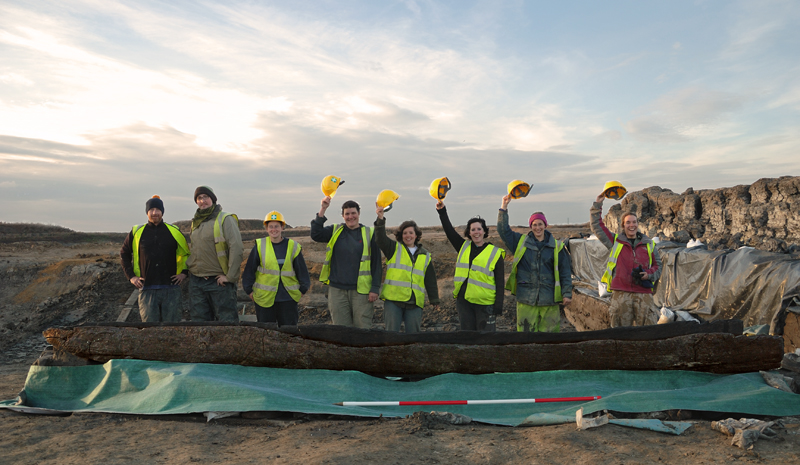
The bi-annual Awards, which took place yesterday at the British Museum revealed Cambridge Archaeology Unit’s remarkable 2011 excavation of Deep Fenland around Must Farm as winner in the Best Archaeology Project and Best Archaeological Discovery categories.

The Cambridge team, which worked with Hanson UK on the extraordinary mass excavation project at a clay brick extraction site at Whittlesey, has had top Bronze expert and TV archaeologist Dr Francis Pryor describing the venture “as a rare glimpse of a vanished time”.

From turbines to Tetricus: engineering technology reveals secrets of Roman coins

Archaeologists and engineers from the University of Southampton are collaborating with the British Museum to examine buried Roman coins using the latest X-ray imaging technology.
Originally designed for the analysis of substantial engineering parts, such as jet turbine blades, the powerful scanning equipment at Southampton’s µ-VIS Centre for Computed Tomography is being used to examine Roman coins buried in three archaeological artefacts from three UK hoards.

The centre’s equipment can scan inside objects – rotating 360 degrees whilst taking thousands of 2D images, which are then used to build detailed 3D images. In the case of the coins, the exceptionally high energy/high resolution combination of the Southampton facilities allows them to be examined in intricate detail without the need for physical excavation or cleaning. For those recently scanned at Southampton, it has been possible to use 3D computer visualisation capabilities to read inscriptions and identify depictions of emperors on the faces of the coins – for example on some, the heads of Claudius II and Tetricus I have been revealed.

Festival of British Archaeology 2012 Events


July is the Council of British Archaeology’s Festival of British Archaeology. Over the next few weeks, Wessex Archaeology will be involved in a programme of informative and fun activities, through our own events and working with other organisations such as the New Forest Park Authority, Churches Conservation Trust and Salisbury Museum.


Hands-on activities and amazing archaeology at our FoBA event

This year marks the 22nd CBA Festival of British Archaeology, the annual celebration of our heritage co-ordinated by the Council of British Archaeology.

The Festival showcases the very best of British archaeology, by presenting over 750 special events organised and hosted by museums, heritage organisations, national and countryside parks, universities, local societies, and community archaeologists across the UK. You don’t have to be an archaeologist to join in - the Festival gives everyone the opportunity to learn about their local heritage, see archaeology in action, and get hands on with history. Clickhere for the Festival's full event's listing.


Read the rest of this article...

Celtic coins unearthed in Jersy belong to Julius Caesar army


The hoard of Iron Age silver and gold coins excavated in the British most southerly Island of Jersy have been identified to date back to Julius Caesar's invading army.

Neil Mahrer, an expert from Jersey Heritage, said Europe's largest hoard of Iron Age coins unearthed in Jersey last week is a 1st Century BCE treasure.

According to the examining research, the coins are believed to date back to the year 50 BCE when the armies of Julius Caesar were advancing north-westwards through France, driving the tribal communities towards the coast.

To find a safe place away from Caesar's campaigns, some of them would have crossed the sea toward Jersey and stored their wealth by hiding it in a secret place.


Roman fort digs gets £400,000 boost


ARCHAEOLOGISTS are going to be digging deep at a historic site in South Tyneside fort, thanks to a £400,000 award.

The Heritage Lottery Fund has granted the cash to Tyne and Wear Archives and Museums for its Hadrian’s Wall and its Legacy on Tyneside venture.

Part of the project will be new excavations at Arbeia Roman Fort in Baring Street, South Shields, which was the supply base for the Wall for many years.

The project, which will begin in the autumn, aims to uncover more about the history of Hadrian’s Wall, from urban Tyneside to the Tyne Valley in Northumberland.

Coun Alan Kerr, deputy leader of South Tyneside Council, said: “We are delighted to be involved in this important project.

Chance to dig deep into North Yorkshire's past


Budding archaeologists are being encouraged to celebrate our rich history in a variety of hands-on experiences around North Yorkshire.

The Council for British Archaeology (CBA) has organised for several centres to celebrate the 21st Festival of British Archaeology this summer, with scores of exhibitions volunteering to take part.

Holgate Windmill is one of the participating venues and will hold an open weekend on July 21 and 22 offering visitors a unique view of the mill’s inventions.

Climate in Northern Europe Reconstructed for the Past 2,000 Years: Cooling Trend Calculated Precisely for the First Time


An international team that includes scientists from Johannes Gutenberg University Mainz (JGU) has published a reconstruction of the climate in northern Europe over the last 2,000 years based on the information provided by tree-rings. Professor Dr. Jan Esper's group at the Institute of Geography at JGU used tree-ring density measurements from sub-fossil pine trees originating from Finnish Lapland to produce a reconstruction reaching back to 138 BC. In so doing, the researchers have been able for the first time to precisely demonstrate that the long-term trend over the past two millennia has been towards climatic cooling.

"We found that previous estimates of historical temperatures during the Roman era and the Middle Ages were too low," says Esper. "Such findings are also significant with regard to climate policy, as they will influence the way today's climate changes are seen in context of historical warm periods." The new study has been published in the journal Nature Climate Change.

Was the climate during Roman and Medieval times warmer than today? And why are these earlier warm periods important when assessing the global climate changes we are experiencing today? The discipline of paleoclimatology attempts to answer such questions.

Warwick hosts ‘archaeology extravaganza’


TICKETS are still available for what organisers are promising will be an “archaeology extravaganza” at Shire Hall in Warwick tomorrow on Saturday.

Warwickshire County Council’s heritage and culture service is organising the day-long ‘Past Uncovered’ event as part of the Council for British Archaeology’s Festival of British Archaeology, which runs nationally from Saturday until July 29.

As well as being able to learn more about the heritage of Warwickshire, visitors will be able to listen to a range of expert speakers, find out about research opportunities, peruse a variety of displays and chat to historians and achaeologists.

People will also be able to go on tours of the old courts and cells in Warwick and see a demonstration about the Shakespeare Birthplace Trust’s Dig for Shakespeare project.

Monday, July 09, 2012

Roman coins animation - video


An animation created from 3D images of the Selby hoard of Roman coins by the University of Southampton

New technique could dramatically speed up assessing the significance of archaeological finds

British Archaeological Awards results


The results are in: the winners of this year’s British Archaeological Awards were announced today (9 July) at the British Museum in London, with some prizewinners whose names are bound to be familiar to readers of Current Archaeology.


Best Archaeological Project: Must Farm (see CA 263)
Best Archaeological Book: Gathering Time: Dating the Early Neolithic Enclosures of Southern Britain and Ireland, by Alasdair Whittle, Frances Healy and Alex Bayliss (See CA 259)
Best public presentation of archaeology: Time Team series 18 episode 1, ‘Reservoir Rituals’

Crossrail excavation work digs up 4,000 skeletons


Key archaeological discoveries have been made by engineers constructing Crossrail, the east to west rail link through central London.

Investigations have confirmed the presence of up to 4,000 complete skeletons, as well as rare 55- million-year-old amber fragments.

The artefacts can be seen for one day at The Music Room, Grays Antiques in Mayfair.

Eventually, all the items uncovered will be donated to the Museum of London or Natural History Museum.

Roman fertility eagle dug up in Scotland


A Roman symbol of fertility found near Selkirk, shaped like an eagle emerging from a flower with a berry in its mouth, highlights the discoveries made in Scotland in this year’s Treasure Trove Report. 
"A copper alloy mount cast in the shape of an eagle head, the sacred bird of Juno. The eagle is depicted emerging from a flower with a berry held in the beak and was intended as a symbol of good luck or fertility. Mounts of this type were used on the supporting frames of Roman wagons and this is the first such mount from Scotland, with only a small number known from Britain" [Credit: Selkirk Weekend Advertiser]
The talisman, excavated in 2010 by a local metal detectorist between Selkirk and Galashiels, is believed to have adorned a Roman wagon or chariot, and is the first relic of its kind to be found north of the border. 

The report described the artifact as: “A copper alloy mount in the shape of an eagle head, the sacred bird of Juno, found near Selkirk. The eagle is depicted emerging from a flower with a berry held in the beak and was intended as a symbol of good luck or fertility. Mounts of this type were used on the supporting frames of Roman wagons and this is the first such mount from Scotland, with only a small number known from Britain.”

"Frankenstein" bog bodies discovered in Scotland


In a "eureka" moment worthy of Dr. Frankenstein, scientists have discovered that two 3,000-year-old Scottish "bog bodies" are actually made from the remains of six people. 
A female Bronze Age mummy from Cladh Hallan is a composite of different skeletons [Credit: Mike Parker Pearson, University of Sheffield]
According to new isotopic dating and DNA experiments, the mummies—a male and a female—were assembled from various body parts, although the purpose of the gruesome composites is likely lost to history. 

The mummies were discovered more than a decade ago below the remnants of 11th-century houses at Cladh Hallan, a prehistoric village on the island of South Uist (map), off the coast of Scotland.

Neolithisches Kammergrab im Oberaargau


Bereits im Oktober 2011 wurde in der Gemeinde Oberbipp im Kanton Bern eine große Granitplatte freigelegt, die sich bei den weiteren Untersuchungen als Deckplatte eines neolithischen Gemeinschaftsgrabes erwies. Seit Februar wird die Anlage vom Archäologisches Dienst des Kanton Bern nun detailliert untersucht.

Sunday, July 08, 2012

Sea surrenders pristine Roman sarcophagus

 
A Turkish press report describes the sarcophagus discovery

 
Diving school trainer Hakan Gulec came across more than fish and flotsam during a recent trip to the bottom of the ocean near Antalya off the coast of southern Turkey. An object protruding through the sand on the sea bed caught Gulec's attention, prompting the intrepid explorer to dislodge and photograph the mystery find. According to Hürriyet Daily News, he then showed his images to officials at Alanya museum who were taken aback by the discovery: a striking, well-preserved sarcophagus adorned with Medusa heads, cupids holding up garlands and dancing women at the corners.

Iron Age warrior bones dug up in Denmark


Danish archaeologists said on Tuesday they had re-opened a mass grave of scores of slaughtered Iron Age warriors to find new clues about their fate and the bloody practices of Germanic tribes on the edge of the Roman Empire. 

Bones of around 200 soldiers have already been found preserved in a peat bog near the village of Alken on Denmark's Jutland peninsula. 


Experts started digging again on Monday, saying they expected to find more bodies dating back 2,000 years to around the time of Christ. 


"I guess we will end up with a scale that is much larger than the 200 that we have at present," Aarhus University archaeologist Mads Kahler Holst told Reuters.

Wednesday, July 04, 2012

Oar walking, underwater wrestling and horse fighting – historian examines the sports and games of the Vikings


Playing ball games is an activity played by children around the world. While today’s parents might worry that their sons and daughters might get scrapes and bruises, in the Viking world such a game could end with an axe being driven into an opponent’s head.

This detail comes from a new article, ‘What the Vikings did for fun? Sports and pastimes in medieval northern Europe’, which was published last month in the journal World Archaeology. In it Leszek Gardeła of the University of Aberdeen uses saga accounts and archaeological evidence to see what men, women and children from Scandinavia and Iceland amused themselves with during the Viking-era, and found that their were several popular pastimes.

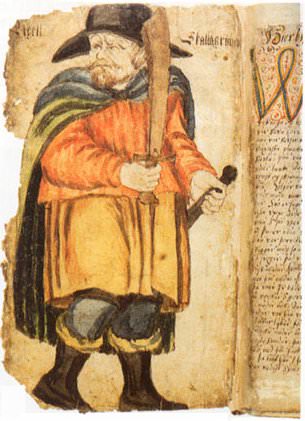
For example, a ball game called knattleikr was played, which involved at least four men throwing a ball, chasing and running, and sometimes also involved a bat. Gardeła relates that in the saga of Egill Skallagrimsson, a game was arranged that brought people from around the district to watch. The story goes that “Egill, who must have been under 12 years old, was competing against an 11-year-old boy named Grımr, who seems to have been much stronger. At some point Egill lost his temper and struck his opponent with a bat, but was immediately seized and dashed to the ground. After complaining about these events to his friend Þorðr Granason, Egill took an axe and drove it into Grimr’s head.”

Large Roman cemetery discovered in Norfolk


Archaeologists have discovered 85 Roman graves in what has been hailed as the largest and best preserved cemetery of that period found in Norfolk.

The site at Great Ellingham, near Attleborough, has been excavated over the last four months and the findings have now been revealed.

Among the skeletons, which have been exhumed for further study, there were some which were beheaded after death.

The cemetery is thought to date from the 3rd/4th Century.

Archaeologists dig up bog army bones in Denmark


Danish archaeologists said on Tuesday they had re-opened a mass grave of scores of slaughtered Iron Age warriors to find new clues about their fate and the bloody practices of Germanic tribes on the edge of the Roman Empire.


Bones of around 200 soldiers have already been found preserved in a peat bog near the village of Alken on Denmark's Jutland peninsula.

Experts started digging again on Monday, saying they expected to find more bodies dating back 2,000 years to around the time of Christ.

"I guess we will end up with a scale that is much larger than the 200 that we have at present," Aarhus University archaeologist Mads Kahler Holst told Reuters.

"We have only touched upon a very small part of what we expect to be there ... We have not seen anything like this before in Denmark, but it is quite extraordinary even in a European perspective," he added, speaking by phone from the site on damp grazing meadows near Jutland's large lake of Mossoe.

Kingsholm garden dig to reveal Gloucester's past


People in part of Gloucester are being asked to dig up their gardens as part of a local history project. 

Kingsholm has been chosen to take part in History on Your Doorstep, a project run by the archaeology team at Gloucestershire County Council.

It was the site of the first Roman military fort in Gloucester and an important Anglo-Saxon royal palace was also located in the area.

The project is being funded through a Heritage Lottery Fund grant.

At the end of the project there will be an exhibition of the findings, held at Gloucester City Museum during the summer of 2013. 

People from outside the area can also take part in some test digs on Saturday as part of the BBC Great Gloucestershire History Day.

Work begins to uncover Roman mosaics at Chedworth villa


Archaeologists have begun to excavate a mosaic beneath a corridor at Chedworth Roman Villa in Gloucestershire. 

At 35m (115ft) long, it is considered to be one of the longest in-situ corridor mosaics in the country.

Visitors to the villa near Cirencester are able to watch archaeologists at work from suspended walkways which have been installed overlooking the mosaics.

National Trust archaeologist Martin Papworth said: "Hopefully we'll find some exciting things."
Victorian archaeologists uncovered and then reburied the mosaics about 150 years ago.

Wilberforce College's Iron Age finds halt building work


Builders at a college in East Yorkshire have stopped work after finding objects dating back to the Iron Age.

The workers constructing a sports court at Wilberforce College, Hull, have made way for experts from Humber Field Archaeology to inspect the site.

Digs at the site in the east of the city date back to the 1960s and there was archaeological work there in 2010.

David Cooper, vice-principal at the college, said: "This is a really important site."
It is thought the objects found are shards of Iron Age pottery.

Top five Archaeology days


As part of The Festival of British Archaeology, here are five ways to dig up the ancient secrets of Britain and beyond.

1. The Horse Hunters of Cheddar Gorge, Somerset
Our ancestors dwelled in the dark caves of Cheddar Gorge at the end of the Ice Age, hunting wild horses by stampeding them over the edges of cliffs. A reenactment group dressed in deerskins will demonstrate flint knapping and fire making, key skills in surviving the stone age. Also includes a talk about the artefacts and bones excavated from the caves, cave painting and making pinch pots.
2. Walk with an Archaeologist: the Stonehenge Landscape, Wiltshire
Stonehenge remains one of the most mysterious archeological specimens in the world, with huge stones taken from distant counties in a cryptic religious circle. Join Neolithic expert and National Trust archaeologist Dr. Nick Snashall on an exploration of the Stonehenge landscape, find out about the latest discoveries and exciting finds. The walk measures about 8 miles, so it is recommended to bring a packed lunch to enjoy whilst walking.

Read the rest of this article...

Moving 4,000 Tons Using Only the Strength of Humans and Animals: Historians Accompany the Castle Construction in Friesach


Entirely in keeping with medieval construction methods, a castle is being erected in the Austrian town of Friesach. The project, which is scheduled to last 30 years, is being accompanied by a number of historians. On July 5th, the corner stone for the visitors' centre will be laid.

Medieval castles are regarded as buildings of particular stability: Even after 1,000 years, many have successfully withstood the ravages of time. Making the most of a construction site, where a castle is being constructed using medieval methods, historians are critically examining the existing knowledge about tools and materials, in an effort to gain new insights. "For example, a female expert in the history of construction is currently conducting research in Friesach in order to discover the secret of the medieval mortar mixture," Johannes Grabmayer, project leader at the Department of History at the Alpen-Adria-Universität explains. An understanding of this "perfect mortar" could also be of interest to today's manufacturers of construction equipment and materials.

Legendary Viking town unearthed


Danish archaeologists believe they have found the remains of the fabled Viking town Sliasthorp by the Schlei bay in northern Germany, near the Danish border.

According to texts from the 8th century, the town served as the centre of power for the first Scandinavian kings.

But historians have doubted whether Sliasthorp even existed. This doubt is now starting to falter, as archaeologists from Aarhus University are making one amazing discovery after the other in the German soil.
"This is huge. Wherever we dig, we find houses – we reckon there are around 200 of them,” says Andres Dobat, a lecturer in prehistoric archaeology at Aarhus University.

Monday, July 02, 2012

Crossrail archaeology dig gives us a glimpse into old London


Delicate work: a Crossrail archaeologist brushes around a skeleton during engineering works at Liverpool Street

A skeleton, ancient jewellery, medieval ice-skates and other artifacts unearthed during excavations for Crossrail are to go on show to the public.
Archaeologists say the finds — about 100 of which will go on display — offer a glimpse into ancient London and the capital’s industrial history.
The skeleton is one of up to 4,000 found in a site underneath Liverpool Street that was used for about 200 years from 1569 as the burial ground for local residents and patients from St Bethlehem Hospital — known as Bedlam.

Bulgarian Archaeologists on Struma Hwy Obey PM's Deadline


Bulgarian Archeologists on Struma Hwy Adhere to PM Deadline: Bulgarian Archaeologists on Struma Hwy Obey PM's Deadline
Regional Minister, Lilyana Pavlova (l), and Culture Minister, Vezhdi Rashidov (r) at the ceremony for the transfer of archaeological discoveries from the Struma highway to local museums. Photo by BGNES 
 
Bulgarian archaeologists have adhered to the June 30 deadline issued by Prime Minister, Boyko Borisov, to finish excavations so that construction on the southwestern Struma highway can go on.
After working round-the-clock, they freed the terrain and workers who will build Lot 1 of the highway can now enter with excavators, loaders, and other heavy construction machinery.

Borisov was scheduled to attend in person the transfer of the archaeological discoveries to the museums in the nearby town of Dupnitsa and city of Kyustendil, but other urgent commitments have prevented him from travelling to the location. The cabinet was represented by Regional Minister, Lilyana Pavlova, Transport Minister, Ivaylo Moskovski, and Culture Minister, Vezhdi Rashidov, who became the very first people to see the Roman coins and ceramics, dated from the 4th century AC.