Tuesday, July 25, 2023

More secrets of mystery Norman castle uncovered

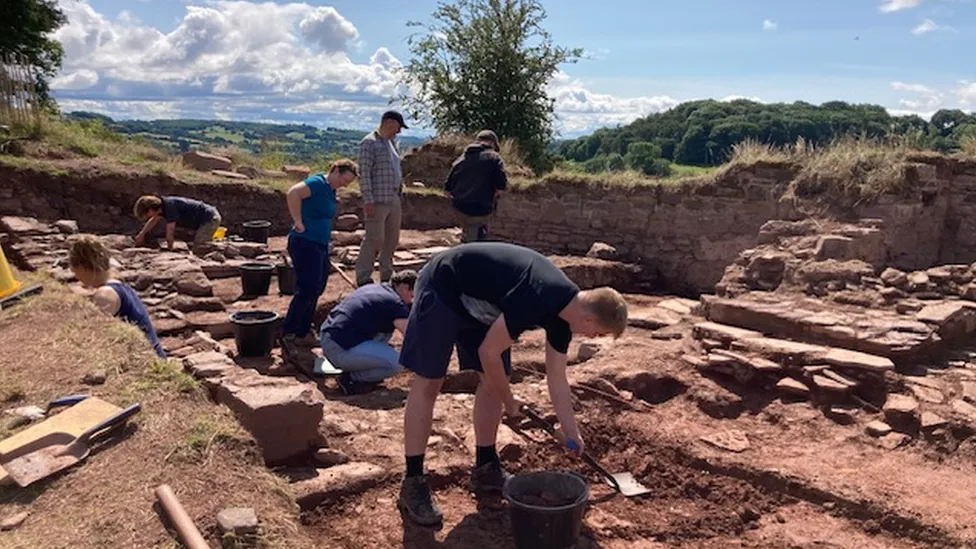
Students from Manchester and Cardiff have been taking part in the Snodhill Castle dig

Marks left by stone masons and the remains of a hidden gate were found at Snodhill Castle in Herefordshire.

Tim Hoverd, the council's archaeology projects manager said the finds gave an idea of the cost and strength of the Norman castle.

The dig was at the site of chapel inside the castle and the finds suggested a substantial building, more on a par with a small church, he said.

Mr Hoverd said: "We should be able to trace who these masons were and when they were working in the county or nearby."

The trust which runs the castle has previously said it5 believes it has found the site of a Royal Free Chapel, a church belonging directly to a monarch.

Read the rest of this article...

The Byzantine General Who Challenged the Emperor

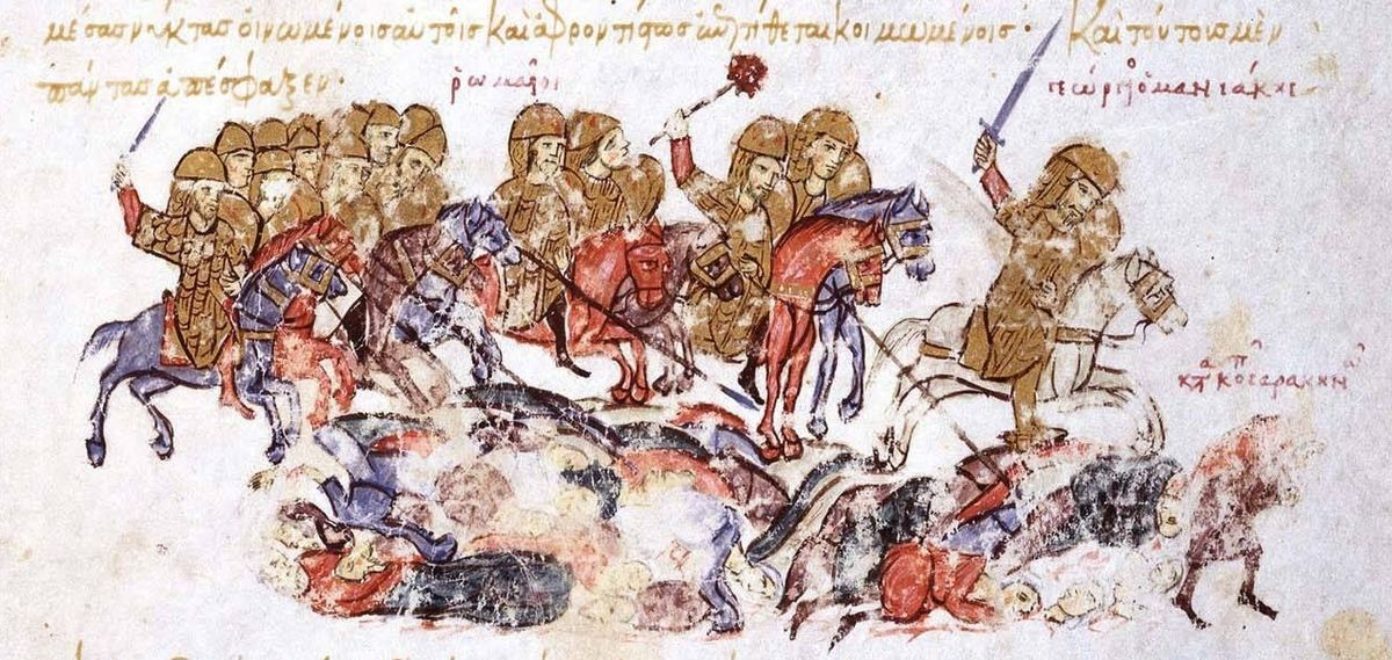
Byzantine general George Maniakes who chalenged emperor Michael IV, leads a cavalry charge against the Arabs. Credit: Public Domain / Wikimedia Commons

After the tremendously successful reign of Basil II, the eleventh century signaled a turn of fortunes in a far more negative direction for the Byzantine (Eastern Roman) Empire, marked by military defeats and decline.

However, George Maniakes, a Byzantine general, stood as an exception in this rather depressing era for the Byzantine Empire. Maniakes stood quite literally as a giant on the battlefield owing to his imposing stature, but he was also a supremely capable tactician and commander.

The historian John Julius Norwich described Maniakes as “the glorious, tempestuous, ill-starred” preeminent Byzantine general of his age.

Read the rest of this article...

Zahnanalyse ermöglicht neue Erkenntnisse zur Bevölkerungsentwicklung in Südwestdeutschland von der Steinzeit bis zur Eisenzeit

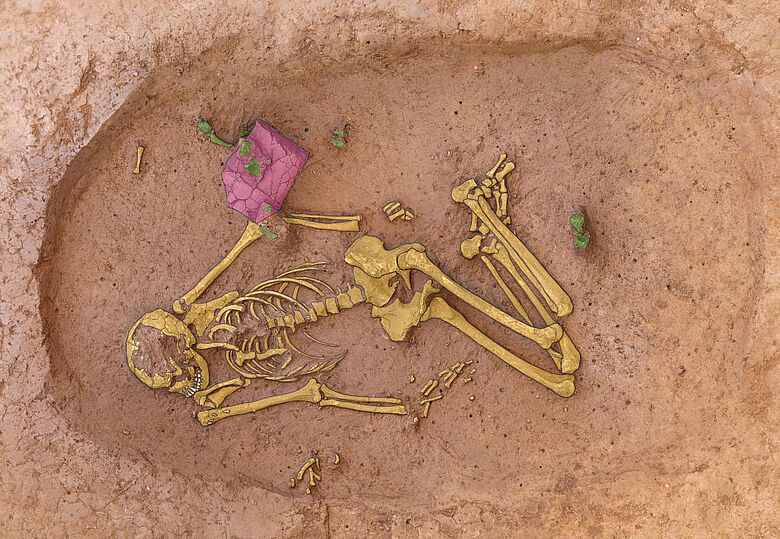
Bestattungen des Endneolithikums und der Frühbronzezeit, wie dieses vor wenigen Jahren in Heilbronn entdeckte Hockergrab der Schnurkeramik, standen im Fokus der Biodistanzanalysen.
Bild: © Landesamt für Denkmalpflege im Regierungspräsidium Stuttgart

Das Landesamt für Denkmalpflege, Senckenberg und die Eberhard Karls Universität Tübingen haben eine neue Methode zur menschlichen Zahnanalyse getestet, um umfassendere Einblicke in die Populationsgeschichte Südwestdeutschlands von der ausgehenden Steinzeit bis zur frühen Eisenzeit zu gewinnen. Die Studie konzentriert sich auf die Untersuchung von Zähnen in menschlichen Bestattungen.

Mit der neuen Analysemethode namens FLEXDIST können genetisch bedingte Ähnlichkeiten und Unterschiede zwischen Individuen anhand spezifischer Zahnmerkmale ermittelt werden. Diese Merkmale, wie beispielsweise die Anzahl und Größe der Höcker von Backenzähnen, sind vererbbar und liefern Aufschluss über die Biodistanz, also die Ähnlichkeit zwischen Individuen. Die Analyse der Zähne kann somit mit genetischen Untersuchungen verglichen werden.

Read the rest of this article...

Neue Erkenntnisse zur Populationsgeschichte des dritten bis ersten Jahrtausends v. Chr. in Südwestdeutschland

Landesamt für Denkmalpflege, Senckenberg und Eberhard Karls Universität Tübingen testen neue Methode zur menschlichen Zahnanalyse

11.07.23 Pressemitteilungen

Pressemitteilung Landesamt für Denkmalpflege im Regierungspräsidium Stuttgart

Einem Team von Forscherinnen und Forschern vom Senckenberg Centre for Human Evolution and Paleoenvironment (SHEP), der Arbeitsgruppe Paläoanthropologie an der Universität Tübingen und des Landesamts für Denkmalpflege (LAD) im Regierungspräsidium Stuttgart ist es mit Hilfe einer neuen Analysemethode erstmals gelungen, umfassendere Einblicke in die menschliche Populationsgeschichte Südwestdeutschlands von der ausgehenden Steinzeit bis zur frühen Eisenzeit zu gewinnen. Die Studie gründet auf der Untersuchung von Zähnen menschlicher Bestattungen.

Mit der neuen Analysemethode FLEXDIST können genetisch bedingte Ähnlichkeiten und Unterschiede der Individuen anhand spezifischer Zahnmerkmale ermittelt werden. „Möglich wird dies, da jeder Zahn unterschiedliche morphologische Merkmale wie etwa die Anzahl und Größe der Höcker von Backenzähnen aufweist“, erläuterte Stephanie Lismann (Universität Tübingen), Zweitautorin der Studie. „Sie sind vererbbar und können Aufschlüsse zur Biodistanz liefern, also wie ähnlich Individuen zueinander sind. Die Analyse dieser Zähne ist mit genetischen Untersuchungen vergleichbar“, so Lismann.

Read the rest of this article...
Monday, July 24, 2023

Earliest glass workshop north of the Alps discovered


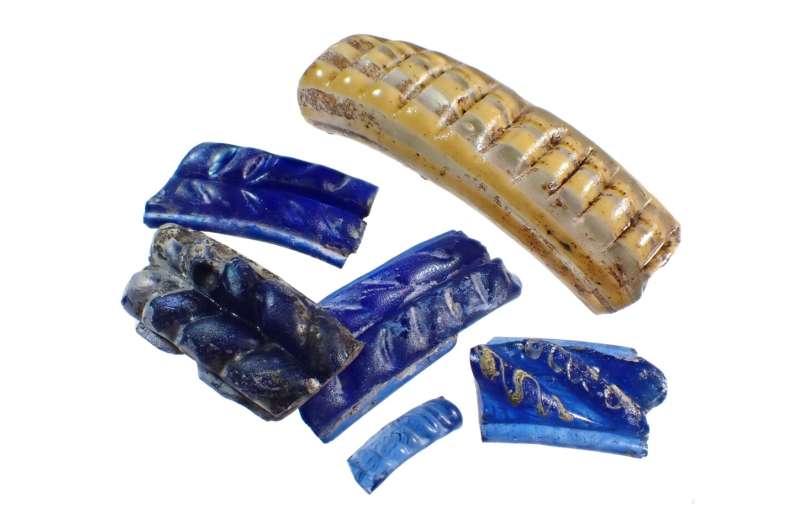
Credit: Antiquity (2023). DOI: 10.15184/aqy.2023.80

After 20 years of above-ground surveys, archaeologists have excavated the famous Iron Age site of Němčice and confirmed the presence of the earliest glass workshop north of the Alps.

Němčice is one of the most important settlement sites of the La Tène Period (3rd–2nd century BC) in Central Europe, famous for its unprecedented amount of gold and silver coins which number over 2,000.

Numerous beautiful glass bracelets and beads have also been found at the site. As such, it was thought that Němčice was a center of glass production, but only these excavations have confirmed this fact.

Read the rest of this article...
Boris Johnson's swimming pool plans on hold as councillors demand archaeological dig

Boris Johnson running near his home in Brightwell-cum-Stowell
 (Image: AFP via Getty Images)

Parish councillors are calling for archaeologists to excavate land around Boris Johnson's Oxfordshire mansion – as its five-acre grounds are believed to have been the site of a 12th-century siege castle

His political career collapsed spectacularly when so many of his blunders were unearthed.

So Boris Johnson could be forgiven for not wanting the past to be dug up yet again.

But parish councillors are calling for archaeologists to excavate land around his Oxfordshire village mansion – as its five-acre grounds are believed to have been the site of a 12th-century siege castle.

They acted after studying his plans for a 36ft swimming pool at the £3.8million pile.

An official objection was raised at a meeting last week.

Read the rest of this article...

Friday, July 21, 2023

Viking House The Size Of Two Tennis Courts Discovered In Norway


It was in this rural field it once all went down, from the Bronze Age to around the 18th century. Thanks to discoveries made by metal detectorists, even more traces of the historical power centre at Sem in Norway have now been uncovered.
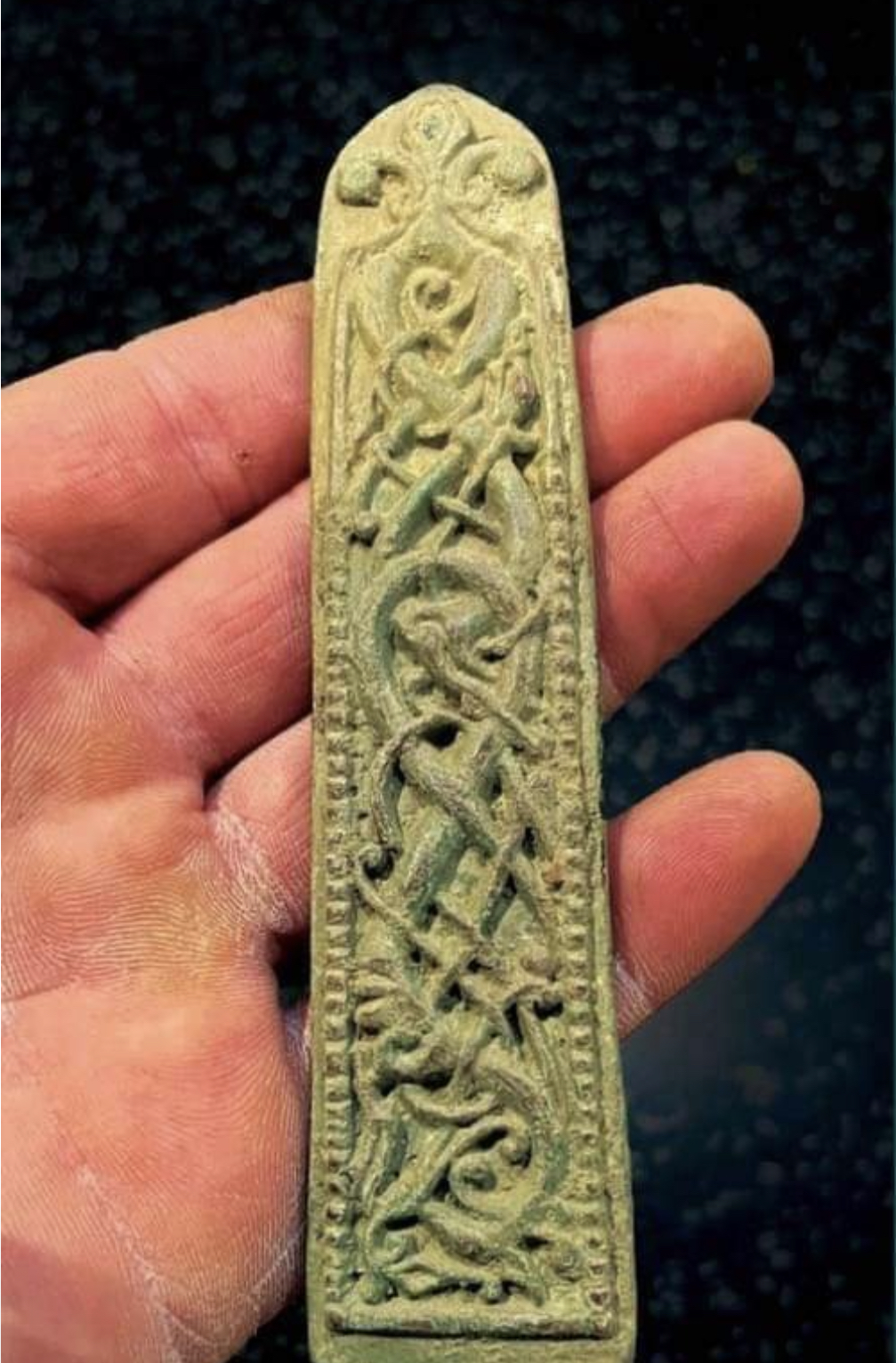
(Photo: Fylkeskommune / Frank Rødberg)

Archaeologists in Norway report they have discovered what seems to be a massive Viking house that has the length of almost two tennis courts.

The discovery was made when scientists excavated at an ancient royal estate site where they also unearthed an exquisite sword and many remnants of lavish parties.

“A finely ornamented handle for a knife or fork was found here during a metal search a few years ago,” says Christian Løchsen Rødsrud, the leader of the nearly three-month-long excavation at Sem in Eiker this summer.

The knife or fork is associated with King Christian IV, who was the king of Denmark and Norway from 1588 to 1648. He stayed at the royal estate at Sem several times.

Read the rest of this article...
Sunday, July 16, 2023

Unique Female Viking Grave In Swedish Mountains Reveals Its Secrets


Archaeologists have found a rare female Viking grave in the Swedish mountains.
Credit: Adobe Stock - Fotokvadrat

"My first thought was that I had found a mine, but then when I had dug around, I understood that it can't be, Nyström told TT.

Nyström took the brooch home and asked around, but no one knew what it was or where it came from. One year later, he came in contact with the museum Jamtli in the city of  Östersund and understood the archaeological and historical value of the brooch he had found.

At the site in Jämtland, Anders Hansson, chief archaeologist at Jamtli, also found another oval brooch which is not much of a surprise because such pins are usually unearthed in pairs.

"What has been established is that it is a cremation grave from the Viking Age and "most likely" a woman's grave, Hansson says. Previously, only five other Viking graves have been found in the mountains, and all have belonged to men.

Read the rest of this article...

Tuesday, July 11, 2023

Norwegian couple found a Viking Age Grave And Sword in their garden


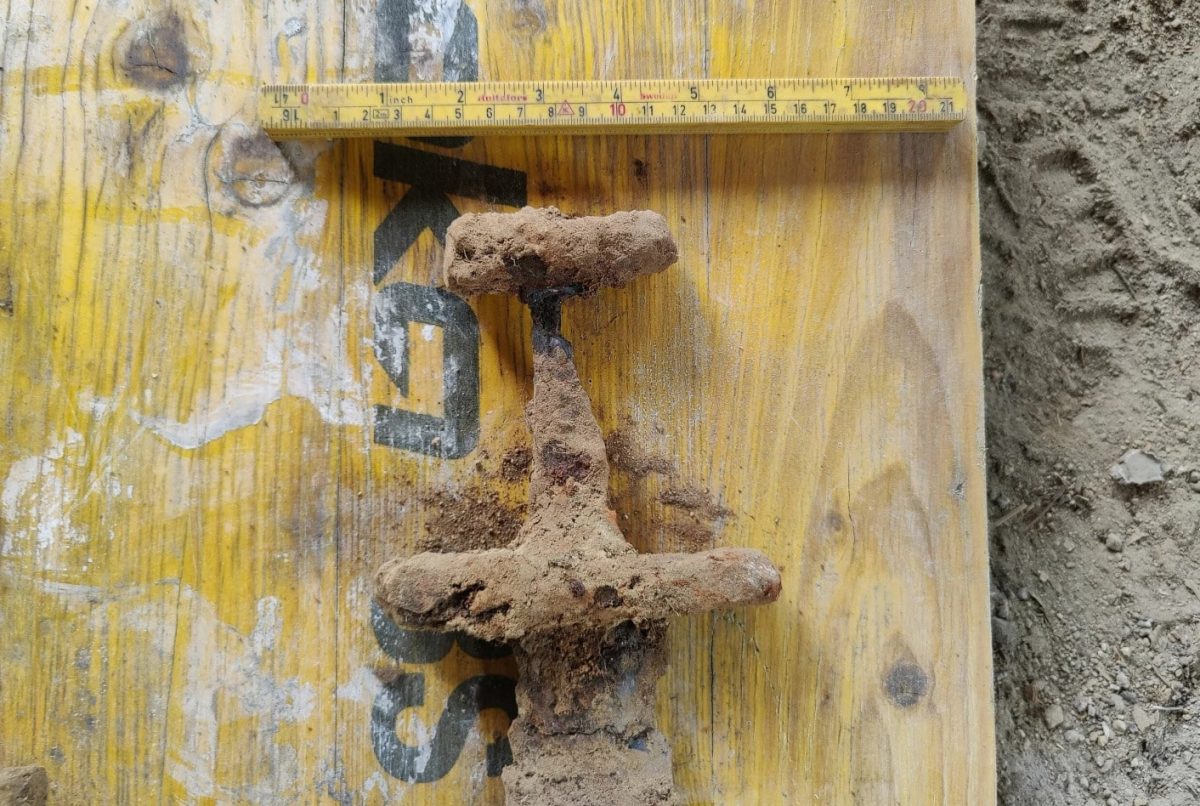
While trying to expand their home, a Norwegian couple found a Viking Age grave and sword in their garden.

It’s not always necessary to travel far to make a remarkable archeological find, but few of us anticipate discovering something of historical significance in our homes. However, this rather strange scenario does occur on occasion. A Norwegian couple was expanding their home when they noticed something strange sticking up from the ground. Sword-like in appearance, and it was exactly that.

Oddbjørn Holum Heiland and his wife Anne were digging behind the Setesdalshouse from 1740, which they wish to extend on June 30.

“I wasn’t going to dig a lot, just a little bit in the slope behind the house, to get some more space between the house and the land,” Heiland told to Science in Norway from Setesdal in Southern Norway.

Read the rest of this article...

Thursday, July 06, 2023

Archaeology A Norwegian Dad Hiking With His Family Discovered a Rock Face Covered With Bronze Age Paintings


It's the first time this type of painting has been found regionally.

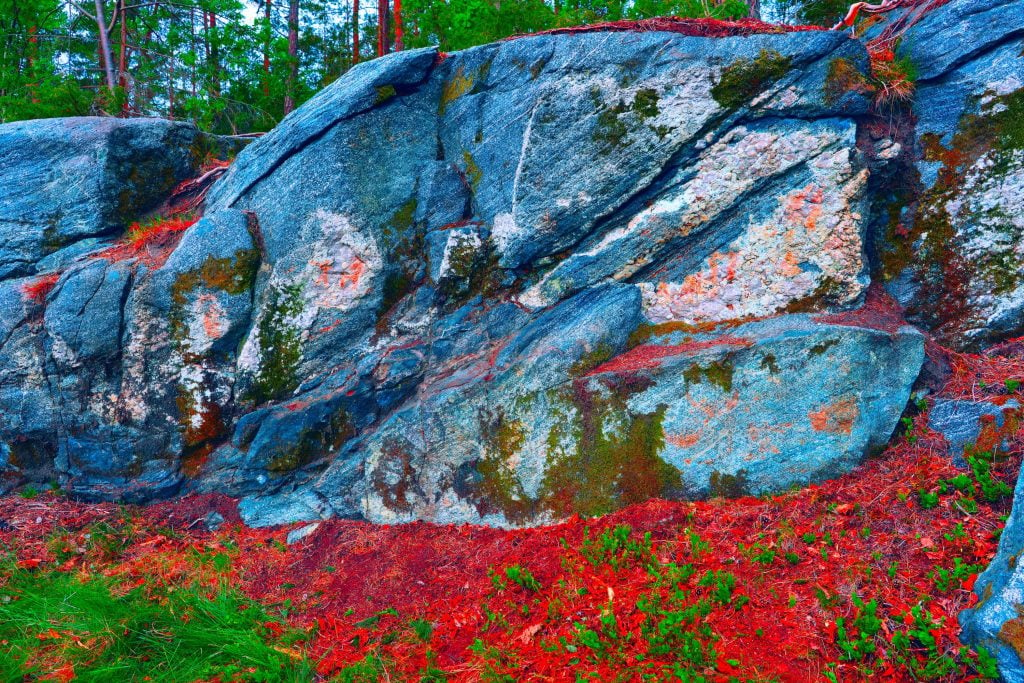
A man on a hike with his family in the countryside outside of Oslo, Norway, has stumbled across a rock face covered in Bronze Age paintings.

The discovery did not, however, come as a complete surprise to Tormod Fjeld, a graphic designer and devoted amateur archaeologist who has hunted down more than 500 petroglyphs with friends in recent years.

And so, when Fjeld spotted a nearby boulder with unusual coloration while taking a break from hiking, he was ready. Fjeld pulled out his phone, took a picture, and then plugged it into an app that could clarify if the markings were natural pigments, such as iron deposits, or something altogether more interesting.

Read the rest of this article...

Ancient Scandinavians wrote encrypted messages in runes 1500 years ago

The Ellestad stone, inscribed between AD 500 and 700, appears to include encrypted runes
Unknown/Creative Commons

People living in Scandinavia may have written encrypted messages in runes – the alphabet later used by the Vikings – several centuries earlier than previously thought.

In runic writing systems, each rune can represent both a sound and a word. For example, in an early runic system called the Elder Futhark, the rune that corresponds to the letter S also means “sun”.

It is generally possible to translate runes into modern languages. But we have long known that in the Viking period, starting in roughly AD 800, runes were sometimes encrypted, so the text isn’t decipherable. One of the most famous examples is the Rök runestone in Sweden, which was erected in the late 800s and contains a lengthy, encrypted runic text. No one has been able to convincingly decipher it.

Read the rest of this article...

Pictish Symbols Explained: 14 Pictish stones in Scotland and the meaning of their symbols

Over two hundred Pictish stones are scattered across Scotland with curious symbols that archaeologists and historians have studied for years, here’s what we know about them.

The Picts are famous for erecting majestic standing stones that feature enigmatic symbols. While located across many regions of Scotland, we know areas like Aberdeenshire acted as one of the chief heartlands for northern Picts and this heritage is reflected even in the modern place names used today.

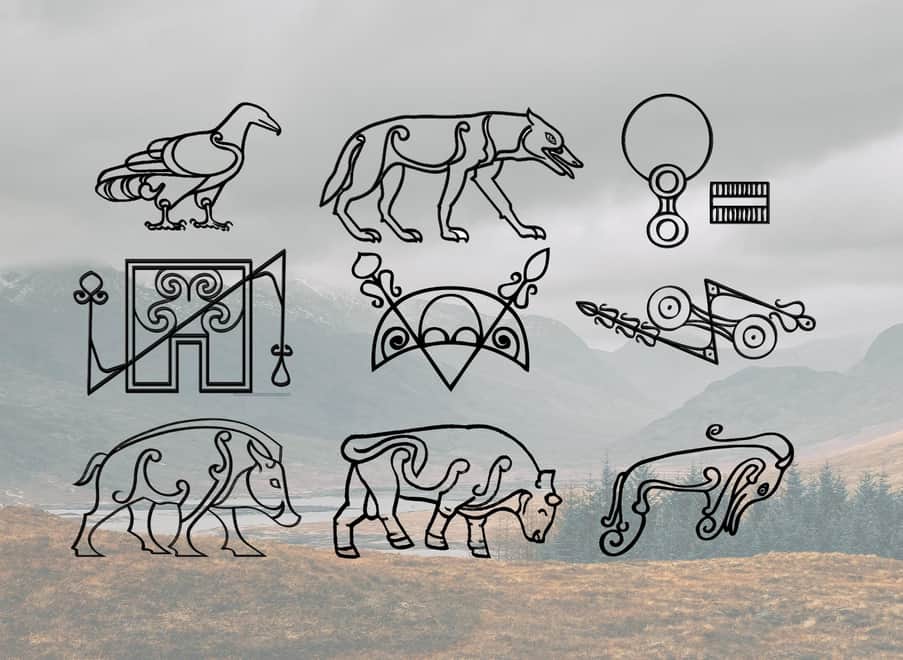
The Picts’ expertly carved symbol stones, according to scholars, may have served as territorial markers, represented Pictish names and ranks, or recorded marriage treaties. Pictish symbols are divided into three groups; Animal, Geometric and Everyday Object symbols, they usually occur in pairs and there are roughly 50 documented symbols.

Some historians suggest that the symbols predate their existence on stones and may have been used for tattoos as was typical with Pictish tribes. Ultimately, our knowledge of Pictish culture is limited to modern scholars’ interpretation, so here are 14 Pictish stone symbols and their meaning according to them.

Read the rest of this article...

Tuesday, June 27, 2023

The Norn Language: Scotland’s mysterious Viking tongue that can be found in modern Scots


Dubbed the “sixth Scandinavian language” Norn was spoken by Scots for centuries prior to its extinction, but echoes of this past can still be heard as remnants of the Viking tongue exist in modern Scottish words.

Broadly speaking, Etymologists divide Scandinavian languages into two historical branches; Western and Eastern. Danish and Swedish account for the Eastern examples while the Western includes Norwegian, Icelandic and Faroese.

Just as Iceland and the Faroe Islands were largely settled by Norwegian Vikings, regions of Scotland like the Shetland Islands also underwent this Norse invasion which led to the birth of another Western Scandinavian language; Norn.

Read the rest of this article...

Monday, June 26, 2023

How to Make a Viking Warrior?


"Making a Warrior: the Social Implications of Viking Age Martial Ideologies” is the title of a new research project, which was recently granted substantial funding from Nordforsk. Partners are the Universities in Oslo, Copenhagen, Uppsala, and Reykjavik.

Archaeologist Marianne Moen, who has also recently taken over the position as Head of Department of Archaeology at the Museum of Cultural History, will be the project manager for the upcoming research project “Making a Warrior: the Social Implications of Viking Age Martial Ideologies” that is starting up in the fall of 2023.

– The Viking Age often evokes associations with violence and war, with images of tough men enacting scenarios of violence and war. At the same time, we know that the truth was much more complex. This project is based on the premise that Viking warriors were not a uniform group of people, and that warrior ideals moreover had socio-political and ritual aspects that were as important as the actual war and violence in itself, she tells us.

Read the rest of this article...

Saturday, June 24, 2023

Wild Cattle in Britain – Descendants of Viking Cattle?


Also known as the Chillingham Cattle, Britain is home to four flocks of White Cattle living in the wild since the 12th century.

The fierce and shy wild cattle living in the park at Chillingham is but one flock of four roaming at Woburn, Dynevor, and Cadzow. Earlier on, such herds were a common feature in the British landscape, probably kept for their ornamental and symbolic value. Known in the 12th century as Tauri Sylvestres, they have apparently always been considered a wild sub-species. The herd at Chillingham, though, was first mentioned in 1645. Today, about 130 animals live in the 150-ha large park in Northumberland. The herd is protected from being earmarked, a true sign of their “wild” status.

These flocks of wild cattle were treated as a kind of super-deer eaten on festive occasions, such as at the Archbishop of York installation feast in 1466. At the celebrations, six wild bulls were roasted and served. It appears the white cattle survived as potent medieval status symbols alongside other wild species. Evidence from Auckland Castle indicates a herd of White Cattle was kept in the 15th-century deer park for ornamental reasons together with wild horses.

Read the rest of this article...

Thursday, June 22, 2023

Viking artefact unearthed by metal detectorist to be sold at auction

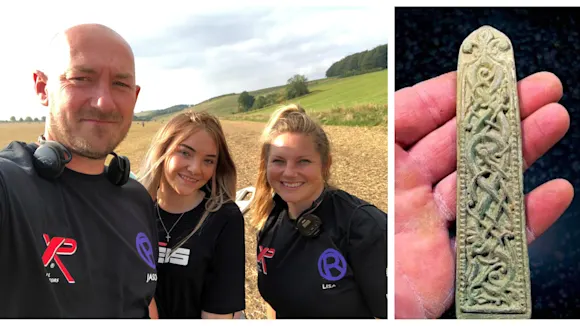
The bronze artefact, called a die, would have been used to create decorative motifs to be applied to a military helmet (Jason Jones/PA)

A metal detectorist has unearthed a Viking artefact that was used to craft decorative motifs for military helmets.

Jason Jones, 44, of Norwich, made the find while searching a field near Watton in Norfolk in January this year, having previously found two medieval silver coins there.

The construction industry worker, who was with his wife Lisa, said he had forgotten to charge his main detector and was using his backup machine.

“I returned to the area where the coins were found and got a loud signal, and at a depth of just two inches found an unusual bronze object,” he said.

“Lisa came over and was speechless when she saw it.

Read the rest of this article...

Viking artefact unearthed by metal detectorist in Norfolk field could fetch £24,000 at auction

Jason Jones, 44, with his wife and daughter, found a Viking artefact in a field in Norfolk.
Credit: Jason Jones / PA / Noonans auctioneers

A Viking artefact unearthed by a metal detectorist in Norfolk could fetch up £24,000 at auction.

Jason Jones, 44, of Norwich, made the find while searching a field near Watton in Norfolk in January this year, having previously found two medieval silver coins there.

The construction industry worker, who was with his wife Lisa, said he had forgotten to charge his main detector and was using his backup machine.

“I returned to the area where the coins were found and got a loud signal, and at a depth of just two inches found an unusual bronze object,” he said.

Read the rest of this article...

Archaeologists unearth 4,000-year-old ‘Stonehenge of the Netherlands’

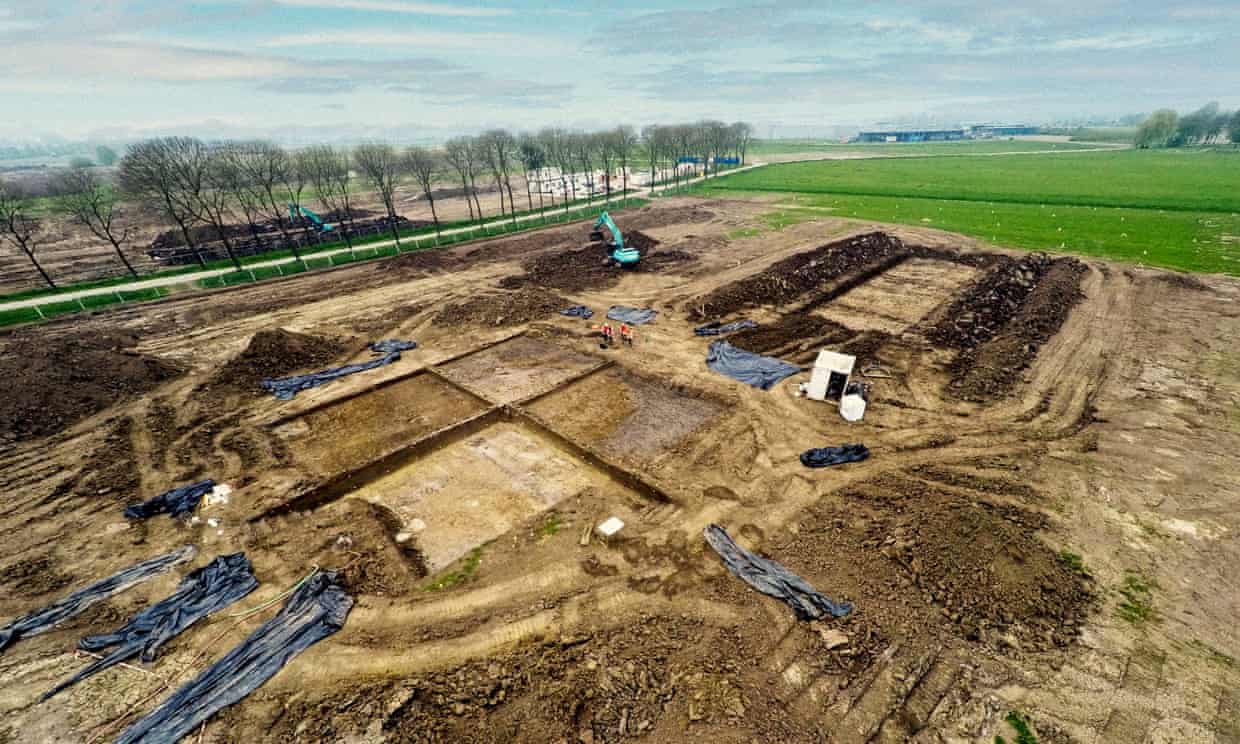
The Tiel sanctuary featured a solar calendar that was used to determine important events including festivals and harvest days, say archaeologists.
Photograph: Municipality of Tiel/Reuters

Dutch archaeologists have unearthed an approximately 4,000-year-old religious site – nicknamed the “Stonehenge of the Netherlands” – that includes a burial mound that served as a solar calendar.

The mound, which contained the remains of about 60 men, women and children, had several passages through which the sun shone directly on the longest and shortest days of the year.

The town of Tiel, where the site was discovered, said on its Facebook page: “What a spectacular archaeological discovery! Archaeologists have found a 4,000-year-old religious sanctuary on an industrial site.”

It added: “This is the first time a site like this has been discovered in the Netherlands.”

Read the rest of this article...

‘It stands over us like a giant’s dining table’: on the trail of the UK’s ancient stones

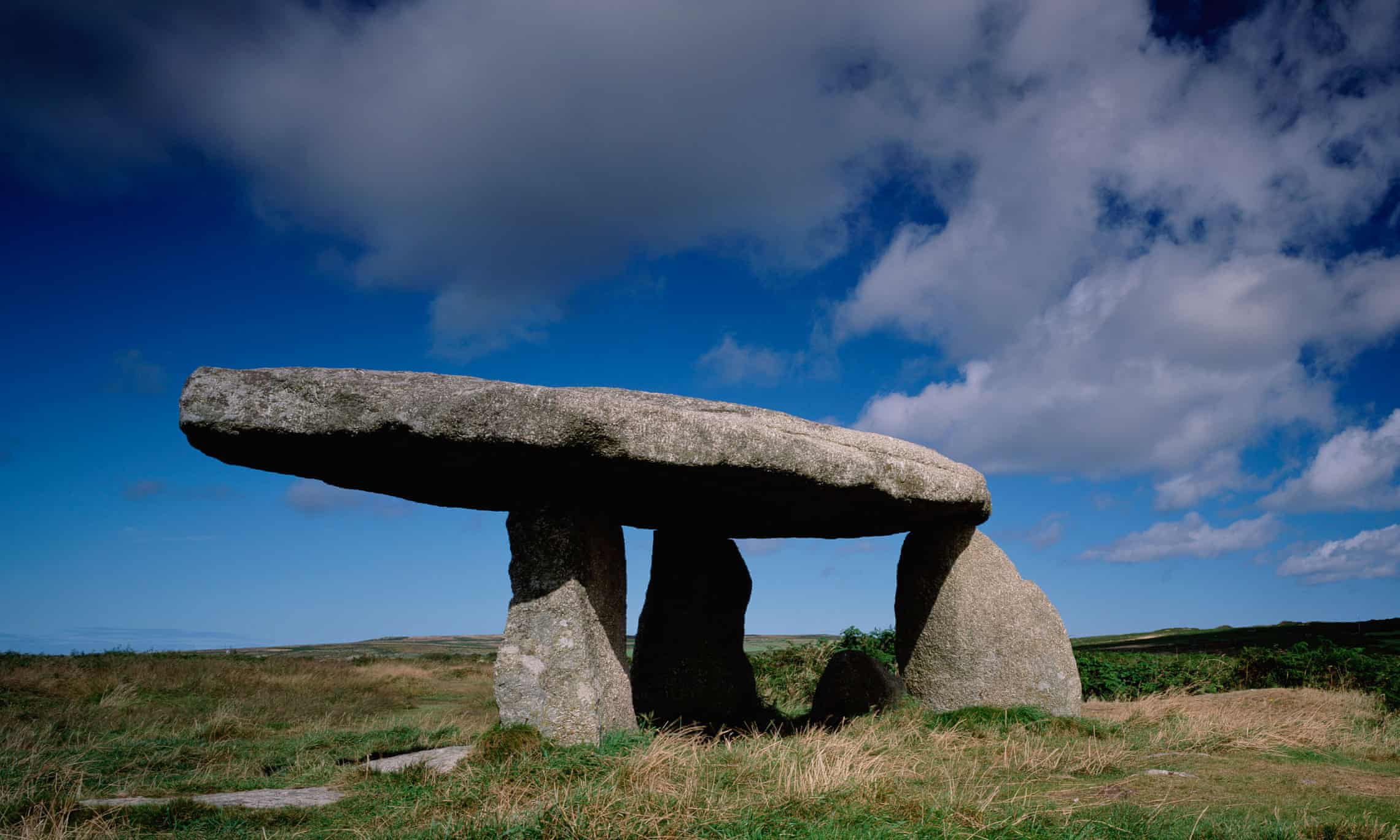
One of Cornwall’s most recognisable megaliths … Lanyon Quoit. Photograph: Alamy

No longer just for solstice, a new type of tourism means these mysterious formations are being visited year round. Our writer joins a stone hunt on the Cornish moors.

Up on Cornwall’s Penwith Moors time takes a strange quality. Here the landscape is a morass of knotted bracken and bristly gorse, a soft marigold tinge signalling warmer summer days. A grey smudge of cloud sags on the horizon and the wind whirs like white noise, a low and disorientating murmur. The topography is a palimpsest, with working farms etched over ruinous mines and prehistoric settlements. And at its heart is a scattering of ancient stones, the enigmatic quoits, barrows and stone circles that have captivated and confounded societies for millennia.

It’s an enchanting place just to wander, but to help me dive deeper into the mysteries of the moors, I am meeting artists and stone enthusiasts Lally MacBeth and Matthew Shaw. Almost immediately I feel underdressed in hiking boots primed with mud and a hardy waterproof – in Cornwall, we come perpetually prepared for the threat of showers. MacBeth, on the other hand, looks the part of an antiquarian in an emerald-green blazer and matching beret finished with a swipe of ruby lipstick. The only muted part of her outfit is a monochrome badge, the size of a small pebble, that reads: “The Stone Club”.

Read the rest of this article...

A Couple Renovating Their Kitchen in Denmark Found an Ancient Stone Carved With Viking Runes

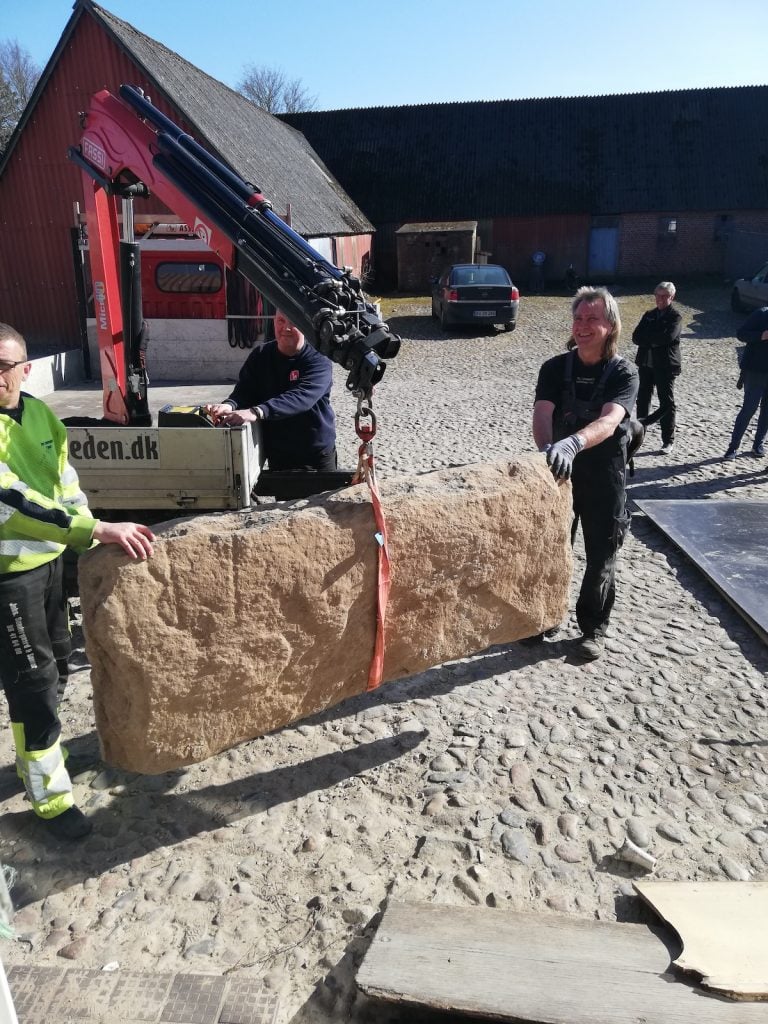
An ancient stone was discovered under the kitchen floor in a home in Denmark.
Photo Lene Brandt, courtesy National Museum of Denmark.

When Lene Brandt and her husband, Anders Nielsen, were preparing to tear up the linoleum floors in the kitchen in their home in the village of Mosekær, in Denmark, they probably expected the normal things that occur in the course of such a project: cost overruns, delays, and problems with contractors.

Instead, what they found was an ancient artifact. The couple stumbled across a nearly 2,000-pound stone, measuring more than six feet long, carved with ancient runes. The couple contacted local experts at the Museum Østjylland. Staff archaeologist Benita Clemmensen is quoted by the cultural news site Skjalden saying that these stones are the sole written records of the Viking Age. 

Five runes can be found carved into the stone’s surface, reading “aft Bi,” which can be translated as “after B.” 

Read the rest of this article...