Thursday, September 29, 2022

DNA From Skeletons Reveals Large Migration to Early Medieval England

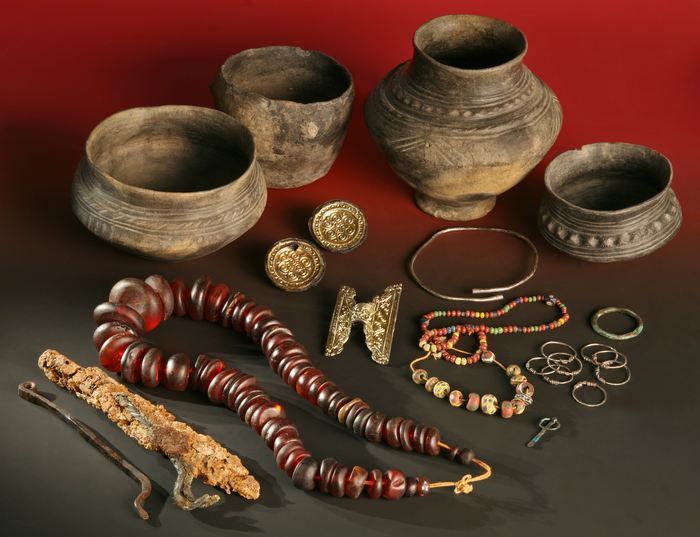
Goods from a grave site at Issendorf cemetery in Lower-Saxony, Germany. 
Landesmuseum Hannover

A new study could close a long-standing debate about movement of people post-Roman rule

In the 19th century, archaeologists in England unearthed remains that dated to the era after Roman rule, which ended around 400 C.E. The items revealed a shift from Roman artifacts to those originating in present-day Germany and the Netherlands. In that era, Roman-style tools and pieces of pottery were replaced with northern European jewelry, swords and architecture.

“You can’t deny there was a big shift in material culture—Roman Britain looks very different from the Anglo-Saxon period 200 years later,” Catherine Hills, an archaeologist at the University of Cambridge in England, tells Science’s Andrew Curry.

But as for what led to this change, historians have long been divided. Many archaeologists have rejected the idea of a mass migration as the cause. After all, just a small number of migrants could have introduced their culture to the island, writes New Scientist’s Clare Wilson.

Read the rest of this article...

Tuesday, September 27, 2022

How Vikings Influenced the Modern English Language


Knowledgable linguist Rob Watts of RobWords explained how the Old Norse language of the Vikings had a profound effect upon the modern English language with many very important words.

The Vikings raided, pillaged… and changed our language. Their Old Norse words invaded English and many remain to this day

This effect includes gender pronouns (she, he, them), key verbs (to be, to take, to crawl, to guess, to trust), words of violence (slaughter, ransack, club, knife, berserk), clothing words (skirt, shirt, shorts), words with “SK” origins (shabby, scabby, scatter, shatter, ship, skipper), doubled-up words (bathe, bask, ditch, dike, shriek, screech), English place names (Derby, Grimsby, Braithwaite, Langthwaite), Scottish place names (Jura, Lerwick), and surnames (Anderson, Carson, Harrison, MacAskill, MacArthur, MacIvor), and Norse gods (Thor, Tuesday, Wednesday).

Read the rest of this article...

Archaeologists Discover 1,200-Year-Old Shipwreck That Reveals A Lost Age: Report


Archaeologists have recently discovered a shipwreck off the coast of Israel, which is believed to be 1,200 years old. It is believed to be a merchant ship, that suggests trading continued after the Islamic co quest of the Holy Land, according to a report in Express.co.uk.

The shipwreck is dated to the 7th or 8th century AD. The Islamic republic, which had extended its dominance to the eastern Mediterranean area during this period, was trying to overwhelm the Christian Byzantine Empire.

According to the archaeologists, despite the religious tensions in the area, the shipwreck demonstrates that commerce was still thriving since it carried products from all over the Mediterranean, including Cyprus, Egypt, Turkey, and the coast of North Africa.

Read the rest of this article...

Genome Study Offers Clues to Anglo-Saxon Migration

(Landesmuseum Hannover)

According to a statement released by the University of Huddersfield, a team of researchers from the Max Planck Institute for Evolutionary Anthropology, the University of Central Lancashire, and the University of Huddersfield analyzed the genomes of more than 400 people who lived in Britain, Ireland, German, Denmark, and the Netherlands, and determined that there was a wave of migration from the North Sea region into eastern England during the Anglo-Saxon period, beginning some 1,500 years ago. The study suggests that as much as three quarters of eastern England’s early medieval population had ties to continental European countries bordering the North Sea. And analysis of mitochondrial DNA, which is inherited only through the maternal line, indicates that women, and likely whole families, had made the trip.

Read the rest of this article...

Sunday, September 18, 2022

Vikings: Raiders, Traders and Settlers (Online Course)


The University of Oxford online course will run from Wednesday, 28 Sep 2022 to Friday 09 Dec 2022 

You can find further details here...

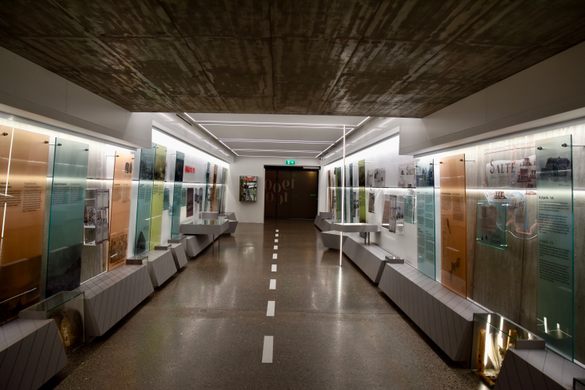
Reykjavík 871±2


IN 2001, ARCHAEOLOGICAL EXCAVATIONS ON Aðalstræti unearthed the remains of a tenth-century longhouse with a wall dating back to 871±2, the oldest evidence of human habitation in Reykjavík.

The year is based on the layer of tephra deposited from a volcanic eruption in the Torfajökull area, which has been found all over Iceland and placed around 871 by carbon dating, with a range of possible inaccuracy of two years either way. The eruption coincides with the early years of Iceland’s settlement age, when the Norsemen started to migrate across the sea, as told by later medieval texts dealing with Icelandic history.

Managed by the City Museum, the Settlement Exhibition of Reykjavík 871±2 gives visitors a rare glimpse into the Viking Age, with the entirety of the excavated ruins displayed in the basement alongside a various collection of artifacts, from pieces of relics to everyday tools. Utilizing interactive multimedia, the exhibit gives an immersive experience and takes visitors back to the days of yore.

Read the rest of this article...

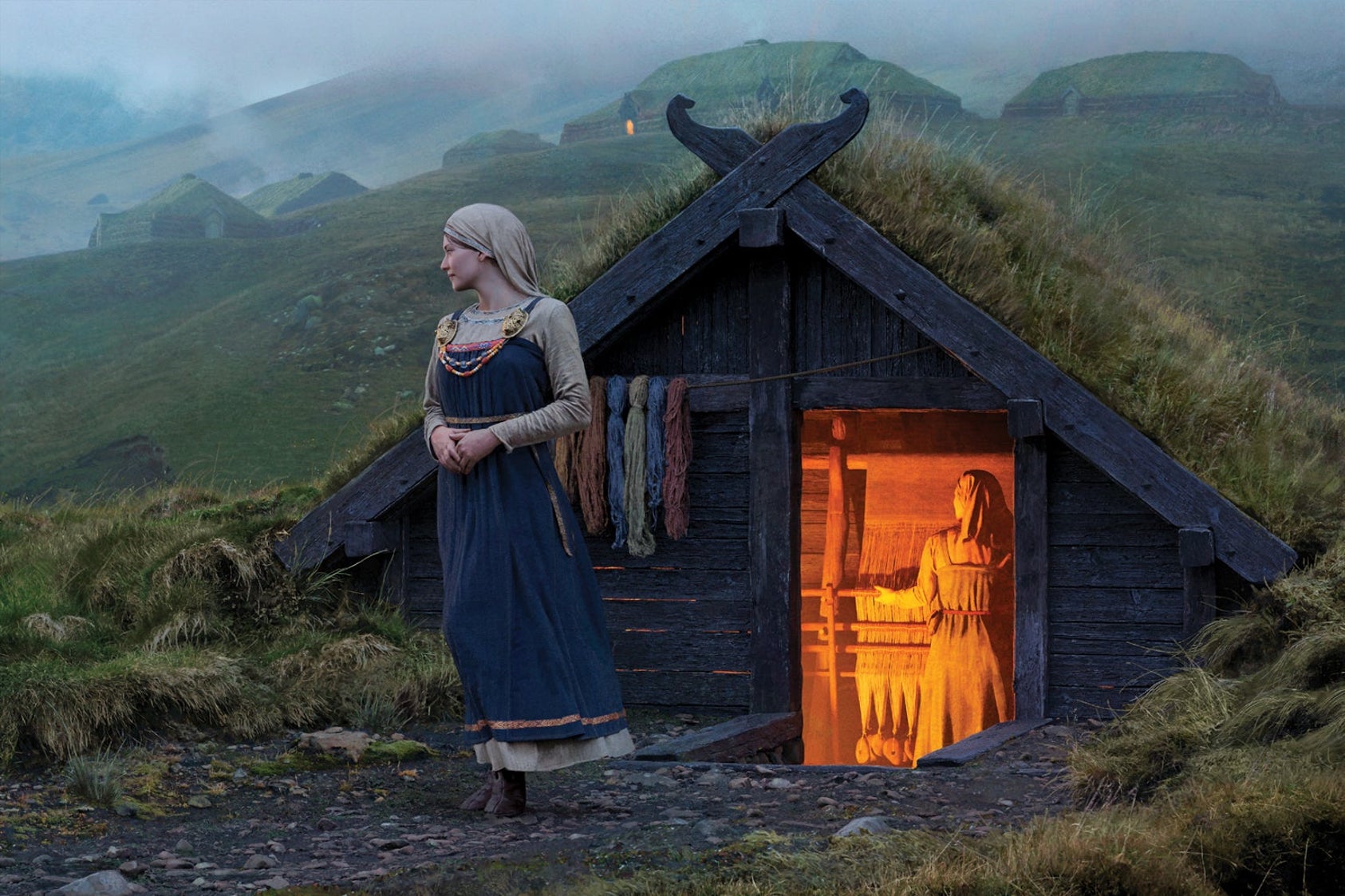
Viking Textiles Show Women Had Tremendous Power


Cloth from Viking and medieval archaeological sites shows that women literally made the money in the North Atlantic

Archaeology has a representation problem. For most of the time that scholars have been probing the human past, they have focused mainly on the activities of men to the exclusion of women. There are a couple reasons for this bias. One is that the kinds of artifacts that tend to preserve well are made of inorganic materials such as stone or metal, and many are associated with behaviors stereotypically linked to men, such as hunting. Another reason is that early archaeologists were mostly men and more interested in men's work than in women's. As a result, our understanding of past cultures is woefully incomplete.

In recent years archaeologists have sought to fill that gap in our knowledge, in part by taking a closer look at traditionally ignored remains such as textiles, which had long been dismissed as trivial. Cloth rarely survives the centuries because it decomposes easily except under ideal preservation conditions. But even in a fragmentary state, it contains a wealth of information about the people who made and used it.

Read the rest of this article...

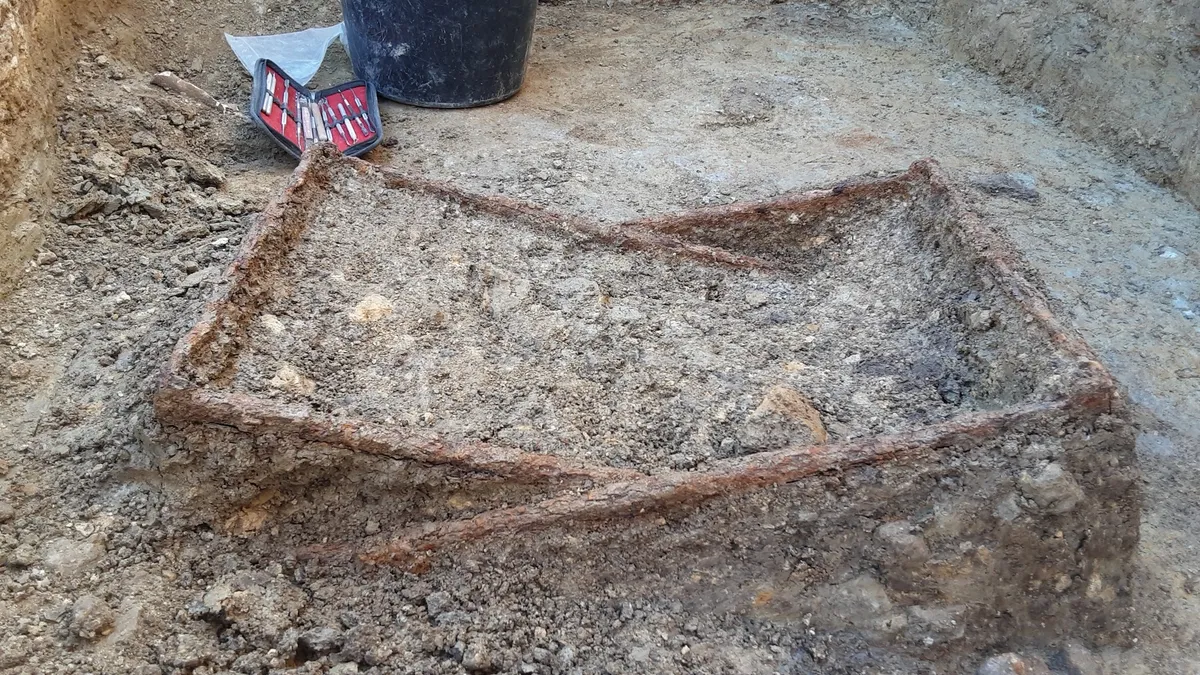
Early-medieval woman was buried with a rare item: a metal folding chair

The 1,400-year-old iron folding chair was a symbol of power and status in medieval times.
(Image credit: BLfD/Zenger)

Coins, weaponry, jewels and other valuables are often found in the ancient burials of prominent people, but archaeologists recently discovered a truly rare grave good: a metal folding chair.

Constructed of an iron frame, the medieval chair measures approximately 28 by 18 inches (70 by 45 centimeters) when folded and was found by a team of archaeologists from the Bavarian State Office for Monument Protection (BLfD) last month in Endsee, a village in southeastern Germany.

Hubert Fehr, an archaeologist with the BLfD, told Live Science that the chair dates to approximately A.D. 600 and that it was associated with the burial of a woman who died in her 40s or 50s.

Read the rest of this article...

Thursday, August 11, 2022

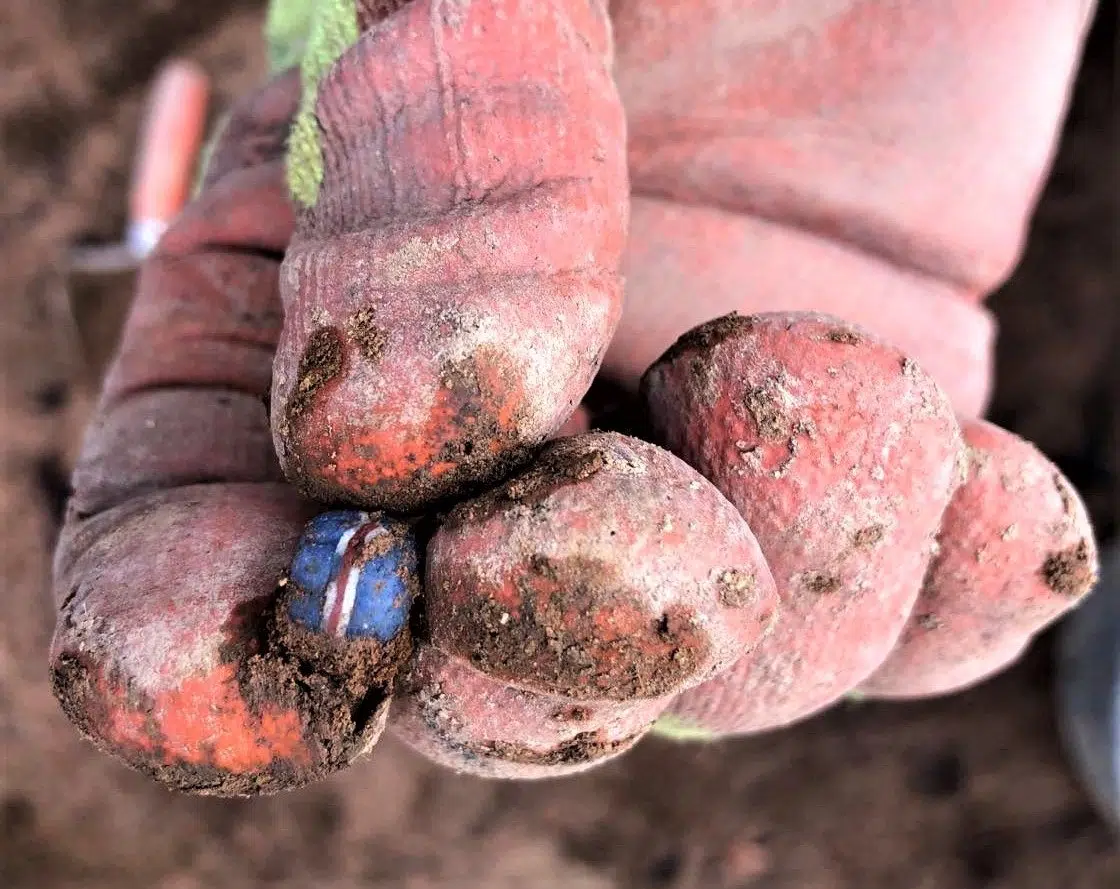
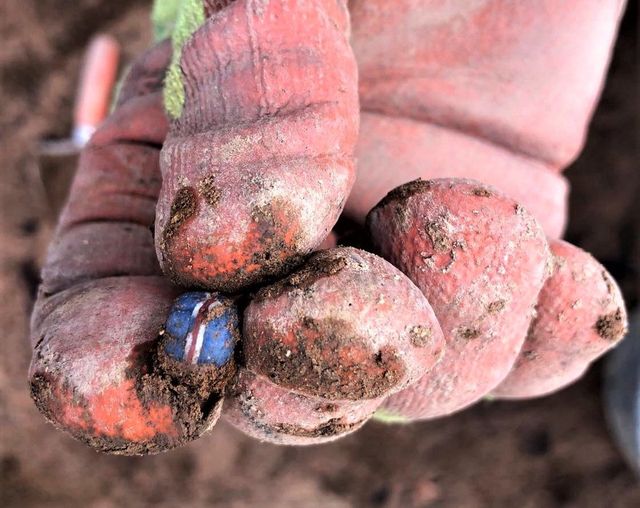
Excavation in Seyðisfjörður Unearths Jewelry from Earliest Period of Settlement

Photo: Fjörður – Seyðisfjörður fornleifar – Facebook


Archaeologists in Seyðisfjörður have excavated jewelry that dates from 940 – 1100, just after the initial settlement of Iceland. Notably, one of the beads found in the excavation even bears the colours of the Icelandic national flag.

Remarkably well-preserved structures in Seyðisfjörður

Archaeological digs have been underway in Seyðisfjörður, a fishing village in the East Fjords of Iceland, since 2020. Due to the high slopes of the valley, Seyðisfjörður is subject to land slides, and local authorities plan to build defensive barriers to protect the village, which has suffered damage in recent years. However, these same land slides have also preserved archaeological sites in the region particularly well. Archaeologists have been called in to perform exploratory digs where the defensive barriers will be erected, and have found remarkably intact manmade structures and artifacts such as game pieces and pearls.

Read the rest of this article...

Medieval Artifacts Uncovered in Iceland


SEYðISFJÖRðUR, ICELAND—Traces of a farmstead dated to the earliest settlement of Iceland have been uncovered in the East Fjords of the island by a team of researchers led by archaeologist Ragnheiður Traustadóttir, according to Iceland Review. The site is situated in a valley where landslides from the high slopes and tephra from volcanic eruptions have protected archaeological materials and provided a means of dating them. So far, researchers have found human remains; the bones of a horse; a spear; a boat; and jewelry, including a red, white, and blue bead dated to between A.D. 940 and 1100. To read about a Viking Age site in Iceland's lava fields, go to "The Blackener's Cave."

Read the rest of this article...

Wednesday, July 06, 2022

How Literate Were the Ancient Celts?


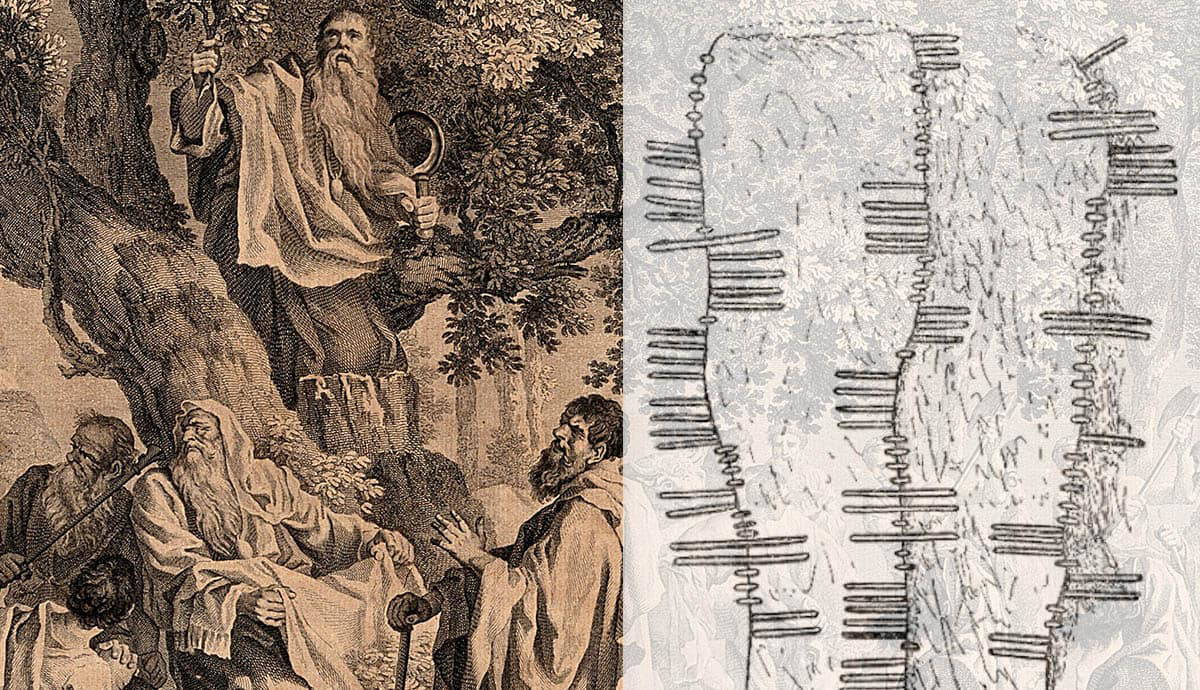
The ancient Celts are commonly viewed as primitive barbarians, at least in comparison to the Greeks and the Romans. One of the reasons for this is that they are commonly thought to have been illiterate. However, this is not true. Numerous pieces of Celtic writing have been discovered across Europe. But what type of writing did they use, and where did it come from?

In the ninth century BCE, the alphabet used by the Phoenicians in the Levant was adopted by the Greeks. From the Greeks, it was adopted by the Etruscans and then the Romans in Italy in the seventh century BCE.

In about 600 BCE, the Greeks established a trading colony in the south of Gaul called Massalia, where the modern city of Marseille is now. This was Celtic territory. The Celts occupied almost the entirety of Gaul, as well as parts of Iberia to the west. Thus, with the founding of Massalia, the Greeks and other Mediterranean nations began to build a close trading relationship with the Celts. The Etruscans in particular exerted a strong cultural influence over the Celts by means of trade, especially from the fifth century BCE onwards. This influence was primarily seen in artwork, but it also became evident in writing.

Read the rest of this article...

Vikings Actually Reached the Americas Long Before Columbus

Reconstructed Viking-Age building next to the site of L'Anse aux Meadows.
(Image: Glenn Nagel Photography)

Vikings were active at a Newfoundland settlement nearly 500 years before Christopher Columbus crossed the Atlantic, research suggests.

On the northernmost tip of the northernmost peninsula of Newfoundland, Canada, is a prehistoric Viking settlement known as L’Anse aux Meadows. The site has been explored by archaeologists since the 1960s, but a firm date for the settlement has proven elusive.

Research published in Nature adds some much-needed clarity to the issue. A team led by archaeologist Michael Dee from the University of Groningen in The Netherlands provides new evidence showing that Vikings were active at L’Anse aux Meadows by 1021 CE — exactly 1,000 years ago. In an email to Gizmodo, Dee said his team’s findings represent the “first, and only, known date for Europeans in the Americas before Columbus,” who crossed the Atlantic in 1492 CE. 

Read the rest of this article...

Wednesday, June 22, 2022

New Thoughts on Eastern Europe's Medieval Source of Ivory


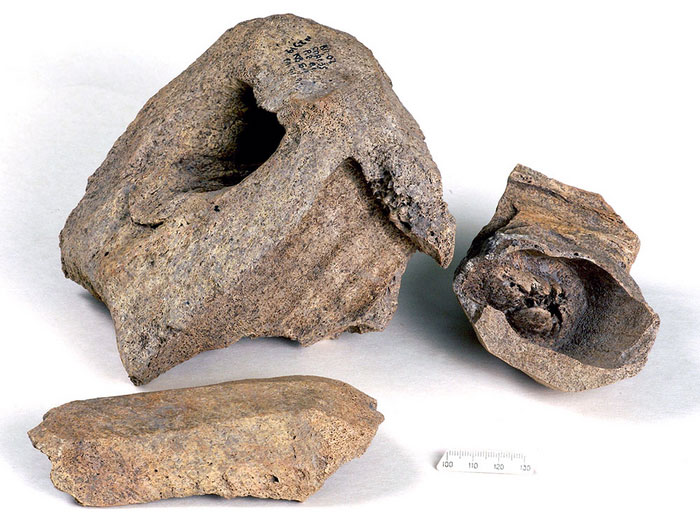
TRONDHEIM, NORWAY—According to a statement released by the Norwegian University of Science and Technology (NTNU), researchers led by James Barrett of the NTNU University Museum analyzed nine walrus snout bone fragments unearthed in 2007 during a construction project in Kyiv, an important trading city in the medieval period. In 2019, Barrett and his colleagues determined that Western Europe obtained most of its walrus products from Norse settlers in Greenland, although it was still thought that the ivory used in Eastern Europe came from the Barents Sea, which is located off the northern coasts of Norway and Russia. The researchers determined that five of the nine bone fragments had a genetic signature indicating they came from a genetic group of walruses only found in Greenland, while the chemical analysis of isotopes from the bones suggests that seven of the nine animals could have come from the region of Greenland. 

Read the rest of this article...

The Worst Year Ever to Be Alive in History

The worst year to be alive? Eyjafjallajokull, the Icelandic volcano that threw transatlantic travel into a tailspin several years ago after it erupted, sending plumes of smoke over the North Atlantic, the UK and the continent. Another Icelandic volcano could have caused enormous disruption in the year 536 as well, according to new research.
Credit: Árni Friðriksson/Wikimedia Commons/ CC BY-SA 3.0

The volcanic explosions of the year 536 caused modern-day researchers to state recently that that year was definitively “the worst year to be alive” in history.

A strange and unsettling fog, which even deprived the world of the sun’s warmth, plunged Europe, the Middle East, and parts of Asia into darkness both day and night for a year and a half starting in 536, causing untold misery across the globe.

The Byzantine historian Procopius made a record of the time and wrote that: “For the sun gave forth its light without brightness, like the moon, during the whole year.”

“One of the worst years to be alive”
Michael McCormick, a historian and archaeologist who chairs the Harvard University Initiative for the Science of the Human Past, says that in Europe, “It was the beginning of one of the worst periods, if not the worst year to be alive.”

Read the rest of this article...

Sunday, June 19, 2022

141 Anglo-Saxon graves discovered in England, alongside jewellery, weapons and earwax removers

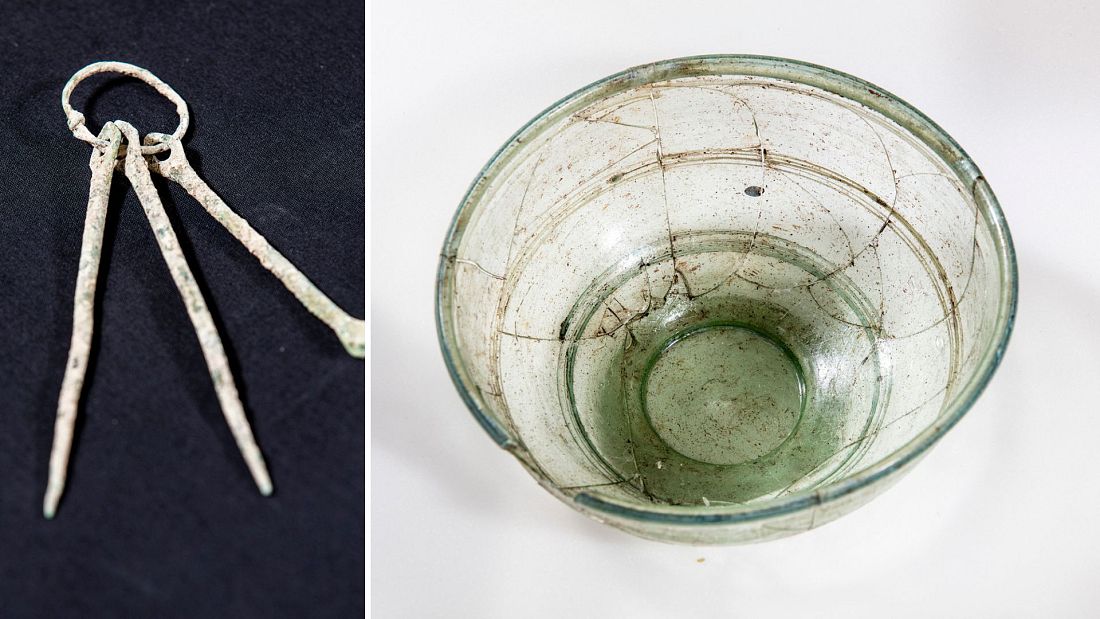
Image shows a toiletry kit and a tubular rimmed glass bowl excavated from Wendover, Buckinghamshire   -   Copyright  AP Photo

Archaeologists working on a site in Buckinghamshire in England have unearthed the well-preserved graves of a clique of wealthy Anglo-Saxons.

The site, which was excavated as part of the ongoing construction of the UK’s high-speed rail service HS2, contains 138 graves and is one of the largest ever uncovered.

Among the items found were a number of grooming tools including earwax removers, toothpicks, tweezers, combs and even a tube that could have contained makeup such as eyeliner; shedding light on how our ancestors practised self-care.

One of the burials, thought to be a male aged between 17-34, was found with a sharp iron object in his spine. Researchers believe he was stabbed from the front before the object embeded in his spine.

The insights offered into Anglo-Saxon life are unprecedented. The site is known to have been used by Romans during the Bronze Age and even in the Neolithic period, but the 5th and 6th centuries from which the objects are dated represents a gap in the historical record.

Read the rest of this article...

Severe droughts reveal sunken relics of the past

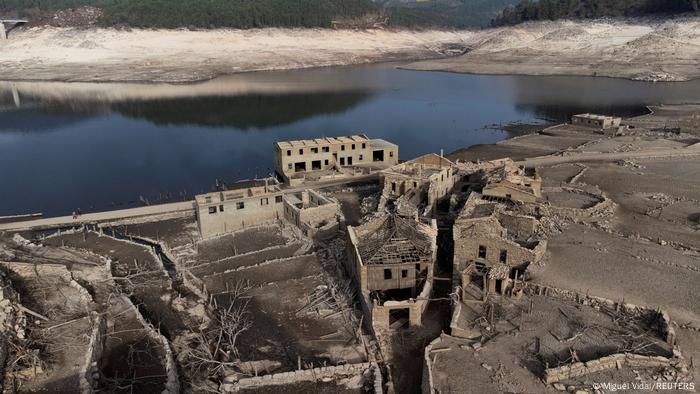
This old Spanish town re-emerged after a drought dried out the reservoir it was submerged in

As the climate crisis intensifies droughts from Iraq to Spain to the US, remnants of past towns and societies have reemerged from receding waters.

Droughts can be a normal part of the climate. But as temperatures rise in the wake of global heating, these dry spells are becoming more severe and longer in many regions. The trend can disrupt entire food systems, pushing millions into starvation and dehydration. 

In an unusual twist, our current high-emitting lifestyle has also helped reveal how we used to live before the climate crisis became quite so urgent. That’s because droughts have uncovered remnants of past communities, some of them thousands of years old.  

Read the rest of this article...

Archaeologists Examining 'Extremely Rare' 1,300-Year-Old Ship They Need to Water Every 30 Minutes


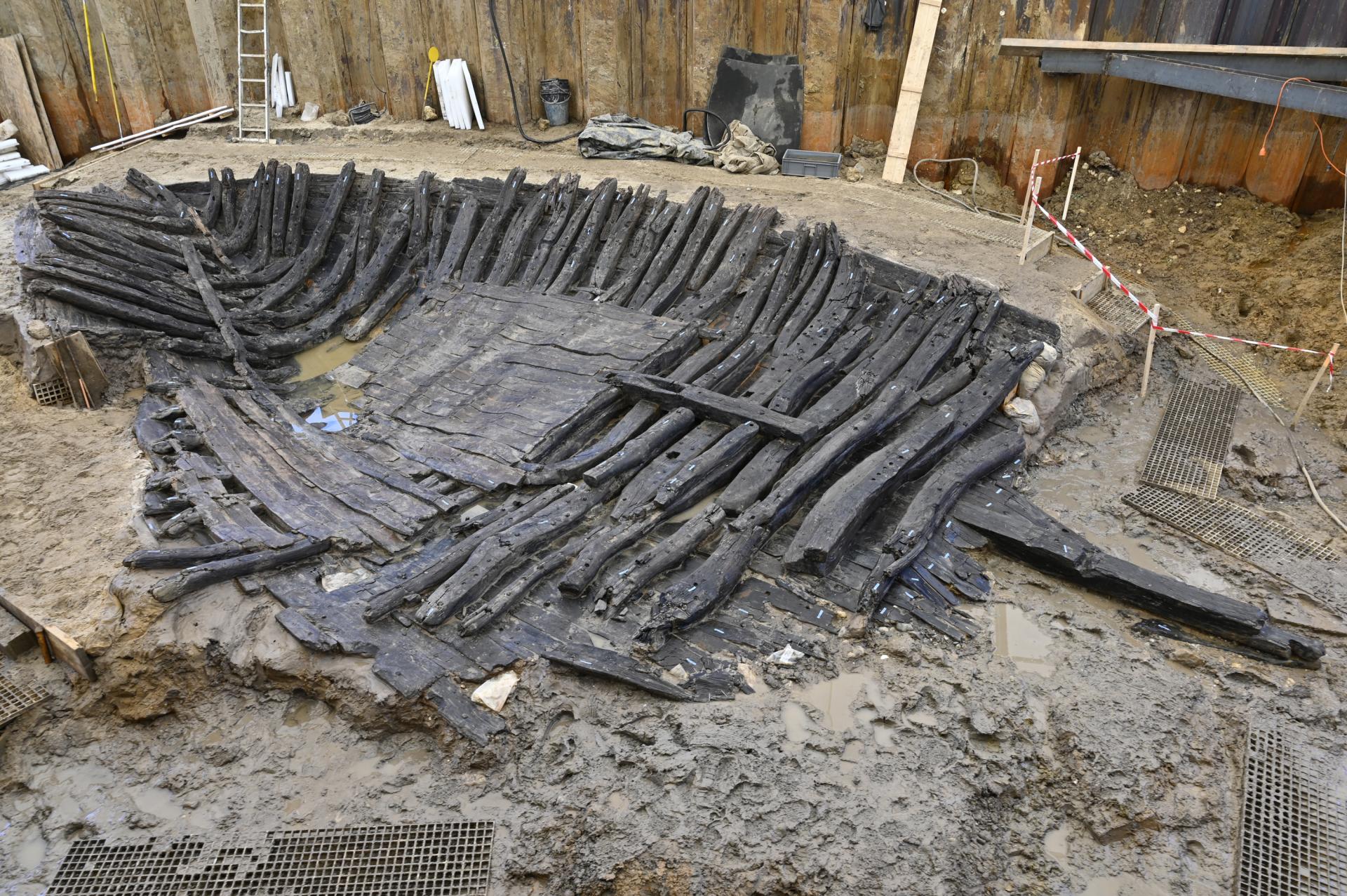
Archeologists in France have uncovered an "extremely rare" yet fragile shipwreck in France believed to be 1,300 years old.

The French National Institute for Preventive Archaeological Research (Inrap) revealed the 12-meter (40-foot) boat to the public Wednesday in Villenave-d'Ornon on the banks of the Garonne in southwest France, according to NBC News. 

However, the wreck's beams of oak, chestnut and pine are delicate enough that air could destroy it, having not been in contact with oxygen or light since it sank, per the report.

Excavation leader Laurent Grimber told the outlet that workers "are watering" the partial remains of the wreck "every 30 minutes" as they aim to "limit the degradation of the wood."

Read the rest of this article...

Saxon pendant with Roman jewel found in Kingsey field

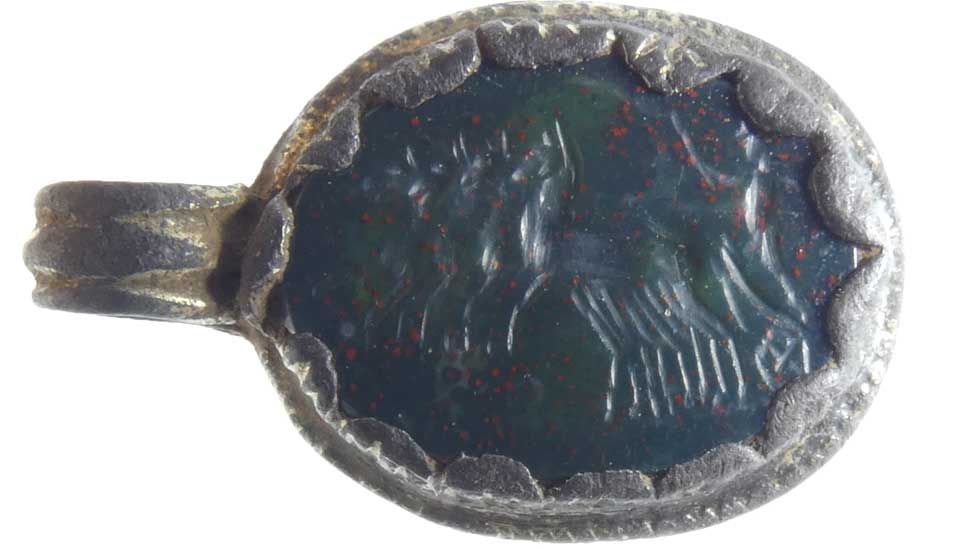
The engraved semi-precious gem is known as an intaglio and shows a figure with a raised whip on small chariot with four horses

A Roman jewel engraved with a chariot and four running horses was found set in a silver Anglo-Saxon pendant by a metal detectorist.

The small piece of jewellery was found in a field near Kingsey, Buckinghamshire, in May 2019.

Historian Edwin Wood said its "high-status" Sutton Hoo-era owner was someone who would have wanted "a direct link with Rome's power and authority".

It was declared treasure by Buckinghamshire Coroner's Court.

Read the rest of this article...

Archaeologists find Viking Age shipyard

Image Credit : Paul Parker – Stockholm University

Archaeologists excavating at Birka on the island of Björkö, Sweden, have discovered a Viking Age shipyard.

Birka, commonly referred to as Sweden’s first town, was established during the mid-8th century AD on the shores of Lake Mälaren. The town emerged as a major trading hub for merchants and tradesmen across Europe and beyond.

Excavations conducted by researchers from Stockholm University uncovered a stone-lined depression on the shore zone with a wooden boat slop at the bottom. The team also discovered large quantities of boat rivets, whetstones made from slate and woodworking tools, suggesting that the site was a Viking Age shipyard.

Sven Isaksson, Professor of Archaeological Science at Stockholm University said: “A site like this has never been found before, it is the first of its kind, but the finds convincingly show that it was a shipyard.

Through systematic survey, mapping and drone investigations, we can now show that Birka, in addition to the urban environment, also has a very rich maritime cultural landscape with remains of everything from jetties to boat launches and shipyards.”

Read the rest of this article...

Ivory found in Kyiv in 12th century originated from Greenland - study


Fragments of walrus tusks unearthed in 2007 were traced back to Greenland, indicating that trading routes in the Middle Ages were more advanced than previously thought.

Nine fragments of walrus ivory from as early as the 12th century that were found in a 2007 archaeological dig in Kyiv were found to have originated in Greenland, indicating that pan-European trading routes in the middle ages were more developed than previously thought, a new study found.

The study, which was published in the peer-reviewed journal "Proceedings of the Royal Society B: Biological Sciences" on April 6, used a number of advanced scientific methods in order to verify that the ivory fragments were indeed from Greenland, which at the time was the main source of walrus ivory.

Read the rest of this article...