Thursday, November 26, 2020

Swedish runestones open gateway to ancient Viking civilization


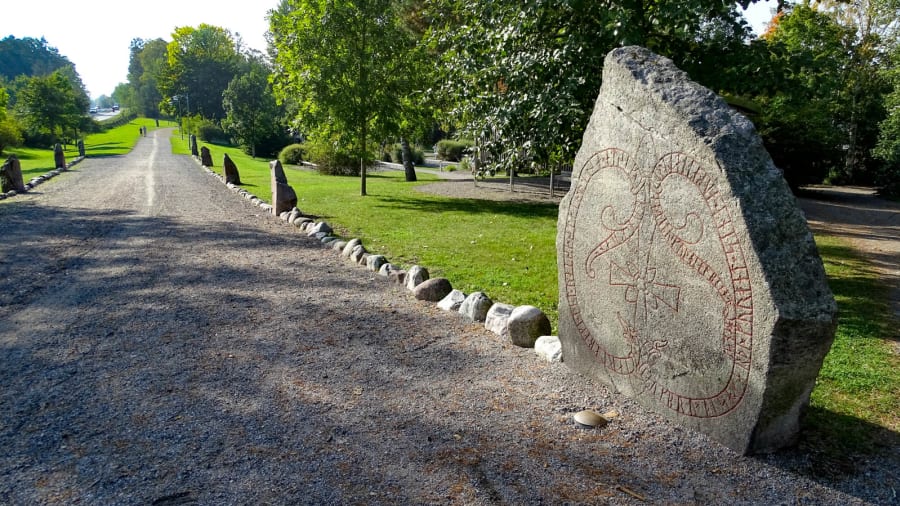
The Jarlabanke Bridge is a common starting point for a tour of Runriket, a collection of ancient runestones in Sweden that sheds light on the country's Viking past. The original bridge once helped Vikings cross over a bog.

Vallentuna, Sweden (CNN) — Drive north of the Swedish capital for about half an hour and you'll reach the lakeside district of Vallentuna, a pleasant community with cobblestone churches, picnic areas and playgrounds.

It's also a journey deep into Sweden's ancient Viking past.

Scattered among Vallentuna's greenery are dozens of mystical runestones that form the gateway to a 1,000-year-old Viking civilization now believed to be one of Scandinavia's most significant historic sites.

Known as Runriket, or Rune Kingdom, this collection of more than 100 Viking age runestones -- ancient lichen-crusted slabs of Old Norse inscriptions -- are beautiful relics that shine a light on modern Sweden's past, revealing surprising truths about its ancestors.

Read the rest of this article...

Monday, November 16, 2020

Archaeologists Discover ‘Amazing’ Iron Age Grave In Lofoten


Norwegian archaeologists have found a remarkably well-preserved skeleton believed to date from the Iron Age during an excavation on the Lofoten Islands.

Earlier this year, a team of archaeologists were surprised to discover a femur and hip bone during a routine excavation on Gimsøya island in Norway's Lofoten.

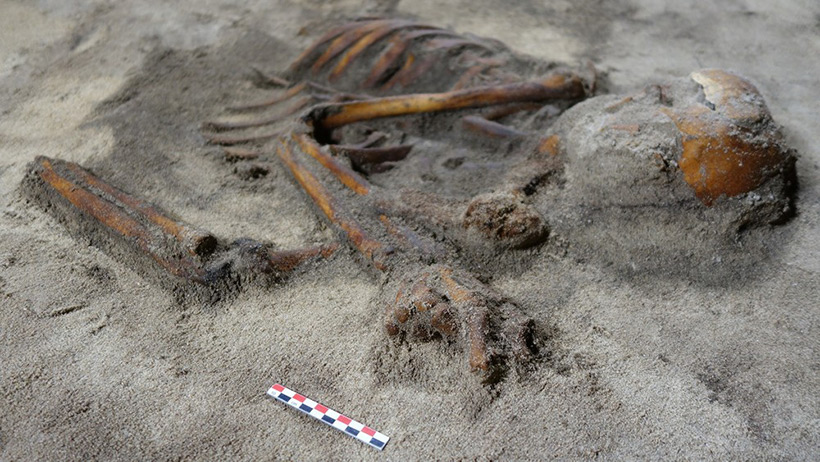
The work continued, and the team was astonished to discover the entire upper body skeleton completely intact.

 
Archaeologist Anja Roth Niemi from Norway's Arctic University Museum is the project manager. She told NRK that parts of the grave are incredibly well-preserved, which is surprising given the work that went on in the area during the 1950s and 1960s.

“The upper body has not been disturbed by soil levelling or other human activity. It is absolutely amazing,” she said.

Read the rest of this article...

Nächste Runde im Streit um das Alter der Himmelsscheibe von Nebra


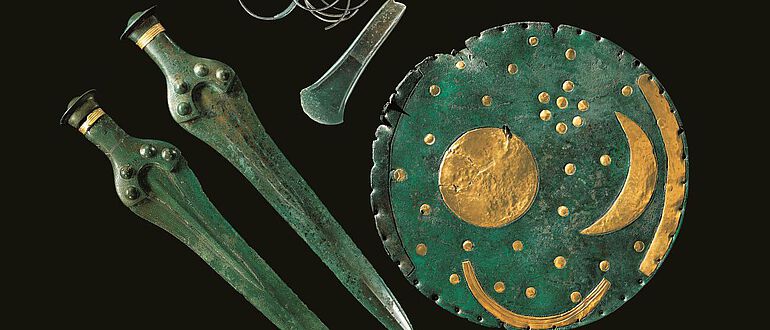
Die Himmelsscheibe von Nebra gilt als die älteste konkrete astronomische Darstellung der Welt. Lange Zeit war sich die Fachwelt einig, dass der Fund der Bronzezeit zugeordnet werden kann. Zwei deutsche Prähistoriker behaupteten in diesem Jahr, dass die Scheibe aus der Eisenzeit stamme und lösten damit eine Kontroverse aus. Nun ist in der von der Österreichischen Akademie der Wissenschaften herausgegebenen Fachzeitschrift »Archaeologia Austriaca« eine Erwiderung erschienen - die Autoren bekräftigen die Datierung der Himmelsscheibe in die Bronzezeit.

Read the rest of this article...

Stonehenge


Stonehenge in southern England ranks among the world's most iconic archaeological sites and one of its greatest enigmas. The megalithic circle on Salisbury Plain inspires awe and fascination—but also intense debate some 4,600 years after it was built by ancient Britons who left no written record.

The monument's mysterious past has spawned countless tales and theories. According to folklore, Stonehenge was created by Merlin, the wizard of Arthurian legend, who magically transported the massive stones from Ireland, where giants had assembled them. Another legend says invading Danes put the stones up, and another theory says they were the ruins of a Roman temple. Modern-day interpretations are no less colorful: some argue that Stonehenge is a spacecraft landing area for aliens, and even more say it's a giant fertility symbol in the shape of female genitalia.

Read the rest of this article...

Construction Workers Unearth Ancient Greek Gem in Downtown Athens

credit: Facebook.com/KostasBakoyannis

Α spectacular ancient Greek sculpture was unearthed in the downtown Agia Irini (St Irene) Square of Athens on Saturday during construction work.

The news was shared by Kostas Bakoyannis, the mayor of the city of Athens, through a Facebook post.

There is still not much information about how old the sculpture is or who it depicts.

Some speculate the marble head belongs to an ancient Greek God, probably Zeus, others say it depicts a prominent ancient Athenian.

Others claim that the sculpture is typical of the type of Hermes Propylaeus of Alkamenos, and it is believed to date back to the 4th or 3rd century AD.

Read the rest of this article...

Friday, November 06, 2020

Slaves in the Viking Age: how prevalent were enslaved people in Viking societies?


“The Vikings were not only slavers, but the kidnapping, sale and forced exploitation of human beings was always a central pillar of their culture.” So says Professor Neil Price in his thought-provoking new book The Children of Ash and Elm: A History of the Vikings.

The place of slavery in Viking culture isn’t something that always gets referenced in popular history, so I asked Professor Price why that was when I interviewed him for the HistoryExtra podcast.

“Slavery studies in the Viking Age have been attracting more and more attention over the past 15 years or so. It’s one of those things I think that we’ve always known about. Every description of raids that comes from that time talks about people being taken away into captivity. It’s not like we didn’t know. And even if you look at the later sources, like the famous Icelandic sagas, there are lots of enslaved people in those stories.

Read the rest of this article...

Friday, October 30, 2020

The Roman Balneum In Rafina: A Monument Reveals Itself

The olive press [Credit: Ephorate of Antiquities of East Attica]

What can the excavation of a Roman bath and its surroundings reveal? If the monument is located near an ancient municipality about which we know very little, such as the municipality of Arafinos (i.e. Rafina), it can bring to light valuable information possibly related to it. And if it is linked to other important findings, such as an inscribed olive press basin ‒ unique in its inscription ‒ it can provide information that may perhaps change views and beliefs about the rural life of late antiquity. The Athens and Macedonia News Agency (AMNA) visited the archaeological site of the Roman Balneum in Rafina ‒ where since 2013 a systematic excavation is being conducted with the cooperation of the Department of History and Archaeology of the National and Kapodistrian University of Athens and the Ephorate of Antiquities of Eastern Attica ‒ and talked to the site’s excavators.

Read the rest of this article...
‘Lost’ medieval bridge discovered under the River Teviot

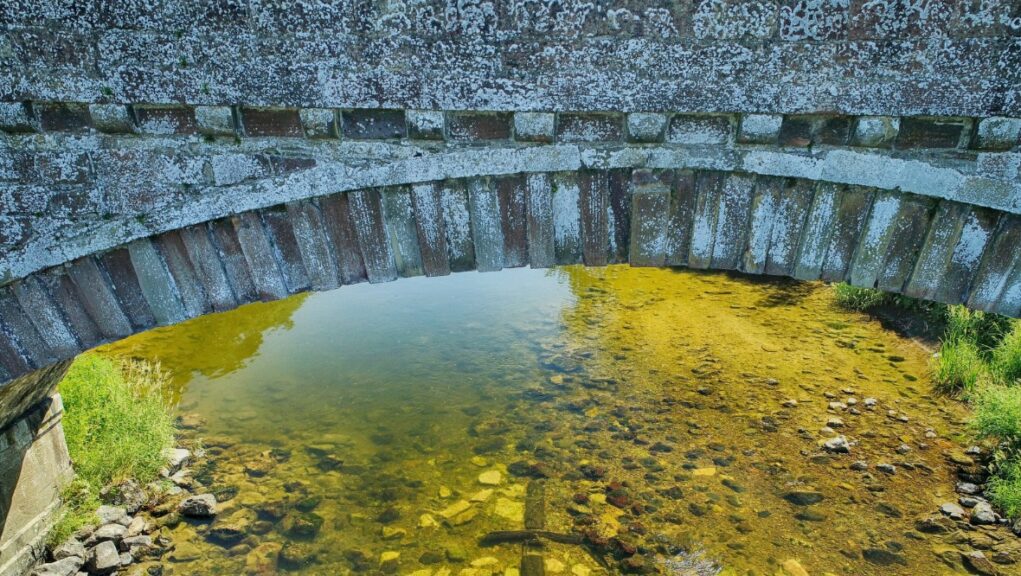
Ancrum Bridge has been hidden beneath the waters of the River Teviot for centuries.

Archaeologists deem the Ancrum Bridge one of the 'most important medieval structures' in Scotland.

One of the oldest bridges in Scotland has been discovered underwater in a river, with archaeologists deeming it to be the most important medieval structure in the country.

The ‘lost’ Ancrum Bridge has been hidden beneath the waters of the River Teviot in the Scottish Borders for centuries, and has been carbon-dated back to the 1300s, to the reigns of David II of Scotland and Edward III of England.

The standing bridge is around 100 years older than others known to exist, and monarchs such as as James V and Mary Queen of Scots would have used it as part of ‘Via Regia’ (The Kings Way), on its way from Edinburgh to Jedburgh and the border with England.

Using radiocarbon dating of the bridge timbers, experts confirmed a date of the mid-1300s, making this the oldest scientifically dated remains of a bridge ever found in its original position across one of Scotland’s rivers.

Read the rest of this article...

How dogs tracked their humans across the ancient world

Libyan rock art that may date back 7000 years depicts a hunter and his dog.
JOE AND CLAIR CARNEGIE/LIBYAN SOUP/GETTY IMAGES

Sometime toward the end of the last ice age, a gray wolf gingerly approached a human encampment. Those first tentative steps set his species on the path to a dramatic transformation: By at least 15,000 years ago, those wolves had become dogs, and neither they nor their human companions would ever be the same. But just how this relationship evolved over the ensuing millennia has been a mystery. Now, in the most comprehensive comparison yet of ancient dog and human DNA, scientists are starting to fill in some of the blanks, revealing where dogs and humans traveled together—and where they may have parted ways.

“It’s a really cool study,” says Wolfgang Haak, an archaeogeneticist at the Max Planck Institute for the Science of Human History. “We’re finally starting to see how the dog story and the human story match up.”

Dogs are one of the biggest enigmas of domestication. Despite decades of study, scientists still haven’t figured out when or where they arose, much less how or why it happened. A 2016 study concluded that dogs may have been domesticated twice, once in Asia and once in Europe or the Near East, but critics said there wasn’t enough evidence to be sure. A few years later, researchers reported signs of dogs in the Americas as early as 10,000 years ago, yet those canines appear to have vanished without a genetic trace. Other studies have found evidence of ancient dogs in Siberia and elsewhere, but scientists don’t know how they got there or how they’re related.

Read the rest of this article...

Five distinct types of dog existed by end of last ice age, study finds

While DNA from modern European dogs has contributed to breeds around the world, traces of other ice age groups remain, including in chihuahuas.
Photograph: Josh Edelson/AFP/Getty Images

From tiny chihuahuas to fluffy Siberian huskies, dogs come in all shapes and sizes. But researchers have revealed there is more to canine diversity than meets the eye.

Scientists have found five distinct groups of dogs were already present at the end of the last ice age, and their legacy lives on in our pets today.

“[If] I walk through Wimbledon Common I am pretty likely to run across dogs that all have a little bit [of a] different history, tracing back as far as 11,000 years ago to different corners of the world,” said Dr Pontus Skoglund, co-author of the study and group leader of the ancient genomics laboratory at the Francis Crick Institute in London.

Read the rest of this article...

Archaeologists reveal human resilience in the face of climate change in ancient Turkey

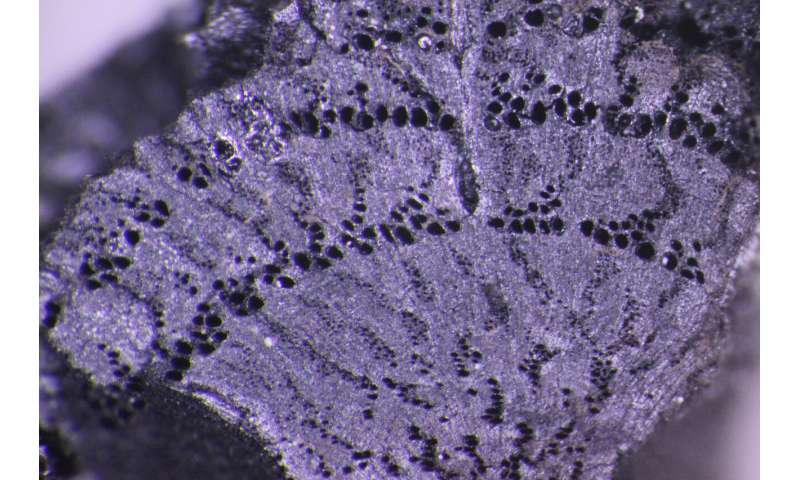
Microscope image of Iron Age oak twig from Tell Tayinat in Hatay, Turkey.
Credit: Brita Lorentzen

An examination of two documented periods of climate change in the greater Middle East, between approximately 4,500 and 3,000 years ago, reveals local evidence of resilience and even of a flourishing ancient society despite the changes in climate seen in the larger region.

A new study led by University of Toronto and Cornell University archaeologists working at Tell Tayinat in southeastern Turkey, demonstrates that human responses to climate change are variable and must be examined using extensive and precise data gathered at the local level. The study highlights how challenge and collapse in some areas were matched by resilience and opportunities elsewhere.

Read the rest of this article...

Dutch Archaeologist Discovers Traces of Four Submerged Medieval Settlements

A satellite image of the Noordoostpolder, a Dutch municipality where the four settlements were found (Public domain via Wikimedia Commons)

A five-year research project yielded the locations of several long-forgotten villages

Archaeologists have long known that multiple medieval settlements stood along the Zuiderzee, a now-obstructed inlet of the North Sea that used to cut through the Netherlands. Researchers unearthed two such historic towns—Urk and Schokland—in the mid-20th century, but until recently, the locations of other settlements remained unknown.

As Dutch regional broadcaster Omroep Flevoland reports, Yftinus van Popta, an archaeologist at the University of Groningen, has identified four “drowned” medieval villages in the Noordoostpolder, a low-lying tract of land reclaimed from the Zuiderzee in the 1940s, after five years of extensive research. (Per the United States Geological Survey, engineers reclaimed the Noordoostpolder and other flood-prone polders by draining water from the Zuiderzee and building a series of dikes.)

Medieval sources suggest that the settlements, called Marcnesse, Nagele, Fenehuysen I and Fenehuysen II, were first inhabited during the 10th and 11th centuries A.D. At some point in the 13th century, the Zuiderzee flooded, submerging the four towns and masking most traces of their existence.

Read the rest of this article...

Saturday, October 24, 2020

CBA Festival of Archaeology


The Council of British Archaeology’s Festival of Archaeology runs from 24 October to 1 November.  The situation with the Corona Virus means that many of the events will be digital, although there will be a number of live events. Please use the search facility on their webpage to see the various events that are offered.

You can find their website here…

Please note that EMAS archaeological Society has offered a quiz on little known archaeological sites in South East England.

You can find a link to the quiz on the EMAS home page here…

Test your knowledge and see how much you know about the archaeology of the area!

Friday, October 23, 2020

Humans And Climate Drove Giants Of Madagascar To Extinction

Investigating the drivers of extinction: By analyzing stalagmites from the La Vierge Cave located
on Rodrigues the scientists reconstructed 8000 years of the region's past climate
[Credit: Hanying Li]

Nearly all of Madagascan megafauna - including the famous Dodo bird, gorilla-sized lemurs, giant tortoises, and the Elephant Bird which stood 3 meters tall and weighted close to a half ton - vanished between 1500 and 500 years ago. Were these animals overhunted to extinction by humans? Or did they disappear because of climate change? There are numerous hypotheses, but the exact cause of this megafauna crash remains elusive and hotly debated. 

The Mascarene islands east of Madagascar are of special interest because they are among the last islands on earth to be colonized by humans. Intriguingly, the islands' megafauna crashed in just a couple of centuries following human settlement. In a recent study published by Science Advances, a team of international researchers found that it was likely a "double whammy" of heightened human activities in combination with a particularly severe spell of region-wide aridity that may have doomed the megafauna. 

Read the rest of this article...

VAST ‘CHANGING ROOM’ FOUND IN ROMAN THERMAE (PUBLIC BATHS) OF ANCIENT SPA RESORT DIOCLETIANOPOLIS IN BULGARIA’S HISARYA

The spacious changing room, or apodyterium, of the main mineral water public baths of the ancient spa resort of Diocletianopolis in Bulgaria’s Hisarya was more than 100 square meters in size.
Photo: Video grab from Nova TV

A sizable “changing room" or “undressing room", apodyterium in Latin, has been discovered by archaeologists in the main thermae (public baths) of the major Ancient Roman city and ancient spa resort of Diocletianopolis in Bulgaria’s Hisarya.

The main or central Roman thermae of Diocletianopolis in Bulgaria’s Hisarya, the modern-day town which is still a famous spa resort thanks to the healing qualities of its mineral waters, are said to be among the top three best preserved Ancient Roman public baths, together with thermae in Algeria and the UK.

Originally an Ancient Thracian settlement and then a Roman town called Augusta, the Antiquity predecessor of Bulgaria’s Hisarya was granted the status of a city in the Roman Empire in 293 AD under Emperor Diocletian (r. 284-305 AD) who renamed it after himself, Diocletianopolis.

Read the rest of this article...

Medieval Black Death May Have Sped Up Because of Droplets in the Air

And some people complain about having to wear a mask in the 21st century...
Credit: illustrissima / Shutterstock.co

Disease about which we know nothing and against which we have no defense is terrifying, and the plague was one such. In medieval times, its cause was unknown, treatment was nonexistent and its impact was devastating. Death rates are estimated to have ranged from a third to two-thirds for “regular” bubonic plague, and close to 100 percent for the pneumonic form that attacked the lungs. Mortality rates like that make the coronavirus seem practically benign.

Today we know more. Antibiotics were invented in the early 1940s, which is helpful because plague is caused by a bacterium, Yersinia pestis. The plague is still dangerous, especially in the pneumonic form: treatment must begin quickly if it’s to succeed. At least we aren’t reduced to thoughts and prayers.

We also know today that we don’t get plague for our sins. We get the bacteria from being bitten by a Yersinia-carrying rat flea – or from droplets in the air emitted by the sick. Yes, just like the coronavirus.

Read the rest of this article...

HS2: Medieval graffiti to 'ward off evil spirits' found

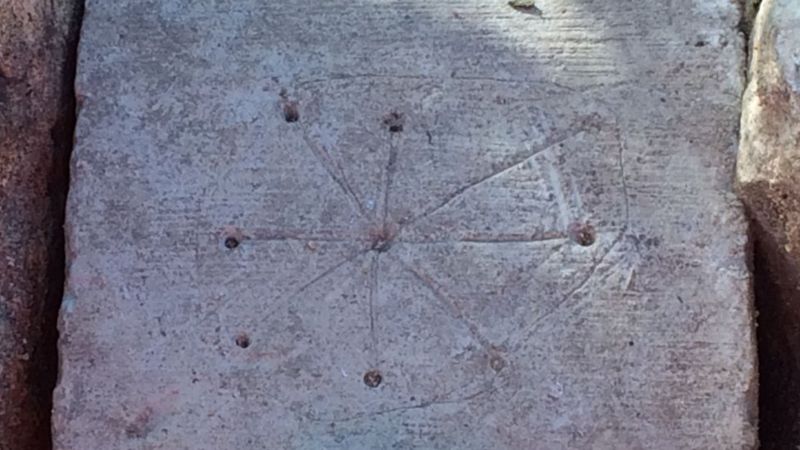
It is believed the markings are "witches' marks", created to ward off evil spirits
HS2 LTD/PA WIRE

Medieval graffiti associated with warding off evil spirits has been discovered by archaeologists.

A series of lines radiating from a drilled hole were unearthed on two stones at the remains of a church in Stoke Mandeville, Buckinghamshire.

Historians believe the markings are 12th Century "witches' marks" created to protect against spirits by trapping them in an endless line or maze.

The discovery was made in preparation for the building of the HS2 rail line.

Archaeologist Michael Court said it was "a fascinating insight into the past".

Read the rest of this article...

'Long-lost' medieval monastery in Gloucester rediscovered

The monastery was founded in about 1270 but was mostly demolished in the 16th Century
COTSWOLD ARCHAEOLOGY

A "long-lost" medieval monastery has been discovered by archaeologists in Gloucester city centre.

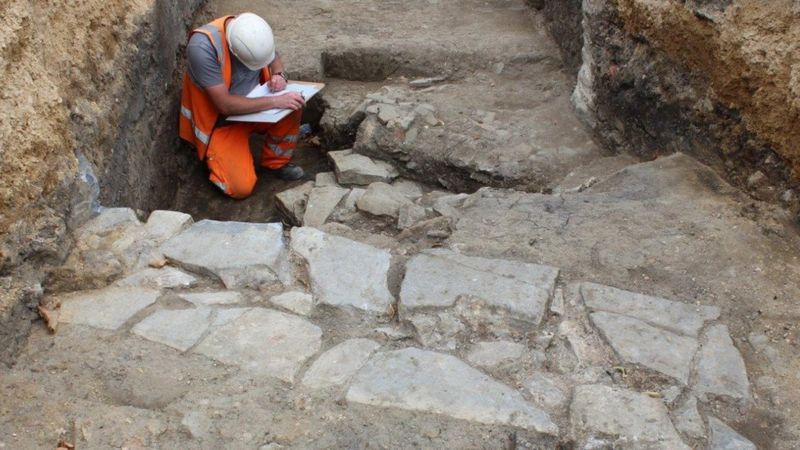
The remains of the 13th Century Carmelite friary have been found beneath a demolished multi-storey car park.

Historians knew roughly where Whitefriars had stood, but its exact location was a mystery.

The dig, ahead of redevelopment work as part of the regeneration of the city's King's Quarter, took place in July.

City archaeologist Andrew Armstrong said it was "very exciting" finally to reveal the exact location of "this long-lost friary".

Read the rest of this article...
FOUILLE D’UN HABITAT CAROLINGIEN À BIGNICOURT-SUR MARNE


À Bignicourt-sur-Marne, l'Inrap met au jour les vestiges d'un site carolingien (VIIIe-IXe siècles). Autour des bâtiments construits en matériaux périssables, ont été identifiés de nombreux « fonds de cabane » témoignant d'activités artisanales et agricoles.

Read the rest of this article...

Archaeologists strike gold on Crete


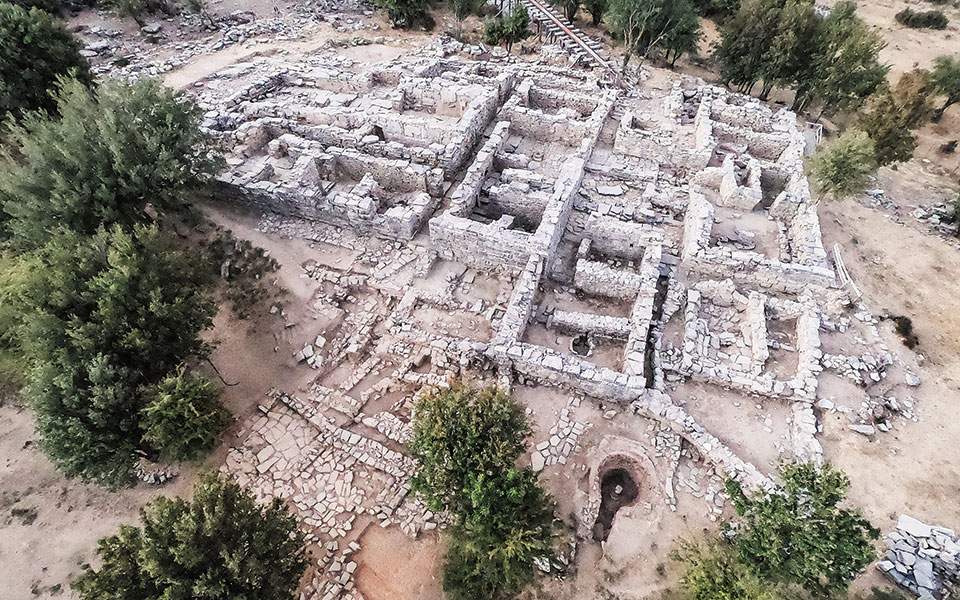
“I feel this year’s findings have been a vindication for [Yannis A.] Sakellarakis. He always claimed – and I did not believe it at the time – that the excavations at Zominthos were very important. He would say, ‘I feel just like [Arthur] Evans when he excavated Knossos,’” the director of the dig, Dr Efi Sapouna-Sakellaraki, says of her late husband. It is she who continues to conduct the Athens Archaeological Society’s excavations at Zominthos, at an altitude of 1,200 meters above sea level, approximately 7 kilometers west of Anogia.

Findings indicate that the excavations at this site on a plateau in the northern foothills of Mount Ida (Psiloritis), once “inhabited by the descendants of the Knossos dynasty,” have not come to an end. On the contrary, it has many more secrets to reveal. Its location is strategic – exactly halfway between the Palace of Knossos and the Ideon Andron caves. It was an important economic, religious and cultural center. Access from the north gate of the palace was via a ramp, dating from the Protopalatial Period (approximately 1900 BC), that ended in a robust retaining wall. In the Neopalatial Period (1700-1600 BC) the ramp was covered with plaques twice.

Read the rest of this article...