Monday, July 27, 2020
Pompeii's most recent finds reveal new clues to city's destruction
Since its discovery several centuries ago, few archaeological sites have fascinated the world as has the ancient Roman city of Pompeii. After the first major excavations in more than 50 years, Pompeii is revealing a surprising abundance of buried treasures. The new finds are coming from intensive work in a small sector known as Region V that has nevertheless yielded giant insights into the final days of the doomed city.
Along with the complete excavation of two houses—the House of the Garden and the House of Orion—the dig has yielded frescoes, murals, and mosaics of mythological figures in gorgeous colors, skeletons with stories still to be unraveled, coins, amulets, and show horses in the stable of a wealthy landowner.
The new finds are also sparking debate about Pompeii’s tragic story. Just before Vesuvius erupted in A.D. 79 and buried the city under a mantle of ash and rock, a local worker scrawled an inscription on a wall. Along with a joke (roughly translated as “he ate too much”), he wrote the date: October 17. The discovery of this inscription may confirm the view that the eruption took place in October, and not August, as some scholars maintain.
Read the rest of this article...
3,000-year-old house remains unearthed in Belgium
Credit: Aron Archaeological Research Agency
Sebastiaan Augustin of Aron, the organisation that is carrying out the archaeological project: “We encountered the floorplan of a house dating from the Iron Age. We can date it to between 770 and 430 before the Common Era. That’s before the Romans got here.
A little further to the east we found a ring of a ditch with pieces of charcoal. It dates from between 1,600 and 1,500 before the Common Era. That’s the middle of the Bronze Age. That’s quite a bit older than the house and may form part of a grave monument.”
“It’s always nice when we find things like this. It doesn’t really surprise us. The Haspengouw area has always been very suitable for farming. It is nice to see that even before the Romans villas like these can be found in our area."
Read the rest of this article...
Norway's Gjellestad burial mound belonged to the Iron Age elite
The soil samples were taken from the mound construction, in the presumed subsoil
and in the trench for the ship burial [Credit: NIKU]
Recent geoarchaeological and geophysical analysis show that the construction of the Gjellestad ship mound was carefully planned and executed.
Five soil samples from the burial mound have been analyzed by researchers from the Norwegian Institute for Cultural Heritage Research (NIKU) and the University of Oslo. These were taken during excavations done by the Museum of Cultural History during autumn of 2019.
One of these samples was taken from the ship grave itself, from within the layer of soil inside the ship. The other samples were taken from the remnants of the mound that surrounded the ship.
The purpose of the analyses was to determine if these were able to reveal anything about what is visible in the 2018 dataset from the ground-penetrating radar (GPR) examinations, and if this could provide more information about how the mound was constructed.
Read the rest of this article...
Christian, Muslim symbols found in 7th century shipwreck in Israel
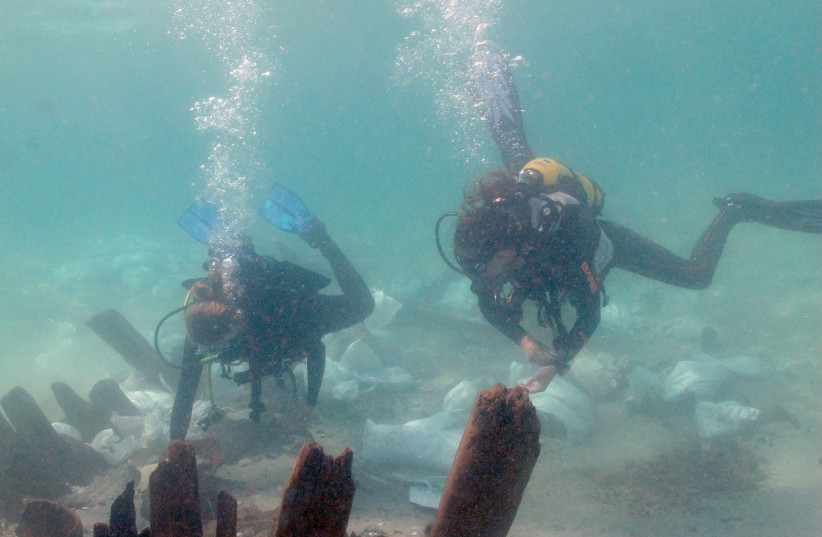
Students Maayan Cohen and Michelle Creisher examine the pottery near the bulkhead at Ma‘agan Mikhael B shipwreck.
(photo credit: A. YURMAN/LEON RECANATI INSTITUTE FOR MARITIME STUDIES OF THE UNIVERSITY OF HAIFA.)
But its plentiful cargo included 103 amphorae filled with all forms of agricultural products, numerous daily objects used by the crew and many other unique features, such as several Greek and Arabic inscriptions. They were swallowed by the sea and the sand, which preserved their secrets for centuries.
First spotted by two members of nearby Kibbutz Ma’agan Michael, about 35 km. south of Haifa, the site was again covered by sand and rediscovered in 2015.
The shipwreck has been excavated by the University of Haifa’s Leon Recanati Institute for Maritime Studies since 2016. It has offered archaeologists unique insights into the life of the region at the time of the transition between Byzantine and Islamic rule, trade routes and ship construction.
Read the rest of this article...
Sunday, July 26, 2020
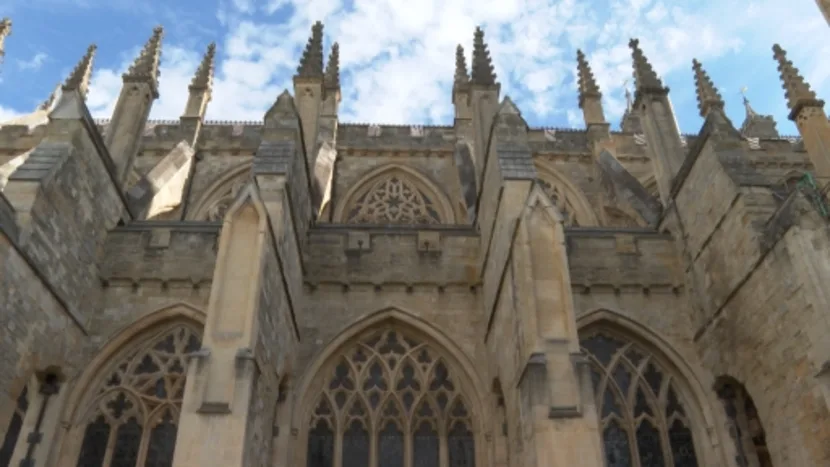
Archaelogical dig starts at Exeter Cathedral
An archaeological dig which has just started at Exeter Cathedral could uncover artefacts as far back as the Romans.
The first stone has been lifted in a six-week investigative dig where a new cloister gallery will ultimately be built.
Archaeologists want to find out what is below the paving slabs and grass which covers the area just outside the cathedral's chapter house, which has never been examined before.
The dig is expected to provide crucial information about the layout of the medieval cloister - which was torn down in 1657 - and the state of its foundations which, if still serviceable, will be reused for the new building.
Read the rest of this article...
Vikings had smallpox and may have helped spread the world's deadliest virus
A 1200-year-old smallpox-infected Viking skeleton found in Oland, Sweden
[Credit: The Swedish National Heritage Board]
Scientists have discovered extinct strains of smallpox in the teeth of Viking skeletons - proving for the first time that the killer disease plagued humanity for at least 1400 years.
Smallpox spread from person to person via infectious droplets, killed around a third of sufferers and left another third permanently scarred or blind. Around 300 million people died from it in the 20th century alone before it was officially eradicated in 1980 through a global vaccination effort - the first human disease to be wiped out.
Now an international team of scientists have sequenced the genomes of newly discovered strains of the virus after it was extracted from the teeth of Viking skeletons from sites across northern Europe.
Professor Eske Willerslev, of St John's College, University of Cambridge, and director of The Lundbeck Foundation GeoGenetics Centre, University of Copenhagen, led the study.
Read the rest of this article...
1,000-year-old Christian jewellery mould found in Switzerland
Stone jewellery mould for crucifix, cross medallion [Credit: Archaeological Service of Grisons]
An archaeological dig beside a former prison in the southeast Swiss canton of Graubünden has unearthed a 1,000-year-old double sided mould that was used to forge Christian-themed jewellery.
The concrete mould, which measures 9 x 8.5 x 3 centimetres, would have been used to forge up to seven different types of objects including earrings and a crucifix.
Experts from Graubünden’s archaeological services said that they reckoned the object dated from sometime between the 9th and 11th centuries.
The find is a rare one not only in canton Graubünden, but across the whole of Switzerland; such objects had previously been found only in Bern, Basel, and Winterthur.
Archaeologists have been digging since March in the area in and around the recently shut down Sennhof prison, and have come across what they describe as a small artisanal district dating from the Middle Ages.
Read the rest of this article...
Roman jars found in Spanish seafood shop
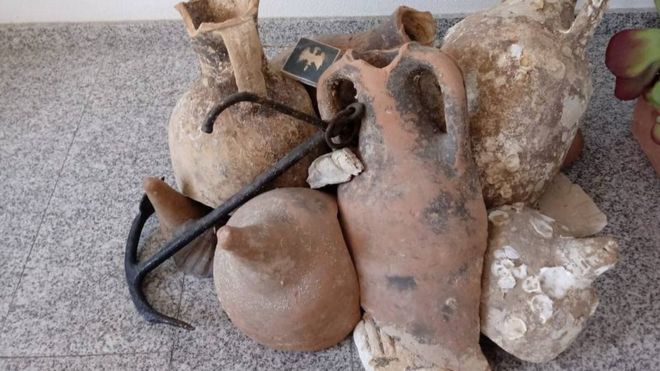
Authorities conducting a routine inspection of a frozen seafood shop in Spain were surprised to find ancient artefacts decorating the premises.
The owner's son found the objects while fishing, according to local media.
Thirteen jars (amphoras) are believed to date back to the 1st Century AD, while an 18th Century anchor and a limestone plaque were also found.
Both the owner of the business in Alicante and his son are now being investigated.
"The amphoras could come from the looting of shipwrecks," which would be protected as objects of underwater archaeology, a statement by the Civil Guard said on Wednesday.
The artefacts were moved to the Museum of the Sea in Santa Pola, where they underwent preliminary dating.
Read the rest of this article...
UN NOUVEL ÉTABLISSEMENT ANTIQUE DÉCOUVERT DANS LA PLAINE D'ALÉRIA (HAUTE-CORSE)
A Pietroso, dans la plaine d’Aléria au pied du Massif du Monte Incudine, les archéologues de l'Inrap ont mis au jour un vaste établissement rural de l'époque romaine, composé d'un étonnant ensemble de structures hydrauliques.
Une équipe d’archéologues de l’Inrap met actuellement au jour un établissement rural du IIIe siècle de notre ère, sur la commune de Pietroso, au pied du Massif du Monte Incudine à l’extrême ouest de la plaine d’Aleria. Sur prescription de l’État (DRAC de Corse), cette fouille, préalable à la construction d’un habitat résidentiel, est prise en charge à 100% par l’État, par le biais du fonds national pour l’archéologie préventive (Fnap). Elle apporte aujourd’hui d’intéressantes informations sur l’occupation antique en Corse.
Read the rest of this article...
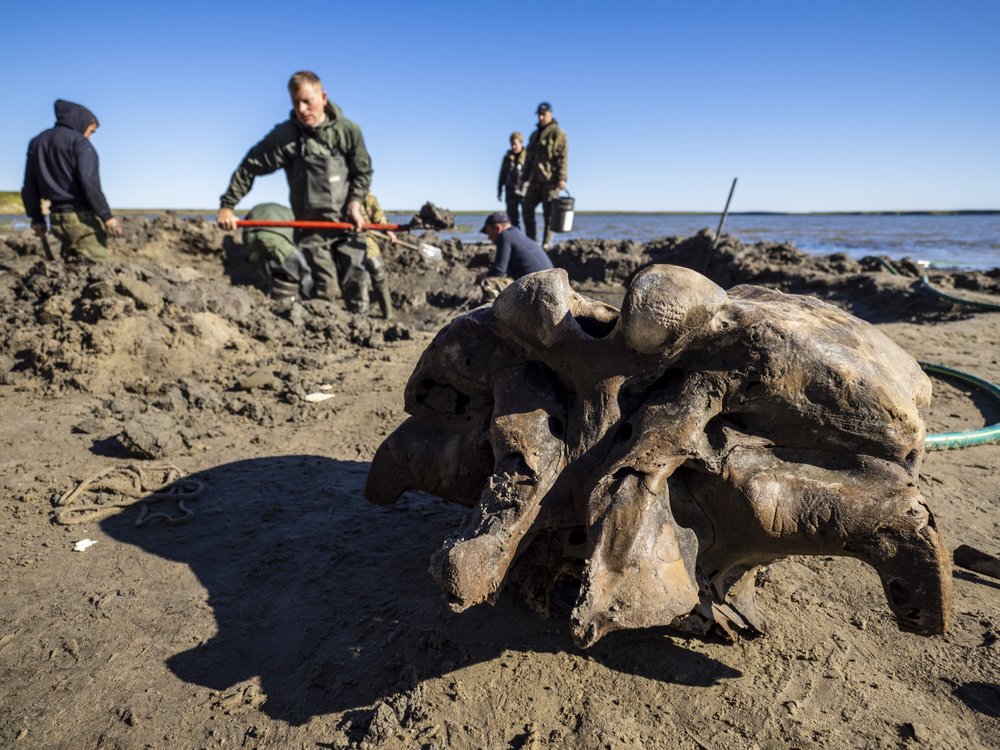
Well-preserved mammoth skeleton found in Siberian lake
Russian scientists are working to retrieve the well-preserved skeleton of a woolly mammoth, which has some ligaments still attached to it, from a lake in northern Siberia.
Fragments of the skeleton were found by local reindeer herders in the shallows of Pechevalavato Lake on the Yamalo-Nenets region a few days ago. They found part of the animal’s skull, the lower jaw, several ribs, and a foot fragment with sinews still intact.
Woolly mammoths are thought to have died out around 10,000 years ago, although scientists think small groups of them may have lived on longer in Alaska and on Russia’s Wrangel Island off the Siberian coast.
Russian television stations on Friday showed scientists looking for fragments of the skeleton in the lakeside silt.
Scientists have retrieved more bones and also located more massive fragments protruding from the silt. They said it would take significant time and special equipment to recover the rest of the skeleton — if it had all survived in position.
Read the rest of this article...
Friday, July 24, 2020
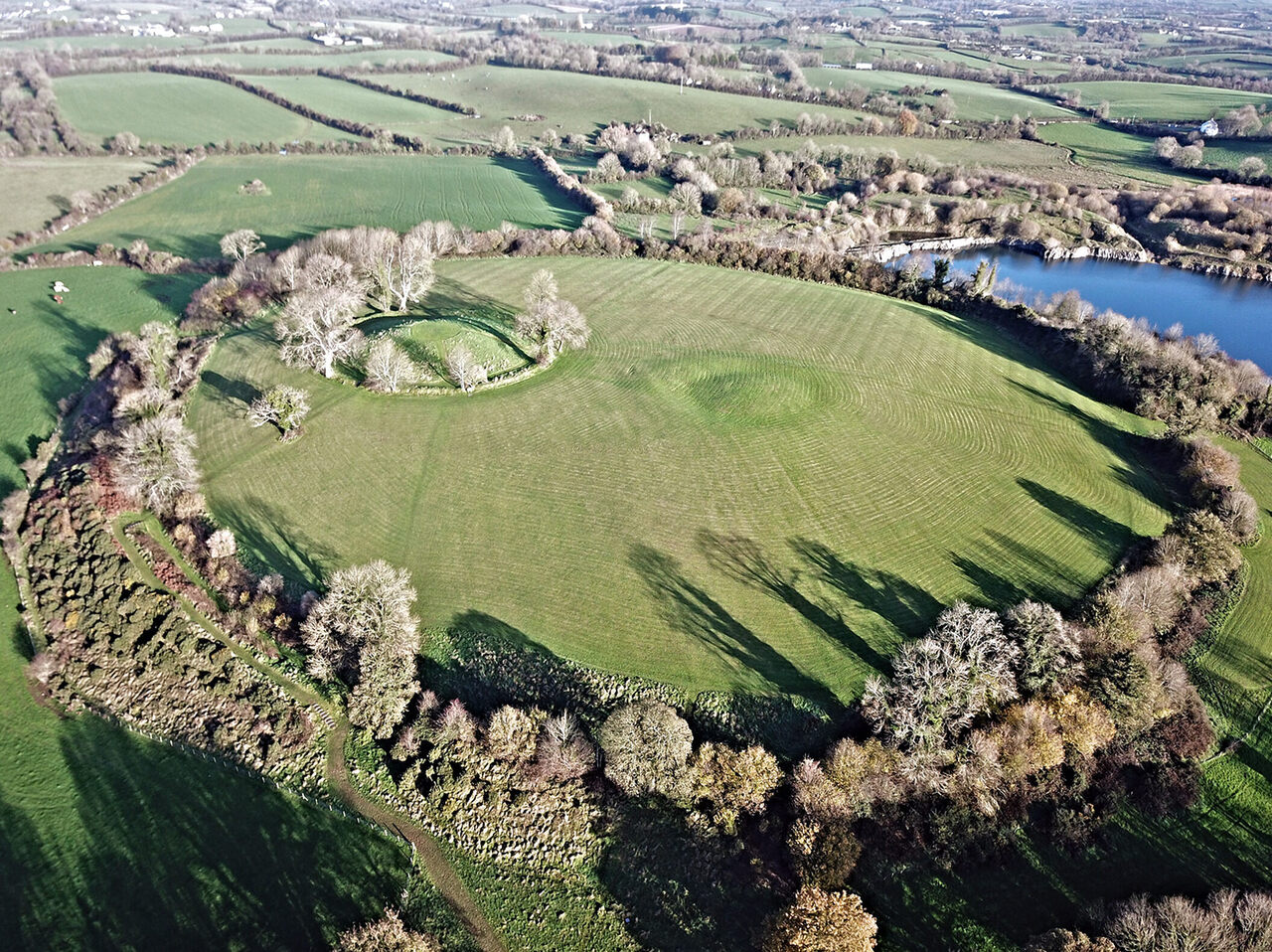
Subterranean Scans Reveal New Mysteries at an Ancient Irish ‘Fort’
The hilltop remains of Navan Fort, an Iron Age site that a new paper argues has a broader history than previously thought.
O'DRISCOLL ET AL. 2020 / OXFORD JOURNAL OF ARCHAEOLOGY
Navan Fort is perched on an Irish hilltop, but some of its history hides beneath the soil.
ON A COLD AND WET day in March 2018, a van crammed with equipment and Scottish and Irish archaeologists rolled up alongside Navan Fort, a prominent hilltop settlement in Northern Ireland that’s not far from the modern border with Ireland. A ringed enclosure that sits on a tall hill in the countryside, Navan Fort is easy to pick out. It was one of the ceremonial centers of pre-Gaelic Ireland, and even has a visitor’s center today. But that March, the archaeologists were seeking remains that didn’t meet the eye.
Lo and behold, they found some. According to their recent study, published in the open-access Oxford Journal of Archaeology, the physical footprint and outsized role of Navan Fort may have been even larger and more lasting than previously thought. Using a combination of non-invasive archaeological surveys—one that measured the magnetic properties of the soil, and another that measures how the dirt conducts electricity—the team found the remnants of subterranean structures, suggesting that the site was occupied earlier than previously believed. They also found evidence of habitation much later than previously thought, clear through to the arrival of St. Patrick in the area, and the patron saint’s founding of the local ecclesiastical see.
Read the rest of this article...
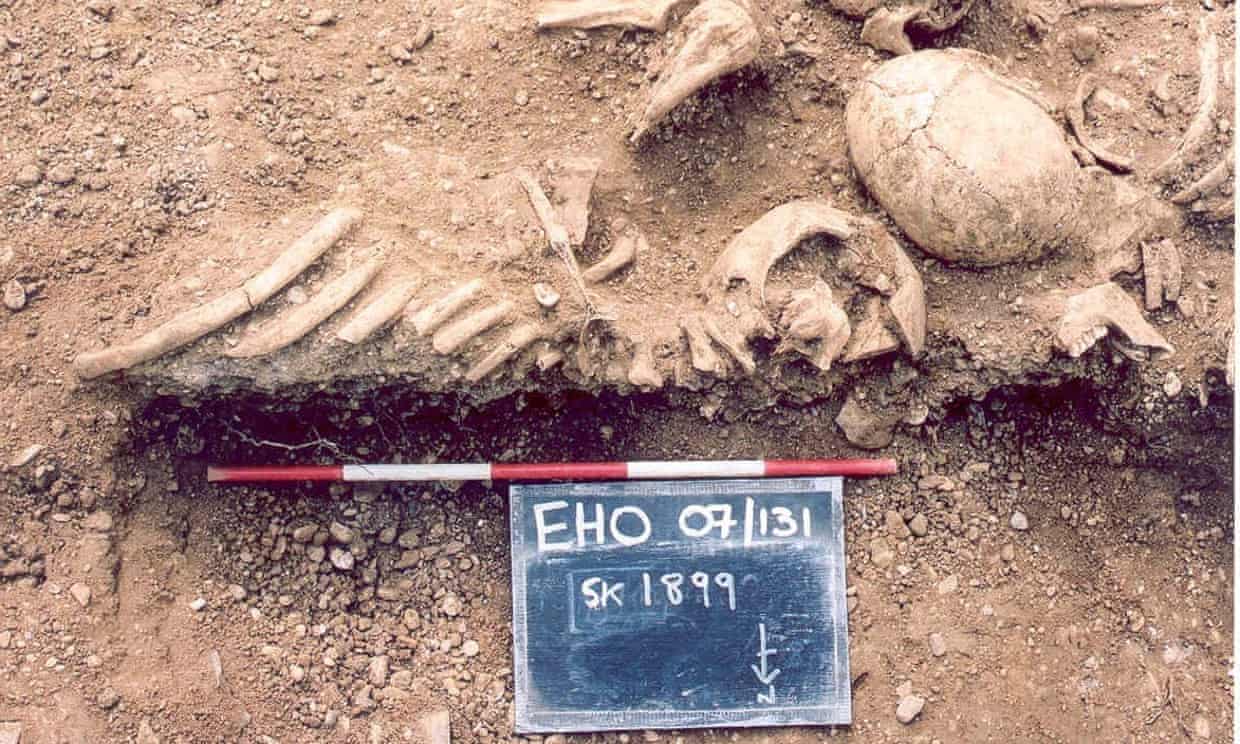
Researchers find earliest confirmed case of smallpox
Massacred 10th century Vikings are seen having been found in a mass grave, at St John’s College, Oxford Photograph: Thames Valley Archaeological Services/PA
The Vikings are known for their intrepid seafaring, fearsome fighting and extensive trading, but it seems it may not only have been goods and weapons they carried on their travels – they could also have carried a deadly disease.
Researchers say they have found the world’s earliest confirmed case of smallpox, revealing the disease was widespread across northern Europe during the Viking age.
“I think it is fair to assume the Vikings have been the superspreaders,” said Eske Willerslev, professor of ecology and evolution at the University of Cambridge and director of the Lundbeck Foundation GeoGenetics Centre at the University of Copenhagen, who led the research.
Smallpox, a deadly infectious disease with symptoms including pus-filled blisters, is caused by the variola virus. Once described by the 18th-century English physician Edward Jenner as the “most dreadful scourge of the human species”, in the 20th century alone the disease is thought to have killed between 300 million and 500 million people.
Read the rest of this article...
Vikings spread smallpox around Europe in the 7th Century
Extinct strains of smallpox have been found in the teeth of Viking skeletons, indicating the disease was widespread in northern Europe during the 7th Century, scientists say.
An international team of researchers analysed the genetic material of the ancient strains and found their structure to differ from the modern smallpox virus which was eradicated in the 20th Century. They say the findings, published in the journal Science, pushes the date of the confirmed existence of smallpox back by 1,000 years.
The researchers believe Vikings may have helped spread the disease, although it is unclear whether these ancient strains were fatal. They say knowing more about the evolutionary history of viruses, such as the deadly smallpox, could help in the battle against new and emerging infectious diseases.
Read the rest of this article...
Viking brooch is first of its kind for Manx National Heritage
The oval brooch in its as-found state. Courtesy Manx National Heritage
A Viking brooch is a rare find of a high status woman and a first for the Isle of Man collections say experts
A collection of rare Viking Age finds including two rare and highly decorated oval brooches have been declared treasure on the Isle of Man.
First discovered in December 2018 by metal detectorists John Crowe and Craig Evans, the two brooches are made from bronze with silver wire decoration and most likely gilded, dating to around AD 900-950.
Experts believe the brooches would have been worn by a woman of some status.
Read the rest of this article...
Viking brooch is first of its kind for Manx National Heritage
The oval brooch in its as-found state. Courtesy Manx National Heritage
A Viking brooch is a rare find of a high status woman and a first for the Isle of Man collections say experts
A collection of rare Viking Age finds including two rare and highly decorated oval brooches have been declared treasure on the Isle of Man.
First discovered in December 2018 by metal detectorists John Crowe and Craig Evans, the two brooches are made from bronze with silver wire decoration and most likely gilded, dating to around AD 900-950.
Experts believe the brooches would have been worn by a woman of some status.
Read the rest of this article...
Wednesday, July 22, 2020
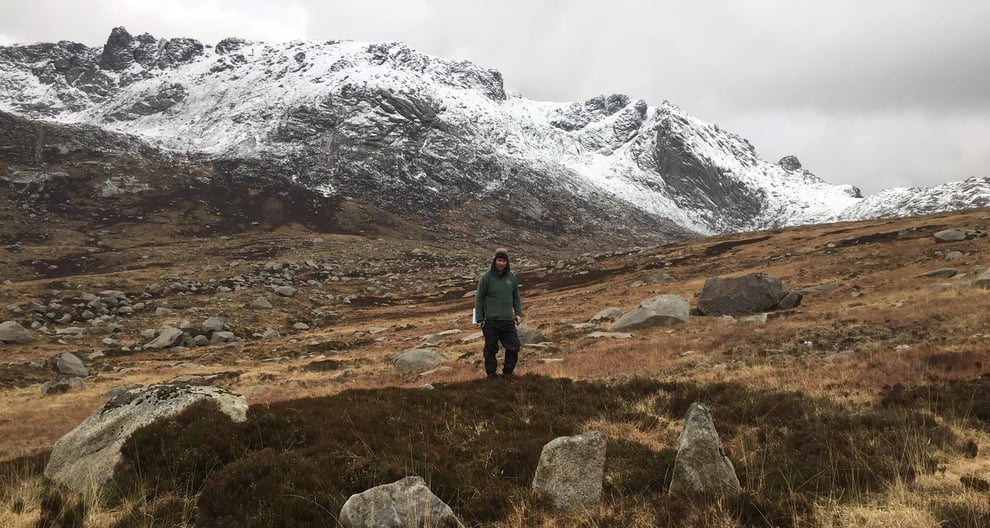
New light cast on Scotland's Bronze Age mountain dwellers on Arran
Radiocarbon dating of a piece of burnt wood found at the site in Glen Rosa has concluded that the house was occupied around 1,400BC. Picture: Frame Creates
Radiocarbon dating of a piece of burnt wood found at the site in Glen Rosa has concluded that the house was occupied around 1,400BC in what has been described as an “exciting” discovery by National Trust for Scotland, which led the dig at the site.
The roundhouse, which was built in Coire a’ Bhradain, which sits some 384 metres above sea level and is the highest known Iron Age site on the island.
It is now believed the roundhouse, which measured around six-metres wide, was used as temporary shelter during deer hunting trips through ‘the Bowman’s Pass’ at the top of the coire.
Read the rest of this article...
Scientists find new evidence of massive tsunami that devastated ancient Britain in 6200BC
The North Sea, Storegga underwater landslide event run-out, associated deposit locations
and core ELF001A [Credit: Gaffney et al. 2020]
Evidence of the catastrophic event has already been found in onshore sediments in Western Scandinavia, the Faroe Isles, northeast Britain, Denmark and Greenland but now for the first time confirmation of the event has been found on the UK’s southern coasts.
The giant tsunami, known as the Storegga Slide, was caused when an area of seabed the size of Scotland (measuring some 80,000sq km and around 3,200 cubic km) shifted suddenly.
This triggered huge waves that would have brought devastation to an inhabited ancient land bridge, which once existed between the UK and mainland Europe - an area known as Doggerland - that is now submerged beneath the North Sea.
Read the rest of this article...
The clues to ancient humans hidden beneath the sea
Submerged in eleven metres of water sits a landscape that could contain tantalising clues to Britain’s earliest farmers. It’s also at serious threat from erosion by the sea - meaning a race against time to discover and preserve as much as possible.
Read the rest of this article...
Iron Age Butter Identified in Scotland
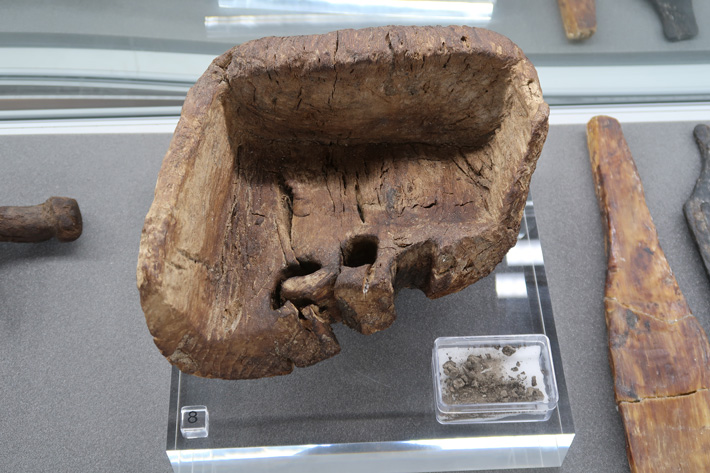
(Courtesy of The Scottish Crannog Centre)
According to a report in The Scotsman, researchers have recovered a 2,500-year-old wooden dish from Loch Tay, a freshwater lake in Scotland’s central highlands. Chisel marks are still visible on the dish, which is thought to have fallen into the water with one of the at least 17 crannogs, or Iron Age wooden houses that once stood on stilts at the site. “Because of the fantastic anaerobic conditions, where there is very little light, oxygen, or bacteria to break down anything organic, you get this type of sealed environment,” explained archaeologist Rich Hiden of the Scottish Crannog Centre.
Read the rest of this article...
Tuesday, July 21, 2020
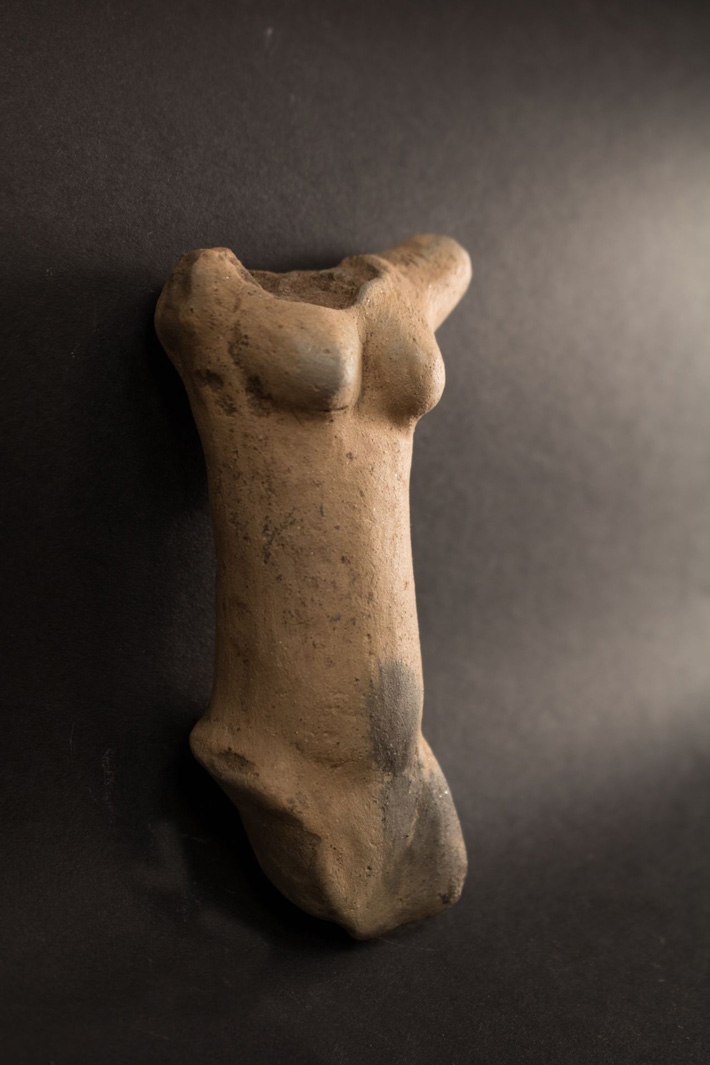
Neolithic “Venus of Egerszeg” Unearthed in Hungary
ZALAEGERSZEG, HUNGARY—Hungary Today reports that researchers from the Göcsej Museum unearthed a fragment of a 6,500-year-old figurine at the site of a large Lengyel settlement at a construction site in western Hungary. Named the “Venus of Egerszeg,” the sculpted clay fragment depicts a woman’s torso. The researchers suggest that the figure was deliberately broken into small pieces as part of a fertility rite. Other ceramic fragments, some of which had been painted yellow, red, and white, and stone tools were also recovered. To read about a 23,000-year-old Gravettian Venus figurine recently found in France, go to "Artifact."
Read the rest of this article...
Subscribe to:
Posts (Atom)