Monday, February 26, 2018

This Roman ‘gate to hell’ killed its victims with a cloud of deadly carbon dioxide

The ancient city of Hierapolis, located in modern-day Turkey 

Is it possible to walk through the gates of hell and live? The Romans thought so, and they staged elaborate sacrifices at what they believed were entrances to the underworld scattered across the ancient Mediterranean. The sacrifices—healthy bulls led down to the gates of hell—died quickly without human intervention, but the castrated priests who accompanied them returned unharmed. Now, a new study of one ancient site suggests that these “miracles” may have a simple geological explanation.

Rediscovered just 7 years ago, the gate to hell at the ancient city of Hierapolis, in modern-day Turkey, is a stone doorway leading to a small cavelike grotto. The gate was built into one wall of a rectangular, open-aired arena, topped by a temple and surrounded by raised stone seating for visitors. The city itself sits in one of the region’s most geologically active areas; 2200 years ago, its thermal springs were believed to have great healing powers. But a deep fissure running beneath Hierapolis constantly emits volcanic carbon dioxide (CO2), which pours forth as a visible mist. The gate—also known as the Plutonium, for Pluto, the god of the underworld—is built directly above it. In 2011, archaeologists showed that the gate is still deadly: Birds that fly too close suffocate and die.

Read the rest of this article...

Britain's prehistoric catastrophe revealed

Ancient Britons may have been nearly wiped out by bubonic plague brought by newcomers to the island


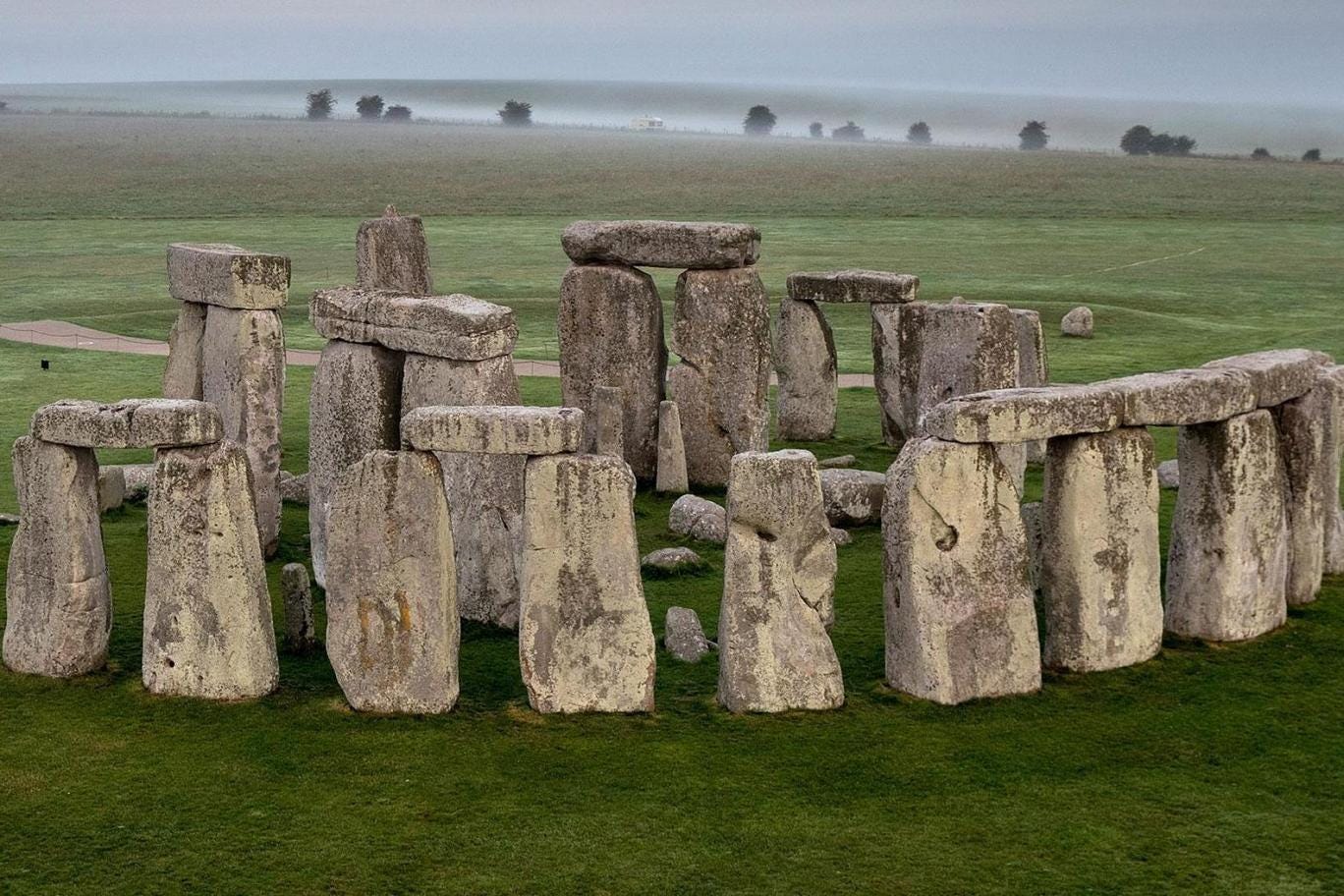
The builders of Stonehenge are thought to be the last of Britain's neolithic people Getty
Extraordinary new genetic evidence is revealing how Britain experienced a mysterious almost total change in its population in just a few centuries after the construction of Stonehenge.

It suggests that some sort of social, economic or epidemiological catastrophe unfolded.

The great 20-30 tonne stones of Stonehenge were erected by Neolithic farmers whose ancestors had lived in Britain for at least the previous 1,500 years – and new genetic research on 51 skeletons from all over Neolithic Britain has now revealed that during the whole of the Neolithic era, the country was inhabited mainly by olive-skinned, dark-haired Mediterranean-looking people.

Read the rest of this article...
The Archaeology of Wealth Inequality

Researchers trace the income gap back more than 11,000 years

When the last of the volcanic ash from Mount Vesuvius settled over Pompeii in A.D. 79, it preserved a detailed portrait of life in the grand Roman city, from bristling military outposts to ingenious aqueducts. Now researchers say the eruption nearly 2,000 years ago also captured clues to one of today’s most pressing social problems.
Analyzing dwellings in Pompeii and 62 other archaeological sites dating back 11,200 years, a team of experts has ranked the distribution of wealth in those communities. Bottom line: economic disparities increased over the centuries and technology played a role. The findings add to our knowledge of history’s haves and have-nots, an urgent concern as the gulf between the 1 percent of ultra-rich and the rest of us continues to grow.
“We wanted to be able to look at the ancient world as a whole and draw connections to today,” says Michael E. Smith, an archaeologist at Arizona State University, who took part in the study. The research is being published this month in Ten Thousand Years of Inequality, a book edited by Smith and Timothy Kohler of Washington State University.
Read the rest of this article...
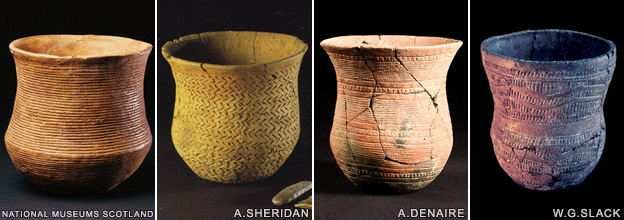
Ancient Britons 'replaced' by newcomers

Beaker pottery starts to appear in Britain around 4,500 years ago

The ancient population of Britain was almost completely replaced by newcomers about 4,500 years ago, a study shows.

The findings mean modern Britons trace just a small fraction of their ancestry to the people who built Stonehenge.

The astonishing result comes from analysis of DNA extracted from 400 ancient remains across Europe.

The mammoth study, published in Nature, suggests the newcomers, known as Beaker people, replaced 90% of the British gene pool in a few hundred years.

Read the rest of this article...

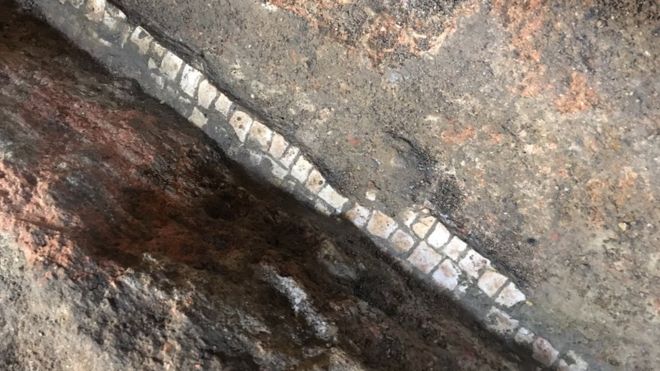
Archaeologists have found the Roman Baths oldest mosaic

Dr Sarah Morton said the find will "continue to develop our understanding of the Roman Baths"
Archaeologists have made "a very exciting discovery" during excavations at an historic Roman baths site.

The oldest mosaic ever found at the site in Bath has been discovered by local volunteer Fiona Medland.

Ms Medland said she was "totally stunned" as this was her "first real find and a dream come true" after 10 years of volunteering with the Bath and Camerton Archaeological Society (BACAS)

Historic England are in discussion with the team on the best way to uncover it.

Stephen Clews, manager of the Roman Baths, said: "So far, just a few of the small cubes of stone that make up the floor have been uncovered. They are a creamy buff colour and are made from local stone. They are small in size, about one centimetre square, and carefully laid.

Read the rest of this article...

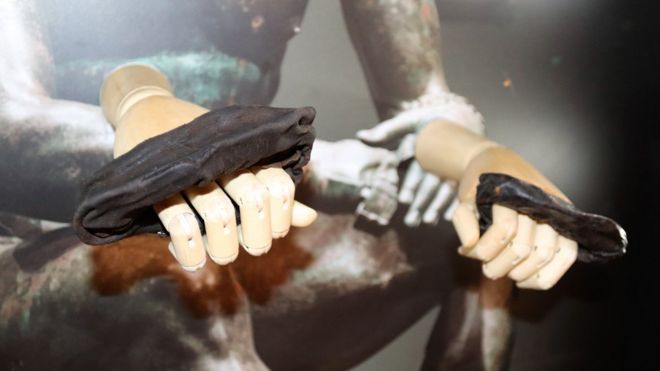
Roman boxing gloves unearthed by Vindolanda dig

The gloves were "skilfully made" about 2,000 years ago

Roman boxing gloves unearthed during an excavation near Hadrian's Wall have gone on public display.

Experts at Vindolanda, near Hexham, in Northumberland, believe they are "probably the only known surviving examples from the Roman period".

Dr Andrew Birley, Vindolanda Trust director of excavations, described the leather bands as an "astonishing" find.

The gloves were discovered last summer along with a hoard of writing tablets, swords, shoes and bath clogs.

Made of leather, they were designed to fit snugly over the knuckles and have the appearance of a protective guard.

Read the rest of this article...
13,500-year-old carved bison bone fished from the bottom of the North Sea

he carved bison bone was fished out of the North Sea in 2005 and dates to the last Ice Age 
[Credit: Rijksmuseum van Oudheden]

Late Ice Age hunter gatherers roamed the area that became the North Sea but very little evidence of their presence has been found. But sometimes the sea floor yields treasures that shed light on the period. This is a confirmation, the article says, of ‘the importance of continental shelves as archaeological archives’.

In 2005 a Dutch fishing vessel caught a bison bone in its nets on the border of the Dutch part of the continental shelf. The bone, which had a distinctive zigzag pattern carved in it, ended up in the hands of a collector who, the NRC writes, ‘had good contacts with fishermen’ and agreed to let experts at the Leiden archaeological museum take a look at it.

Carbon isotope analysis showed the bone to be 13,500 years old and part of a culture that decorated animal bones with zigzag and herringbone motives. Only three other similarly carved objects have been discovered so far: a horse’s jaw in Wales, deer antlers in Northern France and moose antlers in Poland.

Read the rest of this article...
Remains of Roman road found in Northumberland

A drone shot looks down at the Devil's Causeway, in Northumberland 
[Credit: AAG Archaeology]

The road can be traced from Portgate on Hadrian’s Wall, near the Errington Arms, to the mouth of the River Tweed, but parts of it have remained uncovered.

A long feature crossing the site north of Matfen divided the opinion of experts, with some believing it to be the remains of the Devil’s Causeway and others suggesting it was merely an old dry stone wall.

In an attempt to put the question to bed, AAG Archaeologists cut several trenches to view a cross section of the remains, and found a defining characteristic of the Roman road.

The team discovered a stone spine, seen at excavations of the Devil’s Causeway near Netherwitton in 2001 and Shellbraes in 1937.

Read the rest of this article...

The Guardian view on Neanderthals: we were not alone

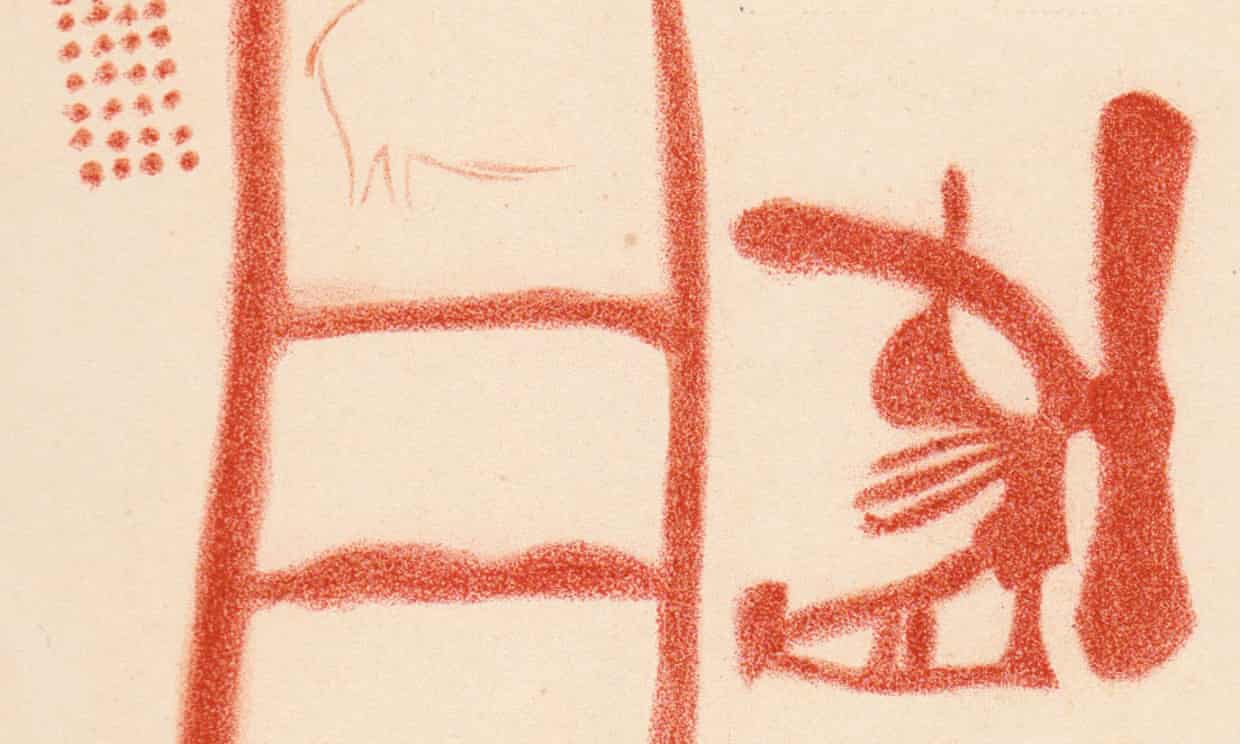
Drawing of Panel 78 in La Pasiega by Breuil et al (1913). The red scalariform (ladder) symbol has a minimum age of 64,000 years but it is unclear if the animals and other symbols were painted later. Photograph: Breuil et al

The three human subspecies known to have hybridised to produce the present human population of the planet, Neanderthals, Homo sapiens and Denisovans, last had a common ancestor more than half a million years ago. Until now it has been assumed that the only branch of her descendants to think symbolically was us, Homo sapiens. In fact, until the development of sequencing techniques sensitive enough to work on ancient DNA, it was thought that the other two species had died out entirely, rather than leaving portions of their genome in European and Melanesian populations respectively. But the discovery, reported last week, of palaeolithic art at four sites in Spain that dates from the time when the peninsula was occupied only by Neanderthals, shows that they worked with symbols of stone and paint.

We have no idea what these markings mean. That is in the nature of symbolism, and indeed of language: the meaning of a sound, or a marking on the wall, is given by the community that uses it; it can’t be read by outsiders. We already know that Neanderthals were anatomically equipped for speech; their use of painted symbols suggests that they could make audible symbols and not just visible ones.

Read the rest of this article...
Neanderthals – not modern humans – were first artists on Earth, experts claim

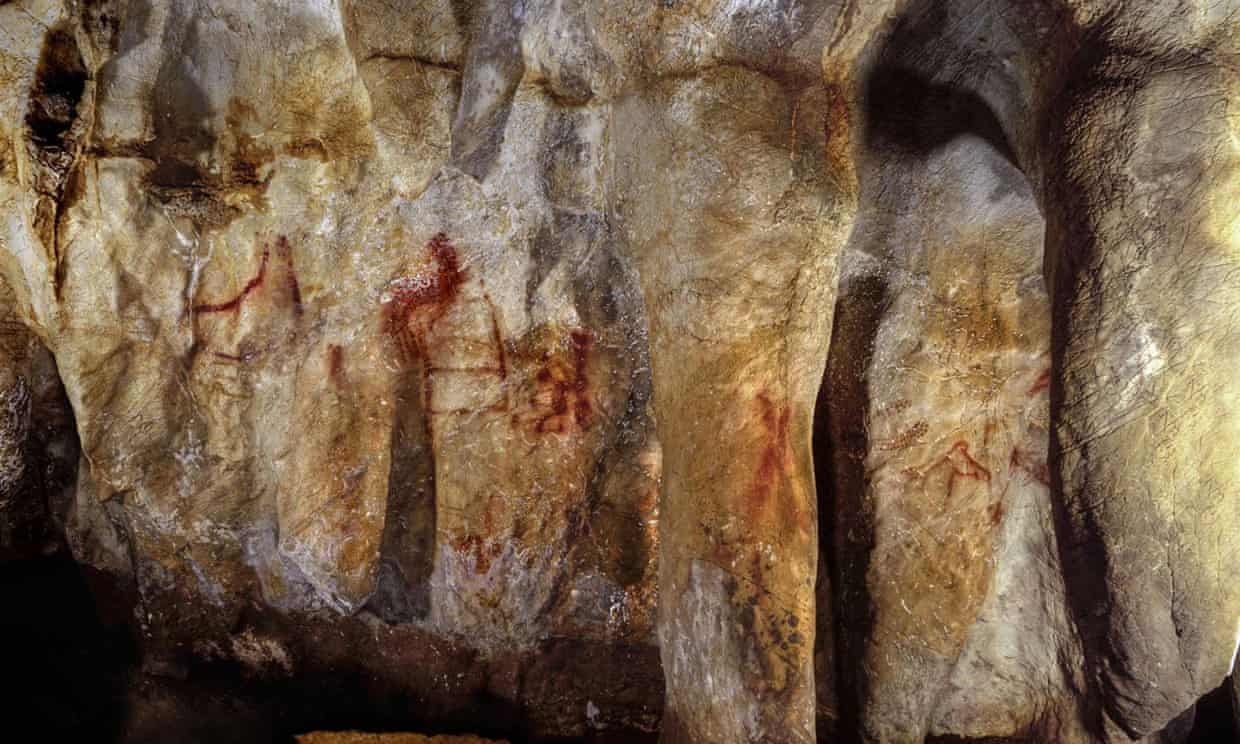
Paintings on a section of the La Pasiega cave wall, including a ladder shape composed of red horizontal and vertical lines. Photograph: P. Saura/PA

More than 65,000 years ago, a Neanderthal reached out and made strokes in red ochre on the wall of a cave, and in doing so, became the first known artist on Earth, scientists claim.

The discovery overturns the widely-held belief that modern humans are the only species to have expressed themselves through works of art.

In caves separated by hundreds of miles, Neanderthals daubed, drew and spat paint on walls producing artworks, the researchers say, tens of thousands of years before modern humans reached the sites.

Read the rest of this article...
A rare Neanderthal hand axe found in a long lost cave in Wales

Image courtesy National Museum Cardiff

Elizabeth Walker, Palaeolithic & Mesolithic Archaeologist and Head of Collections at National Museum Cardiff, talks about a Neanderthal hand axe, which dates back to c. 60,000-35,000 BC

This hand axe was found during excavations at Coygan Cave, near Laugharne, Carmarthenshire, in advance of the cave’s destruction by quarrying in the 1960s. It is of a form typically made by a Neanderthal and was left at the cave with another similar tool sometime between 60,000 and 35,000 years ago.

Findings like this hint that Neanderthals may have lived in the Carmarthenshire area, but we have no evidence of their physical remains. The two axes we have were found near the wall of the cave, and it’s been suggested they were deliberately cached by their owners, who intended to return to the cave to use them on a future visit.

Read the rest of this article...
The Future of London’s Past

‘Central Considerations: Winchester,
the birth of Urban Archaeology, and
The Future of London’s Past’


A Lecture by


Martin Biddle
The First President of EMAS


Friday, 2nd March 2018


7.00pm


Activity Space 1, Clore Learning Centre
Museum of London, London Wall
EC2Y 5HN


FREE TO EMAS AND LAMAS MEMBERS                                                             
£3:00 NON-MEMBERS

Friday, February 16, 2018

Into the light: how lidar is replacing radar as the archaeologist’s map tool of choice

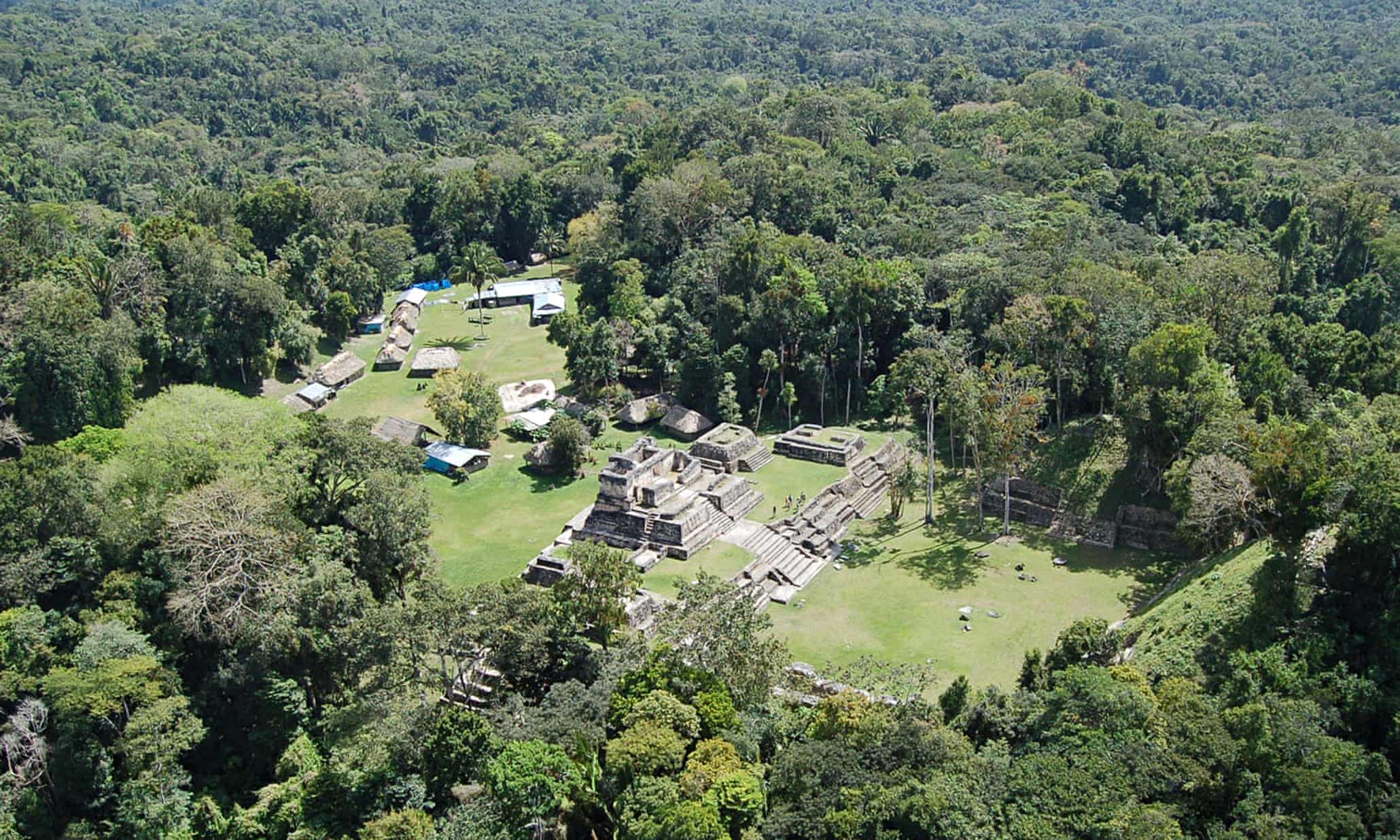
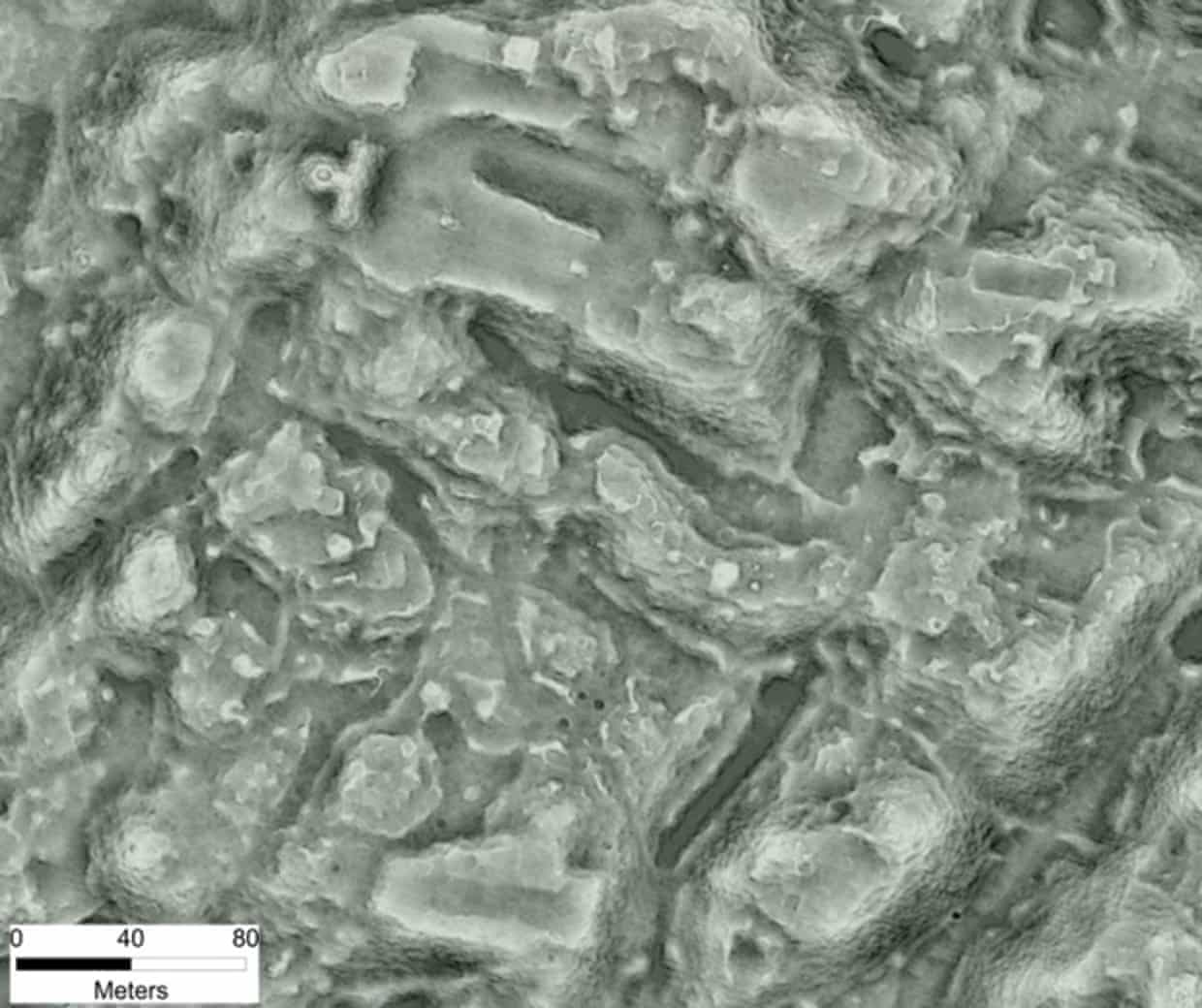
From the ground, structures in the dense Belize jungle were hard to map, but airborne lidar devices revealed details of a site that covered 200 sq km with agricultural terraces everywhere. 
Photograph: Caracol Archaeological Project, University of Central Florida

Colorado State University archaeologist Chris Fisher found out about lidar in 2009. He was surveying the ruins of Angamuco in west-central Mexico the traditional way, with a line of grad students and assistants walking carefully while looking at the ground for bits of ceramics, the remains of an old foundation or even a tomb.

He had expected to find a settlement, but instead he happened upon a major city of the Purepecha empire, rivals of the Aztecs in the centuries immediately preceding the Spanish conquest of Mexico in 1519.

The site covered 13 sq km; traditional surveying would have taken years, so he turned to a technology that uses pulses of light to penetrate the forest and ground cover to reveal what lay beneath. “In two seasons we had surveyed only two square kilometres,” Fisher said. But with this new technology – lidar – “we mapped the entire city in 45 minutes.”

Read the rest of this article...

Laser scanning reveals 'lost' ancient Mexican city 'had as many buildings as Manhattan'

Groundbreaking lidar scanning reveals the true scale of Angamuco, built by the Purépecha from about 900AD


Archaeology might evoke thoughts of intrepid explorers and painstaking digging, but in fact researchers say it is a high-tech laser mapping technique that is rewriting the textbooks at an unprecedented rate.
The approach, known as light detection and ranging scanning (lidar) involves directing a rapid succession of laser pulses at the ground from an aircraft.
The time and wavelength of the pulses reflected by the surface are combined with GPS and other data to produce a precise, three-dimensional map of the landscape. Crucially, the technique probes beneath foliage – useful for areas where vegetation is dense.
Earlier this month researchers revealed it had been used to discover an ancient Mayan city within the dense jungles of Guatemala, while it has also helped archaeologists to map the city of Caracol – another Mayan metropolis.
Read the rest of this article...

Wednesday, February 14, 2018

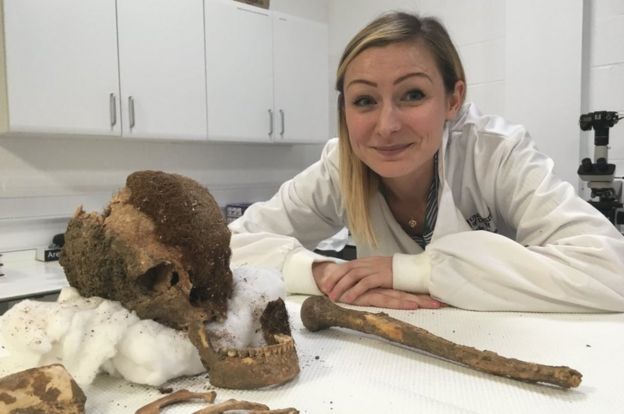
Northumberland Bronze Age skeleton: Whose bones are these?

Sanita Nezirovic has been investigating the Bronze Age remains

Forensic scientists have been analysing Bronze Age bones found in a field - but how do they work out who the person was?

In September 2017, a farmer near Rock, Northumberland, preparing his field for drainage discovered a burial cist - or stone coffin - containing a skeleton and a jug.

Sanita Nezirovic, a lecturer in forensic science at the University of Derby, was tasked with finding out whose bones they were.

She has looked at the remains of hundreds of people, dating from the Bronze Age to modern times.

In each case she creates a "presumptive profile", detailing facts such as the person's sex, age and height.

Read the rest of this article...

Bizarre 'Spider Stones' Found at Site of Neolithic Sun-Worshipers


Two of the 5,000-year-old "spider stones" unearthed on the Danish island on Bornholm.
Credit: Bornholm Museum

Strangely marked stones and other artifacts unearthed on the island of Bornholm in Denmark have raised new mysteries about a Neolithic sun-worshipping religion centered there about 5,000 years ago.

The new finds include "spider stones," inscribed with pattern like a spider's web, and a piece of copper from a time when the metal could not be made by the island's Stone Age inhabitants, say the researchers.

The handful of newfound spider stones look a little like hundreds of inscribed "sun stones" or "solar stones" — solsten in Danish — found since the 1990s amid the remains of an earthen-walled Neolithic enclosure, about 650 feet (200 m) across, at the Vasagard archaeological site on Bornholm in the Baltic Sea, between the southern tip of Sweden and the coast of Poland.

Read the rest of this article...

8,000-Year-Old Heads on Stakes Found in Mysterious Underwater Grave

None of the human skulls had jaw bones. There was one human jaw bone at the site, but it wasn't associated with any of the skulls.

The discovery of a burial containing 8,000-year-old battered human skulls, including two that still have pointed wooden stakes through them, has left archaeologists baffled, according to a new study from Sweden.

It's hard to make heads or tails of the finding: During the Stone Age, the grave would have sat at the bottom of a small lake, meaning that the skulls would have been placed underwater. Moreover, of the remains of at least 11 adults placed on top of the grave, only one had a jawbone, the researchers said.

Read the rest of this article...

Neanderthals' lack of drawing ability may relate to hunting techniques


Replica of drawing of lions painted in the Chauvet Cave. Art in the cave has been identified 
as created by early modern humans [Credit: UC Davis]

Neanderthals had large brains and made complex tools but never demonstrated the ability to draw recognizable images, unlike early modern humans who created vivid renderings of animals and other figures on rocks and cave walls. That artistic gap may be due to differences in the way they hunted, suggests a University of California, Davis, expert on predator-prey relations and their impacts on the evolution of behaviour.

Neanderthals used thrusting spears to bring down tamer prey in Eurasia, while Homo sapiens, or modern humans, spent hundreds of thousands of years spear-hunting wary and dangerous game on the open grasslands of Africa.

Richard Coss, a professor emeritus of psychology, says the hand-eye coordination involved in both hunting with throwing spears and drawing representational art could be one factor explaining why modern humans became smarter than Neanderthals.

Read the rest of this article...

Major Neolithic ceremonial enclosure uncovered at Windsor

An aerial view of the site of the Neolithic causewayed enclosure 
[Credit: Wessex Archaeology]

A major 5,500 year old Neolithic ceremonial gathering place known as a causewayed enclosure has been partially uncovered within sight of Windsor Castle in Berkshire. The discovery was made at Riding Court Farm, near Datchet as part of CEMEX UK’s archaeological programme on the quarrying site, which is monitored on behalf of the local planning authority by Berkshire Archaeology.

Defined by encircling bank and ditch segments with gap entrances, such sites represent some of the earliest known acts of monument building in Britain. Around 80 monuments have been identified across Britain, and others are known on the Continent. The Riding Court causewayed enclosure may have been seasonally occupied, a place where communities gathered to undertake ceremonial feasting, exchange of goods, the marking of festivals and social obligations. Imported objects found in other enclosures suggest trade and exchange of exotic objects (stone axes and pottery), while evidence of feasting and human burials are known from other sites.

One feature is the deliberate consumption and wasting of meat and the exposure of human remains including the placing of skulls in the base of ditches. There are signs that pots were deliberately smashed perhaps as festivities came to a close.

Read the rest of this article...

Mystery of 8,000-Year-Old Impaled Human Heads Has Researchers Stumped

Archaeologists have never before encountered this grisly phenomenon in Mesolithic Scandinavia, and they're hard-pressed to explain it.


Impaled Mesolithic Skull 
found on the bottom of a shallow lake in Kanaljorden #Sweden
ca. 7,000 years old 

In 2009, a new railway bridging southern Sweden's Motala Ström River was slated for construction. But then, archaeologists began turning up artifacts there that were thousands of years old. Over the next few years, animal bones, tools made from antlers, wooden stakes, and bits of human skull were found in the bog's lime sediment.

The remains belonged to Mesolithic hunter-gatherers, a group that existed around 8,000 years ago between the Old and New Stone Ages. These societies have been known to show respect for the bodily integrity of their dead—that is, until now. (Related: "Mysterious Graves Discovered at Ancient European Cemetery")

In 2011, Fredrik Hallgren of the Cultural Heritage Foundation led an archaeological project on the Kanaljorden excavation site near the Motala Ström River. When the team began excavating the site, they uncovered the first known instance of Mesolithic hunter-gatherers mounting human skulls on stakes. (Related: "Archaeologists Discover New Mass Grave From Notorious Shipwreck")

Read the rest of this article...