Tuesday, September 24, 2013

World's oldest bog body hints at violent past

A CT scan of Cashel Man showing the compressed state of the remains that are 500 years older than Tutankhamen

Cashel Man has had the weight of the world on his shoulders, quite literally, for 4,000 years.
Compressed by the peat that has preserved his remains, he looks like a squashed, dark leather holdall.
Apart, that is, from one forlorn arm that stretches out and upward and tells us something of the deliberate and extremely violent death that he suffered 500 years before Tutankhamen was born.

“Start Quote

As part of that decommissioning, their nipples are mutilated”
Eamonn KellyNational Museum of Ireland
Cashel Man is now being studied at the National Museum of Ireland's research base in Collins Barracks, Dublin. He was discovered in 2011 by a bog worker in Cashel bog in County Laois.
Read the rest of this article...

Monday, September 23, 2013

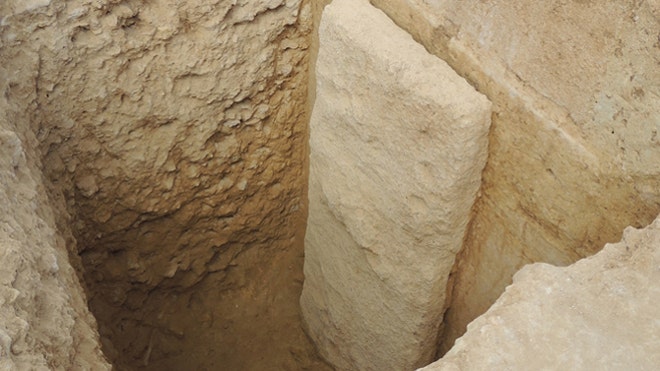
Skeleton of ancient prince reveals Roman life


Italian archaeologists have unearthed a 2,600-year-old intact Etruscan tomb that promises to reveal new depths of one of the ancient worlds most fascinating and mysterious cultures. (ROSSELLA LORENZI)

The skeletonized body of an Etruscan prince, possibly a relative to Tarquinius Priscus, the legendary fifth king of Rome from 616 to 579 B.C., has been brought to light in an extraordinary finding that promises to reveal new insights on one of the ancient world’s most fascinating cultures.

Found in Tarquinia, a hill town about 50 miles northwest of Rome, famous for its Etruscan art treasures, the 2,600 year old intact burial site came complete with a full array of precious grave goods.

“It’s a unique discovery, as it is extremely rare to find an inviolate Etruscan tomb of an upper-class individual. It opens up huge study opportunities on the Etruscans,” Alessandro Mandolesi, of the University of Turin, told Discovery News. Mandolesi is leading the excavation in collaboration with the Archaeological Superintendency of Southern Etruria.

Read the rest of this article...

HIDDEN LIFE OF THE SLAVE IN POMPEII


Her name was Amica (loved friend) and her name and footprint are embedded in a terra cotta tile along side her friend Detfri. The signed tile is a rare find, as Amica was a Roman slave and not only her name, but a tangible imprint of her life, in the form of her footprint survives to this day.
For the most part, the slaves of the well-preserved city of Pompeii still remain largely “invisible” in history, according to the University of Delaware’s Lauren Hackworth Petersen.

A hidden history

Petersen is exploring new approaches to bring the lives of Pompeii’s slaves out of the shadows by drawing on literature, law, art and other material evidence. The research is part of a forthcoming book she is co-authoring with Sandra Joshel, at the University of Washington.

Read the rest of this article...

Giant Prehistoric Elephant Slaughtered by Early Humans


Elephant tusks at Ebbsfleet. (Credit: University of Southampton)

Research by a University of Southampton archaeologist suggests that early humans, who lived thousands of years before Neanderthals, were able to work together in groups to hunt and slaughter animals as large as the prehistoric elephant.

Dr Francis Wenban-Smith discovered a site containing remains of an extinct straight-tusked elephant (Palaeoloxodon antiquus) in 2003, in an area of land at Ebbsfleet in Kent, during the construction of the High Speed 1 rail link from the Channel Tunnel to London.
Investigation of the area was carried out with independent heritage organisation Oxford Archaeology, with the support of HS1 Ltd.
Read the rest of this article...

Odd tale of headless Norse men: Slaves buried with the rich

This Viking man, in his 20s, was buried with a headless woman, who was in her 20s or 30s.
(Photo: Elise Naumann)

About 1,000 to 1,200 years ago, a Viking man still in his 20s was laid to rest on a craggy island in the Norwegian Sea. A new analysis of his skeleton and others buried nearby — several without their heads — suggests a haunting possibility: Some of the dead may have been slaves killed to lie in the grave with their masters.

Slavery was widespread in the Viking world, and scientists have found other Viking graves that include the remains of slaves sacrificed as "grave goods" and buried with their masters, a custom also practiced in ancient China and elsewhere. But the newly analyzed site is one of a very few Viking burials to include more than one slave, says the University of Oslo's Elise Naumann, a Ph.D. student in archaeology who led the research.

"These are people who had values very different from our own," says Naumann, whose study was published online in the Journal of Archaeological Science last week. "There were probably a very few people who were the most privileged, and many people who suffered."

Read the rest of this article...

Head of Aphrodite statue unearthed in Turkey


A group of archaeologists has discovered a life-sized marble head of Aphrodite while uncovering an ancient pool-side mosaic in southern Turkey.

Head of Aphrodite statue unearthed in Turkey
The head of an Aphrodite sculpture was discovered in southern Turkey during archaeological
excavations [Credit: Michael Hoff, University of Nebraska-Lincoln]
Buried under soil for hundreds of years, the goddess of love and beauty has some chipping on her nose and face. Researchers think her presence could shed light on the extent of the Roman Empire's wide cultural influence at the time of its peak.

Archaeologists found the sculpture while working at a site called Antiochia ad Cragum (Antioch on the cliffs), on the Mediterranean coast. The researchers believe the region, which is dotted with hidden inlets and coves, would have been a haven for Cilician pirates — the same group who kidnapped Julius Caesar and held him for ransom around 75 B.C.  


Read the rest of this article...

Tuesday, September 17, 2013

New evidence of Dingwall's Viking past to be revealed


New evidence confirming Dingwall's origins as a Viking power base are to be revealed at a public meeting in the Highland town later this month.
Dingwall's Cromartie car park is believed to be the site of a "thing", the meeting place of a medieval Norse parliament.
Archaeologists excavated part of the car park last year.
A report on the dig, including the results of radiocarbon dating, will be presented at the meeting.
Highland Council said some "exciting answers" to questions about the town's Viking past will be revealed.
Read the rest of this article...

Warrior grave found in excavation

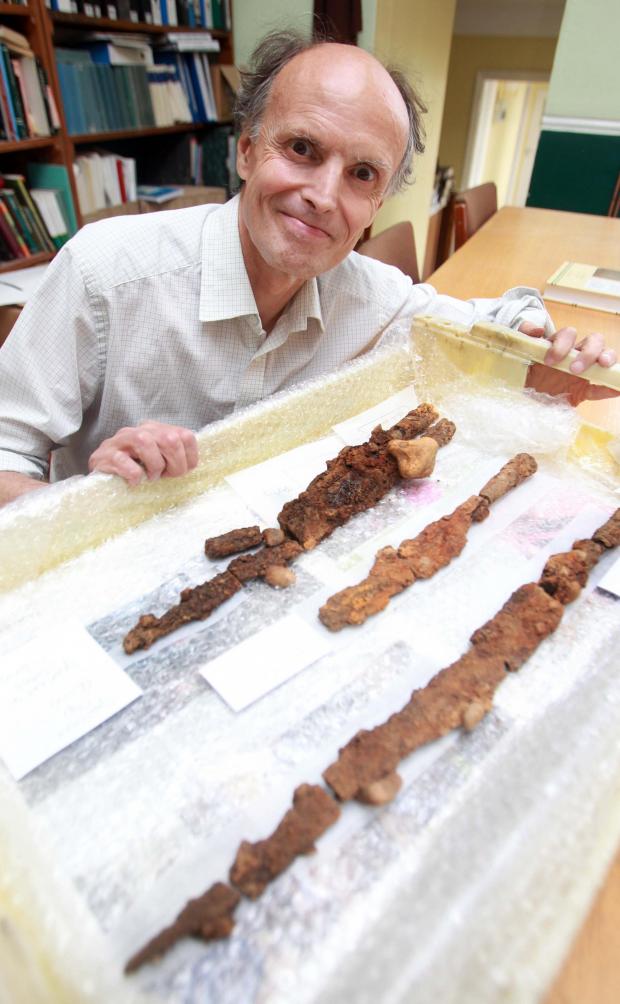
Don Shimmin with some of the spears found in the warrior grave

A WARRIOR grave dating back 2,000 years has been discovered under the site of a new golf clubhouse.

Archaeologists have been investigating land at the Playgolf course in Bakers Lane, Colchester, before work starts on the new range.

And Philip Crummy, director of the Colchester Archaeological Trust, said evidence had been found of a warrior’s grave - complete with five spears.

Mr Crummy said the grave would have belonged to a member of the Catuvellauni tribe just before the Roman conquests of Britain.
Read the rest of this article...

Anti-mafia squad investigates Pompeii

Water is wreaking havoc on the red frescoes that characterise the Casa delle Pareti Rosse

Italy’s anti-mafia squad, the Direzione Investigativa Antimafia, is investigating conservation projects in Pompeii. The Naples-based agency is working closely with the ministry of culture and police to weed out the involvement of organised crime from the archaeological site, which has come under fire from Unesco for failing to address damage to the ancient city’s damaged buildings and frescoes.
The Great Pompeii Project has received a total of €105m of funding from the Italian government and the European Union. 

Read the rest of this article...

Dating of Beads Sets New Timeline for Early Humans

Beads from the site of Ksar Akil (Lebanon) found closely associated with the skeleton of an early modern girl dating to between 39,000–41,000 years ago. The beads shown here are made of the shell of a small marine snail (Nassarius gibbosulus/circumcinctus). The large Glycymeris valve in the centre was not pierced, but its surface preserved bright red pigmentation. (Credit: Katerina Douka and Natural History Museum London)

An international team of researchers led by Oxford University have new dating evidence indicating when the earliest fully modern humans arrived in the Near East, the region known as the Middle East today. They have obtained the radiocarbon dates of marine shell beads found at Ksar Akil, a key archaeological site in Lebanon, which allowed them to calculate that the oldest human fossil from the same sequence of archaeological layers is 42,400-41,700 years old. This is significant because the age of the earliest fossils, directly and indirectly dated, of modern humans found in Europe is roughly similar. This latest discovery throws up intriguing new possibilities about the routes taken by the earliest modern humans out of Africa, says the study published online by the journal PLOS ONE.

Read the rest of this article...

Bulgaria: Land of the tomb raiders


Real-life vampires, giant rock vaginas, ancient sites to rival those of Greece and Rome – Bulgaria’s archaeologists are putting their country on the map of world history, but first they have to stop the mafia stealing its treasures.

Bulgaria: Land of the tomb raiders
2nd and 3rd Century figurines of Greek gods [Credit: Getty Images]
The illegal diggers come at night with shovels and sacks, hunting through the places where they know the professionals have been. They’re looking for the tonnes of ancient artefacts that lie hidden in Bulgaria’s soil.

In the past two decades, Bulgarian law enforcement agencies say this plunder has turned into a €30m-a-year industry for local gangs, putting it a close third behind drugs and prostitution. The artefacts – gold Roman coins, ancient Greek silver, Thracian military helmets – wind up with falsified documents in auction houses in Europe and North America, or increasingly with wealthy Arab and Asian collectors.


Read the rest of this article...
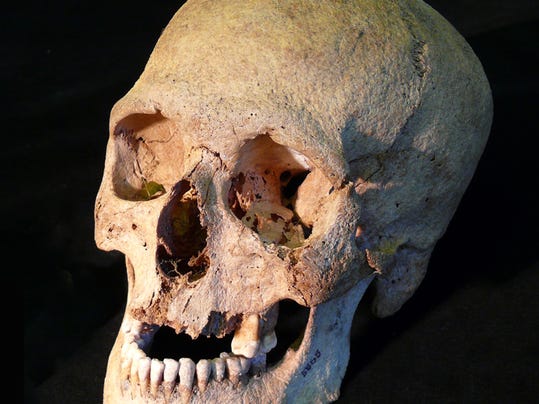
Ancient sportsmen took doping too, findings show

Excavations at a historic stadium area in the ancient city of Magnesia suggest that athletes had used performance-enhancing potions 2,000 years ago. It was not only permitted, but also a celebrated practice. AA Photos

A large number of Turkish and international athletes recently banned for doping might have been born just 2,000 years too late, according to new archaeological findings in the Aegean province of Aydın that suggest using performance-enhancing drugs in ancient Greece was not only permitted but celebrated.

Locals living in the ancient city of Magnesia produced potions from the mood-altering plant mandrake, researchers have said, noting that their involvement with the drug gave them pride of place.


Read the rest of this article...

Archaeologists discover remains of ancient church in York city centre


Archaeologists in York say an ancient church could lead to more historic treasures
© Courtesy of City of York Council

The discovery was made during the first stage of works intended to transform the square as part of Reinvigorate York, which aims to rejuvenate the city's centre.

The remains have revealed the foundations of a Victorian and possibly medieval church. On-Site Archaeology has been appointed by the City of York Council to carry out an archaeological "watching brief", required by the Diocese of York throughout the project to assess the significance of any archaeology discovered.

“Over the next couple of weeks the archaeologists will clean and record the remains of the church and remove any burials that might be affected by the resurfacing works,"says John Oxley, the council's archaeologist.


Read the rest of this article...

Excavation may reveal secret of the Hurlers


A Bronze Age crystal pavement described as "unique" by archaeologists is to be uncovered for the first time since the 1930s.

Excavation may reveal secret of the Hurlers
The Hurlers stone circle near Minions on Bodmin Moor and, above right, the crystal pavement as it looked when last uncovered in 1938 [Credit: Emily Whitfield-Wicks]
The monument, at the Hurlers stone circle on Bodmin Moor, is believed to be the only one of its kind in the British Isles. Scientists and historians hope that by studying it they will gain a better understanding of early civilisations.

Organised by the Caradon Hill Area Heritage Project, "Mapping the Sun" will be led by a team from Cornwall Council's Historic Environment department. Archaeologists will be setting up at the site close to the village of Minions this weekend and the excavation will be open to the public between Tuesday and Saturday.


Read the rest of this article...
6.000 Jahre alte Dorfplätze am Kapellenberg gefunden

Ausgrabung auf dem jungsteinzeitlichen Siedlungsplatz auf dem Kapellenberg. 
Foto: RGZM/D. Gronenborn

Bei den diesjährigen Ausgrabungen auf dem Kapellenberg in Hofheim am Taunus haben Mainzer Archäologen einen seltenen Nachweis für einen jungsteinzeitlichen Tritthorizont mit Keramik-Konzentrationen und Holzkohle in einer Siedlung der Michelsberger Kultur gefunden.

Read the rest of this article...

Thursday, September 12, 2013

Stone me! It’s Britain’s newest stone circle

Standing still: The stone circle at Wilton, near Egremont, restored after more than 200 years

The circle was discovered in a meadow at Wilton, near Egremont by landowners Philip and Lyndsey Johnson. And according to Dr Terence Meaden, a research archaeologist from Oxford University, the stones could be over 4,000 years old.
The formation was unearthed when the Johnsons began researching the history of their house.
They came across an 18th century map with a drawing of the old stone circle in a field close to their home. It was marked “Druids Temple”.
Further investigation showed the stones were probably moved by a farmer around 1800. The stones were found in a nearby hedge.
Read the rest of this article...

As Fashion Week Ends, Pondering the Origins of Clothes

A reconstruction of a Neanderthal female.
Photograph by Joe McNally, National Geographic
As Fashion Week winds down in New York, scientists continue their own search for the very latest in ancient fashion—latest meaning oldest. They're asking one seemingly simple question: Who invented clothes anyway?
As straightforward as it sounds, it isn't easy to answer. We may be used to artistic depictions of prehistoric Homo sapiens and Neanderthals wrapped in furry hides, but, in truth, the story of how clothing became such a prominent mark of humanity is only just starting to be unraveled.
Clothing doesn't readily fossilize. Much like the soft tissues that wrap our bones, fabrics and other body coverings decay rapidly. Yet, despite this, archaeologists and anthropologists are starting to figure out the elements of prehistoric style through an array of indirect evidence that includes everything from dyed plant fibers to lice.
Read the rest of this article...

NEW PASSAGE-TOMB DISCOVERY NEAR NEWGRANGE

LiDAR image of Boyne Valley. Image: Heritage Council (INSTAR)

Details of the “first passage-tomb to be discovered in in Boyne Valley in 200 years” have been reported in the Sept 7 edition of the Meath Chronicle. It was recently discovered along with many other previously unknown features by archaeologists using light detection and ranging imaging (LiDAR).
The archaeologists, led by Kevin Barton, have called for a fully comprehensive research project in order to fully assess the results of the entire LiDAR survey performed in and around the Brú na Bóinne UNESCO World Heritage Site
Warranted further investigation
The “new” passage-tomb, on the floodplain of the Boyne southwest of Newgrange, had showed up on LiDAR imagery of the valley, Mr. Barton said. Because of its situation in proximity to the Boyne monuments, it was considered that the feature warranted further work.
Read the rest of this article...

Stonehenge was built on solstice axis, dig confirms


English Heritage says it has discovered a "missing piece in the jigsaw" in our understanding of Stonehenge, England's greatest prehistoric site. Excavations along the ancient processional route to the monument have confirmed the theory that it was built along an ice age landform that happened to be on the solstice axis, according to Professor Mike Parker Pearson, a leading expert on Stonehenge.

Stonehenge was built on solstice axis, dig confirms
Archaeologists found ridges, formed by Ice Age meltwater, that align Stonehenge
with the solstice axis [Credit: Francis Dean/Rex]
The Avenue was an earthwork route that extended 1.5 miles from the north-eastern entrance to Wiltshire's standing stones to the River Avon at West Amesbury. Following the closure of the A344 road, which cut across the route, archaeologists have been able to excavate there for the first time.

Just below the tarmac, they have found naturally occurring fissures that once lay between ridges against which prehistoric builders dug ditches to create the Avenue. The ridges were created by Ice Age meltwater that happen to point directly at the mid-winter sunset in one direction and the mid-summer sunrise in the other.


Read the rest of this article...

Stonehenge ditch discoveries prove archaeology link to River Avon true

An overhead shot of Stonehenge now (top) and how it is expected to look by summer 2014, once the A344 has been covered by grass

Found near the Heel Stone lying about 24 metres from the entrance to Stonehenge, the ditches represent either side of The Avenue, a long, linear feature to the north-east of the site which has been severed for centuries by the A344.

“The part of the Avenue that was cut through by the road has obviously been destroyed forever, but we were hopeful that archaeology below the road would survive,” said Heather Sebire, an archaeologist for English Heritage, who are currently helping decommission the road as part of a plan to make the landmark more tranquil for visitors.

“It is very exciting to find a piece of physical evidence that officially makes the connection which we were hoping for.”


Read the rest of this article...